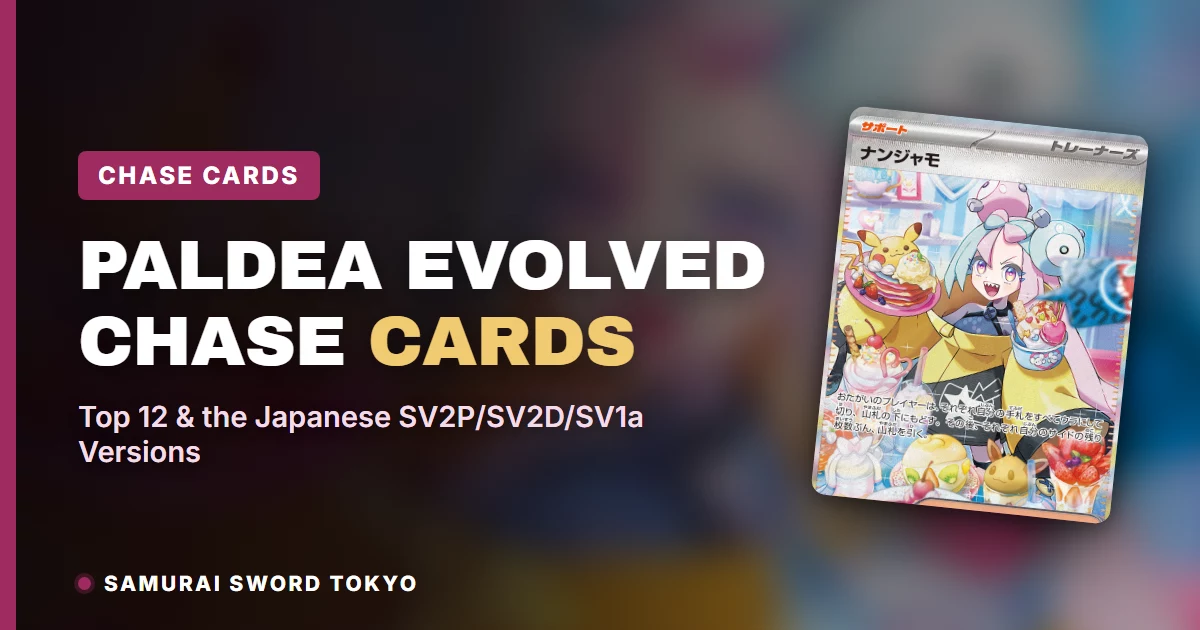
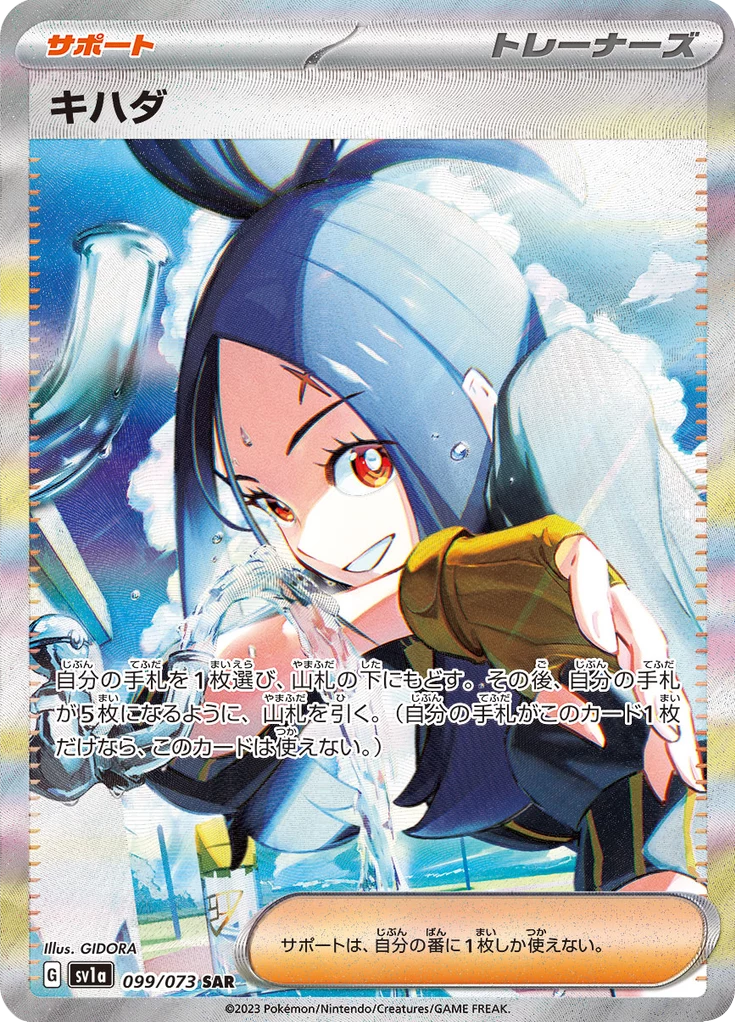
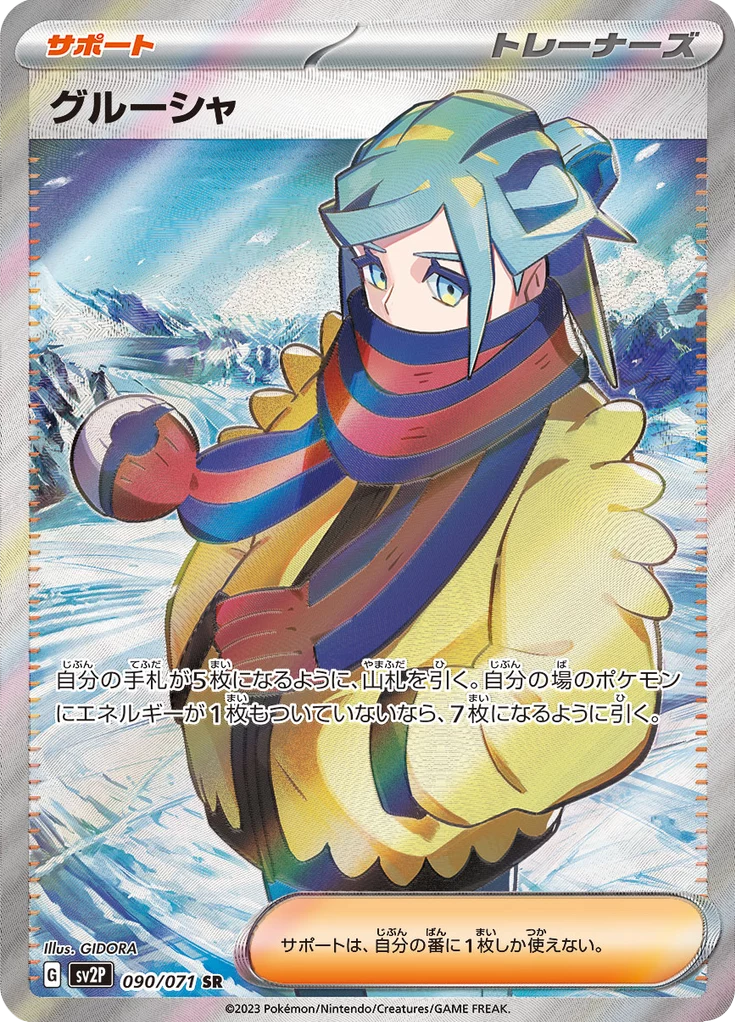
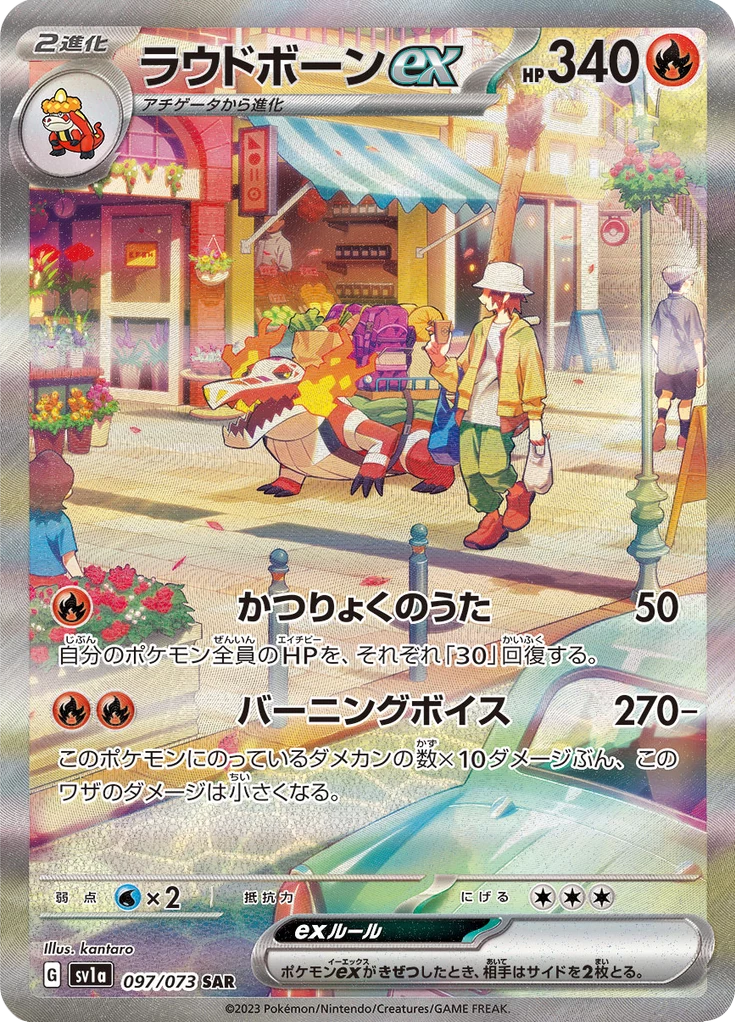
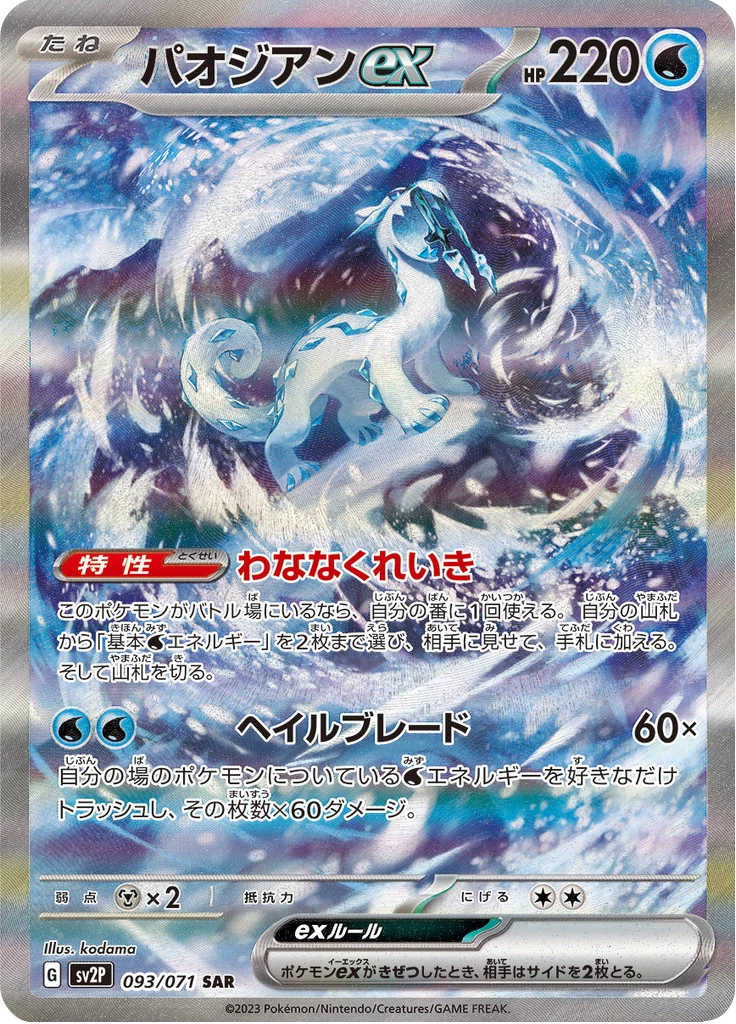
Paldea Evolved Chase Cards: Top 12 & the Japanese SV2P/SV2D/SV1a Versions
Pokémon TCG: Scarlet & Violet—Paldea Evolved (PAL) landed in English on 9 June 2023 with 279 cards — 193 in the base set plus 86 secret rares. In Japan, that same card pool didn’t come from one set. It was split across three: SV1a Triplet Beat, SV2P Snow Hazard and SV2D Clay Burst, each on sale months before the English release.
SV1a Triplet Beat came first, on 10 March 2023, followed by SV2P Snow Hazard and SV2D Clay Burst together on 14 April 2023 — two to three months ahead of Paldea Evolved, and spread across two Japanese set codes and numbering schemes instead of one. Our Paldea Evolved Japanese card list maps the full three-set composition; this guide ranks the twelve chase cards specifically and shows the exact Japanese printing behind each one, with our own PSA 10 listings and current box prices.
Key Takeaways
Paldea Evolved (EN, 279 cards, 9 Jun 2023) draws its chase-card artwork from three Japanese sets released Mar–Apr 2023: SV1a Triplet Beat, SV2P Snow Hazard and SV2D Clay Burst. The cards below with a live PSA 10 listing on our site rank first, topped by PSA 10 Iono SAR (SV2D 096/071), currently listed at ¥102,586. Sealed Japanese boxes are currently listed at ¥9,880 via the SV2D Clay Burst booster box.
PAL
EN Set (Paldea Evolved)
SV1a · SV2P · SV2D
JP Source Sets (2023)
12
Chase Cards Covered
¥9,880
JP Box, Currently Listed
Prices are converted at ¥159/USD (September 2026). Every price below is what we currently list — never a market or auction estimate.
How We Ranked These
This list is ordered two ways, in sequence. First, any card with a live PSA 10 listing on our site goes to the top, ranked by that listing’s price — that puts both Iono prints, Dendra, Grusha, Skeledirge ex and Chien-Pao ex SAR at #1–#6. Everything after that follows the Japanese rarity tier printed on the card itself: Ultra Rare (gold) first, then Special Art Rare, then Art Rare.
We do not quote third-party market prices (TCGplayer, eBay or PriceCharting) anywhere in this article. Where we don’t currently list a graded copy, we say so plainly and point you to Quick Order instead of guessing at a number.
The Top 12 Chase Cards
Every entry below shows the English Paldea Evolved card first, then the Japanese SV1a, SV2P or SV2D printing it was taken from — set code, card number, rarity and illustrator, all cross-checked against the Limitless card database. All twelve carry matching artwork between languages.
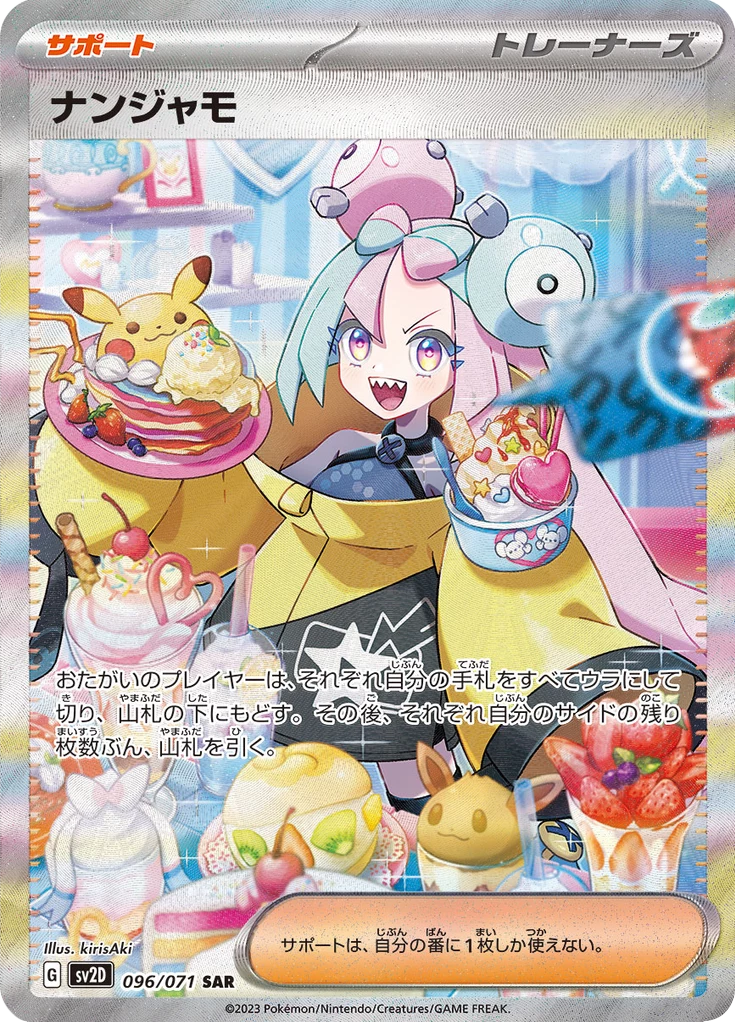
1. Iono, PAL 269 — Special Illustration Rare (SIR)
Japanese equivalent: ナンジャモ, SV2D 096/071, SAR, illustrated by kirisAki. Same artwork.
This exact printing has a live PSA 10 listing on our site: PSA 10 Iono SAR (SV2D 096/071), currently listed at ¥102,586 — the highest-priced PSA 10 we currently list from any of these three sets. Our Iono cards guide covers her other printings.
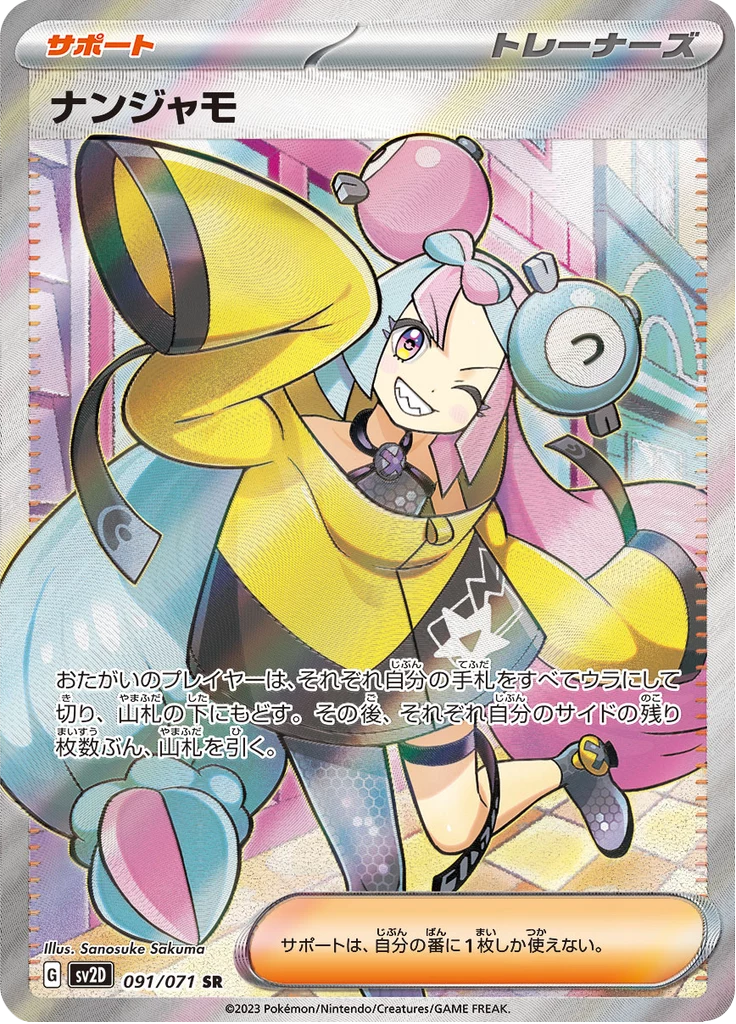
2. Iono, PAL 254 — Ultra Rare (full art)
Japanese equivalent: ナンジャモ, SV2D 091/071, SR, illustrated by Sanosuke Sakuma. Same artwork — a second Iono slot in the set, at SR rather than the SAR treatment above.
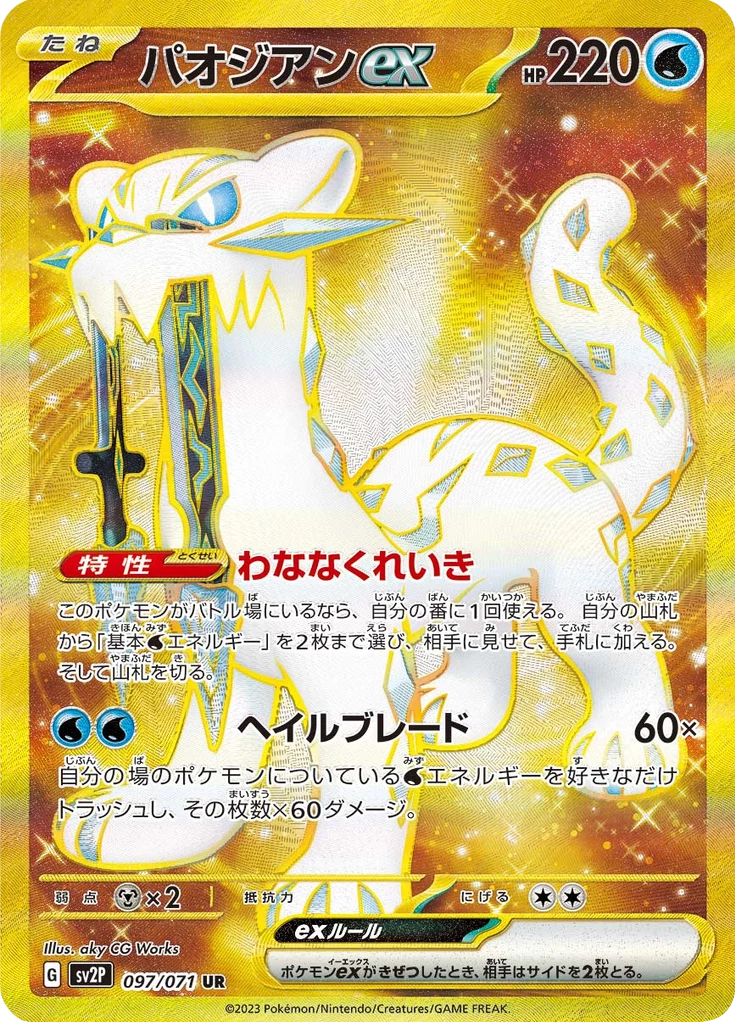
Japanese equivalent: パオジアンex, SV2P 097/071, UR, illustrated by aky CG Works. Same artwork — the gold UR slot for this card, distinct from the SAR at #6.
Chien-Pao ex · SV2P 097/071 · UR · Snow Hazard (SV2P)
Not currently listed as a graded single here — sourcing this one goes through Quick Order.
8. Ting-Lu ex, PAL 275 — Hyper Rare (gold)
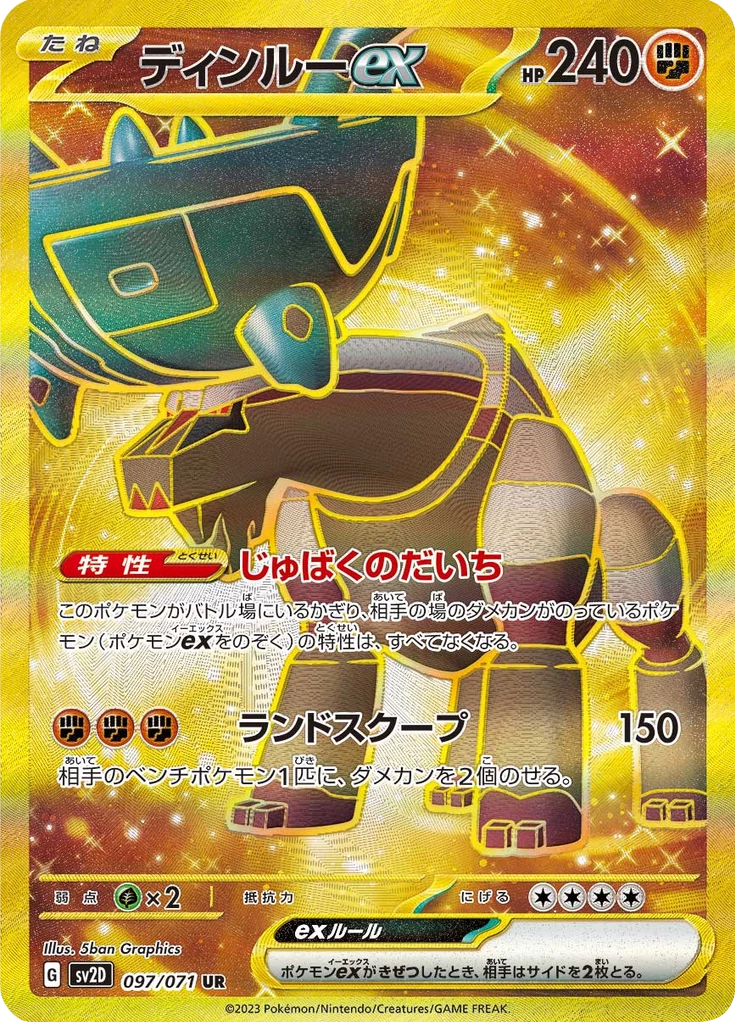
Japanese equivalent: ディンルーex, SV2D 097/071, UR, illustrated by 5ban Graphics. Same artwork.
Ting-Lu ex · SV2D 097/071 · UR · Clay Burst (SV2D)
Not currently listed as a graded single — source via Quick Order.
9. Meowscarada ex, PAL 256 — Special Illustration Rare (SIR)
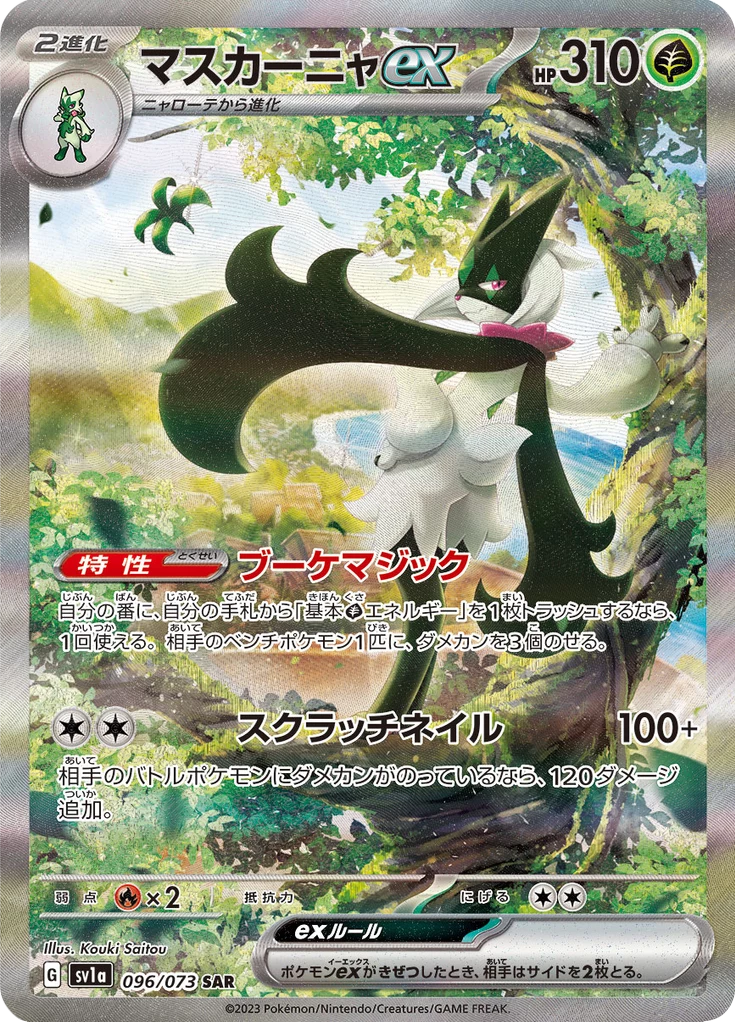
Japanese equivalent: マスカーニャex, SV1a 096/073, SAR, illustrated by Kouki Saitou. Same artwork.
Meowscarada ex · SV1a 096/073 · SAR · Triplet Beat (SV1a)
Not currently listed as a graded single — source via Quick Order.
10. Tinkaton ex, PAL 262 — Special Illustration Rare (SIR)
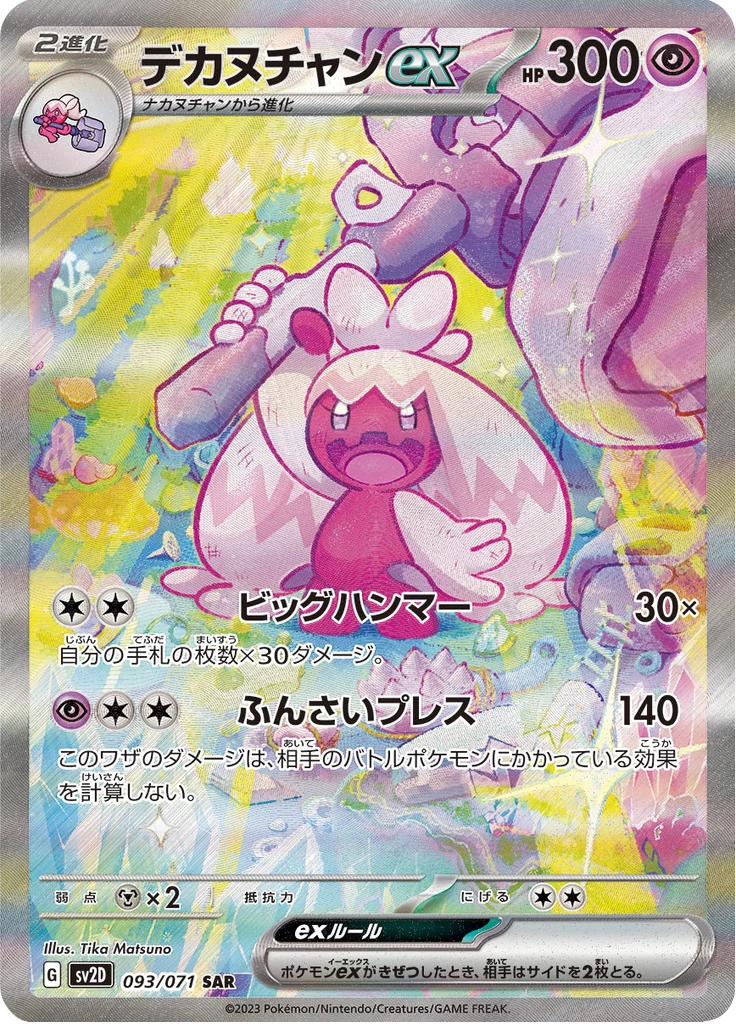
Japanese equivalent: デカヌチャンex, SV2D 093/071, SAR, illustrated by Tika Matsuno. Same artwork.
Tinkaton ex · SV2D 093/071 · SAR · Clay Burst (SV2D)
Not currently listed as a graded single — source via Quick Order.
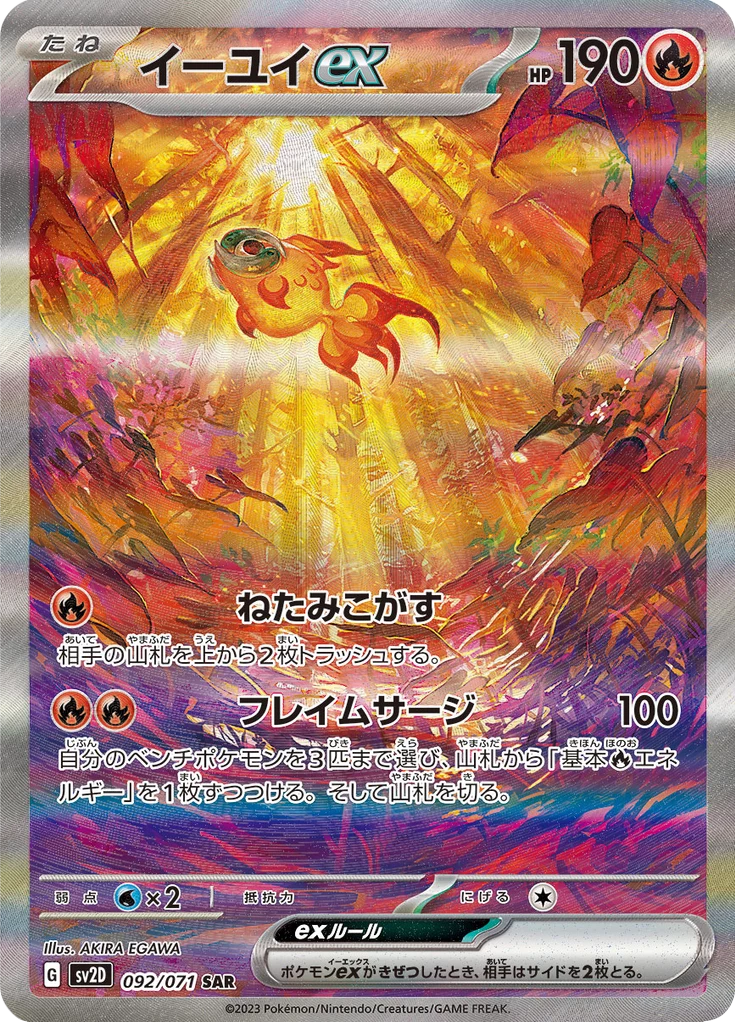
11. Chi-Yu ex, PAL 259 — Special Illustration Rare (SIR)
Japanese equivalent: イーユイex, SV2D 092/071, SAR, illustrated by AKIRA EGAWA. Same artwork.
Chi-Yu ex · SV2D 092/071 · SAR · Clay Burst (SV2D)
Not currently listed as a graded single — source via Quick Order.
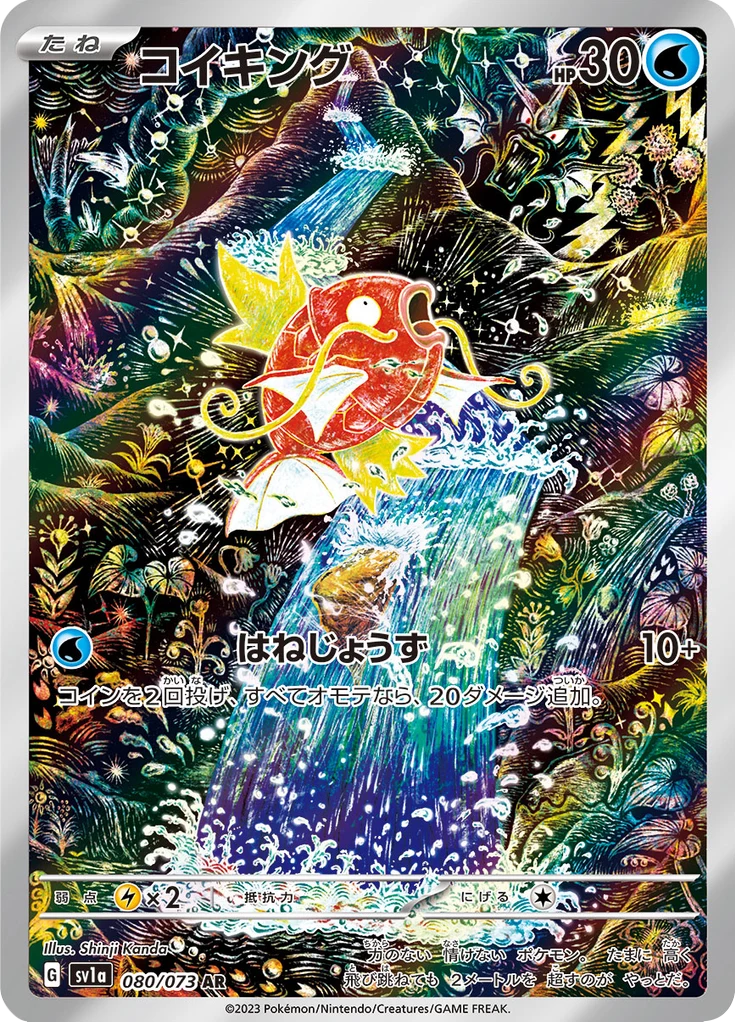
12. Magikarp, PAL 203 — Illustration Rare (IR)
Japanese equivalent: コイキング, SV1a 080/073, AR, illustrated by Shinji Kanda. Same artwork — the lowest secret-rare tier on this list, and the most affordable entry point into the chase-card side of these three sets.
Not currently listed as a graded single — source via Quick Order.
Japanese vs English: What Changes
The chase-card artwork carries over 1:1, but the sets around it don’t line up card-for-card, and Japan splits the pool across three set codes instead of one:
Card numbers reset per language and per set, so they tell you nothing about a card’s position in the other version: SV2D uses a 071 base count and SV2P a separate 071 base count of its own, while SV1a runs on a 073 base count — none of which correspond to Paldea Evolved’s 193-card English base set. A handful of names also shift in translation between our own set-mapping pages: the Trainer card we list as Boss’s Command on the SV1a checklist is the same card Bulbapedia’s English coverage calls Boss’s Orders, and the character our SV1a list spells Clavel appears elsewhere as Clavell.
We ship Japanese sealed product and graded singles worldwide from Tokyo with tracked delivery. For these three sets, there are several practical routes:
SV1a Triplet Beat box — currently sold out; restock requests go through Quick Order.
Everything else — the six remaining chase cards on this list, plus raw copies of any of the above, run through our Quick Order page so we can build a mixed order around exactly what you’re chasing.
Frequently Asked Questions
What is Pokémon TCG: Scarlet & Violet—Paldea Evolved?
Paldea Evolved (PAL) is the English-language Pokémon TCG set released 9 June 2023 with 279 cards — 193 in the base set plus 86 secret rares.
Which Japanese sets was Paldea Evolved printed from?
Three: SV1a Triplet Beat (released 10 March 2023), and SV2P Snow Hazard and SV2D Clay Burst (both released 14 April 2023). Japan received this card pool two to three months ahead of the English release, split across separate set codes rather than one.
What is the highest-priced chase card on this list, and what does our PSA 10 copy cost?
Iono SAR, SV2D 096/071 — the highest-priced PSA 10 we currently list from these three sets, at ¥102,586. It corresponds to the English Iono Special Illustration Rare, PAL 269.
Do the English and Japanese versions of these chase cards use the same artwork?
Yes, for all twelve cards on this list, confirmed by matching the credited illustrator on the Japanese and English Limitless card pages.
Why do three Japanese sets map to one English set?
Japan’s Scarlet & Violet-era releases are smaller and more frequent than the English releases, which periodically combine several Japanese sets’ card pools into one larger release. Paldea Evolved combines SV1a, SV2P and SV2D into a single 279-card English set.
Where can I buy the Japanese SV2P, SV2D and SV1a cards from Tokyo?
Sealed boxes and select PSA 10 singles are listed directly on our site; anything not currently listed, including the sold-out SV1a Triplet Beat box, can be sourced through our Quick Order page, which we use to build mixed orders shipped from Tokyo.
Paldean Fates Chase Cards: Top 10 & the Japanese SV4a Shiny Treasure ex Versions
Pokémon TCG: Scarlet & Violet—Paldean Fates (PAF) released in English on 26 January 2024 with 245 cards. Nearly two months earlier, in Japan, the source material was already on shelves as SV4a Shiny Treasure ex — a 360-card High Class Pack that, at the time, was the largest Japanese Pokémon TCG set ever printed.
Paldean Fates is the English special set built from Shiny Treasure ex, plus a handful of cards cut from Paradox Rift and some Japanese promos; the whole release is built around Shiny Pokémon. Our Paldean Fates Japanese card list covers the full number-by-number mapping. This guide ranks the ten chase cards worth knowing and shows the Japanese SV4a printing behind each one — including the one case where the Japanese Shiny Ultra Rare print has no matching English Shiny Ultra Rare card at all.
Key Takeaways
Paldean Fates (EN, 245 cards, 26 Jan 2024) draws its chase cards from Japan’s SV4a Shiny Treasure ex (360 cards, 1 Dec 2023). Our own graded copy of the top card by listed price, PSA10 Penny SAR (SV4a 354/190), is currently listed at ¥15,070. Sealed Japanese boxes are currently listed at ¥19,306 via the SV4a Shiny Treasure ex booster box.
PAF
EN Set (Paldean Fates)
SV4a · 1 Dec 23
JP Source Set
10
Chase Cards Covered
¥19,306
JP Box, Currently Listed
How We Ranked These
This list is ordered two ways, in sequence. First, any card with a live PSA 10 listing on our site goes to the top, ranked by that listing’s price — that puts Penny SAR and Charmander S at #1–#2. Everything after that is ordered by Japanese rarity tier as Limitless prints it on the card: Ultra Rare (UR), then Shiny Ultra Rare (SSR), then Special Art Rare (SAR).
We do not quote third-party market prices (TCGplayer, eBay or PriceCharting) anywhere in this article, and we don’t state pull rates as fact — our Shiny Treasure ex pull rates guide covers that separately. Where we don’t currently list a graded copy, we say so plainly and point you to Quick Order instead of guessing at a market number.
The Top 10 Chase Cards
Every entry below shows the English Paldean Fates card first, then the Japanese Shiny Treasure ex (SV4a) printing it was taken from. Illustration credit and rarity are from the Limitless card database. Under Bulbapedia’s rarity split, regular Shiny cards carry the “S” rarity with new artwork, while Shiny Pokémon ex cards carry “SSR” and reuse their prior full-art print artwork.
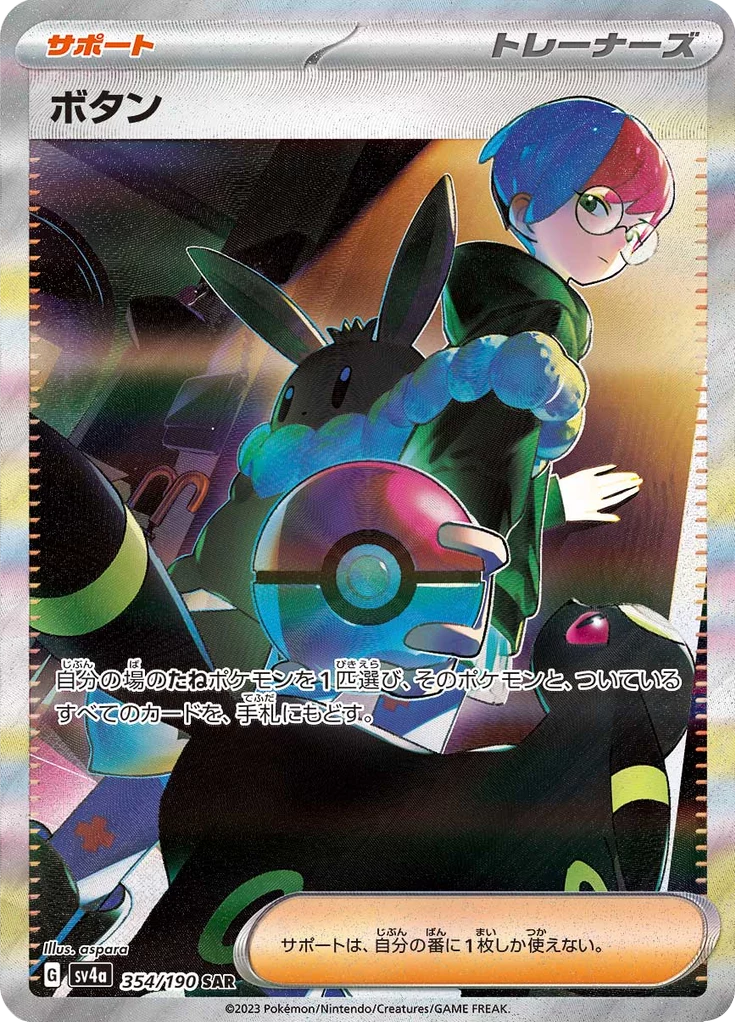
1. Penny, 239/091 — Special Illustration Rare
Japanese equivalent: Penny, SV4a 354/190, SAR, illustrated by aspara. Same illustrator on both prints.
Penny · SV4a 354/190 · SAR · Shiny Treasure ex (SV4a)
This exact printing has a live PSA 10 listing on our site: PSA10 Penny SAR (SV4a 354/190), currently listed at ¥15,070 (~$95 at ¥159/USD). Our Penny cards guide covers her other printings.
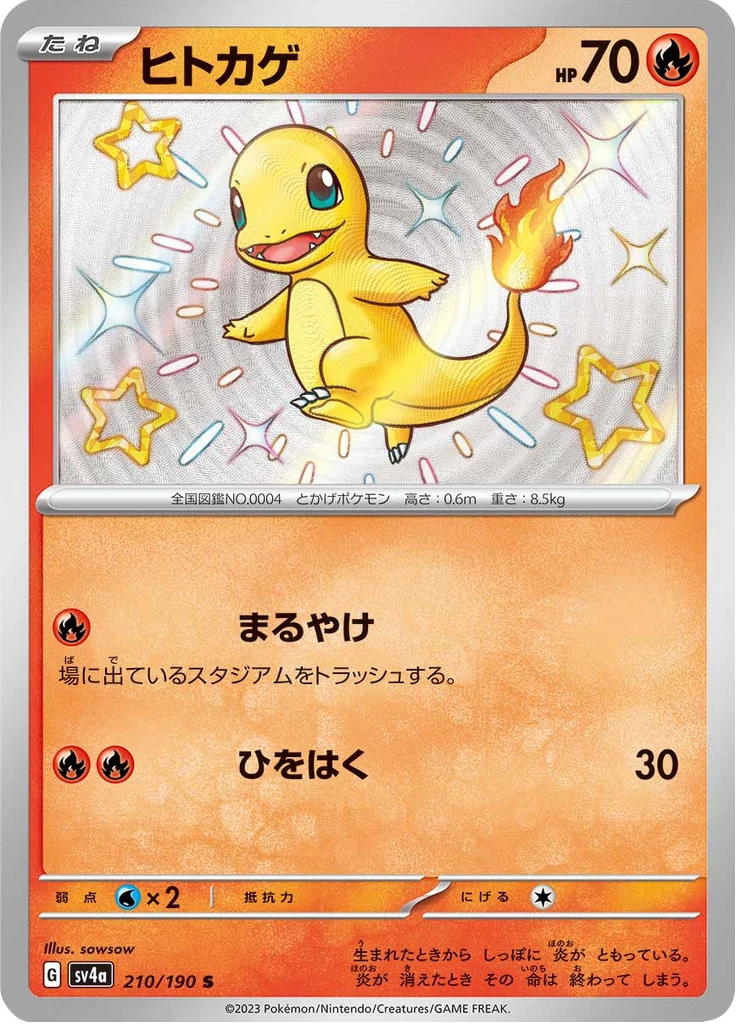
2. Charmander, 109/091 — Shiny Rare
Japanese equivalent: Charmander, SV4a 210/190, S, illustrated by sowsow. Same illustrator on both prints.
Charmander · SV4a 210/190 · S · Shiny Treasure ex (SV4a)
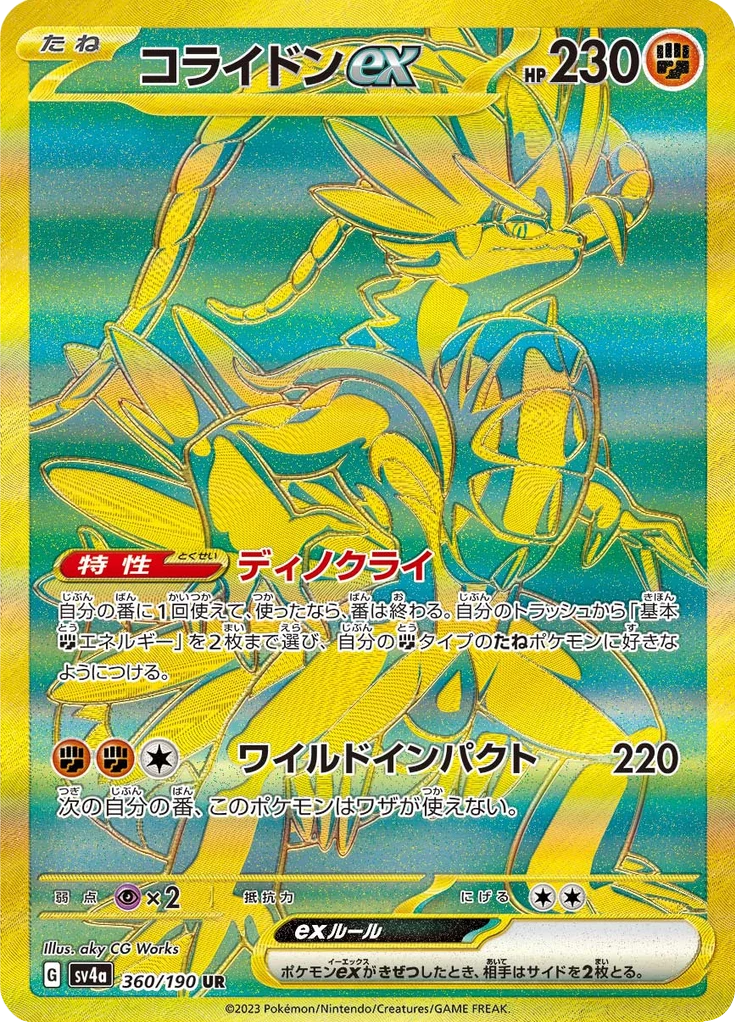
Japanese equivalent: Koraidon ex, SV4a 360/190, UR, illustrated by aky CG Works. This is the top-numbered card of the entire 360-card Japanese set.
Koraidon ex · SV4a 360/190 · UR · Shiny Treasure ex (SV4a)
Not currently listed as a graded single here — sourcing this one goes through Quick Order.
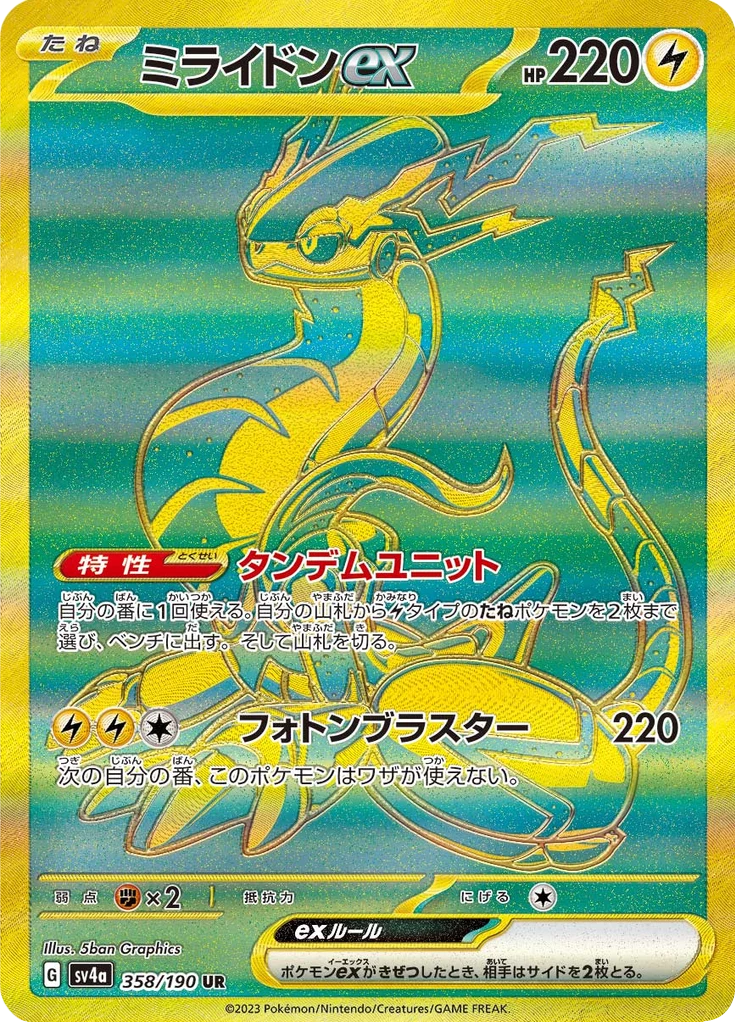
4. Miraidon ex, 243/091 — Secret Rare (gold)
Japanese equivalent: Miraidon ex, SV4a 358/190, UR, illustrated by 5ban Graphics.
Miraidon ex · SV4a 358/190 · UR · Shiny Treasure ex (SV4a)
Not currently listed as a graded single — source via Quick Order.
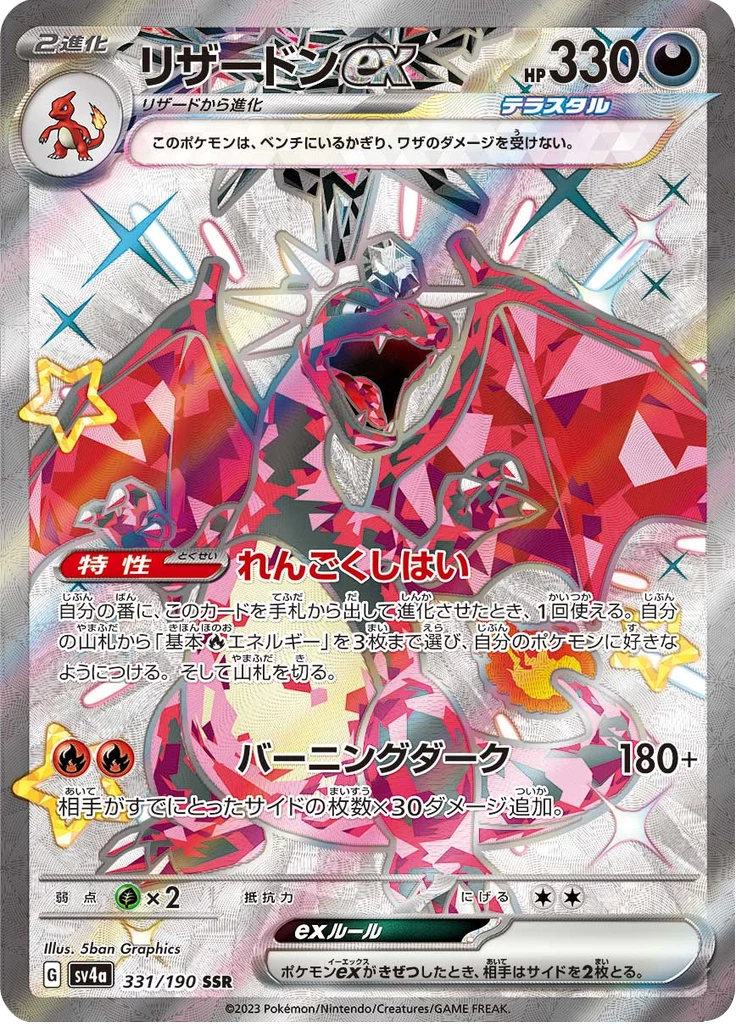
5. Charizard ex — no English Shiny Ultra Rare equivalent
Japanese card: Charizard ex, SV4a 331/190, SSR, illustrated by 5ban Graphics. This is a Japanese-only slot: the Limitless Paldean Fates list has no Shiny Ultra Rare print of Charizard ex at all. English collectors can get Charizard ex in Paldean Fates only as the 054/091 Double Rare or the 234/091 Special Illustration Rare — not in the SSR shiny form the Japanese set prints here.
Charizard ex · SV4a 331/190 · SSR · Shiny Treasure ex (SV4a)
Not currently listed as a graded single — source via Quick Order.
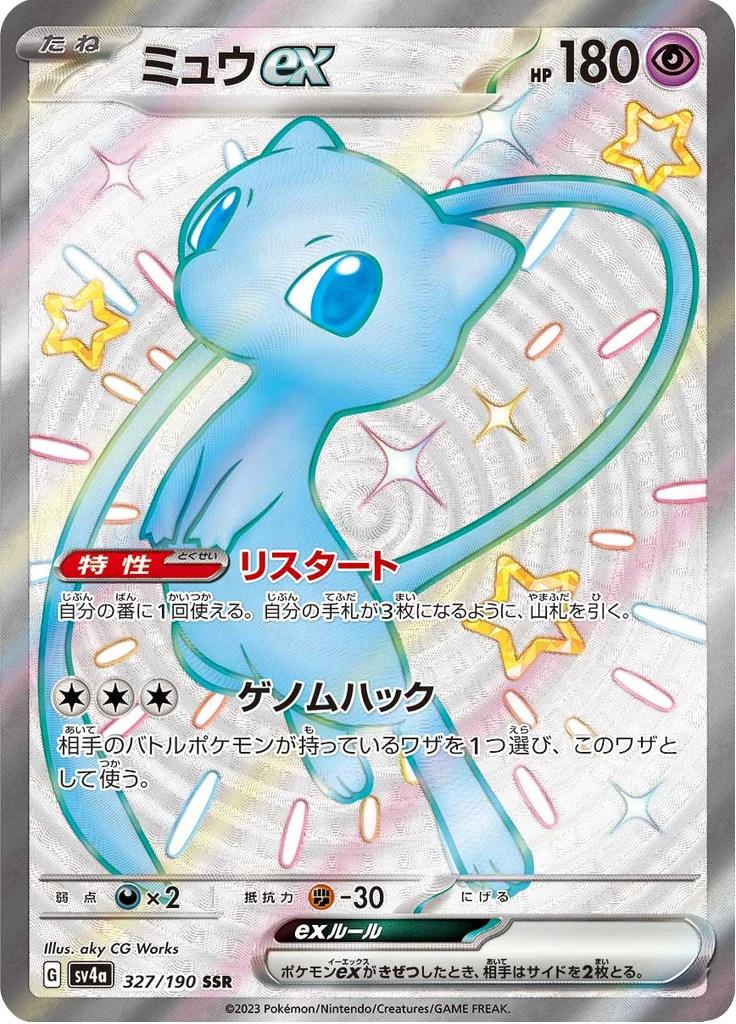
6. Mew ex, 216/091 — Shiny Ultra Rare
Japanese equivalent: Mew ex, SV4a 327/190, SSR, illustrated by aky CG Works. Same illustrator on both prints.
Mew ex · SV4a 327/190 · SSR · Shiny Treasure ex (SV4a)
Not currently listed as a graded single — source via Quick Order.
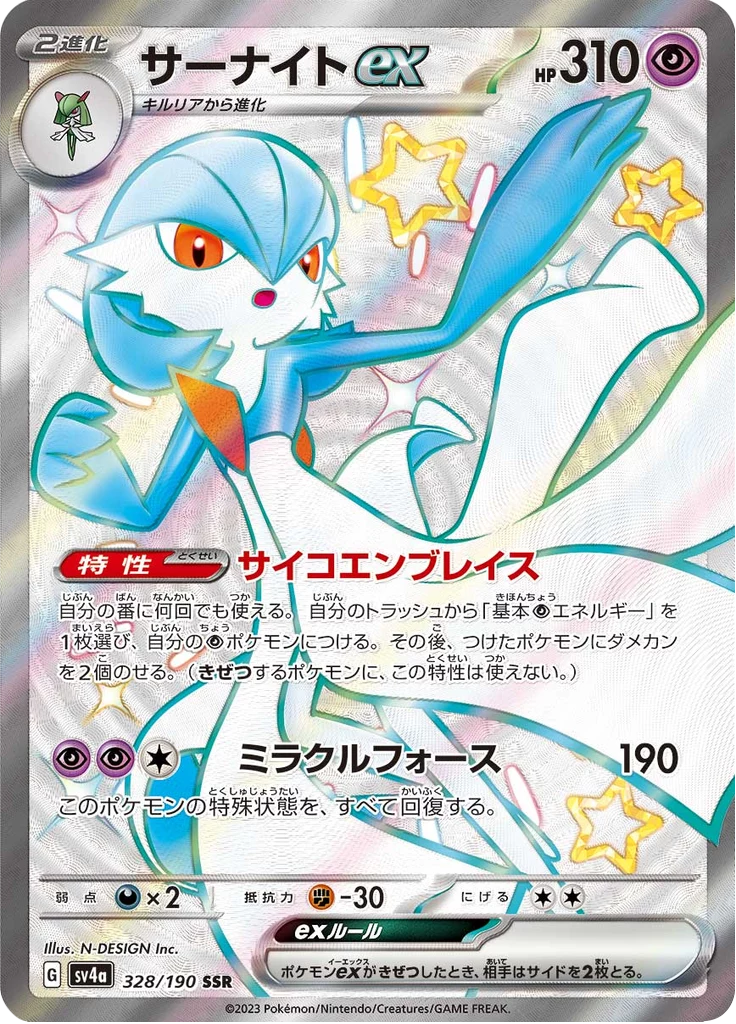
7. Gardevoir ex, 217/091 — Shiny Ultra Rare
Japanese equivalent: Gardevoir ex, SV4a 328/190, SSR, illustrated by N-DESIGN Inc. Same illustrator on both prints.
Gardevoir ex · SV4a 328/190 · SSR · Shiny Treasure ex (SV4a)
Not currently listed as a graded single — source via Quick Order.
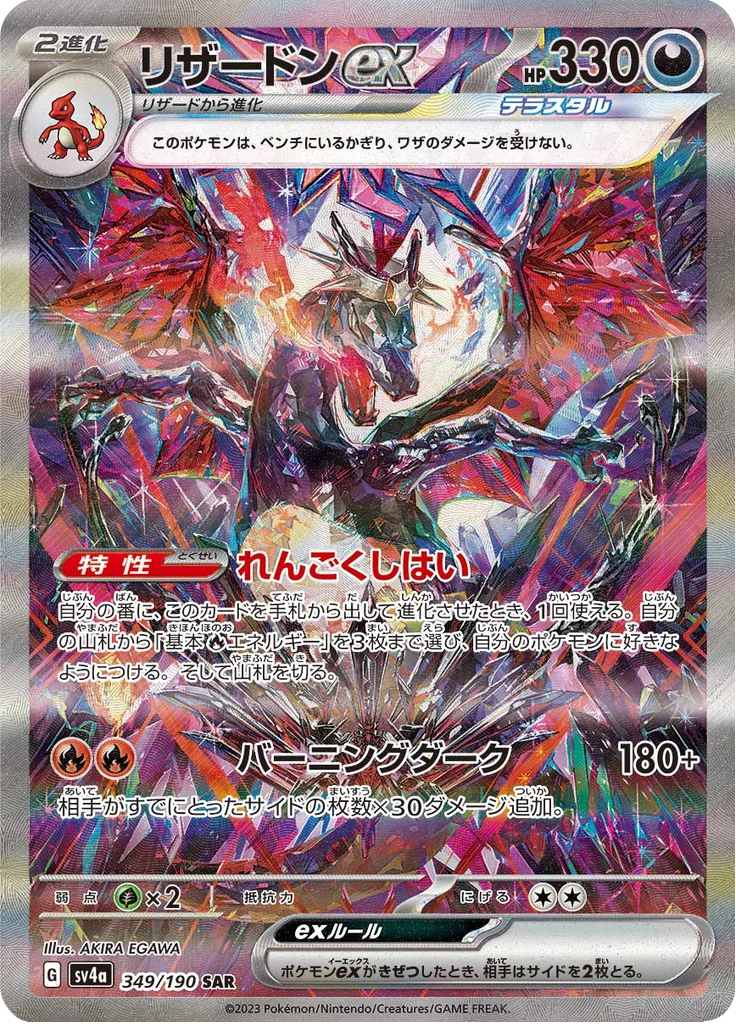
8. Charizard ex, 234/091 — Special Illustration Rare
Japanese equivalent: Charizard ex, SV4a 349/190, SAR, illustrated by AKIRA EGAWA. A separate slot from the SSR-tier Charizard ex at #5 — this is the print that does exist in both languages.
Charizard ex · SV4a 349/190 · SAR · Shiny Treasure ex (SV4a)
Not currently listed as a graded single — source via Quick Order.
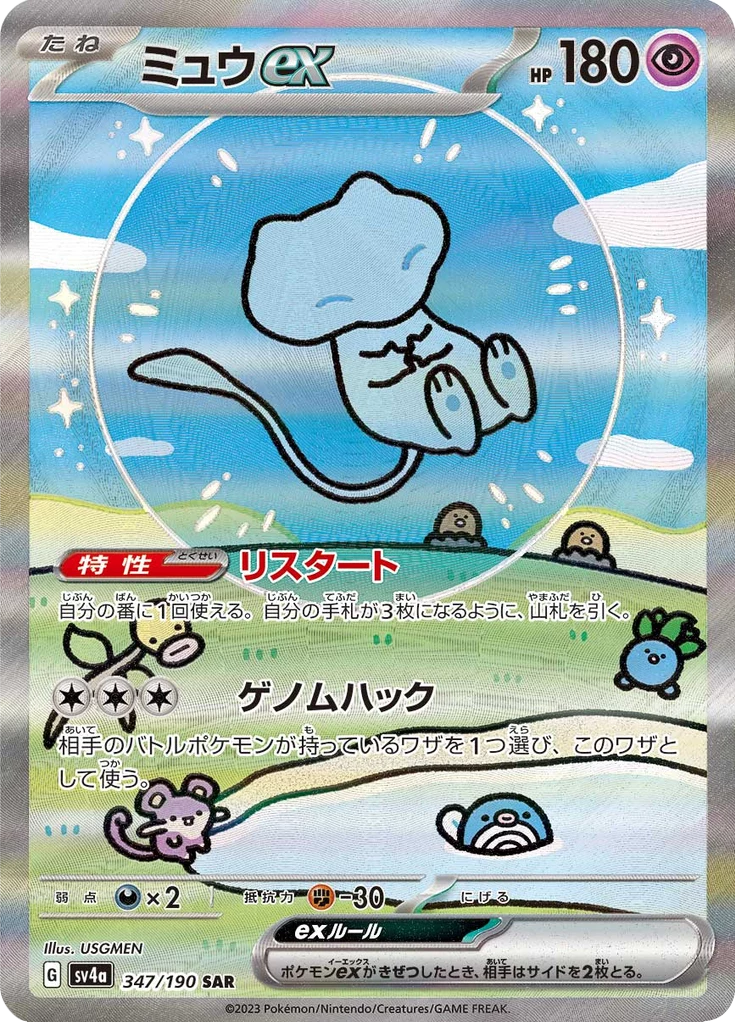
9. Mew ex, 232/091 — Special Illustration Rare
Japanese equivalent: Mew ex, SV4a 347/190, SAR, illustrated by USGMEN. The SAR-tier Mew ex, distinct from the SSR at #6.
Mew ex · SV4a 347/190 · SAR · Shiny Treasure ex (SV4a)
Not currently listed as a graded single — source via Quick Order.
10. Gardevoir ex, 233/091 — Special Illustration Rare
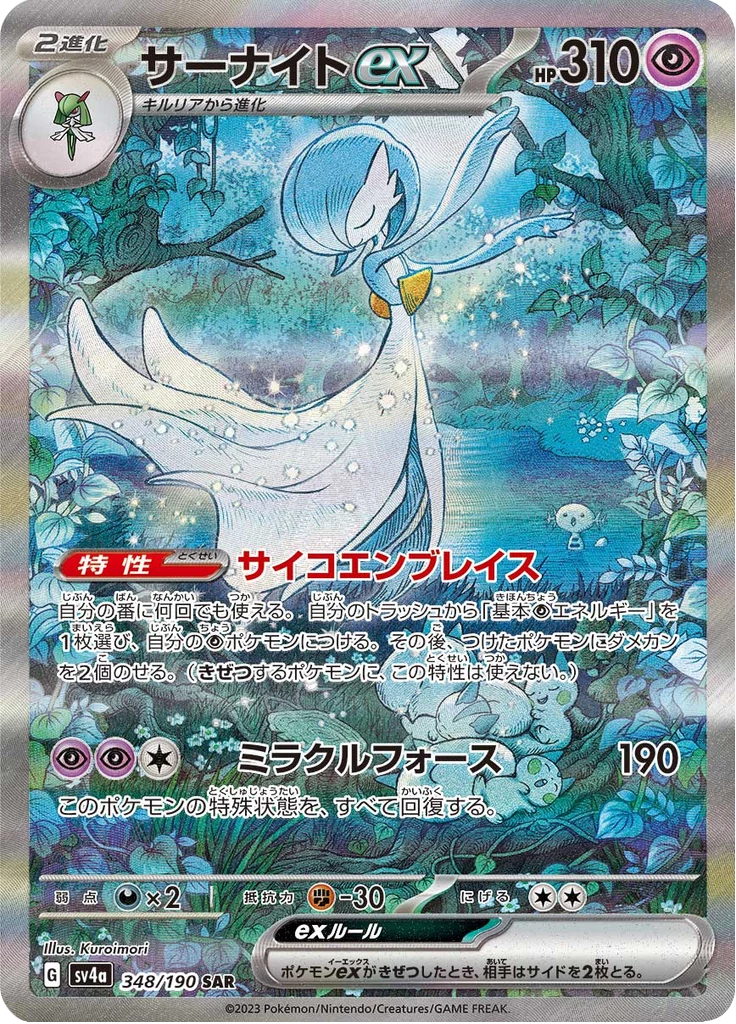
Japanese equivalent: Gardevoir ex, SV4a 348/190, SAR, illustrated by Kuroimori. The SAR-tier Gardevoir ex, distinct from the SSR at #7.
Gardevoir ex · SV4a 348/190 · SAR · Shiny Treasure ex (SV4a)
Not currently listed as a graded single — source via Quick Order.
Japanese vs English: What Changes
The chase-card artwork mostly carries over, but the two sets don’t line up card-for-card. Numbering is the first thing that changes: English Paldean Fates runs as a single sequence through 245/091 (91 base-set numbers plus 154 secret-rare cards), while every Japanese SV4a card keeps its own set code and number — Penny is SV4a 354/190, not “245/091”. Release timing is the second: SV4a Shiny Treasure ex came out in Japan on 1 December 2023, close to two months ahead of Paldean Fates on 26 January 2024.
Japanese — SV4a Shiny Treasure ex
English — Paldean Fates (PAF)
Release date
1 Dec 2023
26 Jan 2024
Total cards
360 (190 numbered + secrets to 360)
245 (91 base + 154 secret rares)
Shiny Ultra Rare (SSR) count
18
12
Special Art / Illustration Rares
8 (SAR)
8 (Special Illustration Rare)
The SSR gap is the most interesting difference on this list. The Japanese set prints 18 Shiny Ultra Rares (SV4a 320–337), but the English Paldean Fates checklist only carries 12 Shiny Ultra Rares (PAF 212–223). Six Japanese SSR cards have no English Shiny Ultra Rare counterpart at all: Meowscarada ex (SV4a 321), Skeledirge ex (324), Quaquaval ex (325), Great Tusk ex (330), Charizard ex (331, covered at #5 above) and Iron Treads ex (333). If you specifically want the shiny full-art treatment on one of those six, the Japanese SV4a printing is the only version that exists.
Graded PSA 10 singles — we currently list two of the ten: Penny SAR (¥15,070) and Charmander S (¥10,912).
Everything else — the remaining eight chase cards on this list, plus raw copies of any of the above, run through our Quick Order page so we can build a mixed order around exactly what you’re chasing.
What is Pokémon TCG: Scarlet & Violet—Paldean Fates?
Paldean Fates (PAF) is the English-language Pokémon TCG special set released 26 January 2024 with 245 cards, built around Shiny Pokémon.
Which Japanese set was Paldean Fates printed from?
SV4a Shiny Treasure ex, a High Class Pack that released in Japan on 1 December 2023 with 360 cards — at the time the largest Japanese Pokémon TCG set ever printed. Paldean Fates also adds a small number of cards cut from Paradox Rift and Japanese promos.
How many cards are in each version, and why do the Shiny Ultra Rare counts differ?
The Japanese SV4a set has 360 cards; the English Paldean Fates set has 245 (91 base plus 154 secret rares). SV4a prints 18 Shiny Ultra Rares, but Paldean Fates only carries 12 — six Japanese SSR cards, including Charizard ex (SV4a 331), have no English Shiny Ultra Rare counterpart.
What is the top chase card on this list, and what does the Japanese copy cost graded?
By our own listing prices, Penny SAR (SV4a 354/190) ranks first at ¥15,070 graded PSA 10, followed by Charmander S (SV4a 210/190) at ¥10,912.
Do the English and Japanese versions of these chase cards use the same artwork?
For most of the cards on this list, yes — the same illustrator is credited on both the Japanese and English Limitless card pages. The exception is Charizard ex’s Shiny Ultra Rare slot, which exists only in Japanese SV4a (331/190) with no English Shiny Ultra Rare equivalent at all.
Where can I buy the Japanese Shiny Treasure ex cards from Tokyo?
Sealed boxes and select PSA 10 singles are listed directly on our site; anything not currently listed can be sourced through our Quick Order page, which we use to build mixed orders shipped from Tokyo.
Paradox Rift Chase Cards: Top 10 & the Japanese SV4K / SV4M / SV3a Versions
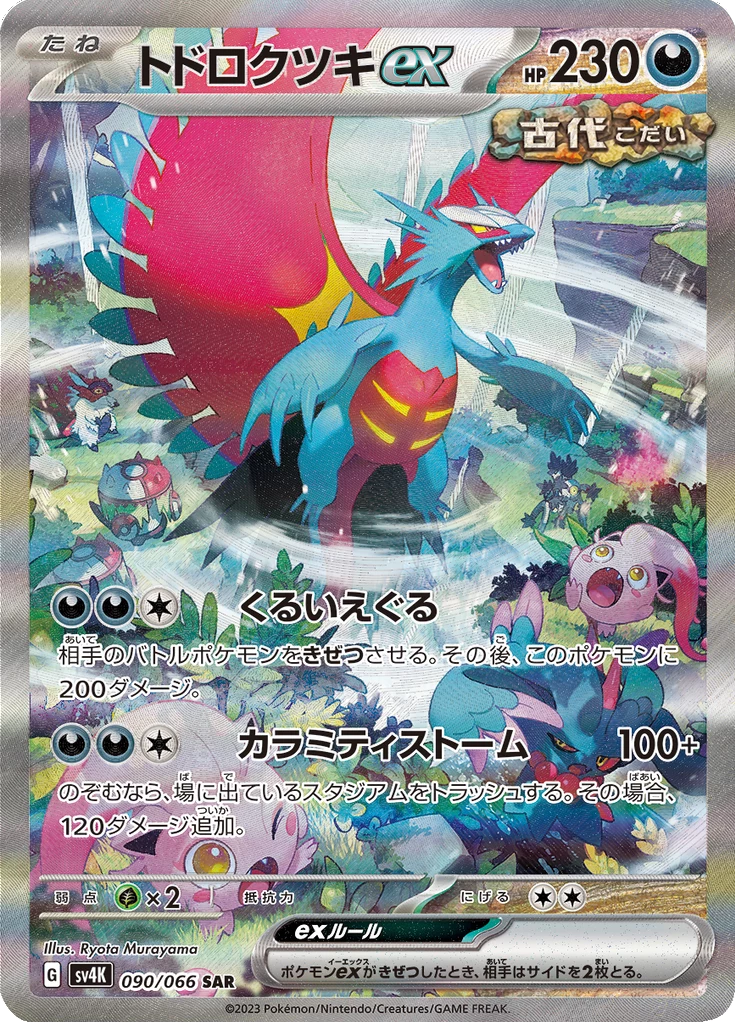
Paradox Rift is one English set built from three Japanese ones. The card pool comes from Japan’s Raging Surf (SV3a) Enhanced Expansion Pack plus the twin sets Ancient Roar (SV4K) and Future Flash (SV4M), stitched together into a single 266-card English checklist — composition as reported by PokeBeach and Pokellector.
Raging Surf released in Japan on 22 September 2023. Ancient Roar and Future Flash followed on 27 October 2023. Paradox Rift released in English on 3 November 2023. Our Paradox Rift Japanese card list covers the full three-set mapping if you want every card, not just the chase pulls.
This guide ranks the ten Paradox Rift cards worth knowing, names the exact Japanese SV3a, SV4K or SV4M print each one comes from, and tells you plainly which ones currently have a live PSA 10 listing on our site, which we can source, and where the numbering actually diverges between the two languages.
Key Takeaway
Paradox Rift’s chase cards trace back to three Japanese sets released between September and October 2023. Our top pick is Mela Special Art Rare PSA 10 [SV4K 092/066] at ¥17,904, and the same set’s sealed SV4K Ancient Roar booster box is currently listed at ¥10,192–¥12,500.
PAR
English Set: Paradox Rift
3 Sets
SV3a, SV4K & SV4M, Sept–Oct 2023
10
Chase Cards Covered
¥10,088
Lowest JP Box, Currently Listed
How We Ranked These
We rank this list in two passes, in a fixed order. First, our own PSA 10 listings: any card we currently list a PSA 10 for goes to the top, sorted by price. Second, everything else is ordered by Japanese print rarity tier — UR first, then SAR, then SR — which mirrors how Limitless TCG tiers the SV3a, SV4K and SV4M sets.
We do not quote third-party market prices for these cards — not TCGplayer, not eBay, not PriceCharting. Where we don’t currently list a graded or raw copy, we say so directly rather than attach a number we can’t stand behind, and point you to Quick Order instead.
The Top 10 Chase Cards
Every card below is matched to its exact Japanese SV3a, SV4K or SV4M print. Where the illustrator credited on the Japanese card page matches the illustrator credited on the English card page, we call it the same illustration; Japanese cards keep their own set code and number rather than the English 182-card run.
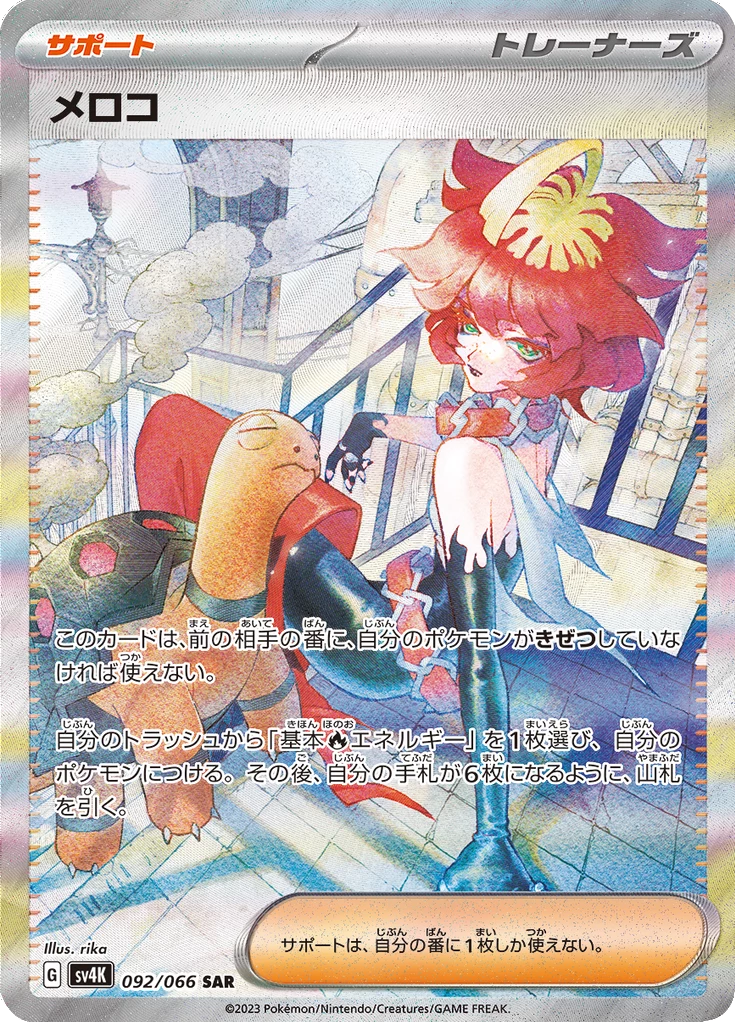
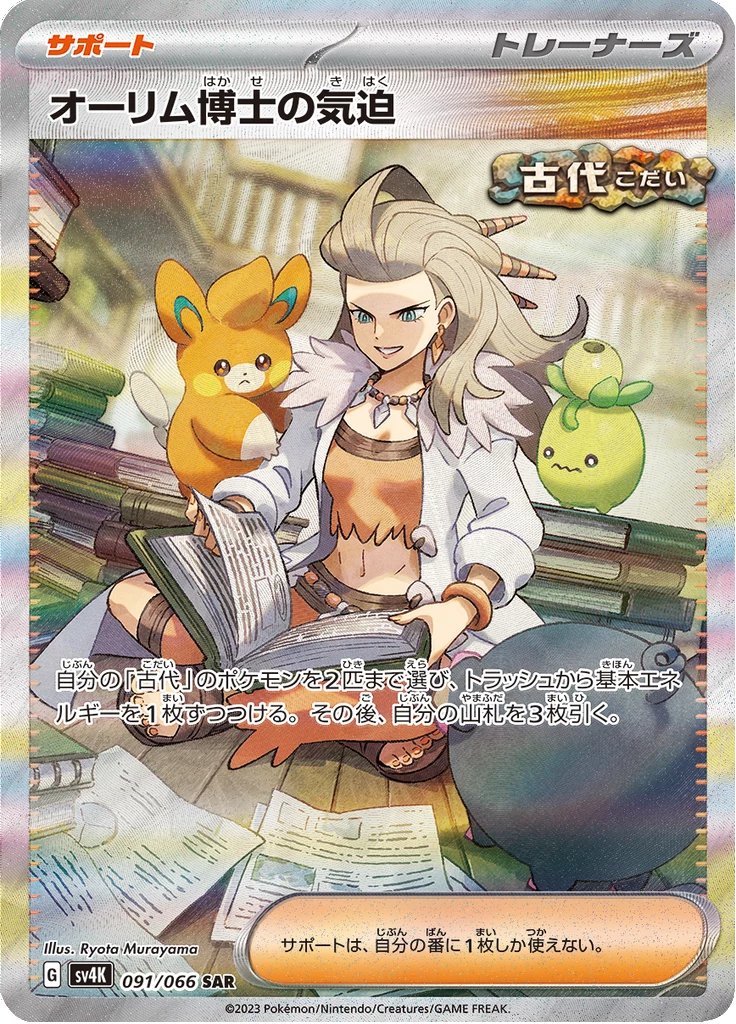
1. Mela (PAR 254/182, Special Illustration Rare)
Japanese equivalent: SV4K 092/066, Special Art Rare (SAR), illustrated by rika — same illustrator as the English card.
Mela, SV4K 092/066, Special Art Rare — Ancient Roar
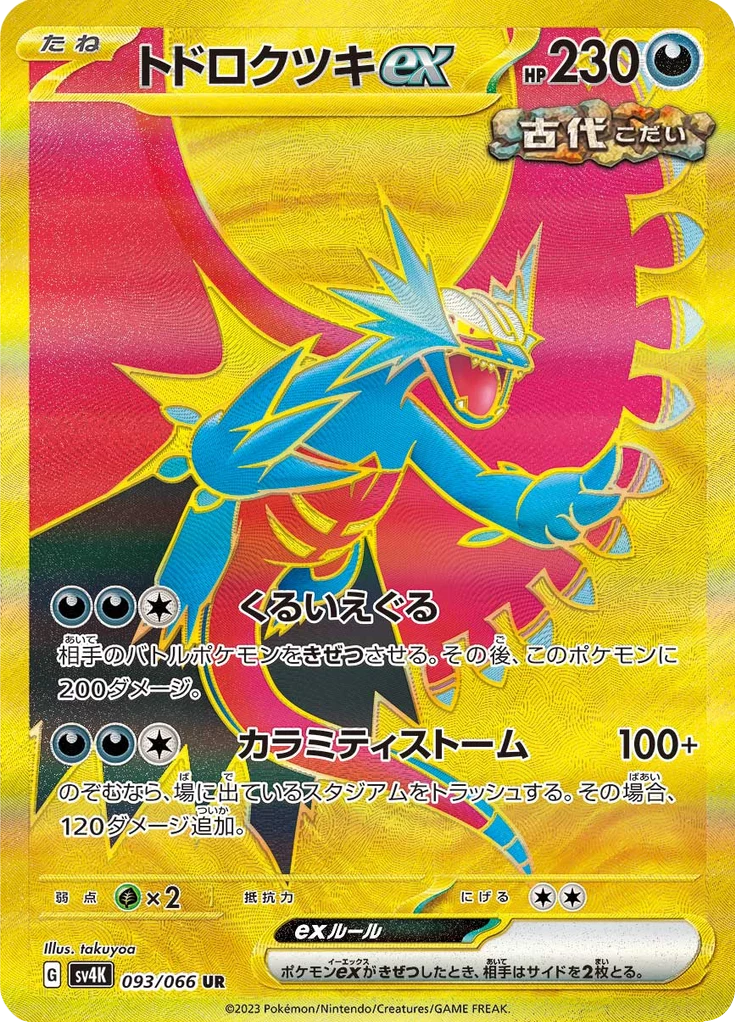
4. Roaring Moon ex (PAR 262/182, gold Secret Rare)
Japanese equivalent: SV4K 093/066, printed Ultra Rare (UR), illustrated by takuyoa — same illustrator as the English card. Ancient Roar’s Ultra Rare tier runs SV4K 093–094.
Roaring Moon ex, SV4K 093/066, Ultra Rare — Ancient Roar
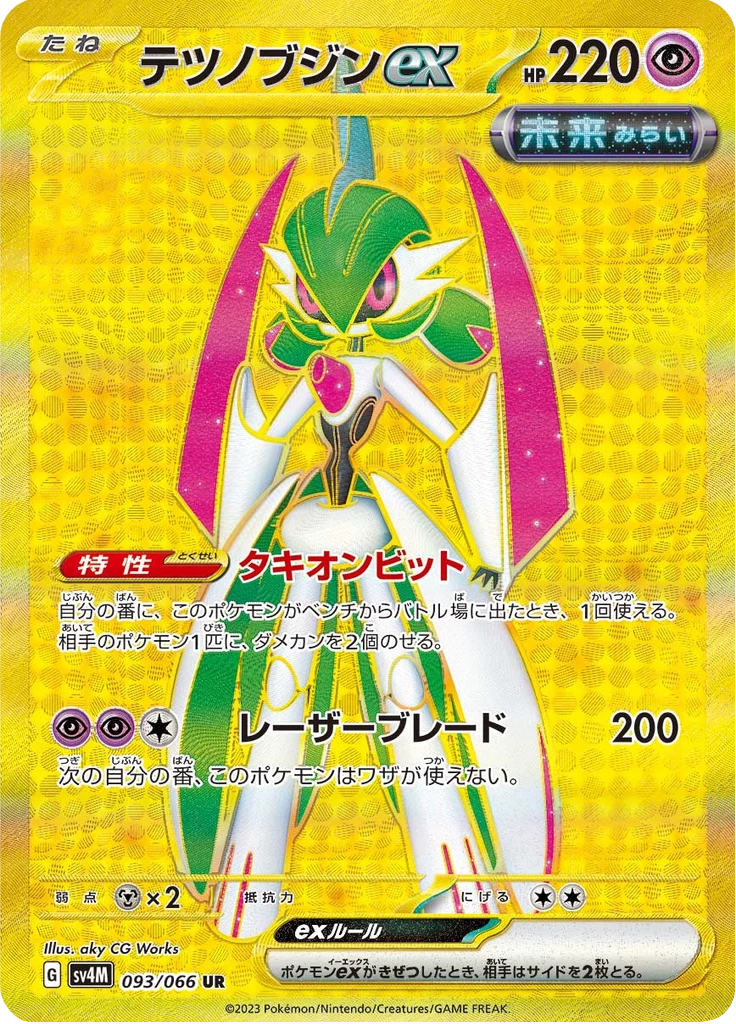
5. Iron Valiant ex (PAR 261/182, gold Secret Rare)
Japanese equivalent: SV4M 093/066, printed Ultra Rare (UR), illustrated by aky CG Works — same illustrator as the English card. Future Flash’s Ultra Rare tier runs SV4M 093–094.
Iron Valiant ex, SV4M 093/066, Ultra Rare — Future Flash
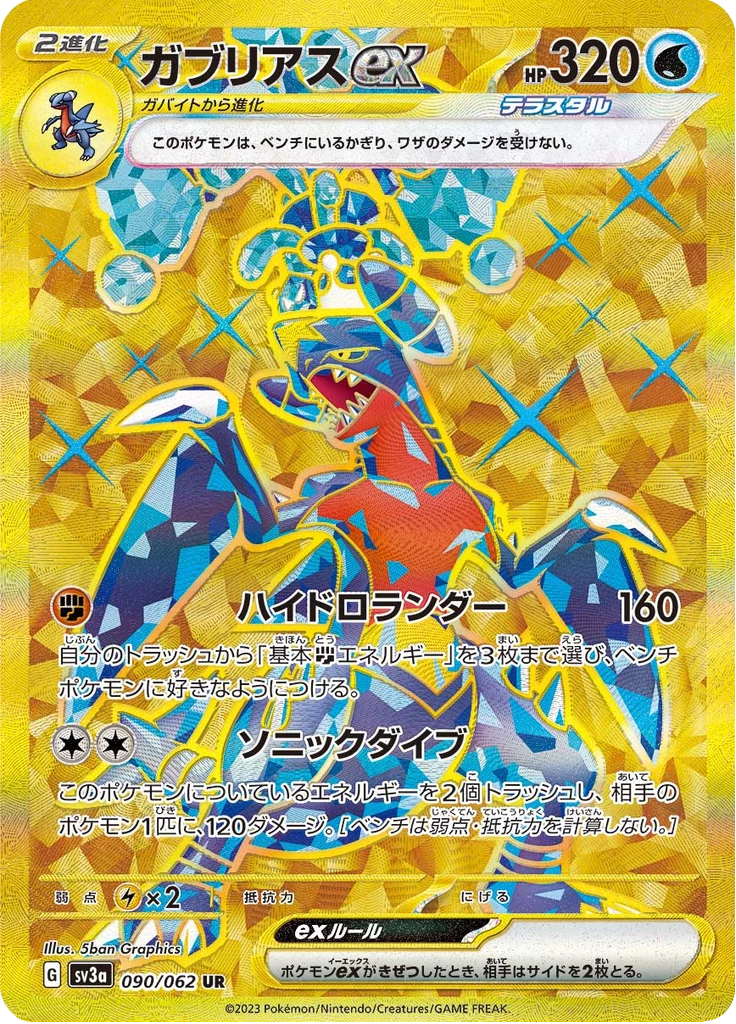
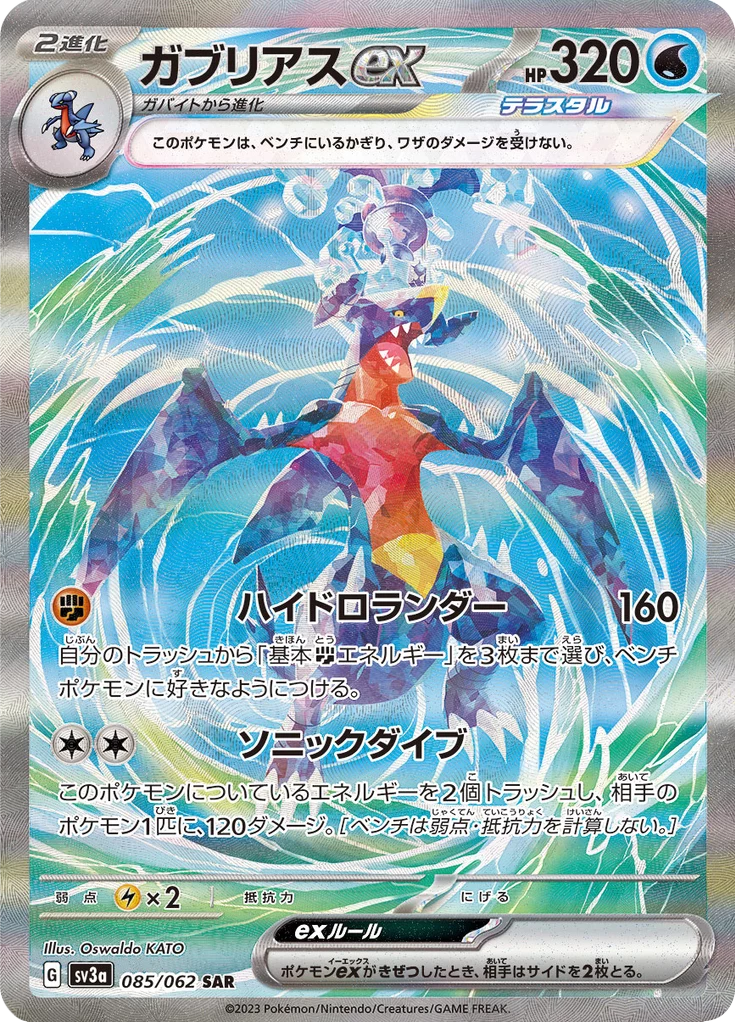
Japanese equivalent: SV3a 090/062, printed Ultra Rare (UR), illustrated by 5ban Graphics — same illustrator as the English card. Raging Surf’s Ultra Rare tier runs SV3a 090–092.
Paradox Rift folds three Japanese sets into one English checklist, so the mapping is less direct than a straight reprint. Our Paradox Rift Japanese card list has the full three-set breakdown if you want to map every number, not just the chase cards.
What
English (Paradox Rift / PAR)
Japanese (SV3a / SV4K / SV4M)
Release date
3 November 2023
SV3a: 22 September 2023 · SV4K & SV4M: 27 October 2023
Total cards
266 (182 base + 84 secret)
SV3a: 92 (62 + secrets to 092) · SV4K: 94 (66 + secrets to 094) · SV4M: 94 (66 + secrets to 094)
Numbering
One run, xxx/182
Each set keeps its own code + number, e.g. SV4K 093/066
Top-tier gold cards
“Secret Rare” (gold), 260–266
Printed Ultra Rare (UR) — top numbered slot of each set (SV3a 090–092, SV4K 093–094, SV4M 093–094)
Full-art secret tier
245–259, commonly called Special Illustration Rare
Printed Special Art Rare (SAR)
Numbering is the practical gap most buyers hit first: a Japanese SV4K 093/066 and its English PAR 262/182 counterpart are the same illustration by the same artist, but neither number tells you the other set’s number — you have to cross-reference. For the full 94-card SV4K checklist see our Ancient Roar (SV4K) card list, and for the full 94-card SV4M checklist see our Future Flash (SV4M) card list.
We ship Japanese sealed product and singles worldwide out of Tokyo with tracked delivery. For the chase cards on this page, there are three practical routes:
Graded singles. We currently list three PSA 10s from this list: Mela at ¥17,904, Shauntal at ¥15,180, and Iron Valiant ex at ¥9,350. For any other card on this list, raw or graded, go through Quick Order and we’ll source it.
What is the Japanese version of Paradox Rift called?
There isn’t one single Japanese set — Paradox Rift combines three: Raging Surf (SV3a), Ancient Roar (SV4K) and Future Flash (SV4M). Raging Surf released 22 September 2023; Ancient Roar and Future Flash released together on 27 October 2023; Paradox Rift released in English on 3 November 2023.
How many cards are in Paradox Rift compared to the Japanese sets?
Paradox Rift has 266 cards in English: 182 base cards plus 84 secret rares. Across the three Japanese sets: Raging Surf has 92 entries (62 base + secrets to 092), and Ancient Roar and Future Flash each have 94 entries (66 base + secrets to 094).
What’s the rarest card in Paradox Rift?
Paradox Rift’s gold Secret Rare tier runs from 260/182 to 266/182 — seven cards in total. Three of them are the Pokémon ex cards covered in this list: Roaring Moon ex (262/182), Iron Valiant ex (261/182) and Garchomp ex (260/182), each mapping to a printed Ultra Rare (UR) in their Japanese set: SV4K 093/066, SV4M 093/066 and SV3a 090/062 respectively.
Are the Paradox Rift chase cards the same artwork as the Japanese versions?
Yes for every card in this list — we confirmed matching illustrator credits between the Japanese and English card pages for all ten cards covered above.
Can I buy the Japanese SV3a, SV4K or SV4M boxes from this store?
Yes. SV4K Ancient Roar is currently listed at ¥10,192–¥12,500, SV4M Future Flash at ¥10,088–¥11,760, and SV3A Raging Surf at ¥12,480–¥14,896, all shipped from Tokyo with tracked delivery.
Do you sell PSA 10 graded Paradox Rift cards?
Currently we list three: Mela at ¥17,904, Shauntal at ¥15,180, and Iron Valiant ex at ¥9,350. For any other card in this list, use Quick Order and we’ll source it for you.
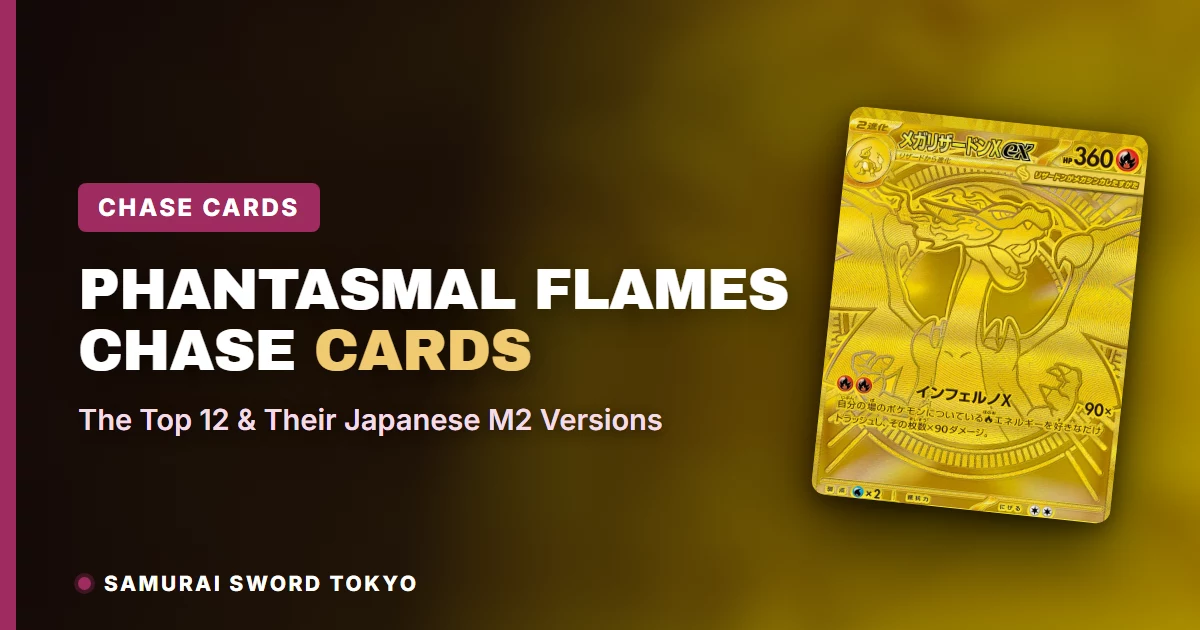
Phantasmal Flames Chase Cards: The Top 12 & Their Japanese M2 Versions
Pokémon TCG: Mega Evolution—Phantasmal Flames (PFL) is the English-language set built primarily on Japan’s M2 Inferno X expansion. Inferno X reached Japanese shelves on 26 September 2025 with 116 cards; Phantasmal Flames followed in English on 14 November 2025 with 130. Bulbapedia’s own set description notes that Phantasmal Flames “includes cards released in the Japanese Inferno X expansion, as well as the MEGA Starter Set Mega Gengar ex and the MEGA Starter Set Mega Diancie ex” — so some of the English cards trace back to separate Japanese starter-set products, not Inferno X itself.
This guide ranks the twelve chase cards collectors are actually asking us about, pairs each English card with its Japanese M2 counterpart (identified by set code and number, not the English collector number), and links straight to our own live PSA 10 listings where one exists. For the complete set mapping, see our Phantasmal Flames Japanese card list; for every one of the 116 Inferno X cards, see the full M2 Inferno X card list.
Key Takeaways
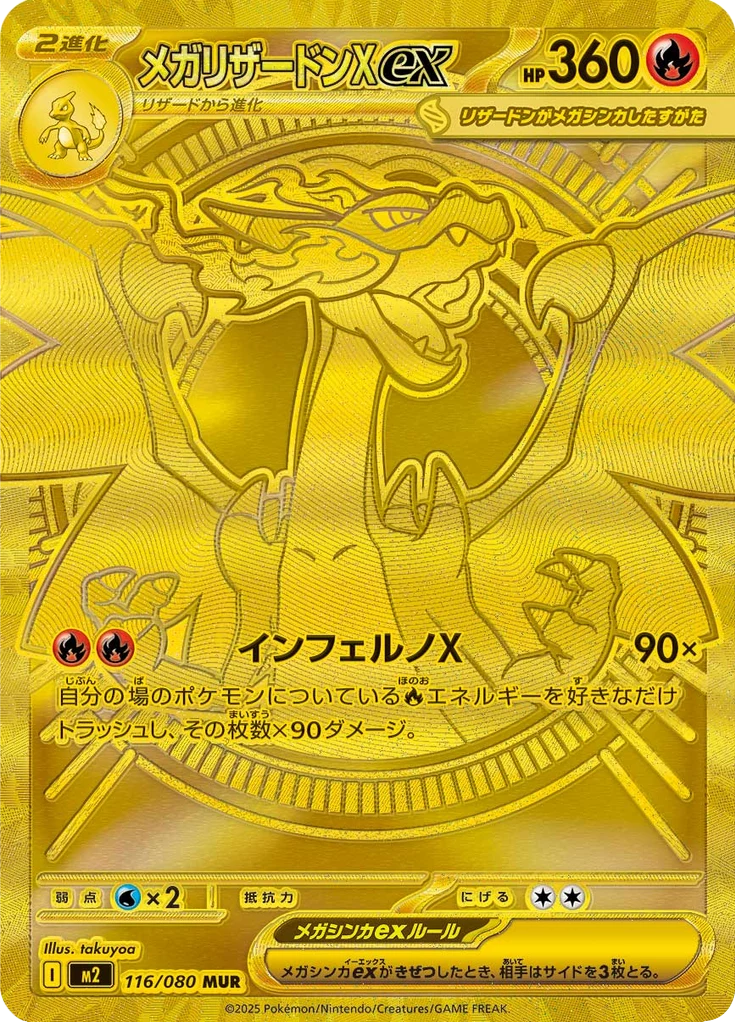
The gold Mega Charizard X ex MUR (M2 116/080) tops this list — its English equivalent (PFL 130/094) is Bulbapedia’s Mega Hyper Rare. Our PSA 10 copy of the Japanese MUR is currently listed at ¥493,460. If you’d rather chase the whole print run yourself, the M2 Inferno X Japanese Booster Box is currently listed at ¥20,370 (Sealed).
PFL
English Set Code
M2 · 26 Sep 25
JP Set & Release
12
Chase Cards Covered
¥20,370
JP Box, Sealed
How We Ranked These
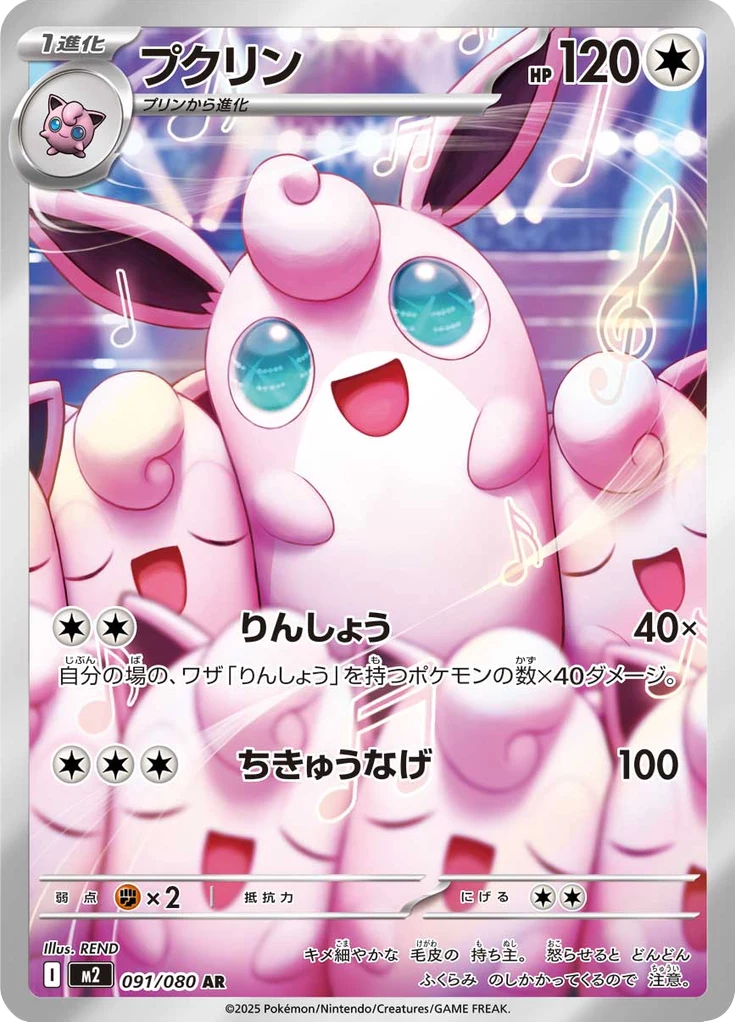
We built this list two ways. First, we checked our own PSA 10 population against this set — cards with a live PSA 10 listing on our site rank first, ordered by listed price. That puts the MUR, the Dawn Special Art Rare and the Wigglytuff Art Rare in positions one through three. Every other card is ranked by Japanese rarity tier, highest to lowest: MUR, then Special Art Rare (SAR), then Secret Rare (SR), then Art Rare (AR).
We don’t quote third-party market prices anywhere in this article. Where a card has a live PSA 10 listing, the price shown is that listing. Where it doesn’t, sourcing runs through Quick Order rather than a guessed number.
The Top 12 Phantasmal Flames Chase Cards
Each entry below pairs the English Phantasmal Flames card with the Japanese M2 Inferno X printing it comes from.
1. Mega Charizard X ex (PFL 130/094) — Mega Hyper Rare
The English Mega Charizard X ex is Phantasmal Flames’ gold-etched final card, a Mega Hyper Rare. Its Japanese counterpart is メガリザードンXex, M2 116/080, MUR, illustrated by takuyoa — the same artwork as the English release.
Mega Charizard X ex — M2 116/080, MUR, Inferno X
This Japanese MUR has a live PSA 10 listing at ¥493,460.
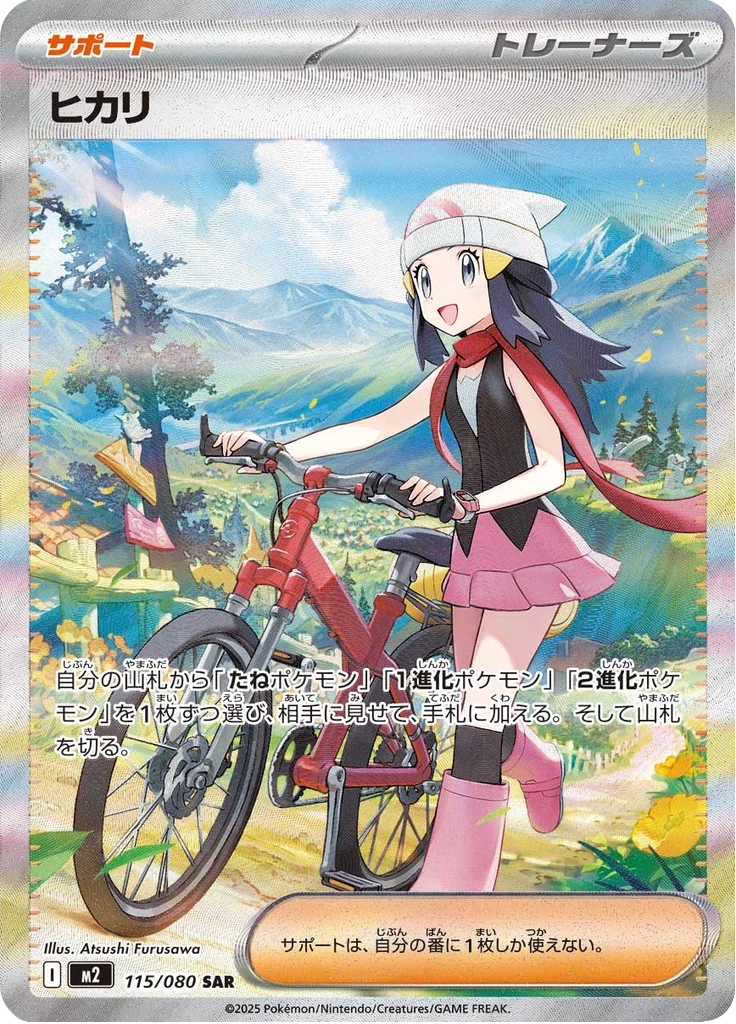
2. Dawn (PFL 129/094) — Special Illustration Rare
Dawn’s Special Illustration Rare in the English set matches ヒカリ, M2 115/080, Special Art Rare, illustrated by Atsushi Furusawa — same artwork. Dawn also appears a second time in this set at a lower tier: a Secret Rare, M2 106/080 in Japanese (Dawn Ultra Rare 118/094 in English), but the SAR above is the one most collectors chase first.
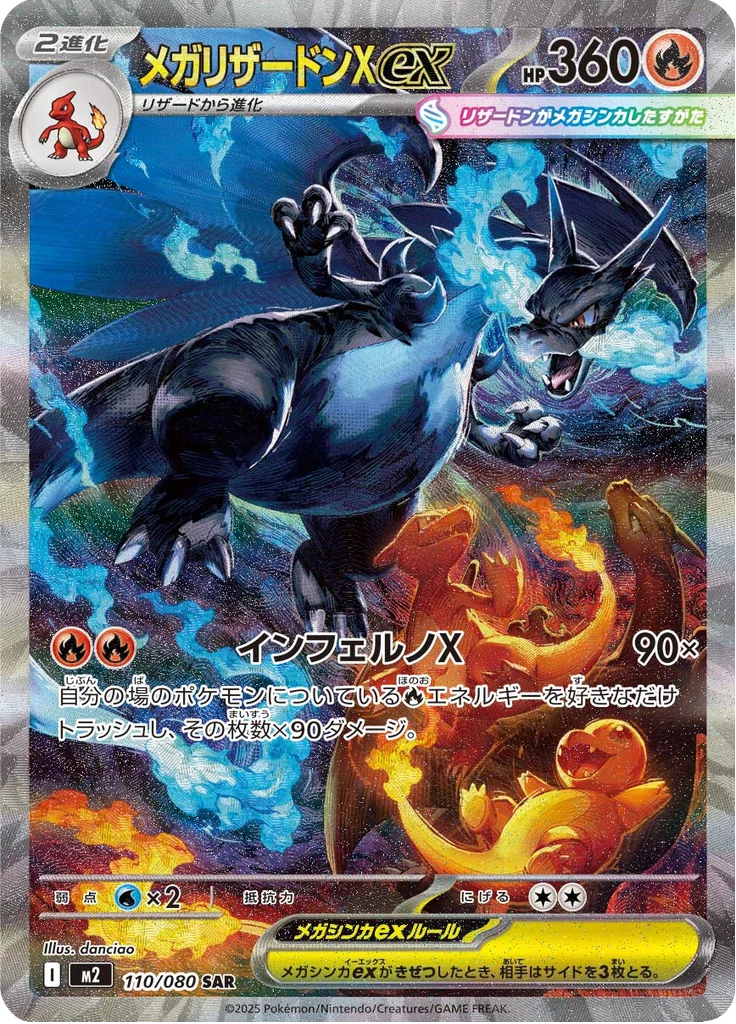
4. Mega Charizard X ex (PFL 125/094) — Special Illustration Rare
A second Mega Charizard X ex chase card sits lower in the set: the Special Illustration Rare matches メガリザードンXex, M2 110/080, Special Art Rare, illustrated by danciao — same artwork, different illustrator credit from the MUR above.
Mega Charizard X ex — M2 110/080, SAR, Inferno X
This printing isn’t currently in our PSA 10 lineup — sourcing runs via Quick Order.
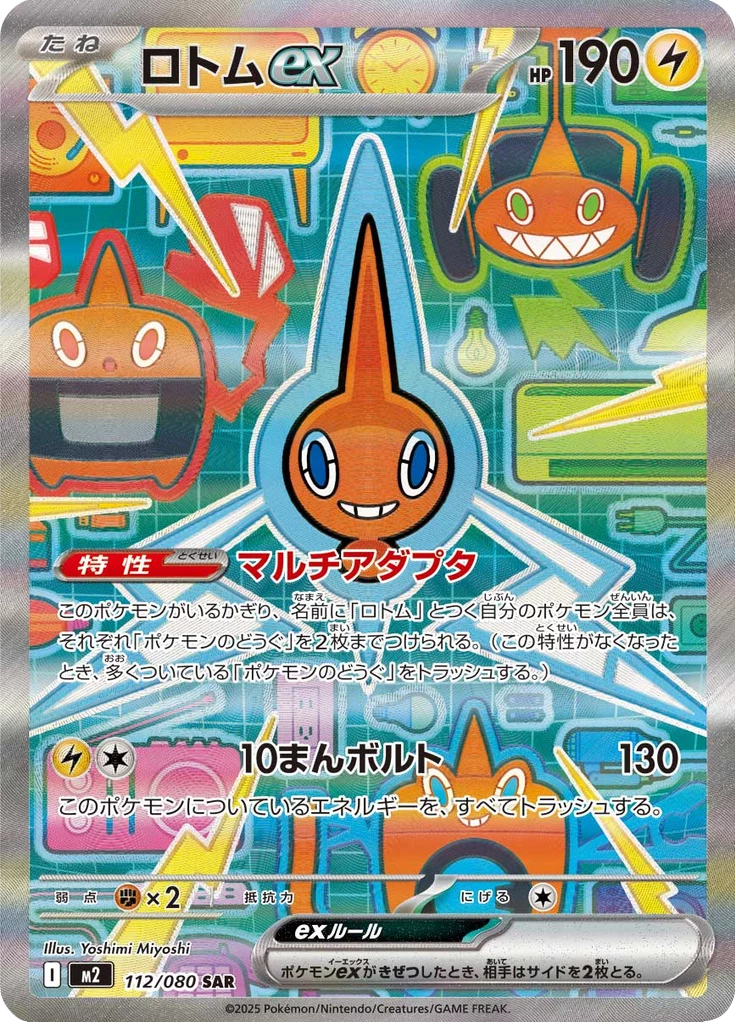
5. Rotom ex (PFL 126/094) — Special Illustration Rare
Matches ロトムex, M2 112/080, Special Art Rare, illustrated by Yoshimi Miyoshi — same artwork.
8. Oricorio ex — Japanese Special Art Rare (no English SAR match)
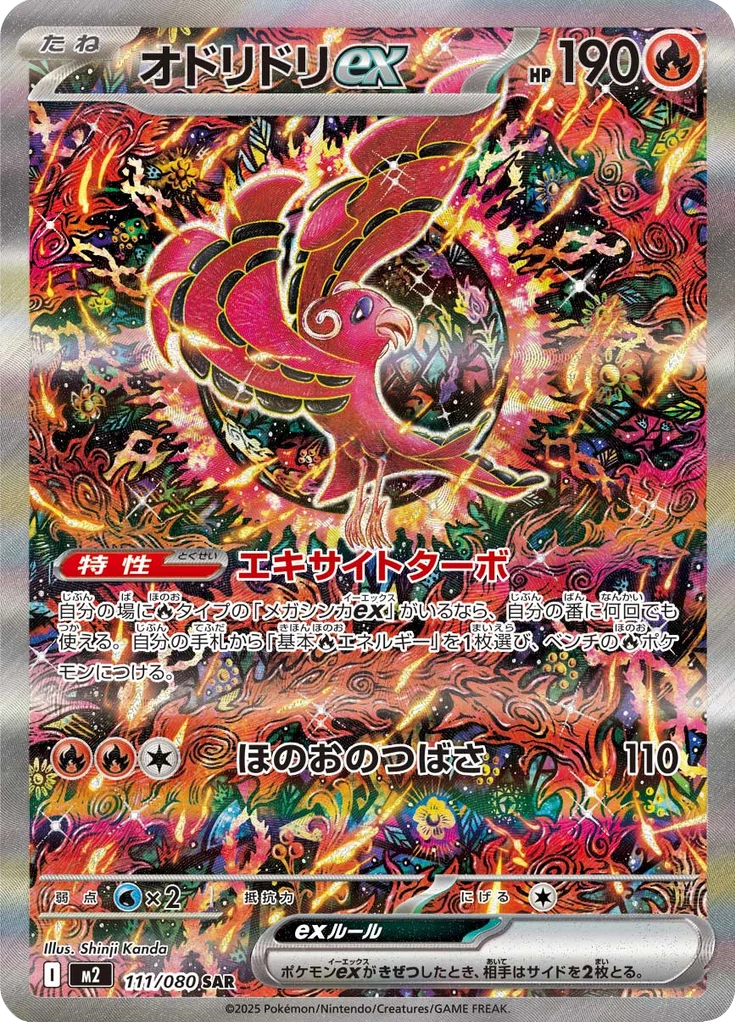
The Japanese オドリドリex, M2 111/080, is a Special Art Rare illustrated by Shinji Kanda. There is no matching Special Art Rare on the Phantasmal Flames checklist — the English Oricorio ex (PFL 110/094) is printed as an Ultra Rare with different full-art treatment. If it’s specifically the SAR illustration you want, the Japanese M2 printing is the one to look for.
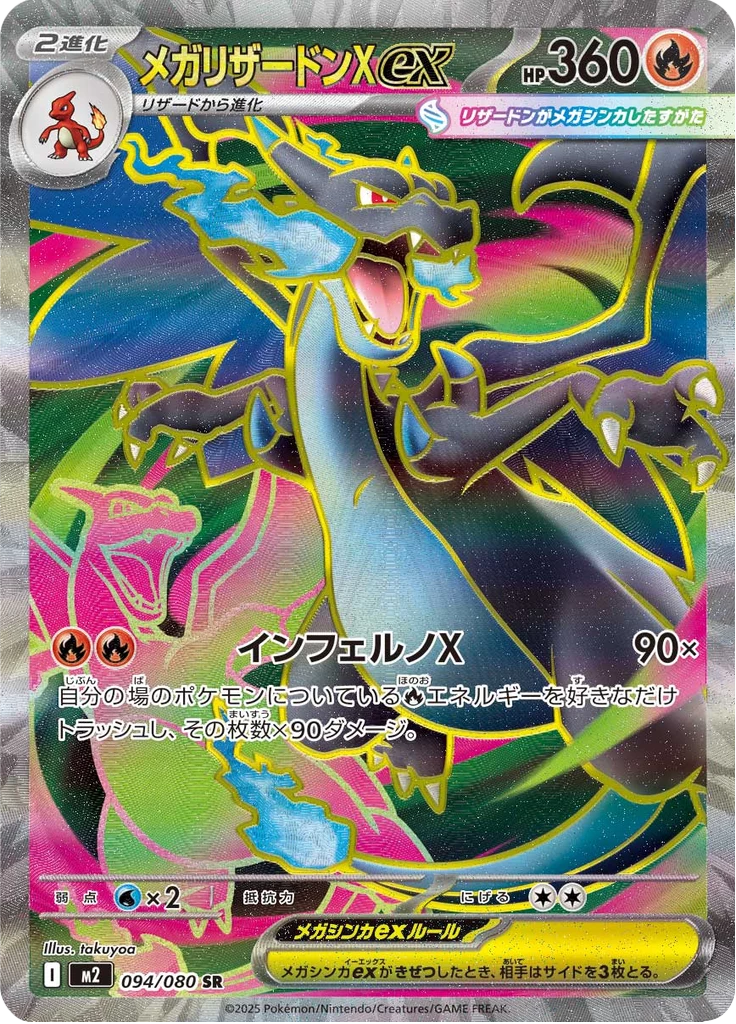
A third Mega Charizard X ex chase card, this one an Ultra Rare in English, matches メガリザードンXex, M2 094/080, Secret Rare, illustrated by takuyoa — same artwork as card #1. Mega Charizard X ex is the only character to appear across three separate rarity tiers in this set.
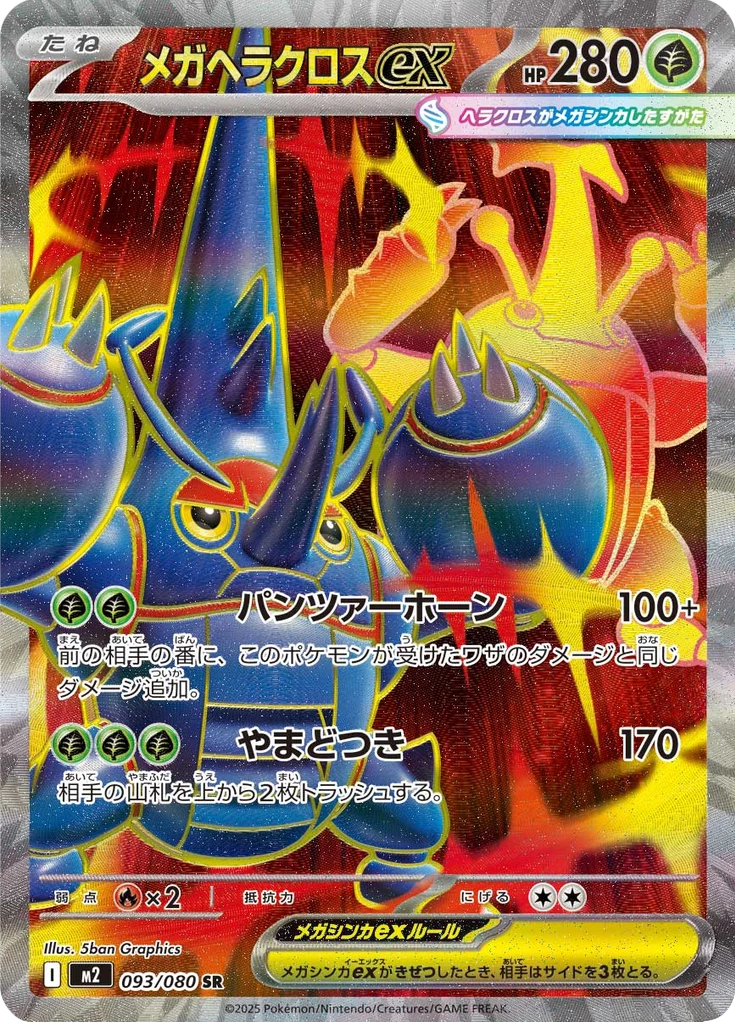
Matches メガヘラクロスex, M2 093/080, Secret Rare, illustrated by 5ban Graphics — same artwork. This card opens the Japanese Secret Rare run in M2, which runs from 093 through 109.
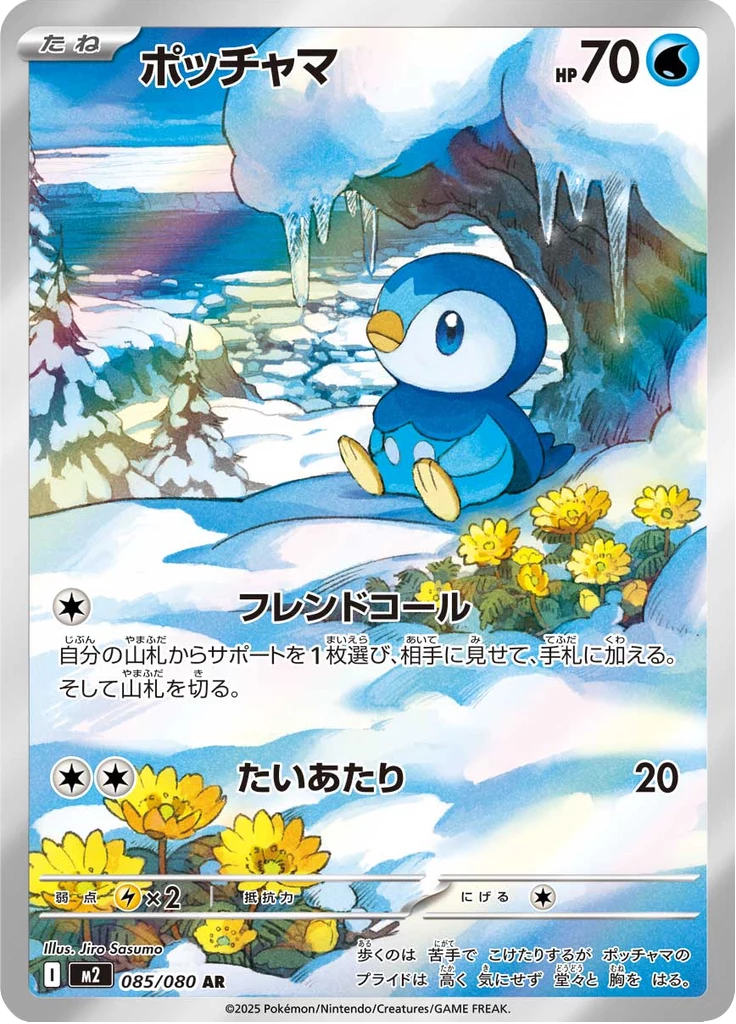
Matches ポッチャマ, M2 085/080, Art Rare, illustrated by Jiro Sasumo. We could not verify whether the English printing shares identical artwork with this Japanese card — the English thumbnail wasn’t available for comparison — so treat the pairing as the checklist match rather than a confirmed art comparison.
Three things change between the Japanese source material and the English release: identifiers, card counts and release timing.
Identifiers. Japanese Pokémon cards are catalogued by set code and number — M2 097/080, for instance — not by the English collector number printed on the corresponding PFL card. That’s why every Japanese card above is referenced as M2 <number>/080 rather than by its PFL number; the two numbering systems don’t line up card-for-card.
Card counts. Inferno X shipped 116 cards in Japan (080 base plus 36 secret-rarity cards). Phantasmal Flames ships 130 in English. The extra 14 cards aren’t hidden Inferno X pulls — per Bulbapedia, Phantasmal Flames “includes cards released in the Japanese Inferno X expansion, as well as the MEGA Starter Set Mega Gengar ex and the MEGA Starter Set Mega Diancie ex.” Those cards come from separate Japanese starter-deck products, not from M2 Inferno X itself.
Release timing. Inferno X released in Japan on 26 September 2025. Phantasmal Flames followed in English on 14 November 2025, roughly seven weeks later.
We ship Japanese sealed product and graded singles worldwide from Tokyo with tracked delivery. If you want the whole print run in one purchase rather than chasing individual cards, start with a sealed box — the SAR, SR and MUR chase cards above all come out of the same product.
For graded singles, the following cards from this list have live PSA 10 listings on our site: the Mega Charizard X ex MUR at ¥493,460, the Dawn SAR at ¥10,384, and the Wigglytuff AR at ¥5,148. For the rest of the cards on this list — the remaining SARs, SRs and ARs not currently in our PSA 10 lineup — send us the exact card through our Quick Order page and we’ll source it. It’s also the fastest way to build a mixed order across boxes and singles in one shipment.
Pokémon TCG: Mega Evolution—Phantasmal Flames (PFL) is the English-language set built on Japan’s M2 Inferno X expansion, plus two Mega Evolution ex cards from separate MEGA Starter Set products. It released on 14 November 2025 with 130 cards.
Which is the rarest card in Phantasmal Flames?
The Mega Hyper Rare Mega Charizard X ex (PFL 130/094) is the top card of the English set. Its Japanese counterpart is the MUR, M2 116/080, from Inferno X.
Why do the Japanese and English card counts differ (116 vs 130)?
Inferno X shipped 116 cards in Japan. Phantasmal Flames adds 14 more in English, including two Mega Evolution ex cards that come from separate Japanese MEGA Starter Set products rather than from Inferno X itself.
Is the Japanese Oricorio ex the same card as the English one?
Not at the same rarity. The Japanese Oricorio ex (M2 111/080) is a Special Art Rare. The English Phantasmal Flames checklist has no matching Special Art Rare — its Oricorio ex (PFL 110/094) is printed as an Ultra Rare with different full-art treatment.
Where can I buy these Japanese Inferno X cards from outside Japan?
We ship Japanese sealed product and PSA 10 graded singles from Tokyo with tracked delivery. Sealed booster boxes and our currently listed PSA 10 copies are linked above, and Quick Order covers anything not currently in our PSA 10 lineup.
Astral Radiance Chase Cards: Top 12 & the Japanese S10D / S10P / S9a Versions
Sword & Shield—Astral Radiance never existed as a single Japanese set. English ASR is a merger of three separate Japanese releases, and every chase card in the English set traces back to one of them.
Astral Radiance (ASR) launched in English on May 27, 2022 with 246 cards — 189 in the base run, 27 secret rares, and a 30-card Trainer Gallery subset. In Japan, that same artwork rolled out earlier and in pieces: S9a Battle Region (25 Feb 2022, 93 cards), S10D Time Gazer (8 Apr 2022, 88 cards) and S10P Space Juggler (8 Apr 2022, 88 cards). We’ve already mapped the full set-to-set relationship in our Astral Radiance Japanese card list; this article ranks the twelve chase cards worth knowing by name and shows exactly which Japanese card, number and rarity each one corresponds to.
Prices below are our own currently listed prices as of September 2, 2026, converted at ¥159/USD. We do not track or quote third-party market prices.
Astral Radiance in Japan: S9a, S10D, S10P
Bulbapedia and Limitless both describe Astral Radiance as a combination product: it folds together Japan’s Time Gazer (タイムゲイザー) and Space Juggler (スペースジャグラー), released the same day in Japan on April 8, 2022, plus the earlier Battle Region enhanced expansion from February 25, 2022, and adds the English-only Trainer Gallery subset and VSTAR Starter Set promos on top. English also introduces the “Radiant Pokemon” mechanic name for cards that exist under different Japanese naming.
Each Japanese set uses its own numbering with a 067 base count: S9a runs to 93 cards, S10D and S10P each run to 88. English ASR renumbers everything into one continuous run of 246, which is why an English collector chasing “ASR 177” needs to know it maps to S10D card 075 — not the same number at all.
How We Ranked These
We ranked this list two ways, in order. First, any card we currently list as a graded PSA 10, ordered from our highest listed price down. Six of the twelve chase cards below fall into that group. Second, the remaining cards are ordered by Japanese printed rarity tier — Character Super Rare (CSR), Ultra Rare (UR) gold, Holo Rare/Rainbow (HR), then Secret Rare (SR), including the alternate-art SR prints collectors often shorthand as “SA.”
We did not use TCGplayer, eBay, or PriceCharting data anywhere in this ranking. Every price you see below is a link to our own product listing, not a third-party market estimate.
The Top 12 Chase Cards
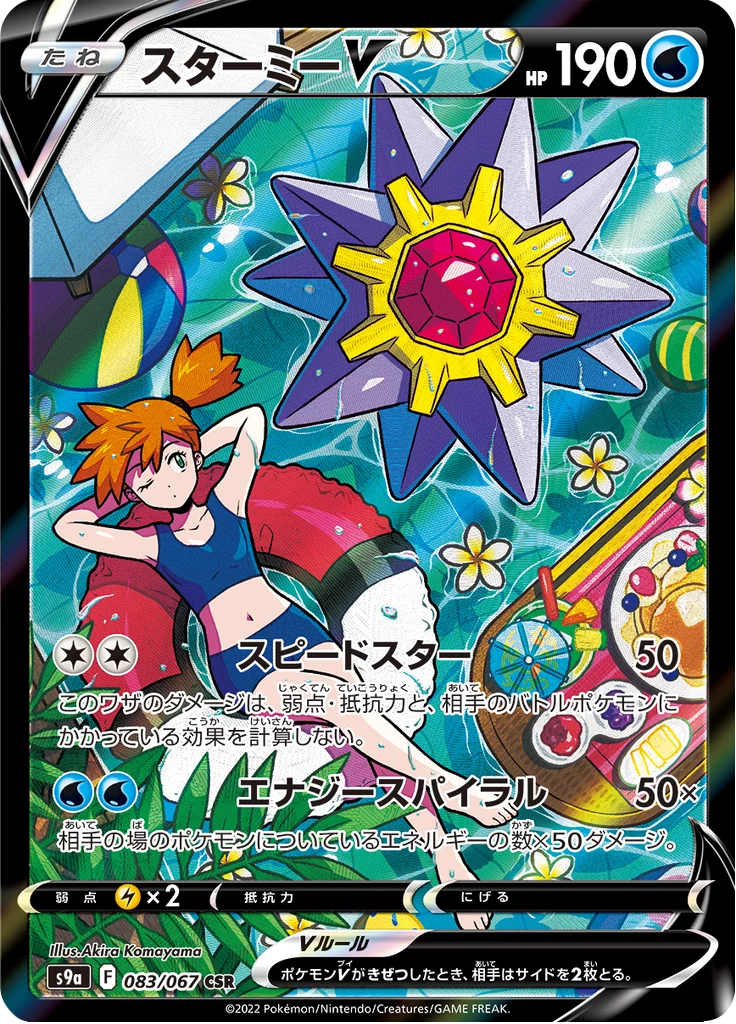
1. Starmie V — ASR TG13 (Character Super Rare)
Japanese equivalent: S9a 083/067, CSR — スターミーV, illustrated by Akira Komayama. This is the same illustration used for Trainer Gallery TG13 in English — same artist, same artwork.
Starmie V, S9a 083/067, CSR, Battle Region (Japanese)
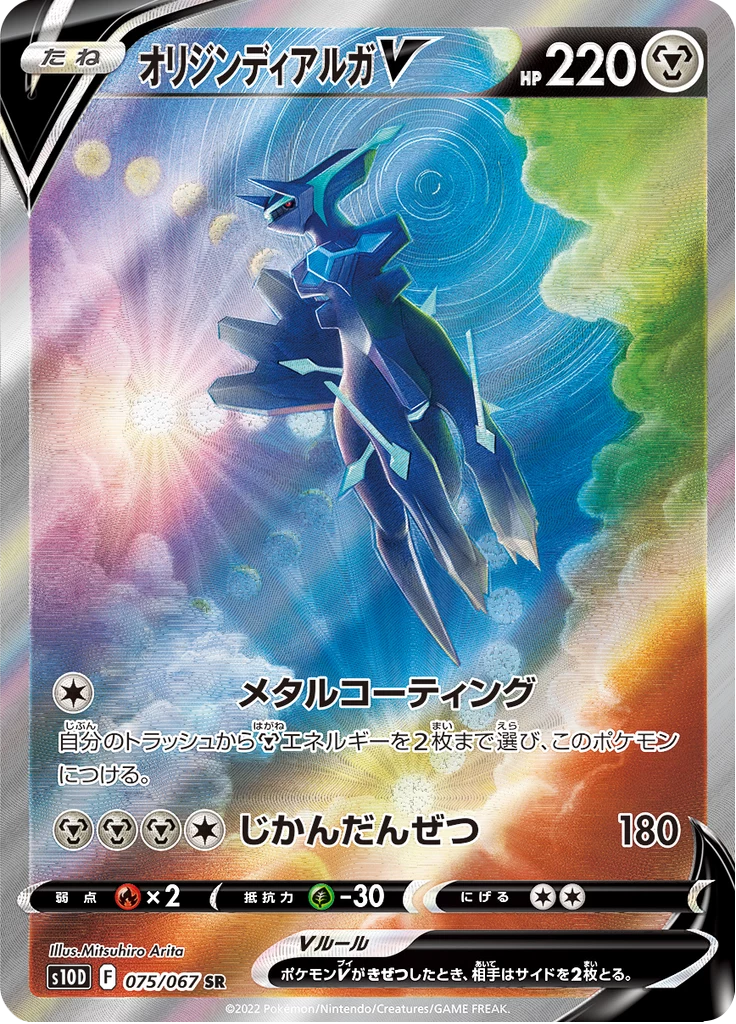
2. Origin Forme Dialga V (Alternate Art) — ASR 177
Japanese equivalent: S10D 075/067, an alternate-art SR (often written “SA”) — オリジンディアルガV, illustrated by Mitsuhiro Arita, matching the ASR 177 artwork exactly.
Origin Forme Dialga V, S10D 075/067, SR (alt art), Time Gazer (Japanese)
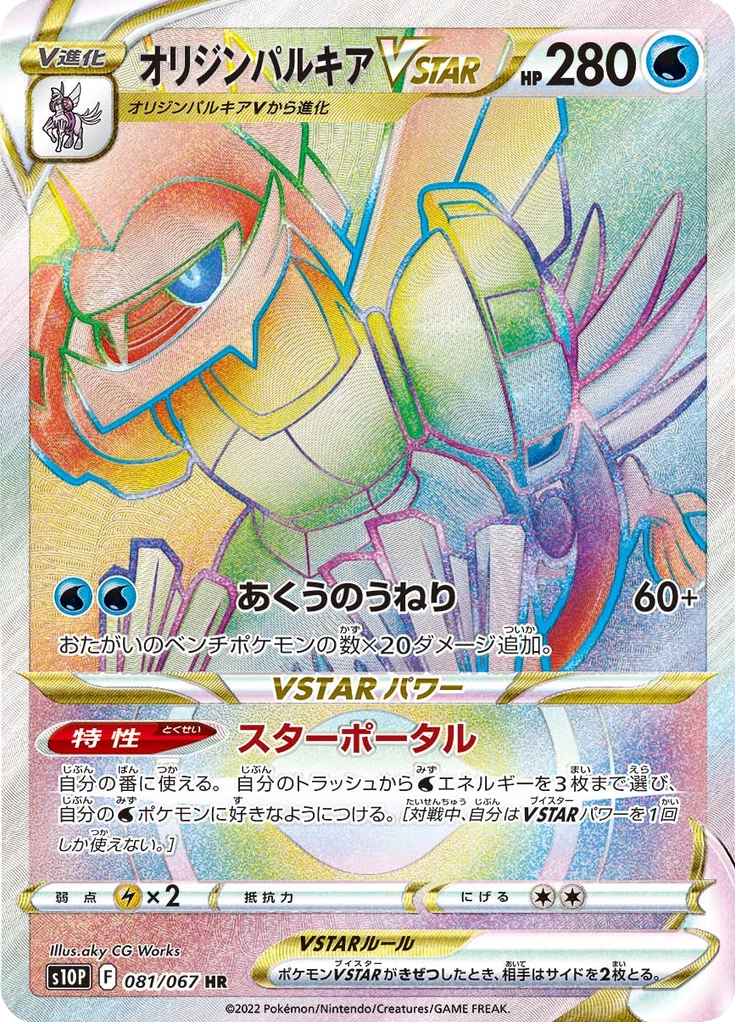
Japanese equivalent: S10P 081/067, HR — オリジンパルキアVSTAR, illustrated by aky CG Works, matching the ASR 192 rainbow rare art. The English “Rainbow Rare” label is an English descriptor only; the printed Japanese rarity is HR.
Origin Forme Palkia VSTAR, S10P 081/067, HR, Space Juggler (Japanese)
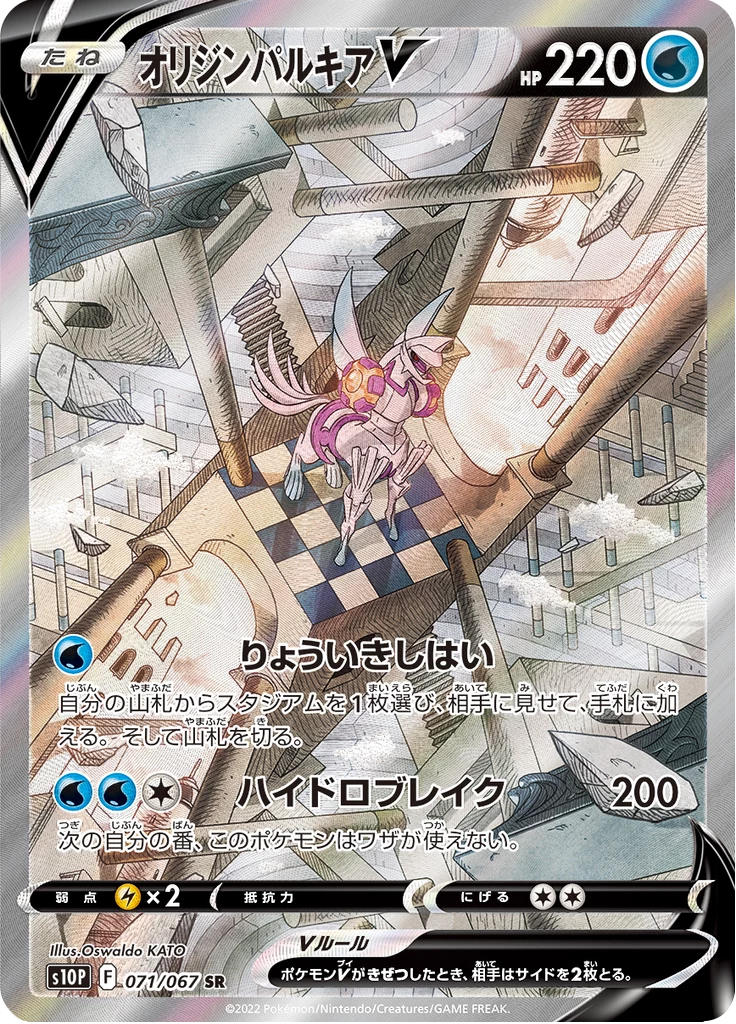
7. Origin Forme Palkia V (Alternate Art) — ASR 167
Japanese equivalent: S10P 071/067, an alternate-art SR — オリジンパルキアV, illustrated by Oswaldo KATO, matching ASR 167.
Origin Forme Palkia V, S10P 071/067, SR (alt art), Space Juggler (Japanese)
We don’t currently list a graded copy of this one — sourcing via Quick Order.
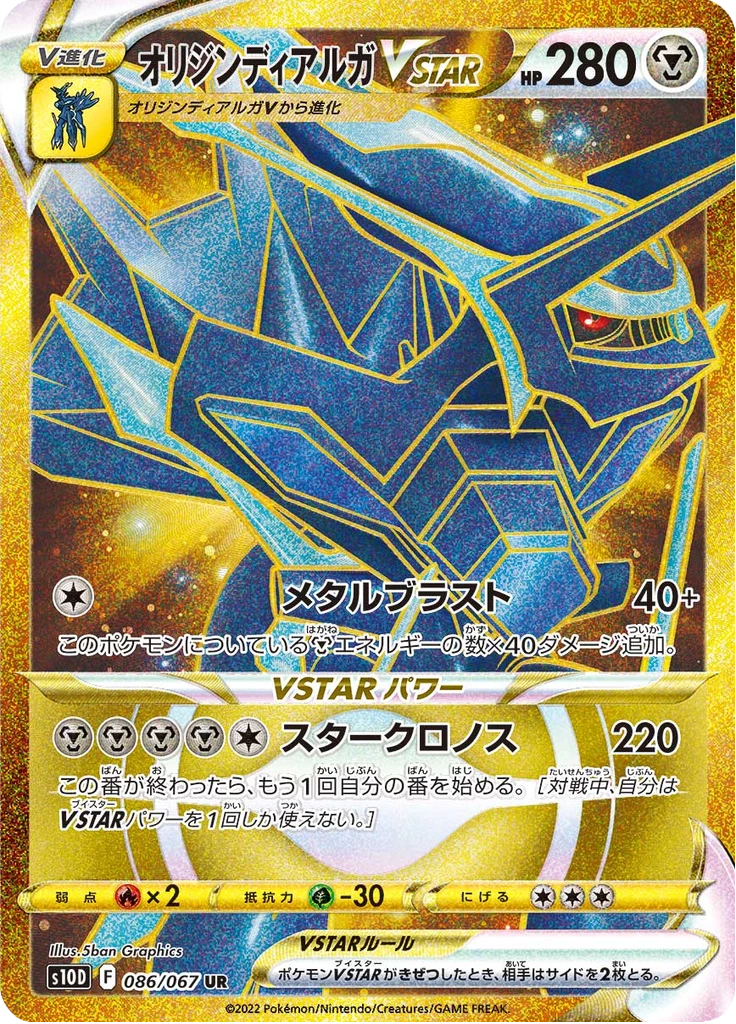
8. Origin Forme Dialga VSTAR (Gold) — ASR 210
Japanese equivalent: S10D 086/067, UR — オリジンディアルガVSTAR, illustrated by 5ban Graphics, matching the ASR 210 gold secret rare. English calls this treatment a “Secret Rare”; the printed Japanese rarity is UR.
Origin Forme Dialga VSTAR, S10D 086/067, UR, Time Gazer (Japanese)
We don’t currently list a graded copy — sourcing via Quick Order.
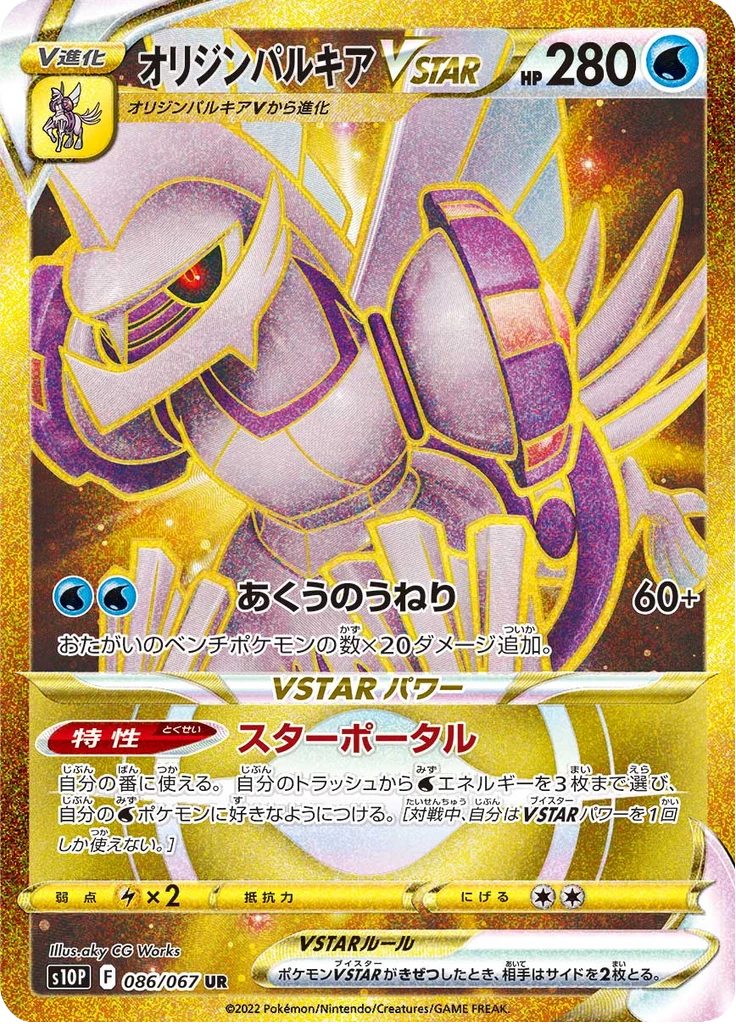
9. Origin Forme Palkia VSTAR (Gold) — ASR 208
Japanese equivalent: S10P 086/067, UR — オリジンパルキアVSTAR, illustrated by aky CG Works, matching the ASR 208 gold secret rare.
Origin Forme Palkia VSTAR, S10P 086/067, UR, Space Juggler (Japanese)
We don’t currently list a graded copy — sourcing via Quick Order.
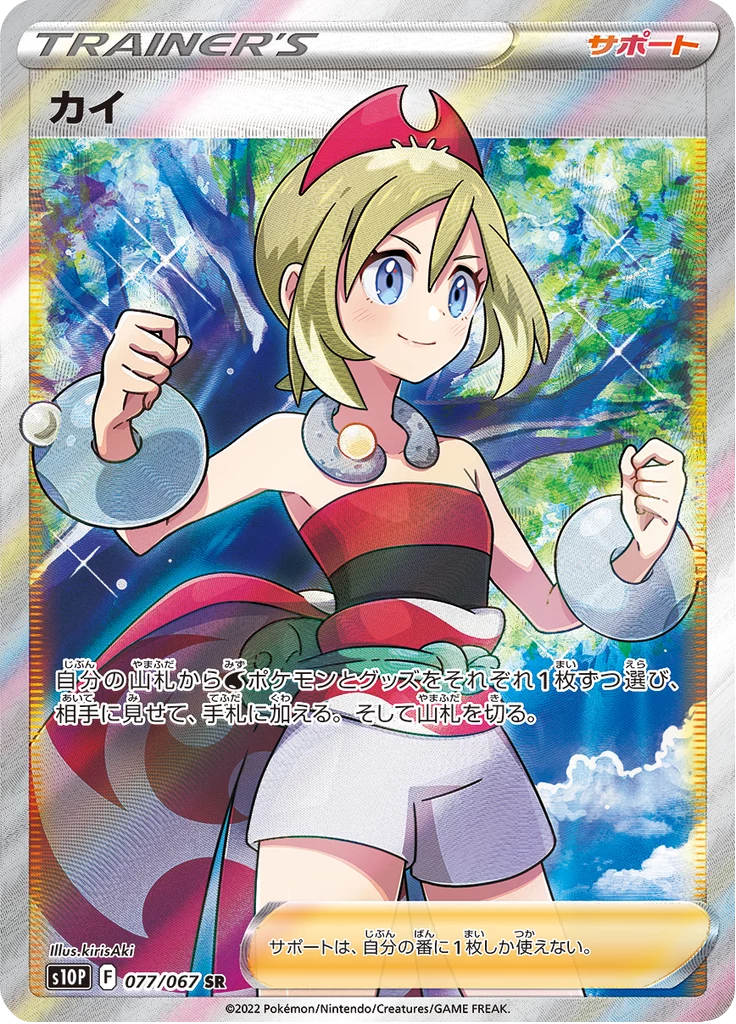
10. Irida (Full Art) — ASR 186
Japanese equivalent: S10P 077/067, SR — カイ, illustrated by kirisAki, matching the ASR 186 full art.
Irida (Kai), S10P 077/067, SR, Space Juggler (Japanese)
We don’t currently list a graded copy of this printing — sourcing via Quick Order.
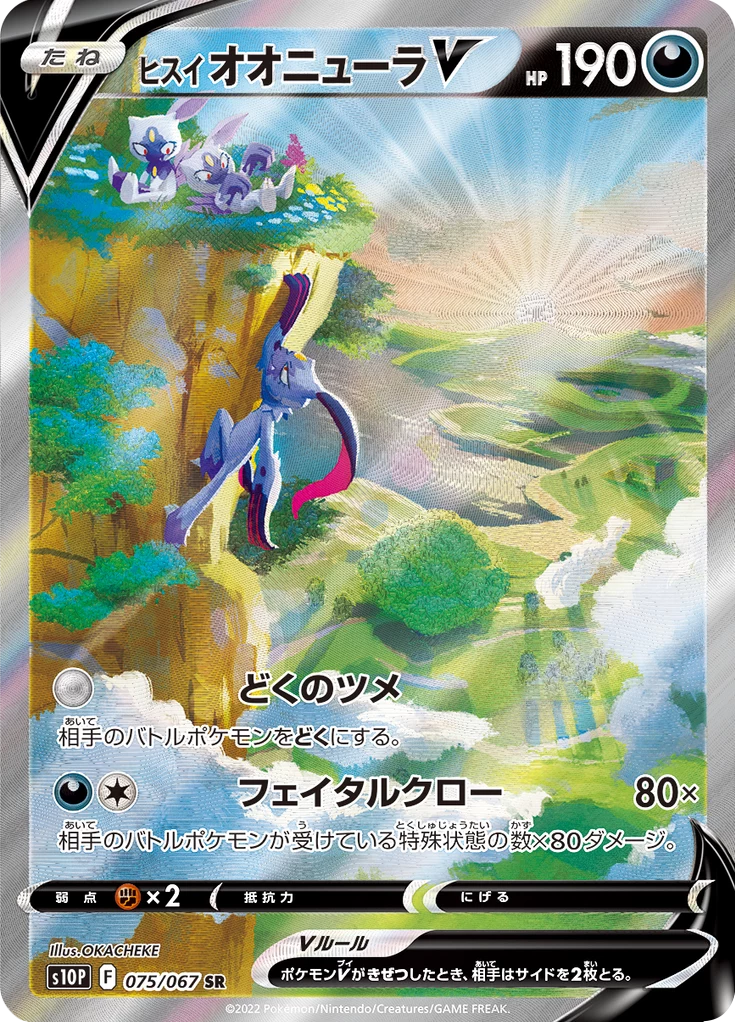
11. Hisuian Sneasler V (Alternate Art) — ASR 175
Japanese equivalent: S10P 075/067, an alternate-art SR — ヒスイ オオニューラV, illustrated by OKACHEKE, matching ASR 175.
Hisuian Sneasler V, S10P 075/067, SR (alt art), Space Juggler (Japanese)
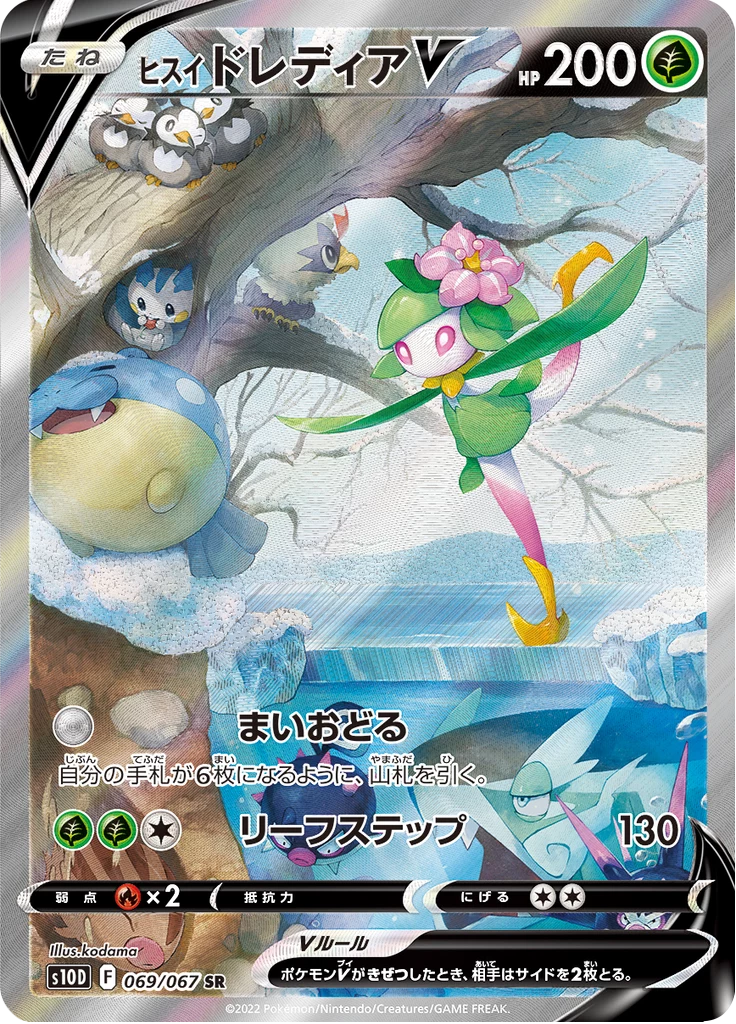
Japanese equivalent: S10D 069/067, an alternate-art SR — ヒスイ ドレディアV, illustrated by kodama, matching ASR 163.
Hisuian Lilligant V, S10D 069/067, SR (alt art), Time Gazer (Japanese)
We don’t currently list a graded copy — sourcing via Quick Order.
Japanese vs. English: What Changes
Beyond the artwork match, four things change between the Japanese originals and the English Astral Radiance release. Our full Astral Radiance Japanese card list covers every card; here’s what matters for the chase cards above.
Numbering. Each Japanese set numbers independently against its own 067 base — S9a runs 001–093, S10D and S10P each run 001–088. English ASR merges all of it into one 246-card run, so “ASR 177” (Dialga V alt art) and “ASR TG13” (Starmie V) look related in English but come from two completely different Japanese sets, S10D and S9a respectively.
Card counts. S9a prints 93 cards, S10D and S10P print 88 each — for a combined 269 across the three sets. English ASR’s 246-card count doesn’t match that total because some Japanese cards from these sets were held back and released later in Lost Origin instead, per PokeBeach’s set-tracking coverage referenced in our mapping article.
Release dates. Japan got this artwork in three waves — S9a on February 25, 2022, then S10D and S10P together on April 8, 2022 — a full seven weeks to ten weeks ahead of the English ASR release on May 27, 2022.
One Japanese-only variant. S10P prints two separate SR versions of Palkia V — 070 (aky CG Works) and 071 (Oswaldo KATO, our #7 above, matching EN ASR 167). Only the 071 artwork got an English full-art treatment; the 070 print has no English full-art counterpart at all, making it a Japanese-exclusive variant of a card that does exist in English.
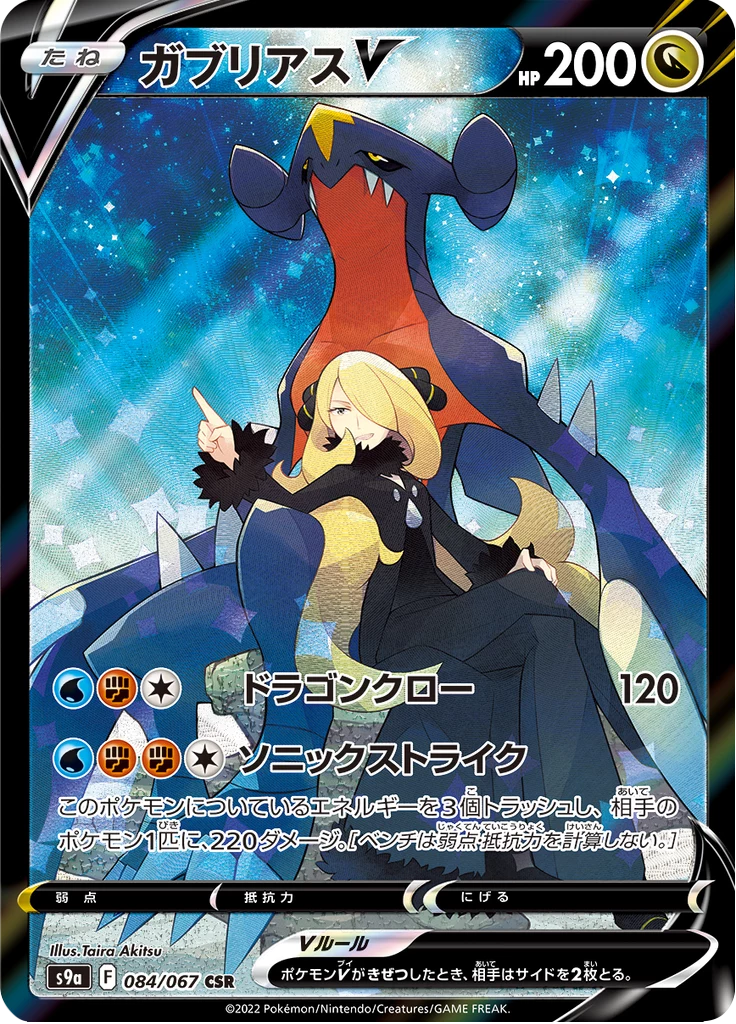
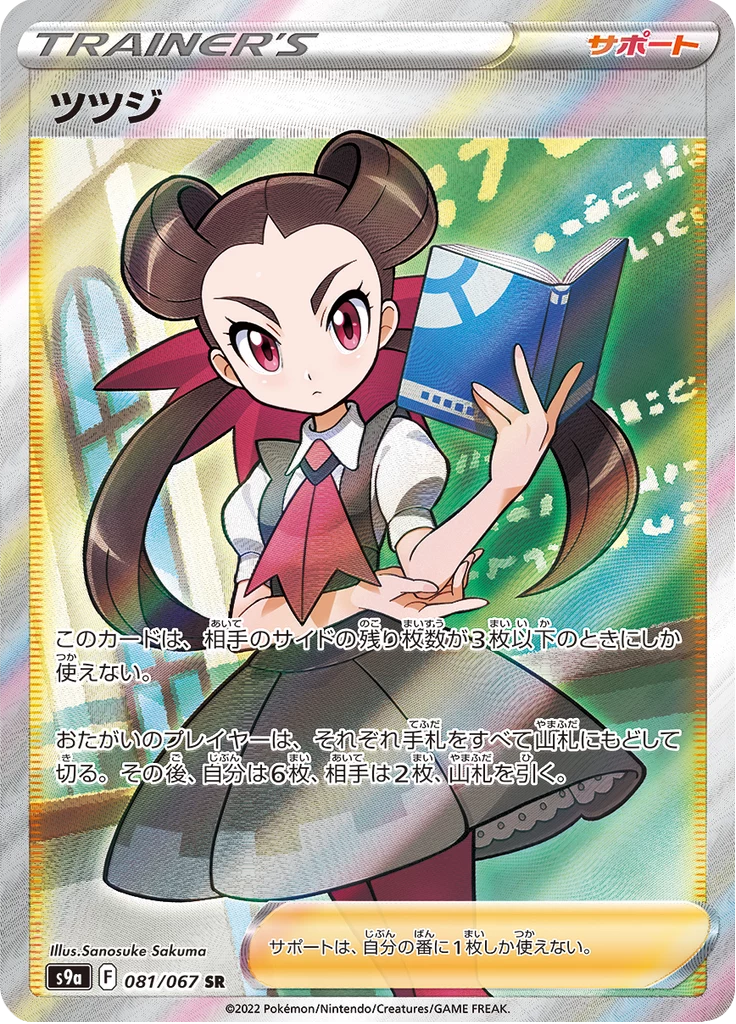
Three of the twelve chase cards above — Starmie V CSR, Garchomp V CSR and Roxanne SR — come out of S9a Battle Region packs. If you’d rather chase them yourself than buy graded, sealed S9a boxes are the direct route.
Shop This Set
S9A-Battle Region Japanese Pokemon Booster Box
Source set for Starmie V CSR, Garchomp V CSR & Roxanne SR
Three: S9a Battle Region (25 Feb 2022, 93 cards), S10D Time Gazer (8 Apr 2022, 88 cards) and S10P Space Juggler (8 Apr 2022, 88 cards). English Astral Radiance combines all three plus an English-only Trainer Gallery subset and released May 27, 2022.
Which Astral Radiance chase card is highest-priced in your listings?
Starmie V, the Character Super Rare from Trainer Gallery TG13 in English (S9a 083/067 CSR in Japanese), currently listed at ¥49,720 PSA 10 — the highest-priced PSA 10 we currently list from these three sets.
Why do the Japanese and English card numbers not match?
Each Japanese set numbers independently against its own 067 base card count, while English ASR renumbers everything into one continuous 246-card run that also folds in the Trainer Gallery subset. A card like “ASR 177” and its Japanese source “S10D 075” simply use different numbering systems for the same artwork.
What does “SA” mean on an alternate-art Japanese card?
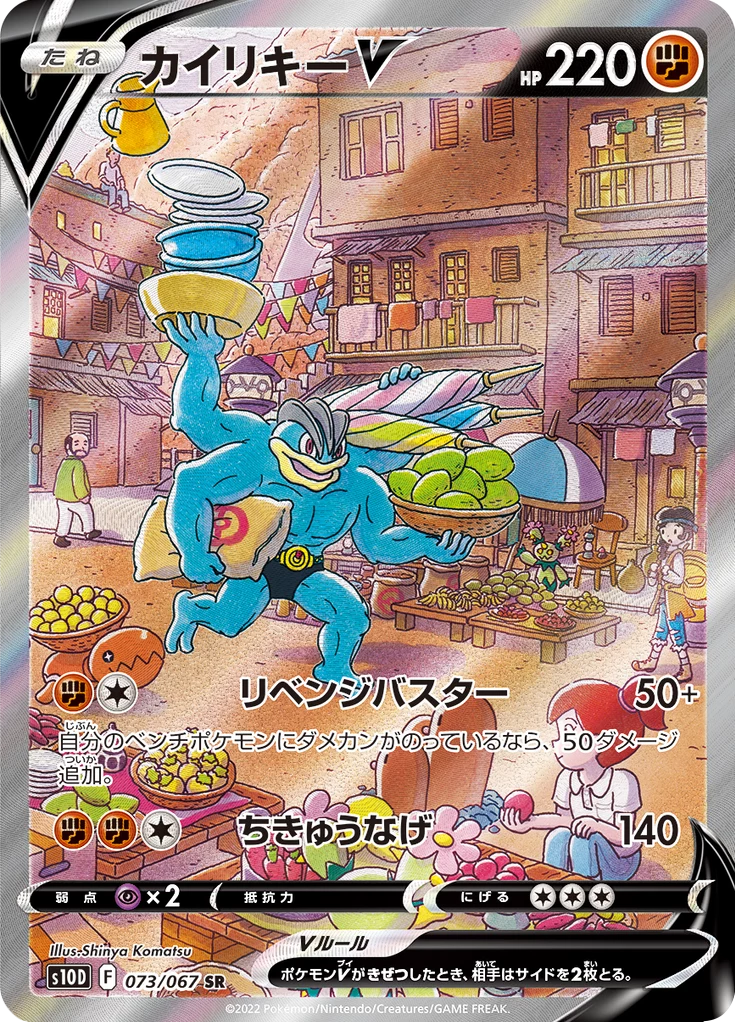
“SA” is community shorthand, not a printed rarity. Cards like the Dialga V and Machamp V alternate arts print SR on the card itself — we refer to them as alternate-art SR (often written “SA”) throughout this guide.
Is there a Japanese card in this set with no English counterpart?
Yes — S10P prints two SR versions of Palkia V (070 and 071). Only the 071 artwork (Oswaldo KATO) got an English full-art treatment as ASR 167; the 070 print (aky CG Works) has no English full-art match at all.
Can I buy sealed Battle Region, Time Gazer or Space Juggler boxes directly?
Yes. We list all three as sealed Japanese booster boxes shipped from Tokyo with tracked delivery, plus a damaged-box option for S9a at a reduced price. Links are in the “Where to Buy” section above.
Prismatic Evolutions Chase Cards: Top 12 & the Japanese SV8a Terastal Festival ex Versions
Prismatic Evolutions is an English-only compilation. Every chase card in it — the Eeveelution mirrors, the Sylveon ex, the Terapagos ex — was printed first in Japan, inside a different set with a different card number and, in at least one case, different artwork entirely.
That source set is SV8a, Terastal Fest ex (also written Terastal Festival ex), a Japanese High Class Pack released 6 December 2024, six weeks before Prismatic Evolutions landed in English on 17 January 2025. We’ve already mapped the two sets card-for-card in our Prismatic Evolutions Japanese card list; this guide narrows that mapping down to the twelve cards collectors actually chase, ranks them by what we currently have listed as graded PSA 10, and shows the Japanese print next to each English one.
Key Takeaways
All twelve chase cards below have live PSA 10 listings on our site, led by the Umbreon Master Ball mirror at ¥32,890 (~$207 at ¥159/USD). The Japanese source booster box, SV8a Terastal Fest ex, is currently listed at ¥19,600 (~$123). Several English SIR chase cards share the exact JP illustration — but not all of them, and we flag the one confirmed exception below.
180
EN Set Cards (Prismatic Evolutions)
SV8a
JP Terastal Fest ex — 6 Dec 2024
12
Chase Cards Covered
¥19,600
JP Booster Box, Currently Listed
How We Ranked These Chase Cards
We did not pull from TCGplayer, eBay or PriceCharting for this list, and we’re not going to start. Instead the ranking below uses two rules, in order: first, any card we currently list as a graded PSA 10 is ranked by our own listed price, highest to lowest; second, anything left over would be ranked by Japanese rarity tier (UR, then SAR/SSR, then SR, then AR/S). As it happens, all twelve cards on this list clear the first rule — every one of them has a live PSA 10 listing on our site — so the order below is simply our own listed prices, highest first.
Rarity tiers referenced throughout are the Japanese printed tiers from the SV8a checklist: Secret Rare (SR, numbers 188–199), Special Art Rare (SAR, 200–232) and Ultra Rare (UR, 233–237). SV8a has no separate Art Rare tier — SAR sits directly above SR. Master Ball mirror and Poké Ball mirror cards are foil-pattern variants of base-numbered cards, not extra secret-rarity slots, a point our full SV8a card list covers in more depth.
The Top 12 Chase Cards
Japanese card names, numbers and illustrators below come from the official Limitless JP checklist for SV8a. Where the pack we sourced this from could not confirm an English Master Ball mirror number, we say so rather than guess.
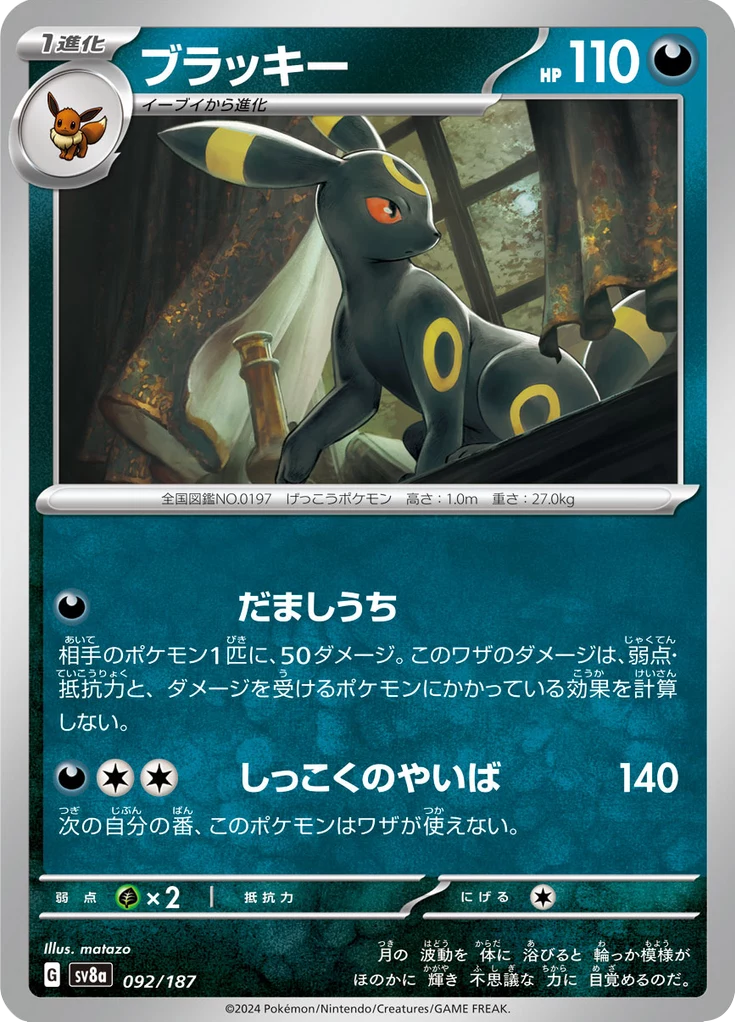
1. Umbreon (Master Ball Mirror) — EN Number TBA
Japanese equivalent: ブラッキー, SV8a 092/187, a Master Ball mirror of the base-numbered card rather than a separate secret slot (illustrator: matazo). The official Pokémon TCG Prismatic Evolutions page describes the Master Ball treatment but lists no separate Master Ball card numbering, so we’re not stating one.
Umbreon 092/187, Master Ball mirror variant, SV8a Terastal Fest ex — regular print shown, mirror is the same number in Master Ball foil
Our PSA 10 copy is currently listed at ¥32,890 (~$207), the highest of the twelve.
Two different Umbreon 092/187 PSA 10s — and a third Umbreon entirely
This ¥32,890 copy is the Master Ball mirror. We also separately list a Poké Ball mirror of the same number, 092/187, as a PSA 10 for ¥11,990 — a different foil pattern, not a price mistake. Neither should be confused with Umbreon ex (SIR, Prismatic Evolutions), a different card entirely mapped to JP ブラッキーex, SAR 217/187. See our Umbreon cards guide and Master Ball mirror explainer before you buy.
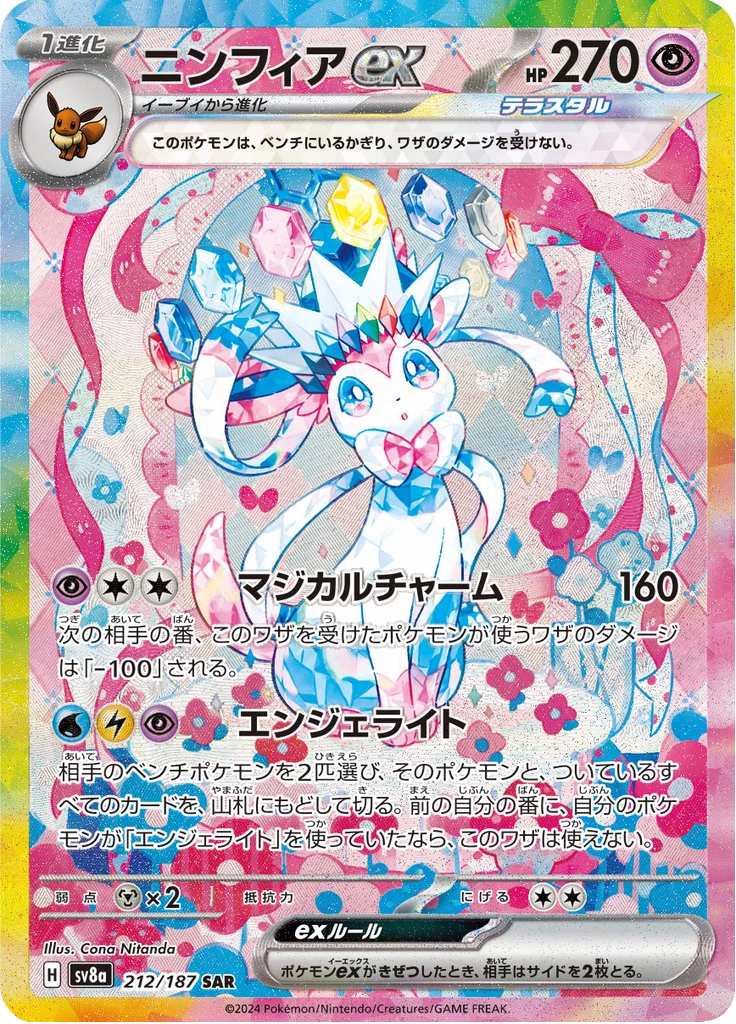
2. Sylveon ex 156/131, Special Illustration Rare
Japanese equivalent: ニンフィアex, SV8a 212/187, Special Art Rare. Same illustrator on both prints — Cona Nitanda — so the artwork matches between the English SIR and the Japanese SAR.
Sylveon ex 212/187, Special Art Rare, SV8a Terastal Fest ex
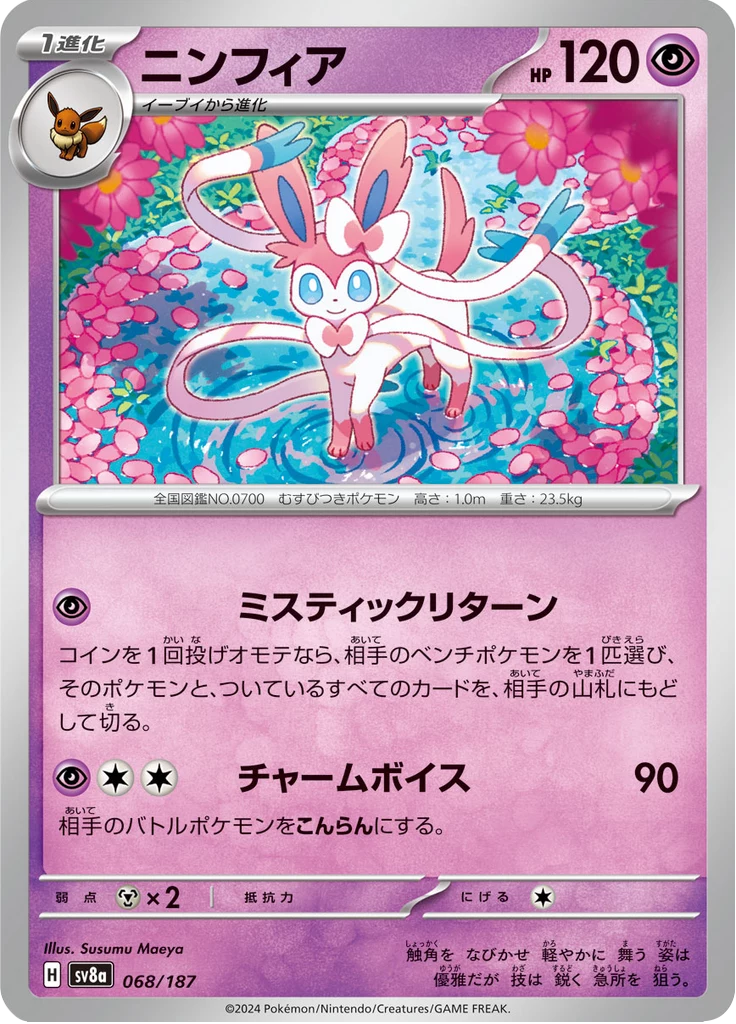
Japanese equivalent: ニンフィア, SV8a 068/187, Master Ball mirror of the base card (illustrator: Susumu Maeya). As with the Umbreon mirror above, we’re not assigning an English number this pack didn’t confirm.
Sylveon 068/187, Master Ball mirror variant, SV8a Terastal Fest ex
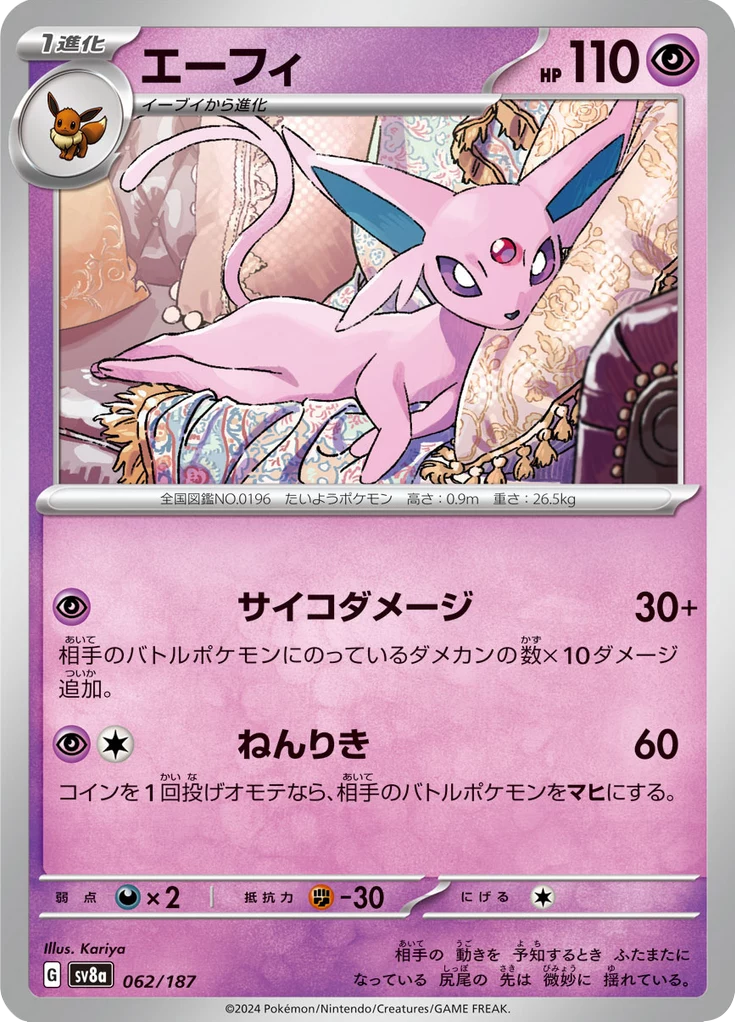
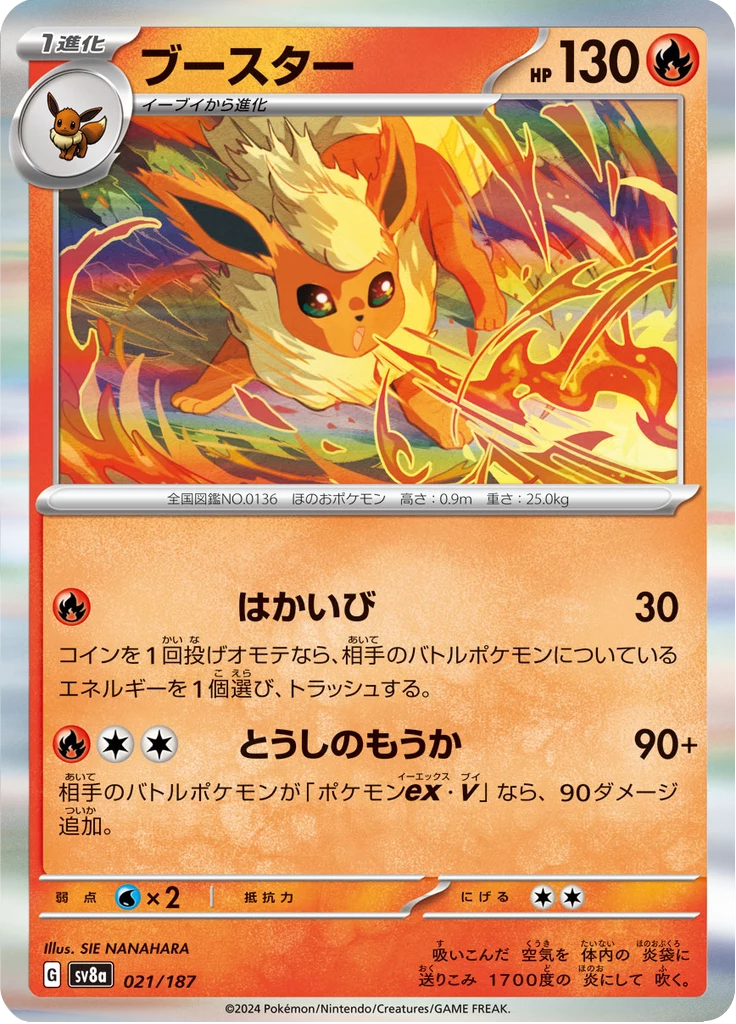
Japanese equivalent: エーフィ, SV8a 062/187, Master Ball mirror (illustrator: Kariya). One of six Eeveelutions on this list; our Eeveelutions PSA 10 buying guide covers the wider family.
Espeon 062/187, Master Ball mirror variant, SV8a Terastal Fest ex
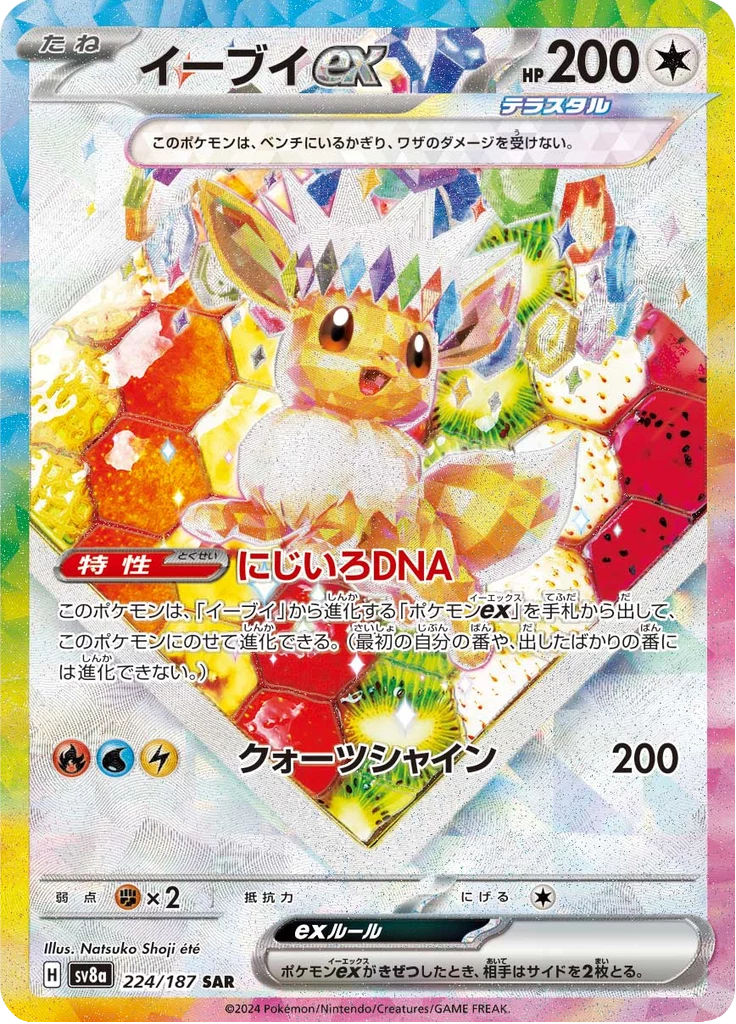
Japanese equivalent: イーブイex, SV8a 224/187, Special Art Rare. This is the one exception on the list: the Japanese SAR is illustrated by Natsuko Shoji été, while the English SIR credits tono — two different illustrations of the same character and card slot, not a shared piece of art.
Eevee ex 224/187, Special Art Rare, SV8a Terastal Fest ex — different illustration from the English SIR
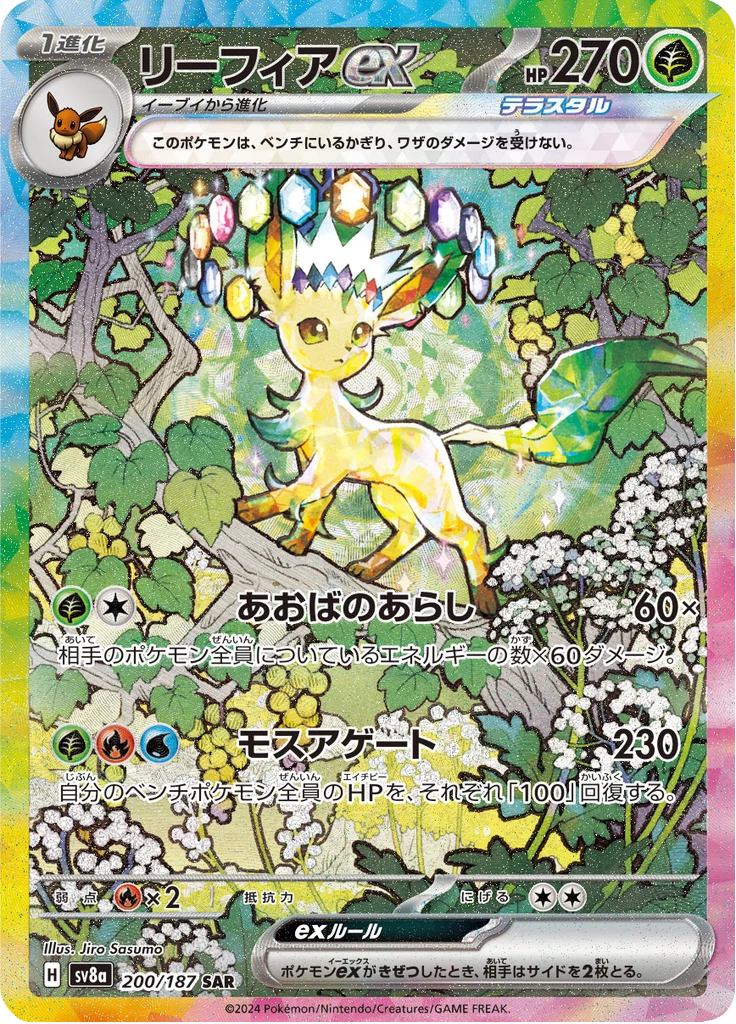
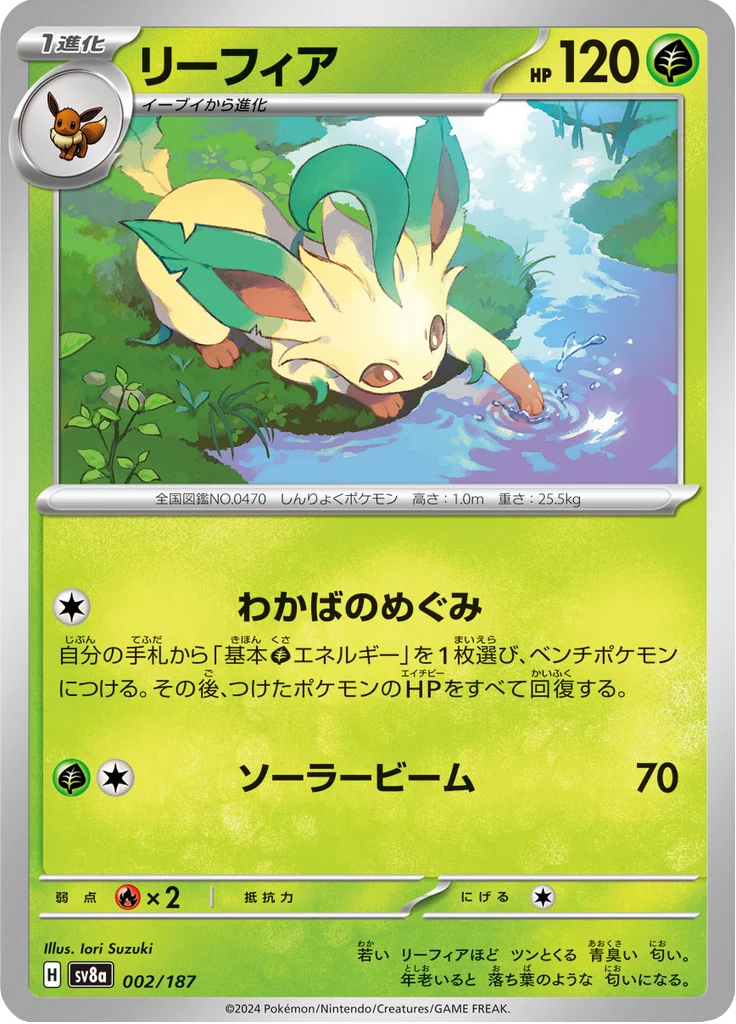
Japanese equivalent: リーフィア, SV8a 002/187, Master Ball mirror (illustrator: Iori Suzuki) — note this is a different card from Leafeon ex above, sharing only the Leafeon name.
Leafeon 002/187, Master Ball mirror variant, SV8a Terastal Fest ex
11. Friends in Paldea 137/131, Ultra Rare (full art)
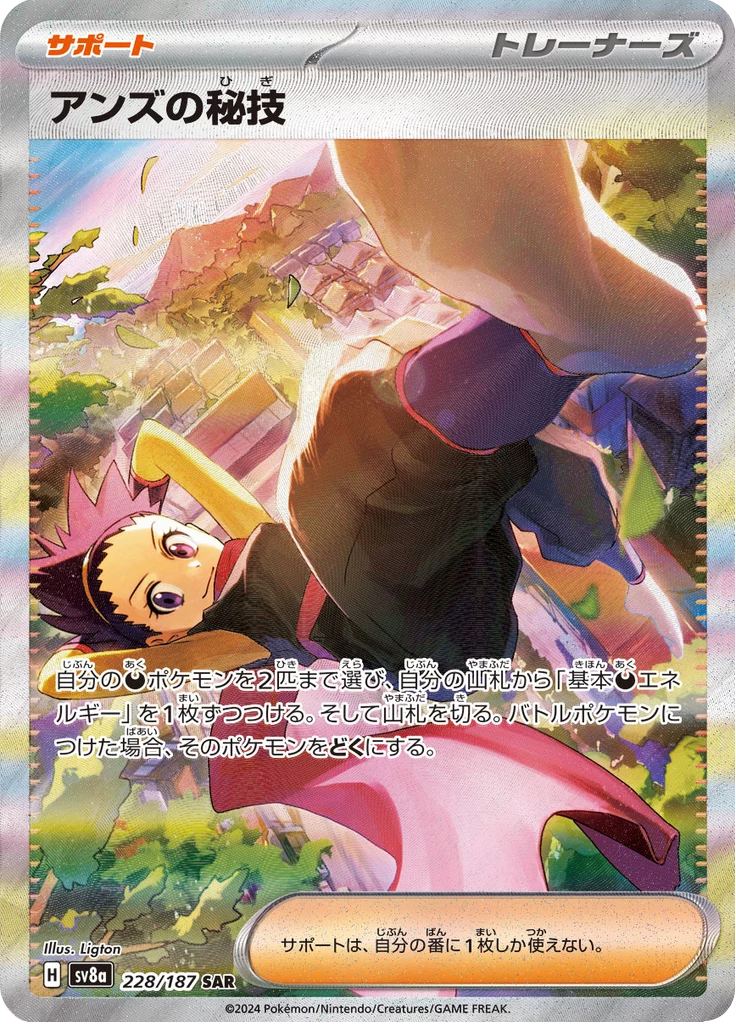
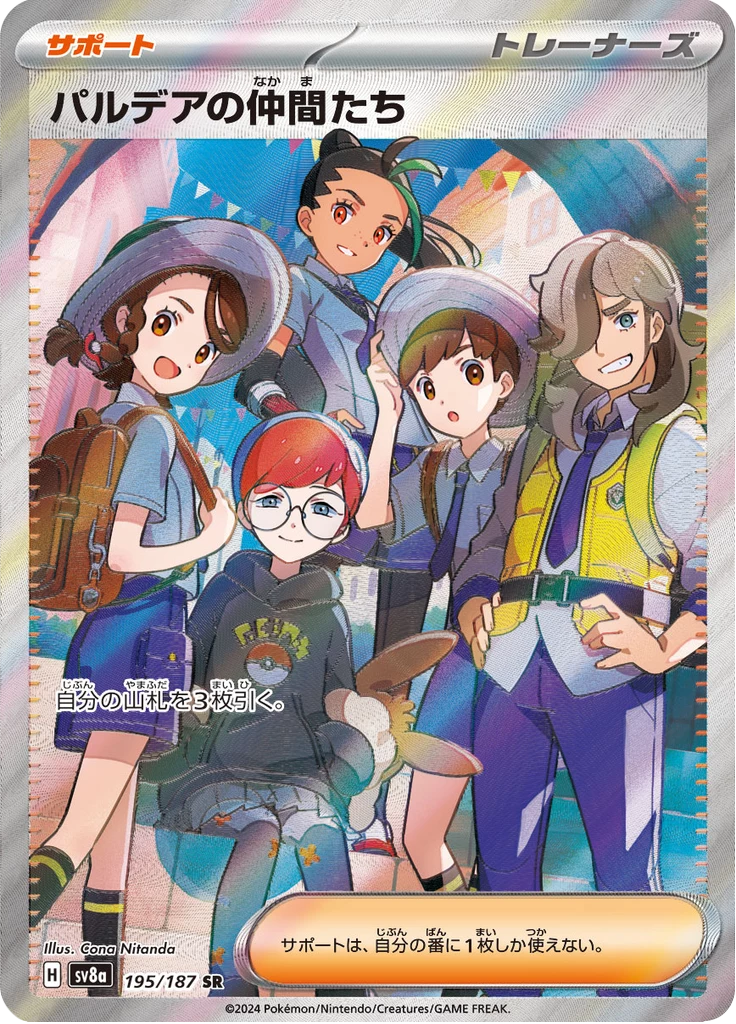
Japanese equivalent: パルデアの仲間たち, SV8a 195/187, Secret Rare. Same illustrator, Cona Nitanda, on both prints — this is the one card on the list where the Japanese secret-rare tier sits below the SAR tier used for most of the others.
Friends in Paldea (Pokéstop illustration) 195/187, Secret Rare, SV8a Terastal Fest ex
12. Terapagos ex 169/131, Special Illustration Rare
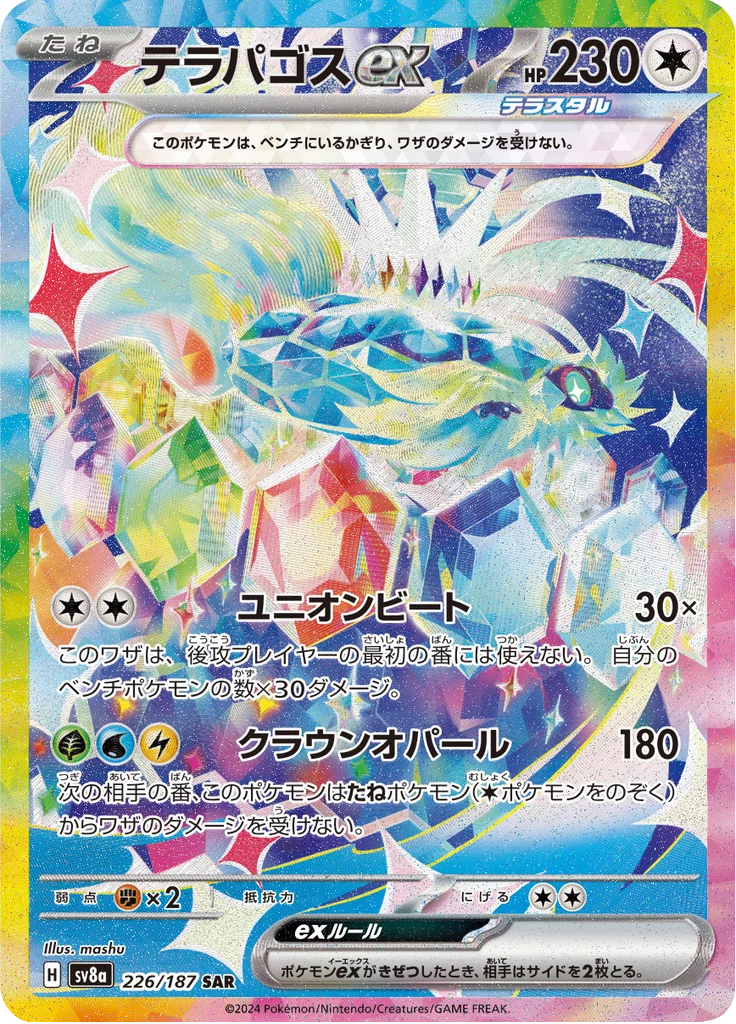
Japanese equivalent: テラパゴスex, SV8a 226/187, Special Art Rare. Same illustrator, mashu, on both prints.
Terapagos ex 226/187, Special Art Rare, SV8a Terastal Fest ex
Currently listed at ¥5,840 (~$37), the most accessible entry point among the twelve.
Japanese vs English: What Changes
Beyond the artwork, four things separate the two versions of this set. See our Prismatic Evolutions Japanese card list for the complete card-by-card mapping; here’s the short version.
Japanese (SV8a Terastal Fest ex)
English (Prismatic Evolutions)
Release date
6 December 2024
17 January 2025 (~6 weeks later)
Card count
Base set of 187, secret-rarity numbers continuing through 237
131 main cards + 49 secret rares (180 total)
Chase-tier numbering
SR 188–199, SAR 200–232, UR 233–237
SIR 144–175, higher secret-rare run 176–180
Mirror variants
Master Ball / Poké Ball mirrors reuse base card numbers (e.g. 092/187 stays 092/187 in either foil)
Own Poké Ball / Master Ball mirror mechanic exists, but which EN numbers map to which JP mirror is unverified
Numbering: a Japanese card like Sylveon ex 212/187 is counted against the 187-card base set, while its English counterpart, 156/131, is counted against the smaller 131-card main set — the same card carries two different fractions depending on which country’s set you’re holding.
No Art Rare tier: SV8a runs straight from Secret Rare to Special Art Rare with no intermediate Art Rare slot, unlike some other Scarlet & Violet-era Japanese sets.
Mirror mechanics: in Japanese SV8a, a Master Ball mirror or Poké Ball mirror is the same numbered card in a different foil pattern — not an additional secret-rarity card. Our Master Ball mirror guide and full SV8a checklist go through this in detail. Prismatic Evolutions has an equivalent Poké Ball/Master Ball mechanic in English, but the specific EN card numbers for those mirrors are not something we can confirm here.
Artwork: most of the shared SIR/SAR pairs above — Sylveon ex, Leafeon ex, Janine’s Secret Art, Friends in Paldea, Terapagos ex — use the identical illustration in both languages, credited to the same artist. Eevee ex is the confirmed exception: two different illustrators, two different pieces of art, same card slot.
Shop the SV8a Terastal Fest ex Box
Every card on this list, in either Master Ball or standard foil, comes out of Japanese SV8a Terastal Fest ex booster boxes.
Graded singles — any of the twelve PSA 10 listings linked throughout this guide, from the ¥5,840 Terapagos ex to the ¥32,890 Umbreon Master Ball mirror.
Something not listed here — our Quick Order page is the fastest way to request a specific card or build a mixed order; sourcing requests for cards outside our current PSA 10 lineup go through Quick Order rather than a live product page.
Frequently Asked Questions
What is the Japanese equivalent of Prismatic Evolutions?
SV8a, Terastal Fest ex (also written Terastal Festival ex), a Japanese High Class Pack released 6 December 2024 — about six weeks before Prismatic Evolutions released in English on 17 January 2025.
Are the Master Ball mirror cards secret rares?
No. In Japanese SV8a, a Master Ball mirror or Poké Ball mirror is the same numbered card as its regular print, just in a different foil pattern — it is not an additional secret-rarity slot.
Why does the Eevee ex artwork look different between the Japanese and English versions?
The Japanese SAR (SV8a 224/187) is illustrated by Natsuko Shoji été, while the English SIR (Prismatic Evolutions 167/131) is illustrated by tono. It’s a confirmed exception — most of the other SIR/SAR pairs in this set, such as Sylveon ex and Terapagos ex, share the same artist and artwork between languages.
Are there two different Umbreon PSA 10 cards on this list?
We list two versions of the same number, SV8a 092/187: a Master Ball mirror at ¥32,890 and a Poké Ball mirror at ¥11,990. Both are different from Umbreon ex (SIR), which maps to a separate card, JP ブラッキーex, Special Art Rare 217/187.
How much is the SV8a Terastal Fest ex booster box?
Currently listed at ¥19,600 (about $123 at ¥159/USD). It’s the source box for all twelve chase cards in this guide.
Can I order a Prismatic Evolutions chase card that isn’t listed as PSA 10 here?
Yes — use our Quick Order page to request specific cards or build a mixed order; we source Japanese singles beyond our current PSA 10 lineup through that route.
Why Are Japanese Pokemon Cards Cheaper? The Real Economics [2026]
Why are Japanese Pokemon cards cheaper? A lower sticker price can partly reflect smaller packs and a different box format. Currency conversion, the seller’s offer and shipping then determine what you actually pay. For singles, compare the specific printing and condition: Japanese cards are not always cheaper than their English counterparts.
This guide separates original manufacturer prices from current store offers, explains how currency and sourcing affect an order, and shows how to compare singles without confusing them with sealed products. Official Pokemon product pages supply the historical specifications; the current box prices below come from our store listings checked on October 20, 2026.
Start with your goal: opening packs, collecting an unopened box, or buying a particular card. Then identify the exact product and condition. That gives you a useful basis for comparing offers.
Smaller packs can mean a lower upfront price; currency and delivery costs determine the final saving. Compare the contents and condition of each box, then calculate the complete order total. For a specific card, compare matching prints and grades. Japanese packs in the official examples below contain five, seven or ten cards.
A Japanese booster pack, an English booster pack, a complete display box and a graded single are different purchases. Start with the contents and condition, then compare prices observed on the same date.
These historical MSRP examples show different Pokemon pack formats. Japanese prices include tax; the U.S. figure is the announced dollar MSRP. Current purchase offers appear separately below.
The English contents are described in Pokemon Support’s booster-pack explanation. That description separates game cards from the Energy and digital code. Count those consistently when comparing products: calling both products simply a “pack” hides a material difference in what the buyer receives.
Box sizes need the same care. The official Japanese Heat Wave Arena product page specifies 30 packs per box and five cards per pack, or 150 cards. At its original ¥180 tax-inclusive pack MSRP, 30 packs total ¥5,400; this arithmetic is a historical reference, not a current purchase offer. The official English Destined Rivals product showcase describes a 36-pack display with ten game cards and a Basic Energy in each pack. That is 360 game cards plus 36 Energy cards. These are different set examples demonstrating different box formats; they do not measure a Japan-versus-English saving on an equivalent box.
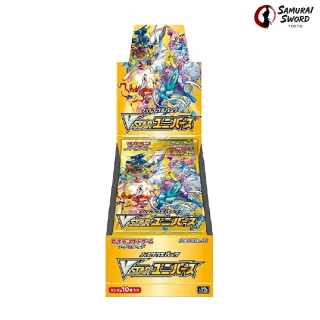
For a specific collection, begin with the card list and work outward to the right product. The VSTAR Universe card list and Pokemon 151 card list help you identify the artwork you want.
Japanese products can have a lower pack sticker price because the product being priced is different. The five-card Scarlet ex pack and ten-card Shiny Treasure ex pack above are both Japanese, yet they have different published prices and formats. There is no single “Japanese pack price” that can be applied to the whole Pokemon catalogue.
MSRP is the manufacturer’s reference price for the specified product. For a purchase today, use the seller’s current offer and check availability. Keep the original MSRP beside its release context when comparing it with that offer.
Comparison layer
Useful question
Common mistake
Original MSRP
What did the manufacturer publish for this exact pack or product?
Treating an old MSRP as today’s available price
Current product listing
What SKU, quantity and condition does this seller offer?
Comparing a no-shrink option with a sealed option
Box contents
How many packs and cards does this specific box contain?
Assuming one box in each language contains equal quantities
Collection goal
Does this product contain the specific artwork or printing I want?
Treating the same Pokemon name as the same card
Final order cost
What does the complete order cost to my destination?
Comparing one seller’s item price with another’s delivered total
Dividing the published Japanese pack prices by their card counts gives ¥36 per card for Scarlet ex / Violet ex (¥180 ÷ 5), approximately ¥41.43 for Pokemon 151 (¥290 ÷ 7), and ¥55 for Shiny Treasure ex (¥550 ÷ 10). These are historical pack-cost averages, not single-card values. The sets have different contents and rarity structures, so this arithmetic does not establish which pack offers better pulls.
Price per card helps check the scale of a purchase. Use it alongside the card list: it counts ordinary and rare cards equally and leaves the chance of finding a particular illustration unresolved.
Choose singles when the goal is one specific illustration; choose a box when the pack-opening experience or unopened display is part of what you want. Use the price comparison appropriate to that goal.
Our product prices in this guide are in Japanese yen. Your cost in another currency depends on the conversion rate and fees applied to the actual payment. If a yen-denominated price stays unchanged, a rate that buys more yen per unit of your currency reduces its converted cost; a rate that buys fewer yen increases it. The effect depends on the yen price staying unchanged.
A hypothetical currency example
A ¥15,000 item converts to US$100 at ¥150 per dollar, or US$120 at ¥125 per dollar. The yen price is identical; the converted item cost changes by US$20. These rates are examples, not current exchange quotes, and the calculation excludes conversion fees, shipping and destination charges.
Use the rate and charges available for your actual payment. Product prices below stay in yen so you can apply your own payment method’s conversion terms.
Record the currency on each quote. A yen listing and a dollar listing cannot be compared by their numbers alone.
Use the applicable payment rate and charges. A general currency converter may differ from the amount charged by your payment provider.
Keep the destination and order quantity consistent. A converted item price still leaves the rest of the order costs to consider.
Check again before paying. Both the product price and the conversion terms may change after you first browse.
For a multi-item order, calculate the total in the currency you will pay and allocate shared costs sensibly. A low unit price can be outweighed by an expensive shipment; a larger shipment may spread some charges over more items, but it can also change weight and destination charges. There is no universal quantity at which ordering from Japan becomes cheaper.
Keep the original MSRP comparison and the current shopping comparison separate. The former explains product formats; the latter tells you what your chosen order costs today.
Reason 3: Compare Sourcing Routes by Delivered Cost
Buying from a Japanese seller can give you a different product selection and price from a local shop. Compare the actual offers: acquisition costs, seller margins, product condition, shipping and service terms can all differ.
The practical way to compare routes is to build an equivalent basket. Specify the exact set, sealed or no-shrink condition, number of boxes, destination and payment method. Then collect current totals. If one quote leaves shipping or destination charges unresolved, keep that part of the comparison open instead of treating it as zero.
Route you are considering
What to record
What the route alone cannot prove
Local shop or local online seller
Exact product condition, final local price, collection or delivery terms, returns terms
That the shop paid more for the product or that an import will cost less
That the item is available at original Japanese MSRP
Marketplace seller
Seller identity, actual-item photos, condition wording, protections and complete fees
That the lowest asking price represents a completed sale or equivalent condition
For a sealed-box collection, the condition of the outer packaging may be part of what you are buying. For opening, you may consider a differently described condition, but read that description before deciding. A lower headline quote is not a like-for-like saving when it refers to a different condition, a damaged box, a carton rather than one box, or an unavailable option.
For a shop order, compare the complete quote for the same quantity and condition. Record how long the quote is valid and which charges are included so that the cheaper item price does not hide a higher order total.
Reason 4: Reprints Can Change Supply, Not Guarantee Prices
Additional production can change the amount of product offered to buyers, but reprinting is not unique to Japan. Pokemon’s English-language product availability statement, updated May 26, 2026, says it is working to increase production and reprint affected products. Check set-specific notices for the product you want.
In Japan, the official Pokemon Card 151 notice described made-to-order production and warned of temporary asking-price spikes around release. This is a useful example of a supply response to a particular product. Look for the corresponding announcement for the set you are considering.
Check the exact set. Look for its own production announcement or seller availability update.
Check the price separately. Compare dated offers before deciding how supply news affects your purchase.
Compare available choices. Balance today’s offer with your budget and how soon you want the product.
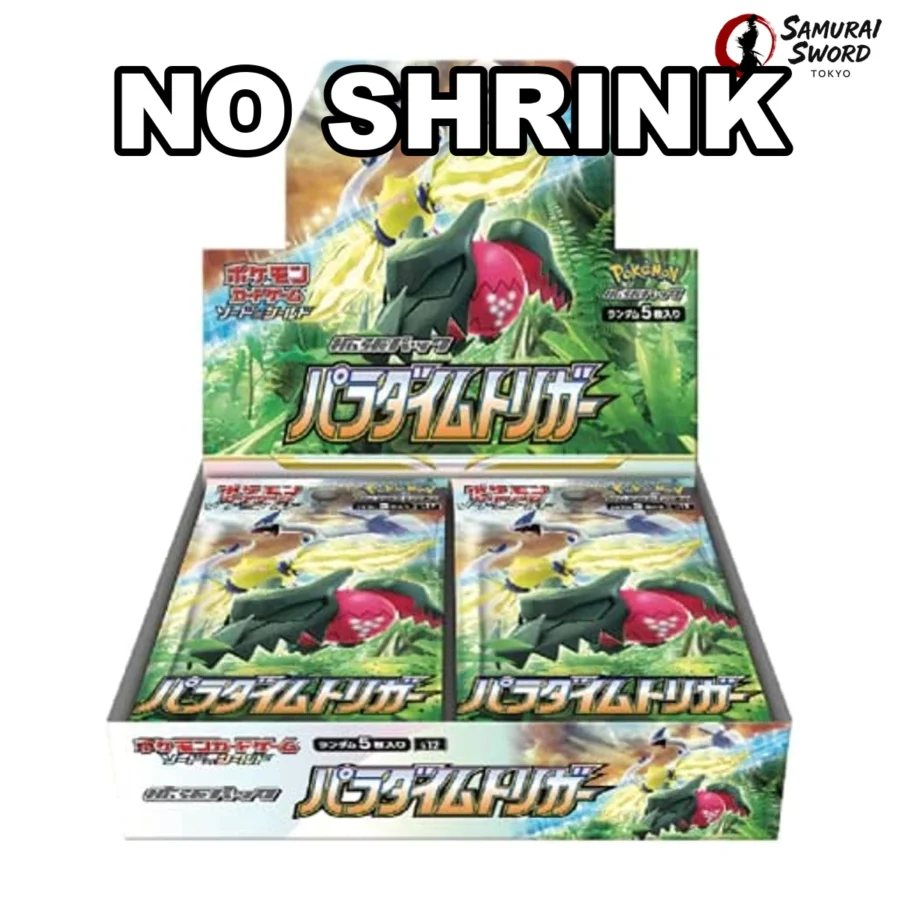
No shrink describes the outer packaging condition, rather than a production wave. Read the seller’s description of the box and packs, inspect its condition evidence, and compare it with other No Shrink offers.
The official Japanese notice also describes counterfeit and searched products on resale platforms. Check the seller’s disclosures for the actual item. No Shrink alone is neither proof of tampering nor proof of an untouched original box.
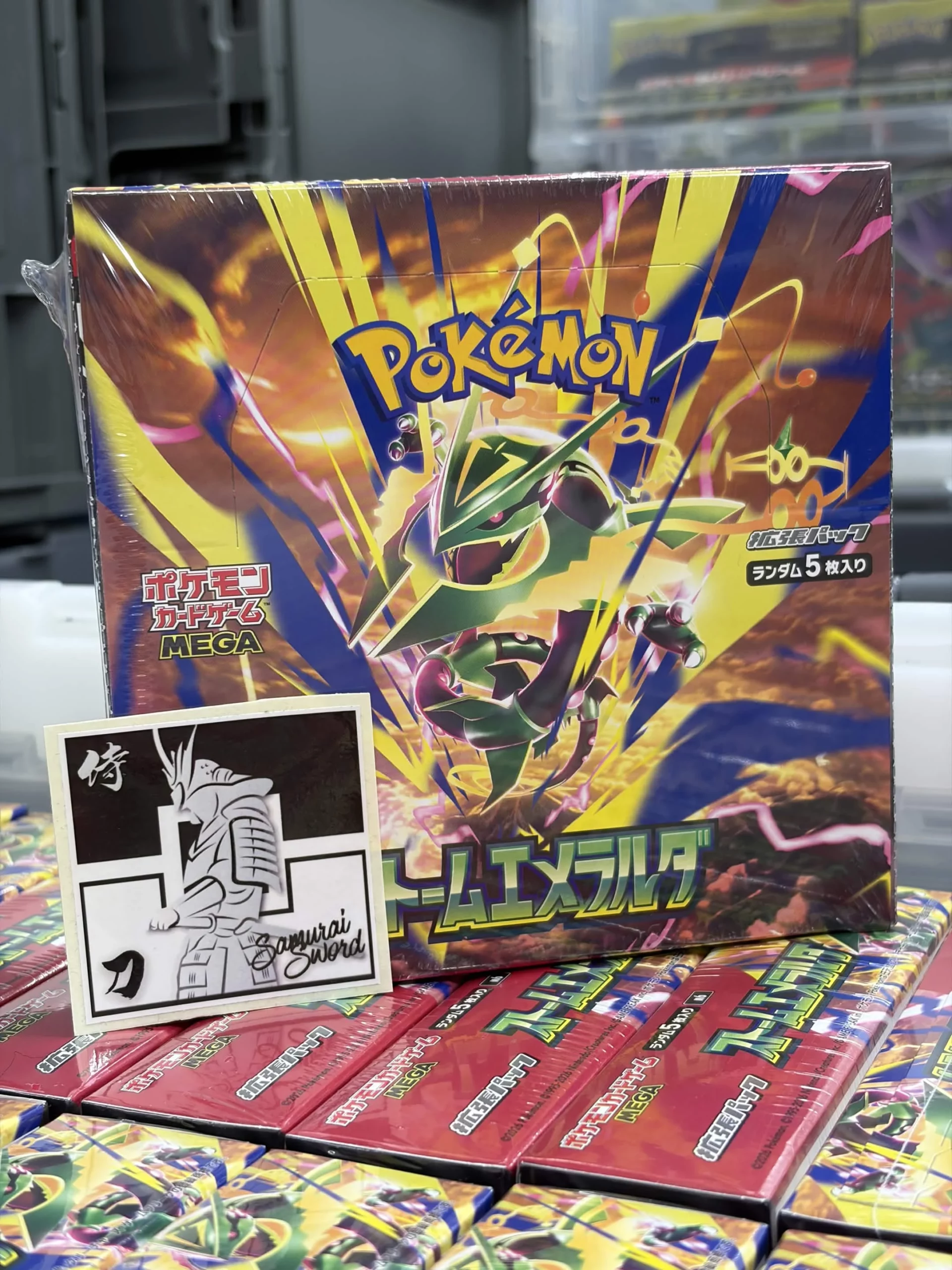
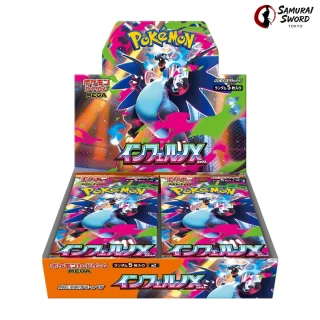
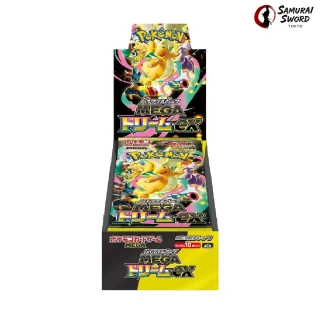
The current offers below include Storm Emeralda and Inferno X in Sealed condition, plus Mega Dream ex in No Shrink condition. Select the condition named beside the price and review its description before ordering.
M6 Storm Emeralda. The current offer below is for the Sealed option.
"Cheaper" Does Not Mean "Worth Less"
A cheaper pack is a cheaper pack purchase. It is not a valuation of each card that might come out of it. Japanese and English printings need their own comparisons, even when they show the same Pokemon or share an illustration. Neither language is automatically the lower-value version.
Same card, different market of origin
Start with the set and full card number in each language, then check the artwork, rarity and finish. A standard holo, reverse pattern, promotional release and special illustration are not interchangeable just because the character name matches. A sealed-product comparison and a single-card comparison answer different questions.
For a single-card comparison
Match or record
Why it matters
Identity
Language, set, full number and artwork
A name alone can group several separate prints
Version
Finish, rarity, promotional stamp and edition where relevant
Different versions may have different buyers and prices
Condition
Comparable raw condition, or the same grader and numerical grade
A raw card and a PSA 10 listing are different offers
Evidence
Recent completed sales and their dates, with asking prices separately labeled
An unsold listing does not establish an achievable sale
Transaction
Currency, quantity and applicable transaction costs
The headline price may not equal the buyer’s total or seller’s proceeds
Where matching sales are scarce, keep the comparison open rather than substituting a similar-looking card. Record the exact print in a sourcing request to avoid receiving a quote for a different version.
The grading angle
Inspect the specific card before treating it as a grading candidate. PSA’s published grading standards consider physical features such as corners, centering, gloss, staining and printing imperfections. A language label does not establish those features or guarantee a grade.
Our PSA10 singles collection lets you compare already graded cards. For a raw-card purchase, inspect its condition separately; the eventual grade depends on that individual card.
Japanese-side exclusives
When a Japanese printing has no exact English counterpart, there is no direct language-price discount to calculate. Identify the specific release and compare it with sales of that same printing. If a similar illustration appears in another product or language, check the number and finish before deciding that the two are equivalent.
Decide whether your goal is a specific card, a set of illustrations, an unopened display, or the experience of opening packs. That choice changes what a useful price comparison looks like. For one artwork, compare matching single-card offers. For an unopened collection, compare the box and packaging condition. For opening, compare the contents and your budget without treating a particular pull as assured.
If you intend to play, check the language and format requirements that apply to the event you plan to enter before buying. A collection purchase and an event-eligible deck purchase need not be the same decision. For general condition and authenticity checks, use our guide to spotting fake Japanese Pokemon cards alongside actual listing photos and seller information.
For visual browsing, open the VSTAR Universe card list before choosing the VSTAR Universe booster box. Seeing the set’s cards first helps you choose for the artwork rather than a vague promise of “Japanese value.” If you prefer a different current box, compare the Inferno X Sealed listing and its product description.
If you are a reseller or shop owner
For a shop order, record the exact SKU, packaging condition, supplier quote date, quantity and complete purchase cost. Keep sealed boxes, raw singles and graded singles on separate lines so each can be compared with an equivalent offer.
Check availability for the selected condition before building an order. Where a listing offers several conditions, save the option name beside the price; a cheaper option may be unavailable even when another version of the product can be ordered.
Pack format and the possible contents of a set do not establish the probability of pulling your desired card. Pokemon Support explicitly says it cannot guarantee a particular Pokemon or type of card in an individual booster pack. An image on the wrapper is not a statement that the pictured card will be inside.
Read how Japanese Pokemon pull rates work for the distinctions between product descriptions, observed opening results and estimates. A lower box price can reduce the amount you spend on that box, but it does not guarantee a cheaper route to one specific card. Comparing the single-card offer is a practical check before buying multiple boxes for a chase.
What Japanese Boxes Actually Cost Right Now
These are SST store asking prices checked on October 20, 2026, with the selected condition shown beside each quote. Follow the linked price to review the current product offer and checkout total.
For other conditions, check the live product page. Requests for a specific product go through Quick Order. A regular box, No Shrink box, damaged box and carton are separate offers; compare the one you intend to buy.
For an unopened display collection, start with the Sealed options. If you are considering No Shrink, read the packaging description and compare other offers with the same condition. Browse the card list first when your priority is the artwork inside.
Why are Japanese Pokemon cards cheaper than English ones?
Smaller packs and different box formats can partly explain lower sticker prices. Currency conversion and delivery costs affect the final total. Compare the exact product and condition; Japanese cards are not always cheaper.
Are Japanese Pokemon cards worth more than English cards?
It depends on the printing. Compare the exact card number, artwork, finish and condition, or the same grader and grade, using recent completed sales. Value singles separately from the pack they came in.
Are Japanese Pokemon cards lower quality?
Judge the individual card by its centering, corners, surface condition and printing imperfections. Published grading standards assess those features rather than treating language as a quality grade.
Is it cheaper to buy Pokemon cards directly from Japan?
It can be. Compare current offers for the same product, condition and quantity, including shipping, payment or conversion charges and applicable destination charges. Use the complete total to choose.
Will the price gap between Japanese and English cards last?
The gap can change with availability, seller prices, demand and currency conversion. Both Japanese and English products can receive additional production. Recheck the exact offers when you plan to buy.
How do I buy Japanese cards from overseas safely?
Check the exact product and condition, seller details, actual-item evidence where relevant, and the shipping, payment and returns terms before ordering. Keep sealed and no-shrink offers separate. Review the current checkout total rather than assuming a historical price or a packaging label proves the offer.
Official MSRP examples show the original product specifications. Store prices were checked October 20, 2026; use each product page and checkout for the latest offer and complete total.
Lost Abyss Booster Box Guide (S11): Pull Rates, Best Cards & Card List (2026)
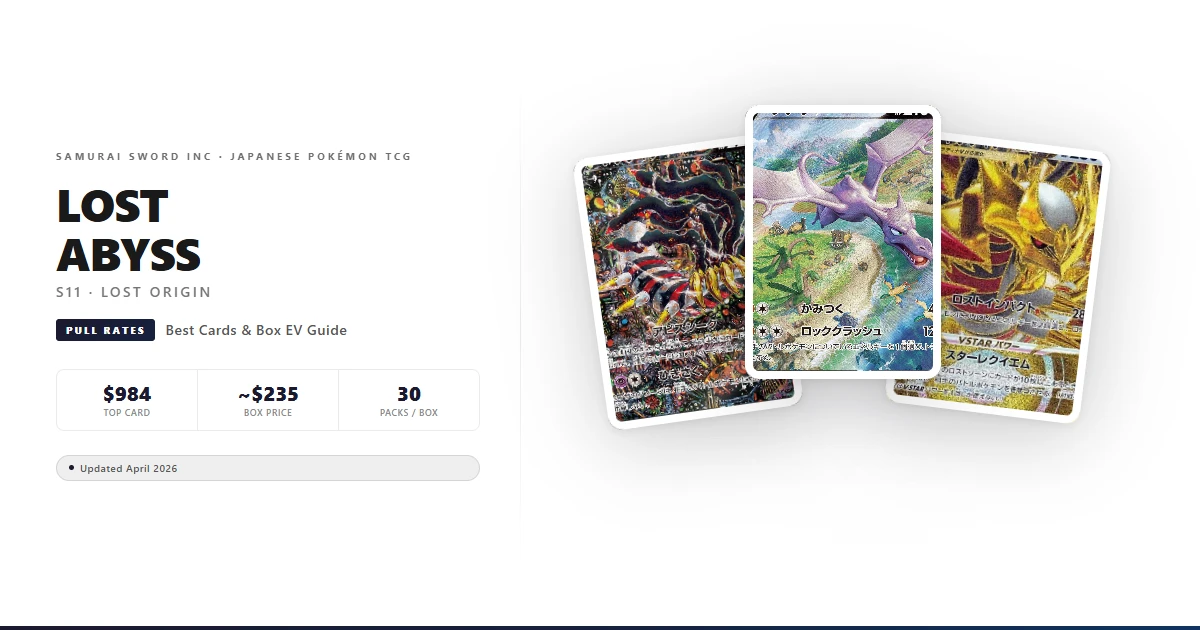
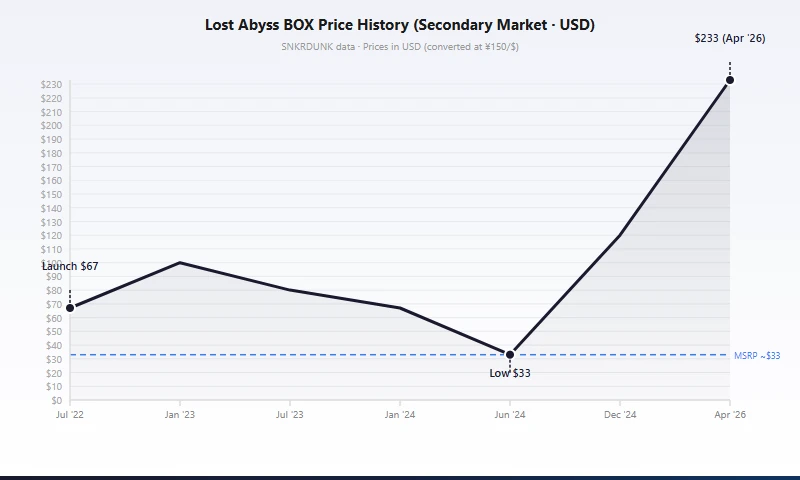
The Giratina V SA from the S11 Lost Abyss booster box is the single most valuable card you can pull from a standard modern Japanese Pokemon TCG expansion — at roughly $984 raw and $1,700+ in a PSA 10 slab, it commands prices that rival vintage chase cards. Lost Abyss introduced the Lost Zone mechanic to the Sword & Shield era when it launched in July 2022, and the sealed box is now currently listed from ¥44,000 (SST), with SNKRDUNK asks as high as ¥59,300 — well above its original retail price.
That box premium exists for one reason: every sealed box carries roughly a 3.8–6.2% chance of containing the Giratina V SA. Open sixteen boxes and you might pull one. Or you might find it in your first. That lottery is what keeps S11 among the most sought-after sealed products in the modern Japanese card market.
This guide breaks down the complete Lost Abyss picture: all 10 most valuable cards ranked by current JPN market prices, pull rate data translated from Japanese opening compilations, a box EV calculation, and 3.5 years of price history showing how this set survived a reprint crash and came back stronger. We ship hundreds of Japanese Pokemon TCG boxes monthly — here’s the data behind one of the most iconic sets we’ve handled.
Key Takeaway
S11 Lost Abyss is home to the ~$984 Giratina V SA — the most valuable card from any standard modern JPN expansion. The booster box is currently listed from ¥44,000 at SST, with SNKRDUNK asks up to ¥59,300, so the chase card alone is still worth roughly 3× the box price. Production ended after the 2024 reprint, and the V-shaped price recovery from ¥5,000 confirms enduring demand.
Updated September 1, 2026
Box and Giratina V SA pricing below reflect current SST listings and live SNKRDUNK asking prices.
$984
Top Card (Giratina V SA)
¥44,000+
BOX Price (SST, from)
30 Packs
Per Box
127 Cards
Total Set
S11 Lost Abyss Set Overview
Lost Abyss is the set that brought the Lost Zone mechanic to Sword & Shield — and produced the most valuable card in the modern Japanese Pokemon TCG. Released on July 15, 2022, S11 packs 127 cards into a standard 30-pack box that has become one of the most premium sealed products in the hobby.
Set Specs
Spec
Detail
Set Code
S11
Set Name
Lost Abyss (ロストアビス)
Series
Sword & Shield
Category
Expansion Pack
JP Release
July 15, 2022
Packs per Box
30
Cards per Pack
5
Main Set
100 cards
Secret Rares
27 cards (12 SR incl. 4 SA, 8 HR, 3 UR, 4 Trainer SR)
Total Cards
127
MSRP
¥4,950 → currently listed from ¥44,000 at SST; SNKRDUNK lowest ask ¥59,300, as of September 1, 2026
EN Equivalent
Lost Origin (partial — also includes S10A, S10D cards)
The Lost Zone Mechanic
Lost Abyss’s signature mechanic — the Lost Zone — sends cards to a separate zone from which they cannot be retrieved. Unlike the discard pile, cards in the Lost Zone are permanently removed from play. This created new deck strategies centered around accumulating cards in the Lost Zone to unlock powerful abilities, most notably Giratina VSTAR’s Star Requiem attack, which knocks out any opposing Pokemon if 10+ cards sit in your Lost Zone.
The mechanic proved so popular that Lost Zone-based strategies dominated the competitive Sword & Shield format through 2023. That competitive relevance, combined with the Giratina V SA’s artwork, created a dual demand pillar — both players and collectors want these cards.
What Makes This Set Special
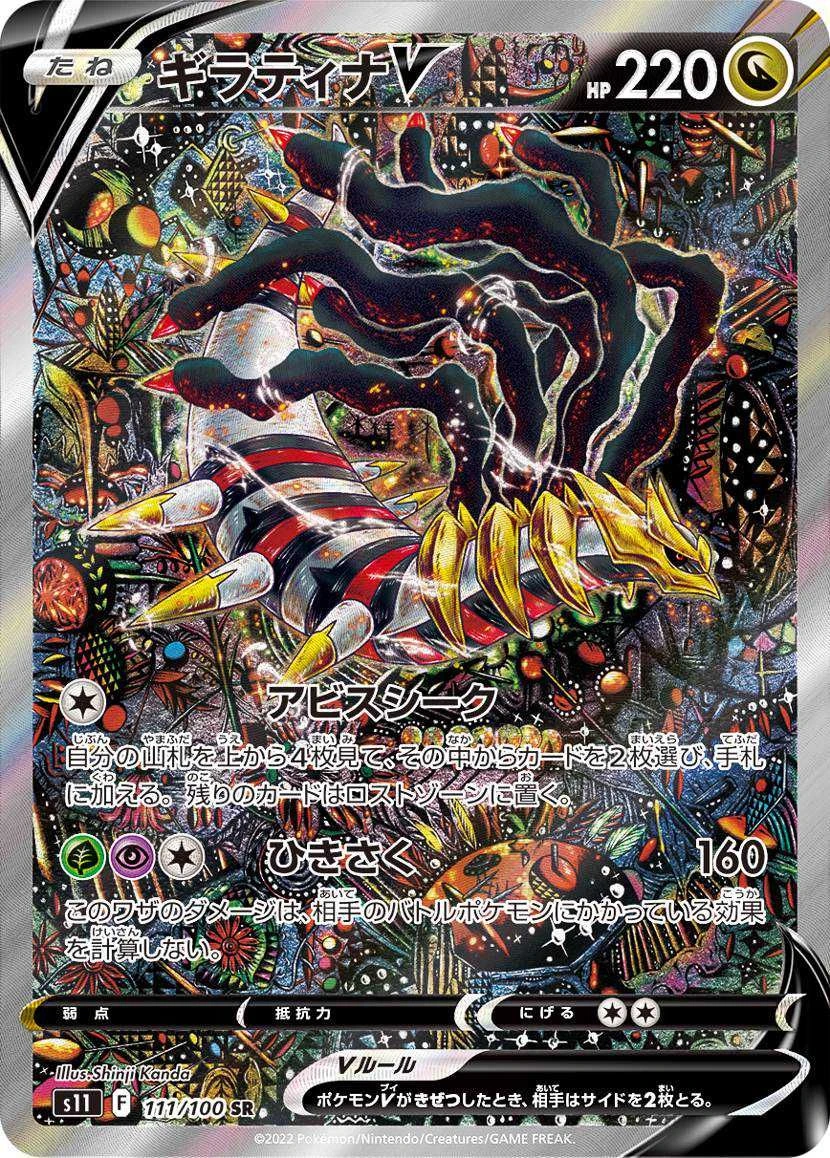
Giratina V SA (111/100). The most valuable card from any standard modern JPN expansion. Illustrated by Shinji Kanda, the alternate art depicts Giratina emerging from a portal between dimensions. At ~$984 raw and $1,700+ PSA 10, this card alone justifies the set’s sealed product premium.
Four alternate art cards. S11 contains four Special Art variants: Giratina V SA, Aerodactyl V SA, Rotom V SA, and Galarian Perrserker V SA. The SA pull rate (~15% per box for any SA) keeps these cards genuinely scarce.
Lost Zone competitive legacy. Giratina VSTAR, Comfey, and Mirage Gate formed the backbone of one of the most dominant deck archetypes in the Sword & Shield competitive era.
JPN vs English — The Lost Origin Connection
The English set Lost Origin combines cards from three Japanese sets: Lost Abyss (S11), Dark Phantasma (S10A), and Time Gazer (S10D). This dilutes S11’s concentrated card pool across a 196-card English set, significantly reducing your odds of pulling any specific S11 card.
JPN Premium
The Japanese Giratina V SA (~$984 as of April 2026) commands a 70%+ premium over the English Lost Origin version (~$400–573). JPN cards from S11 consistently trade higher than their ENG equivalents, driven by superior print quality and a more focused 127-card pool.
Top 10 Most Valuable Lost Abyss Cards
The Giratina V SA towers over this set’s value chart at roughly 11× the price of the second-most valuable card. Here are the top 10 ranked by current JPN market data.
Giratina V SA (111/100) — ¥180,000–218,000 (~$984)
Rank
Card
Number
Rarity
JPN Price (¥)
USD Price
1
Giratina V (Alt Art)
111/100
SR (SA)
¥180,000–218,000
~$984
2
Aerodactyl V (Alt Art)
106/100
SR (SA)
¥14,000–17,800
~$87
3
Giratina VSTAR
125/100
UR
¥5,500–6,980
~$23
4
Rotom V (Alt Art)
104/100
SR (SA)
¥2,200–2,780
~$21
5
Giratina V
110/100
SR
¥2,200–2,780
~$18
6
Giratina VSTAR
120/100
HR
¥2,700–3,580
~$10
7
Aerodactyl V
105/100
SR
¥1,300–1,780
~$8
8
Fantina
116/100
SR
¥900–1,580
~$6
9
Aerodactyl VSTAR
118/100
HR
¥1,600–2,180
~$5
10
Pidgeot V
112/100
SR
¥700–980
~$4
Price Note
JPN prices from SNKRDUNK and altema.jp (April 2026). USD prices from PriceCharting. JPN cards typically trade at a 15–40% premium over English equivalents for high-demand cards.
#1 Giratina V SA (111/100) — ~$984
The Giratina V SA is the defining card of modern Japanese Pokemon — and the highest-value pull from any standard expansion box in the current era. At ¥180,000–218,000 on the Japanese secondary market (~$984 USD raw), it occupies a price tier usually reserved for vintage stars.
Illustrated by Shinji Kanda, the alternate art captures Giratina tearing through dimensional space with its six-legged, centipede-like Altered Forme on full display. The composition uses dramatic perspective — Giratina lunging toward the viewer through a shattered portal — creating a sense of motion that few Pokemon cards achieve.
PSA 10 copies trade at $1,700+, reflecting the grading market’s strong conviction. The Japanese version commands a 70%+ premium over its English Lost Origin counterpart (~$400–573).
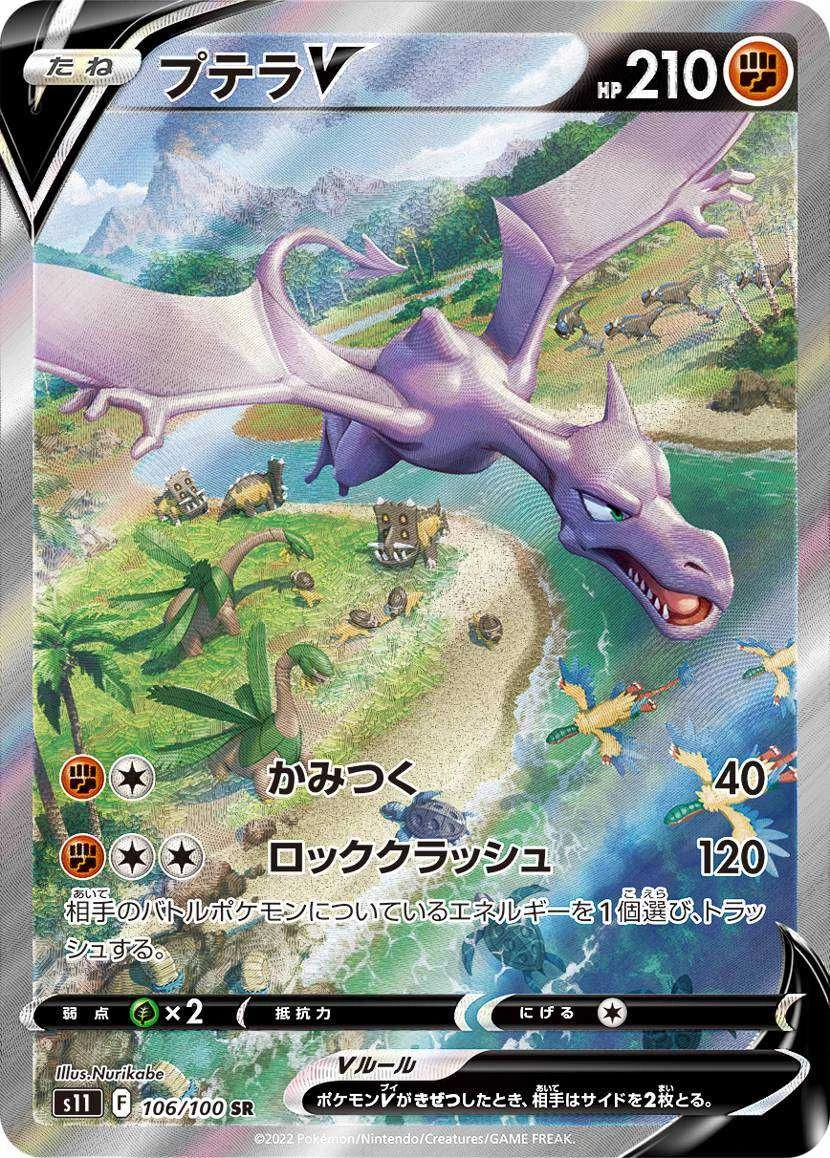
#2 Aerodactyl V SA (106/100) — ~$87
Aerodactyl V SA (106/100) — ¥14,000–17,800 (~$87)
The Aerodactyl V SA at ¥14,000–17,800 (~$87) shows the prehistoric Pokemon soaring above a fossil excavation site — a scene that connects Aerodactyl to its lore origins. This card has strong international demand, particularly among collectors who appreciate the paleontology-themed artwork. PSA 10 copies trade around $171.
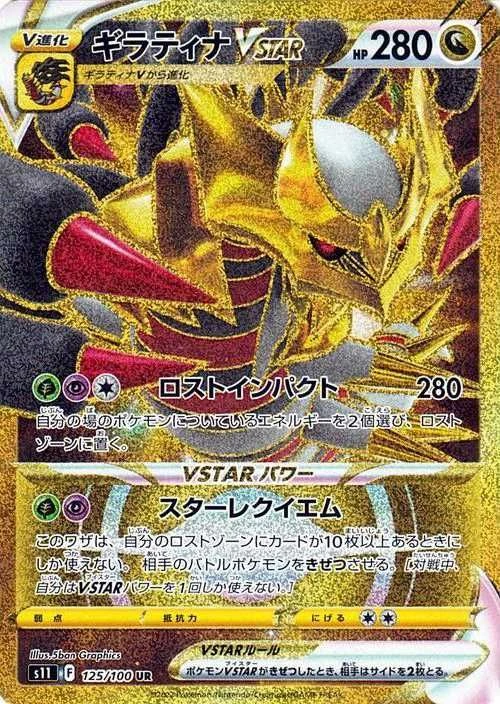
#3 Giratina VSTAR UR (125/100) — ~$23
Giratina VSTAR UR (125/100) — ¥5,500–6,980 (~$23)
The gold-textured Ultra Rare treatment of Giratina VSTAR at ¥5,500–6,980 (~$23) is a popular display piece. The Star Requiem VSTAR Power text gleams in gold relief. PSA 10 copies jump to ~$83, making it a viable grading candidate.
Cards #4–10
Rotom V SA (104/100) (¥2,200–2,780 / ~$21) — Competitive staple from Charizard ex decks. 3-draw ability maintained play demand well into Scarlet & Violet format.
Giratina V SR (110/100) (¥2,200–2,780 / ~$18) — Standard full-art version carrying the set mascot’s baseline collector appeal.
At a current listed price from ¥44,000 (SST) up to a ¥59,300 SNKRDUNK ask, S11 is a premium purchase — but the Giratina V SA alone is still worth roughly 3× the box price. Here’s how it breaks down by buyer type.
Buyer’s Tip
If you’re chasing the Giratina V SA specifically, buying the single at ~$984 saves thousands compared to opening boxes. But the ~15% SA pull rate per box means roughly 1 in 7 boxes contains a display-worthy alternate art — and that lottery is what keeps collectors opening.
For Collectors
Lost Abyss is one of those sets where one card defines the entire experience. The Giratina V SA at ~$984 creates a level of pack-opening tension that few modern sets can match. Every SR-slot pack is a potential $984 moment — and even without hitting the SA, the four trainer SRs and other alternate arts deliver display-worthy pulls.
S11 also carries historical weight as the set that introduced the Lost Zone mechanic. For collectors building a Sword & Shield era collection, this is a cornerstone set.
For Box Openers
Thirty packs at the current ¥44,000–50,960 SST listing (~$299–347) means roughly $10–12 per pack. Each box guarantees at least one SR-tier pull (from the 16-card SR pool, which includes the four SAs). You’ll also pull approximately 4–5 RR cards, 2 RRR cards, and common/uncommon bulk.
The ~3.8–6.2% chance of pulling the Giratina V SA from a single box is the headline — but even a non-SA box delivers $20–40 in SR value plus the guaranteed RR/RRR cards. The 10% “double-hit” box probability adds extra excitement.
For Long-Term Holders
The sealed box trajectory tells a powerful story. S11 launched at ¥4,950, climbed steadily, crashed to approximately ¥5,000 after the June 2024 reprint, then kept recovering — SST currently lists the box from ¥44,000, with SNKRDUNK asks up to ¥59,300 as of September 1, 2026. That recovery — from reprint floor back to roughly 9–12× the original retail — demonstrates the market’s conviction in this set’s long-term value.
Production is finished. The 2024 reprint was the last run. Every box opened or shipped reduces sealed supply permanently.
Singles vs. Box — The Math
Approach
Cost
What You Get
Buy Giratina V SA single
~$984
The exact card you want, guaranteed
Buy 16 boxes (avg for specific SA)
$3,500–4,000
~1 Giratina V SA + 3–4 total SA pulls + 480 other cards
Buy 1 box for the experience
from ¥44,000 (~$299+)
30 packs + guaranteed SR-tier pull + ~3.8–6.2% SA lottery
S11 follows the standard Sword & Shield expansion pull rate structure — one guaranteed SR-tier card per box, with SA, HR, and UR cards requiring multiple boxes. The 30-pack format gives you more shots at the high-rarity pool than smaller Enhanced Expansion sets.
Pull Rate Breakdown (Per Box — 30 Packs)
Rarity
Cards in Set
Expected per Box
Notes
RR
~12
4–5
V and VSTAR cards
RRR
~6
~2
VSTAR and VMAX cards
SR
16 (incl. 4 SA)
1 guaranteed
Full art V, trainers, and alternate arts
SA
4
~1 per 6–7 boxes (~15%)
Giratina V, Aerodactyl V, Rotom V, Galarian Perrserker V
HR
8
~1 per 10 boxes (~10%)
Rainbow rare treatment
UR
3
~1 per 10 boxes (~10%)
Giratina VSTAR, Lost Sweeper, Collapsed Stadium
Disclaimer
Pull rates are estimated from Japanese community opening compilations (oripagacha.com, SNKRDUNK). Not officially confirmed by The Pokemon Company. Actual results vary.
Giratina V SA — The Odds
Approximately 3.8–6.2% per box for the Giratina V SA specifically — roughly 1 in 16–26 boxes. Conservative estimates (oripagacha) place the rate at ~3.8% per box; SNKRDUNK data suggests ~6.2%. At carton level (12 boxes), Japanese opening data suggests approximately 2 total SA pulls, giving roughly a 50% chance of seeing the Giratina V SA in one carton.
“Double-Hit” Boxes
Approximately 10% of S11 boxes contain two secret rares instead of the standard one. These are randomly distributed and can contain any combination of SR, HR, or UR cards.
Box EV Breakdown
Every box of Pokemon cards has negative expected value on average — that’s standard across all TCG products. What matters for S11 is the Giratina V SA’s extreme value pulling the SA-weighted average substantially higher than most sets.
Component
Est. Value per Box
1 SR/SA hit (SA-weighted avg.)
~¥7,500 (~$50)
4–5 RR cards
~¥600
2 RRR cards
~¥400
Remaining R/U/C
~¥200
SA-Weighted Box EV
~¥8,700 (~$58)
EV Summary
Box cost: ~¥33,000–37,500 ($220–250) | Average EV: ~¥8,700 ($58). The 15% SA probability — with the Giratina V SA at $984 — creates the widest SA-weighted upside of any Sword & Shield expansion. Standard SR-only EV is ~¥2,800 ($19).
The Giratina V SA’s extreme value ($984) means that a single SA pull transforms the entire box economics. For comparison, S12 Paradigm Trigger has a similar dynamic with the Lugia V SA ($510), and S11A Incandescent Arcana features the Serena SR ($75) at a smaller scale.
Price Trends — 3.5 Years After Launch
The Lost Abyss box and the Giratina V SA have both traced dramatic arcs since July 2022 — surviving a reprint crash to reach their highest sustained prices in the set’s history.
S11 Lost Abyss BOX price history (JPN secondary market, SNKRDUNK data)
BOX Price Journey
Period
BOX Price (JPN)
BOX Price (USD)
Context
Jul 2022 (Launch)
¥4,950 retail → ~¥8,000–10,000
~$55–70
Launch premium
Late 2022–2023
~¥12,000–18,000
~$80–120
Steady appreciation
June 2024
~¥5,000
~$35
Reprint crash (bottom)
Late 2024
~¥15,000–20,000
~$100–135
Recovery begins
Early 2026
¥33,000–37,500
~$220–250
Post-recovery level
September 2026
from ¥44,000 (SST) / ¥59,300 SNKRDUNK ask
~$299–403
Current level
The 2024 reprint created a sharp correction, pushing boxes back toward original retail. But the reprint supply was absorbed within months, and the recovery that followed has been one of the most dramatic in recent Pokemon TCG history. The current ¥44,000–59,300 range represents roughly a 9–12× multiple over the original ¥4,950 retail — driven almost entirely by the Giratina V SA’s appreciating value.
Giratina V SA Price History
July 2022 (Launch): ~¥20,000–30,000 (~$140–210)
Late 2022–2023: Gradual climb to ¥40,000–60,000
2024 (Post-Reprint): Temporary dip, then rapid recovery past ¥100,000
2025: Crossed ¥150,000 milestone
April 2026: ¥180,000–218,000 (~$984 raw)
PSA 10 copies trade at $1,700+, reflecting the grading market’s strong conviction. The raw-to-graded premium (roughly 1.7×) signals that collectors view this card as a long-term hold worth the cost of professional grading.
Why Prices Recovered
Production end — The 2024 reprint was the final run. Sealed supply only decreases from here.
Giratina’s cultural staying power — As one of the most popular Legendary Pokemon globally, demand isn’t tied to competitive rotation or temporary trends.
Grading market validation — PSA 10 copies at $1,700+ attract investment-grade collector interest, which flows back into sealed box demand.
Sword & Shield nostalgia cycle — Collectors who entered the hobby during this era are returning with disposable income.
Authentic S11 boxes are available through Japanese TCG specialty retailers with tracked international shipping. Given the set’s premium price point (currently listed from ¥44,000 at SST), verification is especially important.
What to Look For
Factory seal — Genuine S11 boxes have a white Creatures Inc. factory seal, not re-shrunk clear wrap. At this price point, resealed boxes are a real risk from unverified sellers.
30 packs per box — Each pack contains 5 cards. A box should feel appropriately heavy and consistent in weight.
Japanese text on all packaging — The box should display the ロストアビス (Lost Abyss) branding with The Pokemon Company logo.
Seller verification — Purchase from established sellers with a track record in Japanese Pokemon TCG and verifiable sourcing from authorized Japanese distributors.
At Samurai Sword Tokyo, we stock sealed Japanese Lost Abyss boxes sourced directly from our inventory in Japan with tracked international shipping. Availability fluctuates — check our product page for current stock, or browse the full Japanese Pokemon sealed booster box collection if you are comparing alternatives.
The Giratina V SA ($984) is the engine — the most valuable card from any standard modern JPN expansion. It drives sealed box demand, determines box pricing, and creates the asymmetric upside that makes every opening tense.
Supply is finite and shrinking — production ended after the 2024 reprint. The price recovery from ¥5,000 to a current ¥44,000–59,300 range reflects a market that recognizes permanent scarcity.
Four alternate arts keep every box alive — the ~15% SA pull rate per box means roughly 1 in 7 boxes contains a display-worthy alternate art card.
At a current price from ¥44,000 (SST) to a ¥59,300 SNKRDUNK ask, Lost Abyss sits in premium territory — but for a set containing a $984 chase card with proven appreciation since its 2022 launch, the risk-reward balance is compelling. Whether you’re opening for the thrill or holding sealed for the long term, S11 has earned its place among the most important Sword & Shield era sets.
Each 30-pack box guarantees at least one SR-tier card from a pool of 16 SRs (including 4 alternate arts). SA cards appear in approximately 15% of boxes (~1 in 6–7 boxes). HR cards appear ~10% of the time, and UR cards also ~10%. About 10% of boxes are “double-hit” boxes containing two secret rares. Pull rates are estimated from Japanese community opening data and not officially confirmed.
What is the most expensive card in Lost Abyss?
Giratina V SA (111/100) at approximately ¥180,000–218,000 (~$984 raw) as of April 2026. PSA 10 graded copies trade at $1,700+. It is the most valuable card from any standard modern Japanese Pokemon TCG expansion.
Is Lost Abyss worth buying in 2026?
At a current price from ¥44,000 (SST) to a ¥59,300 SNKRDUNK ask, S11 is a premium set with the highest chase-card ceiling in the Sword & Shield era. Box EV (including SA probability) averages approximately $58, which is below box cost — standard for Pokemon TCG products. The value proposition lies in the ~3.8–6.2% chance of pulling a $984 Giratina V SA, the collector-grade artwork, and the sealed box’s appreciation trajectory.
How rare is the Giratina V SA in Lost Abyss?
Approximately 3.8–6.2% per box (roughly 1 in 16–26 boxes). At carton level (12 boxes), you can expect about 2 total SA pulls with roughly a 50% chance of seeing the Giratina V SA specifically.
What is the English equivalent of Lost Abyss?
Lost Origin (SWSH11) is the English equivalent, but it combines cards from three Japanese sets: S11 Lost Abyss, S10A Dark Phantasma, and S10D Time Gazer. The English version has 196 cards versus S11’s 127, diluting pull rates. The Japanese Giratina V SA commands a 70%+ price premium over the English version.
Is the Lost Abyss booster box price sustainable in September 2026?
The current price reflects post-reprint stabilization and continued demand. After crashing to ~$35 following the June 2024 reprint, boxes recovered and SST currently lists the box from ¥44,000, with SNKRDUNK asks up to ¥59,300 as of September 1, 2026, as supply was absorbed and the Giratina V SA continued appreciating. With production finished and no further reprints expected, the price is anchored by finite supply and the $984 chase card.
Paradigm Trigger (S12) needed a full May 21, 2026 refresh because the old article read like a short Paradigm Trigger card list instead of a serious buying guide. The current standard is different: lead with the buying answer, show the product, show the chase cards, explain the pull-rate math, and separate Japan market signals from overseas customer-facing prices.
The practical answer is simple. Buy sealed if you want a Sword & Shield-era Lugia chase box with long-term sealed appeal. Buy Lugia V SA directly if that is the only card you want. A sealed box can be a strong purchase when you want the product story and the opening experience. It is a weak purchase when you are only using it as an expensive shortcut to one exact SAR.
This version follows the same format as the stronger SST Pokemon guides: current market proof, a real product image, a top-card grid, a Japan vs overseas chart, buyer segmentation, box EV, and a deeper FAQ section. The goal is not to pad word count; it is to answer the questions a collector or shop buyer actually has before ordering.
The biggest change is the order of the thinking. A thin article usually starts with a card ranking and only later mentions whether a box is worth buying. This refresh starts with the purchase decision because that is what search traffic is really asking. A reader wants to know whether sealed makes sense today, whether singles are smarter, whether the set has a reason to age well, and whether the visible price is current. The card ranking is still important, but it sits inside a fuller buying framework.
Thumbnail composite for Paradigm Trigger using SST product imagery and key chase-card imagery.
Key Takeaway Paradigm Trigger is still a Lugia V special-art box, with Candice, Unown, Regidrago, and Lugia VSTAR adding depth below the chase. As of September 1, 2026, SNKRDUNK’s lowest ask sits at ¥22,700, while SST listed the box at ¥21,070. Judge the box by buyer type: sealed collectors, singles buyers, openers, and import buyers all need different advice.
Updated September 1, 2026
Box pricing refreshed on September 1, 2026: Paradigm Trigger (S12) was listed at ¥21,070 on our store, with a lowest asking price of ¥22,700 on SNKRDUNK as of September 1, 2026.
Paradigm Trigger is the Japanese S12 product released on October 21, 2022. It connects to Silver Tempest, but Japanese sealed buyers should treat it as its own product with its own card numbering, box price, and collector identity.
The old short article format usually stopped at release date, card count, and a top-10 table. That is not enough. A modern buyer needs to know whether the set has a durable reason to exist, whether the sealed price is moving, whether the top cards justify opening, and how the Japanese box compares with English or adjacent Japanese sets.
Spec
Detail
Set code
S12
Japanese release
October 21, 2022
Card count
98 main-set cards plus 27 secret cards, 125 total
Box format
30 packs per box, 5 cards per pack
SAR count
27 Special Art Rare cards
Current Japan signal
Listed at ¥21,070 (SST) · SNKRDUNK ask ¥22,700, as of September 1, 2026.
Best buyer
Collector or shop buyer who understands the set story and is not relying on one exact pull.
Paradigm Trigger sealed Japanese booster box. The product image is shown early so the article card and article body match the product being sold.
What Changed in the May 2026 Refresh
The old article was useful as a first pass, but it was too thin for the current blog standard. It had fewer visual breaks, a weaker market section, and a shorter decision path. This refresh adds the missing context: why the set matters, where the box sits today, how the top cards rank, and when singles make more sense than sealed.
Japanese Box vs English Relationship
English products are easier for many local buyers, but the Japanese product is cleaner for collectors who want one exact set code and Japanese print quality. The Japanese box also has a more direct sealed-market signal because the product is not blended with multiple Japanese sources the way many English releases are.
Factor
Japanese Paradigm Trigger
Silver Tempest
Product identity
One Japanese set code, one box, one collector story
English market relationship with different distribution and buyer behavior
Best for
Japanese sealed collectors, import buyers, visual collectors
Local players and buyers who prefer English cards
Pricing
Read Japan and overseas separately
Often easier to find locally, but not the same sealed thesis
Buying mistake
Using old article prices after the market has moved
Assuming English and Japanese pull economics are identical
What the Product Page Should Help You Decide
A strong set guide should reduce hesitation before the product page click. For Paradigm Trigger, the reader should leave this section knowing the set code, the card count, the box format, the major chase lanes, and the current market spread. That is enough to compare the box against other Japanese sealed products without opening a dozen tabs.
This is especially important for overseas buyers. A small difference in listed price can disappear once shipping, payment fees, import tax, and condition risk are included. The article therefore treats price as a range and a decision signal, not as a single permanent number. That is the difference between a useful ecommerce guide and a static checklist.
Paradigm Trigger card list (S12): what’s in the set
The full Paradigm Trigger card list covers all 125 cards (98 main-set plus 27 secret cards), including the 27-card premium pool anchored by Lugia V. Use it to check card numbers and rarity before deciding between a sealed box and targeted singles, or browse the broader Japanese Pokemon sealed booster box collection to compare Paradigm Trigger against other sets.
Top 10 Best Cards and Current Market Read
Paradigm Trigger is still a Lugia V special-art box, with Candice, Unown, Regidrago, and Lugia VSTAR adding depth below the chase. The top-card table below uses the local PriceCharting cache and Fuji card-list image set where available, then frames each card by why a buyer would care. Prices are not permanent; the ranking is useful because it shows the shape of demand.
Rank
Card
Rarity
Raw price signal
Why it matters
1
Lugia V 110/98
SA/SR
¥90,000 (SNKRDUNK ask, Sept 1, 2026)
The defining special-art chase and the reason the box has a high ceiling.
2
Candice 113/98
SR
$12.49
Candice gives the set a strong trainer lane below Lugia.
3
Unown V 103/98
SA/SR
$25.31
Alternate art with strong Johto nostalgia and a distinct visual identity.
4
Regidrago V 108/98
SA/SR
$23.50
Regidrago special art keeps the alternate-art pool from being only Lugia.
5
Lugia VSTAR 123/98
UR
$25.59
Gold Lugia for completionists and mascot collectors.
6
Lugia VSTAR 118/98
HR
$24.61
Rainbow Lugia gives the mascot another premium slot.
7
Lugia V 109/98
SR
$12.99
Standard full-art Lugia is the practical lower-cost version.
8
Candice 121/98
HR
$6.20
Candice HR supports trainer completion demand.
9
Unown VSTAR 116/98
HR
$7.70
Unown premium hit for Johto collectors.
10
Regidrago VSTAR 117/98
HR
$6.71
Regidrago premium hit below the SA card.
SA/SR
Lugia V
The defining special-art chase and the reason the box has a high ceiling.
SR
Candice
Candice gives the set a strong trainer lane below Lugia.
SA/SR
Unown V
Alternate art with strong Johto nostalgia and a distinct visual identity.
Top-Card Thesis
The best version of a set guide explains why the top card leads. For Paradigm Trigger, the top layer works because the cards are tied to the set story rather than feeling randomly expensive. The market can move, but the identity is easier to defend when the chase cards are aligned with the product name, mascot, character focus, or mechanic.
Secondary Hit Layer
A box feels better when there are enough cards below the top chase to keep opening from becoming binary. That does not mean every SAR or UR pays for the box. It means the buyer has several outcomes that still feel like meaningful collection pieces.
SA/SR
Regidrago V
Regidrago special art keeps the alternate-art pool from being only Lugia.
UR
Lugia VSTAR
Gold Lugia for completionists and mascot collectors.
HR
Lugia VSTAR
Rainbow Lugia gives the mascot another premium slot.
SR
Lugia V
Standard full-art Lugia is the practical lower-cost version.
Budget Singles Worth Watching
Budget singles matter because not every reader is ready to buy a sealed box or a top SAR. Lower-cost SRs, ARs, and URs often make the article more useful for collectors who want the set identity without paying for the top card. For Paradigm Trigger, the lower layer also helps explain why opening can still be enjoyable even when the expected value is below sealed price.
The lower layer also matters for resale and customer education. A shop buyer can sell the top chase easily, but the box becomes easier to merchandise when there are several cards that look good in a display case, binder page, or break menu. That is why the article covers secondary SARs, ARs, and URs instead of treating everything outside the top three as filler.
What Makes Paradigm Trigger Special
Lugia Makes Paradigm Trigger a Ceiling Box
Paradigm Trigger closes the main Sword & Shield era with Lugia as the unmistakable chase. The Japanese version has a tighter identity than its English relationship because the S12 card pool is more focused.
Why the Set Can Be Explained Quickly
A strong ecommerce article should make the set understandable from a thumbnail, a product card, or a quick scan. Paradigm Trigger has that advantage: its best cards and product identity point in the same direction. That makes it easier for collectors, store buyers, and breakers to communicate the product without a long explanation.
Why That Matters for Sealed Boxes
Sealed boxes do not trade only on average pull value. They also trade on identity, scarcity, display appeal, and whether future buyers can understand the box quickly. A set with a clear story can stay easier to sell than a technically similar set whose top cards feel disconnected from the product.
Collector Memory and Thumbnail Recognition
Collector memory is practical, not abstract. If a buyer can remember the set from one image and one chase lane, the article and product card have a much better chance of converting later. Paradigm Trigger should therefore be presented with its box image, its most recognizable cards, and the set-specific hook near the top of the page. A text-only article forces the reader to do too much work.
Should You Buy a Paradigm Trigger Box in 2026?
Buy sealed if you want a Sword & Shield-era Lugia chase box with long-term sealed appeal. Buy Lugia V SA directly if that is the only card you want. The honest answer changes by buyer type. That is the main reason the new article format needs more depth than the old one.
Buyer type
Best action
Reason
Exact top-card buyer
Buy the single
Specific-card odds are low, even when the set itself is good.
Sealed collector
Buy after checking current spread
The product story matters, but stale pricing can produce bad entries.
Casual opener
Buy one box if lower hits are acceptable
The box can be fun without guaranteeing the chase card.
Shop or breaker
Buy if the set story is easy for your customers
Clear chase identity matters for merchandising and breaks.
Player
Buy singles
Playable needs are cheaper and cleaner through targeted purchases.
Import buyer
Compare landed cost
Shipping, duties, and currency spread can erase a low sticker price.
Box vs Singles
Singles are the rational route for one exact chase. Sealed boxes are for the product experience, shelf identity, and optionality. The article should not confuse those two jobs. A box can be good and still be the wrong route to one card.
Compared With Lost Abyss
Use Lost Abyss as the comparison point rather than treating every SV-era box as identical. The better buy is the one whose chase structure matches the buyer’s goal. Sometimes that means paying more for a stronger chase; sometimes it means buying the cheaper box because the set identity is enough.
Sealed Holding Logic
The sealed holding case depends on whether the box will still be easy to explain later. Paradigm Trigger has a clearer story than many generic mid-era boxes, but that does not remove restock, reprint, or demand risk. Buy sealed because you want the box and understand the thesis, not because an article says every sealed Pokemon product must rise.
How to Compare Entry Prices
Do not compare one seller’s Japan sticker price with another seller’s international checkout price as if they are the same thing. A clean comparison includes product condition, whether the box is factory sealed, shipping speed, tracking, payment fees, and the risk of dealing with an unknown marketplace seller. The cheapest visible number is not always the cheapest final purchase.
For repeat buyers and stores, consistency can be worth more than a small discount. A predictable sourcing route makes it easier to reorder, answer customer questions, and avoid condition disputes. For one-time collectors, the right move is often to decide the maximum landed cost first, then choose the cleanest box inside that budget.
Pull Rates, Chase Odds and Box EV
Pokemon does not publish official pull rates for Japanese booster boxes. The estimates below are decision support based on typical Japanese SV-era structure and community opening behavior, not guaranteed odds.
Pull Rate Reality The key distinction is any premium hit versus one exact card. A buyer can reasonably expect a satisfying box and still be very unlikely to pull the exact SAR they want.
Estimated Pull Rate Breakdown
Rarity or slot
Estimated box behavior
Buyer meaning
RR / ex
Several per box
Baseline hits, not the sealed-price thesis.
AR
Multiple visual hits in many boxes
Binder value and casual opening satisfaction.
SR
Most boxes are anchored by an SR-or-better style slot
The most common premium outcome.
SAR
Chance upgrade, not guaranteed
The main collector chase, but exact-card odds are much lower.
UR
Lower-frequency gold-card upgrade
Useful for collectors and playable/gold-card buyers.
Specific Chase Odds
If a buyer wants one exact SAR, the correct mental model is multi-box odds. Even if a set has a relatively small SAR pool, the box still has to hit the SAR layer and then hit the correct card inside that layer. That is why the recommendation for exact-card buyers is nearly always singles first.
Goal
Estimated route
Recommendation
Enjoy one sealed box
Reasonable
Buy sealed if the set story appeals to you.
Pull any premium card
Reasonable but variable
Open if lower outcomes are acceptable.
Pull the top SAR
Low exact-card odds
Buy the single if this is the only target.
Build a master set
Boxes plus singles
Use sealed for base volume, singles for expensive gaps.
Hold sealed
No pull risk
Focus on box condition, authenticity, and entry price.
Box EV Context
Expected value is usually below sealed price for Pokemon boxes. That is normal. The sealed price includes scarcity, product identity, optionality, and the entertainment value of opening. The mistake is using EV as the only reason to buy or ignoring EV completely. A strong guide shows both.
EV component
Role in Paradigm Trigger
How to use it
Top SARs
Main upside
Great when hit, too rare to rely on.
Secondary SARs
Reduce binary feel
Make opening more satisfying below the top card.
SR/AR layer
Baseline visual value
Important for casual collectors and binder builders.
UR layer
Gold-card optionality
Can matter when the card is playable or iconic.
Sealed premium
Box value beyond pulls
Driven by condition, supply, and set identity.
Opening Plan by Budget
One box is best treated as an experience purchase. Two or three boxes can give a better feel for the set, but they still do not turn an exact SAR into a reliable outcome. If a buyer plans to spend more than the price of the target single, the singles route should be reconsidered before opening another box.
The balanced route for many collectors is one sealed box plus targeted singles. The box provides the product memory, base cards, AR texture, and a chance at upside. Singles then finish the exact chase cards without forcing the buyer to gamble through a larger sealed budget. That hybrid strategy is often better than pure sealed opening or pure singles buying.
Japan vs Overseas Price Snapshot
The market section is where the old articles were weakest. As of September 1, 2026, SNKRDUNK’s lowest ask sits at ¥22,700, while SST’s overseas retail signal was listed at ¥21,070. That does not mean there is one perfect price. It means buyers should compare Japan source signals, overseas retail, shipping, condition, and the reason they are buying.
Japan vs overseas market snapshot for Paradigm Trigger, updated May 21, 2026. Yen and dollar signals are intentionally separated.
Market signal
May 2026 baseline
September 1, 2026 read
Buyer meaning
Japan low/mid signal
¥23,304
¥21,070 (SST listing)
Shows whether the box is still in its old range or has reset upward.
Japan upper live signal
¥34,000
¥22,700 (SNKRDUNK lowest ask)
Use this to avoid anchoring to stale pricing.
Overseas/SST signal
$144.5
Listed at ¥21,070 (~$143)
Customer-facing price must include shipping, handling, and sourcing realities.
Best buyer action
Casual price check
Compare landed cost and buyer goal
Do not use one converted number as the entire market.
How to Read a Wide Spread
A wide spread is not automatically a contradiction. Japan domestic signals, overseas retail, buy-price references, and sold data all measure different parts of the market. The right article explains the spread instead of hiding it.
What Would Change the Recommendation?
The recommendation weakens if sealed supply returns in size, if the top-card demand cools, or if overseas pricing runs far above Japan without a condition or sourcing reason. It strengthens if the box holds its current range while the top cards remain liquid.
Current Market Thesis
Paradigm Trigger is best treated as a set with a specific buyer thesis, not a generic Pokemon box. If the buyer wants that thesis, sealed can make sense. If the buyer only wants a single card, the market thesis is a warning to buy the single instead.
May 2026 Action Guide
If the current Japan signal is close to the overseas checkout price after shipping, buying from a trusted store is usually simpler than chasing a marginal discount. If Japan is materially lower, the buyer should ask whether the difference is real after fees and condition risk. If overseas is materially lower, the buyer should check whether the listing is old stock, opened stock, regional product, or missing condition details.
The correct conclusion is not always “buy now.” Sometimes the correct move is to watch the spread for another week, buy the single, or choose a different Japanese box with a better entry. The value of the chart is that it gives the reader a framework for that choice instead of leaving them with a stale price line from an older article.
Where to Buy Paradigm Trigger
For SST customers, check the live product page first, then compare against the broader Japanese sealed collection if another set better matches the buyer’s goal.
Paradigm Trigger (S12) Booster Box
Japanese sealed booster box. Check the current price and shipping options before using old article assumptions.
Paradigm Trigger is worth covering at full length because the buying decision is not just a top-10 list. The buyer needs product identity, current market context, chase-card odds, and a clear box-vs-singles answer. That is the gap this refresh closes.
The best buyer is someone who likes the set even when the top card does not appear. The worst buyer is someone who wants one exact SAR and thinks a box is the cheapest route. If you separate those two people, the recommendation becomes much clearer.
Best use case Buy sealed for the Paradigm Trigger product story and optionality. Buy singles for precision. Use the current Japan vs overseas spread before deciding where to enter.
Frequently Asked Questions
What are the pull rates for Paradigm Trigger?
Pokemon does not publish official pull rates. Treat S12 as a Japanese box with regular hits, AR/CHR texture depending on the era, and one SR-or-better style slot, with SAR/CSR/UR/alternate-art outcomes as chance upgrades.
What is the best card in Paradigm Trigger?
Lugia V is the leading chase in this refresh. The set still needs to be judged by the full premium pool, not only by the single top card.
Is Paradigm Trigger worth buying in 2026?
Yes if you like the set identity and current sealed price. Buy singles instead if you only want Lugia V or one exact premium card.
How many cards are in Paradigm Trigger?
Paradigm Trigger has 98 main-set cards plus 27 secret or premium cards, 125 total cards in this guide’s count.
Is Paradigm Trigger the same as Silver Tempest?
No. Silver Tempest is the English-market relationship. Paradigm Trigger is the Japanese S12 product with its own card numbering, box format, and sealed-market behavior.
Should I buy a Paradigm Trigger box or Lugia V?
Buy Lugia V directly if that is the only target. Buy the box if you value the opening experience, sealed collecting, and multiple chase lanes.
What is the biggest risk with Paradigm Trigger?
The biggest risk is treating one sealed box as a rational way to hit one exact card. Exact-card odds remain low even when any-premium-hit odds feel attractive.
Where can I see the full Paradigm Trigger card list?
Use the S12 card list linked in the article to inspect card numbers, artwork, and rarity before buying sealed or singles.
Is Paradigm Trigger better than Lost Abyss?
Paradigm Trigger is better if you prefer Lugia V special art and final Sword & Shield main-set status. Lost Abyss is the cleaner comparison if you want a different chase structure or sealed price band.
Is Paradigm Trigger better opened or kept sealed?
Open it if the chase suite and pack experience matter. Keep it sealed if you want a clean Japanese box with current Japan-vs-overseas market support.
Cinccino Japanese Pokemon Cards: The Complete Print Guide
Cinccino has only ever had one home-set headline moment in Japan, and it happened twice in the same afternoon. When Ninja Spinner (M4) released on 13 March 2026, Cinccino ex came out of the box in three separate rarity tiers on the same day — a Double Rare, a Secret Rare, and a Special Art Rare, all sharing the same print run.
That trio sits on top of three older Cinccino prints going back to November 2020, giving the line six Japanese cards across four sets and roughly six years. This guide lists every one of them — card number, rarity, artist, release date — and tells you exactly what we can and can’t confirm about each. The PSA 10 graded copy of the Ninja Spinner SAR is the one line item here with a live price attached; for the rest, we’re working strictly from set-record data, not price guesses.
Key Takeaway
Six Japanese Cinccino prints exist across Shiny Star V (2020), Wild Force (2024), Black Bolt (2025) and the 2026 Ninja Spinner (M4) trio — four sets in total. The M4 trio — Double Rare (#71), Secret Rare (#103), and Special Art Rare (#117) — all released the same day. The PSA 10 graded Cinccino ex SAR (M4 117/083) is currently listed at ¥19,800 (~$125).
6
Printings Tracked
¥19,800
Our PSA10 SAR (M4 #117)
2026
Newest Print (Ninja Spinner)
2020–26
Years Spanned
Prices below are as of September 2026, converted at ¥159/USD. We’ve only verified live pricing for the card we carry ourselves — secondary-market prices for the other five printings haven’t been checked and aren’t included.
Every Cinccino Print from Japan
Six confirmed printings, newest first:
Card
Set (JP)
Code / No.
Rarity
Release
Cinccino ex
Ninja Spinner
M4 117/083
Special Art Rare
13 Mar 26
Cinccino ex
Ninja Spinner
M4 #103
Secret Rare
13 Mar 26
Cinccino ex
Ninja Spinner
M4 #71
Double Rare
13 Mar 26
Cinccino
Black Bolt
SV11B #78
Uncommon
06 Jun 25
Cinccino
Wild Force
SV5K #60
Uncommon
26 Jan 24
Cinccino
Shiny Star V
S4a #143
not confirmed
20 Nov 20
The set names above are the Japanese release names. Ninja Spinner is a Japan-only release as of this check — Limitless’s database cross-references it internally to an English handle, “Chaos Rising,” but that isn’t a confirmed official localisation name, so we refer to the set only as Ninja Spinner (M4) throughout this guide.
We haven’t sourced secondary-market pricing for five of these six prints, so there’s no value ranking below — only rarity and set placement. The PSA 10 graded M4 117/083 is the one line item with a live price, covered in the next section.
The 2026 Trio: Cinccino ex from Ninja Spinner (M4)
Ninja Spinner gave Cinccino ex three separate print slots in the same 13 March 2026 release — a Double Rare, a Secret Rare, and a Special Art Rare. All three share the same Pokemon and the same set; only the rarity tier and artwork treatment change.
The Double Rare (#71), illustrated by 5ban Graphics, is the standard ex-card frame — the version most collectors pull first and the entry point into the trio. The Secret Rare (#103), also 5ban Graphics, carries the set’s secret-rare treatment and a numbering slot that runs past the set’s regular card count, standard practice for Japanese secret rares. The Special Art Rare (#117), illustrated by Keisin, is the alternate full-scene artwork print — it’s numbered 117/083 on the printed card, with “083” being the set’s regular card count and “117” sitting in the extended SAR range.
A PSA 10 graded copy of the SAR specifically — the 117/083 — is currently listed at ¥19,800 (~$125). We haven’t tracked comparable pricing for the Double Rare or Secret Rare from this set, so we can’t say how the three compare on the secondary market; what we can confirm is the rarity structure and release date, both consistent across Limitless’s card records for M4.
On the “Chaos Rising” Name
You may see Ninja Spinner referred to as “Chaos Rising” in card databases. That’s an internal English cross-reference, not an official Pokemon Company localisation name — the set has only released in Japan as of this check. Stick with “Ninja Spinner (M4)” when searching or ordering.
Between the 2020 original and the 2026 chase trio, Cinccino appeared twice more — both times as a straightforward Uncommon in a mainline set.
Cinccino #78 (Black Bolt, Uncommon)
Cinccino #60 (Wild Force, Uncommon)
Black Bolt (SV11B #78), released 6 June 2025 and illustrated by Ayako Ozaki, is the most recent of the two. Wild Force (SV5K #60) came out 26 January 2024, illustrated by Yuu Nishida. Both are set-filler Uncommons rather than chase prints — no secret rare or alt-art treatment on either — and neither is currently in our stock, so we can’t attach a price to them here. If you’re building a set run of either release, our Scarlet & Violet-era Japanese Pokemon guide covers where both sets sit in the broader release timeline.
The 2020 Original: Shiny Star V
Cinccino, S4a #143, Shiny Star V — rarity tier not confirmed on Limitless’s card page
Shiny Star V (S4a), released 20 November 2020 and illustrated by Shibuzoh., is Cinccino’s earliest Japanese appearance in our records at card #143. Limitless’s own card page for this entry doesn’t display a rarity tier, so we’re not assigning one here — if you’re trying to identify a copy, go by the card number and set symbol rather than an assumed rarity label.
This is also the only pre-2024 Cinccino print in the lineup, meaning there’s a roughly three-year gap between it and Wild Force. Nothing in the source data explains that gap; it simply reflects which sets Cinccino was and wasn’t included in.
Which Cinccino Print Fits Your Collection
With only one printing carrying a verified live price, “budget tiers” don’t really apply here the way they would for a heavily-tracked card. Instead, here’s how the six prints break down by what you’re actually trying to collect:
The current chase card — the Ninja Spinner (M4) Special Art Rare (117/083). It’s the newest, the highest rarity tier in the trio, and the one available in PSA 10 grade, currently listed at ¥19,800 (~$125).
The rest of the 2026 trio — the Double Rare (#71) and Secret Rare (#103) complete the same-day M4 release if you want all three rarity tiers from one set.
Set-builders — the Black Bolt (SV11B #78) and Wild Force (SV5K #60) Uncommons round out a Scarlet & Violet-era Cinccino run without chasing a secret rare.
Earliest-print collectors — the Shiny Star V (S4a #143) print is the oldest confirmed entry, from 2020, with its rarity tier still unconfirmed.
For alt-art and Special Art Rare cards more broadly — how the tier fits into Japan’s current rarity structure — see our Japanese Pokemon alt-art SAR cards guide. And if the whole seven-print Minccino/Cinccino evolution line is what you’re after rather than Cinccino alone, our Minccino & Cinccino cards guide covers every print across both stages — this article goes narrower, focused only on Cinccino and weighted toward the new M4 trio and current live pricing.
Where to Buy Cinccino Cards from Japan
We ship Japanese sealed product and graded singles worldwide from Tokyo with tracked delivery. Our current Cinccino stock is the PSA 10 graded Special Art Rare from Ninja Spinner — the top rarity slot in the 2026 trio.
Which Cinccino card is the top rarity tier currently available?
Within the 2026 Ninja Spinner (M4) print run, the Special Art Rare (117/083) sits above the Secret Rare (#103) and Double Rare (#71) in rarity structure. It’s also the print we carry in PSA 10 grade, currently listed at ¥19,800 (~$125). We haven’t verified secondary-market pricing for the other five Cinccino printings, so a full value ranking across all six isn’t possible from the data we have.
What’s the difference between the Cinccino ex Double Rare, Secret Rare, and SAR from Ninja Spinner?
All three released the same day (13 March 2026) in the same set. The Double Rare (#71) uses the standard ex-card frame, illustrated by 5ban Graphics. The Secret Rare (#103), also 5ban Graphics, is numbered past the set’s regular card count, standard for Japanese secret rares. The Special Art Rare (#117, printed as 117/083), illustrated by Keisin, uses the alternate full-scene artwork treatment.
Is “Chaos Rising” the official English name for Ninja Spinner (M4)?
No. It’s a cross-reference used internally by card databases like Limitless, not a confirmed official localisation name. Ninja Spinner has only released in Japan as of this check, so we refer to it as Ninja Spinner (M4) throughout this guide.
Is the Shiny Star V Cinccino (S4a #143) a Secret Rare?
We can’t confirm that. Limitless’s card page for S4a #143 doesn’t display a rarity tier, so we present it here as an early 2020 Cinccino print without assigning a rarity label.
Where can I buy Cinccino cards from Japan?
The PSA 10 graded Cinccino ex SAR (M4 117/083) is currently listed at ¥19,800 (~$125). For other prints or sealed Ninja Spinner boxes, our Quick Order page handles sourcing quotes.
Guest checkout available Member coupons require registration or login before checkout. Creating an account during checkout will not unlock coupons for that order.