Japanese Pokemon card rarity symbols are one-to-three letter codes printed on every card, and that code — not the artwork — is what tells you the rarity. The catch: the alphabet keeps changing. An “HR” from a 2021 pack and the Scarlet & Violet-era “Hyper Rare” are not the same card.
The letters decode era by era — Sword & Shield, Scarlet & Violet, and the Mega era — so you know which tier a card sits in before you check what it’s worth. For the grading side of this question, see our rarity guide for graded buyers.
Japan replaced pictorial symbols with bold letters starting with Black Collection / White Collection. Sword & Shield later added HR for rainbow-foil chase cards; Scarlet & Violet renamed that gold-foil tier UR while English calls it “Hyper Rare”; the 2026 Mega era added MUR on top. Full Art is a print style, not a code printed on the card.
- Set reference: Japanese Pokemon card list.
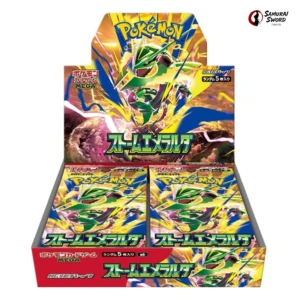
- A Japanese sealed booster box is listed on our store.
Check the linked listing for the current price before ordering. USD figures convert at ¥154/USD, approximate.
From Symbols to Letters: How Japanese Pokemon Card Rarity Symbols Work
Japanese Pokemon cards didn’t always use letters. Per Bulbapedia’s Rarity page, Japan switched from pictorial symbols to bolded letters starting with the Black Collection and White Collection releases on December 17, 2010: “rather than using symbols, use bolded letters to denote rarity; for example, C, U, R and RR.” Every set since has printed a short letter code — usually one to three characters — and that code is the actual rarity indicator. Exact placement on the card varies by set layout, so check the card itself rather than assuming one universal spot.
The letters aren’t static: each era adds combinations on top of the base four (C, U, R, RR), and some — most confusingly HR — get reused with a different meaning later on. One distinction to keep straight throughout: rarity letters mark the print tier; Full Art is a separate, physical print style (artwork covering the whole face). Every SAR, AR, SR, CHR, CSR and UR card is a Full Art card, but “Full Art” itself isn’t a code printed on the card.
Sword & Shield Era Rarity Table
The Sword & Shield era (Japan) is where the letter system got its most elaborate build-out. Sourced from Bulbapedia’s Sword & Shield Era page — currently a Draft-namespace page (community draft, not yet promoted to the main encyclopedia), so treat it as the best available source rather than a finalized one.
| Letters | Name | What it marks |
|---|---|---|
| C | Common | The most common tier — roughly 40–45% of the non-secret cards in a given expansion. |
| U | Uncommon | Most Trainer and Energy cards — roughly 30–34% of non-secret cards. |
| R | Rare | The rarest tier non-rulebox Pokemon can have; always holographic — roughly 10–12% of non-secret cards. |
| RR | Double Rare | Given to Pokemon V; expansions typically carry 6–8 Pokemon V at this tier. |
| RRR | Triple Rare | Introduced in this era; found on Pokemon VMAX, VSTAR, and V-UNION. |
| SR | Super Rare | Full art RR chase cards (Pokemon V, Supporters). From Single/Rapid Strike Master onward, alt-art RR cards qualify too. |
| HR | Hyper Rare (rainbow) | Rainbow-foil full art RRR chase cards, extra glitter layer — a different look from the Scarlet & Violet-era “Hyper Rare.” |
| UR | Ultra Rare | Gold foil Pokemon, Item, Stadium or Energy cards; ~3 as secret rares per expansion. |
| S / SSR | Shiny / Shiny Super Rare | Exclusive to Shiny Star V and Shiny VMAX Collection — 104 “S” and 23 “SSR” cards total. |
| A | Amazing | Legendary Heartbeat, Shiny Star V, Shiny VMAX Collection — 9 cards total. |
| CHR | Character Rare | Full art Basic/Stage 1/2 Pokemon with a human trainer, from VMAX Climax — 46 cards. |
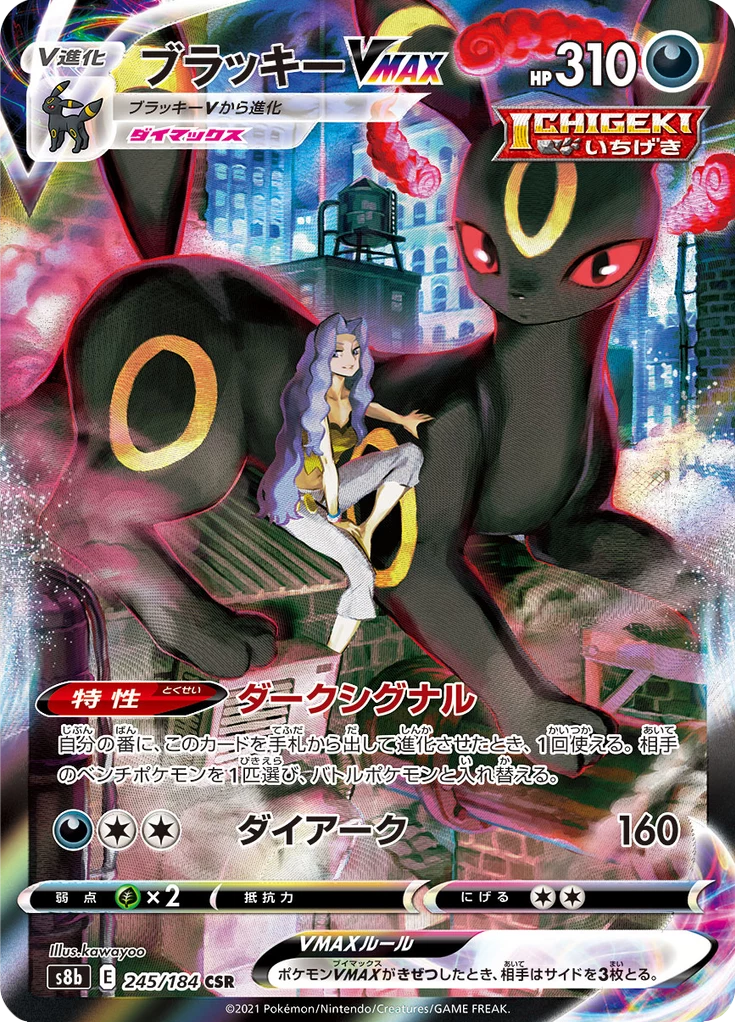
| CSR | Character Super Rare | Same idea as CHR, for Pokemon V/VMAX/VSTAR/V-UNION — 48 cards. |
CHR and CSR are worth remembering: the “card with a person in it” look is distinctive, and Bulbapedia notes it as a return from the earlier Sun & Moon era rather than a Sword & Shield invention.
Scarlet & Violet Era Rarity Table
Scarlet & Violet (Japan) trimmed the letter list slightly and renamed several tiers around the Pokemon ex mechanic, per Bulbapedia’s Scarlet & Violet Era page.
| Letters | Name | What it marks |
|---|---|---|
| C | Common | Roughly 50% of the non-secret cards in a given expansion. |
| U | Uncommon | Roughly 30–33% of non-secret cards. |
| R | Rare | The rarest tier non-Pokemon-ex cards can have; always holographic — 8 cards, roughly 10–12%. |
| RR | Double Rare | Given to Pokemon ex and Tera Pokemon ex; expansions typically carry 6 at this tier. |
| AR | Art Rare | Full art Basic/Stage 1/2 Pokemon in their natural environment, akin to CHR; ~12 as secret rares. |
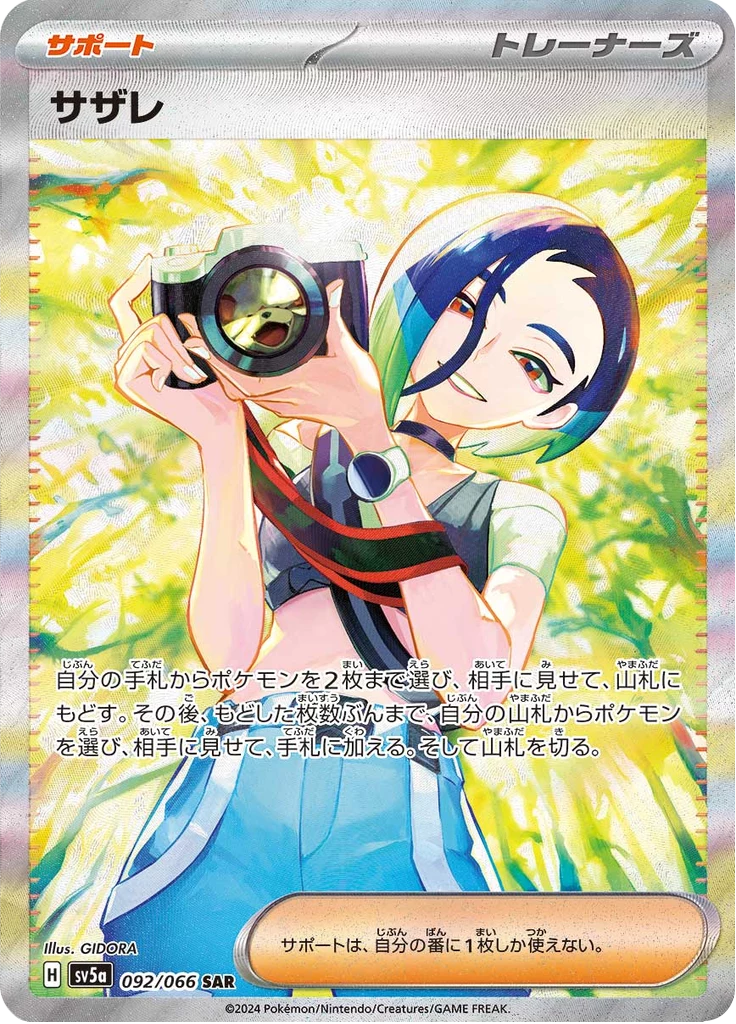
| SR | Super Rare | Full art chase cards — Pokemon ex and Supporters; ~8–10 as secret rares. |
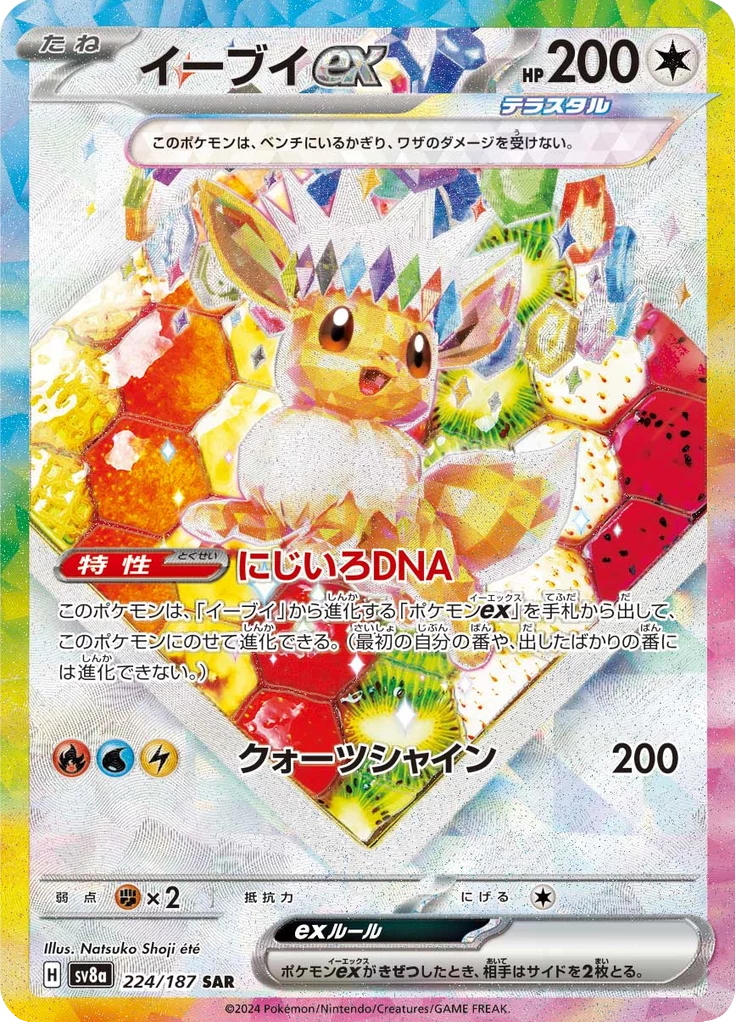
| SAR | Special Art Rare | Pokemon ex and Supporters only, extra glitter layer beyond SR; ~5 as secret rares. |
| UR | Ultra Rare | Rarest tier — gold foil ex/Item/Tool/Stadium/Energy cards; ~3 as secret rares. English name: “Hyper Rare.” |
| BWR | Black White Rare | Introduced in Black Bolt & White Flare; monochrome full art secret cards (Victini printed in red as the exception). Symbol: two stars, one black, one white. |
AR and SAR both trace back to the final Sword & Shield high-class set, VSTAR Universe. And despite the name, “Black White Rare” (2025–26 Black Bolt / White Flare) has nothing to do with the 2010–11 Black & White series that introduced Full Art cards — the two names are fifteen years apart and unrelated.
For the era’s full print-run context — set list, release dates, what shipped alongside these rarities — see our Scarlet & Violet era guide and the earlier Sword & Shield era guide.
The HR Naming Split: Rainbow Rare vs Gold Hyper Rare
In the Sword & Shield era, HR means “Hyper Rare” and refers to rainbow-foil full art chase cards — nicknamed “Rainbow Rare” by the English-speaking hobby. From Scarlet & Violet onward, Japan labels the equivalent top-tier chase card UR (“Ultra Rare”), while the English-market name for that same gold-foil card became “Hyper Rare.” Same English phrase, two eras, two visually different cards.
Per Bulbapedia’s dedicated Hyper Rare page: “Hyper rare is a type of rarity in the Pokemon Trading Card Game, introduced in the Scarlet & Violet expansion. They are Full Art Secret cards that showcase Pokemon, Item, Pokemon Tool, Stadium, Basic Energy, or Special Energy cards as gilded cards with gold backgrounds,” using three gold stars as the symbol. Before this naming existed, such cards were commonly classified as secret rares; in Japan, the first sets to carry it were Violet ex and Scarlet ex.
For the rainbow-foil look, see our HR / Rainbow Rare guide. For the glitter-layer Special Art cards, see our SA / Special Art guide.
The Current Mega Era Naming
Bulbapedia’s Rarity page (as of August 2026) lists the current “Mega” era naming, keeping most Scarlet & Violet letters but adding two new top-tier codes:
| JP letters | English name | Note |
|---|---|---|
| AR | Illustration Rare | Carried over from Scarlet & Violet’s “Art Rare.” |
| SAR | Special Illustration Rare | Carried over from Scarlet & Violet’s “Special Art Rare.” |
| MA | Mega Attack Rare | New tier for the Mega era. |
| UR | Hyper Rare | Same gold-foil tier as Scarlet & Violet’s UR. |
| MUR | Mega Hyper Rare | New top tier for the Mega era, sitting above UR/Hyper Rare. |
Bulbapedia’s Rarity page also lists Radiant Rare and Amazing Rare (A) as separate named rarities. Terminology moves with nearly every new series, so check the current naming on newer cards.
ACE SPEC: The One-Per-Deck Rarity
ACE SPEC sits outside the letter tiers — it’s a rules-restriction rarity, not a pull-rarity tier. Per Bulbapedia, it was first introduced in Boundaries Crossed with a pink star symbol; the rule limits a deck to at most one ACE SPEC card, and only as a Trainer or Energy card. It was reintroduced in Temporal Forces with a magenta/blue colour scheme and the English name “ACE SPEC Rare.” Japan’s label for these cards is simply ACE.
PSA10 Examples by Rarity
| Card | Rarity |
|---|---|
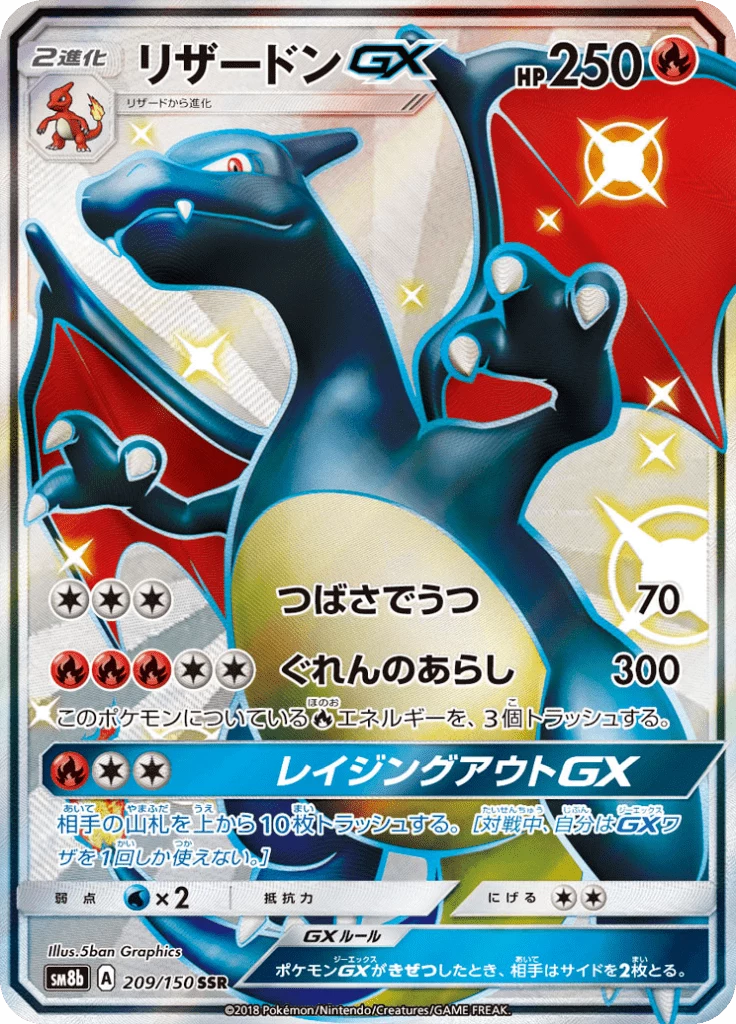
| Charizard GX 209/150 (High Class Pack “GX Ultra Shiny”) | SSR Shiny Super Rare |
| Umbreon VMAX 095/069 (Eevee Heroes) | HR Hyper Rare (rainbow) |
| Pikachu VMAX 279/184 (High Class Pack “VMAX Climax Box”) | UR Ultra Rare (gold) |
| Umbreon VMAX 245/184 (High Class Pack “VMAX Climax Box”) | CSR Character Super Rare |
| Eevee ex 224/187 (Terastal Fest ex) | SAR Special Art Rare |
The letter tells you the print tier, not the price — the Pokemon, the set, and condition move the number independently. Sourcing requests go through Quick Order, and the wider PSA10 collection shows the graded singles on our store.
What the Letters Don’t Tell You
- Letters describe print tier, not odds. The era-table percentages and card counts are Bulbapedia’s descriptive counts of how many cards of that tier exist within a set — not pull-rate or per-box guarantees.
- These are Bulbapedia-sourced labels, not official Nintendo/Pokemon Company terminology statements.
- On-card placement of the mark varies by set layout — check where it sits on each card rather than assuming one universal corner across every set.
- The Sword & Shield table draws on a Bulbapedia Draft-namespace page — the most detailed breakdown available, but a community draft rather than a finalized article.
Where to Buy These Rarities from Japan
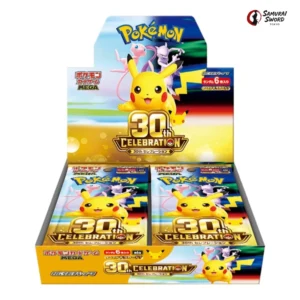
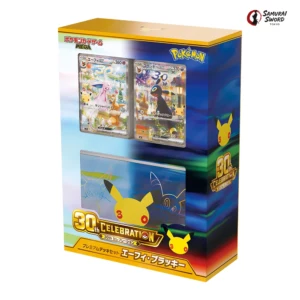
Japanese sealed product and graded singles ship from Tokyo. Browse the full shop, our Japanese Pokemon booster box collection, or the M6a 30th CELEBRATION booster box.
Frequently Asked Questions
What does HR mean on a Japanese Pokemon card?
It depends on the era. In Sword & Shield-era sets, HR means “Hyper Rare” and refers to a rainbow-foil full art chase card. From Scarlet & Violet onward, Japan labels the equivalent gold-foil chase card UR (“Ultra Rare”), and the English market calls that gold card “Hyper Rare” instead — so in English the phrase “Hyper Rare” usually points to the gold UR card, not the earlier rainbow HR.
What’s the difference between SAR and AR on Japanese cards?
Both are Scarlet & Violet-era full art secret rares. AR (Art Rare) covers full art Basic/Stage 1/Stage 2 Pokemon shown in their natural environment. SAR (Special Art Rare) is reserved for Pokemon ex and Supporter cards and adds an extra glitter foil layer on top of the standard full art print. That doesn’t mean SAR reliably prices higher than AR, so treat them as separate design tiers rather than a fixed price ladder.
When did Japan switch from symbols to letters for rarity?
With the Black Collection and White Collection releases, per Bulbapedia’s Rarity page. Before that, Japanese sets used pictorial rarity symbols; from that release onward, sets use bolded letters such as C, U, R and RR.
Is CHR the same as SAR?
No. CHR (Character Rare) is a Sword & Shield-era label for full art cards depicting a Basic/Stage 1/Stage 2 Pokemon alongside a human trainer or companion. SAR (Special Art Rare) is a separate Scarlet & Violet-era label reserved for Pokemon ex and Supporter cards with an added glitter foil layer. They come from different eras and mark different card types.
What is ACE SPEC on a Japanese card?
ACE SPEC (Japanese label: ACE) is a rules-restriction rarity, not a pull-rarity tier — a deck can include at most one ACE SPEC card, and only as a Trainer or Energy card. It was first introduced in Boundaries Crossed with a pink star symbol and reintroduced in Temporal Forces with a magenta/blue colour scheme.
Picked for this article
📩 Get member-only sale alerts & coupons
Sale alerts, coupons and restock notices by email — straight from Tokyo.