Buat akun gratis untuk kumpulkan poin & peringkat
Samurai Sword Tokyo
Pesanan Keranjang

Kenapa Box Kartu Pokemon Cepat Habis: Calo, Alokasi, dan Bagaimana Box Jepang Sampai ke Tanganmu
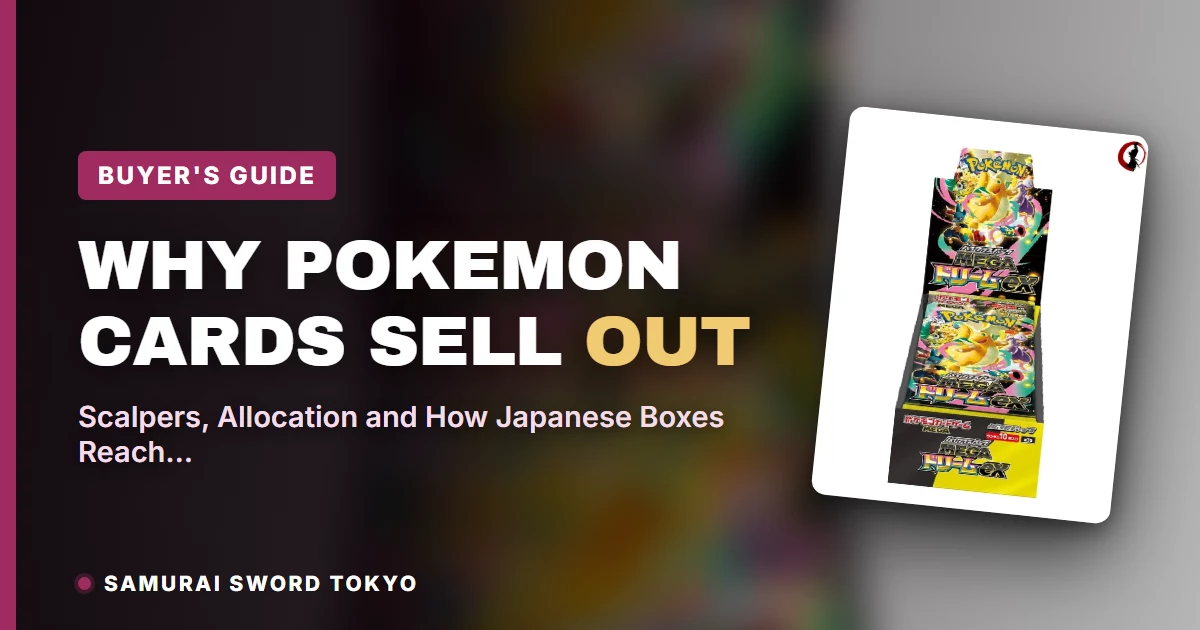
Pokemon boxes can sell out when strong release-day demand meets limits on what reaches an individual store. The Pokemon Company printed roughly 10 billion cards worldwide in the twelve months to March 2026 — reported as over 10% of every Pokemon card ever made, produced in that single year — while shelves still emptied. Reported allocation limits, scalper purchasing, bots, reprints and total production all form part of the supply picture; the available figures do not establish any one of them as the single cause.

This guide works through what’s actually driving the sell-outs, what The Pokemon Company and individual Japanese retailers have done about it, and how that same pressure shapes what we can and can’t guarantee when we ship sealed Japanese boxes out of Tokyo.

Key Takeaways

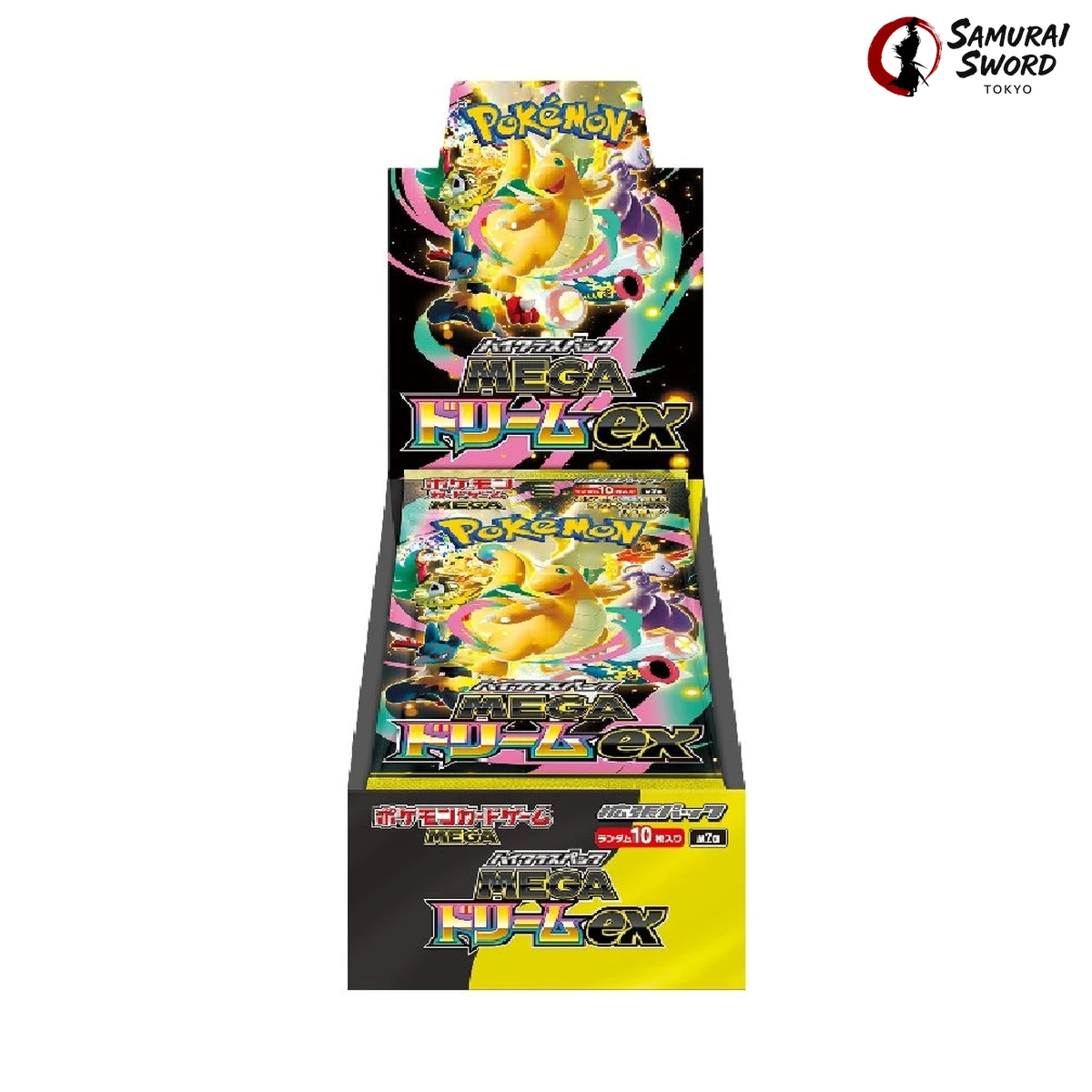
The Pokemon Company printed roughly 10 billion cards worldwide between March 2025 and March 2026 — described as over 10% of all Pokemon cards ever made produced in that single year — while high demand and reported limits on store allocations still left some shelves empty. Some Japanese retailers now cut open packs or strip shrink wrap at the register specifically to remove a scalper’s resale margin. Our own M2A–Mega Dream ex Japanese Pokemon Booster Box, listed at ¥12,240 (~$77) in September 2026, and SV11B–Black Bolt Japanese Pokemon Booster Box, listed at ¥22,472 (~$141) in September 2026, ship factory-sealed from Tokyo with no pack-cutting.

10B
Cards Printed Worldwide (2025–26)

30–50%
Est. Store Allocation, Recent Sets

10–15%
Est. Allocation, Prismatic Evolutions

Nov 2024
Surging Sparks Shortage Began

Yen figures convert at ¥159/USD (September 2026). Allocation percentages below are industry-observer estimates, not figures published by The Pokemon Company.

Why Printing More Cards Hasn’t Stopped the Shortage

The scale of the print run is the first thing that surprises people. According to PokéBeach, The Pokemon Company printed roughly 10 billion Pokemon TCG cards worldwide between March 2025 and March 2026 — reported as over 10% of every Pokemon card ever made, produced in that single twelve-month window. That is not a company failing to increase output — it’s a company producing at an extraordinary scale by any historical measure.

And shelves still emptied within hours of release. PokéBeach traces the modern shortage back to Surging Sparks emptying shelves in November 2024, while the 10-billion-card figure shows production increasing in response. Reported allocation limits, concentrated demand, reprints and additional production all form part of the supply picture; the available figures do not establish allocation as the single cause.

What The Pokemon Company Has Changed

In response to the shortage, The Pokemon Company and its retail partners have rolled out a set of measures aimed specifically at scalper purchasing rather than at total print volume. Per Sportskeeda’s roundup of recent changes, these include:

  • Stricter ID policies at retail — requiring identification at the point of purchase to curb bulk buying by resellers.
  • More frequent reprints — shortening the gap between a set selling out and new stock arriving, rather than relying on a single large print run.
  • Bot-detection and anti-bot measures — targeting the automated purchasing tools that let a single scalper clear online stock in seconds.

Reprints increase the number of cards supplied, while ID checks and anti-bot measures address how that supply is distributed among buyers. Those are different levers, and both matter when a high-output year can still leave retail shelves empty.

Japan’s Anti-Scalper Fix: Cutting Packs at the Register
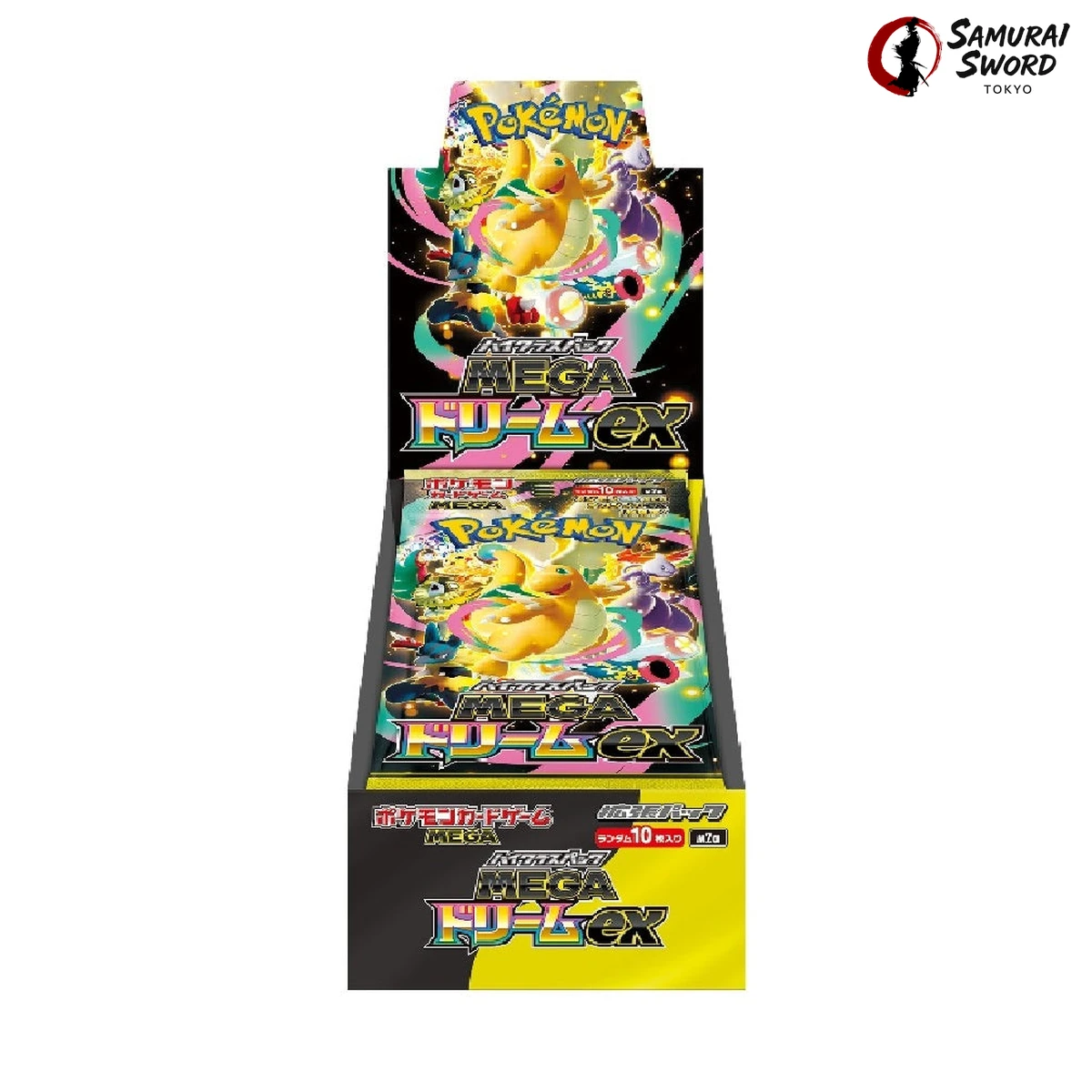
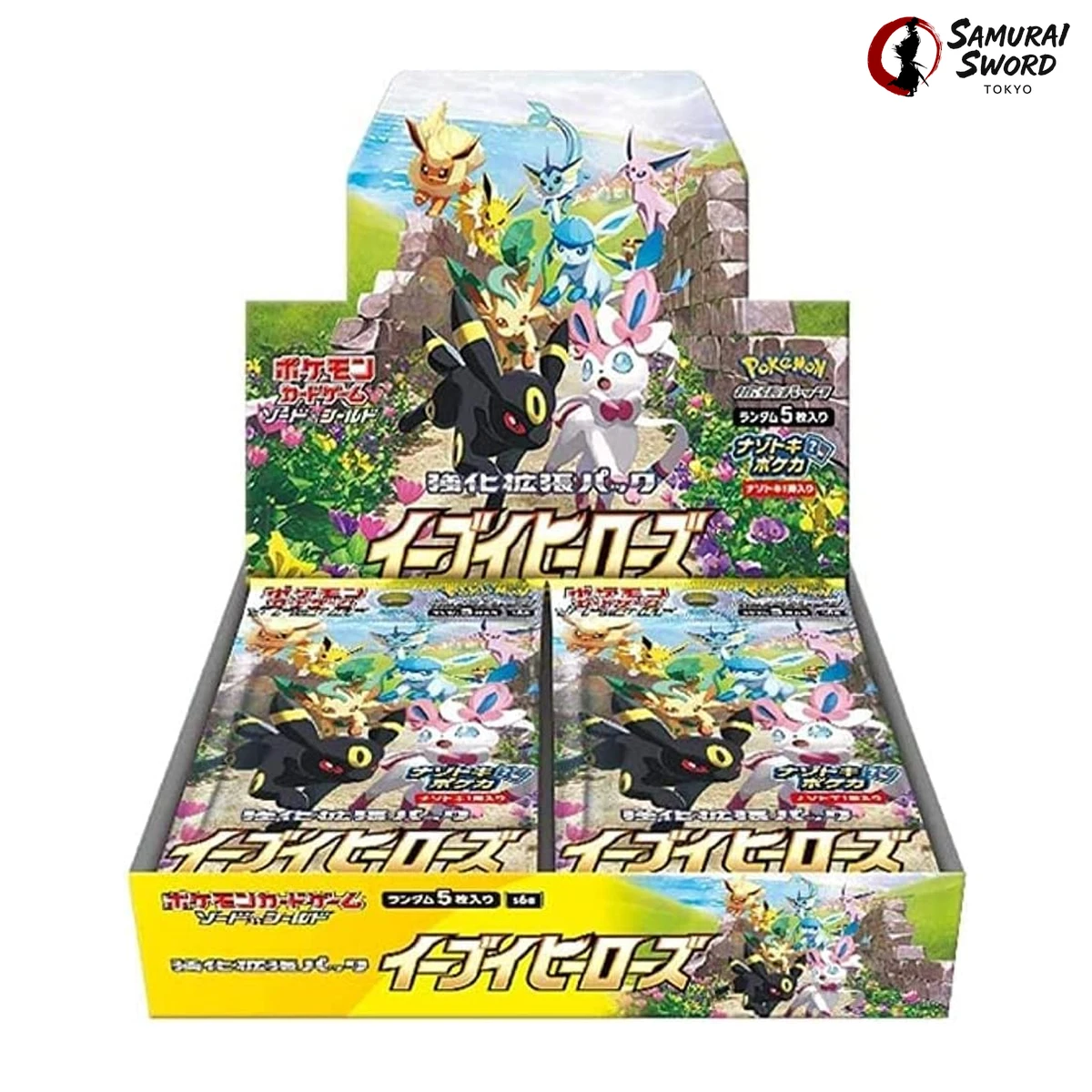
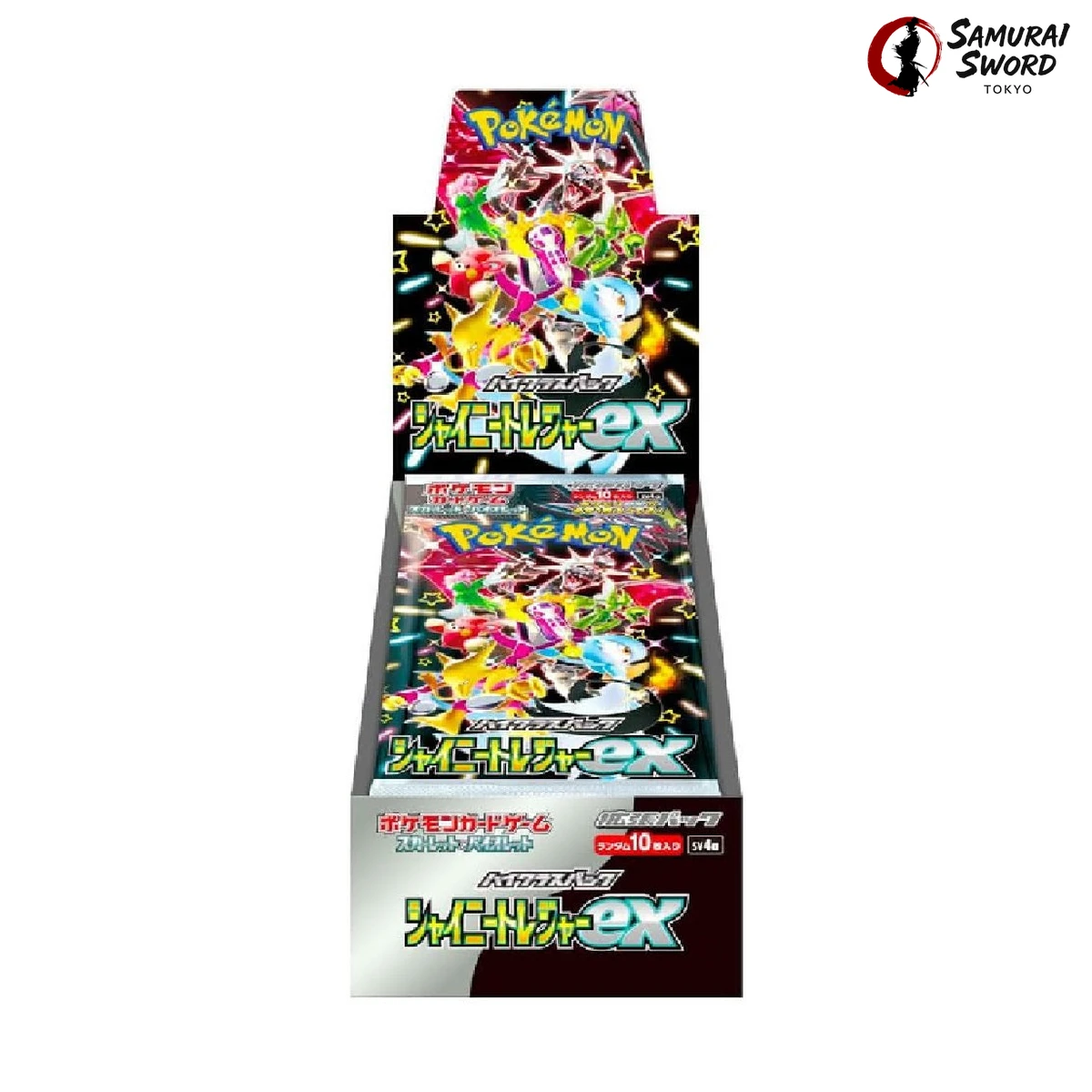
M2A Mega Dream ex Japanese Pokemon booster box, factory-sealed
A factory-sealed Japanese booster box — the shrink wrap that some retailers now deliberately remove at checkout to deter scalpers.

Japanese retailers have taken a distinctive physical approach that goes beyond ID checks or purchase limits: some stores cut open booster packs, or remove the shrink wrap from booster boxes, at the point of sale. The logic is direct. A “factory sealed” box or an unopened pack carries resale value to a collector or a reseller; a box with the shrink wrap already off, or a pack that’s already been sliced open, does not — even though every card inside is completely untouched and fully usable for play.

According to reporting from The Gamer and Toy People, some stores have photographed and posted signage showing customers exactly where a pack will be cut before it’s handed over, so there’s no ambiguity at the counter. Outer-box damage as an anti-scalping measure has been reported in Japan since as early as 2022–2023, with pack-cutting specifically reported more recently as retailers refine the tactic.

It’s a blunt tool, but it works on the actual incentive: a scalper’s business model depends on reselling sealed product at a markup. Remove the seal at the till, and that specific resale premium disappears, while the customer who actually wants to open the pack and play loses nothing.

A Similar Playbook: One Piece Card Game’s US Shop

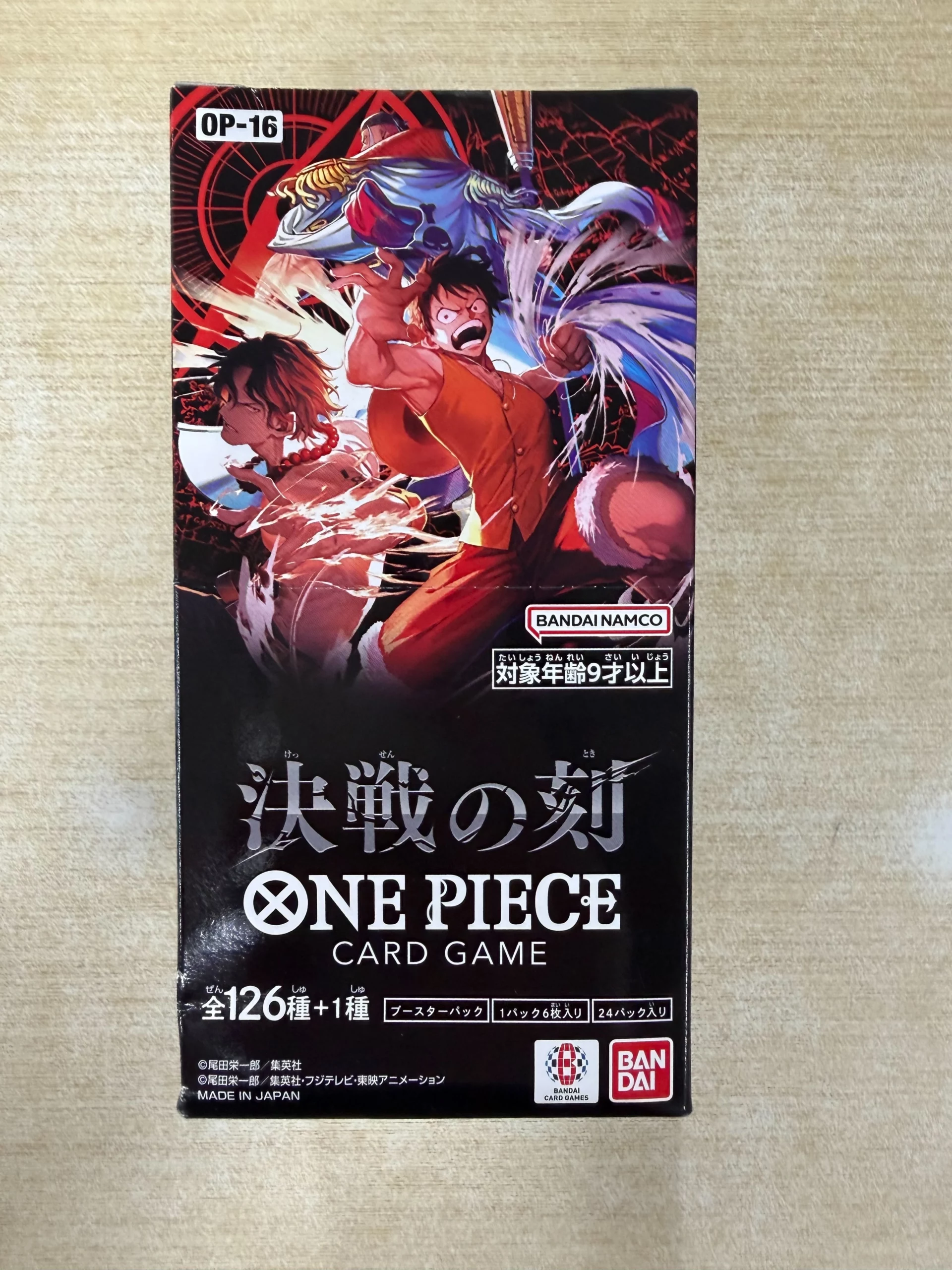
The same tactic has reportedly surfaced outside Pokemon. The One Piece Card Game’s official US shop has reportedly adopted a comparable policy: removing the factory shrink wrap from sealed booster boxes at the point of sale, so the box is no longer “factory sealed” in collector terms by the time it leaves the counter — specifically to blunt the incentive for scalper resale.

That report is sourced through secondary aggregation rather than a primary statement we’ve independently located from Bandai or the OPCG shop itself, so it’s worth treating as a reported practice rather than a confirmed, ongoing policy. What it does show is that the underlying idea — strip the “sealed” premium at checkout to make scalping less profitable — isn’t unique to Pokemon or to Japan. It’s a response to the same economics wherever a trading card product sells out on release day.

How Store Allocation Actually Works

One factor behind a release that empties quickly can be the percentage of a store’s requested order that the distributor actually ships. Sportskeeda’s roundup cites industry-observer estimates — not official Pokemon Company figures — putting recent allocation fulfillment at roughly 30–50% of requested order volume for recent sets, an improvement on the roughly 10–15% estimated for the Prismatic Evolutions release.

Release Est. store allocation fulfilled Source basis
Prismatic Evolutions ~10–15% of requested volume Industry-observer estimate
Recent sets (2025–26) ~30–50% of requested volume Industry-observer estimate

Even taking the improved end of that range, a store receiving half of what it requested may sell out quickly on a high-demand release. The estimate is one useful lens for understanding a specific shop’s availability, but it is not an official statistic or proof that allocation alone caused a sell-out.

A Legitimate Alternative: Our Damaged Box Line
Damaged Box Japanese Pokemon booster box with cosmetic outer-box damage, contents unaffected
A Damaged Box listing — cosmetic outer-box wear distinguished from deliberate anti-scalper pack-cutting.

To be clear about the difference: the pack-cutting described above is retailers deliberately altering sealed product at checkout to deter scalpers. Our own Damaged Box line is a separate, unrelated mechanism. These are boxes that arrive from the supply chain with cosmetic damage to the outer packaging — a crushed corner or a torn cellophane edge — through ordinary handling and shipping, not through a deliberate anti-scalping cut. Pricing is listing-specific; the Damaged Box label by itself does not establish that a box costs less than the corresponding regular listing.

It’s an honest, legitimate secondary-market response to the same broad dynamic — packaging condition affecting resale value — but it is not us replicating the Japanese retail anti-scalping tactic ourselves. If you’re comparing the two, our full breakdown is in how much you save on a Japanese Damaged Box. For the mechanics of shrink wrap itself, see our booster box shrink wrap guide and our No Shrink vs regular box guide.

Where to Buy Japanese Pokemon Boxes from Tokyo

Because store allocation can affect what reaches a particular shop even while total production rises, buyers should distinguish a store-level sell-out from worldwide print volume. For sealed collectors, the practical comparison is whether the product is factory-sealed or has been altered at checkout.

Our M2A–Mega Dream ex Japanese Pokemon Booster Box was listed at ¥12,240 (~$77) in September 2026, and our SV11B–Black Bolt Japanese Pokemon Booster Box was listed at ¥22,472 (~$141) in September 2026. Both ship factory-sealed from Tokyo.
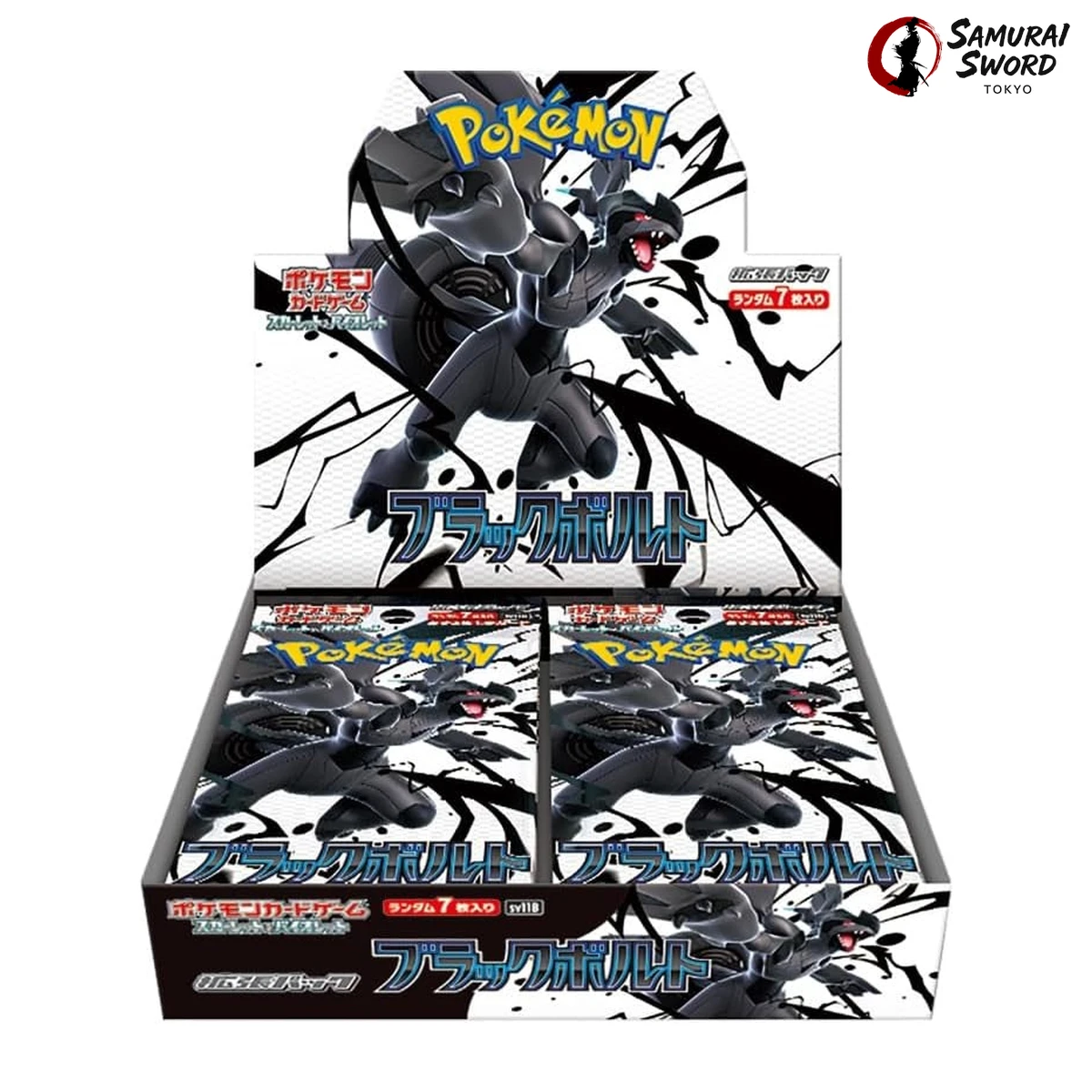
SV11B Black Bolt Japanese Pokemon booster box, factory-sealed
SV11B–Black Bolt Japanese Pokemon Booster Box — listed at ¥22,472 (~$141) in September 2026, ships factory-sealed from Tokyo.
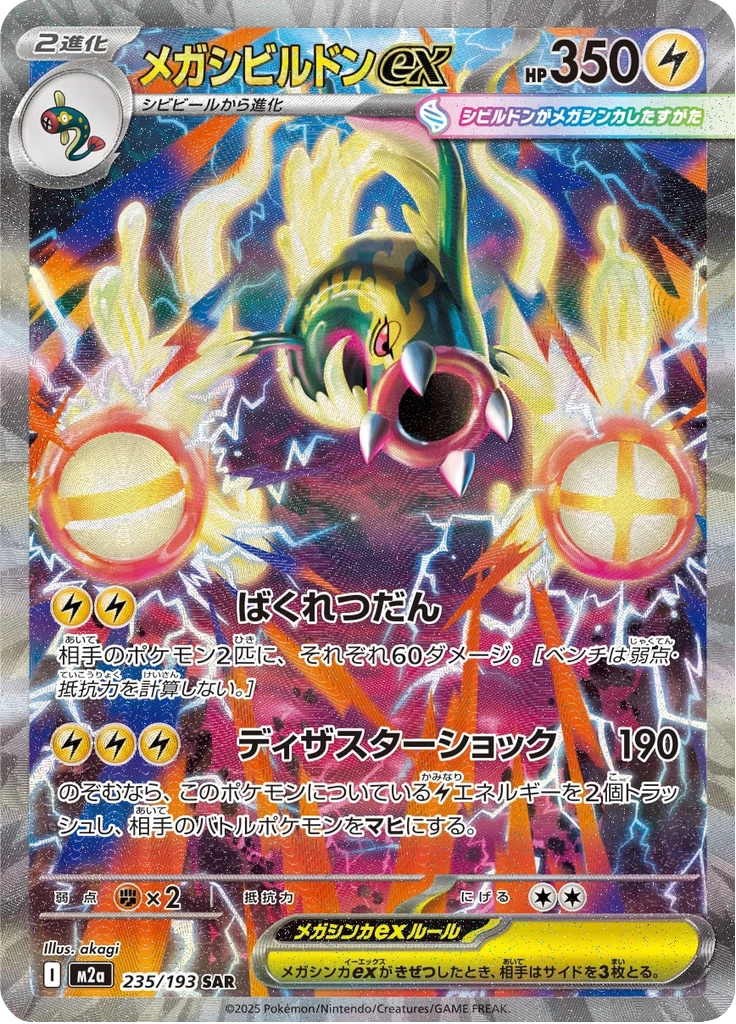
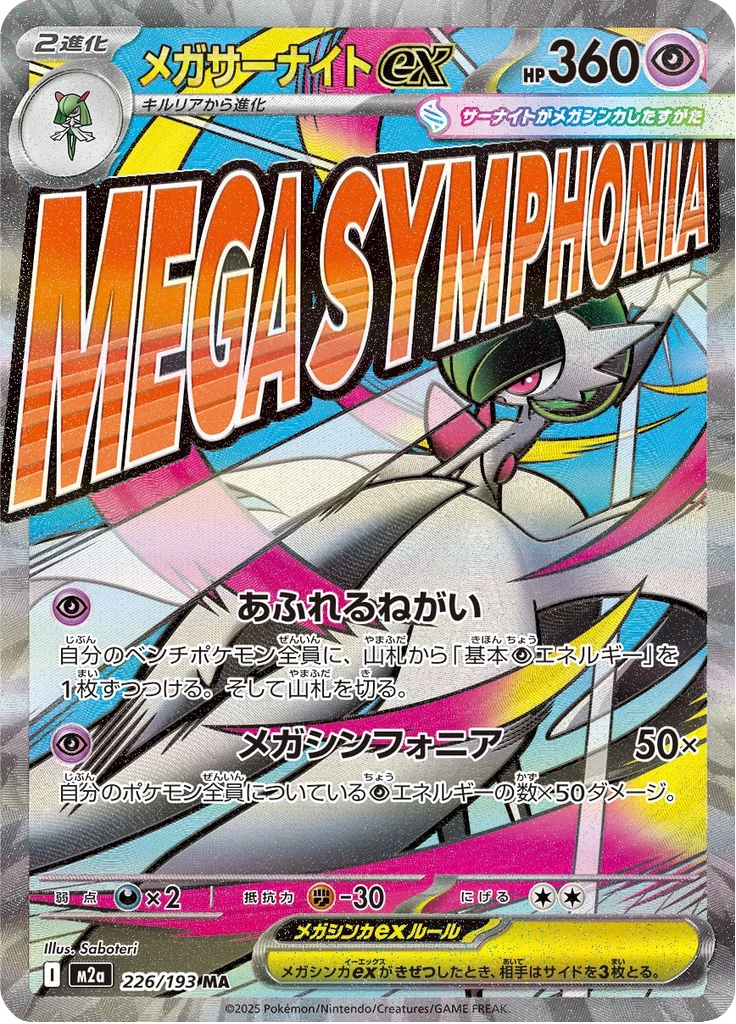
Mega Gardevoir ex, MA, M2A Mega Dream ex
Mega Gardevoir ex, MA — a chase-tier pull from the M2A Mega Dream ex set.
Mega Eelektross ex, SAR, M2A Mega Dream ex
Mega Eelektross ex, SAR — another top-tier chase card from the same set.

The Mega series M1–M6 box ranking guide covers where M2A sits against the rest of that run. If you’d rather explore acquisition routes beyond a single box — including Japan’s card vending machines — see our guide to Pokemon card vending machines in Japan and the broader where to buy Japanese Pokemon cards online overview.

Shop This Box
M2A–Mega Dream ex Japanese Pokemon Booster Box
Listed at ¥12,240 (~$77) in September 2026
Ships from Tokyo · Factory-sealed · Tracked delivery

View Product →

Browse the full range in our Japanese Pokemon booster box collection, or build a mixed order — including sets not listed individually on the site — through Pesan Cepat.

Pertanyaan yang Sering Diajukan

Why do Pokemon card boxes sell out so quickly?

High demand can meet limits on what reaches an individual store. The Pokemon Company printed roughly 10 billion cards worldwide between March 2025 and March 2026, while industry observers estimated that stores received roughly 30–50% of requested volume for some recent sets. Those estimates make allocation one possible factor, not the sole proven cause.

Has The Pokemon Company done anything about scalpers?

Yes. Reported measures include stricter ID policies at retail, more frequent reprints to shorten restock gaps, and bot-detection and anti-bot measures aimed at automated bulk purchasing online.

Why do some Japanese stores cut open Pokemon card packs before selling them?

Some Japanese retailers cut open booster packs or remove the shrink wrap from booster boxes at the point of sale specifically to deter scalpers. An unsealed box or an already-opened pack loses its resale value as “factory sealed” product to collectors, while every card inside remains completely usable for play. Outer-box damage as an anti-scalping measure has been reported in Japan since as early as 2022–2023, with pack-cutting reported more recently.

Does this happen outside Pokemon too?

Reports indicate the One Piece Card Game’s official US shop has adopted a comparable approach — removing factory shrink wrap from booster boxes at checkout to reduce scalper resale value. That report is secondary-sourced rather than confirmed via an original Bandai or OPCG statement, but the underlying tactic mirrors the Japanese Pokemon retail practice.

Is your Damaged Box the same thing as anti-scalping pack-cutting?

No. Anti-scalping pack-cutting is a retailer deliberately unsealing product at checkout to deter resale. Our Damaged Box listings are units that arrived from the supply chain with cosmetic outer-packaging damage from ordinary handling. Pricing is listing-specific, and the two are separate, unrelated mechanisms.

What percentage of a store’s order actually gets fulfilled for a hot Pokemon set?

Industry-observer estimates — not official Pokemon Company figures — put recent fulfillment at roughly 30–50% of a store’s requested volume, compared with an estimated 10–15% during the Prismatic Evolutions release. These are reported estimates, not published statistics.
Panduan Kartu Trainer Bianca (Cyber Judge): Semua Cetakan Jepang & SAR

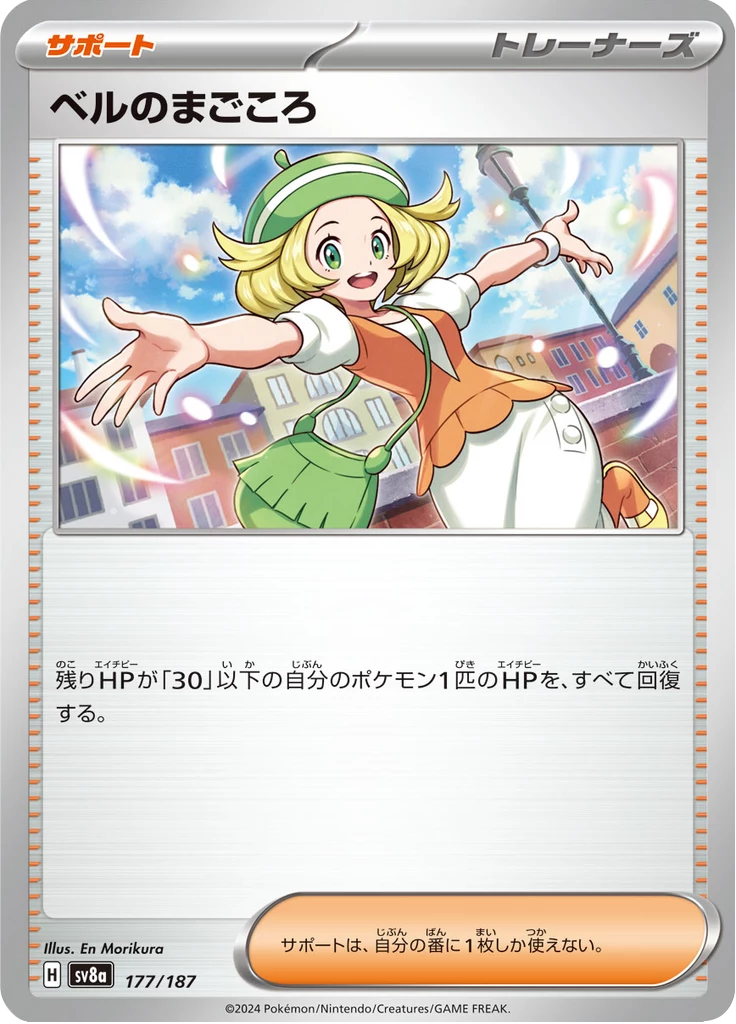
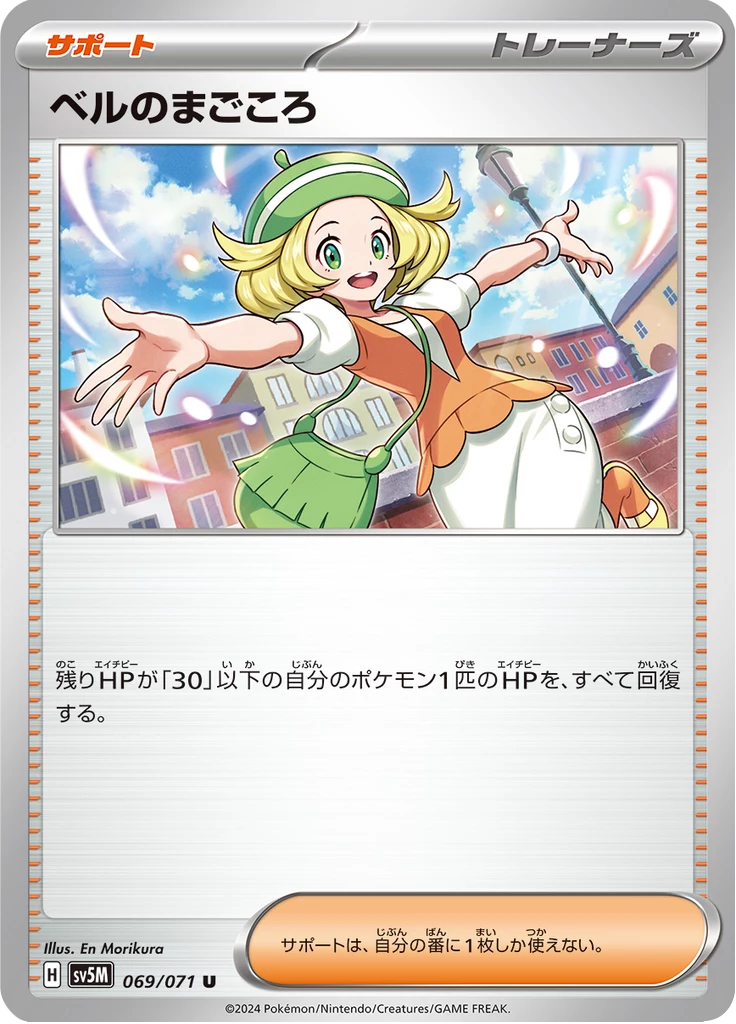
Search “Bianca” on a Japanese card list and you’ll find nothing. Search ベル (Bel) instead, and five prints show up.

That’s because the Supporter card built around this character carries her original Japanese name on the card itself — ベルのまごころ (Beru no Magokoro, “Bel’s Devotion”) — and it’s only the English localisation that renamed her Bianca. Limitless TCG’s English-translation toggle renders the card as “Bianca’s Devotion,” the name used for English-language searches, while the native Japanese name is printed on the Japanese cards.
The card itself has been printed five times across three Japanese sets: three separate rarities inside the SV5M Cyber Judge set alone, plus a Battle Collection reprint and a Terastal Festival ex reprint. This guide runs through all five prints, explains why the SV5M Uncommon, Secret Rare, and Special Art Rare are not the same tier despite sharing a set, and points to the one Japanese box that pulls the anchor-set trio.
Key Takeaways

Bianca’s Devotion (Beru no Magokoro) is a Trainer – Supporter card, Regulation Mark H, printed across three sets: SV5M Cyber Judge, MC, and SV8a. The SV5M Special Art Rare (#97, illustrated by Cona Nitanda) is the chase print of the set — a different rarity and illustrator from the SV5M Uncommon (#69) and Secret Rare (#92), even though all three exist only in that one set. All three SV5M prints are pulled from the SV5M Cyber Judge Japanese Pokemon Booster Box, currently listed at ¥9,690 (~$61).

5
Japanese Prints

3
Rarity Tiers (SV5M)

3
Sets Featuring the Card

¥9,690
SV5M Box (~$61)

Prices are our own listed prices as of September 2026, converted at ¥159/USD.

The Card: Bianca’s Devotion Across Five Japanese Prints

Bianca’s Devotion is a Trainer – Supporter card carrying Regulation Mark H. Its Japanese in-game namesake, Bel (ベル), has had this one Supporter effect reprinted five times, across three different Japanese sets, with two different illustrators and three distinct rarities inside its home set alone.

Set Card # Rarity Illustrator
SV5M (anchor) 69 Uncommon En Morikura
SV5M (anchor) 92 Secret Rare En Morikura
SV5M (anchor) 97 Special Art Rare Cona Nitanda
MC 723 Promo/deck – no pack rarity En Morikura
SV8a 177 Terastal Festival ex reprint En Morikura

The English-language version of this same Supporter effect appears in Temporal Forces, printed under the localised name Bianca rather than Bel. Limitless groups the Japanese print family with English Temporal Forces #142, #197, and #209; these are listed once here because they are English variants of the card, not a repeated one-to-one equivalent for every Japanese row.

Four of the five Japanese prints share the same illustrator, En Morikura. The exception is the SV5M Special Art Rare, painted by Cona Nitanda — a different artist working in the alternate-art style, which is one of the reasons that print stands apart from the rest of the lineup.

The Anchor Set: SV5M Cyber Judge

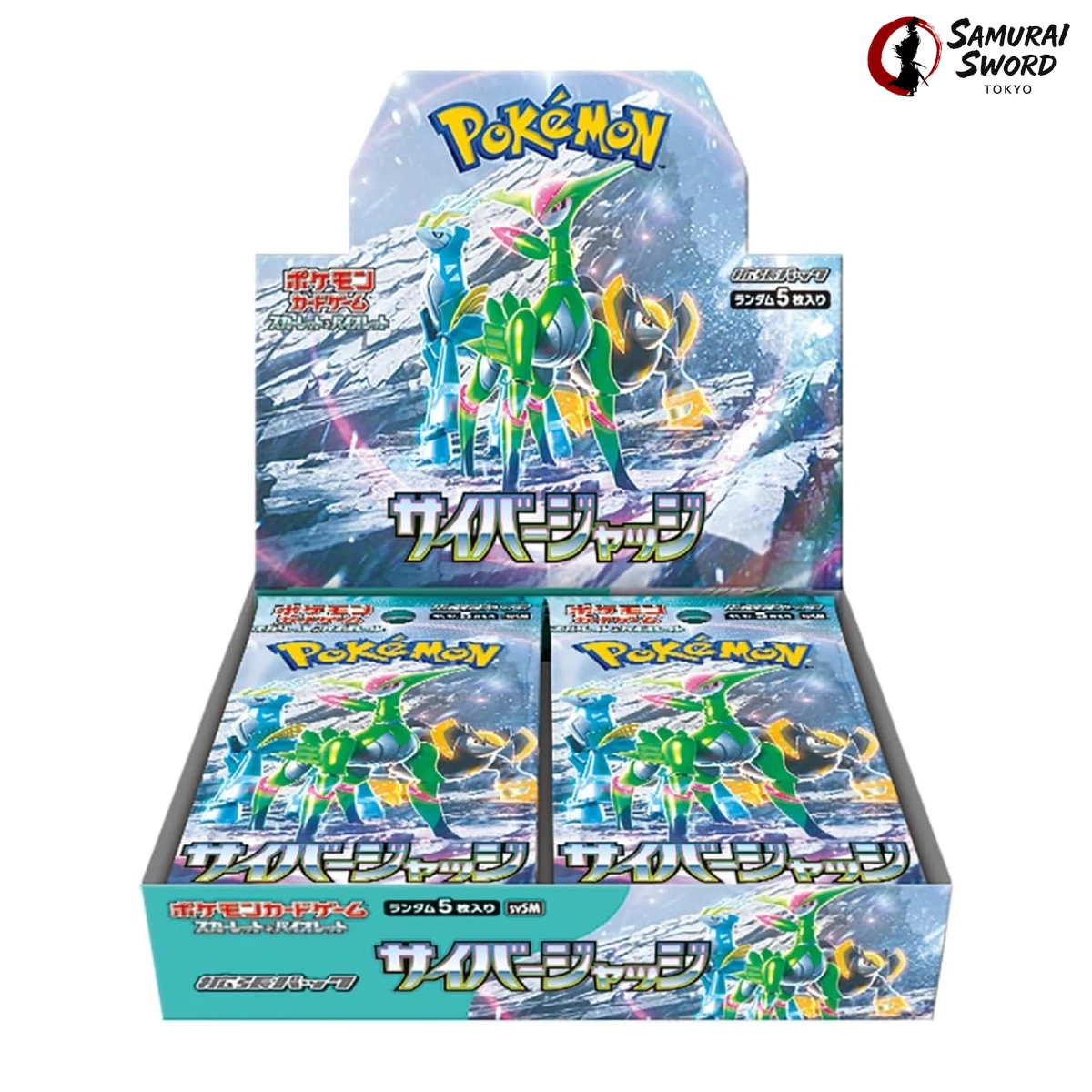
SV5M “Cyber Judge” (サイバージャッジ) released in Japan on 26 January 2024 and carries 100 cards. It’s the set that contains all three anchor-print variants of Bianca’s Devotion — the Uncommon, the Secret Rare, and the chase Special Art Rare. See our full SV5M Cyber Judge card list for the rest of the set; this guide focuses only on the Bianca/Bel Supporter across all its prints.

Bianca’s Devotion #69, Uncommon

Bianca's Devotion #69, Uncommon, SV5M Cyber Judge
Bianca’s Devotion #69, Uncommon — SV5M Cyber Judge

This is the base-rarity print of the card, illustrated by En Morikura in the standard Trainer-card frame.

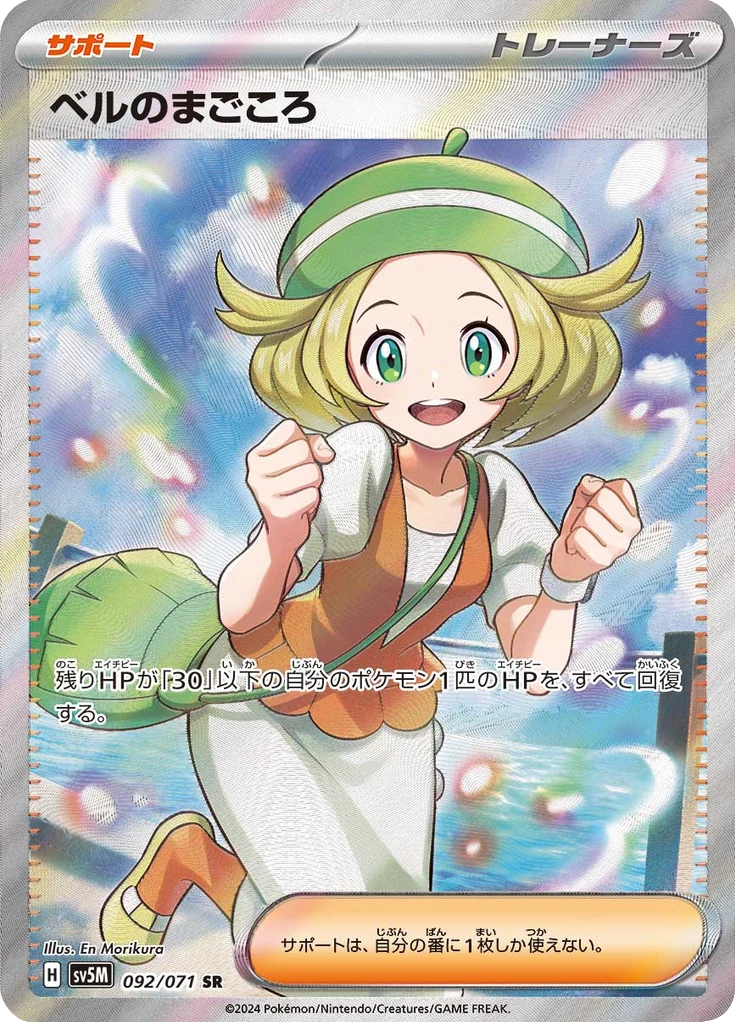
Bianca’s Devotion #92, Secret Rare

Bianca's Devotion #92, Secret Rare, SV5M Cyber Judge
Bianca’s Devotion #92, Secret Rare — SV5M Cyber Judge

The Secret Rare uses the same En Morikura artwork as the Uncommon, reprinted in the set’s secret-rare card number range. It is a separate rarity tier from both the Uncommon below it and the Special Art Rare above it in the set’s numbering — not an alternate name for either.

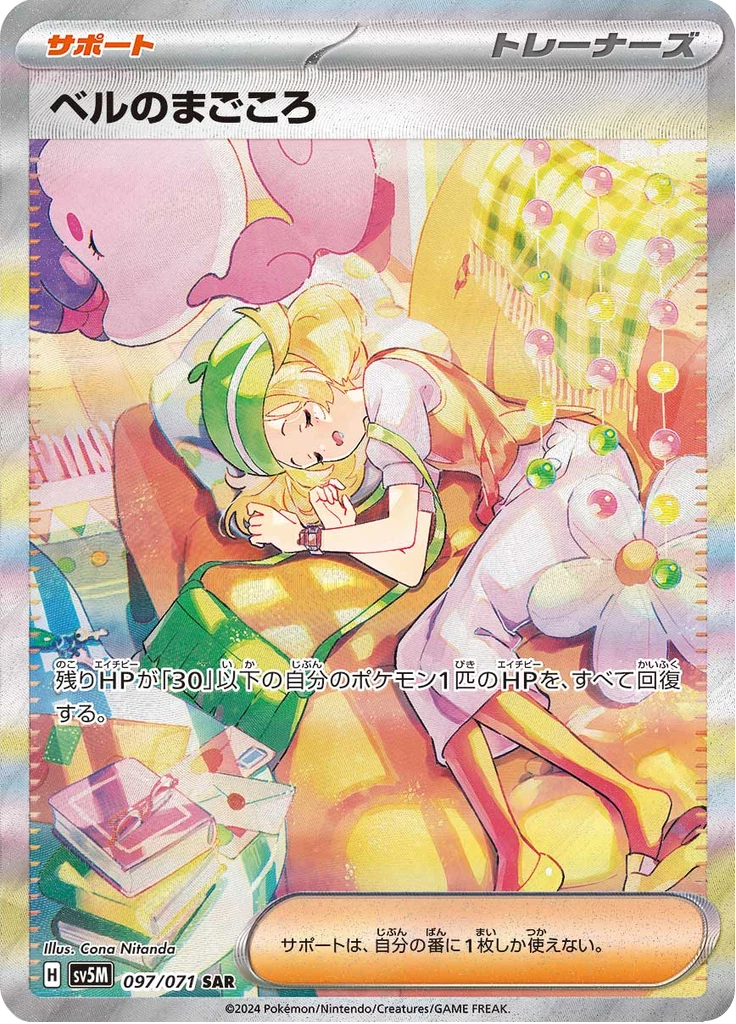
Bianca’s Devotion #97, Special Art Rare

Bianca's Devotion #97, Special Art Rare, SV5M Cyber Judge
Bianca’s Devotion #97, Special Art Rare — SV5M Cyber Judge, illustrated by Cona Nitanda

This is the highlighted chase print: a Cona Nitanda illustration in the Special Art Rare treatment, numbered #97 in the same set as the Uncommon and Secret Rare above. It is a different card from those two — different illustrator, different rarity slot — despite all three appearing inside SV5M.

Other Japanese Prints: MC and SV8a

Beyond the SV5M anchor set, Bianca’s Devotion has appeared twice more in Japanese product.

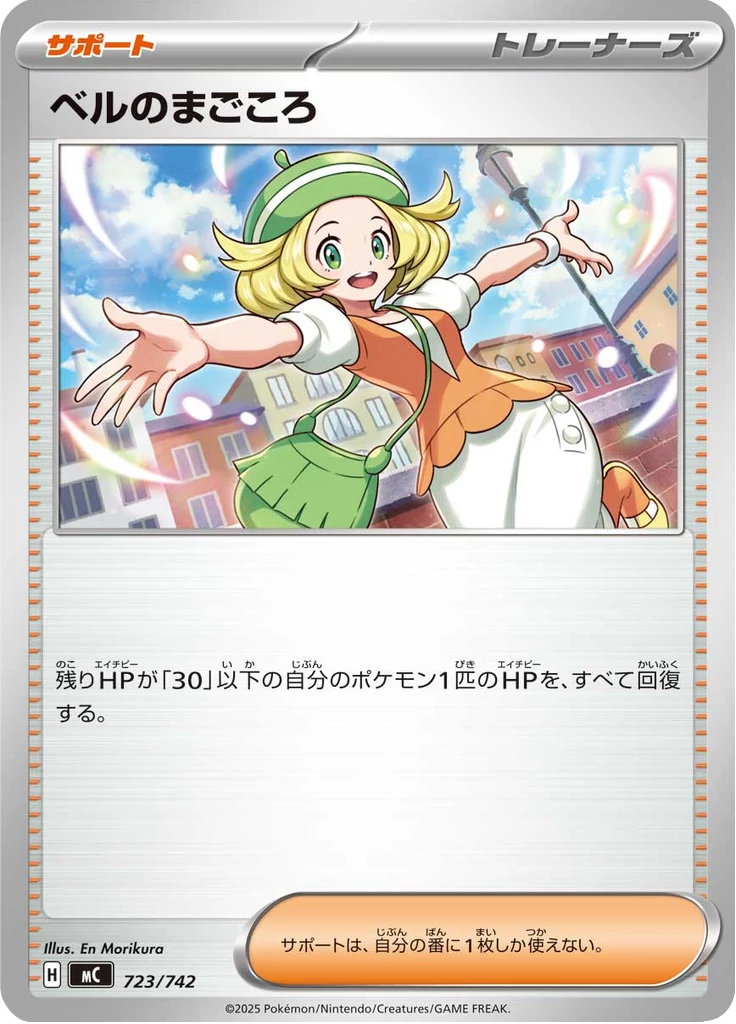
MC #723, Battle Collection reprint

Bianca's Devotion #723, MC Start Deck 100 Battle Collection reprint
Bianca’s Devotion #723 — MC (Start Deck 100 Battle Collection)

Card #723 in the MC numbering carries no standalone pack rarity — it’s a promo/deck-issued reprint rather than a set-booster pull, again illustrated by En Morikura.

SV8a #177, Terastal Festival ex reprint

Bianca's Devotion #177, SV8a Terastal Festival ex reprint
Bianca’s Devotion #177 — SV8a, Terastal Festival ex

The SV8a printing carries the same En Morikura artwork again, this time reprinted for the Terastal Festival ex set. Neither the MC nor the SV8a print is currently listed on our site as a single — if you’re specifically after either of those two, sourcing requests go through Pesan Cepat.

All five prints share the same underlying Supporter effect and, in Japan, the same native card name; only the illustration, rarity treatment, and set placement change from one print to the next.

Chase Prints and What Makes Them Collectible

Of the five prints, the SV5M Special Art Rare (#97) is the one identified as this card’s chase print: it’s the sole print carrying the alternate Cona Nitanda illustration, and it sits in a rarity slot separate from both the Uncommon and Secret Rare that share the same set.

SV5M’s Special Art Rare-tier Trainer cards are sometimes discussed together as a set of related pulls — our Cyber Judge Trio guide covers the other SAR-tier Trainer cards from the same set. Bianca’s SAR is illustrated by Cona Nitanda, a different artist from the ones featured in that piece, so treat it as a related-set companion rather than a shared-illustrator match.

For a broader breakdown of what’s inside SV5M Cyber Judge packs, our Cyber Judge pull-rates and best-cards hub covers the set’s other chase pulls alongside this one.

Which Japanese Box to Open for Bianca (Bel) Cards

No Bianca/Bel single is currently listed on our site. All three SV5M anchor-set prints — the Uncommon, the Secret Rare, and the Special Art Rare chase print — are pulled from one sealed product: the SV5M Cyber Judge Japanese Pokemon Booster Box, currently listed at ¥9,690 (~$61).

SV5M Cyber Judge Japanese Pokemon Booster Box, listed on samuraiswordtokyo.com
SV5M Cyber Judge Japanese Pokemon Booster Box, currently listed at ¥9,690 (~$61)

If you’re weighing SV5M against the other Japanese sets released around the same window, our SV5a vs SV5K vs SV5M box guide compares the three side by side. For the MC and SV8a reprints, a Pesan Cepat request is the route to a specific single.

Shop This Set
SV5M Cyber Judge Japanese Pokemon Booster Box
Currently listed at ¥9,690 (~$61)
Ships from Tokyo · Tracked delivery

View Product →

Where to Buy Bianca (Bel) Cards from Tokyo

We ship Japanese sealed product out of Tokyo with tracked delivery. For Bianca’s Devotion, the direct route is the sealed SV5M Cyber Judge Japanese Pokemon Booster Box, which contains all three anchor-set prints in one product. Our broader Japanese Pokemon booster box collection covers the surrounding sets if you’d like to build a mixed order.

For general trainer-card collecting, our Gardenia Japanese trainer card guide follows the same print-by-print format for another Gym Leader-style Supporter. If you’re after the MC or SV8a reprints, or singles from either, the fastest way to place a request is our Quick Order page.

Pertanyaan yang Sering Diajukan

What is Bianca’s Japanese name on Pokemon cards?

Her Japanese in-game name is Bel (ベル), and the Supporter card built around her is named ベルのまごころ (Beru no Magokoro), which Limitless TCG’s English-translation toggle renders as “Bianca’s Devotion.”

Are the SV5M Secret Rare and Special Art Rare Bianca cards the same rarity?

No. The SV5M Secret Rare (#92) and Special Art Rare (#97) are separately numbered, different rarity tiers with different treatments — the Special Art Rare also uses a different illustrator, Cona Nitanda, versus En Morikura on the Secret Rare and Uncommon.

Which print is the chase card for this Supporter?

The SV5M Special Art Rare, card #97, illustrated by Cona Nitanda. It’s the only one of the five Japanese prints with that alternate-art treatment.

Is there an English print of this card?

Yes — the English equivalent is printed in Temporal Forces under the localised name Bianca, at card numbers that vary by print run (#197, #142, or #209 depending on the specific version).

Can I buy a Bianca (Bel) single directly?

No Bianca/Bel single is currently listed on our site. Sourcing requests for any of the five Japanese prints go through our Quick Order page.

Which box should I open to pull a Bianca (Bel) card?

Open SV5M Cyber Judge for the three SV5M printings: Uncommon, Secret Rare, and Special Art Rare. MC #723 is deck-issued, while SV8a #177 comes from Terastal Festival ex.

Panduan Kartu Eevee Promo SM-P 245 (GX Start Battle)

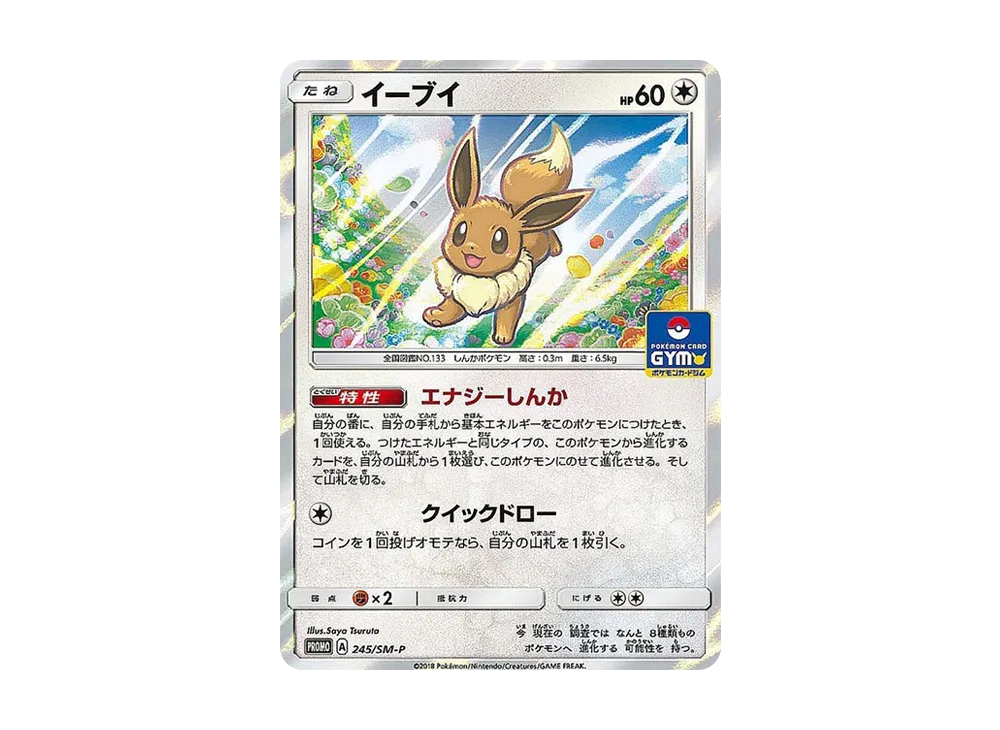
Eevee 245/SM-P was never sold in a booster pack. It was handed out at Japanese Pokémon Card Gyms in the summer of 2018 to players who showed up and played three free battles — a straightforward attendance prize rather than a set pull.

The card is イーブイ — Eevee, numbered 245/SM-P in the Japanese Sun & Moon promo series (Limitless set code SMP, no dash), printed as a kira/holo campaign promo. We currently list a PSA 10 copy of this exact print, and this guide covers what the card is, how it was distributed, how it compares to its English counterpart, and where it sits among Japanese promo tiers.

Key Takeaways

Eevee 245/SM-P is a kira/holo Pokémon Card Gym attendance promo from the July 2018 “GX Start Battle — Get Eevee” campaign. We list a PSA 10 copy at ¥16,390 (~$103). It has no connection to the unrelated 2021 Eevee Heroes (S6a) expansion — if you’re after that set instead, our S6a Eevee Heroes Japanese Booster Box is listed separately.

60
HP

Promo
Rarity (Kira/Holo)

245/SM-P
Card Number

Jul 2018
Japan Distribution

Prices below are current samuraiswordtokyo.com listings, converted at ¥159/USD (September 2026).

The Card: Eevee 245/SM-P (Promo)

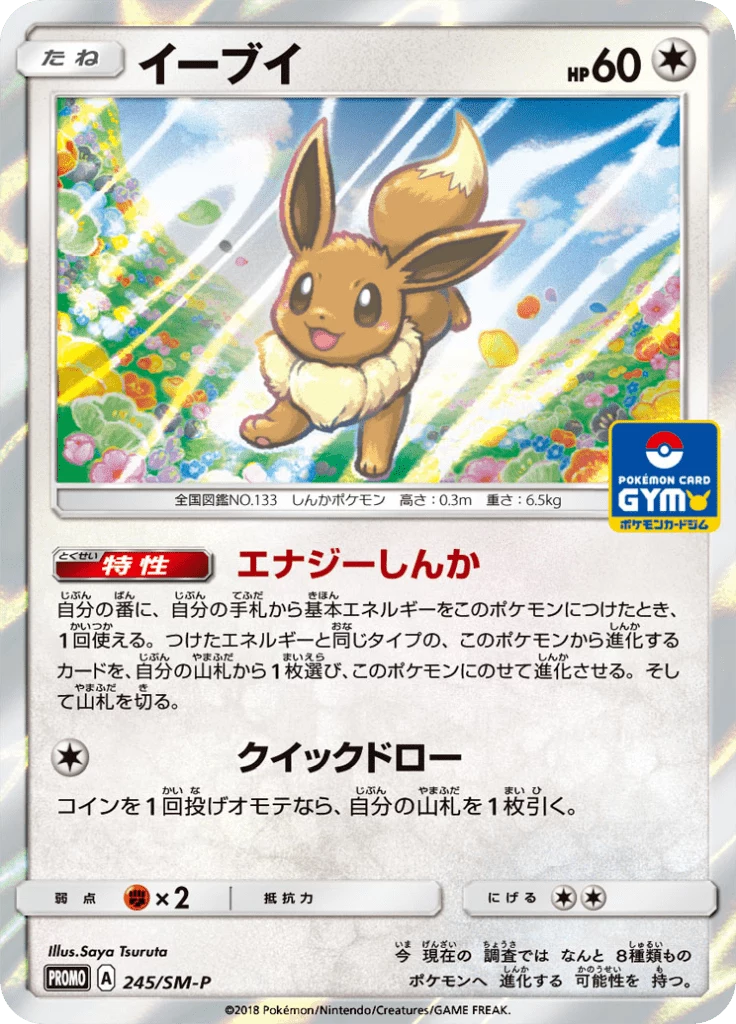
Eevee — イーブイ in Japanese — is a Basic Colorless-type Pokémon carrying 60 HP. The 245/SM-P print has an Ability called エナジーしんか (Energy Evolution) and an attack called クイックドロー (Quick Draw), a coin-flip move. The print is illustrated by Saya Tsuruta.

The number itself tells you what kind of card this is. SM-P is the Japanese Sun & Moon-era promo numbering track (Limitless catalogues it as set code SMP, written without a dash), and 245 is simply this card’s position in that ongoing promo series — not a position inside a boxed expansion. Cards on the SM-P track were released individually across tournaments, campaigns, magazines and store events throughout the Sun & Moon era rather than in a single set.

Eevee 245/SM-P promo card, Japanese Sun & Moon promo series
Eevee 245/SM-P — Japanese SM-P promo series, illustrated by Saya Tsuruta

Our own graded copy of this print is a PSA 10, currently listed at ¥16,390 (~$103).

PSA 10 Eevee 245/SM-P GX Start Battle promo card slab, listed on samuraiswordtokyo.com
PSA 10 Eevee 245/SM-P slab, listed on samuraiswordtokyo.com

The Distribution: GX Start Battle at Pokémon Card Gyms

This Eevee was not sold. It was distributed through “GXスタートバトル 〜イーブイをゲット〜” (“GX Start Battle — Get Eevee”), a campaign run at Pokémon Card Gyms across Japan. According to the official Pokémon Card announcement dated 15 June 2018, the campaign began on Friday, 13 July 2018.

The mechanic was simple: a participant needed to bring a GX Start Deck and complete three or more free battles at a participating Gym session. Completing that requirement earned the player the promo Eevee — the kira/holo 245/SM-P print covered in this guide — as their attendance reward. It wasn’t a prize for winning; it was a prize for showing up and playing.

Because this print dates to a 2018 event promo rather than a boxed release, it falls well outside the confirmed 2001–2016 window in which Japanese 1st Edition marks were used, so this card carries no 1st Edition stamp of any kind.

Japanese vs English Print

This Eevee does have an English-language equivalent: Sun & Moon (base set) #101. Where the Japanese version reached players exclusively through Gym attendance, the English #101 print was distributed as part of the mainline Sun & Moon base set booster releases rather than through a standalone event campaign.

That distribution difference is the main thing to keep in mind if you’re comparing the two: the Japanese 245/SM-P and the English #101 share the same Eevee illustration lineage from the Sun & Moon era, but they reached collectors through entirely different channels — one through a Japan-only in-store campaign, the other through ordinary retail booster packs.

Where This Promo Sits Among Japanese Rarity Tiers

Campaign and event promos like this Eevee sit on a separate track from mainline booster-pack rarities such as Common, Rare, Special Art Rare or Secret Rare. Those tiers describe a card’s position inside a specific boxed expansion’s pull structure; a card numbered on the SM-P track, by contrast, was never part of a booster box’s pull structure at all — it reached players only through the Gym campaign described above.

Within that promo track, the kira/holo finish on 245/SM-P is the standard treatment used for this generation of Sun & Moon-era Gym promos, distinguishing it from plain non-foil promo cards issued through other channels during the same period. For a broader look at how Japanese TCG rarity tiers are labelled and what separates them, see our best Eevee cards guide, which surveys Eevee prints across multiple Japanese sets and tiers.

Shop This Card
PSA 10 Eevee 245/SM-P (GX Start Battle Promo)
Currently listed at ¥16,390 (~$103)
Ships from Tokyo · Tracked delivery

View Product →

Where to Buy Eevee Cards from Tokyo

Our graded copy of PSA 10 Eevee 245/SM-P is currently listed at ¥16,390 (~$103), shipped from Tokyo with tracked delivery. Since this is a campaign promo rather than a boosted pull, there is no sealed source product for it — the PSA 10 listing above is the direct route to this specific print.

If you’re building out a wider Eevee collection rather than chasing this one promo specifically, note that Eevee also headlines an entirely separate, later Japanese expansion: the 2021 Eevee Heroes (S6a) set, which is unrelated to this 2018 promo campaign. We carry the S6a Eevee Heroes Japanese Booster Box at ¥159,600, and the full Eevee Heroes Eeveelutions Set at ¥400,000. For that set’s full card list and box contents, see our Eevee Heroes (S6a) card list and box guide and our Eevee Heroes Eeveelutions Set guide.

S6a Eevee Heroes Japanese Pokemon booster box product photo, samuraiswordtokyo.com
S6a Eevee Heroes Japanese Booster Box — a separate, unrelated 2021 Eevee-themed expansion

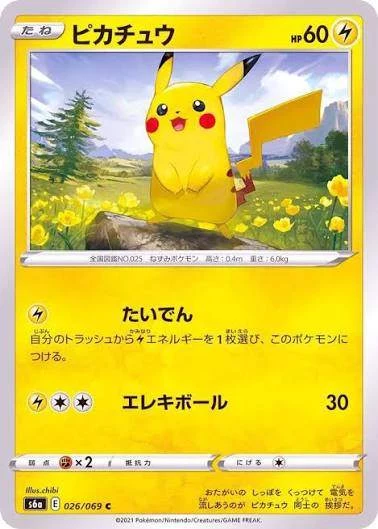
Eevee Heroes also drives interest in some of its Eeveelution-adjacent singles, such as PSA 10 Pikachu C 026/069 (s6a), listed at ¥11,000.

PSA 10 Pikachu C 026/069 s6a Eevee Heroes card slab, listed on samuraiswordtokyo.com
PSA 10 Pikachu C 026/069 (s6a) — a different card from the unrelated Eevee Heroes set

Browse the full range in our PSA 10 graded card collection, or use our Quick Order page for a mixed order across singles and sealed product.

Pertanyaan yang Sering Diajukan

What is Eevee 245/SM-P?

It is a kira/holo Japanese promo card, number 245 on the Sun & Moon promo series (SM-P), distributed as an attendance prize through the July 2018 “GX Start Battle — Get Eevee” campaign at Pokémon Card Gyms. We list a PSA 10 copy at ¥16,390 (~$103).

How did you get the Eevee 245/SM-P promo card?

Participants brought a GX Start Deck to a participating Pokémon Card Gym session and completed three or more free battles. Completing that was enough to receive the promo Eevee as an attendance reward — it was not tied to winning.

Is Eevee 245/SM-P connected to the Eevee Heroes (S6a) set?

No. Eevee Heroes (S6a) is a separate, later Japanese expansion released in 2021, three years after this 2018 Gym attendance promo. The two are unrelated releases that happen to both feature Eevee.

Does Eevee 245/SM-P have a 1st Edition version?

No. This is a 2018 promo card, which falls outside the confirmed 2001–2016 window in which Japanese 1st Edition marks were used, so this print carries no 1st Edition stamp.

Does Eevee 245/SM-P have an English print?

Yes — the English equivalent is Sun & Moon (base set) #101, distributed through ordinary retail booster releases rather than an event campaign.

Where can I buy a PSA 10 Eevee 245/SM-P from Tokyo?

Our graded copy is currently listed at ¥16,390 (~$103) with tracked shipping from Tokyo. Since this is a campaign promo rather than a booster pull, there is no sealed product route to this specific print.

Cara Menyimpan Kartu Pokemon Jepang dan Slab PSA: Panduan Praktis

Short answer: raw Japanese Pokemon cards go into an inert sleeve and a rigid toploader or binder page, kept flat or upright out of direct sunlight and away from high humidity; PSA slabs get stored upright or flat — never stacked on edge under weight — in the same low-light, low-humidity conditions. The physical card itself is a standard 63mm × 88mm trading-card size, and a PSA holder is a fair bit bigger than the card it protects, which changes how much space you actually need to plan for.

This guide walks through both cases: what to do with raw Japanese singles and sealed product, and what changes once a card comes back from PSA in a graded holder. We ship PSA10 Japanese cards and sealed Japanese booster boxes out of Tokyo every week, so the examples below are drawn from stock that actually moves through this kind of storage and handling before it reaches a buyer.

Key Takeaways

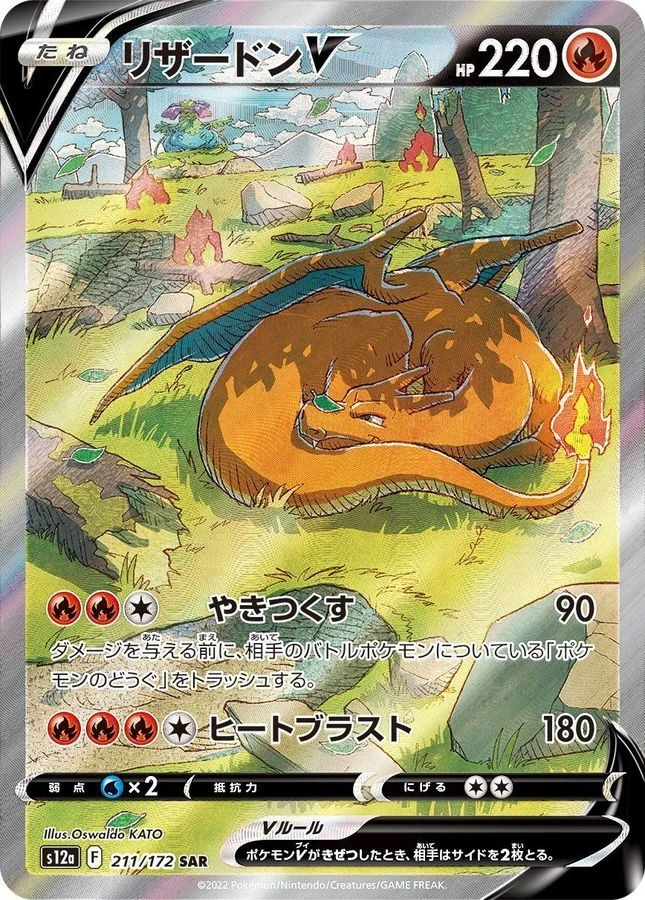
A Japanese Pokemon card measures 63mm × 88mm, the same as an English-language card, so standard sleeves and toploaders fit either. A PSA slab is commonly reported at roughly 81mm × 136mm × 6.5mm — noticeably larger than the card inside it, which matters for box and shelf planning. Keep both raw cards and slabs out of direct sunlight and high humidity. A PSA10 Charizard V 211/172 SAR is currently listed at ¥18,260 (~$115) and a sealed M2a Mega Dream ex Japanese Pokemon Booster Box is currently listed at ¥12,240 (~$77) — two examples used throughout this guide to illustrate raw-card, slab, and sealed-box storage side by side.

63×88mm
Standard JP Card Size

~81×136mm
PSA Slab Footprint

¥159
Per USD (Sept 2026)

5
Storage Examples Below

Yen figures below convert at ¥159/USD (September 2026). Product prices are our own listed prices at samuraiswordtokyo.com — check the linked listing for the current number before ordering.

Card Size and Material: What You’re Actually Protecting

A Japanese Pokemon card is 63mm × 88mm (2.5in × 3.5in) — identical to an English-language Pokemon card, and the same footprint shared across most trading card games. If you already have sleeves, toploaders, or binder pages sized for English cards, they fit Japanese cards without any adjustment.

The one commonly-reported difference is the card stock itself: Japanese card stock is often described by collectors as thinner and smoother than the English-language equivalent. That’s a widely repeated observation rather than a lab-measured spec, so treat it as a texture and handling note — it’s part of why a snug-fitting sleeve matters more with Japanese cards than a loose one, since thinner stock shifts and creases more easily inside an oversized sleeve.

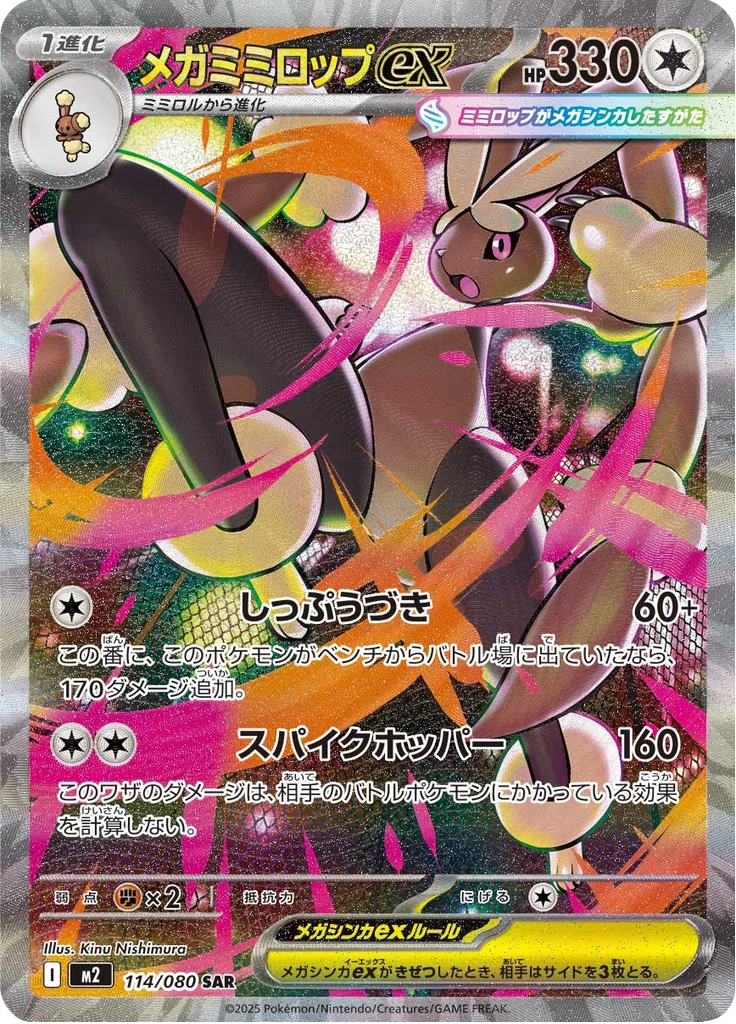
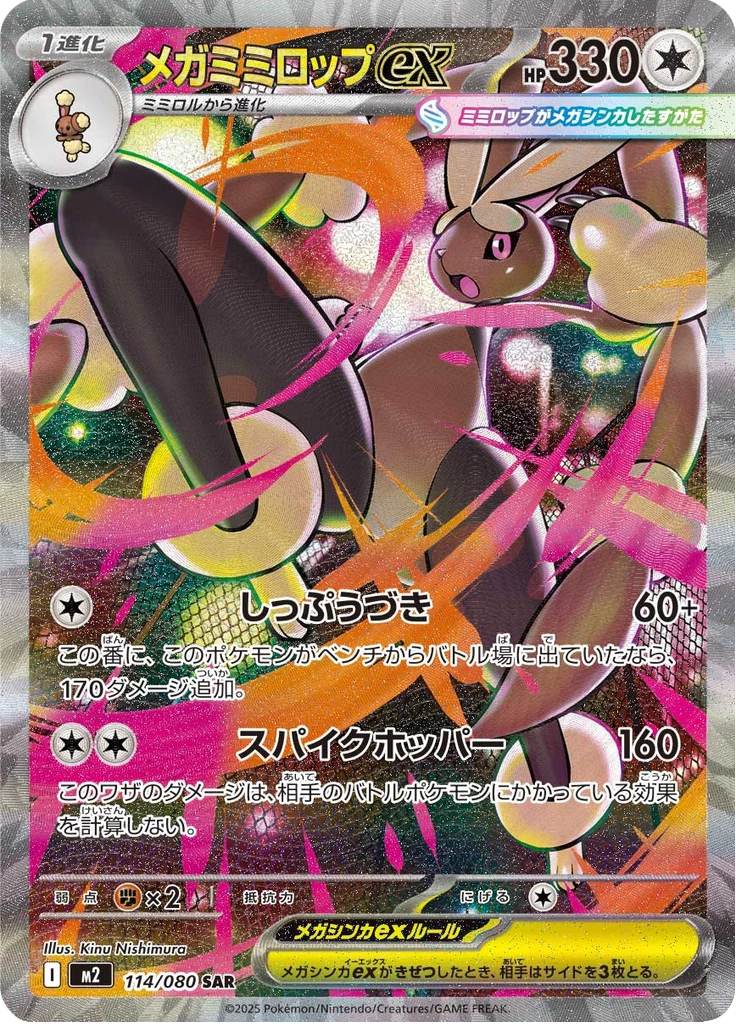
Mega Lopunny ex 114/080 SAR Japanese Pokemon card
Mega Lopunny ex 114/080, SAR — standard 63mm × 88mm card size regardless of rarity tier

Sleeves, Toploaders, and Binders for Raw Cards

For raw (ungraded) Japanese cards, the standard collector approach is a layered one: an inert penny sleeve against the card itself, then a rigid toploader or a binder page on top of that for anything you’re not sending for grading. None of this is an official Pokemon Company storage rulebook — there isn’t one — it’s standard practice across the trading card hobby, and it applies the same way to Japanese cards as it does to any other 63mm × 88mm card.

A few practical points worth being specific about:

  • Sleeve first, always. A bare card directly inside a toploader or a binder pocket picks up scuffs from repeated insertion and removal. The sleeve is the sacrificial layer.
  • Match the sleeve to the card, not to habit. A sleeve that’s too loose lets the card shift and the corners catch on the sleeve seam; too tight and you risk bending a corner on insertion. Given the thinner stock noted above, a snug standard-size sleeve is the safer default for Japanese cards.
  • Toploaders for anything valuable or destined for grading. Corners and edges are exactly what a rigid toploader protects, and corners and edges are exactly what grading companies look at first.
  • Binder pages for cards you handle often. A nine-pocket binder page is more practical than a stack of toploaders if you’re regularly flipping through cards, provided the binder itself is stored the way the next section describes.
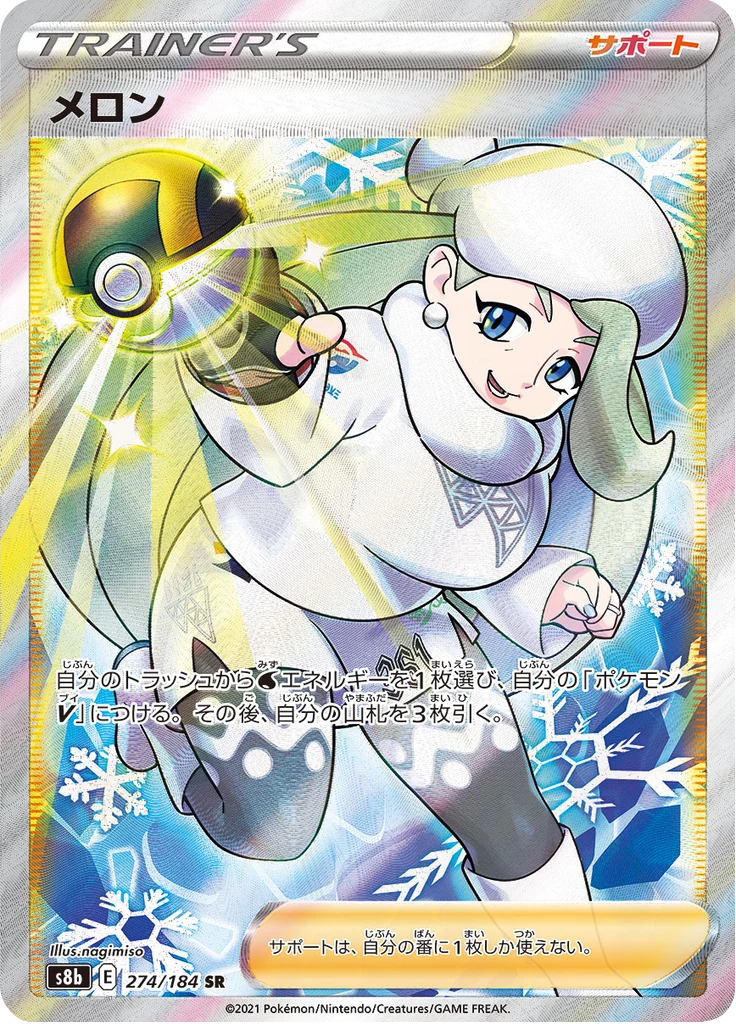
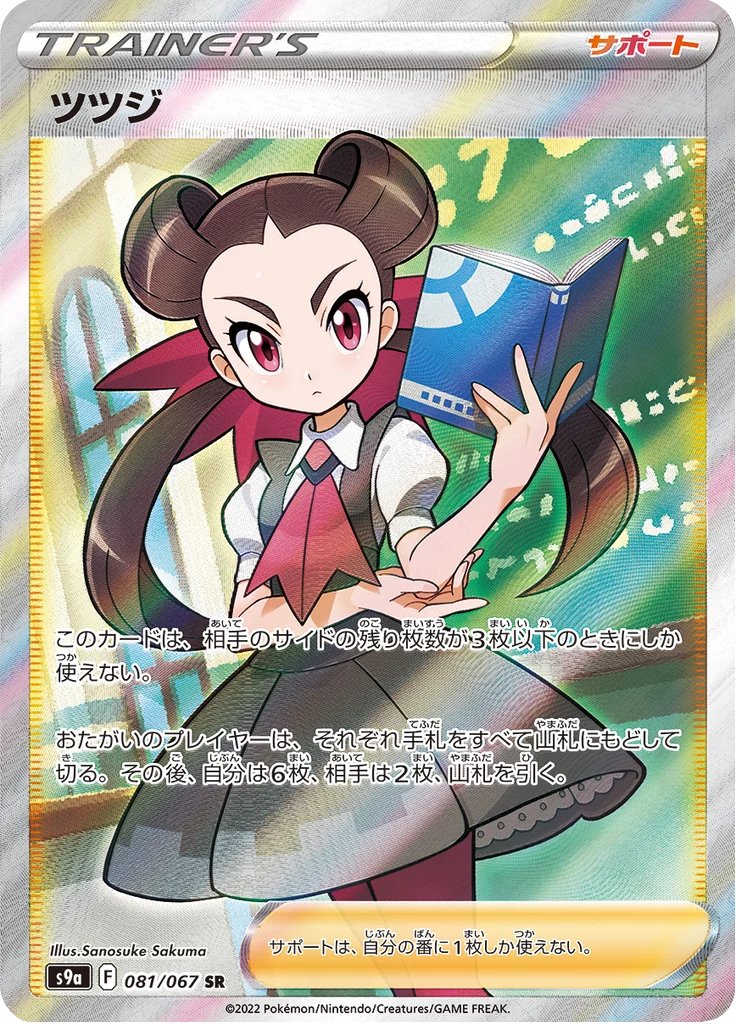
Melony SR 274/184 Japanese Pokemon card

Melony SR 274/184

Roxanne SR 081/067 S9a Japanese Pokemon card

Roxanne SR 081/067, S9a

Both of the raw prints above are the kind of card worth sleeving and toploading before submission — a full-art rarity where a corner ding or a surface scratch picked up from loose handling is the difference between a Gem Mint result and a lower grade.

Before You Sleeve a Card for Grading

If a card is going to PSA, don’t touch the surface with bare fingers and don’t force it into an undersized sleeve. Our PSA 10 grading guide covers exactly what centering, corners, edges, and surface need to look like before submission — worth reading before you sleeve anything you plan to send in.

Storing PSA Slabs: Dimensions and Handling

Once a card comes back from PSA, it’s sealed inside a hard plastic holder — a “slab” — and the storage problem changes shape entirely. A standard PSA holder is commonly reported at roughly 81mm × 136mm × 6.5mm (about 3.25in × 5.35in × 0.25in). That’s not an official PSA-published spec sheet figure; it’s the size widely cited by collectors and slab-case sellers, and it’s consistent enough to plan storage around. Oversized or multi-card submissions come back in larger custom holders, so don’t assume every slab in a collection is the same size.

PSA10 Charizard V 211/172 SAR graded slab
PSA10 Charizard V 211/172, SAR — a standard-size PSA holder, noticeably larger than the 63mm × 88mm card sealed inside it

Two handling rules matter more for slabs than for raw cards:

  • Store upright or flat — not on edge under weight. A slab standing on its short edge with other slabs pressing against it can crack under sustained pressure. Upright in a slotted box or flat in a stackable case are both fine; edge-under-weight is the one to avoid.
  • The slab protects the card from direct handling and contact, not from light, heat, or humidity. A holder still needs the same environmental precautions as a raw card — see the next section.

We’re not duplicating the grading scale itself here — what “PSA 10 / Gem Mint” actually requires on centering, corners, edges, and surface is covered in full in our PSA 10 meaning guide. If you’re comparing PSA against other companies before deciding where to submit, our CGC vs PSA guide and broader Japanese card grading guide cover the wider landscape.

Environment Control: Light, Heat, and Humidity

The same three environmental factors matter whether a card is raw, sleeved, or sealed inside a PSA slab:

Factor Why it matters Practical guidance
Direct sunlight / UV Fades foil and ink over time Keep cards and slabs out of direct light; a closed box or cabinet beats an open shelf under a window
High humidity Warps card stock and can affect adhesives on sleeves or binder pages Store in a stable, dry room rather than a garage, basement, or anywhere with swings in moisture
Heat / temperature swings Accelerates material breakdown and can soften plastic holders over time A normal indoor room temperature is fine; avoid attics, cars, and anywhere near direct heating

None of this comes from an official Pokemon Company storage document — there isn’t a published one — but it’s standard practice across the trading card collecting community, and it’s the same logic that applies to any paper-and-foil collectible. Sunlight and humidity are the two factors that do irreversible damage; a slotted box in a closet or cabinet handles both at once.

Storing Sealed Booster Boxes and Other Sealed Product

Sealed product follows the same environmental rules as individual cards — out of direct sunlight, away from high humidity and heat — with one addition: the shrink wrap itself is part of what you’re protecting. Shrink wrap alone does not prove that a box has never been opened, resealed, or tampered with, but avoiding crushing and abrasion helps keep both the box and its packaging in their present condition.

M2a Mega Dream ex Japanese Pokemon Booster Box sealed product
M2a Mega Dream ex Japanese Pokemon Booster Box — sealed product stores flat, out of direct light and stacking weight

If you’re checking whether a box’s shrink wrap is original or has been tampered with before you decide how to store (or resell) it, our Japanese booster box shrink-wrap guide covers that in detail and is a useful companion to this one.

Display Storage vs Long-Term Storage

Whether you’re storing a raw card, a slab, or a sealed box, it’s worth separating two different goals, because they call for different setups:

  • Display storage means the card or slab is somewhere you’ll see and handle it regularly — a magnetic case, a binder page, or a slab upright on a shelf. Prioritise a spot away from direct sunlight even if it means a slightly less prominent shelf position; a display case in a sunbeam is the single most common way collectors accidentally fade a card over months.
  • Long-term storage means the card, slab, or sealed box is going into a box or cabinet for months or years without regular handling. Here, stability matters more than visibility: a closed, dry, temperature-stable space, cards and slabs upright or flat rather than on edge under weight, and sealed product stored the same way rather than stacked several boxes deep.

A useful habit either way: check on stored cards, slabs, and sealed product periodically rather than sealing them away and forgetting them. Catching an environment problem — a damp spot, a sunlit corner that shifted with the seasons — early is the difference between a minor fix and permanent damage.

Where to Buy PSA10 Cards and Sealed Product from Tokyo

If you’re building a collection worth storing properly, we ship graded PSA10 Japanese cards and sealed Japanese booster boxes out of Tokyo with tracked delivery. A few examples currently on our site, spanning the raw-sleeve, slab, and sealed-box cases covered above:

Browse the full graded selection in our PSA10 graded card collection, or see our broader guide to buying Japanese Pokemon cards online if you’re comparing sources before you order. For a specific card or set not shown above, our Quick Order page is the fastest way to ask.

Featured Product
PSA10 Charizard V 211/172 SAR
Currently listed at ¥18,260 (~$115)
Ships from Tokyo · Tracked delivery

View Product →

Pertanyaan yang Sering Diajukan

What size are Japanese Pokemon cards?

63mm × 88mm (2.5in × 3.5in) — identical to English-language Pokemon cards and the standard trading card size, so ordinary sleeves, toploaders, and binder pages fit either.

How big is a PSA graded card holder?

A standard PSA slab is commonly reported at roughly 81mm × 136mm × 6.5mm (about 3.25in × 5.35in × 0.25in). This is a widely-cited figure rather than an official PSA-published spec, and oversized or multi-card submissions come back in larger custom holders.

Should PSA slabs be stored flat or upright?

Either is fine. What to avoid is storing a slab on its short edge under the weight of other slabs pressing against it, which risks cracking the holder over time.

Does sunlight actually damage Pokemon cards?

Direct sunlight and UV exposure fade foil and ink over time. This is standard trading-card-collector practice rather than an official Pokemon Company recommendation, but keeping cards and slabs out of direct light and stable, dry conditions is the accepted way to prevent it.

Is Japanese card stock different from English card stock?

Collectors commonly describe Japanese card stock as thinner and smoother than English-language card stock. This is a widely-repeated observation rather than an independently lab-verified spec, but it’s a reason to use a snug, correctly-sized sleeve rather than a loose one.

How should I store a sealed Japanese booster box?

The same way as raw cards and slabs — out of direct sunlight, away from high humidity and heat, stored flat or upright rather than crushed under other boxes. Protect the shrink wrap from crushing and abrasion, but do not treat the wrap alone as proof that a box has never been opened or resealed.

Panduan Kartu Moby Dick One Piece: Semua Cetakan & Set (2026)

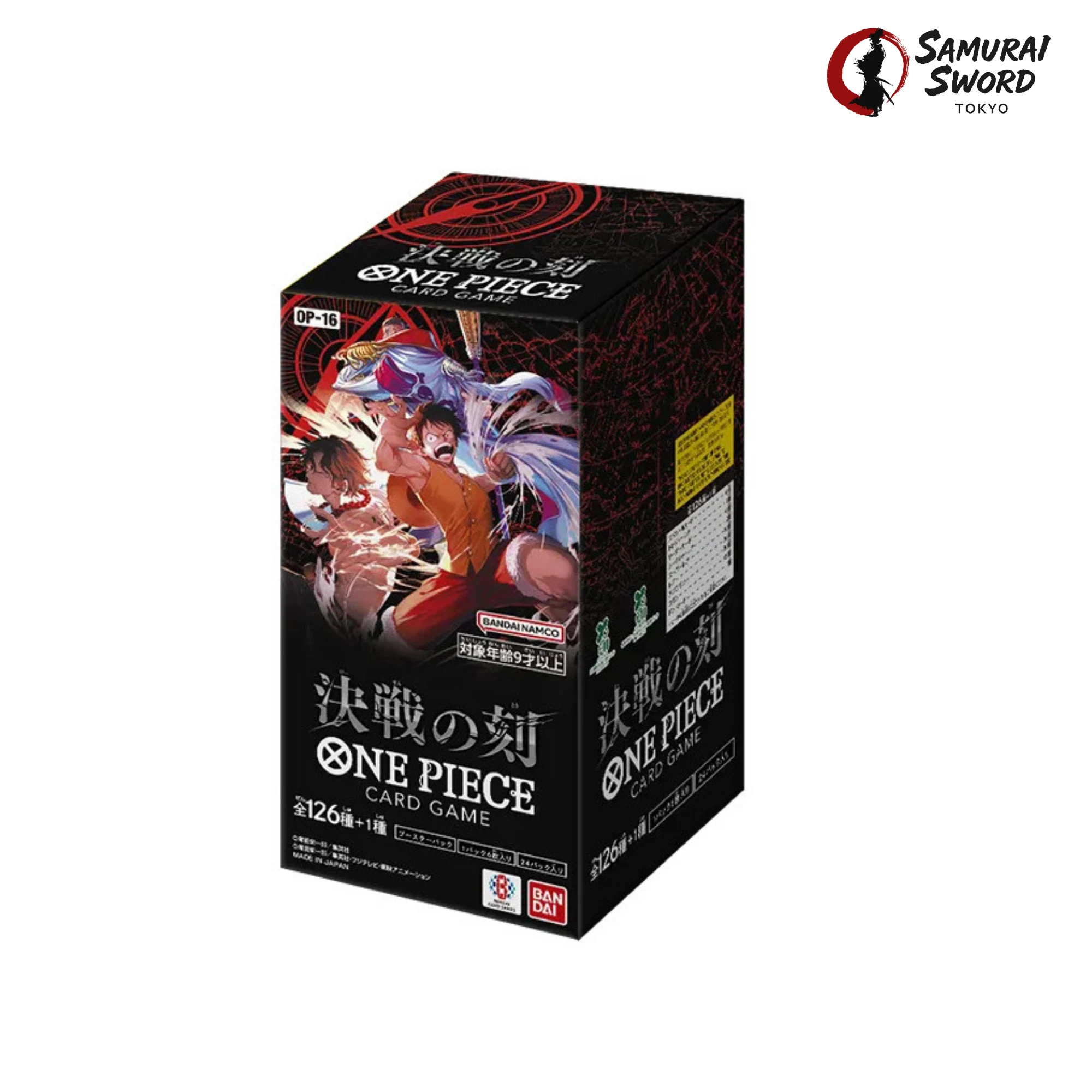
Moby Dick is Whitebeard’s flagship, not a fighter — and in the One Piece Card Game it plays that way too. It’s a Stage card, the card type that sits on the field supporting a deck rather than a Character that takes a battle slot, and that single detail trips up a lot of buyers searching for “Moby Dick card” who expect a Character listing.

The verified versions span three separate card numbers across three sets — OP02-024, OP08-056 and OP16-021 — plus a parallel of the newest number, for four table rows in total. Between the first appearance and the most recent one, the card’s colour flips twice and its rarity jumps from Common to Rare. This guide walks through all three sets, tells you which version is inside which of our currently listed Japanese boxes, and where the one that isn’t listed can be sourced instead.

Key Takeaways

Moby Dick has four verified versions across three card numbers — OP02-024 (Red, -Paramount War-), OP08-056 (Blue, -Two Legends-), and standard and parallel versions of OP16-021 (Red, Rare, -THE TIME OF BATTLE-). The OP-16 The Time of Battle Japanese Booster Box is currently listed at ¥12,360 (~$78) and contains OP16-021; the OP-08 Two Legends Japanese Booster Box (Damaged Box) is currently listed at ¥9,500 (~$60) and contains OP08-056. The OP-02 printing is not listed on our site at the moment; sourcing requests go through Pesan Cepat.

3
Card Numbers

2
Rarities (C / R)

3
Sets Featuring Moby Dick

2
Listed Boxes on Our Site

Card numbers, rarities, colours, and set names below come from the official card list (freewords search for “Moby Dick”, checked today). Prices shown are our own current listing prices on samuraiswordtokyo.com, converted at ¥159/USD (September 2026) — not third-party market data.

Every Verified Moby Dick Printing

Whitebeard’s ship has appeared in the game across three confirmed mainline sets to date, plus a confirmed parallel treatment of the newest number. Here is every print we’ve verified, in release order:

Code Rarity Type Colour Cost Set
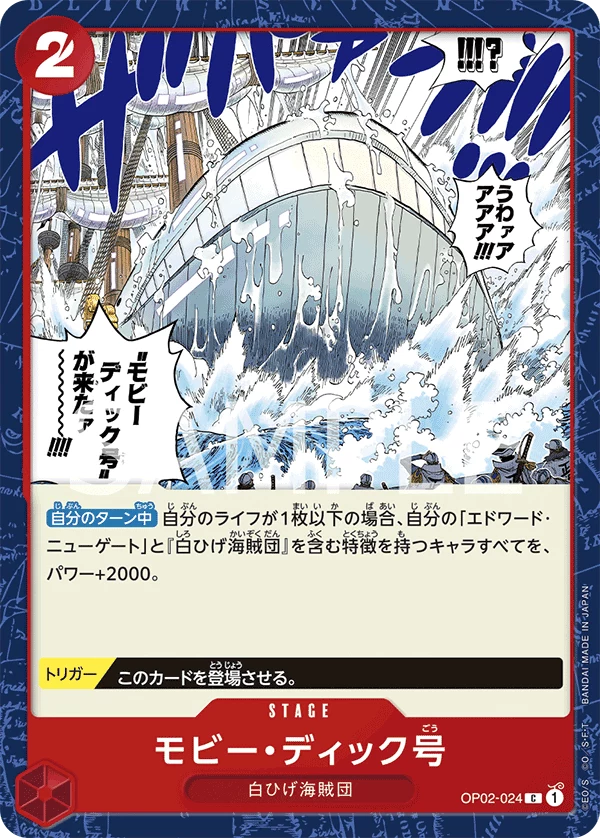
OP02-024 C Stage Red 2 -Paramount War- [OP-02]
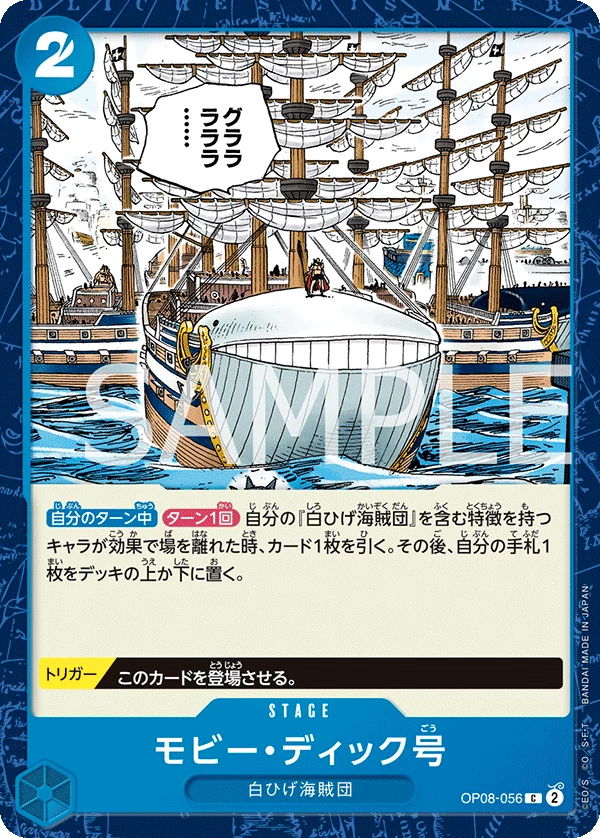
OP08-056 C Stage Blue 2 -Two Legends- [OP-08]
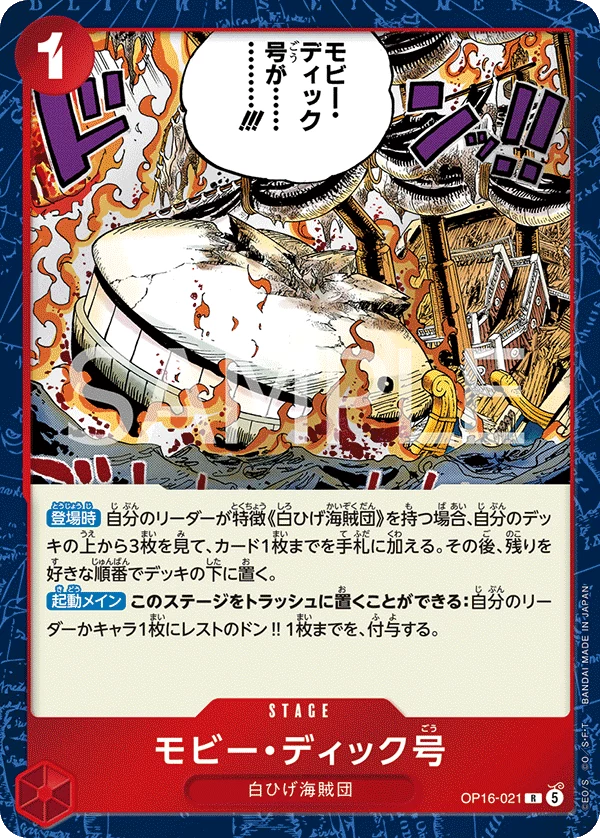
OP16-021 R Stage Red 1 -THE TIME OF BATTLE- [OP-16]
OP16-021 (parallel) R Stage Red 1 -THE TIME OF BATTLE- [OP-16]

All four rows are the same Stage card, printed under a Whitebeard Pirates crew designation each time. Across the three card numbers, no two share the same colour-and-rarity combination — the colour runs Red, then Blue, then back to Red, and the rarity only lifts off Common with the newest number; the OP16-021 parallel simply repeats that same Red/Rare combination as its own standard printing. Nothing about the card’s colour history is consistent across the three sets, so if you’re trying to match a loose card to a set, colour alone won’t do it — you need the printed card number.

The Debut: OP02-024 in -Paramount War- [OP-02]

Moby Dick OP02-024, C, -Paramount War- [OP-02]

Moby Dick’s first card game appearance is OP02-024, a Common-rarity Stage card, coloured Red, with a cost of 2, from -Paramount War- [OP-02], one of the game’s early mainline sets. It carries the Whitebeard Pirates crew designation, the same designation every subsequent printing of this ship uses.

This print is not listed on our site at the moment; sourcing requests go through Pesan Cepat. If you’re building a Whitebeard Pirates collection around this era, our Whitebeard One Piece cards guide covers the crew’s captain across the same sets.

The Colour Switch: OP08-056 in -Two Legends- [OP-08]

Moby Dick OP08-056, C, -Two Legends- [OP-08]

The second card number, OP08-056, moved the ship into -Two Legends- [OP-08] and switched its colour from Red to Blue, while keeping the same Common rarity and the same cost of 2. It’s the only one of the three verified card numbers coloured Blue — both the OP-02 debut and the later OP-16 number are Red, so this one stands apart in the middle of the printing history.

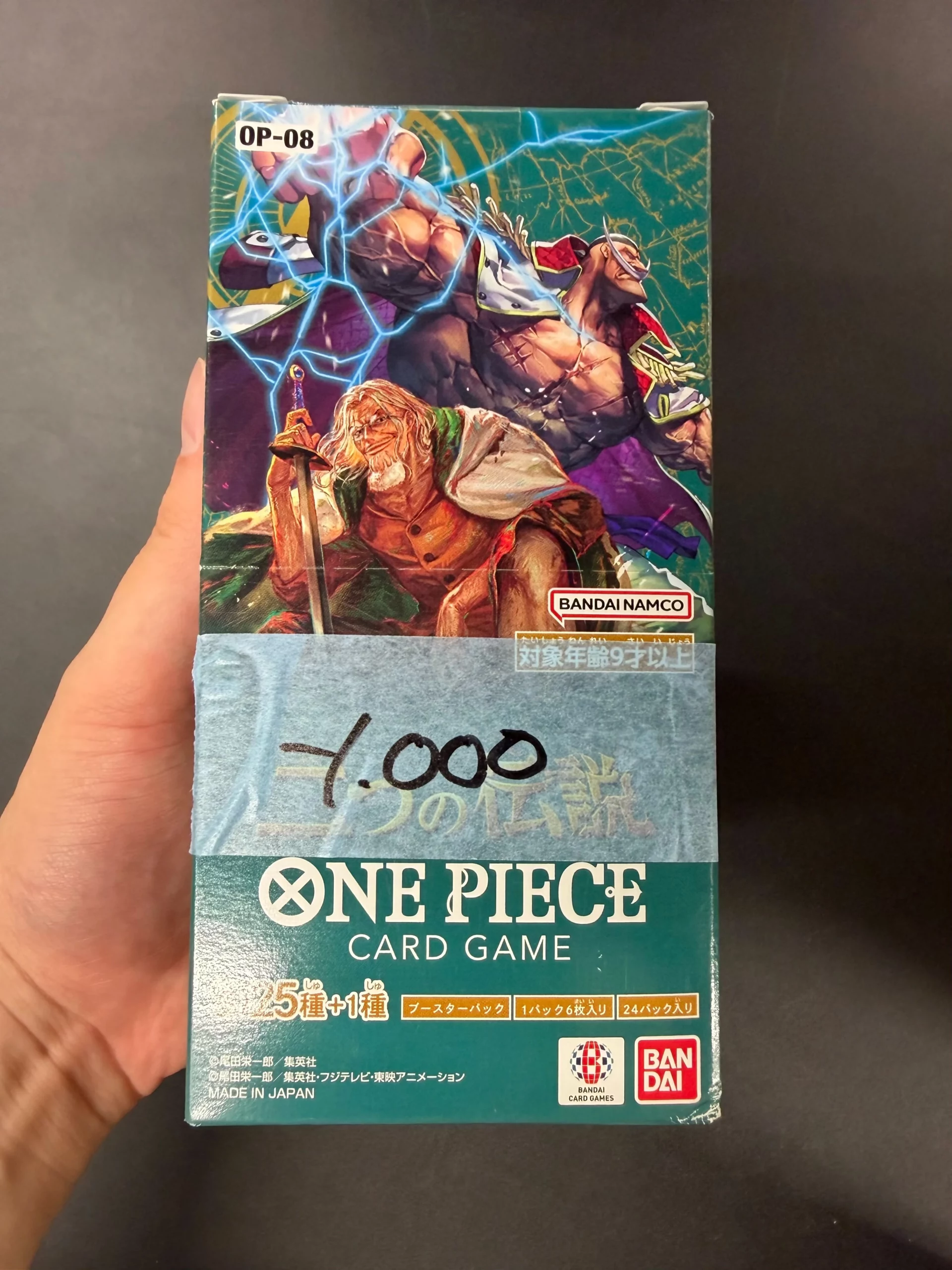
OP08-056 is the print inside our currently listed OP-08 Two Legends Japanese One Piece Booster Box — Damaged Box, priced at ¥9,500 (~$60). It’s a Damaged Box listing rather than a regular-condition one — the sealed box itself has cosmetic shelf wear, not the cards inside.

OP-08 Two Legends Japanese One Piece Booster Box, Damaged Box condition, product photo
Our OP-08 Two Legends Japanese Booster Box, Damaged Box — the source of OP08-056

For a fuller look at what else this set pulls, see our OP-08 Two Legends best cards guide.

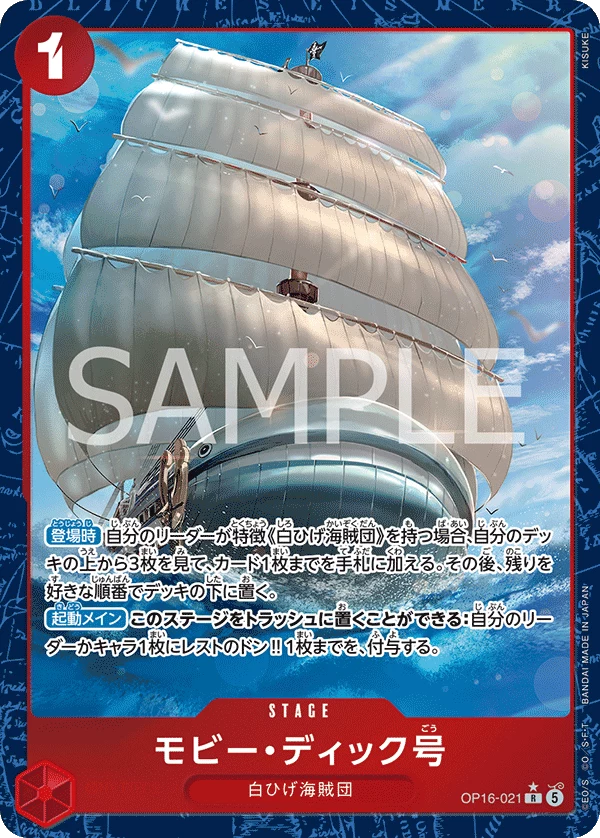
The Rarity Jump: OP16-021 in -THE TIME OF BATTLE- [OP-16]

Moby Dick OP16-021, R, -THE TIME OF BATTLE- [OP-16]
Moby Dick OP16-021, R, -THE TIME OF BATTLE- [OP-16] — the current highest-verified rarity for this card

The newest card number, OP16-021 from -THE TIME OF BATTLE- [OP-16], is the first Moby Dick card to leave Common rarity — it prints at R. The colour also reverts to Red, matching the OP-02 debut rather than the Blue of OP-08, and the cost drops to 1, the lowest of the three verified card numbers.

This is the print inside our currently listed OP-16 The Time of Battle Japanese One Piece Booster Box (regular condition), priced at ¥12,360 (~$78), and also inside the OP-16 Damaged Box listing at ¥11,400 (~$72). Both listings pull from the same set, so the card inside is identical — the price difference reflects the box’s outer condition, not the print.

OP-16 The Time of Battle Japanese One Piece Booster Box, regular condition, product photo
Our OP-16 The Time of Battle Japanese Booster Box, regular condition — the source of OP16-021
Identifying Your Copy

Check the cost number printed on the card. Cost 2 and Red means OP02-024. Cost 2 and Blue means OP08-056. Cost 1 and Rare means OP16-021 — the only Moby Dick print that isn’t a Common.

The OP16-021 Parallel

Moby Dick OP16-021 parallel, R, -THE TIME OF BATTLE- [OP-16]

OP16-021 also has a confirmed parallel treatment, listed separately on the official card database under the same card number. It shares the same Rare rarity, Red colour, and cost of 1 as the standard OP16-021 — the parallel art is an alternate treatment of the same print rather than a distinct card number. Both the standard and parallel versions come from the same -THE TIME OF BATTLE- [OP-16] booster box, so opening a currently listed OP-16 box can produce either treatment.

Of the three sets covered in this guide, OP-02 and OP-08 have no confirmed Moby Dick parallel — the parallel treatment we’ve verified sits only with the newest, highest-rarity printing.

Which Boxes to Open for Moby Dick

Two of the three sets carrying Moby Dick are currently on our site. Here’s how the listings break down:

Listing Set Moby Dick print inside Harga
OP-16 The Time of Battle Booster Box -THE TIME OF BATTLE- [OP-16] OP16-021 R (standard or parallel) ¥12,360 (~$78)
OP-16 Damaged Box -THE TIME OF BATTLE- [OP-16] OP16-021 R (standard or parallel) ¥11,400 (~$72)
OP-08 Two Legends Damaged Box -Two Legends- [OP-08] OP08-056 C ¥9,500 (~$60)

If the goal is the highest-rarity print, -THE TIME OF BATTLE- is the set to open, in either the regular or Damaged Box listing — the card inside doesn’t change between the two, only the box’s outer condition and price. Our OP-16 regular vs Damaged Box guide explains exactly what “Damaged Box” means on our site if you’re deciding between the two. For OP08-056, the Two Legends Damaged Box is the currently listed OP-08 option, and our OP-16 pull rates and best cards guide covers the rest of what that set produces alongside Moby Dick.

OP-02’s -Paramount War- set is not currently listed on our site in any condition; sourcing requests for OP02-024 go through Pesan Cepat.

Shop This Set
OP-16 The Time of Battle Japanese One Piece Booster Box
Contains the Rare OP16-021 Moby Dick print
Ships from Tokyo · Tracked delivery

View Product →

Where to Buy Moby Dick One Piece Cards from Tokyo

For boxes containing a Moby Dick print, the OP-16 The Time of Battle Booster Box is currently listed at ¥12,360 in regular condition, its Damaged Box is currently listed at ¥11,400, and the OP-08 Two Legends Damaged Box is currently listed at ¥9,500.

For the OP-02 debut printing, or for a graded or specific-condition single of any of the three card numbers, our Quick Order page is the route — send us the exact card number and we can look into sourcing it. For broader browsing, see our One Piece Card Game box collection.

Since Moby Dick is Whitebeard’s ship rather than a standalone character, most collectors building a Whitebeard Pirates set pair it with the crew itself. Our Whitebeard One Piece cards guide covers the captain, and our guides to Marco, Jozu, Vista, and Thatch round out the rest of the crew. If you’re also tracking Squard, another Whitebeard Pirates ally who shares OP-16 as a set, our companion Squard One Piece cards guide follows the same three-set structure.

Pertanyaan yang Sering Diajukan

Is Moby Dick a Character card in the One Piece Card Game?

No. Moby Dick is a Stage card, the card type that stays on the field rather than a Character card. All four verified versions across the three card numbers — OP02-024, OP08-056, and standard and parallel OP16-021 — are Stage cards, not Characters.

How many official Moby Dick printings are there?

The confirmed prints are three card numbers across three sets — OP02-024 (-Paramount War-), OP08-056 (-Two Legends-), and OP16-021 (-THE TIME OF BATTLE-) — plus a confirmed parallel of OP16-021, for four verified printings in total.

Does Moby Dick’s colour change between printings?

Yes. OP02-024 is Red, OP08-056 is Blue, and OP16-021 is Red again. The colour is not consistent across the three sets, so colour alone can’t identify which printing you’re holding — check the printed card number.

Which Moby Dick printing has the highest rarity?

OP16-021 from -THE TIME OF BATTLE- [OP-16], at Rare. The two earlier printings, OP02-024 and OP08-056, are both Common. OP16-021 also has a confirmed parallel version at the same Rare rarity.

Which box should I open to get the OP16-021 Moby Dick?

Either of our two current OP-16 -THE TIME OF BATTLE- listings — the regular-condition booster box at ¥12,360 (~$78) or the Damaged Box at ¥11,400 (~$72). Both come from the same set and can produce the standard or parallel OP16-021.

Where can I buy Moby Dick One Piece cards from Japan?

The OP-16 The Time of Battle Booster Box is currently listed at ¥12,360 in regular condition and at ¥11,400 as a Damaged Box; the OP-08 Two Legends Damaged Box is currently listed at ¥9,500. The OP-02 printing isn’t listed at the moment; sourcing requests for it go through our Quick Order page.

Kartu Pokemon Jepang Paling Langka: Promo, Trofi, dan Jumlah Cetak

The rarest Japanese Pokemon cards aren’t rare because of what they’re worth — they’re rare because of how few were ever produced or how narrowly they were given out. A tournament-prize card handed to a few hundred players, a magazine-contest prize limited to a few dozen winners, and a modern chase card drawn from a defined pool are all “rare” in different, documentable ways. This guide ranks Japanese rarity by distribution and print history — not by resale price or auction results.

Some of the cards below are once-in-a-generation tournament prizes that never entered general circulation. Others are built into today’s booster boxes as a chase mechanism, where the scarcity is engineered into every box rather than tied to a one-off event. Both count as documented Japanese rarity, just on very different scales.

Key Takeaways

Tropical Wind (1999) has both tournament and magazine distribution in its history, but this guide does not assign a combined print total because the supplied sources conflict on the tournament attribution. Pikachu Illustrator’s officially recorded distribution is 39 cards, with the known total around 41 as of August 2020. Our own PSA10 Celebi, Old Back [PRMF-3 No.251], is currently listed at ¥275,000 (~$1,730), and a PSA10 Umbreon, Master Ball Mirror [SV8a 092/187], is currently listed at ¥32,560 (~$205) — two very different rarity mechanisms, both documented below.

1999
Tropical Wind Print

~41
Pikachu Illustrator Known Total

153
Master Ball Mirror Pool (SV2a)

6
PSA10 Examples Covered

Prices below are our own listed prices, converted at ¥159/USD (September 2026). This guide ranks by documented distribution and print history, not by price — see our most valuable Japanese Pokemon cards hub if you want the price-ranked version of this question.

What Makes a Japanese Pokemon Card Rare

“Rare” means different things depending on how a card left the printer. Three distinct mechanisms show up across Japanese Pokemon history:

  • Tournament-prize cards — handed out to players who reached a specific tournament, with the total distribution capped by however many people attended.
  • Contest-promo cards — awarded to winners of a magazine or company-run illustration contest, with the total capped by however many prizes were announced.
  • Packed-in chase cards — a card type built into a modern booster box’s print run, where a specific card is drawn from a defined pool rather than reliably included.

The first two categories are historical and closed — no more Tropical Wind or Pikachu Illustrator cards are being made. The third is current: every new Japanese high-class pack can introduce its own chase mechanism. This guide covers one example of each, plus a fourth category built from an official bonus-file product with its own card-back era. For how graders and collectors talk about rarity tiers more broadly, see our rarity guide for graded buyers.

Tropical Wind: A 1999 Tournament Prize Card

Tropical Wind is a 1999 tournament-related prize card with additional distribution through a Trainers Magazine Vol. 3 lottery. The supplied research conflicts over which tournament accounts for the cited participant figure, so this guide does not attribute that figure to a named event or state a combined print total.

A separate reprint dated 2001 exists on e-card stock, carrying updated Generation II artwork from the same illustrator. The exact print run for that later version isn’t documented on the source page we drew this from, so no figure is given for it here.

Pikachu Illustrator: The CoroCoro Contest Card

Pikachu Illustrator came out of a CoroCoro Comic illustration contest rather than a tournament. The first contest was announced in the November 1997 issue (released October 15, 1997), with results published in the January 1998 issue (released December 1997):

Award tier Winners What each received
Best Award 3 20 cards of their own submitted artwork, plus one Pikachu Illustrator card each
Excellence Award 20 One Pikachu Illustrator card each

Further Mewtwo- and Pikachu-themed contests in 1998 distributed additional cards on top of that first leg. Taken together, the officially recorded distribution stands at 39 cards; as of August 2020, two further examples had surfaced outside that official count, putting the documented total at roughly 41.

No.1 Trainer: A Recurring Tournament Trophy

Unlike Tropical Wind and Pikachu Illustrator, No.1 Trainer isn’t a single print — it’s a Trainer-tier prize card issued across many separate Japanese tournaments, with later World Championships first-place prize versions also documented. Tournaments carrying a No.1 Trainer prize include:

  • Pokemon Card Game Official Tournament
  • Lizardon Mega Battle
  • Kamex Mega Battle
  • Tropical Mega Battle
  • Secret Super Battle
  • World Challenge Secret Super Battle
  • World Challenge Tropical Mega Battle
  • Neo Spring/Summer Road
  • World Championships first-place prize versions

The source we drew this list from doesn’t give a print quantity for any individual year’s version, so we won’t attach a number to it here. What makes No.1 Trainer collectible as a category is the sheer number of distinct tournament-year versions rather than any single print run — each event effectively minted its own variant of the same trophy design.

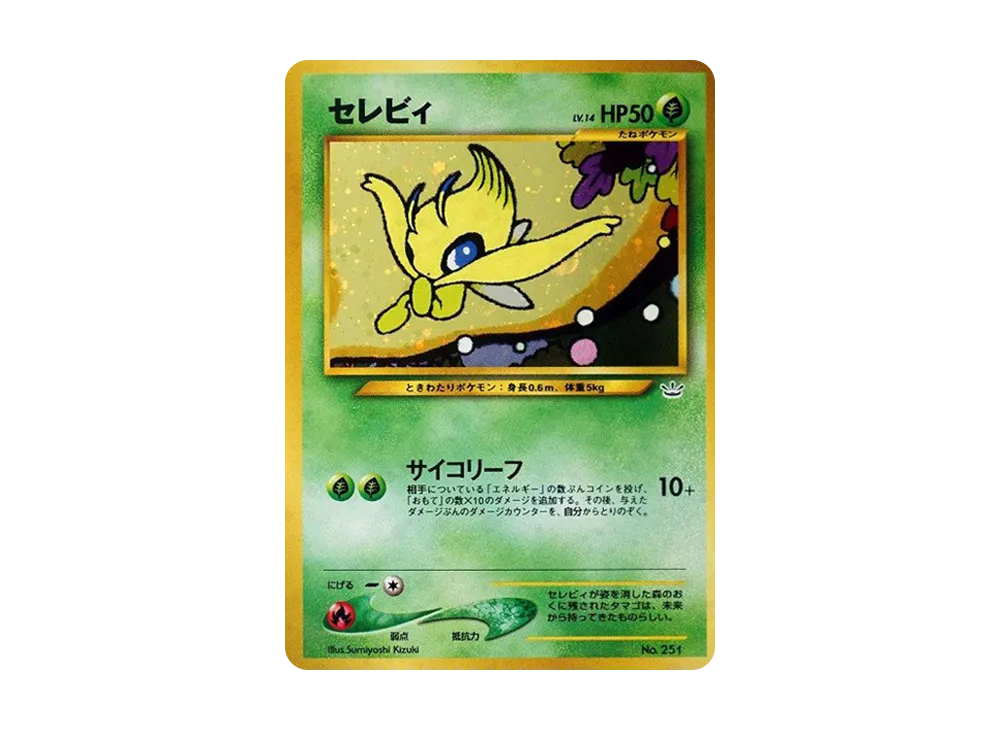
Old Back Premium File: Celebi’s TCG Debut

PSA 10 Celebi, Old Back [PRMF-3 No.251], Pokemon Card neo Premium File 3

Not every rarity story here is a tournament prize. Our own PSA10 Celebi carries the designation “Old Back [PRMF-3 No.251]” on its own listing, placing it in Pokemon Card neo’s “Premium File 3” — an official bonus-file product using the pre-2002 card-back design from the Pokemon Card neo era rather than the modern back. Per Bulbapedia, Premium File 3 held nine cards representing each TCG type, and this Celebi print was the character’s first-ever TCG appearance rather than a reprint of an earlier release.

We haven’t independently re-verified the exact print run for PRMF-3 itself in this research pass, so that figure is marked unverified here — the only distribution detail we can state with confidence is what our own product listing carries: the “Old Back” designation and its PRMF-3 catalogue number. That’s a different kind of rarity claim from Tropical Wind or Pikachu Illustrator: it’s about a specific product era and card-back design, not a hard-capped distribution count.

Featured Rarity
PSA10 Celebi, Old Back [PRMF-3 No.251] (Pokemon Card neo “Premium File 3”)
¥275,000 (~$1,730)
Ships from Tokyo · Tracked delivery

View Product →

Master Ball Mirror: A Modern Chase Mechanism

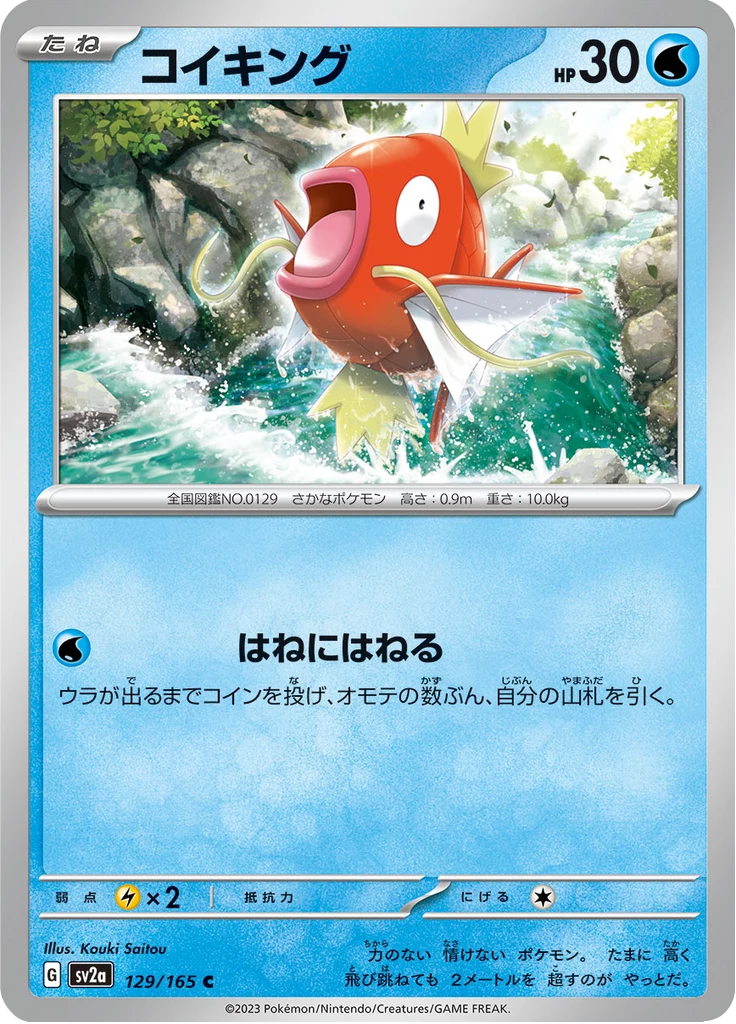
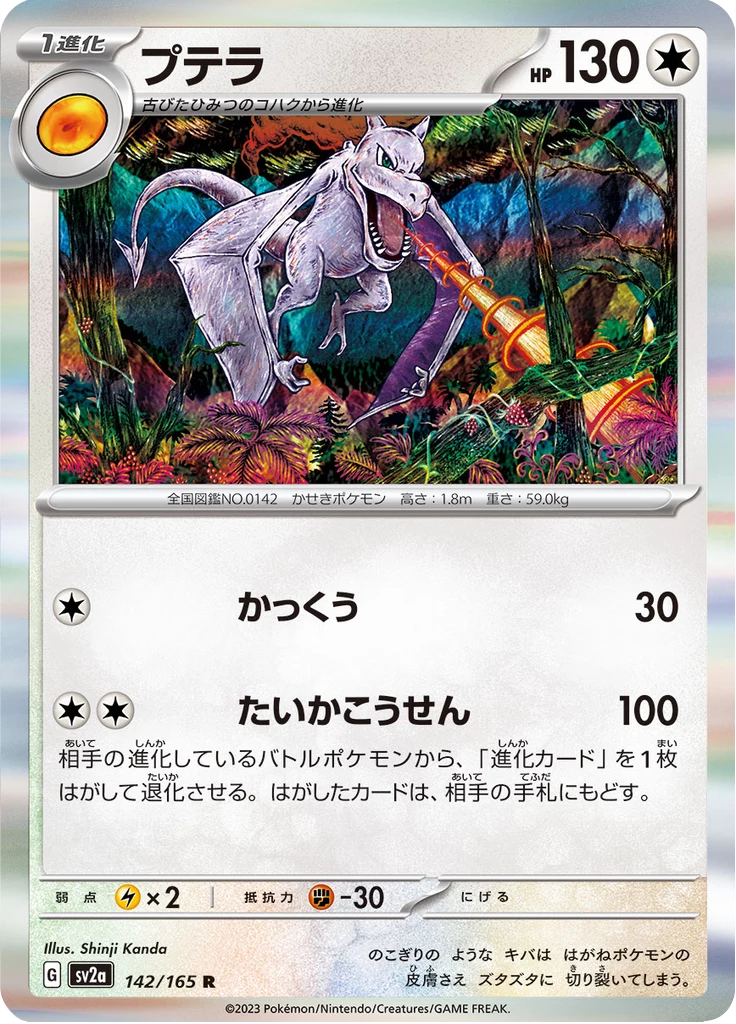
Not all rarity mechanisms are historical. SV2a “Pokemon Card 151” (Japan, June 2023) introduced the Master Ball Mirror — a reverse-holo treatment drawn from a defined pool of 153 eligible cards (151 Pokemon plus 2 Trainer cards). One Master Ball-pattern card is drawn per box from that pool, which makes it a chase mechanism built into the print run rather than a guaranteed pull of any single card. This description is sourced from secondary retail and community pages rather than a direct Pokemon Company statement, so treat the “one per box, drawn from 153” mechanism as unverified against a primary source, even though it’s the consistent secondary-source description of how the set behaves.

Magikarp, C Master Ball Mirror [SV2a 129/165], Pokemon Card 151

Magikarp, C Master Ball Mirror [SV2a 129/165]

Aerodactyl, R Master Ball Mirror [SV2a 142/165], Pokemon Card 151

Aerodactyl, R Master Ball Mirror [SV2a 142/165]

The same Master Ball Mirror rarity type also appears in later Japanese high-class packs, such as “Terastal Festival ex” (SV8a). The pool size and per-box draw mechanics for that later set aren’t covered by the source above, so we won’t extend the “153-card pool” figure to it — it’s the same rarity label, not necessarily the same underlying odds.

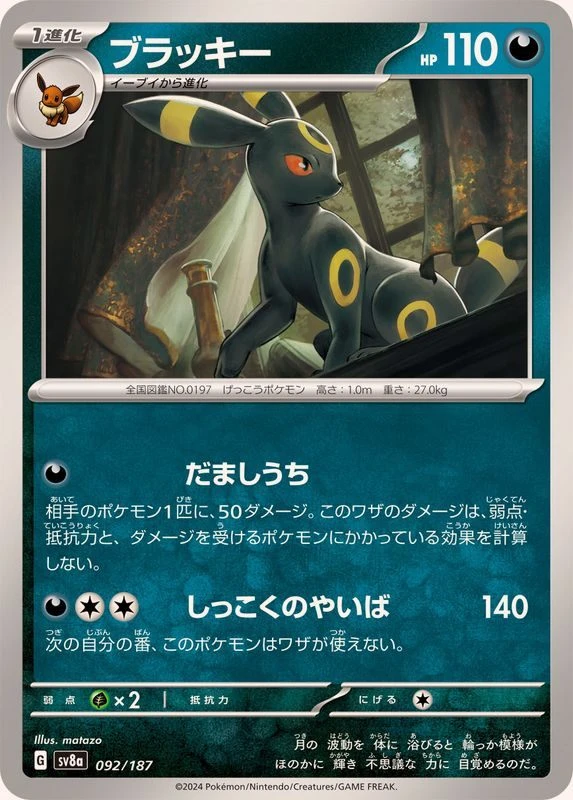
PSA 10 Umbreon, Master Ball Mirror [SV8a 092/187], High Class Pack Terastal Festival ex

For a full breakdown of how the Master Ball Mirror mechanism works across sets, see our dedicated Master Ball Mirror guide — this section is a summary of the mechanism as one entry in a wider rarity survey, not the full deep dive.

Where to Buy These Rarity Tiers from Japan

Tropical Wind, Pikachu Illustrator and No.1 Trainer are not listed on our site at the moment; sourcing requests for cards like these go through Pesan Cepat. The two documentable modern and bonus-file categories above, though, are currently listed on our site:

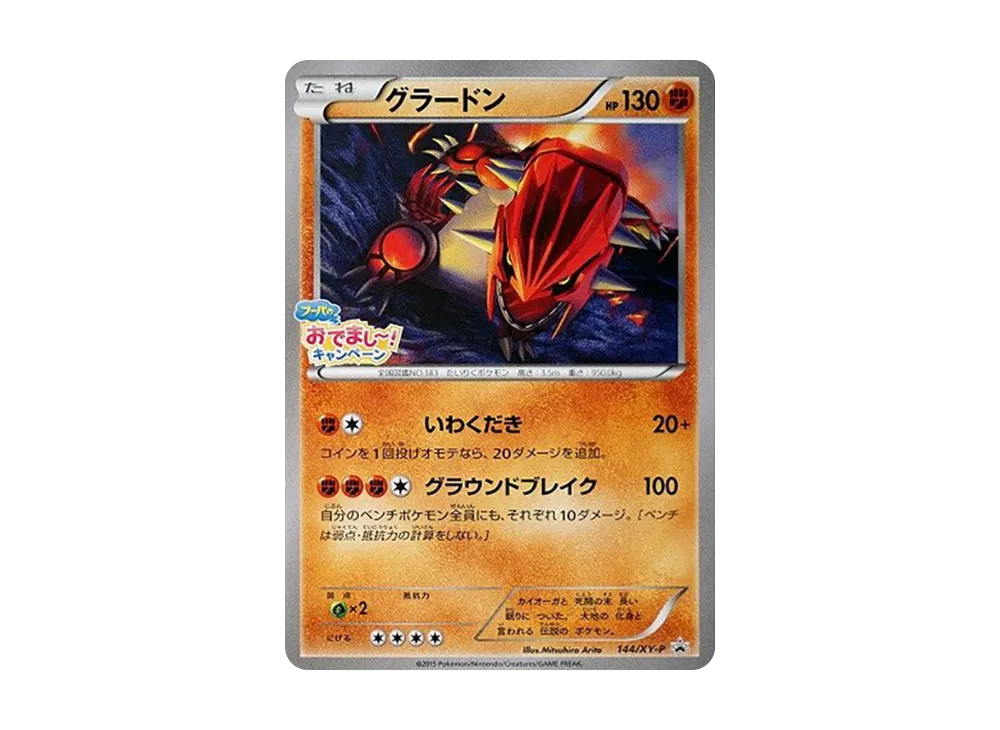
PSA 10 Groudon, P [XY-P 144], movie-campaign promo
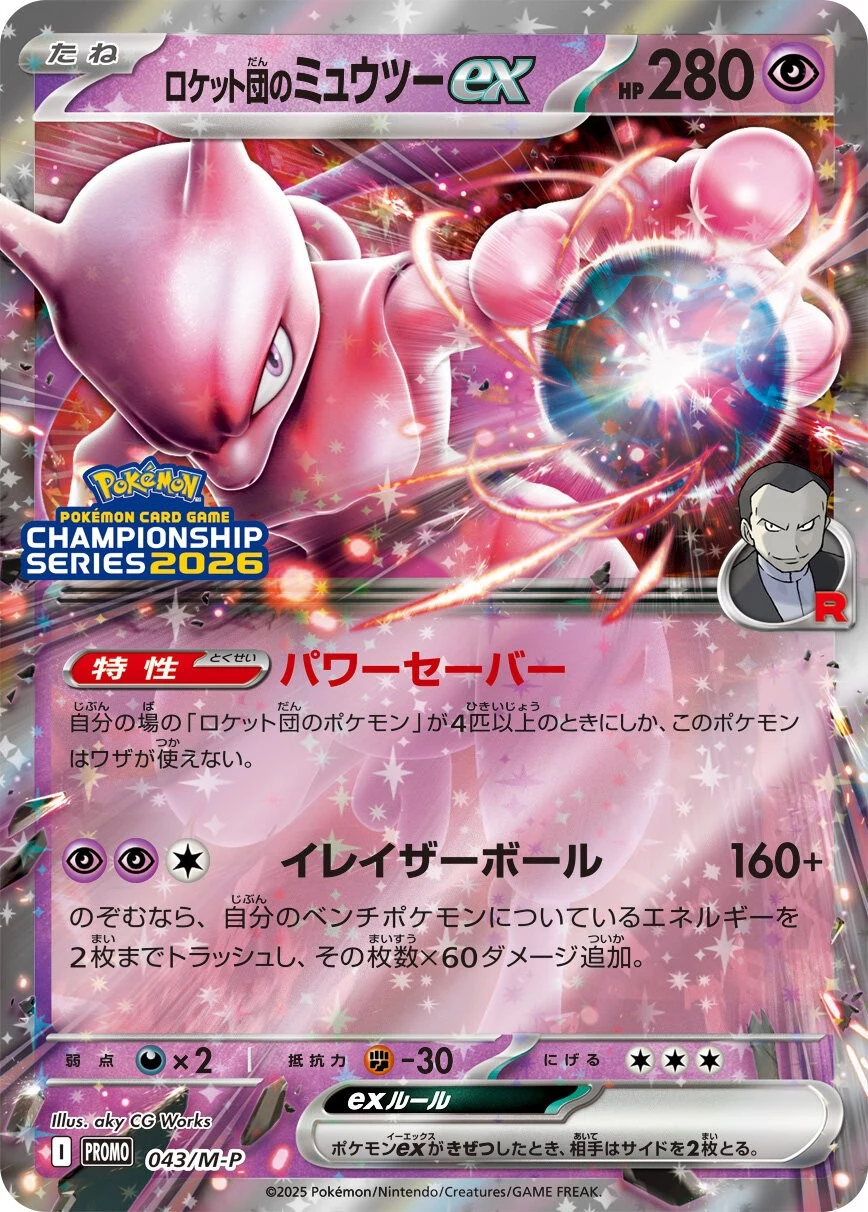
PSA 10 Team Rocket's Mewtwo ex, P [043/M-P], promo
PSA 10 Team Rocket’s Mewtwo ex, P [043/M-P], promo

Browse the full PSA10 graded card collection for more examples across these and other rarity types, or read our Japanese 1st Edition guide and what PSA 10 actually means to understand how grading and print-era details combine with the distribution facts above.

Pertanyaan yang Sering Diajukan

What makes a Japanese Pokemon card “rare” if not price?

Documented distribution and print history: how many people could ever have received the card (a tournament-prize or contest-promo card), or how the card is drawn into a modern booster box’s print run (a chase mechanism like Master Ball Mirror). Price is a separate, later effect of that scarcity, not the definition of it.

What is the rarest Japanese Pokemon card by documented distribution?

Among the cards covered here, Pikachu Illustrator has the narrowest documented distribution stated in this guide: 39 cards officially recorded, with the known total at roughly 41 as of August 2020. This guide does not assign a combined print total to Tropical Wind because the supplied sources conflict on the tournament attribution.

How many Pikachu Illustrator cards were made?

The officially documented distribution is 39 cards, awarded through a 1997–98 CoroCoro Comic illustration contest (3 Best Award winners and 20 Excellence Award winners in the first leg, plus further 1998 contests). As of August 2020, two additional examples had surfaced outside that official count, putting the known total at roughly 41.

What is a Master Ball Mirror card?

Secondary retail and community sources describe a reverse-holo rarity type in SV2a “Pokemon Card 151” (Japan, June 2023), with one Master Ball-pattern card drawn per box from a pool of 153 eligible cards. It’s described as a chase mechanism rather than a guaranteed pull of any specific card, but the mechanism has not been verified here against an official Pokemon Company statement.

Is the “Old Back” Celebi the same as an original Pokemon Card neo release?

Our listing designates it “Old Back [PRMF-3 No.251]”, which places it in Pokemon Card neo’s official “Premium File 3” bonus-file product using the pre-2002 card-back design. Per Bulbapedia, this Celebi print was the character’s TCG debut, not a reprint. We haven’t independently verified PRMF-3’s exact print run, so we cite only what our own listing states rather than a broader distribution figure.

Where can I buy PSA10 examples of these rarity types from Japan?

PSA10 examples across the Old Back Premium File, promo and Master Ball Mirror categories are currently listed — see the product links in the Where to Buy section above, or browse the full PSA10 graded card collection. Tropical Wind, Pikachu Illustrator and No.1 Trainer aren’t listed on our site at the moment; sourcing requests for cards like these go through Pesan Cepat.

Kartu Pokemon Terkuat dalam Set Jepang: HP & Damage Tercetak Tertinggi

“Strongest Pokemon card” means different things to different collectors — some mean price, some mean tournament power, some just mean the biggest number on the card. This guide answers it the one way that’s actually verifiable: printed HP, checked card by card against Limitless TCG’s database today.

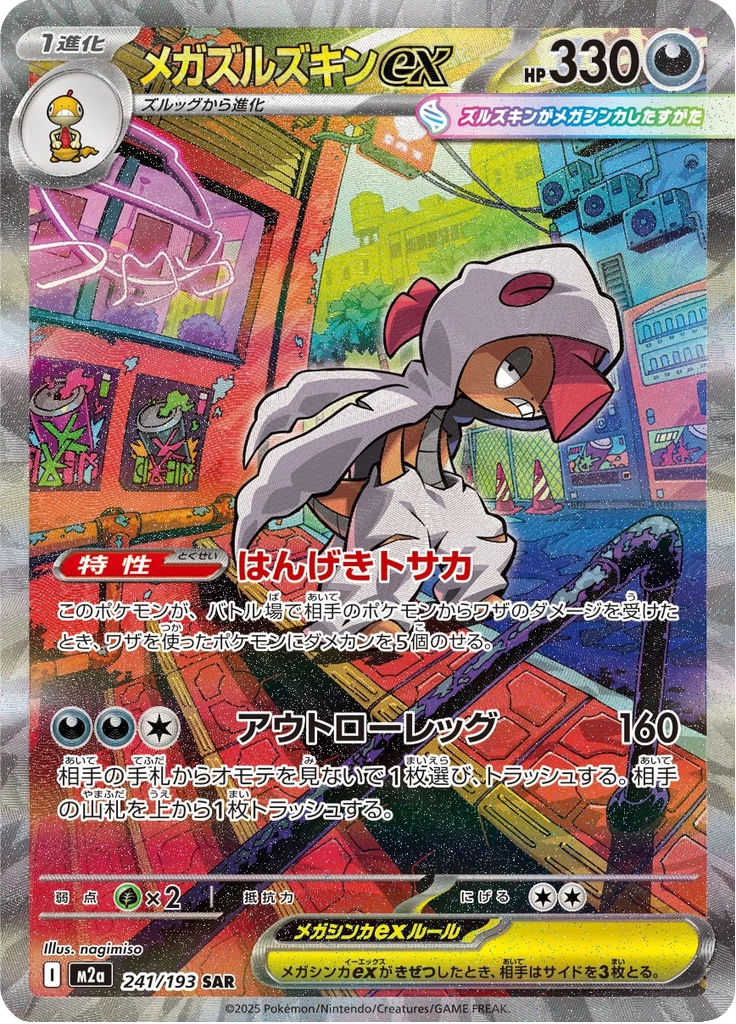
By that measure, four Mega Dream ex (M2a) examples selected for this guide sit at 330–360 HP. This article compares six cited product listings by printed HP, explains the M-series (Mega Evolution) format represented by the upper entries, and shows where those printed numbers sit against the earlier examples included here. It is not a complete ranking of every card in M2a or the wider Japanese card pool.

Key Takeaways

Among the six product listings compared here, Mega Gardevoir ex, 226/193, Secret Rare has the highest printed HP at 360 HP, followed by Mega Eelektross ex, 235/193, SAR at 350 HP — both from Mega Dream ex (M2a). This comparison uses printed HP only, verified on Limitless TCG’s card pages, not price or competitive strength.

360 HP
Highest in This Comparison

6
High-HP Cards Ranked

3
Sets Featured

2025–26
M-Series (Mega) Era

Printed HP figures are verified on Limitless TCG’s individual card pages (limitlesstcg.com), checked September 2026. Yen prices convert at ¥159/USD (September 2026).

What “Strongest” Means for a Pokemon Card

A Pokemon card doesn’t have one single “strength” number. It has printed HP (how much damage it can take before being knocked out), tournament viability, and market value — and those three things move independently. A card can have huge printed HP and never see competitive play; a card can be worth very little and still carry one of the biggest HP totals ever printed.

This article uses only the first — printed HP — because it’s the only one you can check yourself by reading the card. Every figure below is cross-checked against Limitless TCG’s card database, which mirrors the Japanese card text directly. We’re not ranking by price, by tournament results, or by rarity tier; a card can be extremely rare and still have modest HP, and vice versa.

That distinction matters because the 2025–26 M-series (Mega Evolution) format is also reported to have introduced a new rarity tier alongside the HP jump: MA (Mega Attack Rare / メガアタックレア). On Limitless TCG’s own card pages, though, all four M2a examples selected here — including Mega Gardevoir ex and Mega Lucario ex — are catalogued as Secret Rare, not MA; this guide uses Limitless’s rarity labelling throughout. Our MA-rare complete guide covers that separate rarity tier on its own terms; this article is about the printed stat line, not the rarity letters.

Six Listed Cards Compared by Printed HP

The comparison below covers six cited PSA 10 product listings, ordered by printed HP:

Peringkat Kartu Set / Number Printed HP Type
1 Mega Gardevoir ex, Secret Rare Mega Dream ex (M2a) #226/193 360 Psychic
2 Mega Eelektross ex, SAR Mega Dream ex (M2a) #235/193 350 Lightning
3 Mega Lucario ex, Secret Rare Mega Dream ex (M2a) #228/193 340 Fighting
4 Mega Scrafty ex, SAR Mega Dream ex (M2a) #241/193 330 Darkness
4 Mega Lopunny ex, SAR Inferno X (M2) #114/080 330 Colorless
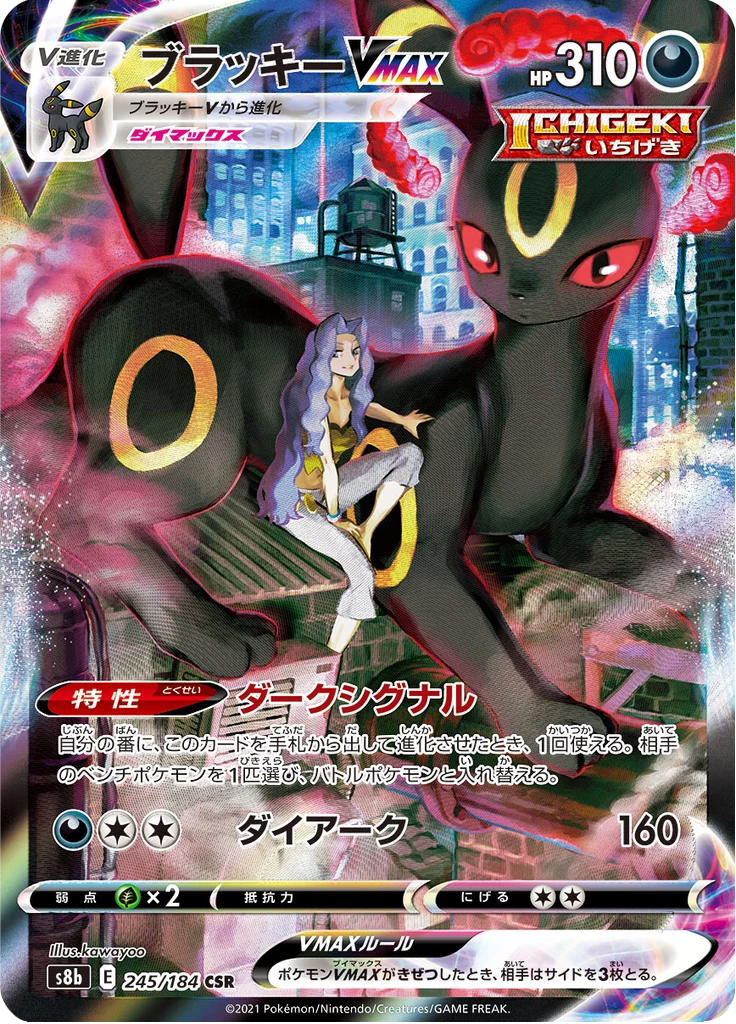
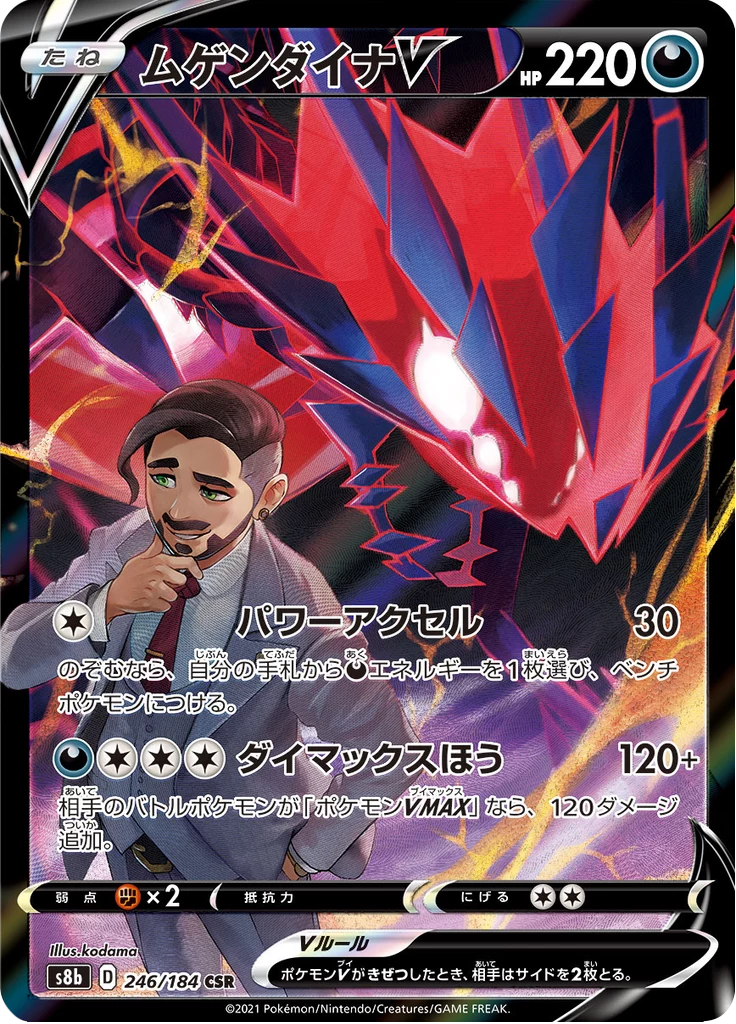
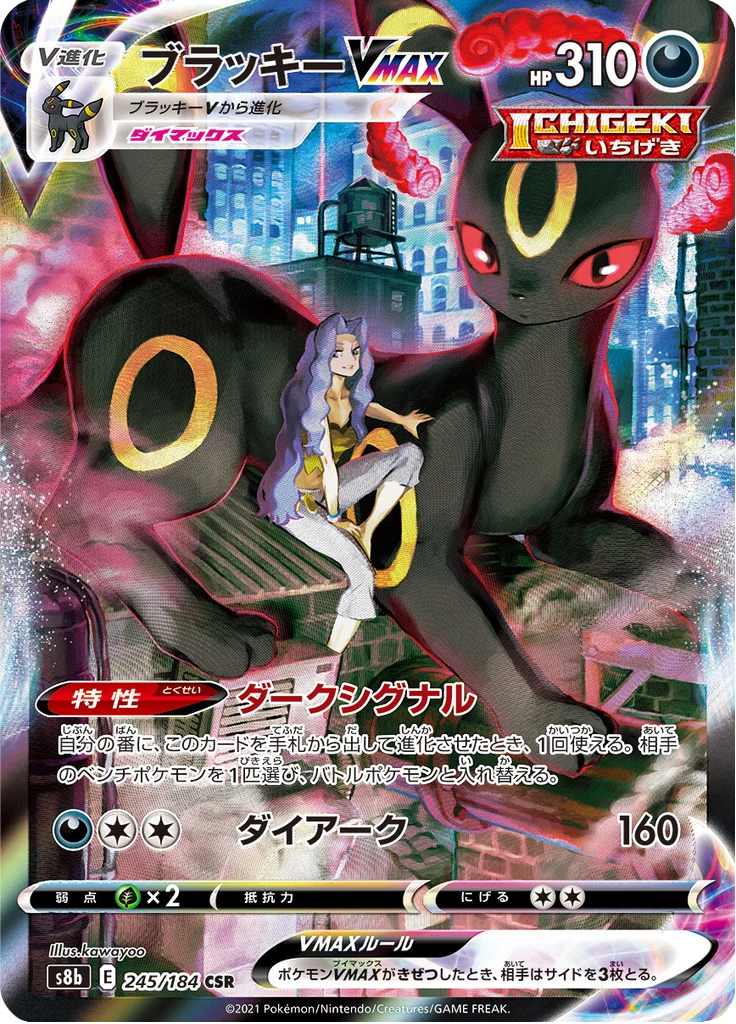
6 Umbreon VMAX, CSR VMAX Climax (S8b) #245/184 310 Darkness

Two things stand out within this six-card comparison. First, four entries come from Mega Dream ex. Second, there’s a tie at 330 HP between Mega Scrafty ex and Mega Lopunny ex. These observations apply only to the selected entries, not every card in either set.

Four Mega Dream ex Examples (330–360 HP)

Four of the six selected entries come from Mega Dream ex (M2a). All four are Mega Pokemon ex cards and sit in the 330–360 HP band. Other M2a cards are outside the scope of this comparison.

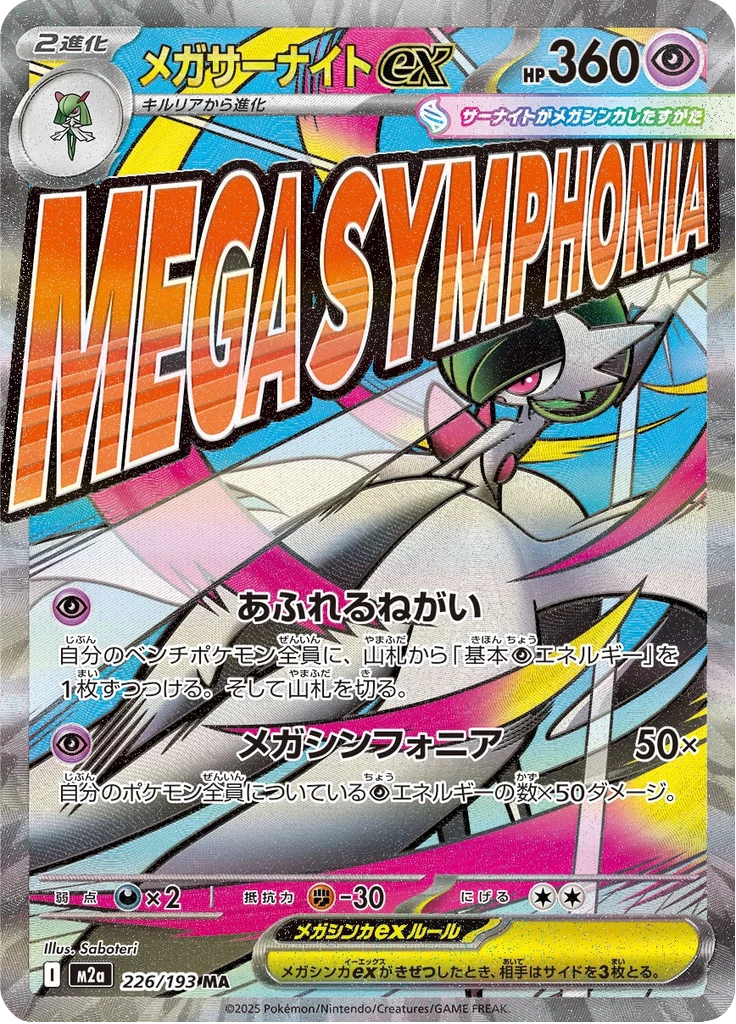
Mega Gardevoir ex, 226/193, Secret Rare, Mega Dream ex (M2a)
Mega Gardevoir ex, 226/193, Secret Rare — Mega Dream ex (M2a). Printed HP 360, the highest in this comparison.

Mega Gardevoir ex tops the list at 360 HP, a Psychic-type Mega Pokemon ex catalogued as Secret Rare on Limitless TCG. It’s the highest printed HP figure among the cards in this guide.

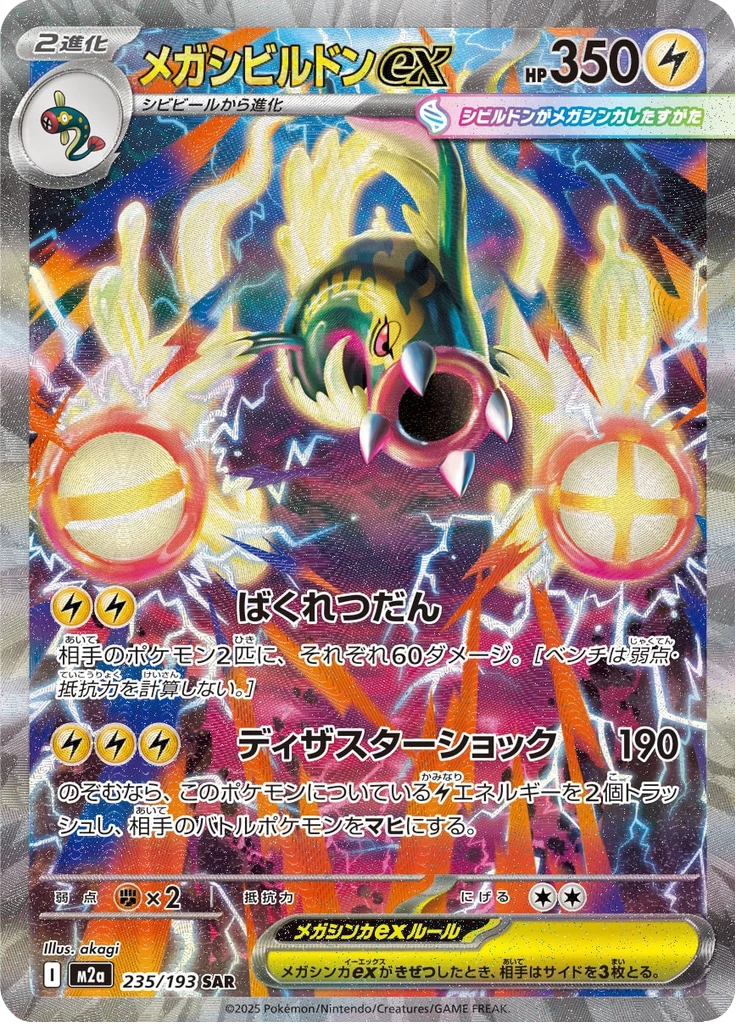
Mega Eelektross ex, 235/193, SAR, Mega Dream ex (M2a)
Mega Eelektross ex, 235/193, SAR — Mega Dream ex (M2a). Printed HP 350.

Mega Eelektross ex follows at 350 HP, a Lightning-type Special Art Rare. It’s the second-highest figure among the six entries in this comparison.

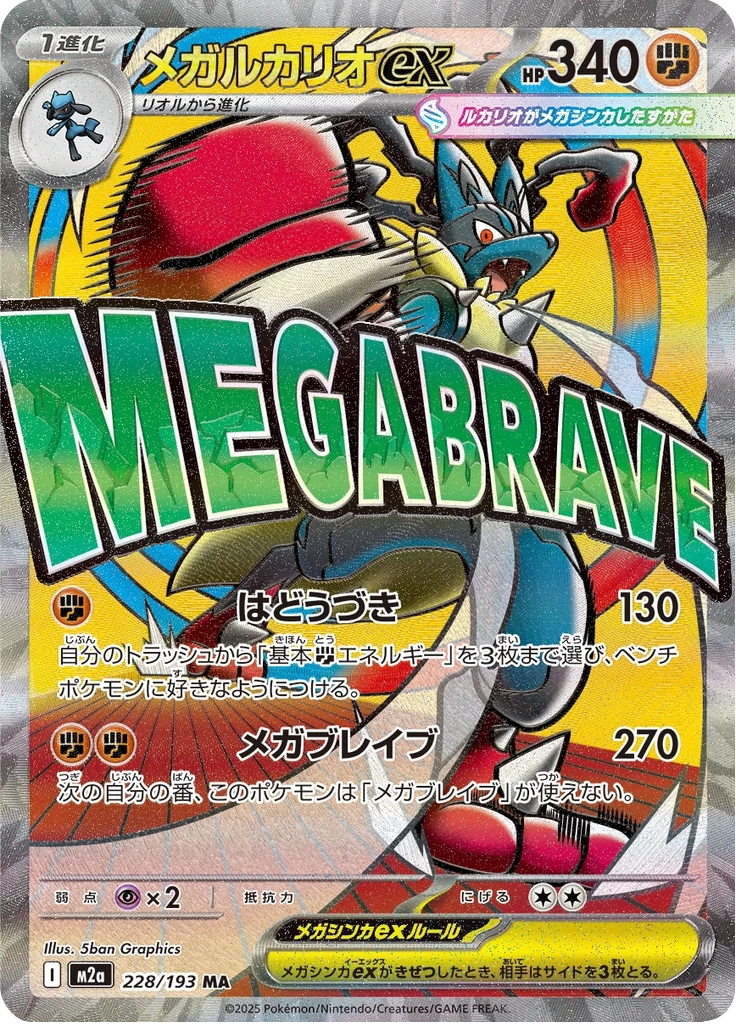
Mega Lucario ex, 228/193, Secret Rare, Mega Dream ex (M2a)
Mega Lucario ex, 228/193, Secret Rare — Mega Dream ex (M2a). Printed HP 340.

Mega Lucario ex sits at 340 HP, Fighting-type, and like Mega Gardevoir ex is catalogued as Secret Rare on Limitless TCG. Our best full-art Pokemon cards roundup covers how Secret Rare and SAR full-art treatments compare visually if you want the art side of the picture.

Mega Scrafty ex, 241/193, SAR, Mega Dream ex (M2a)
Mega Scrafty ex, 241/193, SAR — Mega Dream ex (M2a). Printed HP 330.

Mega Scrafty ex closes out the M2a group at 330 HP, Darkness-type, tying with a card from a different set covered in the next section. Mega Dream ex is part of the wider M-series lineup — see our Mega series M1–M6 box ranking guide for how M2a fits against the other Mega-era boxes.

Mega Lopunny ex and Umbreon VMAX

Not every high-HP card in this ranking comes from Mega Dream ex. Two cards from earlier releases round out the top six.

Mega Lopunny ex, 114/080, SAR, Inferno X (M2)
Mega Lopunny ex, 114/080, SAR — Inferno X (M2). Printed HP 330, tied for fourth on this list.

Mega Lopunny ex comes from Inferno X (M2), a Colorless-type Special Art Rare printed at 330 HP — the same figure as Mega Scrafty ex from M2a, despite the two cards coming from different sets in the same Mega series.

Umbreon VMAX, 245/184, CSR, VMAX Climax (S8b)
Umbreon VMAX, 245/184, CSR — VMAX Climax (S8b). Printed HP 310.

Umbreon VMAX, 245/184, Character Super Rare from VMAX Climax (S8b), rounds out the ranking at 310 HP. It’s a Sword & Shield-era Darkness-type card, and at the time it released, 310 HP was close to the ceiling for a single non-Tag Team Pokemon — a useful marker for how far the M-series format has pushed printed HP since.

How Printed HP Has Climbed Across Eras

Looking at printed HP across the sets we track shows a clear upward trend on single-Pokemon cards, with one important exception for combined Tag Team totals:

Era / Set Kartu Printed HP Note
Sun & Moon – Tag Bolt (SM9) Latias & Latios GX 250 Combined total for two Pokemon on one card, not a single-Pokemon figure
Sword & Shield – Time Gazer (S10D) Machamp V 220 Single Pokemon V card
Sword & Shield – VMAX Climax (S8b) Umbreon VMAX 310 Single Pokemon, Character Super Rare
M-series – Inferno X (M2) Mega Lopunny ex 330 Single Pokemon, Special Art Rare
M-series – Mega Dream ex (M2a) Mega Gardevoir ex 360 Single Pokemon, Secret Rare — highest in this comparison

The Latias & Latios GX figure needs a caveat: Tag Team GX cards state combined HP for two Pokemon sharing one card, so 250 HP there isn’t directly comparable to a single Pokemon’s printed HP the way the other rows are. Once you separate that out, the selected single-Pokemon examples range from 220–310 HP on the VMAX and V era cards cited here to 330–360 HP on the selected M-series Mega Pokemon ex cards. We haven’t verified every high-HP card ever printed in Japanese sets, so treat this as a comparison across the specific cards cited here, not a claim about the entire card pool.

Buying High-HP Japanese Cards from Tokyo

All six ranked cards, plus the Latias & Latios GX and Machamp V comparison cards cited in the section above, are graded PSA 10 and listed on our site. Prices convert at ¥159/USD (September 2026):

The full spread of Mega Pokemon ex cards, including these high-HP prints, ships out of Mega-series boxes; our Mega series box ranking guide covers which boxes carry which cards. For general rarity-symbol background on the letters used above (SAR, CSR), see our Japanese rarity symbols guide, and for how Japanese prints compare with English releases generally, see Japanese vs English Pokemon cards.

Highest Printed HP in This Comparison
PSA10 Mega Gardevoir ex, Secret Rare, 226/193 (Mega Dream ex)
360 printed HP — currently listed at ¥5,610 (~$35)
Ships from Tokyo · Tracked delivery

View Product →

Browse the rest of our graded singles in the PSA 10 graded card collection, or build a mixed order — sealed boxes and singles together — through Pesan Cepat.

Pertanyaan yang Sering Diajukan

Which Pokemon card has the highest printed HP?

Among the six product listings compared here, Mega Gardevoir ex (226/193, Secret Rare) from Mega Dream ex (M2a) has the highest printed HP at 360, verified on Limitless TCG. Mega Eelektross ex (235/193, SAR) from the same set follows at 350 HP.

Does “strongest” mean the same thing as “most expensive”?

No. This guide ranks cards strictly by printed HP — figures you can verify by reading the card. It does not rank by price, market value, or competitive tournament strength, which move independently of printed stats.

What is MA (Mega Attack Rare)?

MA, or Mega Attack Rare, is a rarity tier reported to have been introduced with the 2025–26 M-series (Mega Evolution) format. On Limitless TCG’s own card pages, though, the four M2a examples selected in this comparison — including Mega Gardevoir ex and Mega Lucario ex — are catalogued as Secret Rare, not MA. See our dedicated MA-rare guide for that tier’s own breakdown.

Why does Latias & Latios GX show 250 HP if it’s lower than some other cards on the list?

Tag Team GX cards like Latias & Latios GX print a combined HP total for two Pokemon sharing one card. That 250 HP figure isn’t directly comparable to the single-Pokemon HP totals elsewhere in this guide, which is why it’s shown separately as a comparison point rather than ranked alongside the single-Pokemon cards.

Has printed HP always been this high in Japanese sets?

The selected single-Pokemon examples in this guide range from 220–310 HP on the cited V and VMAX cards to 330–360 HP on the cited M-series Mega Pokemon ex cards. This describes only the cards compared here, not every card ever printed.

Where can I buy these high-HP Japanese cards?

The product-linked cards in the ranking, plus the Latias & Latios GX and Machamp V comparison singles, are all listed individually as PSA 10. You can also browse the full PSA 10 collection or place a mixed order through Quick Order.

Panduan Kartu Full Art Wiglett: Shiny Rare SV4a Shiny Treasure ex

“Wiglett full art” can be an imprecise search term. Among the prints already documented in this guide, Scarlet ex 081/078 is the Art Rare with a full-card illustration. Shiny Treasure ex 226/190 is catalogued as a Shiny Rare and retains a conventional frame, so it should not be presented as Wiglett’s full-art print.

Wiglett (ウミディグダ) is a Water-type Pokemon with 50 HP. The prints covered here include cards from Scarlet ex (SV1S), released January 20, 2023, and ハイクラスパック「シャイニートレジャーex」 / Shiny Treasure ex (SV4a), released December 1, 2023.

This guide separates the documented Scarlet ex Art Rare from the later Shiny Rare, walks through the Japanese sets represented below, compares them with the documented English-language equivalents, and shows where the sealed Shiny Treasure ex box is currently listed.

Key Takeaways

The documented Art Rare is Scarlet ex 081/078. Shiny Treasure ex 226/190 is instead a Shiny Rare with a conventional frame. A graded single of any Wiglett print is not currently listed on our site; the sealed SV4a Shiny Treasure ex Japanese Pokemon Booster Box — where the SV4a prints are pulled from — is currently listed at ¥16,640 (~$105).

50
HP (Water Type)

AR / Shiny Rare
Documented Treatments

360
Cataloged Cards (SV4a)

Dec 2023
Japan Release

Prices below are current samuraiswordtokyo.com listings, converted at ¥159/USD (September 2026).

The Cards: Wiglett Art Rare and Shiny Rare

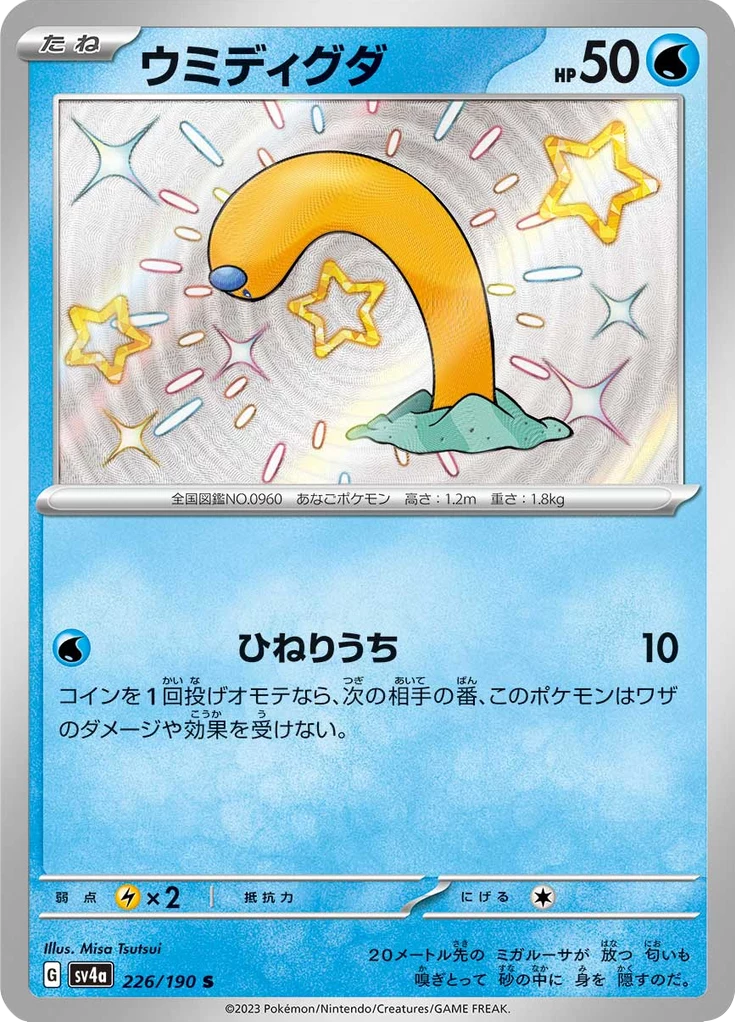
Wiglett is a Water-type Pokemon carrying 50 HP. The full-card illustration documented in the table below is the Scarlet ex Art Rare. The pictured Shiny Treasure ex print is separately catalogued as a Shiny Rare and is illustrated by Misa Tsutsui.

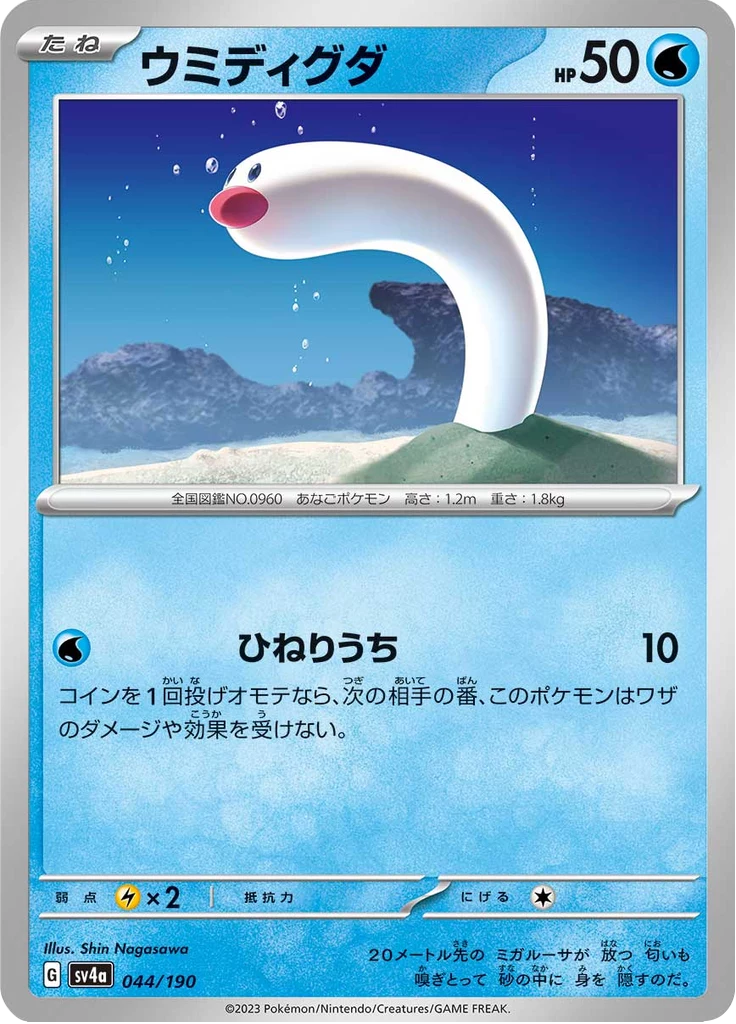
Wiglett Shiny Rare, Shiny Treasure ex (SV4a)
Wiglett Shiny Rare — Shiny Treasure ex (SV4a), illustrated by Misa Tsutsui

The pictured SV4a print is a Shiny Rare, not a Full Art or Art Rare. Its artwork sits inside a conventional card frame. The separate Scarlet ex 081/078 entry is the Art Rare treatment relevant to a search for Wiglett’s full-card illustration.

A graded single of this print is not currently listed on our site. The print is pulled from sealed SV4a Shiny Treasure ex Japanese Pokemon Booster Box product, currently listed at ¥16,640 (~$105); sourcing requests for a graded single go through our Quick Order page.

The Set: Shiny Treasure ex (SV4a)

Shiny Treasure ex — ハイクラスパック「シャイニートレジャーex」 in Japanese — is Limitless set code SV4a, a Japanese High Class Pack released December 1, 2023, cataloguing 360 cards in total. The set includes shiny-coloured Pokemon across several card treatments; see our Shiny Treasure ex pull-rates and best-cards hub for set-specific discussion.

The set’s headline chase card is a different Pokemon — Mew ex, in its Special Art Rare treatment — shown below for context on where Wiglett’s Shiny Rare sits within the wider release.

Mew ex Special Art Rare, Shiny Treasure ex (SV4a)
Mew ex Special Art Rare — a different Pokemon shown for set context

For the complete card-by-card list of Shiny Treasure ex, see our Shiny Treasure ex (SV4a) card list, and for the sealed side of the set — pack structure, box contents, and how it compares to other Japanese High Class Packs — see our Shiny Treasure ex booster box buying guide.

SV4a Shiny Treasure ex Japanese Pokemon Booster Box, listed on samuraiswordtokyo.com

The SV4a Shiny Treasure ex Japanese Pokemon Booster Box — where both verified SV4a Wiglett prints originate — is currently listed at ¥16,640 (~$105).

Japanese vs English Print

Among the documented English-language equivalents, the card appears in the English Scarlet & Violet base set (SVI) at #55 and #206, and again in Paldean Fates (PAF) at #121. These documented English slots do not establish a one-to-one match with every Japanese print, so matching a specific Japanese print to a specific English number by rarity tier alone is not something we can confirm from the available print data.

Paldean Fates carries its own set of shiny-style chase prints in the same spirit as Shiny Treasure ex; our Paldean Fates chase cards guide covers that set’s connection to SV4a in more detail.

Where This Shiny Rare Sits Among Japanese Rarity Tiers

Shiny Treasure ex stacks several rarity tiers above its base prints, and Wiglett’s Shiny Rare is one rung on that ladder. Other Pokemon in the same set carry different tiers of shiny and alternate-art treatment — Glimmora ex, for example, appears as both a Double Rare and a Shiny Ultra Rare within SV4a, illustrating how the set spreads its chase prints across multiple rarity levels.

Glimmora ex Shiny Ultra Rare, Shiny Treasure ex (SV4a)

Glimmora ex (Shiny Ultra Rare)

Glimmora ex Double Rare, Shiny Treasure ex (SV4a)

Glimmora ex (Double Rare)

Set against that ladder, a Shiny Rare such as Wiglett’s featured print sits above the set’s Double Rare tier and below its Shiny Ultra Rare and Special Art Rare treatments.

Because the search term “full art” brings up cards from across the whole Pokemon TCG catalogue rather than just Shiny Treasure ex, our best full art Pokemon cards guide and full art Pokemon cards rarity guide are worth a look if you want the true printed Full Art, Special Art, and Alternate Rare tiers explained side by side with Shiny Rares like this one.

Shop This Set
SV4a Shiny Treasure ex Japanese Pokemon Booster Box
Contains the verified SV4a Wiglett prints, including the Shiny Rare
Ships from Tokyo · Tracked delivery

View Product →

Where to Buy Wiglett from Tokyo

A graded single of any Wiglett print is not currently listed on our site. The sealed SV4a Shiny Treasure ex Japanese Pokemon Booster Box is currently listed at ¥16,640 (~$105), shipped from Tokyo with tracked delivery, and it is the source product for both verified SV4a prints covered in this guide.

For the wider Shiny Treasure ex release — card list, pull-rate discussion, and full box-buying details — see our Shiny Treasure ex (SV4a) card list and Shiny Treasure ex booster box buying guide. For other Japanese Pokemon booster boxes, browse our Pokemon card box collection, or use our Quick Order page for a mixed order across sealed product and singles, including sourcing requests for graded singles we don’t currently list.

Pertanyaan yang Sering Diajukan

Which Wiglett print has the full-card illustration?

Among the prints documented here, Scarlet ex 081/078 is the Art Rare with the full-card illustration. Shiny Treasure ex 226/190 is a Shiny Rare with a conventional frame, not Wiglett’s full-art print.

What are the Japanese prints of Wiglett?

The Japanese prints documented here include 18/78 (Common) and 81/78 (Art Rare) in Scarlet ex (SV1S, released 20 January 2023), plus a base print and a Shiny Rare in Shiny Treasure ex (SV4a, released 1 December 2023). This is not presented as a complete list of every Japanese Wiglett print.

What set is Wiglett’s Shiny Rare from?

Shiny Treasure ex, Limitless set code SV4a, a Japanese High Class Pack released 1 December 2023 with 360 cataloged cards.

Does Wiglett have an English print?

Yes — documented English equivalents include Scarlet & Violet base set (SVI) at #55 and #206, and Paldean Fates (PAF) at #121. These slots do not establish a one-to-one match with every Japanese print.

Is a PSA 10 Wiglett single available?

Not currently. A graded single of any print is not listed on our site at the moment; sourcing requests go through our Quick Order page. The sealed SV4a booster box, where the verified SV4a prints are pulled from, is currently listed at ¥16,640 (~$105).

Where can I buy the box this Wiglett print comes from?

The SV4a Shiny Treasure ex Japanese Pokemon Booster Box is currently listed at ¥16,640 (~$105), shipped from Tokyo with tracked delivery.

Panduan Kartu Black Kyurem 020/027 (CP2 Legend Kira Collection, 1st Edition)

The non-ex Japanese Black Kyurem prints verified for this guide are CP2 020/027 and two promotional cards, BWP-216/BW-P and XYP-239/XY-P. The CP2 card can carry a 1st Edition mark, a small stamp in the corner of the 2015 concept-pack print.

This guide covers Black Kyurem R, No. 020/027, the card printed in the Japanese concept pack informally known as the Legend Kira Collection (set code CP2). We currently list a PSA 10 copy of this exact 1st Edition print, graded and shipped from Tokyo, and below we walk through what the card is, how it compares to Black Kyurem’s other Japanese printings, where CP2 sits inside the wider concept-pack era, and how this vintage card differs from the unrelated modern “Black Kyurem ex” cards.

Key Takeaways

Black Kyurem R 020/027 :1ED is a PSA 10, currently listed at ¥44,000 (~$277). It comes from CP2, the Japanese concept pack informally called the Legend Kira Collection, released 18 July 2015 with 27 cards sold in 4-card packs. Two other Japanese Black Kyurem promos exist outside this set, and CP2 never received a direct English-language release. If you’re also tracking Black Kyurem’s dragon-type counterpart, we list a PSA 10 White Kyurem R 021/027 from the same set.

120
HP

R
Rarity (020/027)

27
Set Size (CP2)

Jul 2015
Japan Release

Prices below are current samuraiswordtokyo.com listings, converted at ¥159/USD (September 2026).

The Card: Black Kyurem 020/027 R

Black Kyurem (ブラックキュレム) is a Basic Pokemon, Dragon type, with 120 HP. It carries two attacks: Thunder Nail (サンダーネイル) for 40 damage with a coin-flip chance to paralyse the Defending Pokemon, and Glacial Axe (ひょけつざん) for 120 damage with 20 damage of self-recoil. It’s weak to Fairy type and has a retreat cost of 3. The card is illustrated by Mitsuhiro Arita.

Black Kyurem R 020/027, CP2 Legendary Shine Collection
Black Kyurem R 020/027 — CP2 Legend Kira Collection, illustrated by Mitsuhiro Arita

Its position at #020 in a 27-card set places it inside CP2’s main numbered run, at the standard Rare tier — not a secret or above-the-set-count slot. Our own graded copy of this print carries the 1st Edition mark and is currently listed at ¥44,000 (~$277), PSA 10.

PSA 10 Black Kyurem R 020/027 CP2 slab, listed on samuraiswordtokyo.com

The Set: CP2 Legend Kira Collection

The Japanese set is officially titled コンセプトパック「伝説キラコレクション」. Bulbapedia’s own English translation of that title is “Legendary Shine Collection,” and our own site uses the shorter “Legend Kira Collection” as an informal descriptive rendering (伝説 = Legend, キラ = Kira/shine). Neither is an official Pokemon Company-published English title — CP2 never received one, since the set was never released outside Japan. The set code is CP2.

CP2 released in Japan on 18 July 2015, carrying 27 cards total and sold in 4-card packs rather than the usual 5-card format. It was tied to the 18th Pokemon movie, Hoopa and the Clash of Ages, on its Japan release. Black Kyurem shares the set with its counterpart White Kyurem and with Zekrom, both of which carry the same movie tie-in.

White Kyurem R 021/027, CP2 Legend Kira Collection

White Kyurem R 021/027 (CP2)

Zekrom R 009/027, CP2 Legend Kira Collection

Zekrom R 009/027 (CP2)

CP2 falls inside the era of Japanese sets that could carry the 1st Edition stamp — a mechanic running from 2001 up to the point it was retired just before Sun & Moon’s Japan launch on 9 December 2016. That window covers the XY main sets and every XY-period Concept Pack through CP6, of which CP2 is one, meaning a 1st Edition variant of Black Kyurem 020/027 is a documented possibility within this set — and it’s the exact variant our PSA 10 copy carries. For the full mechanic explainer, see our Japanese 1st Edition cards guide. For more on how CP2 fits among the other Concept Packs from CP1 through CP6, see our Japanese Concept Packs (CP) guide, and for the wider XY-era context, our XY-era Japanese Pokemon guide covers CP2’s release details directly. For the complete 27-card CP2 checklist, see our CP2 Legendary Shine Collection set guide.

No CP2 booster box is listed on our site. This concept pack used 4-card packs; sourcing requests for sealed product or unlisted singles go through Pesan Cepat.

Japanese vs English Print

The English cross-reference verified for CP2 020/027 is XY Promos #80, which Limitless TCG lists as its counterpart. We did not verify a direct English CP2 set release, so this guide uses that promo mapping rather than claiming a one-to-one English set equivalent.

If you’re trying to match a Japanese CP2 copy against an English collection, go by the promo cross-reference rather than expecting a same-numbered set card — there isn’t one. This is a common pattern for vintage Japanese Concept Packs, which frequently never crossed over into English retail sets at all.

Where This 1st Edition R Sits Among Japanese Rarity Tiers

Within CP2’s own 27-card run, Black Kyurem 020/027 carries the printed Rare (R) label. That label identifies this card’s rarity; it does not establish a set-wide highest tier. What separates our anchor listing from an ordinary CP2 Rare is the 1st Edition stamp, a print variant that only exists on a subset of cards from sets released within that mechanic’s active window (2001 through 9 December 2016).

Within the non-ex prints verified here, CP2 020/027 is tied to a numbered retail concept pack, while BWP-216 and XYP-239 are promotional cards. Those distribution categories are different, so this is not a like-for-like rarity comparison.

For the broader species picture, see our Kyurem cards guide, which covers the Black Kyurem, White Kyurem, and Kyurem forms documented there.

Shop This Card
PSA10 Black Kyurem R 020/027 :1ED (CP2)
¥44,000 (~$277)
Ships from Tokyo · Tracked delivery

View Product →

Where to Buy Black Kyurem from Tokyo

Our graded copy of PSA 10 Black Kyurem R 020/027 :1ED is currently listed at ¥44,000 (~$277), shipped from Tokyo with tracked delivery. Since no CP2 booster box is currently listed on our site, this graded single is the direct listed route to the card.

If you’re building out the wider CP2 Legend Kira Collection lineup, we also list a PSA 10 White Kyurem R 021/027 at ¥45,100 (~$284) and a PSA 10 Zekrom R 009/027 at ¥100,488 (~$632), both from the same 2015 set and the same movie tie-in.

For the wider PSA 10 range, browse our PSA 10 graded card collection. For a mixed order across singles from multiple sets, our Quick Order page is the fastest way to build a cart; sourcing requests for prints we don’t currently list, including the two Black Kyurem promos above, also go through Quick Order.

Pertanyaan yang Sering Diajukan

What is Black Kyurem 020/027 R?

It is the Rare-tier print of Black Kyurem from the Japanese concept pack informally known as the Legend Kira Collection (set code CP2), released 18 July 2015. A PSA 10 copy with the 1st Edition mark is currently listed at ¥44,000 (~$277).

Does Black Kyurem have other Japanese prints?

Yes — based on the available card database records, two promotional prints also exist: BWP-216 (Black & White Promo, illustrated by 5ban Graphics) and XYP-239 (XY Promo, illustrated by kawayoo). Neither is part of a numbered retail set, and we do not currently list either.

What does the 1st Edition mark mean on this card?

It’s a print variant used across Japanese sets released between 2001 and just before Sun & Moon’s Japan launch on 9 December 2016, covering the XY main sets and all XY-period Concept Packs through CP6. CP2 falls inside that window, and our anchor listing carries this mark.

Is there an English version of this card?

CP2 never received a direct English-language set release. The closest cross-reference is XY Promos #80, an English promo-slot card rather than a same-numbered set release.

Is this the same card as “Black Kyurem ex”?

No. Black Kyurem ex is a separate, modern card on the current ex mechanic, most recently printed in the “Enhanced Expansion Pack: Paradise Dragona” (SV7a) and the “Start Deck 100 Battle Collection” (MC). It shares a name with the vintage CP2 Rare covered here but is not a reprint of it.

Where can I buy a PSA 10 Black Kyurem from Tokyo?

Our graded CP2 020/027 :1ED copy is currently listed at ¥44,000 (~$277) with tracked shipping from Tokyo. We also list PSA 10 examples of the set-mates White Kyurem and Zekrom from the same CP2 release.

Panduan Kartu Eternatus VMAX Gold UR: Character Super Rare VMAX Climax (S8b 247/184)

Eternatus VMAX 247/184 is a Japanese Character Super Rare, not the gold Ultra Rare. A separate Japanese gold UR exists as Shiny Star V 328/190, so the two cards must not be conflated.

The card examined here is ムゲンダイナ — Eternatus VMAX, card 247/184, printed as a Character Super Rare (CSR) in the Japanese High Class Pack “VMAX Climax” (set code S8b), released 3 December 2021. The actual Japanese gold Ultra Rare is 328/190 from Shiny Star V. This guide identifies the 247/184 CSR, walks through the Eternatus family inside VMAX Climax, and compares the Japanese print against its English counterpart.

Key Takeaways

Eternatus VMAX 247/184 is a Character Super Rare from VMAX Climax (S8b); it is not the Shiny Star V 328/190 gold UR. The 247/184 single is not listed on our site at the moment; sourcing requests go through Quick Order. It is pulled from the S8B-VMAX Climax Japanese Pokemon Booster Box, currently listed at ¥39,900 (~$251). Our PSA10 Umbreon VMAX CSR (245/184) is currently listed at ¥34,676 (~$218).

340
HP

CSR
Rarity (247/184)

184
Set Size (S8b)

Dec 2021
Japan Release

Prices below are current samuraiswordtokyo.com listings, converted at ¥159/USD (September 2026).

The Card: Eternatus VMAX 247/184 Character Super Rare

Eternatus VMAX — ムゲンダイナ in Japanese — is a Darkness-type card in the Sword & Shield-era typing system, carrying 340 HP. The Character Super Rare print sits at card number 247, well past VMAX Climax’s own 184-card main-set count, illustrated by Mitsuhiro Arita. Numbering a card above the set’s printed total is the standard Japanese convention for marking a secret- or special-tier slot rather than a card that belongs to the main numbered run.

Eternatus VMAX 247/184 Character Super Rare, VMAX Climax (S8b)
Eternatus VMAX 247/184 Character Super Rare — VMAX Climax (S8b), illustrated by Mitsuhiro Arita

The rarity printed and catalogued for 247/184 is Character Super Rare (キャラクタースーパーレア). Calling this card the gold UR is inaccurate: that description belongs to the distinct Shiny Star V 328/190 Ultra Rare.

Don’t Mix Up the Name

For S8b 247/184, look for “Character Super Rare” or “CSR.” The gold Ultra Rare is S4a 328/190.

We do not currently list a graded or single copy of the 247/184 CSR itself — sourcing requests for a graded Eternatus VMAX go through Quick Order. The S8B-VMAX Climax Japanese Pokemon Booster Box, currently listed at ¥39,900 (~$251), is the sealed product this print — and its 246/184 V counterpart — is pulled from. For the wider Eternatus story across all five Japanese sets that have carried the Pokemon, see our Eternatus cards guide; this article is a single-print deep dive on just the S8b/247 CSR.

The Set: VMAX Climax (S8b)

VMAX Climax — ハイクラスパック「VMAXクライマックス「 in Japanese — is set code S8b, a High Class Pack released on 3 December 2021. Its main numbering runs to 184 cards. Reported set-composition figures put the full print run at 285 cards once secret-tier numbers are included (184 main-set plus 101 secret-tier) — that breakdown has not been independently re-verified card by card, so treat it as reported rather than confirmed to the same standard as the Eternatus print table above.

S8B VMAX Climax Japanese Booster Box, listed on samuraiswordtokyo.com
S8B VMAX Climax Japanese Booster Box — the sealed source of all four verified Eternatus prints

For the complete 285-card list, see our VMAX Climax card list & pull rates hub, and for a broader look at the set’s standout secret-tier cards, our S8b VMAX Climax pull rates & best cards page. If you’re weighing whether to open the set yourself, our VMAX Climax booster box buying guide covers the sealed product in more depth.

Japanese vs English Print

The direct English-language counterpart to the Japanese S8b 247/184 CSR is Lost Origin TG22/TG30, which carries the same Mitsuhiro Arita character artwork. Other English Eternatus VMAX prints include SWSH Black Star Promos #45 and Darkness Ablaze #117 and #192, but those are different treatments.

When matching the Japanese CSR, compare the artwork and use Lost Origin TG22 rather than treating the promo or Darkness Ablaze cards as one-to-one equivalents. For a wider English-side cross-reference of sets that touch this era, see our Brilliant Stars Japanese card list.

Where This CSR Sits Among Japanese Chase Rarities

Within VMAX Climax, the Eternatus line splits across two rungs of the set’s rarity structure: the main-numbered Double Rare (V, 109/184) and Triple Rare (VMAX, 110/184), and the secret-slot Character Super Rare pair (V 246/184, VMAX 247/184). The CSR sits above the Double Rare and Triple Rare prints — a full character-art treatment placed outside the main 184-card count, which is the standard pattern for CSR-tier cards throughout this set.

Listed examples from this set include PSA10 Umbreon VMAX CSR (245/184) at ¥34,676 (~$218), PSA10 Shadow Rider Calyrex VMAX CSR (236/184) at ¥9,020 (~$57), and PSA10 Professor’s Research (Professor Juniper) SR (266/184) at ¥8,800 (~$55). The Eternatus 247/184 single is not listed on our site at the moment; sourcing requests go through Quick Order.

Umbreon VMAX 245/184 Character Super Rare, VMAX Climax (S8b)
Umbreon VMAX 245/184 Character Super Rare — a sibling CSR from VMAX Climax, currently graded and listed on our site

For the sibling S8b single-card guide on this set’s other headline chase print, see our Duraludon VMAX Gold UR card guide.

Shop This Set
S8B-VMAX Climax Japanese Pokemon Booster Box
Currently listed at ¥39,900 (~$251) — the sealed source of all four verified Eternatus prints
Ships from Tokyo · Tracked delivery

View Product →

Where to Buy Eternatus VMAX from Tokyo

The S8B-VMAX Climax Japanese Pokemon Booster Box, currently listed at ¥39,900 (~$251), is the sealed source for the 247/184 CSR, its 246/184 V counterpart, and the rest of the set’s secret-tier pulls. It ships from Tokyo with tracked delivery.

If you’re building a Character Super Rare run from this set rather than chasing Eternatus specifically, PSA10 Umbreon VMAX CSR (¥34,676 / ~$218) and PSA10 Shadow Rider Calyrex VMAX CSR (¥9,020 / ~$57) are both currently listed, alongside PSA10 Professor’s Research SR (¥8,800 / ~$55). Browse the wider range in our PSA 10 graded card collection.

For sourcing requests on graded or raw Eternatus V/VMAX prints we don’t currently list, or to build a mixed order across singles and sealed product, our Quick Order page is the fastest route.

Pertanyaan yang Sering Diajukan

What is Eternatus VMAX Gold UR?

The Japanese gold Ultra Rare is Eternatus VMAX 328/190 from Shiny Star V. VMAX Climax 247/184 is a separate Character Super Rare and should not be labelled Gold UR.

Is “Gold UR” the official rarity of Eternatus VMAX 247/184?

No. The rarity printed and catalogued for 247/184 is Character Super Rare (CSR). The distinct Shiny Star V 328/190 card is the Japanese gold Ultra Rare.

What is the difference between Eternatus V and Eternatus VMAX in VMAX Climax?

They are separate cards. Eternatus V is 220 HP and appears at 109/184 (Double Rare) and 246/184 (Character Super Rare). Eternatus VMAX is 340 HP and appears at 110/184 (Triple Rare) and 247/184 (Character Super Rare). All four released the same day.

Does Eternatus VMAX have an English print?

Yes — Lost Origin TG22/TG30 is the direct English counterpart to S8b 247/184. Other English treatments include SWSH Black Star Promos #45 and Darkness Ablaze #117 and #192.

What set is Eternatus VMAX 247/184 from?

VMAX Climax, Japanese set code S8b, a High Class Pack released 3 December 2021 with a 184-card main set (reported figures put the full print run, including secret-tier cards, at 285).

Where can I buy Eternatus VMAX cards from Tokyo?

We do not currently list a graded or single copy of the 247/184 CSR; sourcing requests go through Quick Order. The sealed S8B-VMAX Climax Japanese Pokemon Booster Box, currently listed at ¥39,900 (~$251) with tracked shipping from Tokyo, is where this print and its V counterpart are pulled from.