Crea una cuenta gratis y suma puntos y rango
Samurai Sword Tokyo
Pedidos Carrito

Guía de rareza de cartas Pokémon japonesas para compradores de cartas graduadas

Japanese Pokemon Card Rarity Guide For Graded Buyers
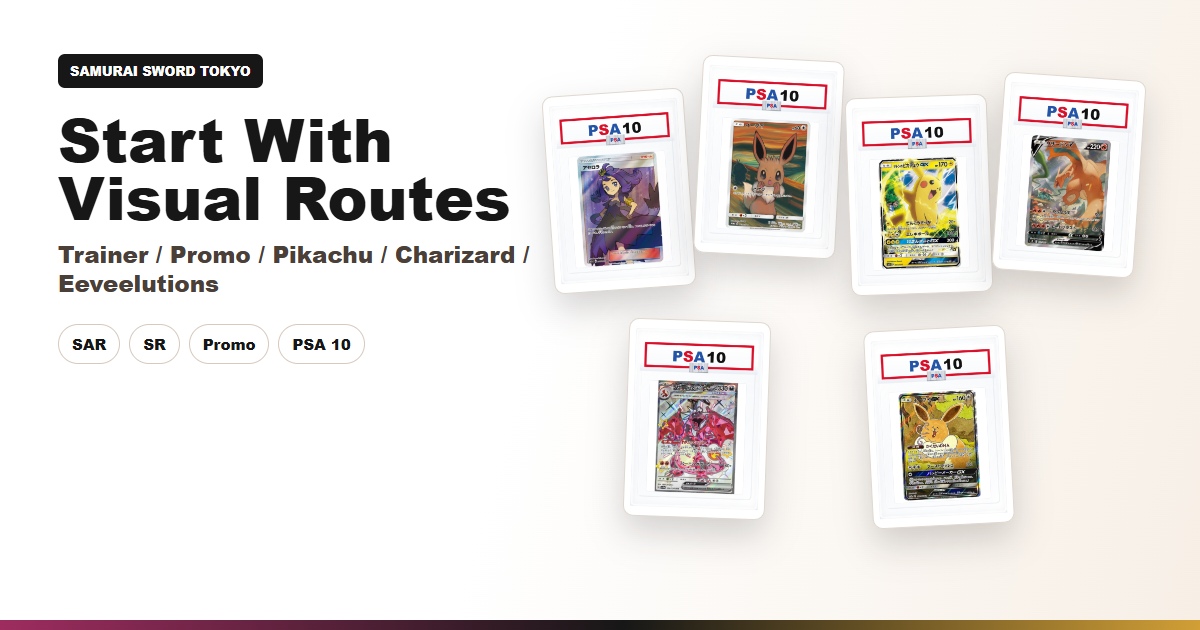
Above the fold PSA 10 rarity route rail

Start With The Rarity Guide Buying Router

If you are buying Japanese Pokemon cards for PSA 10, do not sort only by the printed rarity abbreviation. Use rarity to narrow the search, then confirm the exact Pokemon or Trainer, artwork, set, card number, live availability, and buyer role.
Browse live PSA 10 graded cards Request current PSA 10 wholesale availability

Updated June 23, 2026: this guide turns high-traffic rarity-guide search behavior into a practical buying checklist for overseas collectors, resellers, and card shops sourcing Japanese PSA 10 Pokemon cards from Japan.

Key takeaway: rarity helps you filter cards, but PSA 10 value comes from the full buying context. A lower-rarity Pikachu promo, Trainer card, or popular art card can be a better graded buy than a higher-rarity card with weak demand.

The Real Worry Behind A Rarity Search

Most buyers do not search a rarity guide because they love abbreviations. They search because they are worried about making a mistake: buying the wrong version, overpaying for a rare-looking card, grading a card that should stay raw, or building inventory that will not move. A good rarity guide should name those worries before it asks the reader to click a product or wholesale link.
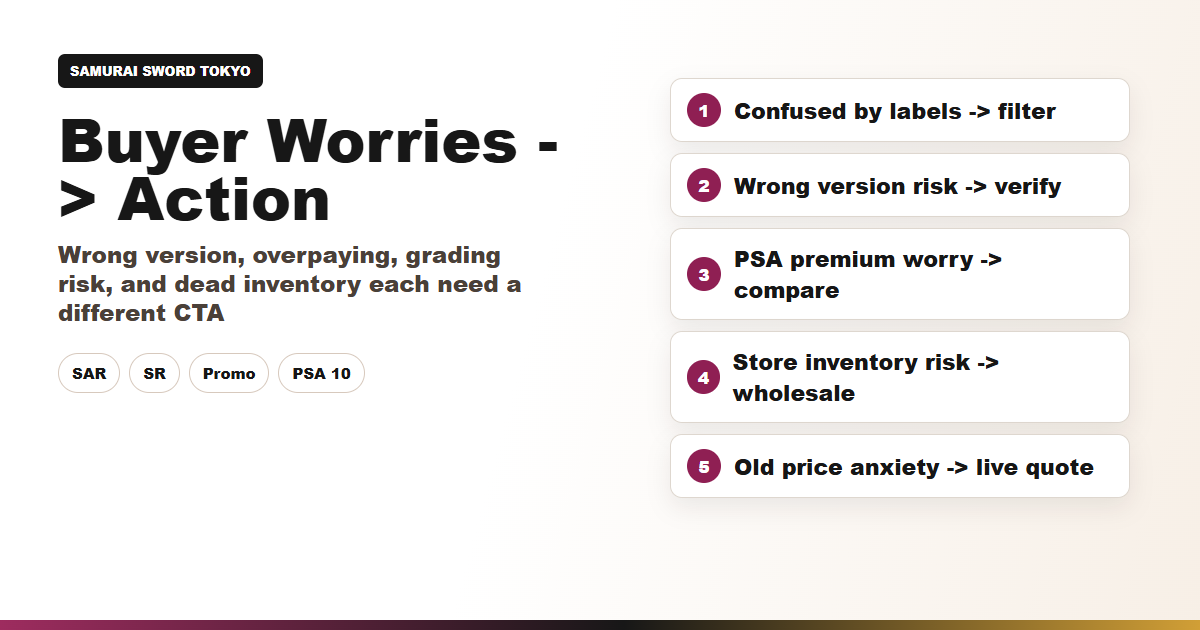
Customer worry to PSA buying action router
Convert the buyer’s worry into a next action: verify, compare, browse, or request a current quote.
Buyer worry What they are really asking How this guide answers Best CTA
I do not understand the rarity labels. Which cards are worth my attention first? Use rarity as a filter, then prioritize character demand, artwork, and buyer role. Read the rarity ladder, then browse live PSA 10 cards.
I am afraid of buying the wrong version. How do I avoid confusing similar Japanese cards? Check set, card number, language, artwork, grade wording, and official card data before relying on price. Open exact product pages first.
I do not know if PSA 10 is worth the premium. Should I buy raw, grade later, or buy the slab? Compare condition certainty, time, fees, resale speed, and buyer trust. Read PSA 10 vs raw.
I need inventory, not a personal collection. What will actually move for my shop or resale channel? Build around recognizable themes, liquidity, price bands, and substitutions. Request current wholesale availability.
I do not trust old price screenshots. What price can I act on now? Use the article as a framework, then confirm live product pages or a dated quote. Browse live PSA 10 inventory.

Quick Answer: What Rarity Should PSA 10 Buyers Care About?

For graded-card buyers, the most useful Japanese rarity groups are not simply the rarest labels. The strongest buying routes are usually character-driven: SAR or SR Trainers, icon Pokemon, Japanese promos, Eeveelutions, Charizard, Pikachu, Mew/Mewtwo, and cards with artwork that can sell the slab at a glance.

Buyer question Short answer SST action
I want live PSA 10 inventory. Start with cards that are currently listed or can be quoted now. Browse the PSA 10 collection.
I am buying for resale. Prioritize liquidity, recognizability, and price bands over rarity abbreviation alone. Ask for a current wholesale list.
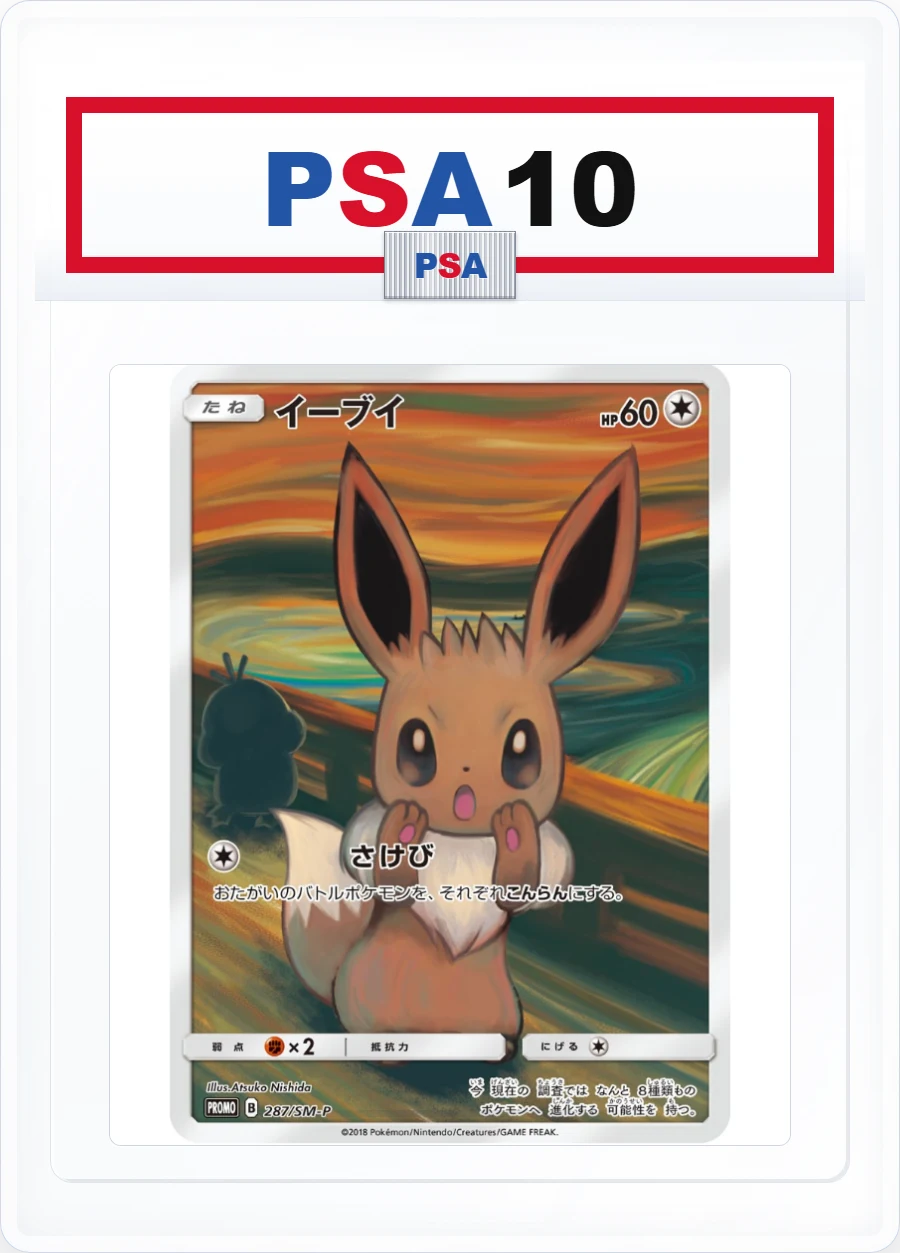
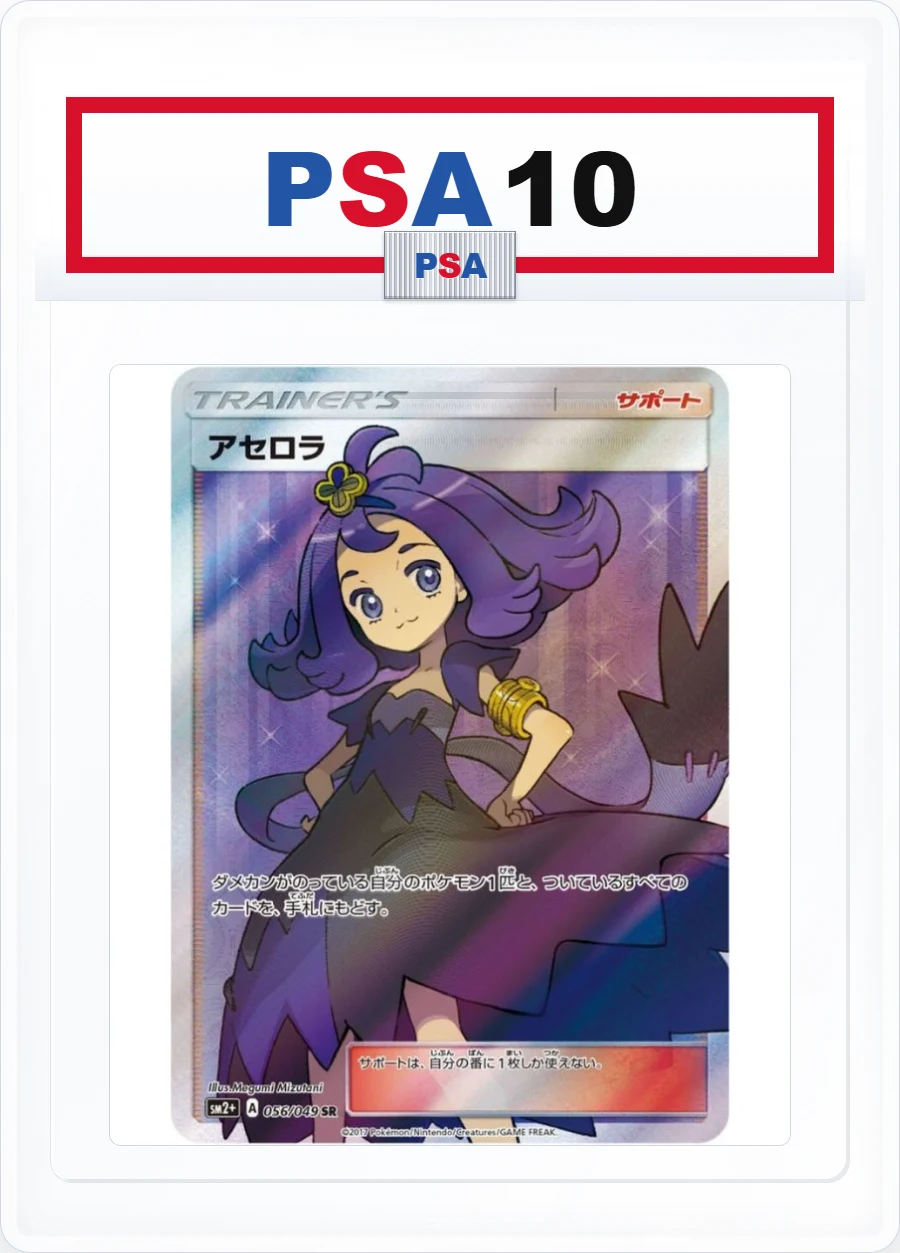
I want premium collector slabs. Check exact version, card number, art, grade wording, and quote date. Open exact product pages such as Acerola, Eevee Munch, Pikachu, and Charizard.
I am deciding raw vs PSA 10. Use rarity as one signal, then compare grading risk and resale speed. Read PSA 10 vs raw.
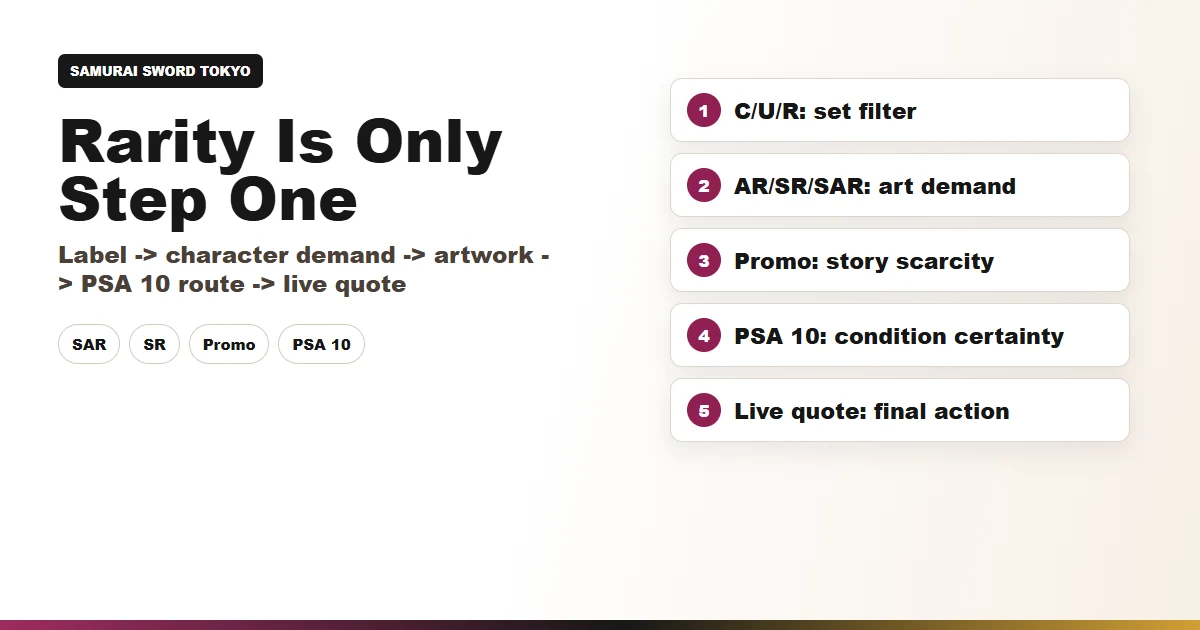
Japanese Pokemon rarity ladder for graded buyers
The graded-card buyer ladder: rarity label, character demand, artwork, PSA 10 availability, then live quote.

Rarity Guide: Core Japanese Labels Decoded

Before using rarity as a PSA 10 buying filter, decode what the label actually means. Japanese Pokemon products do not use one permanent ladder across every era, but the labels below cover the abbreviations most overseas graded-card buyers will meet when checking modern and semi-modern Japanese cards.

C/U/RRR/RRR

Base layers and headline mechanics

Use these to understand the set structure first. They are not automatic PSA 10 targets.

Best when the Pokemon, era, or play history creates demand beyond the label.
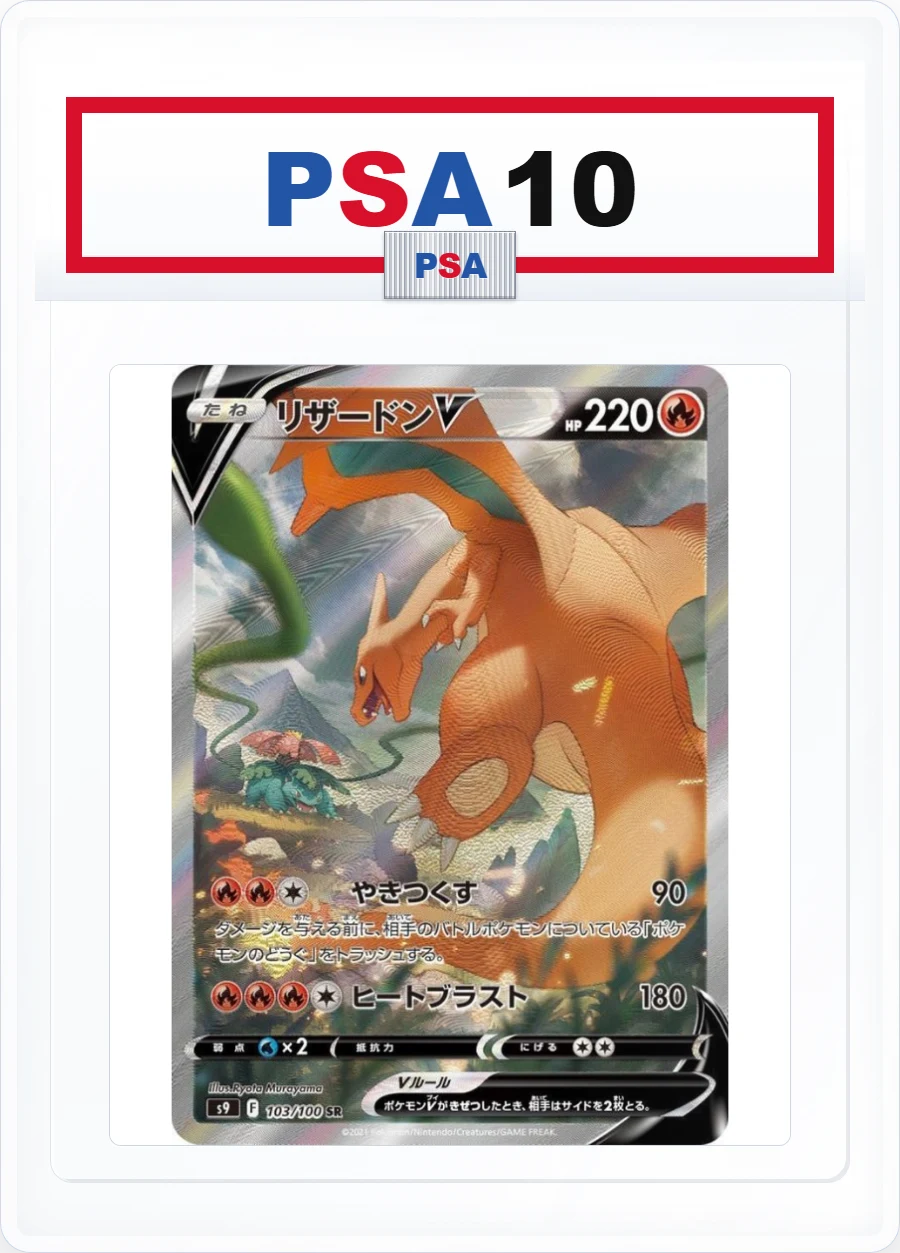
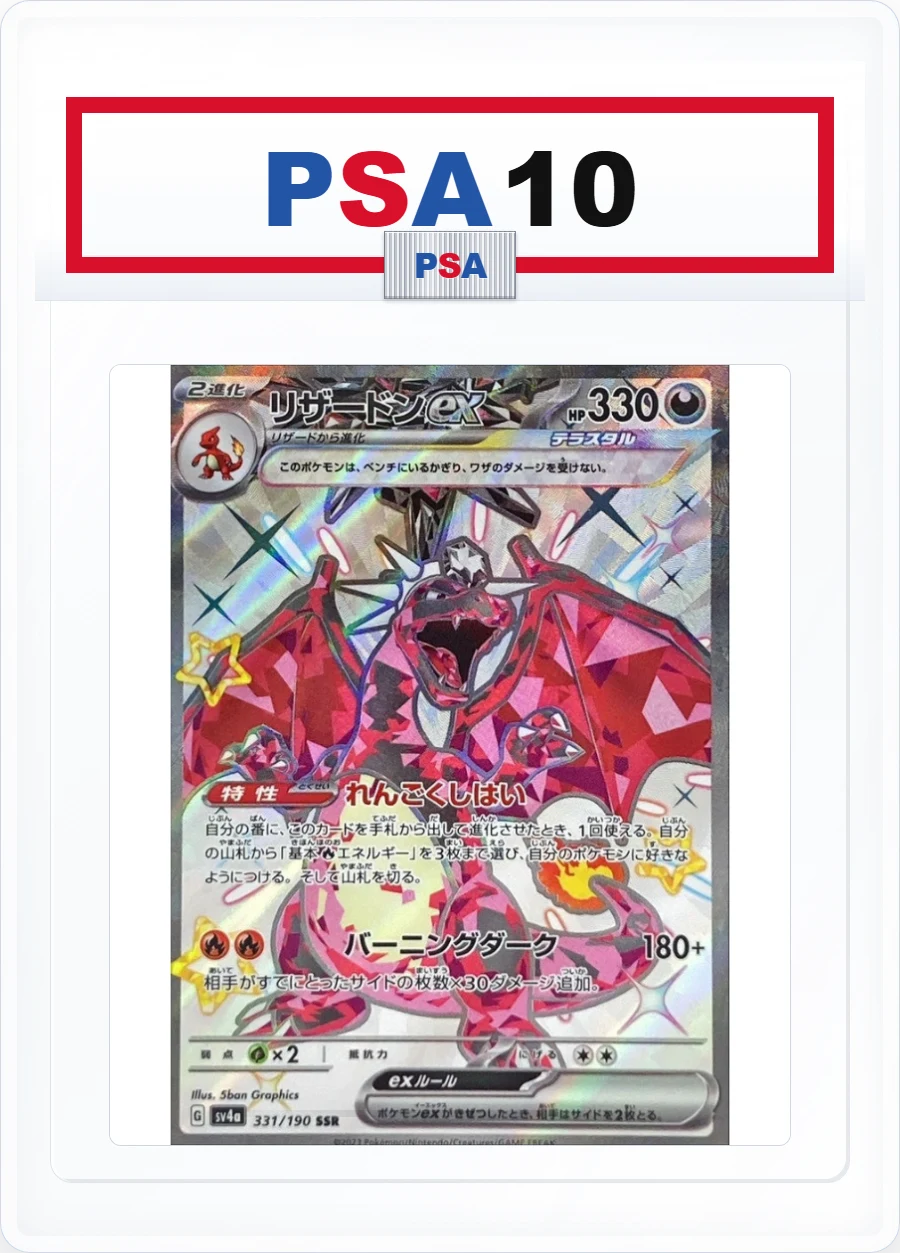
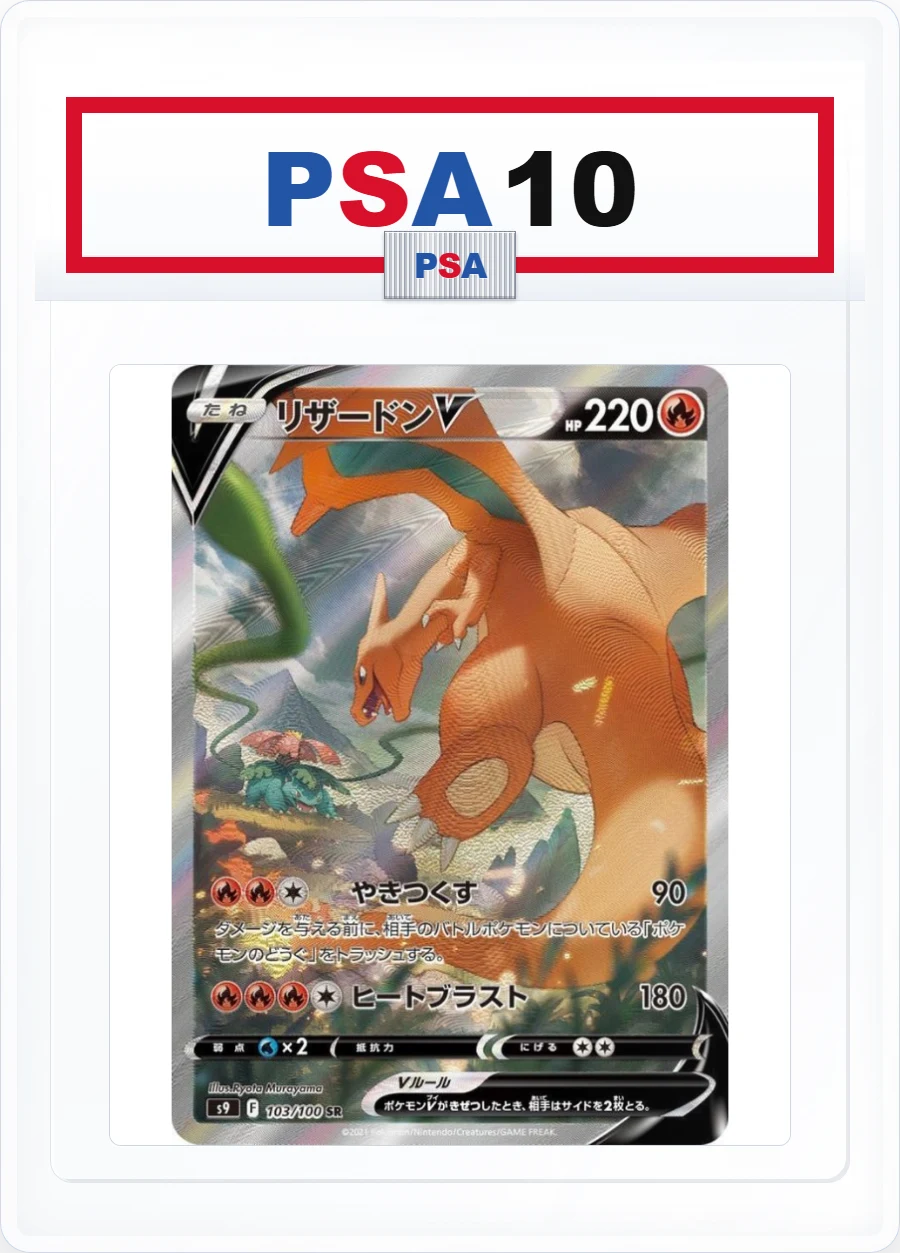
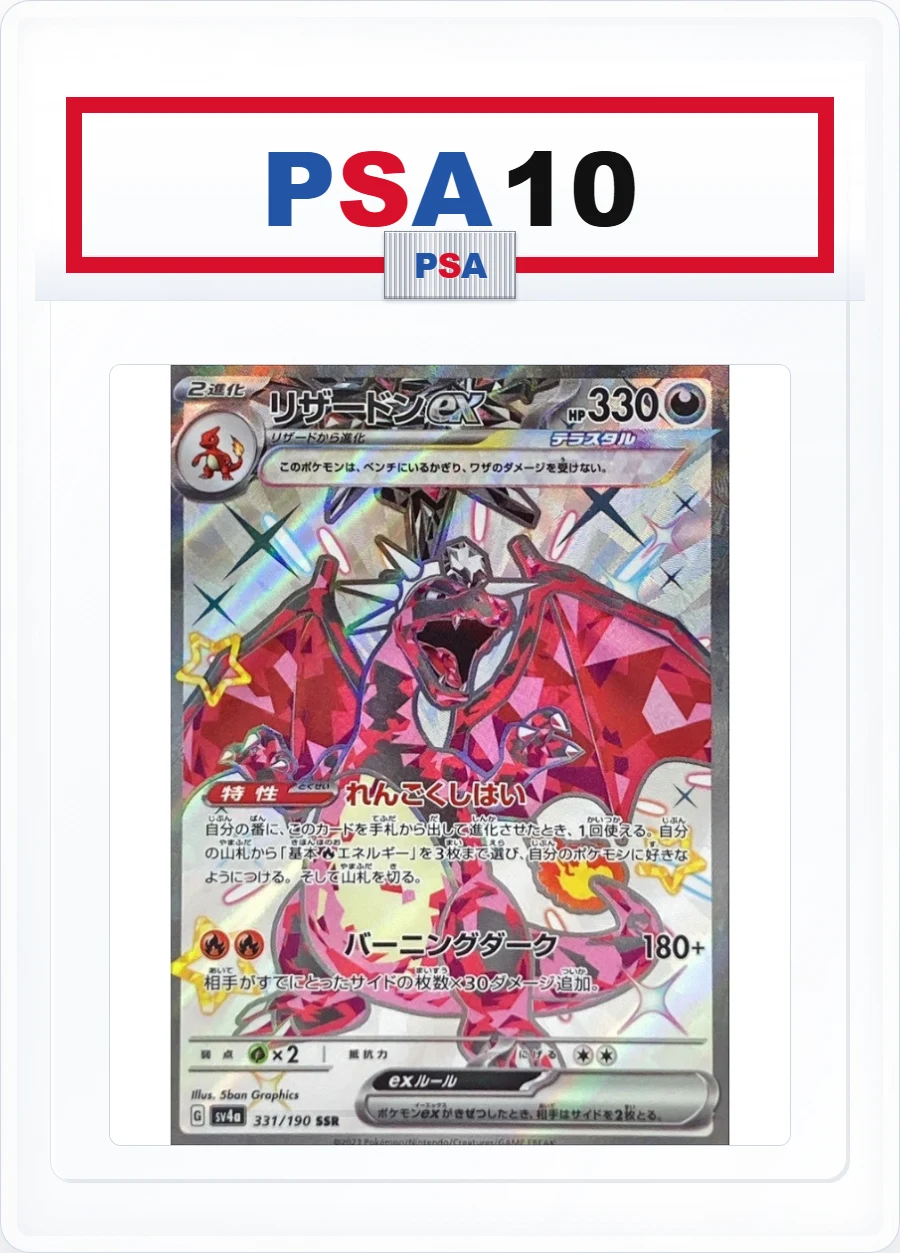
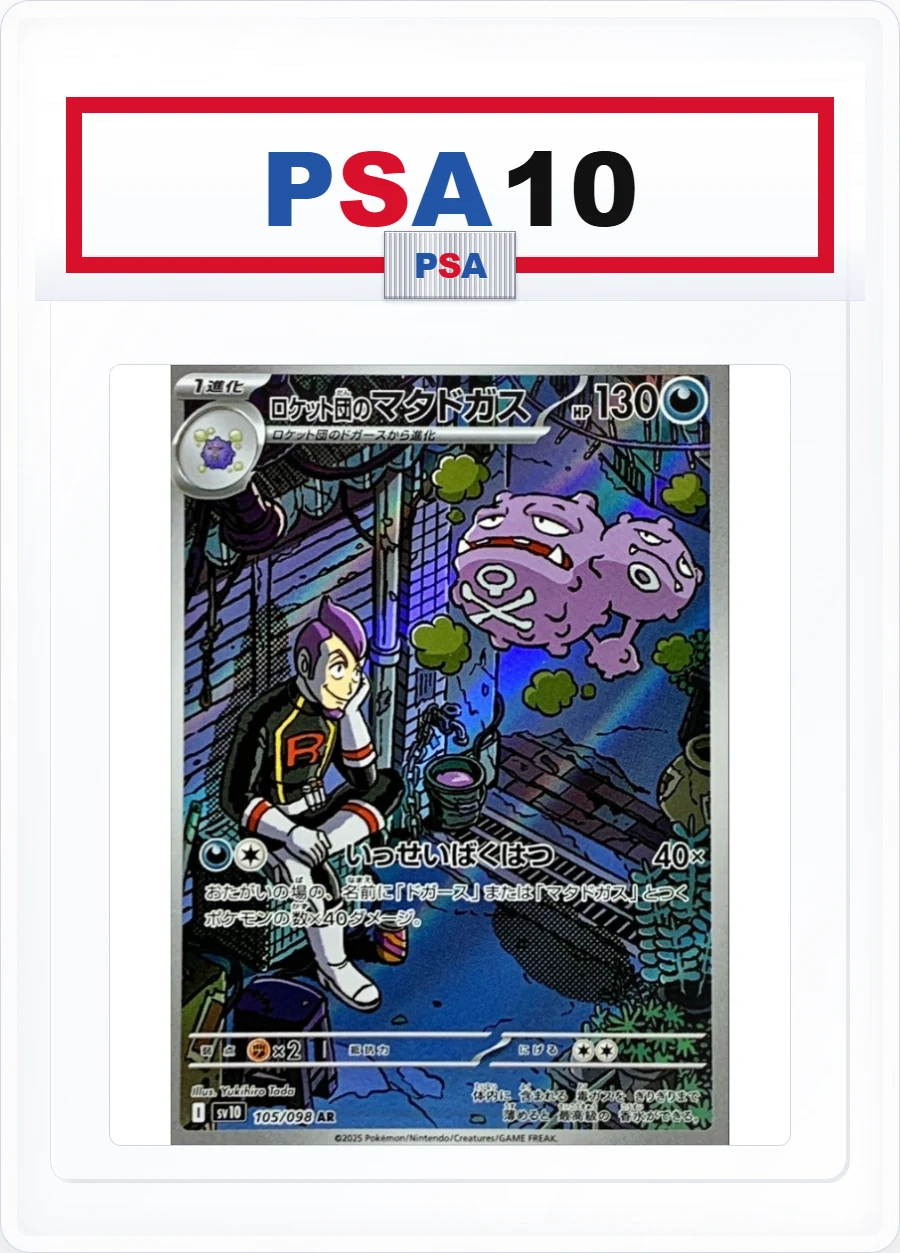
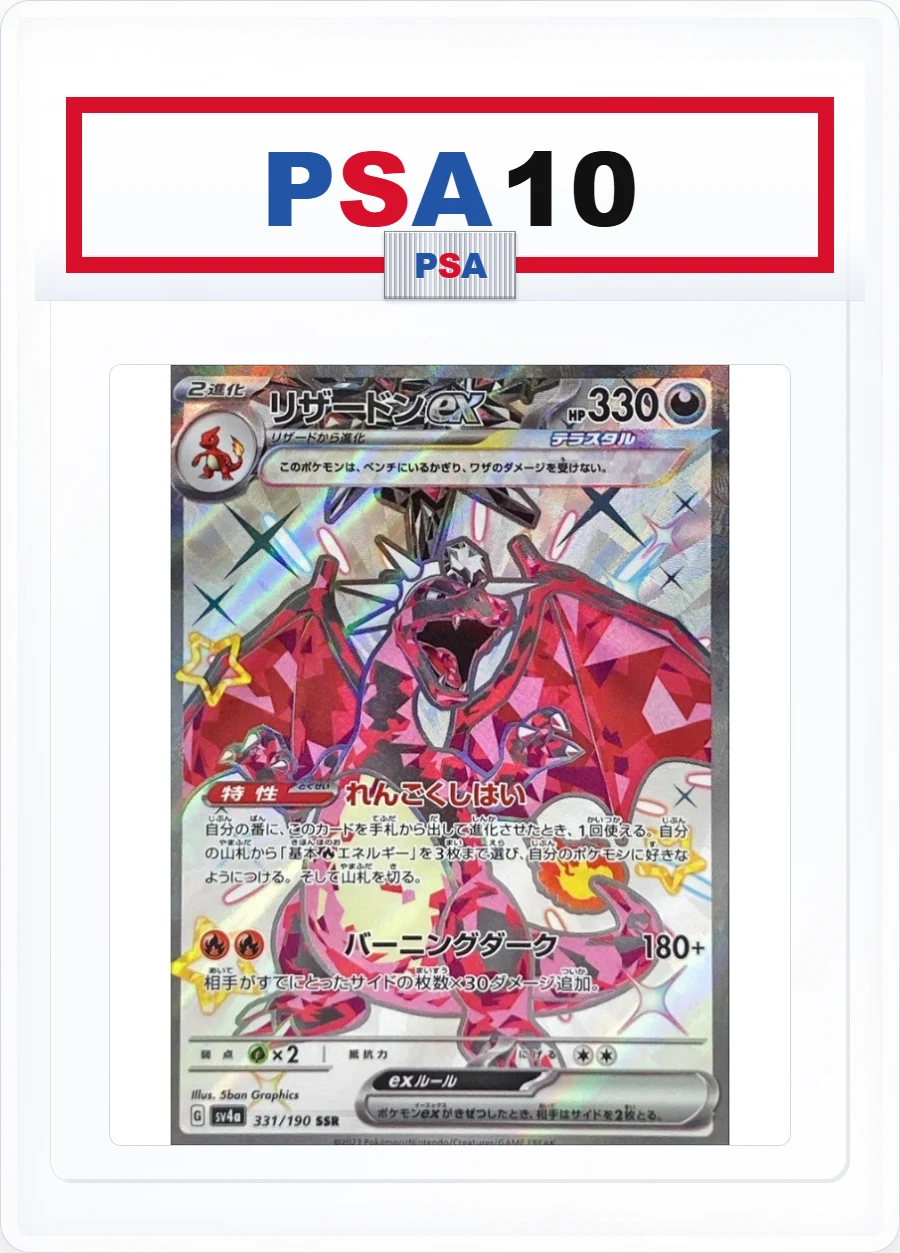
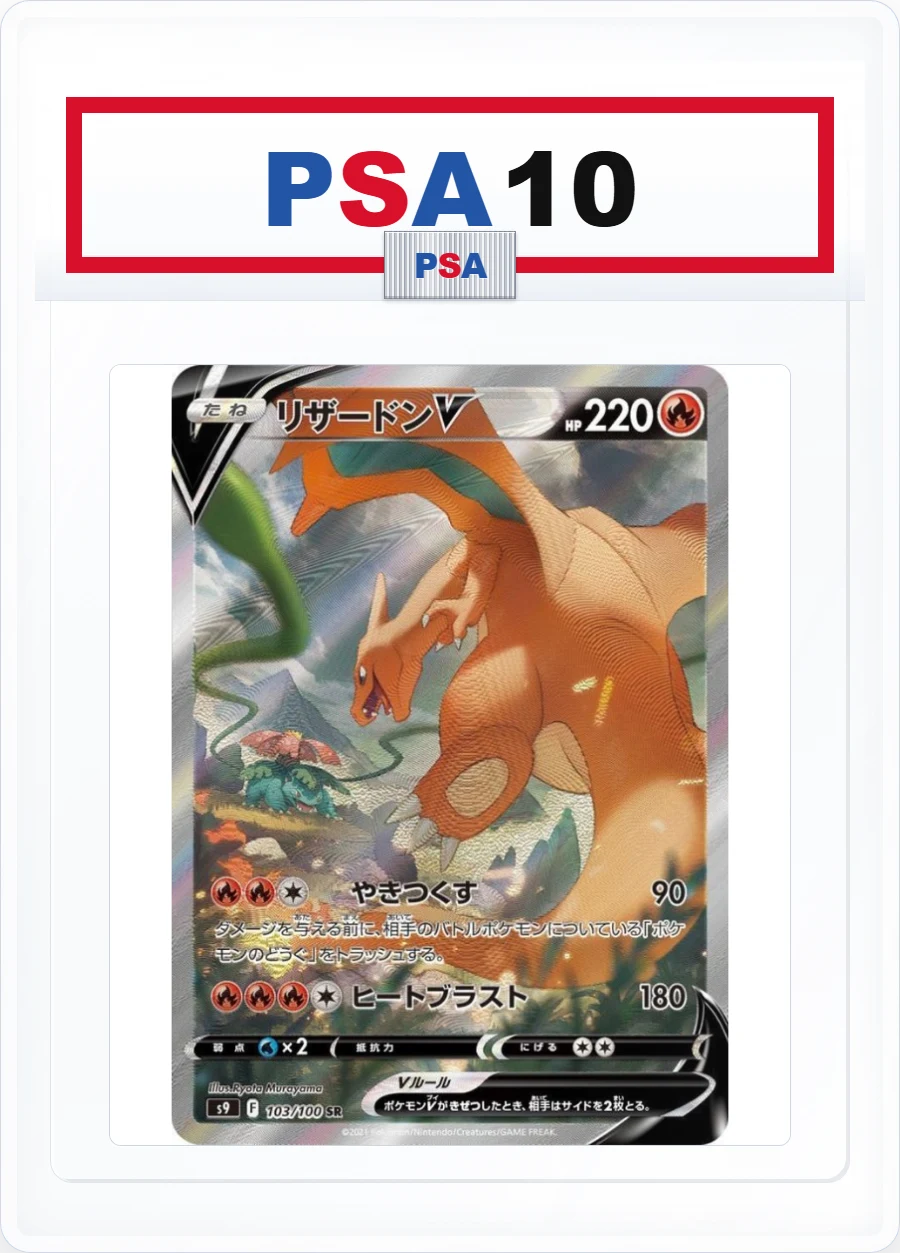
PSA10 Charizard V example for headline rarity route

ARCHRCSRSA

Artwork-first routes

These cards sell visually. The image, character pairing, and theme often matter more than abbreviation status.

Good for display cases and themed collections when the art is easy to explain.
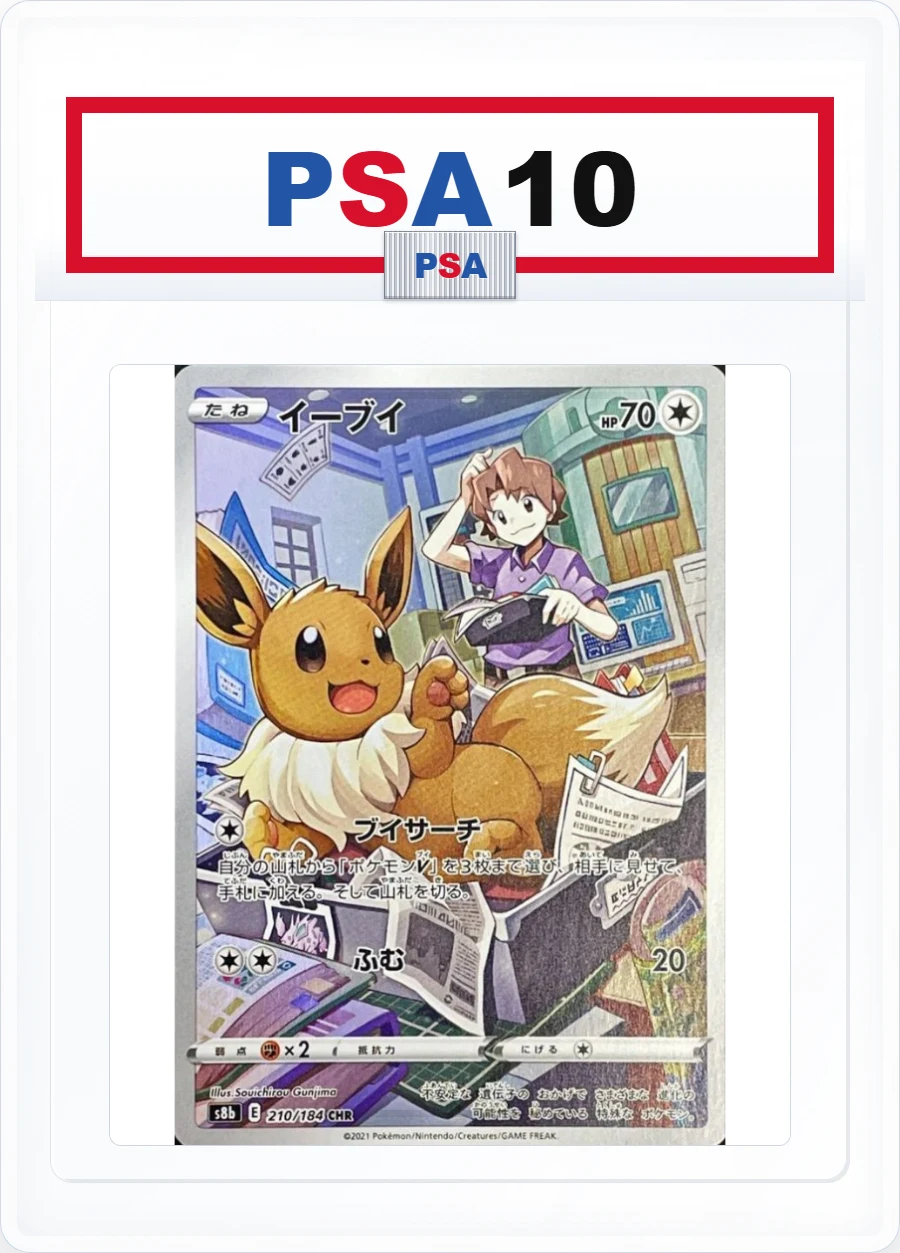
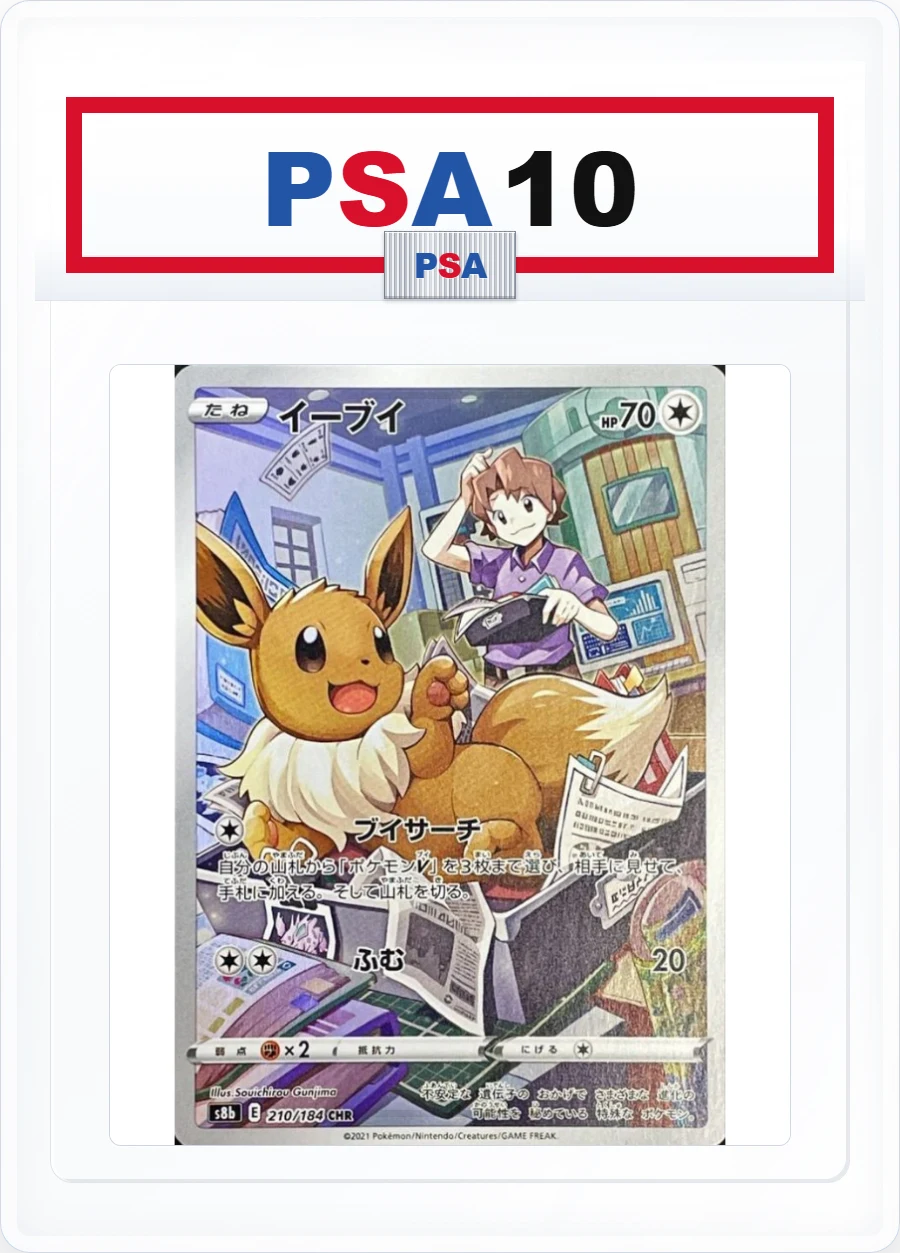
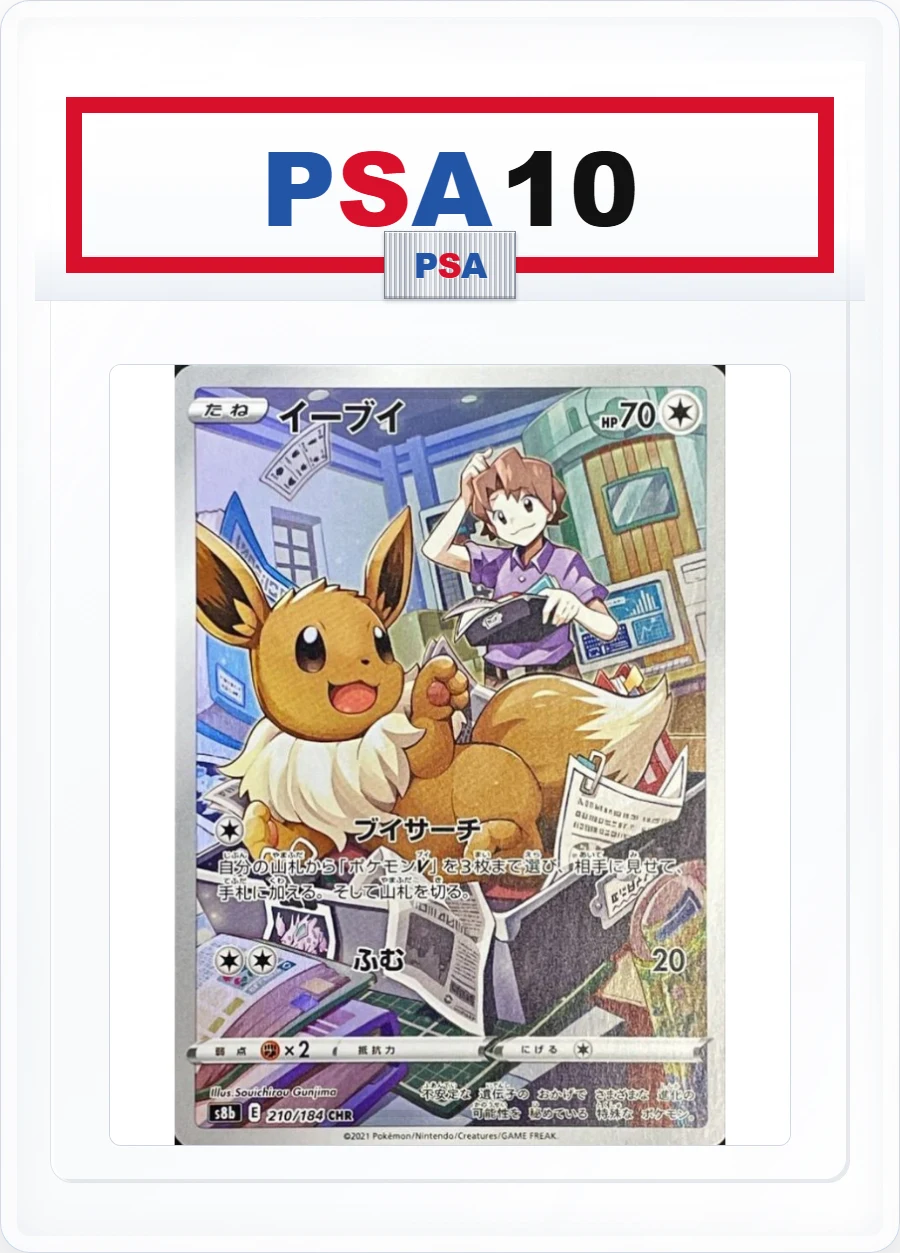
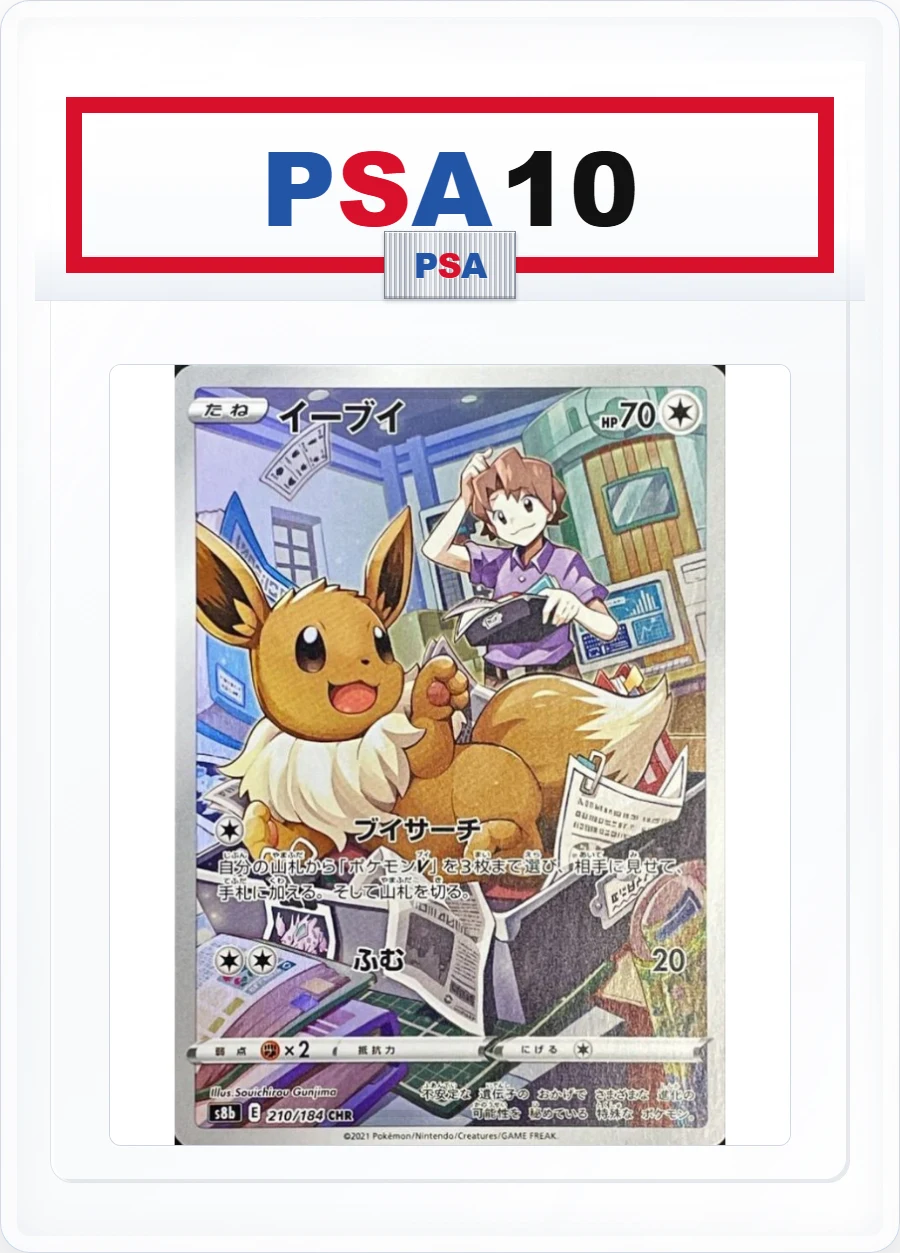
PSA10 Eevee CHR artwork route example

SRSARSSR

Premium full-art and chase routes

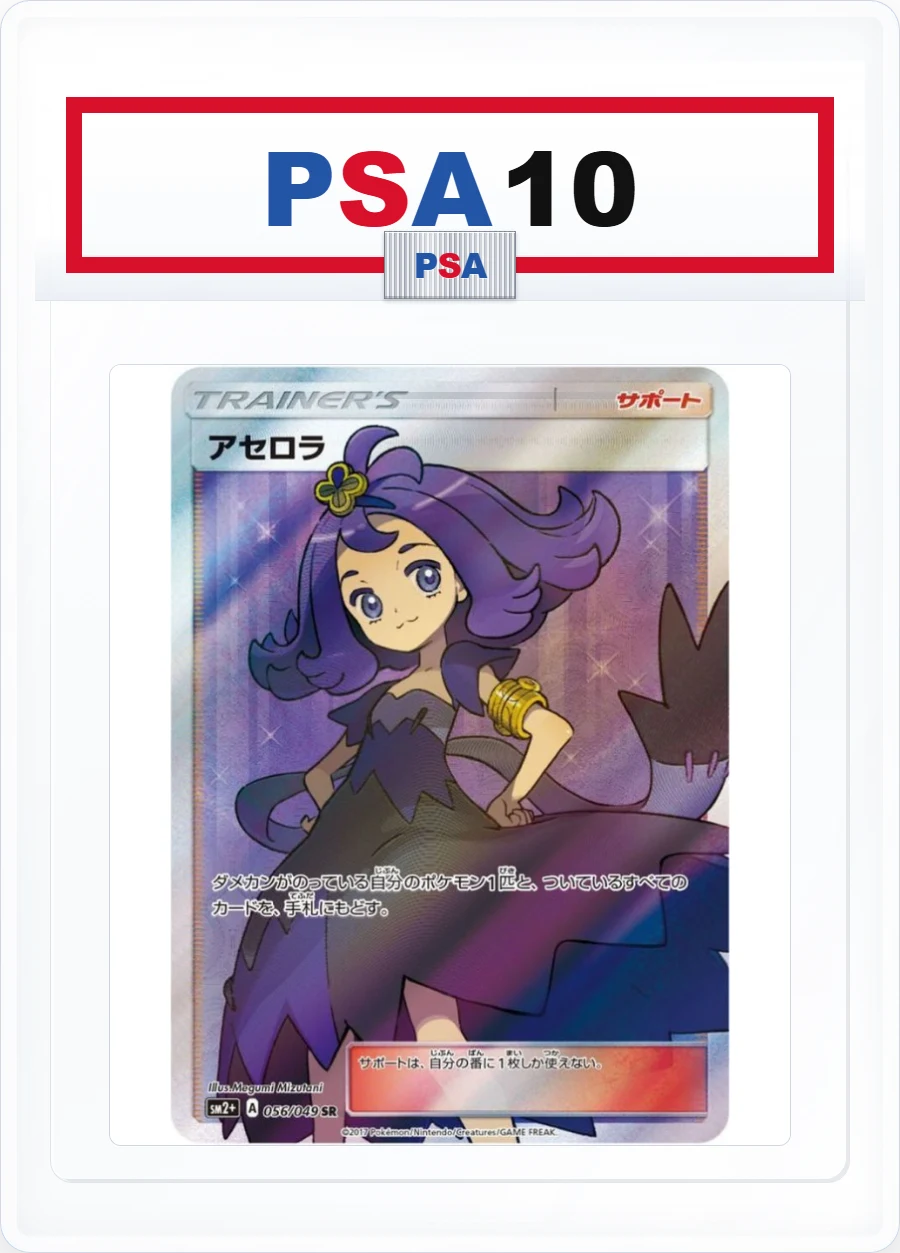
Trainer names, icon Pokemon, and story artwork decide whether the label turns into PSA 10 demand.

Verify exact product-page taxonomy, card number, and quote date before comparing prices.
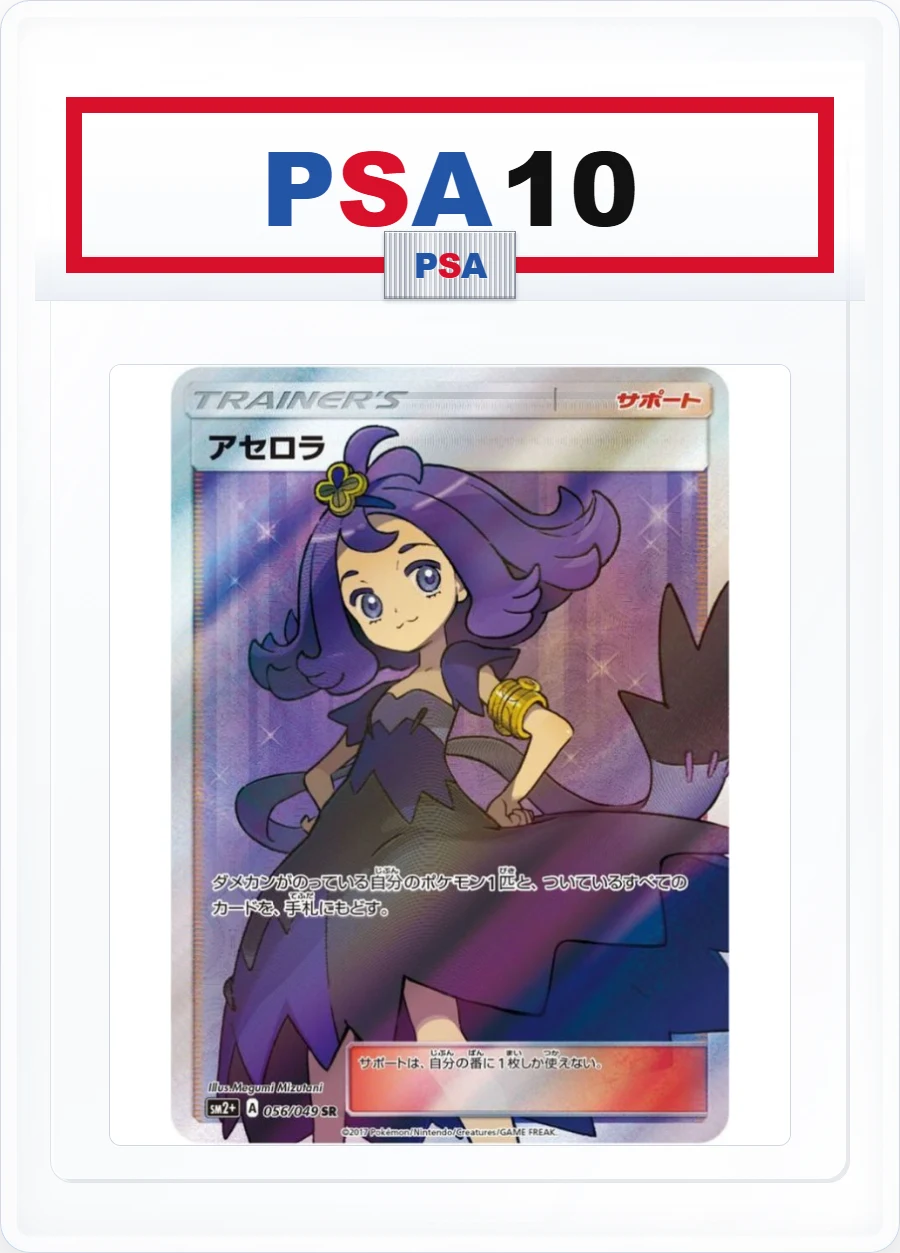
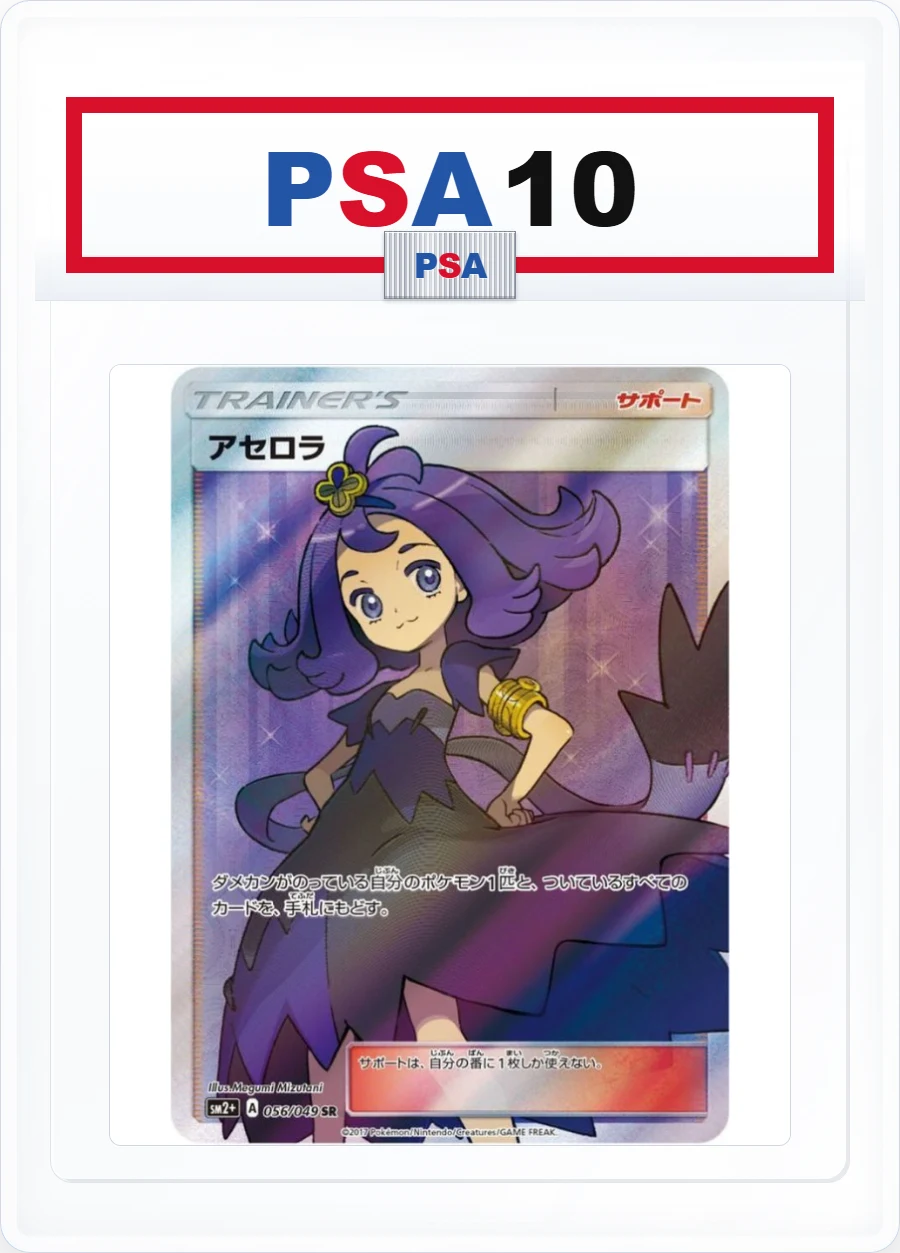
PSA10 Acerola SR premium trainer route example

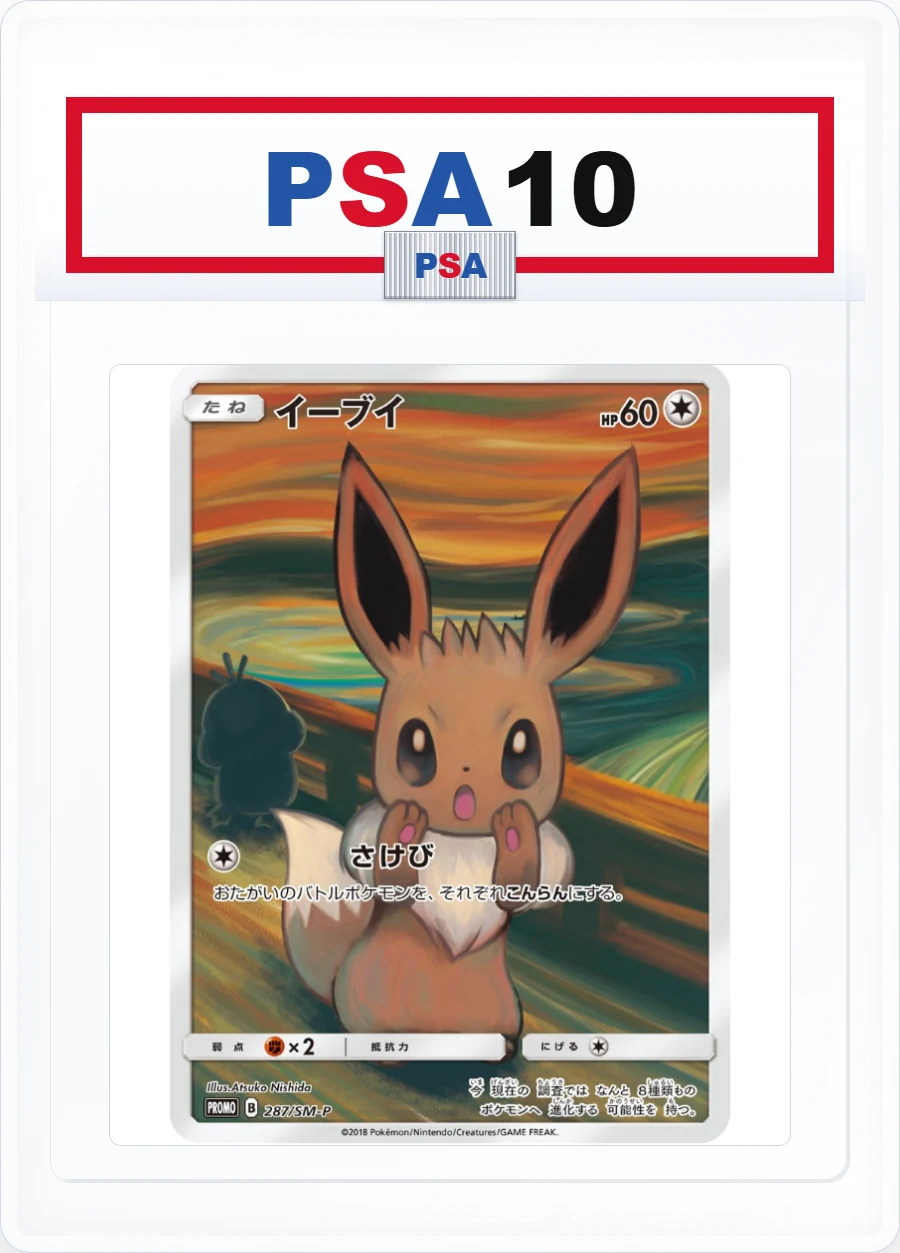
URGoldPromo

Scarcity story routes

Gold treatment and promo distribution can look premium, but the story must be clear to the buyer.

Promo number, event context, and live availability matter more than a simple rarity ladder.
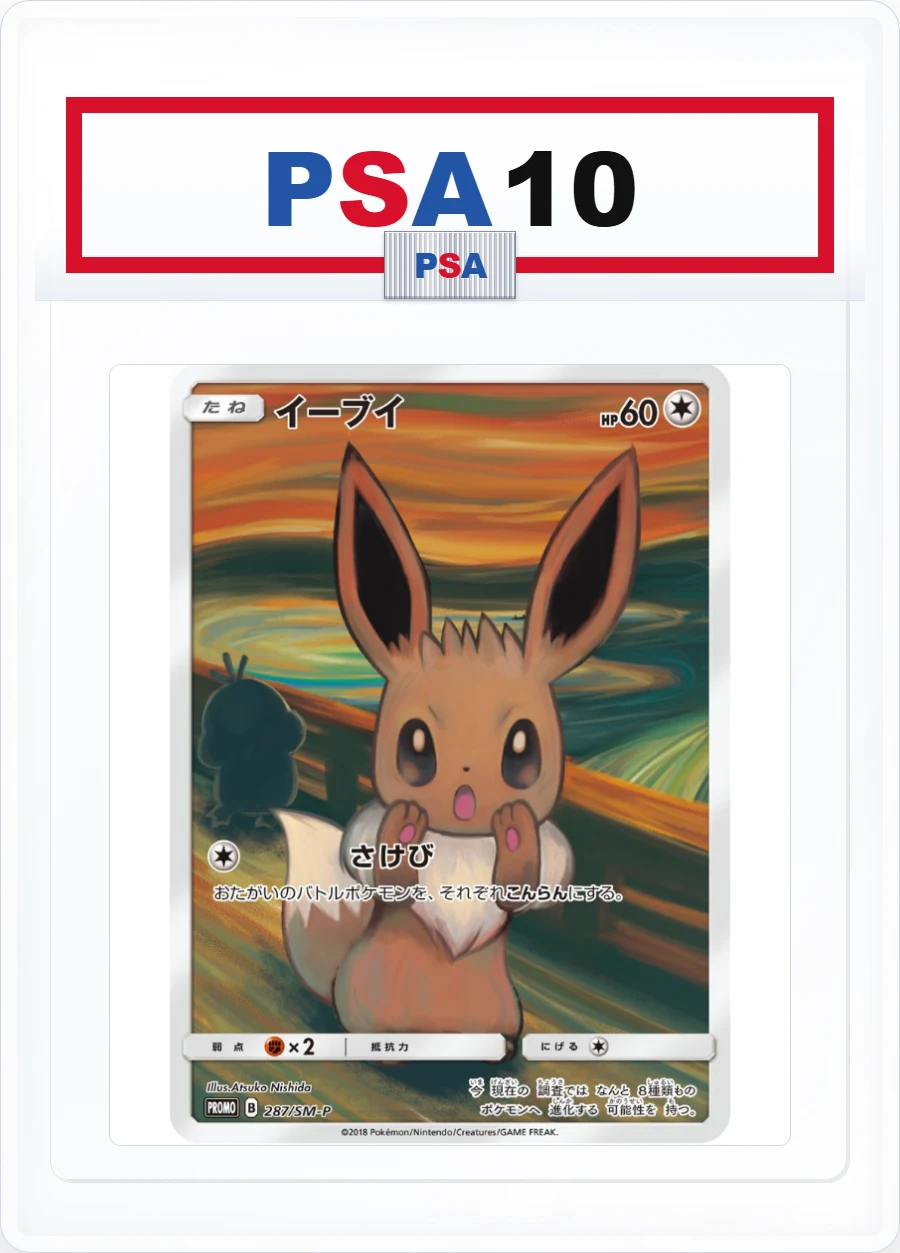
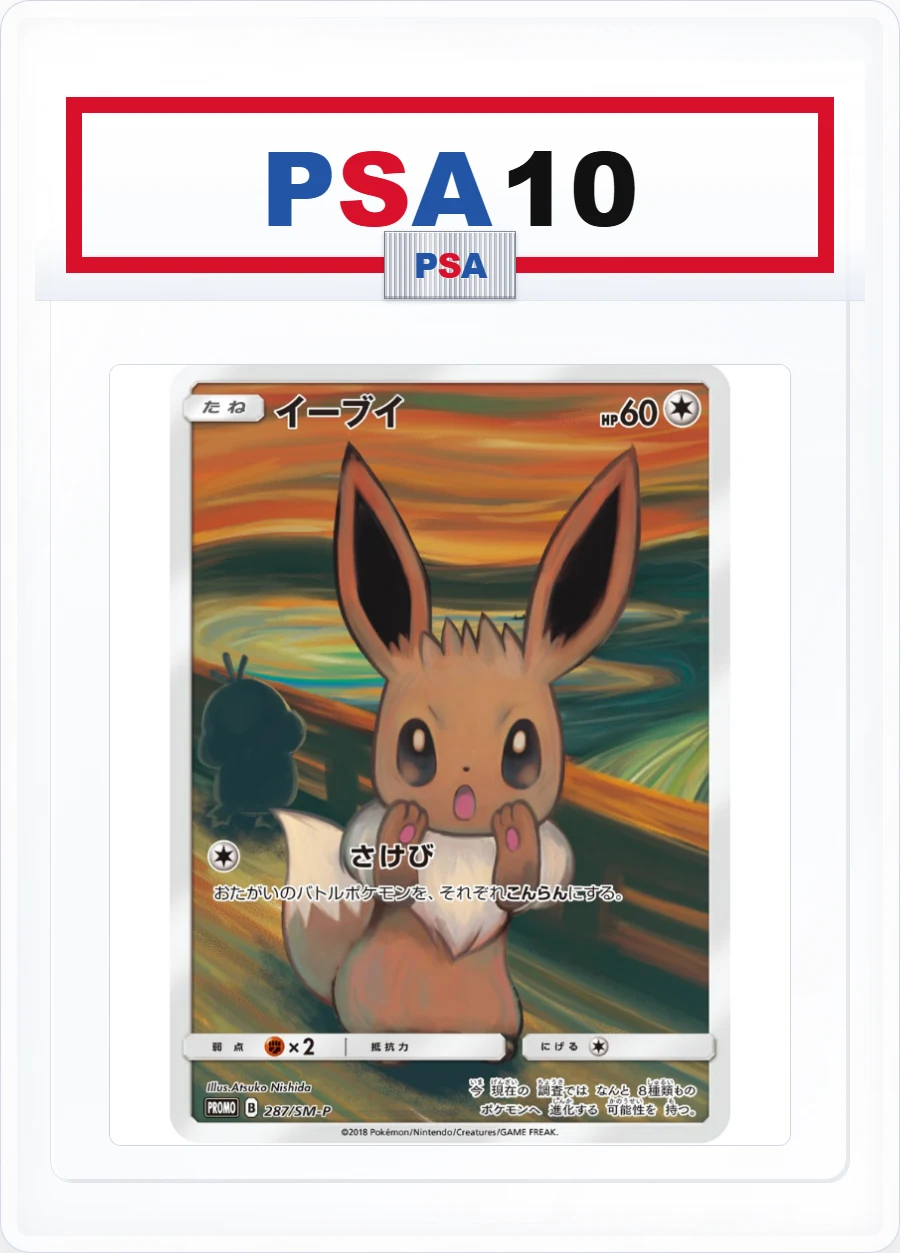
PSA10 Eevee Munch promo route example

Label Meaning PSA 10 buying read
C / U / R Common, Uncommon, and Rare base-set layers. Usually not a slab priority unless age, play history, character demand, or unusually clean condition changes the equation.
RR / RRR Modern double-rare/triple-rare headline mechanics such as ex, V, VMAX, or era-specific main cards. Good identity filter, but the exact Pokemon, artwork, and current price support still decide the buy.
AR / CHR / CSR / SA Art, character, and special-art routes where the visual scene carries demand. Strong for merchandising and theme collectors; grade only when condition and resale path justify PSA fees.
SR / SAR / SSR Secret/full-art, special-art, or shiny-product taxonomy depending on era and product page. Potential premium PSA route; verify exact card number, product taxonomy, live price, and supply before ordering.
UR / Gold / Promo Premium finish or distribution route rather than a simple pack-rarity ladder. Demand depends on recognizability, event story, and availability more than the abbreviation alone.

Why Competitor Rarity Guides Get Traffic

Ahrefs’ June 15, 2026 domestic competitor snapshot showed SNKRDUNK’s Pokemon card rarity article with an estimated 11,579 monthly organic visits and 280 ranking keywords. The searcher behind that page is usually trying to decode abbreviations before making a buy, sell, grade, or keep decision.

SST should not copy that content. The useful lesson is format: answer fast, use tables, define confusing labels, and then route the reader into the next commercial action. For SST, the next action is not a generic rarity glossary. It is choosing whether to browse live PSA 10 slabs, request a wholesale list, compare raw vs PSA 10, or build a character-themed buying route.

Competitor pattern Why it works SST upgrade
Rarity definitions Beginners need abbreviations decoded quickly. Connect each rarity to PSA 10 buying risk and buyer role.
Tables and simple hierarchy Readers skim before they trust the article. Add buyer routes, product links, and wholesale actions.
FAQ for long-tail questions Rarity creates many small search queries. Answer grading, resale, raw-vs-slab, and shop-inventory questions.
Image breaks Visual cards make the page easier to understand. Use SST-owned product/slab images instead of copying competitor images.

The bigger SEO lesson is that high-traffic competitors do not rely on one article type. They cover different search jobs: release freshness, hit-card rankings, price checks, product inventory, trust/process questions, character-specific PSA demand, and overseas where-to-buy searches. This article covers the rarity-guide job, then deliberately points buyers toward the commercial routes SST can actually serve.

SEO role Benchmark surface Ahrefs read Searcher job How this article adapts it
Fresh release and new-set hub SNKRDUNK release schedule page 18,548 estimated visits What is new, what should I watch, and when should I act? Keep rarity explanations tied to the next buyable route instead of leaving the reader in research mode.
Hit-card and price-ranking page SNKRDUNK set hit-card pages 12,974 estimated visits on a Pokemon 151 hit-card page Which cards matter most, and what price range should I expect? Use ranked routes, dated SST price examples, and live quote CTAs instead of a numberless glossary.
Evergreen rarity glossary SNKRDUNK rarity guide 11,579 estimated visits / 280 keywords Decode abbreviations before buying, selling, grading, or keeping a card. Answer the same beginner anxiety, then move into PSA 10 risk, exact version checks, and inventory routes.
PSA 10 inventory surface Cardrush PSA10 category 6,016 estimated visits Show me buyable PSA 10 cards now. Place the PSA 10 collection and exact product routes early so the article does not behave like a passive dictionary.
Trust and transaction page Hareruya2 buying page 5,496 estimated visits Can I trust the process, price, and next step? Repeat current-quote, availability, wholesale, and exact-version checks where anxiety is highest.
Character PSA 10 long tail magi character PSA10 article 1,136 estimated visits What about this exact character or named card in PSA 10? Branch from rarity into Trainer, Pikachu, Charizard, Eeveelutions, promo, and display-case routes.
Overseas shopping entry PokeNinJapan / TCG Republic style pages US demand around Japanese Pokemon cards, where-to-buy, and card-list queries How do I buy Japanese cards from Japan without confusing versions or sources? Write in plain English, keep images dense, and connect education to collection and wholesale actions.

Japanese Rarity Labels Through A Graded-Card Lens

Japanese Pokemon cards use set-specific rarity labels, and those labels can change across eras. Treat the table below as a buyer map rather than a permanent universal rule. Always confirm the exact Japanese card in the official card database, product page, or current seller quote before relying on a rarity abbreviation.

Rarity or route How buyers usually read it PSA 10 buying note Best CTA
C / U / R Base rarity layers for set completion and play. Usually not a PSA 10 priority unless the card has unusual age, art, play history, or character demand. Use as raw/set-completion context.
RR / RRR Modern ex/V/VMAX-style headline cards depending on era. Icon Pokemon can still matter, but the abbreviation alone does not guarantee a strong slab. Compare exact Pokemon and artwork.
AR Art Rare, often loved for illustration and binder appeal. Grade only when art demand, centering, and resale path justify the premium. Use raw-vs-PSA checklist.
SR Full-art or special treatment depending on era and card type. Trainer SRs and icon Pokemon SRs can become strong PSA 10 routes. Check product pages and related character guides.
SAR Special Art Rare with stronger story/art pull in many modern sets. Often a good PSA 10 candidate, but still needs liquidity and live quote discipline. Browse PSA 10 collection or request availability.
UR / gold Gold cards and premium treatments. Can be collectible, but demand varies widely by card identity. Do not buy by rarity label alone.
Promo Not a normal pack rarity, but often a major collector route. Distribution story can matter more than printed rarity. Use exact product page or wholesale quote.
Vintage / trophy / no-symbol routes Era and scarcity can outweigh modern rarity logic. Requires extra authentication, grade, and market research. Use specialist inquiry and current quote.
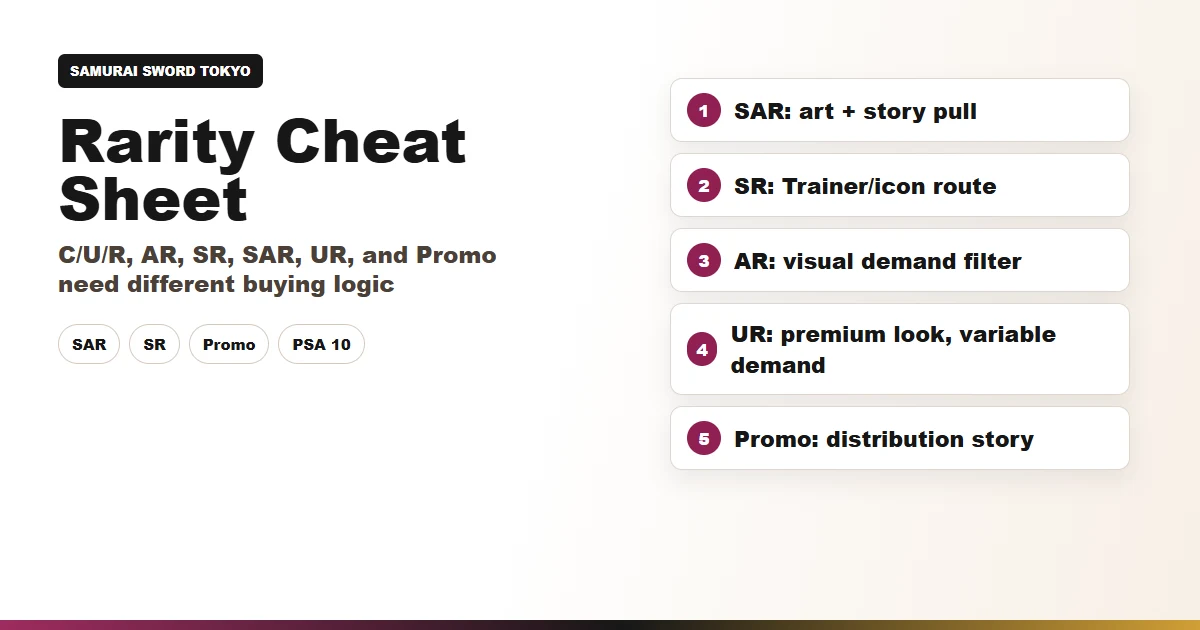
Japanese Pokemon rarity abbreviation buyer cheat sheet
Use rarity labels as a filter, then move into character demand and live buying routes.

Era-By-Era Rarity Labels: What Actually Changes

The biggest beginner mistake is treating every Japanese rarity abbreviation as if it belongs to one permanent ladder. Japanese Pokemon products have changed structure across eras, and collector demand does not move in a perfectly straight line from common to rare. For PSA 10 buyers, the era matters because it changes how many comparable cards exist, how easy the card is to identify, and whether the rarity label is the main story or only a small part of it.

Use this section as a sanity check before making a graded-card decision. A modern SAR can be easy to explain because the art, rarity label, and character route are visible at a glance. An older holo or promo can require more explanation because the card’s appeal may come from age, event distribution, or a specific campaign. A clean PSA 10 slab removes condition uncertainty, but it does not remove the need to understand why that exact card has demand.

Era or product route How the label can mislead buyers PSA 10 check Best buying action
Older Japanese holos and vintage routes The visible rarity mark may not tell the whole story. Age, set history, scarcity, and condition can matter more than modern abbreviation logic. Confirm exact set, card number, holo pattern, language, grade cert, and whether the slab is easy for your buyer segment to recognize. Use a specific inquiry rather than a broad rarity filter.
Sun & Moon full-art and promo-heavy routes SR, HR, and promo routes can overlap with character demand. A normal-looking promo number can still be the main value driver. Check whether the card is wanted because of rarity, character, event distribution, or art. Do not collapse those into one price assumption. Open exact product pages and compare cards within the same character route.
Sword & Shield art routes AR, CHR, CSR, SR, and SA-style collector language can be used loosely by sellers and buyers. Match the official card identity first, then ask whether the illustration can sell the slab visually. Use the card image, set number, and product page before relying on shorthand labels.
Scarlet & Violet SAR / AR routes SAR can sound automatically premium, but weak character demand or thin liquidity can still make a slab slow to move. Combine rarity with Pokemon or Trainer recognition, artwork, PSA 10 availability, and live quote discipline. Browse live PSA 10 inventory, then request a current quote for quantity or substitutions.
Promos, event cards, and campaign cards They do not fit neatly into pack-rarity ladders, so simple rarity charts underrate them. Look for distribution story, age, visual appeal, and how easily the card can be explained to an overseas buyer. Use product pages or wholesale inquiry with the exact promo number.

Worked PSA 10 Candidate Walkthrough

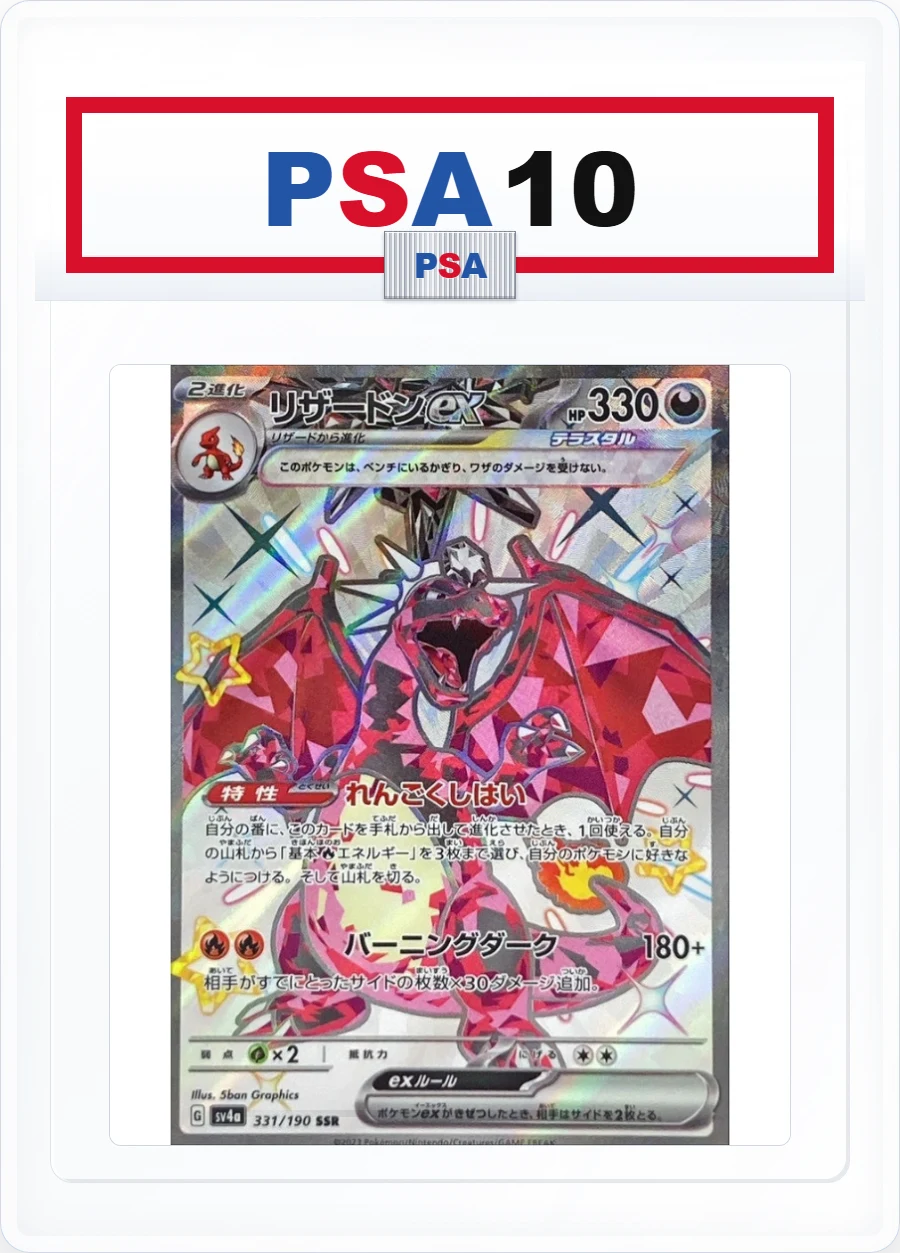
Here is the practical way to use the guide on one named route. Suppose a buyer is evaluating a modern Charizard SSR-style PSA 10 slab such as PSA10 Charizard ex SSR 331/190. The printed rarity label helps the card pass the first screen, but the buy decision should not stop there. Charizard has broad recognition, the art is visually strong in a product card, and PSA 10 removes most condition uncertainty for an overseas buyer. Those are positives. The remaining work is to confirm the exact version, whether the product page is live, whether the quote is current, and whether the buyer wants one premium slab or a broader display mix.

This walkthrough also shows why a lower-rarity card can compete with a higher-rarity card. If the higher-rarity card is hard to explain, has weak character demand, or lacks a clear resale audience, it may lose to a promo Pikachu, Eevee, Trainer, or Charizard with a stronger story. In other words, the rarity label is a gate, not the final score.

Decision step What to inspect Pass signal Stop signal
Exact identity Name, set number, language, artwork, grade label, and product URL. The product title, image, and slab identity all describe the same card. Similar artwork or seller shorthand creates version confusion.
Collector demand Pokemon or Trainer recognition, theme fit, and visual appeal. The card can be explained quickly in a shop case, listing title, or buyer message. The only selling point is that the abbreviation sounds rare.
PSA 10 role Whether the buyer needs certainty or can accept raw-condition risk. The slab saves time and gives a clear resale/listing format. The buyer mainly wants grading upside and can wait.
Liquidity and use case Collector, reseller, store display, or wholesale order. The card fits a named route: Charizard, Pikachu, Eeveelutions, Trainer, promo, or display mix. The buyer cannot name who will want the slab later.
Quote discipline Live product page, current availability, and dated quote if buying quantity. The decision uses current SST availability or a fresh wholesale list. The decision relies on old screenshots or unsourced price memory.

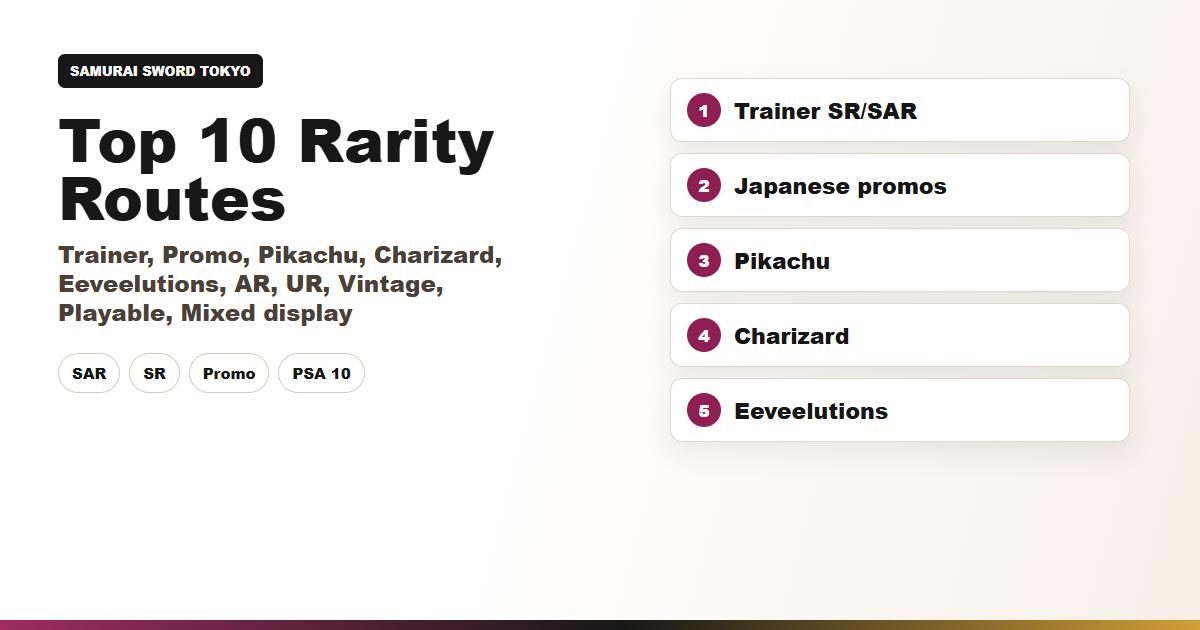
Top 10 Rarity Routes To Check Before Buying PSA 10

This is the competitor-derived module: put the named routes near the top so buyers can self-sort quickly. The ranking is not a permanent market ranking. It is a practical order for deciding which rarity-driven routes deserve attention first.

Rango Ruta Why buyers click PSA 10 decision SST path
1 Trainer SR / SAR Character demand can turn the card into a grail. Check name, artwork, set, quote date, and liquidity. Acerola product route
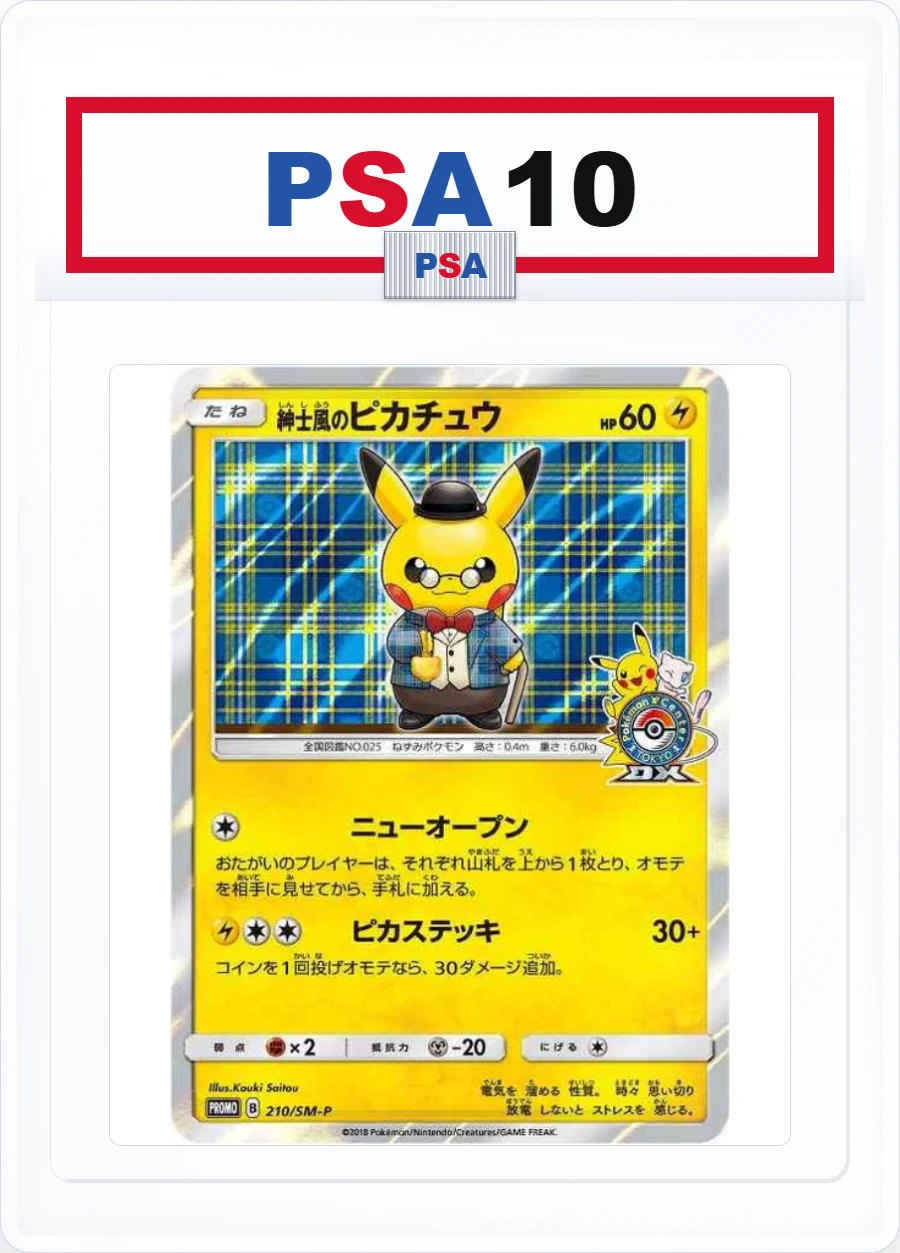
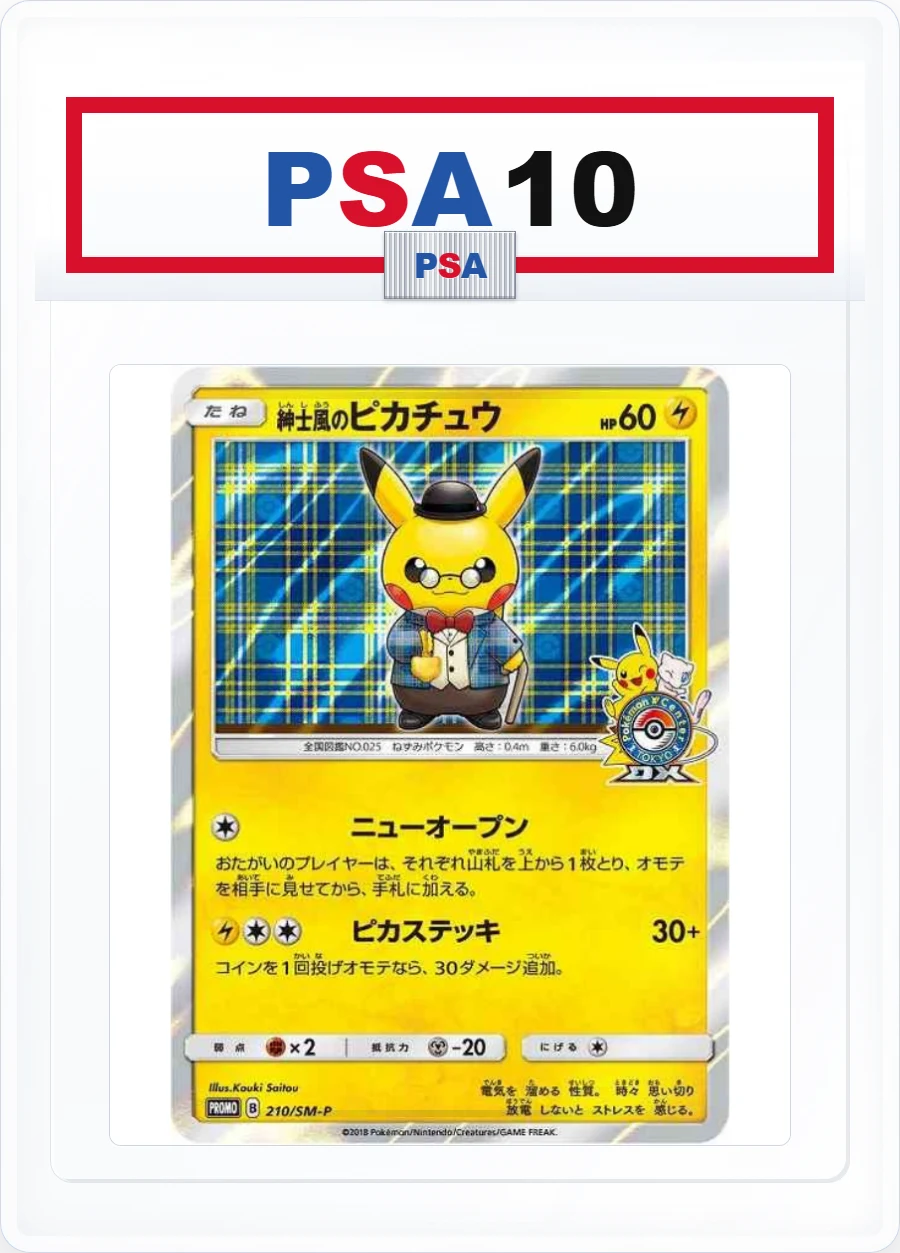
2 Japanese promos Distribution story creates collector urgency. Verify promo number and availability before comparing comps. Eevee Munch route
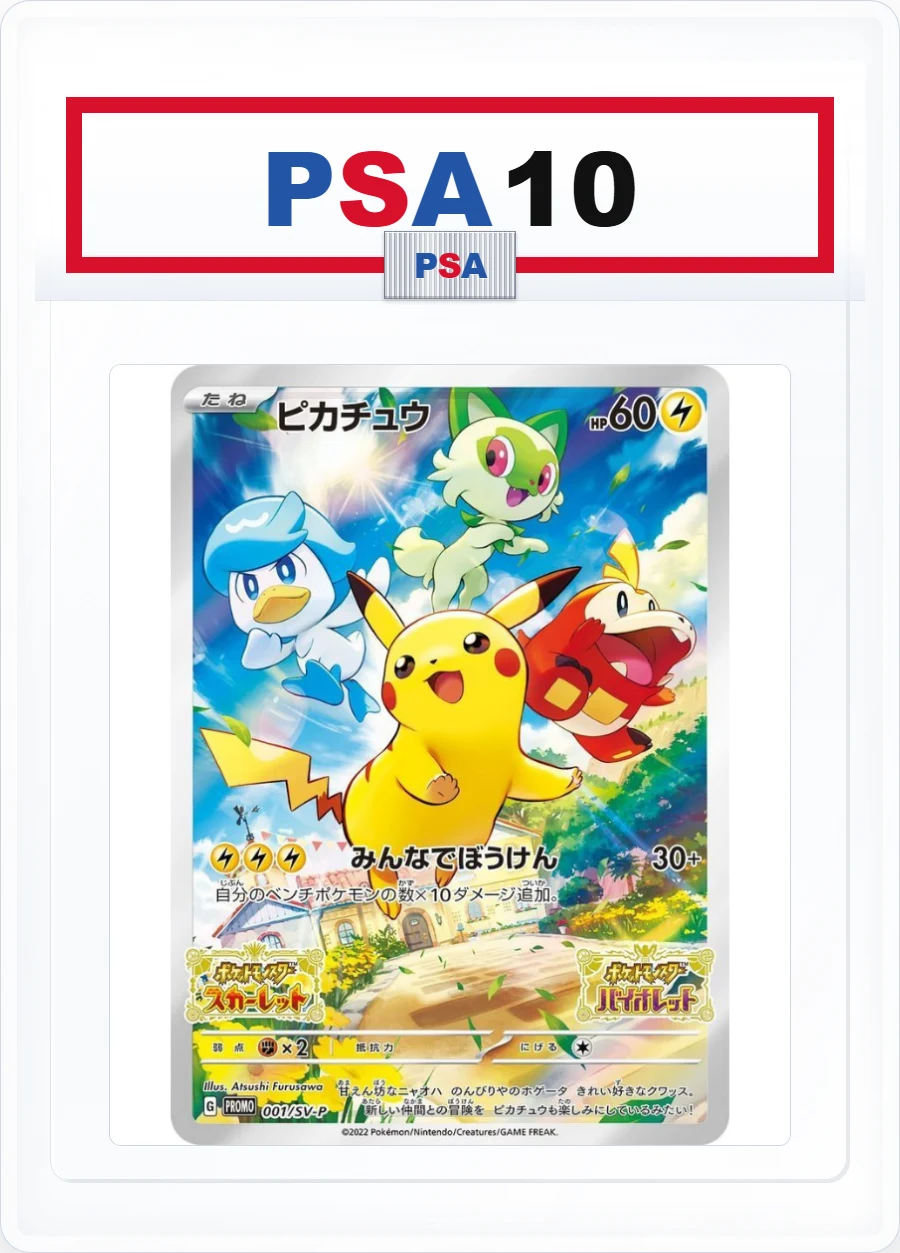
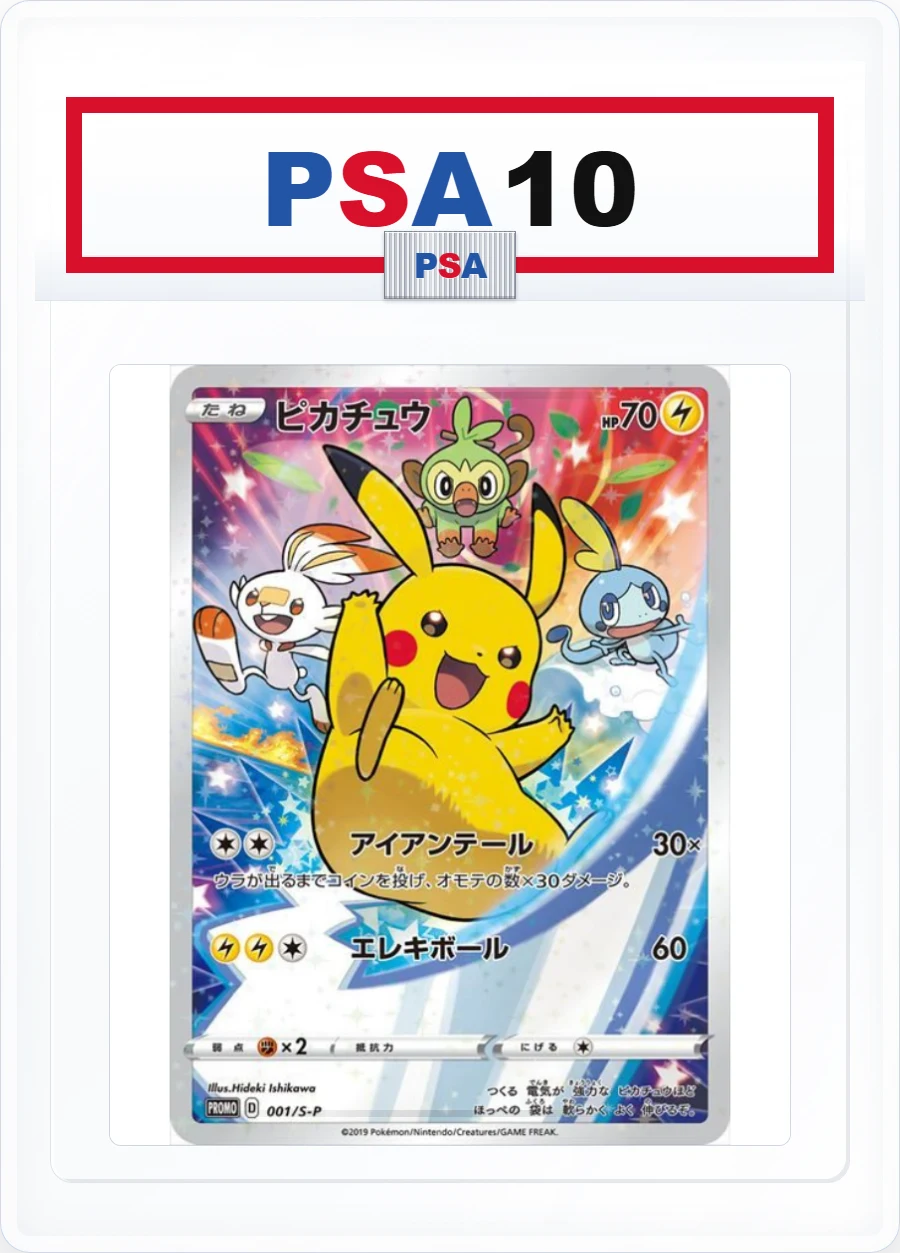
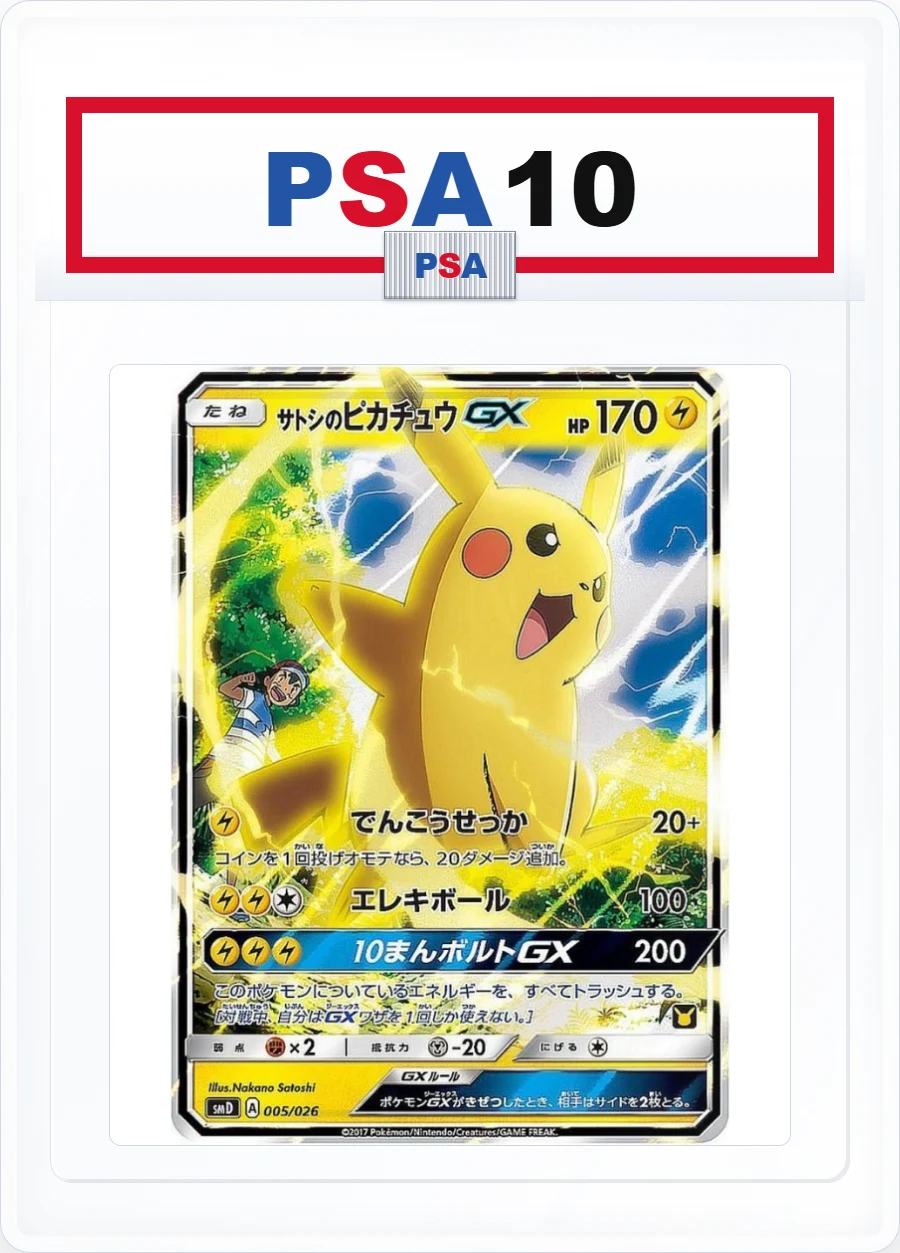
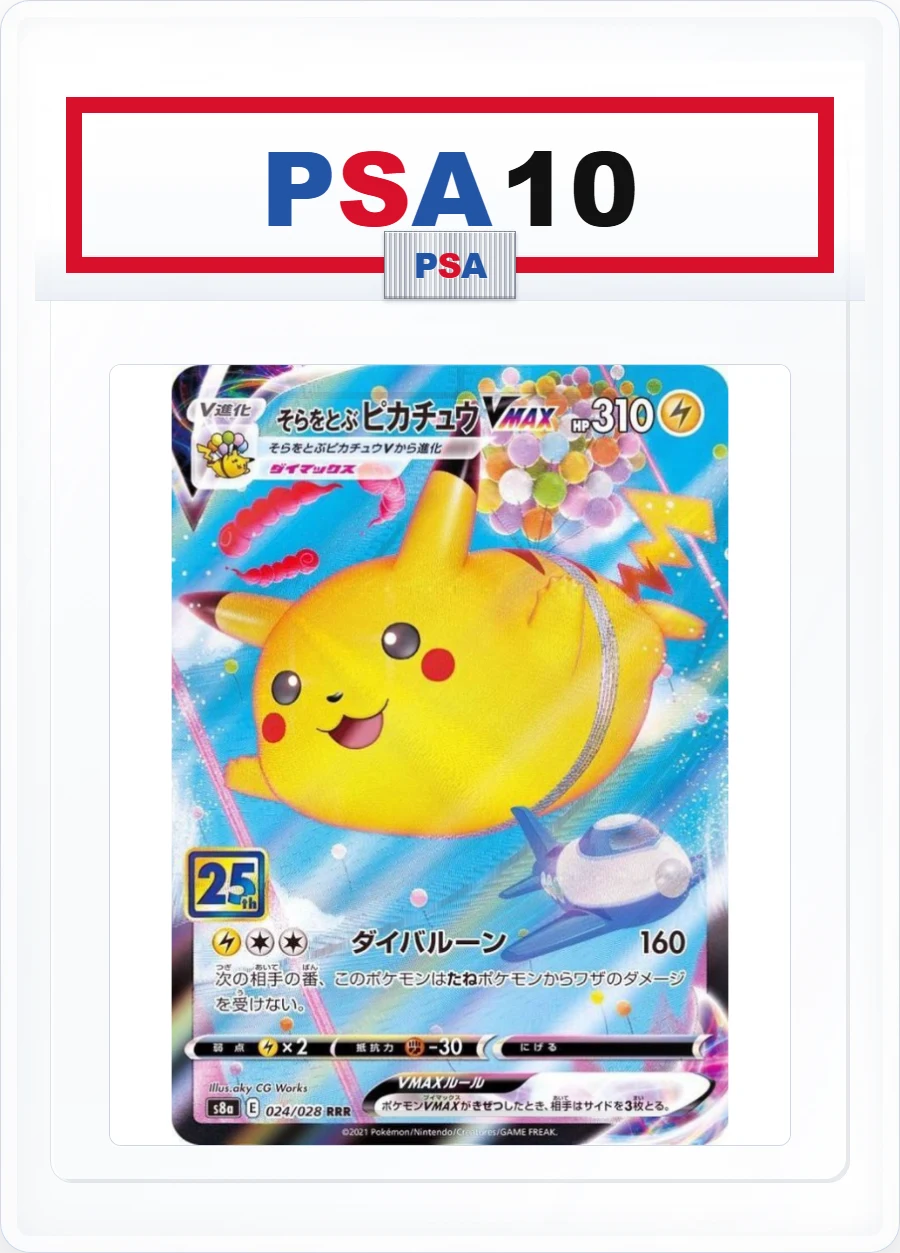
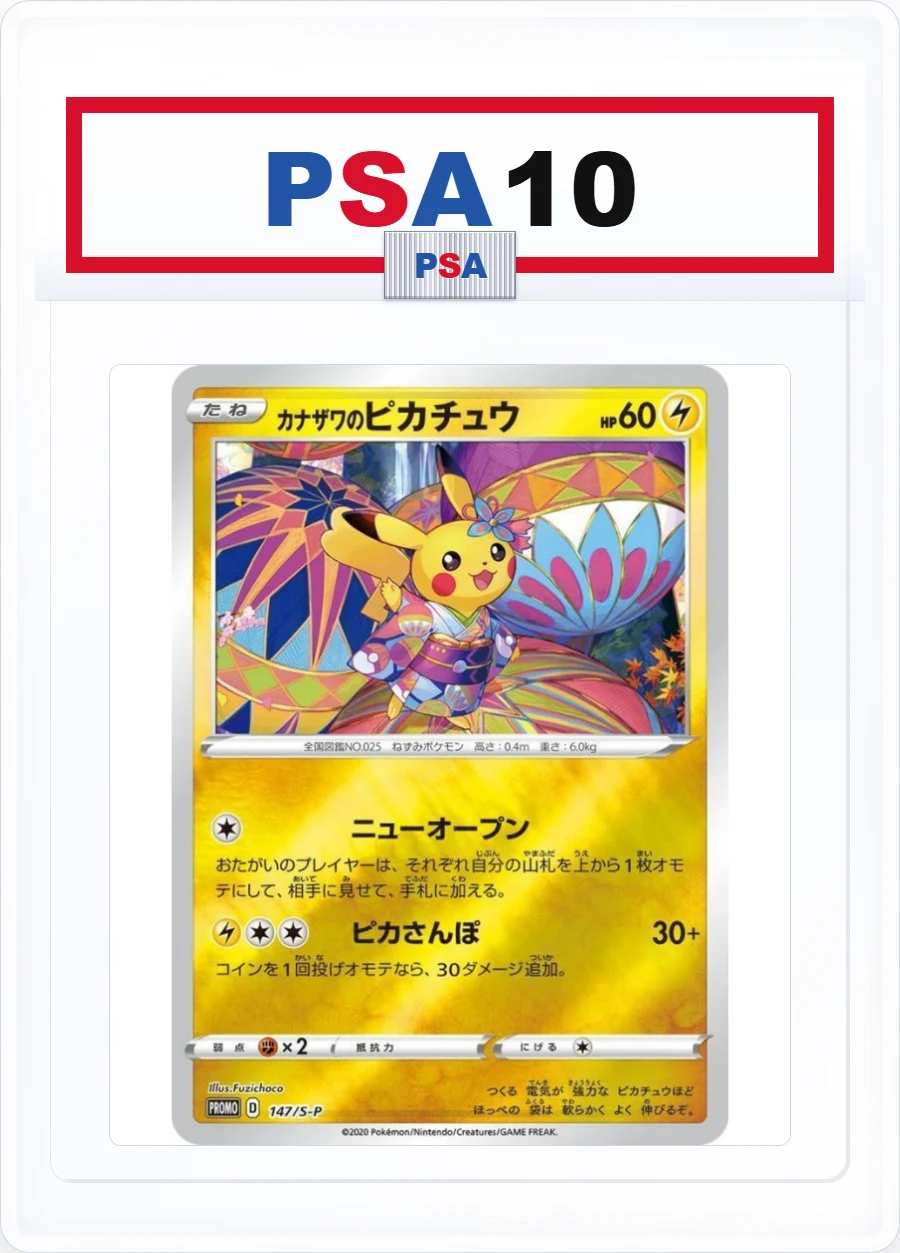
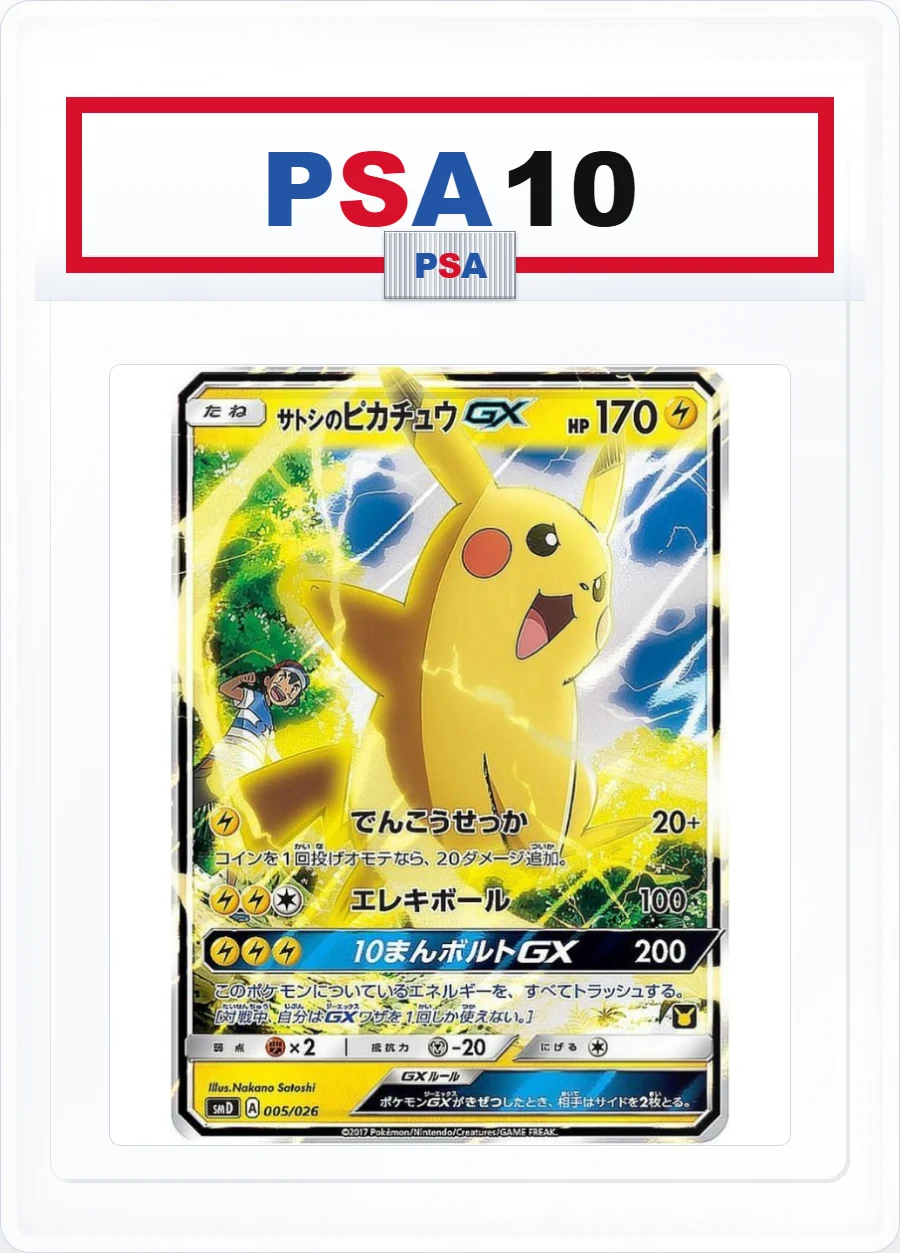
3 Pikachu cards Easy global recognition. Exact version matters because Pikachu has many prints. Ash’s Pikachu route
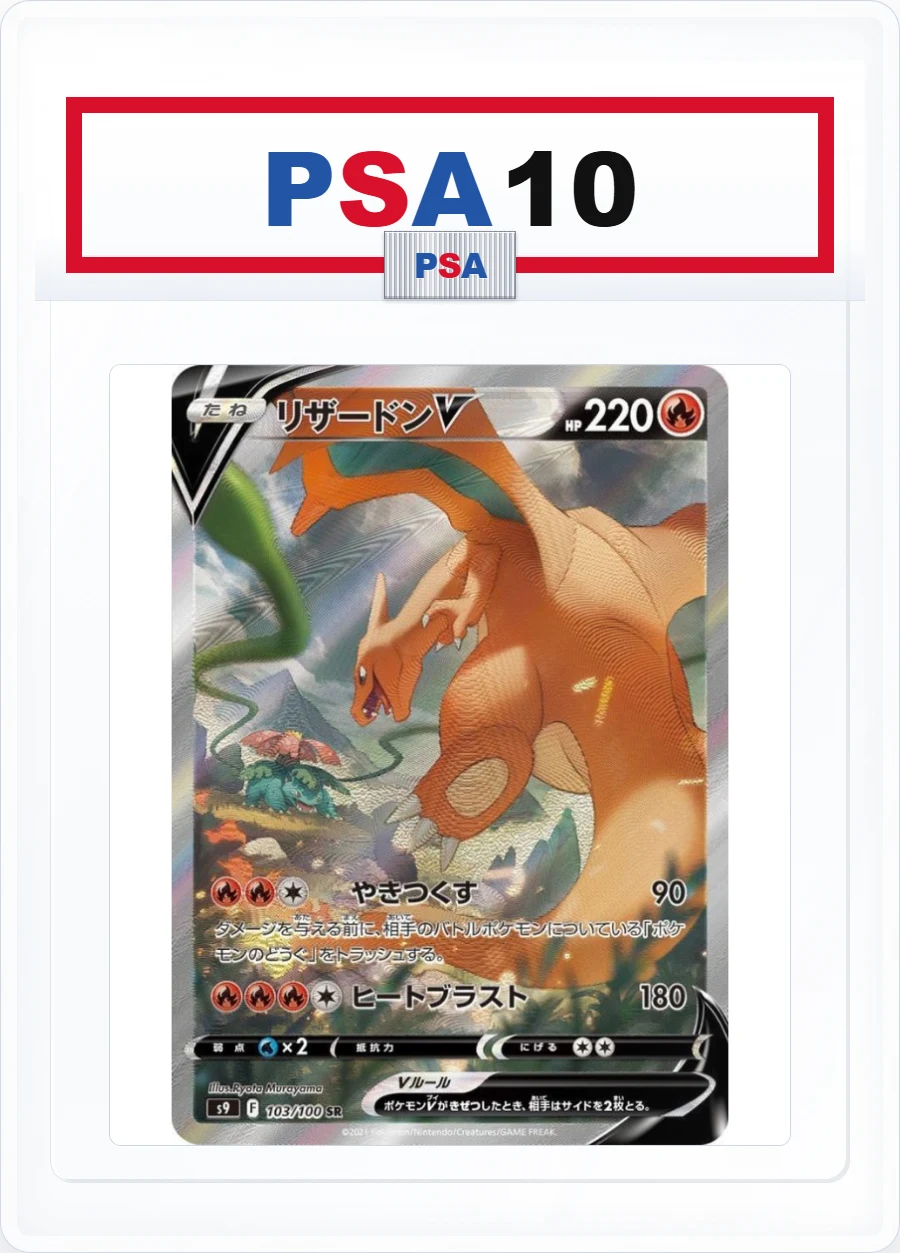
4 Charizard cards High recognition and many collector segments. Do not confuse different Charizard versions. Charizard product route
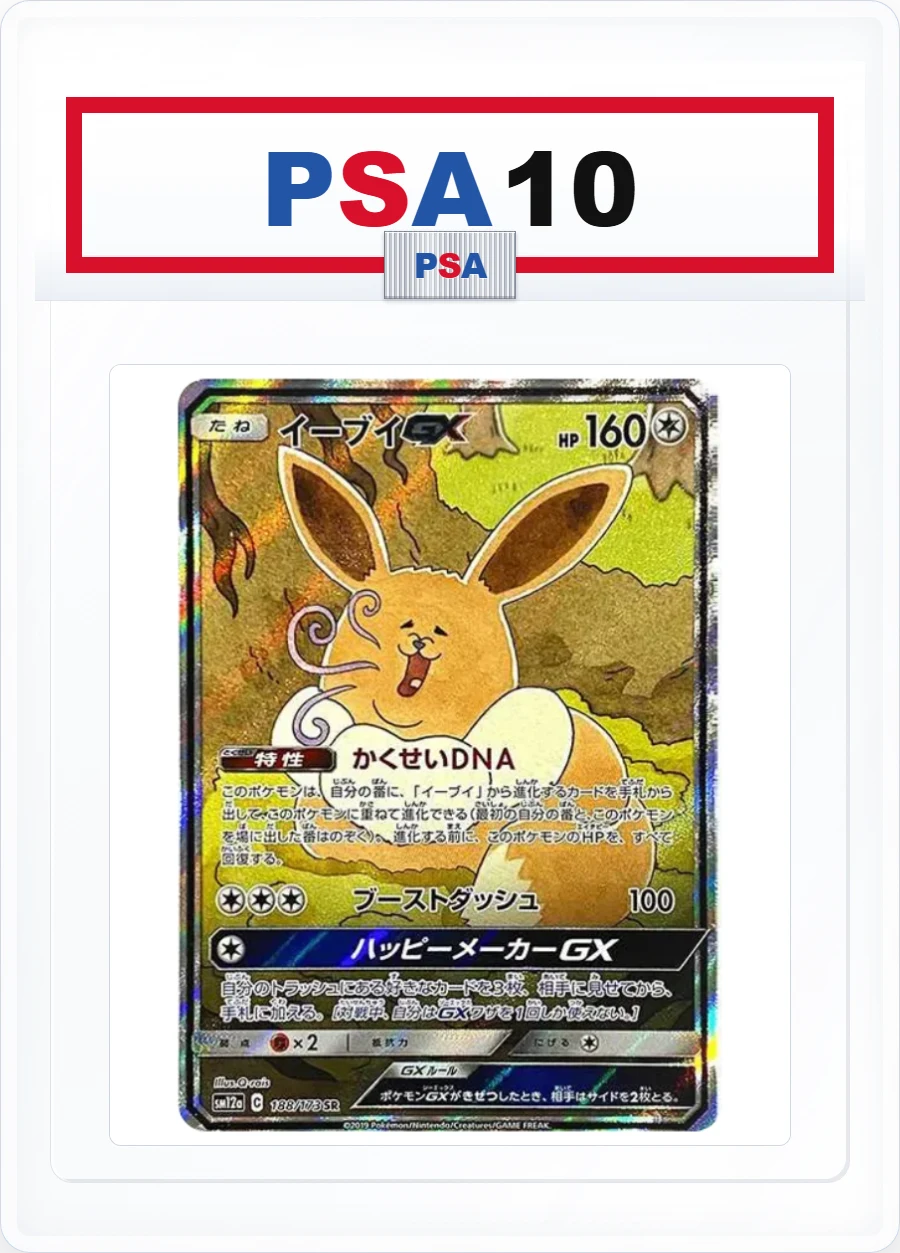
5 Eeveelutions Theme collectors can build whole slab groups. Great for store cases when the theme is coherent. Eevee GX route
6 AR illustration cards Artwork is understandable even to newer buyers. Not every AR deserves grading. Screen carefully. PSA 10 vs raw guide
7 Gold / UR cards Premium look and rarity shorthand. Demand varies more than the color suggests. Use live collection filters.
8 Vintage holos Age and nostalgia can create demand. Estado and exact era drive the slab outcome. Use inquiry for specific needs.
9 Playable high-rarity cards Players and collectors can overlap during active formats. Demand may shift when competitive relevance changes. Use current quote only.
10 Mixed display slabs Stores need breadth, not only trophies. Build a theme and price band before buying quantity. Wholesale inquiry
Top 10 rarity routes visual summary
A quick visual map of the rarity routes that tend to matter before a PSA 10 or wholesale buying decision.
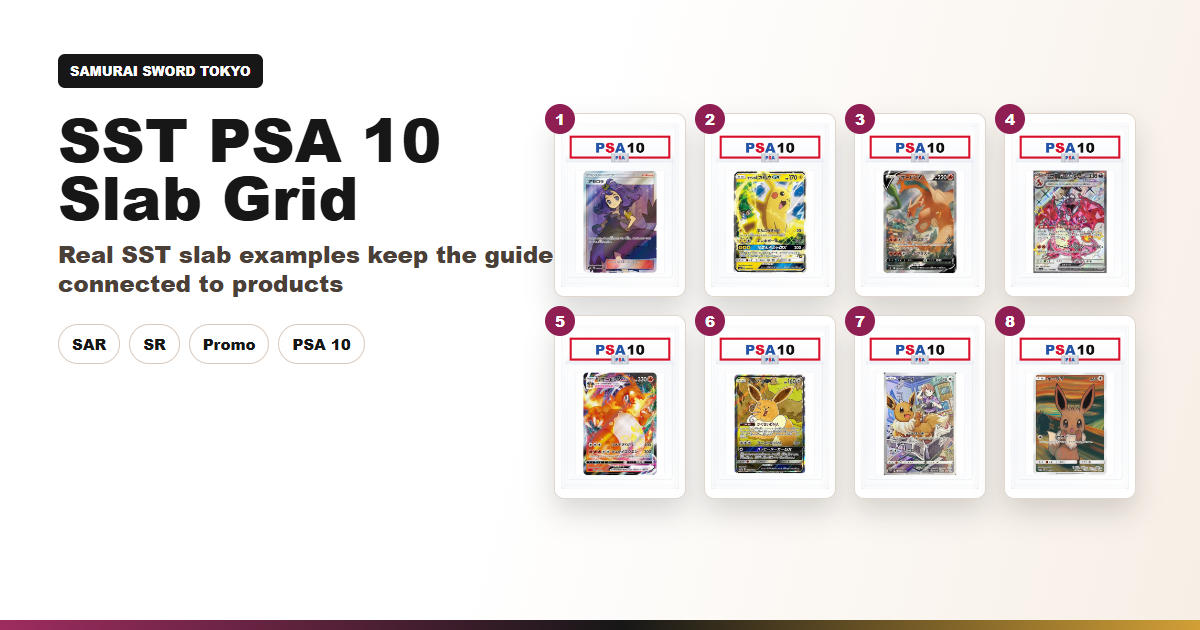
SST PSA 10 slab grid visual
Use real slab examples as buying routes: Trainer, Promo, Pikachu, Charizard, and Eeveelutions.

Shop By Intent: Collector, Reseller, Store, Or Bulk Buyer

A rarity guide converts better when it does not treat every reader the same. A collector wants confidence. A reseller wants turnover. A store wants a case that is easy to explain. A bulk buyer wants a current list and clear substitutions.
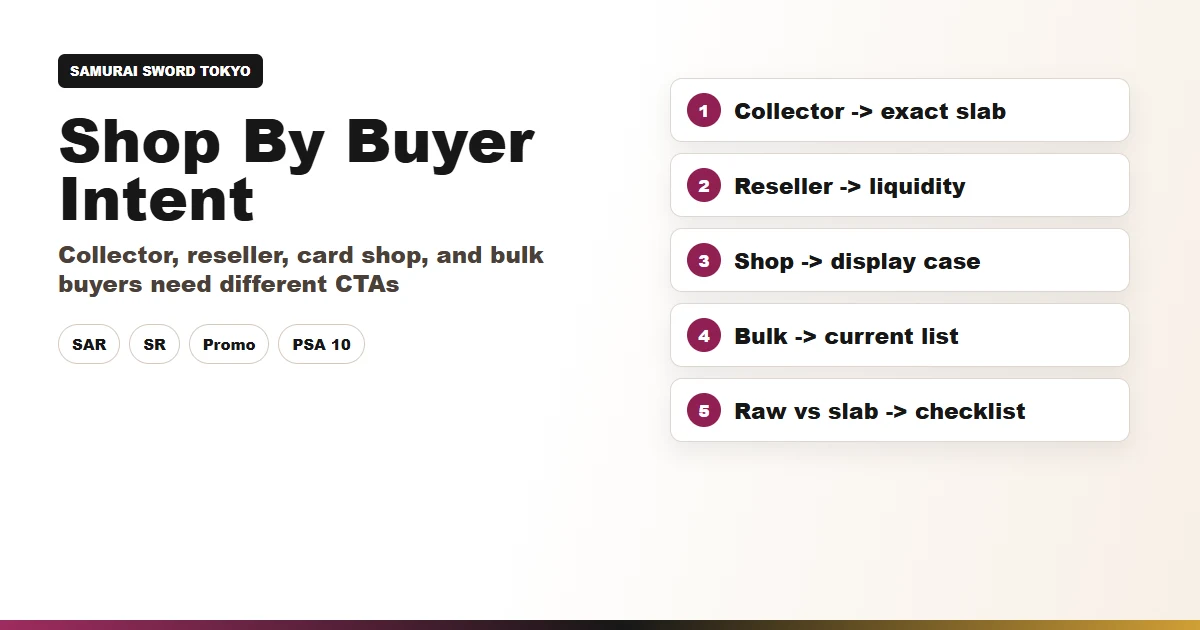
Shop by buyer intent router for Japanese Pokemon card rarity and PSA 10
Use the buyer route first, then choose rarity and exact card identity.
Buyer What rarity means to them Risk CTA
Collector A clue to scarcity and art importance. Overpaying because the abbreviation sounds rare. Browse live PSA 10 slabs
Reseller A sorting tool for listing speed and margin. Buying beautiful cards that move slowly. Request current wholesale availability
Card shop A way to explain showcase tiers to customers. A case that looks expensive but lacks recognizable names. Source Japanese TCG wholesale
High-end buyer A starting signal for premium research. Wrong version, stale quote, or thin liquidity. Open exact product pages first.
Raw-vs-slab buyer A grading-candidate filter. Grading fees and time on cards that should stay raw. Compare PSA 10 vs raw

PSA 10 Candidate Checklist

Before a Japanese card becomes a PSA 10 buying candidate, it should pass more than one filter. This is where many rarity guides stop too early. The abbreviation can tell you what category the card belongs to. It cannot tell you whether the card belongs in a graded inventory order.

Filter Pass signal Fail signal
Character demand Pikachu, Charizard, Eeveelutions, Mew/Mewtwo, major Trainers, or a theme collectors already understand. The card is rare but hard to explain to the target buyer.
Artwork The art can sell the slab visually in a product card or showcase. The art is technically rare but not visually compelling.
Exact version Card number, language, set, and artwork are easy to verify. Multiple versions can be confused in listings or quotes.
Estado path Already PSA 10 or realistically worth grading after raw screening. Likely 9 or lower after fees, time, and shipping.
Liquidity Buyer segment is clear: collector, reseller, store, or high-end buyer. The only reason to buy is «it is rare.»
Quote discipline Live product page or current wholesale quote is available. The decision relies on an old screenshot or unsourced price claim.
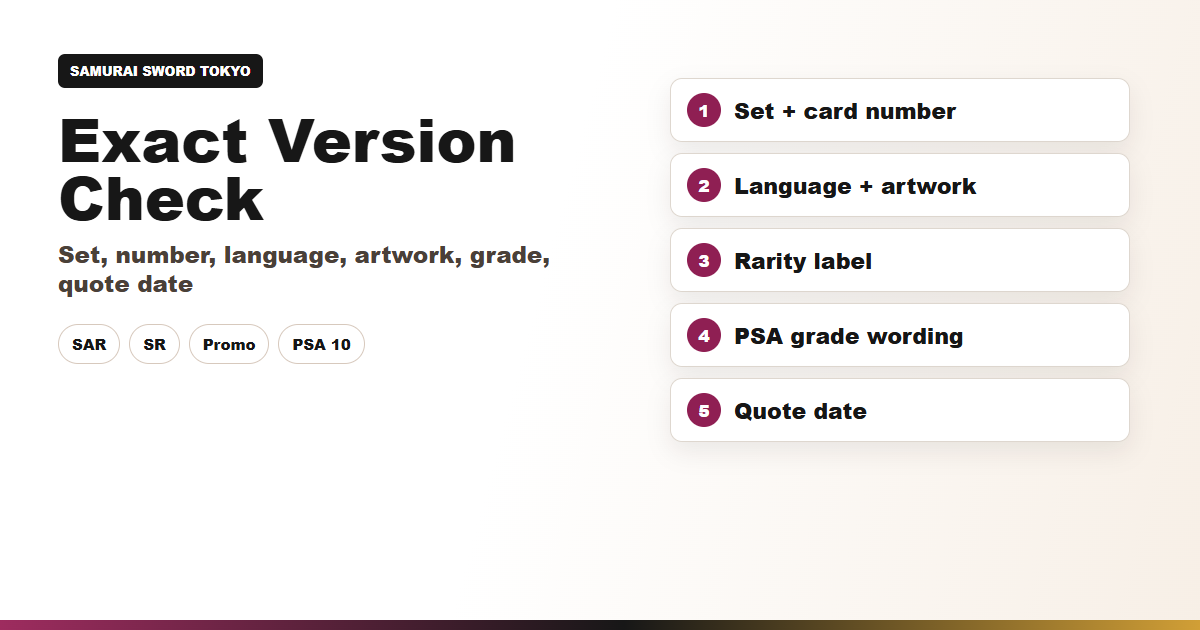
Exact version verification checklist visual
Exact card identity is the protection layer between a rarity search and a confident purchase.
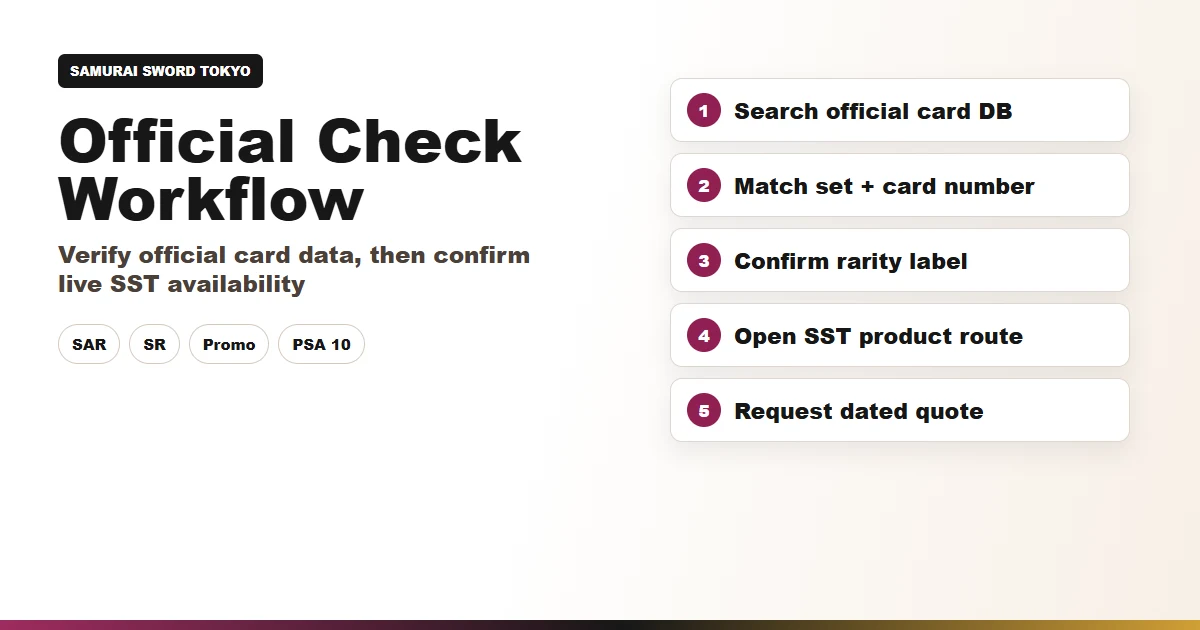
Official card database checking workflow for graded buyers
Official data helps verify the card. The buy decision still needs live SST availability and a dated quote.

Product Routes For The Article

These SST links make the article more than a glossary. Each link gives a reader a practical next step after learning how rarity affects graded-card buying.
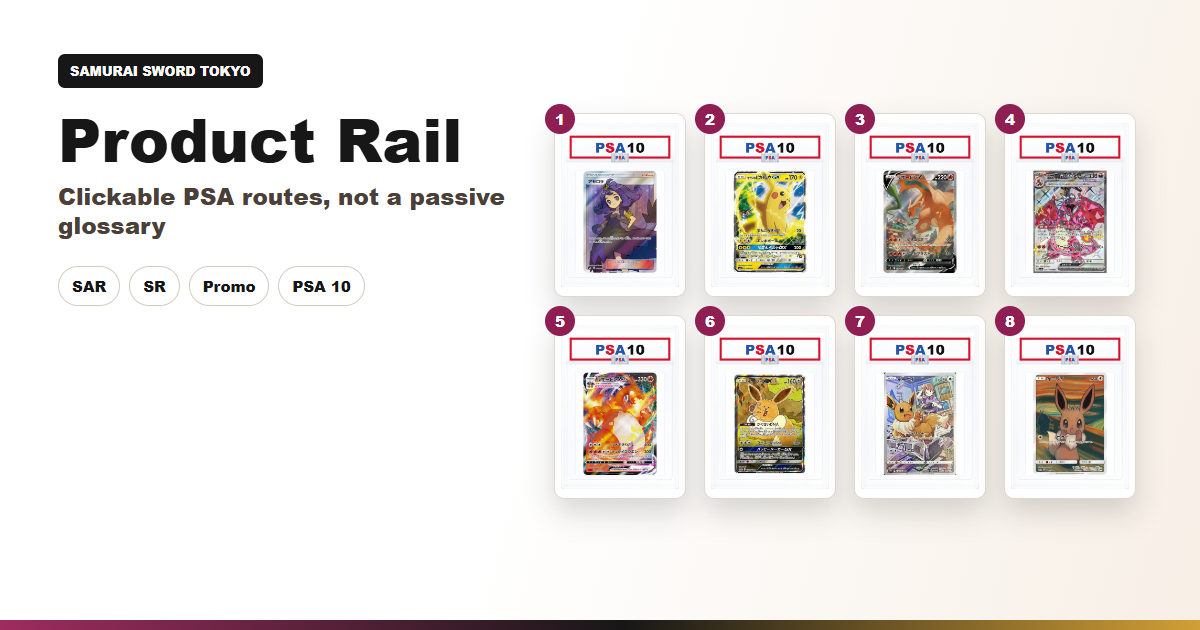
SST PSA product rail collage
A product-style rail keeps the rarity guide connected to live buying paths instead of staying as a glossary.

Why Promo Cards Break The Rarity Shortcut

A promo card may not fit the same hierarchy as pack-pulled rarities. Its demand can come from distribution method, event story, age, region, artwork, character, and how often clean graded copies appear. That is why a promo can outperform a card with a higher-looking rarity abbreviation.

For graded buyers, the practical question is not «what rarity is it?» The better question is «why will someone want this exact slab later?» If the answer is release story, character, art, and limited availability, the card can deserve serious attention even when a normal rarity table does not rank it neatly.

Raw vs PSA 10: The Grading Decision Image
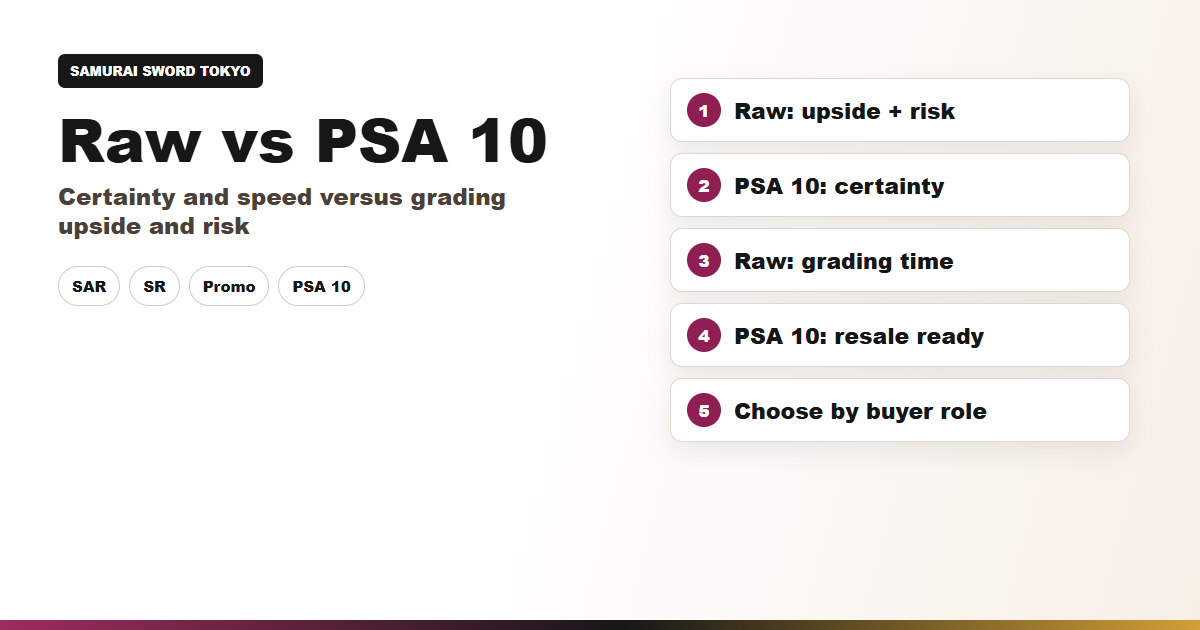
Raw versus PSA 10 decision visual
Rarity can suggest a candidate, but the buy route depends on condition risk, time, fees, and resale confidence.

When a buyer is not sure whether to buy raw or graded, the article should slow them down. The important question is not whether the card is rare. The important question is whether the certainty of PSA 10 is worth more than the possible upside of grading a raw copy later.

Market Watch: Price Signals Must Stay Numeric
Ahrefs price-sensitive keyword benchmark for Japanese Pokemon PSA buyers
Price-sensitive buyers need numbers, but those numbers must be dated and sourced. Ahrefs demand explains the search behavior; current product pages or quotes handle the buying decision.

The Ahrefs benchmark confirms the practical problem: Japanese rarity searchers are also price searchers. In the June 15, 2026 snapshot, ポケモンカード 値段 showed 16,000 search volume and 3,491 estimated traffic for Cardrush, while psa10 showed 4,500 volume and 5,145 estimated traffic. Removing all price numbers makes the guide feel safer internally but weaker for a buyer who is trying to decide whether a slab price is reasonable.

The safer pattern is not to publish stale third-party price screenshots. It is to show the numeric demand signal, show dated SST product-page price examples where available, and tell the reader to re-check the live page or request a current wholesale quote before ordering.

Signal Ahrefs keyword Market Benchmark site Volume Tráfico Pos. Article use
JP price intent ポケモンカード 値段 JP Cardrush Pokemon 16,000 3,491 1 Keep price language visible; users are not satisfied by rarity labels alone.
JP PSA intent psa10 JP Cardrush Pokemon 4,500 5,145 22 Connect rarity explanations to PSA 10 product routes early.
JP character/SAR intent ブラッキーsar JP Cardrush Pokemon 8,500 8,912 1 Character demand can outrank the rarity abbreviation itself.
JP named-price intent リーリエ値段 JP Cardrush Pokemon 3,300 3,484 1 Named-card price checks should be handled with dated pages or quotes.
JP PSA character route ピカチュウpsa10 JP Cardrush Pokemon 900 988 1 PSA 10 plus icon Pokemon is a stronger route than generic rarity terms.
Overseas Japanese-card intent japanese pokemon cards US PokeNinJapan 8,600 29 17 Explain Japanese-card buying in plain English before abbreviations get too dense.
Overseas where-to-buy intent where to buy japanese pokemon cards US PokeNinJapan 400 66 4 Add collection and wholesale CTAs for readers ready to source from Japan.
Overseas card-list intent eevee heroes card list US TCG Republic 3,800 359 4 Use card-list style structure and visual product routes, not only prose.
SST product-page example Ruta Page price read Availability read Checked
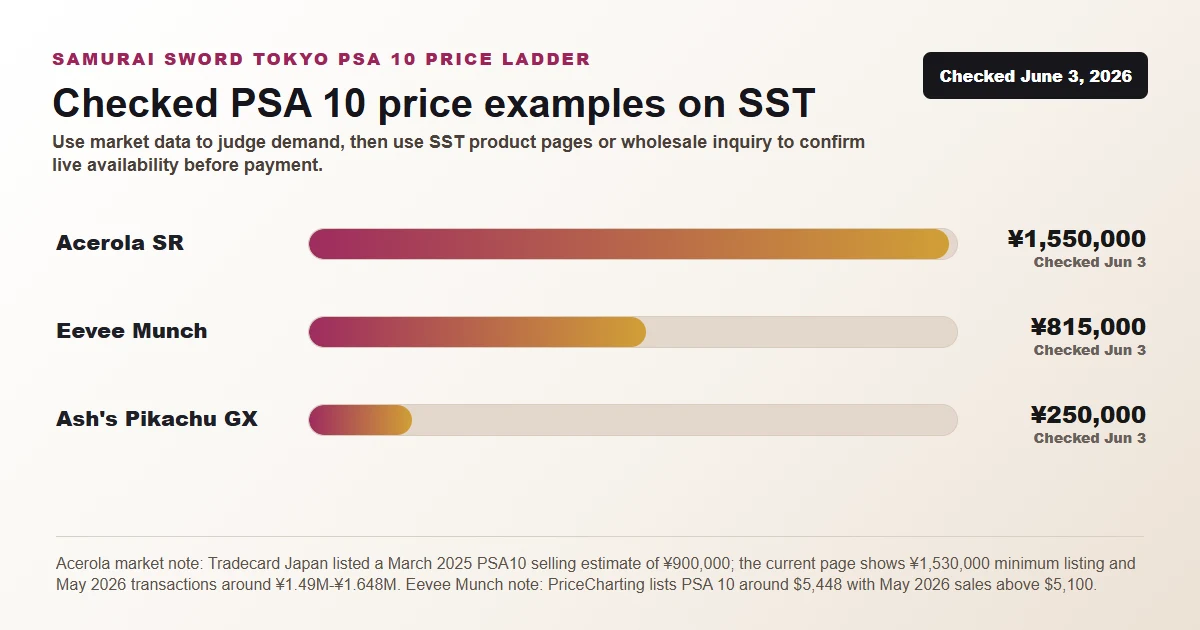
PSA10 Acerola 056/049 SR SR Trainer route JPY 1,602,300 OutOfStock in product schema at check June 23, 2026 JST
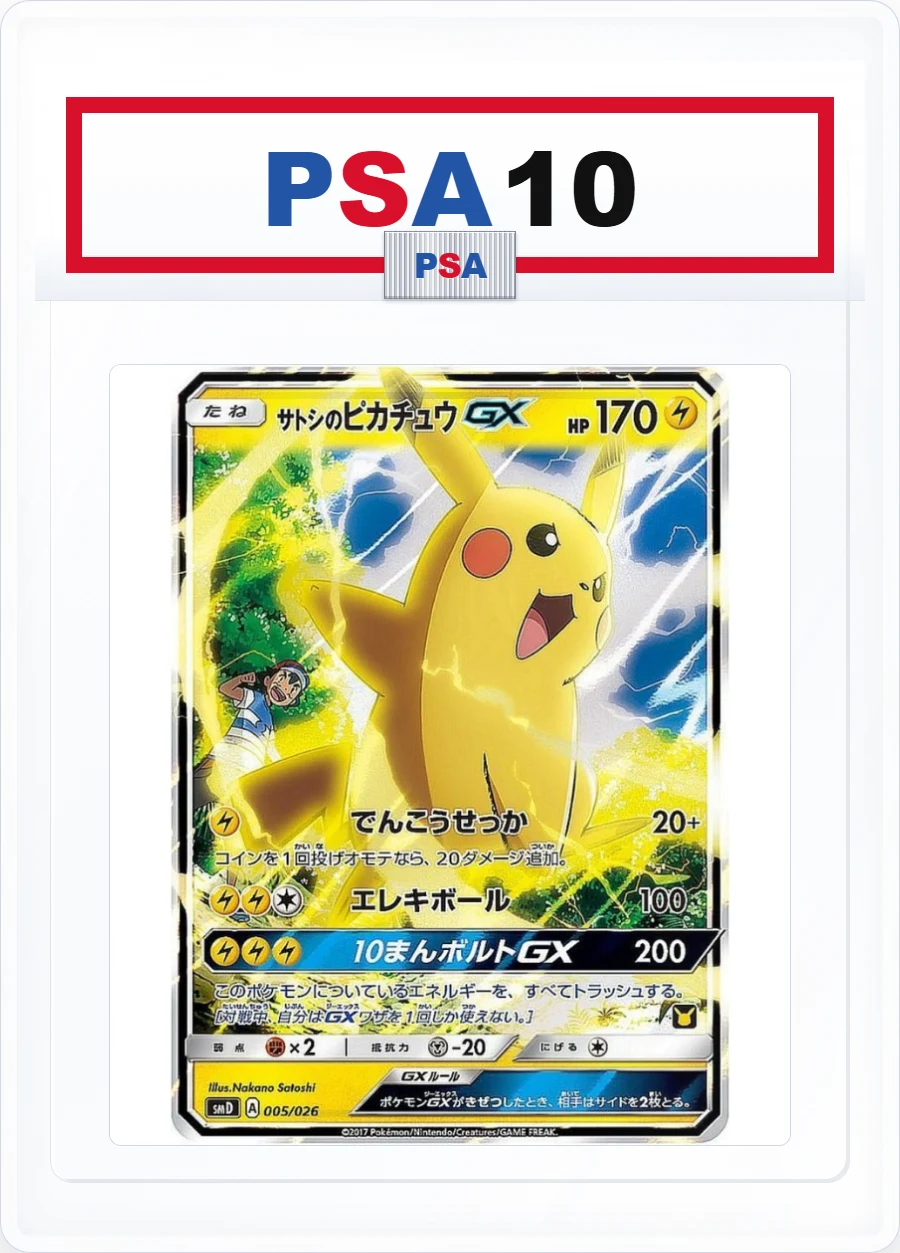
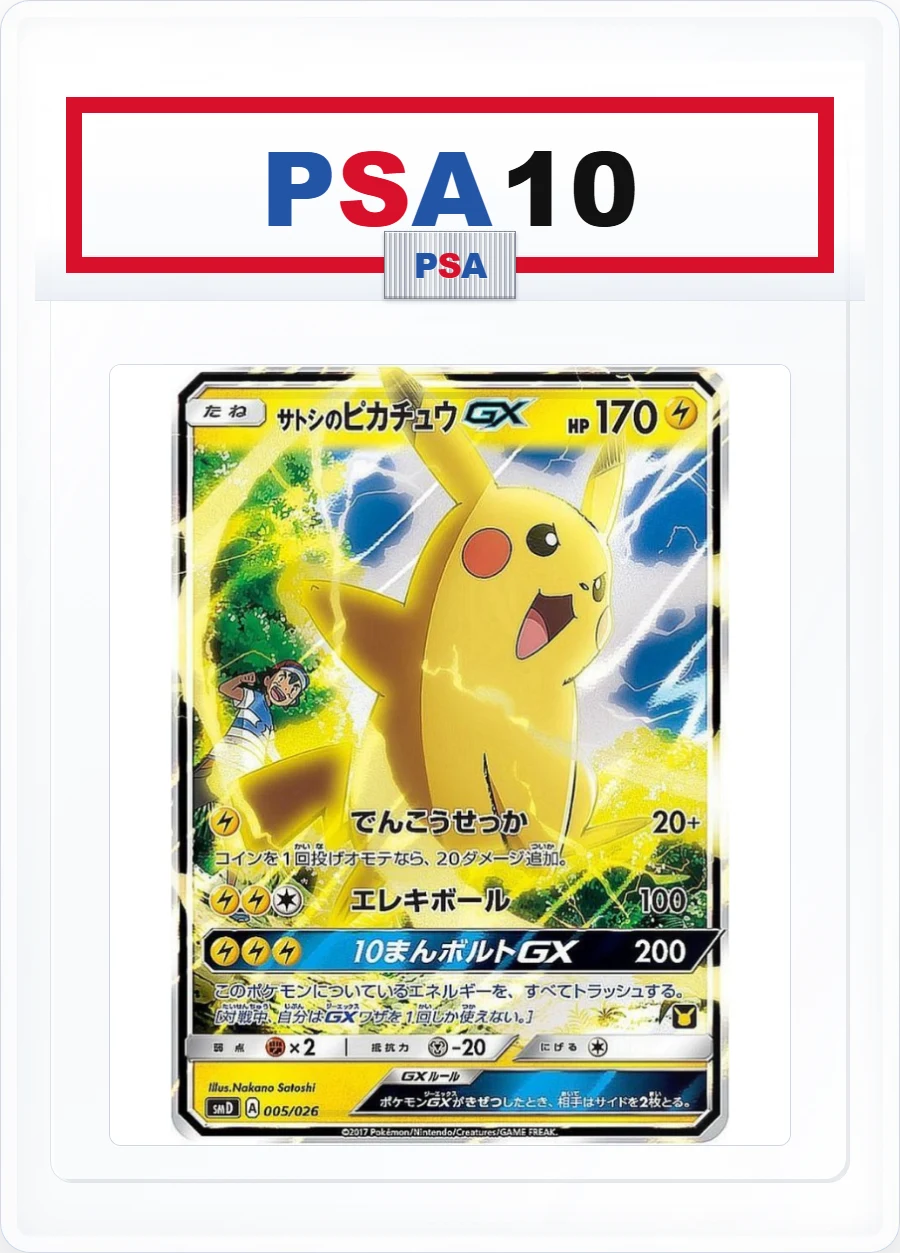
PSA10 Ash’s Pikachu GX 005/026 Pikachu promo route JPY 236,900 OutOfStock in product schema at check June 23, 2026 JST
PSA10 Charizard V 103/100 SA Charizard SA route JPY 70,200 OutOfStock in product schema at check June 23, 2026 JST
PSA10 Eevee Munch Exhibition 287/SM-P PROMO Promo story route JPY 862,200 OutOfStock in product schema at check June 23, 2026 JST

Research basis: Ahrefs domestic and overseas keyword snapshots dated 2026-06-15, local benchmark report outputs/ahrefs-rarity-psa-keywords-2026-06-23/ahrefs_rarity_psa_keyword_benchmark_from_raw.md, official Pokemon Card Game card-search page, and SST product-page structured data checked June 23, 2026 JST. Product-page examples are price discipline examples, not availability guarantees. Public competitor and official images were not copied into this article.

How To Use This Guide For Wholesale

If you are buying for a shop, resale channel, or recurring overseas supply, send a brief that turns rarity into an actionable assortment. Instead of asking for «rare cards,» specify the buyer outcome.
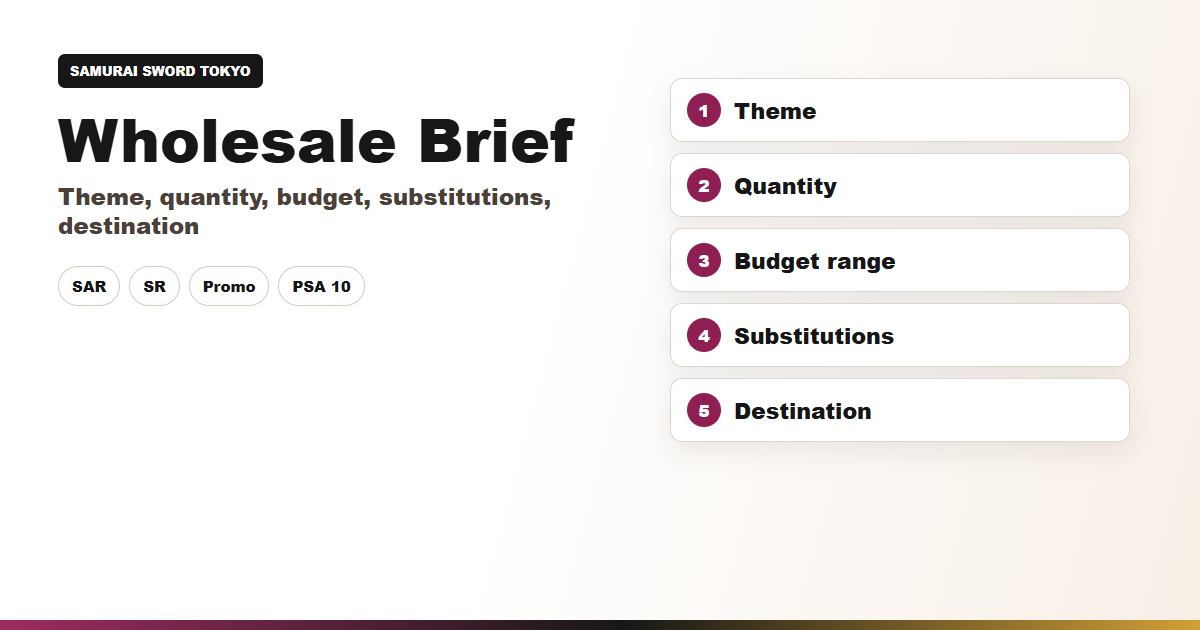
Wholesale rarity brief checklist visual
A wholesale buyer should turn rarity into an order brief: theme, quantity, budget, substitutions, and destination.
  • Target quantity and budget range.
  • Preferred routes: Trainers, promos, Pikachu, Charizard, Eeveelutions, AR illustration cards, modern SAR, or lower-price display slabs.
  • Whether PSA 10 only is required or raw Japanese cards can be mixed in.
  • Destination country and expected shipment timing.
  • Acceptable substitutions and cards to avoid.
  • Whether the order is for collecting, resale, shop display, or mixed inventory.

Request a rarity-aware PSA 10 wholesale list Source Japanese TCG alongside graded cards

Related SST Guides

Guide Use it when Link
Bulk PSA 10 buying guide You are buying multiple slabs from Japan. Read the bulk guide
Wholesale PSA 10 guide You are sourcing for resale or a store. Read the wholesale guide
PSA 10 vs raw guide You are deciding whether rarity justifies grading. Compare PSA 10 vs raw

FAQ

Is SAR always better than SR for PSA 10 buyers?

Not automatically. SAR often has stronger collector appeal because of full-art storytelling, but the better PSA 10 buy depends on the Pokemon or Trainer, artwork, population, liquidity, and live price.

Should I grade every AR or SAR Japanese Pokemon card?

No. Grade candidates should be screened by demand, condition, centering, expected grade, fees, and resale path. Some lower-rarity cards are better raw binder cards than PSA 10 inventory.

What rarity should a reseller focus on?

Resellers usually need recognizable Pokemon, Trainers, promos, and liquid slabs rather than the rarest label in isolation. A mixed PSA 10 assortment can be stronger than one expensive card.

Do Japanese rarity labels match English rarity labels exactly?

No. Japanese products use their own set structures and rarity labels, and older eras can differ significantly. Always check the exact Japanese card, set, number, and artwork.

Why can a promo card beat a higher rarity pack card?

Promo demand can come from distribution story, age, event context, and character popularity. Those factors can matter more than the printed rarity label.

Where should overseas buyers start?

Start with live SST PSA 10 inventory if you want current buyable slabs. Use the wholesale inquiry route for quantity, substitutions, or mixed Japanese TCG sourcing.

Can rarity predict PSA 10 price by itself?

No. Rarity is only one signal. Card identity, artwork, population, market timing, condition, language, and buyer segment all affect PSA 10 pricing.

How should card shops use rarity guides?

Use rarity as a merchandising map. Build display cases around recognizable themes such as Pikachu, Charizard, Eeveelutions, Trainers, promos, and modern art cards instead of sorting only by rarity abbreviation.

Bottom Line

Japanese Pokemon card rarity is useful because it helps buyers organize the search. It is dangerous when it becomes the entire buying decision. For PSA 10 buyers, the better path is simple: use rarity to filter, use character and artwork to judge demand, use live SST inventory to confirm availability, and use wholesale inquiry when the order needs quantity or recurring supply.
Guía de compra al por mayor de cartas Pokemon PSA 10 japonesas: cómo los compradores en el extranj...

Japanese PSA 10 Pokemon Cards Wholesale Guide: How Overseas Buyers Can Source From Tokyo

Last updated: June 4, 2026. Market data, canonical CTA links, and gallery product links were refreshed before upload packaging.

This guide focuses on the buying workflow for PSA 10 Japanese Pokemon cards, including how to browse current SST inventory and when to use the wholesale inquiry path for larger orders.

Key Takeaway: Tokyo PSA 10 wholesale sourcing should be treated as a buying workflow, not a simple card list. The strongest SST angle is direct access to Japanese PSA 10 inventory, wholesale inquiry paths, and product pages that help international wholesalers and high-volume collectors move from research to action.

This guide explains how overseas buyers can approach Japanese PSA 10 sourcing from Tokyo with a wholesale mindset instead of a scattered product-page crawl.

The buying decision is different from a sealed-box set guide. A PSA 10 buyer is not only asking "which card is best?" They are asking whether the seller can confirm current graded inventory, whether the order can scale, how to compare product pages quickly, and which link to click when they are ready to request pricing or buy.

Quick Answer

For Tokyo PSA 10 wholesale sourcing, start with the PSA 10 collection, then use the wholesale page if the order is multi-card, recurring, or B2B. Individual product pages are the place to confirm exact card identity, PSA 10 wording, and current availability before ordering.

Buyer question Short answer SST action
I want to browse available graded cards. Start with the PSA 10 collection. Open SST PSA 10 graded cards and compare current listings.
I need quantity or a price list. Use the wholesale inquiry path. Start from SST wholesale and request a current PSA 10 list or quote.
I need to verify current SST inventory. Open the linked PSA 10 product pages and exact card identities. Compare card name, card number, PSA 10 wording, product title, and current availability before ordering.
I need current prices. Use live product pages or a current quote. Treat any old screenshot or saved price list as expired until SST confirms availability.

Where To Browse Or Request PSA 10 Inventory

Buyer need SST path How to use it
Browse current PSA 10 inventory Shop PSA 10 graded cards Use this for a broad stock check before narrowing by character, price point, or card number.
Ask for quantity or recurring supply Wholesale inquiry page Use this when the order needs a current list, quote date, shipping discussion, or B2B handling.
Open a product page PSA10 Acerola 056/049 SR Use the product page or quote to confirm the exact card, PSA 10 wording, and live availability.
Open a product page PSA10 Ash’s Pikachu GX 005/026 Use the product page or quote to confirm the exact card, PSA 10 wording, and live availability.
Open a product page PSA10 Charizard V 103/100 SA Use the product page or quote to confirm the exact card, PSA 10 wording, and live availability.
Open a product page PSA10 Charizard ex SSR 331/190 Use the product page or quote to confirm the exact card, PSA 10 wording, and live availability.

Use the broad collection when you are still comparing options. Use individual product pages when the exact card matters. Use the wholesale path when you need current quantity, pricing, or recurring supply.
Why Japanese PSA 10 Cards Work For Overseas Buyers

Japanese Pokemon cards have several advantages for graded-card buyers: Japanese print quality is often strong, Japanese-only promos create collector stories, and overseas buyers frequently want inventory that is difficult to source locally. A PSA 10 slab also removes a large part of the condition-risk conversation because the buyer can compare grade wording, product title, card identity, and price before ordering.

That does not make every PSA 10 card a good buy. The practical question is what changes buyer action. A reseller cares about liquidity and margin. A collector cares about exact artwork and long-term desire. A store cares about showcase appeal, category breadth, and how quickly each slab can be explained to a customer. A breaker or content seller may care about recognizable names that perform well on camera.

For this topic, the practical hook is Tokyo-origin trust, inventory depth, and direct wholesale CTA flow. Start with the buying workflow, then check risk controls and order planning before committing budget.

Market Signal: PSA Demand Is Still Elevated In 2026

The useful recent data is not "every PSA 10 card is automatically going up." The stronger claim is narrower and more actionable: PSA grading volume is still running at very high levels in 2026, PSA 10 cards carry a large premium over raw cards in broad Pokemon price data, and individual slab prices need a dated comp check before a buyer commits budget.

As of GemRate’s June 3, 2026 dashboard, PSA recorded 482,480 grades over the trailing seven days, up 10% from the prior seven days, and 2,125,904 grades over the trailing 30 days, up 4% from the prior 30 days. GemRate also reported that April 2026 was a record month for card grading, with 3.10 million total cards graded and PSA at 2.21 million cards, up 42% year over year. May cooled from April, but still reached 2.95 million total cards and PSA graded 2.07 million cards, up 25% year over year.

Dated source What changed Buyer implication
GemRate dashboard, updated June 3, 2026 PSA trailing seven-day grades: 482,480, up 10% vs the prior seven days; trailing 30-day grades: 2,125,904, up 4%. PSA supply and demand signals are active now, so stale price lists should not drive a bulk order.
GemRate April 2026 recap, published May 2, 2026 Overall grading hit a record 3.10 million cards; PSA graded 2.21 million cards, up 42% year over year. The market is not quiet. Buyers should compare current inventory and quote dates, not last season’s assumptions.
GemRate May 2026 recap, published June 2, 2026 Overall grading was 2.95 million cards, still up 20% year over year; PSA graded 2.07 million cards, up 25% year over year. Even after the April record, graded-card activity remained elevated.
Pulled Pokemon Market Report, published May 20, 2026 Across tracked Pokemon cards, raw averaged $42.25 while PSA 10 averaged $273.45, a 547.3% premium. PSA 10 certainty can be worth a real premium, but the premium must be checked card by card.

The chart below is the practical reading for a bulk buyer. It separates demand direction from pricing discipline, which matters because a high PSA 10 premium can create margin but can also hide an overpay if the wrong card, wrong version, or old comp is used.

Market signal What it supports What it does not prove
PSA grading volume remains elevated The graded-card market is active enough to justify a dedicated PSA 10 buying page and current inventory CTA. It does not prove every individual PSA 10 card is rising.
PSA 10 average premium is much higher than raw in broad Pokemon data Buyers often pay for certainty, grade, and resale-ready presentation. It does not replace checking the exact card, language, set, and recent sold comps.
Icon cards show wide raw-to-PSA10 spreads Charizard, Eevee, Pikachu, Mew, Mewtwo, Trainers, and promos can be useful anchors for a slab order. It does not mean a random assortment of slabs is good wholesale inventory.
SST has linked product pages The article can move readers from research to actual browse/request actions. Availability and exact order details still need the product page or current quote.

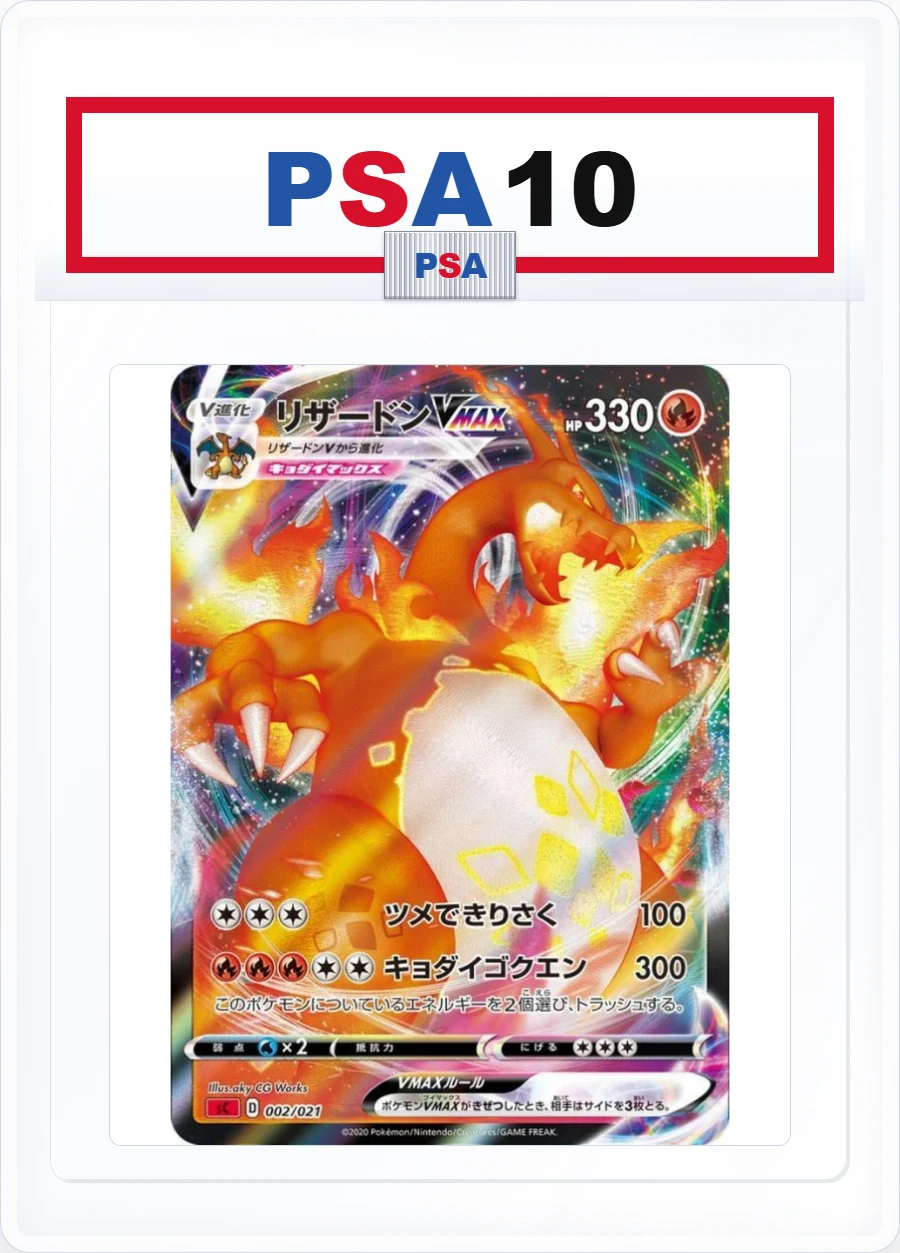
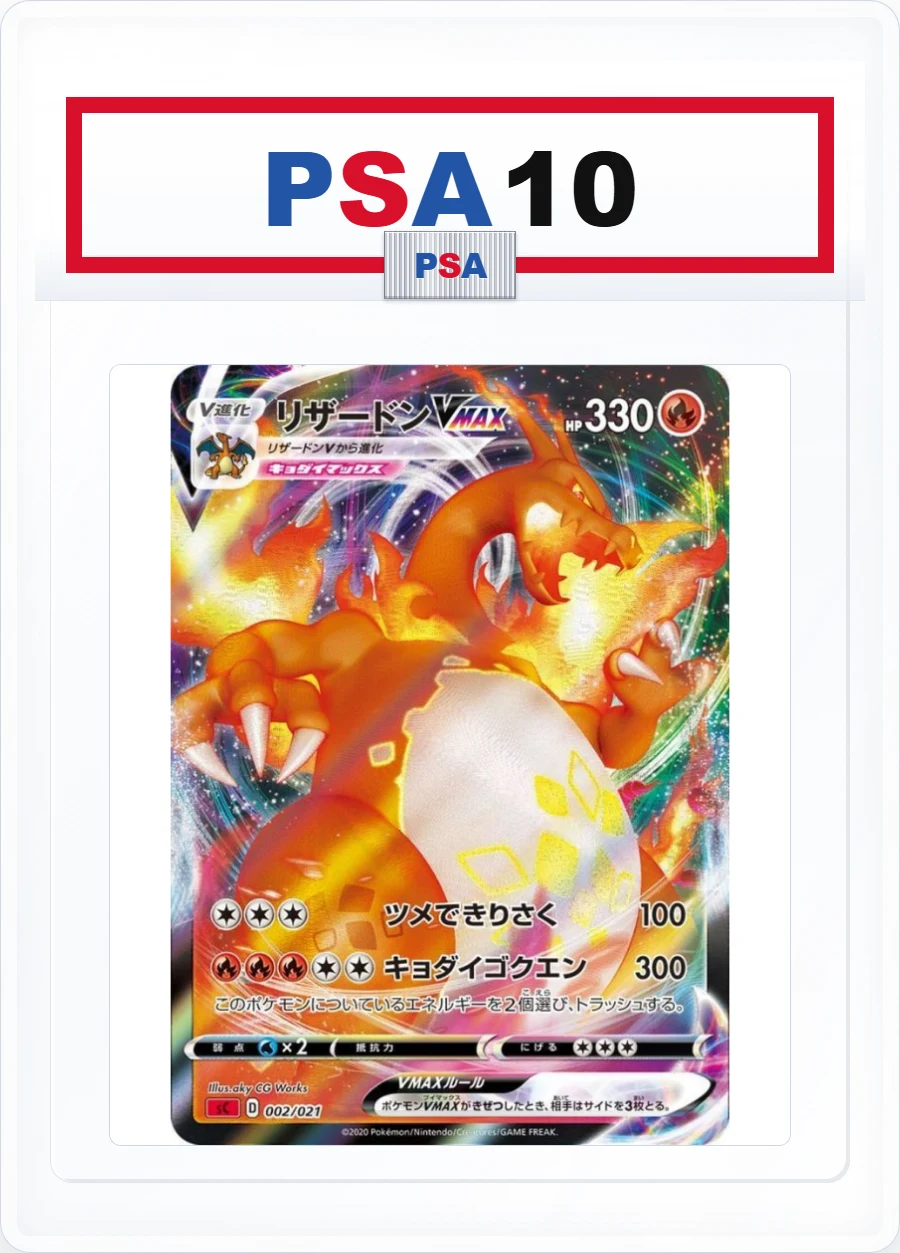
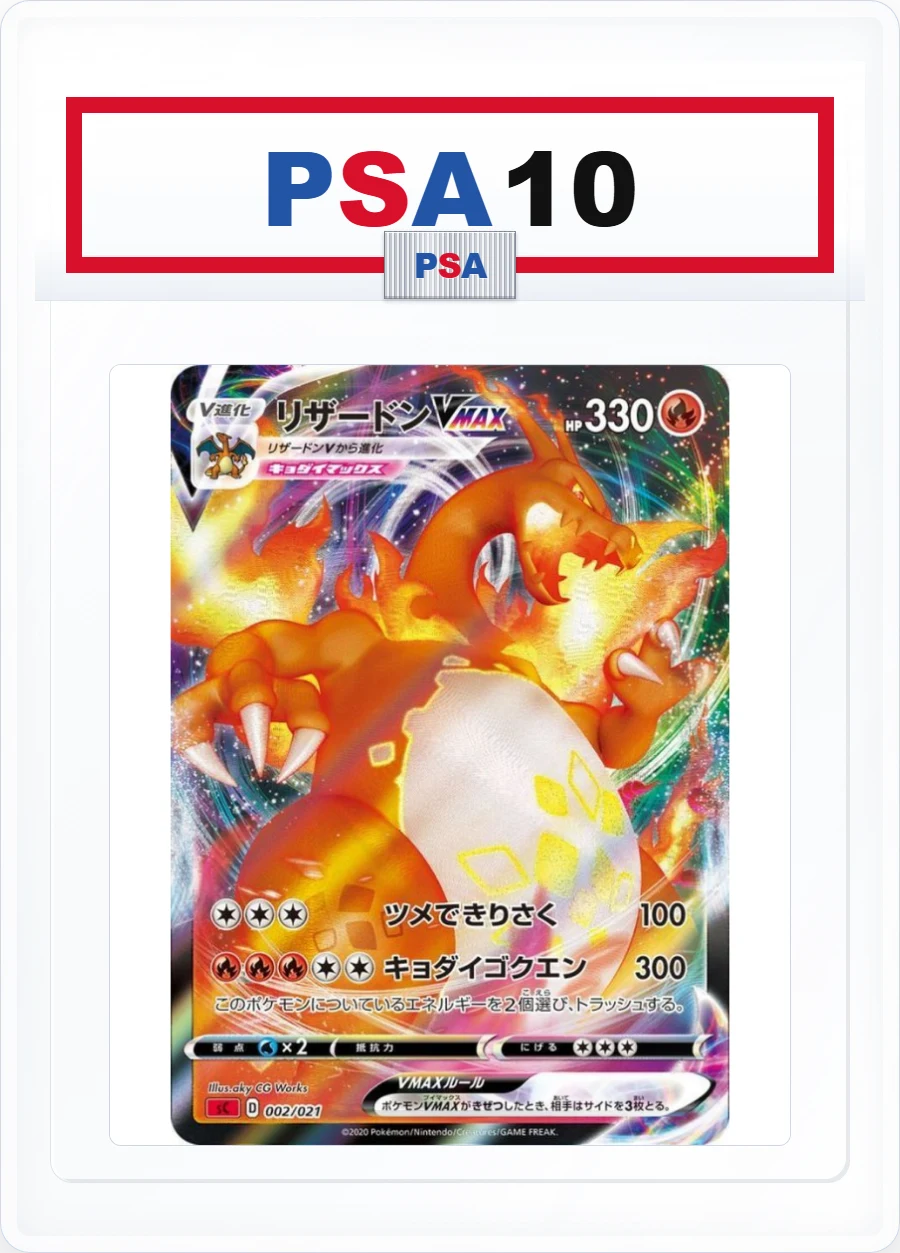
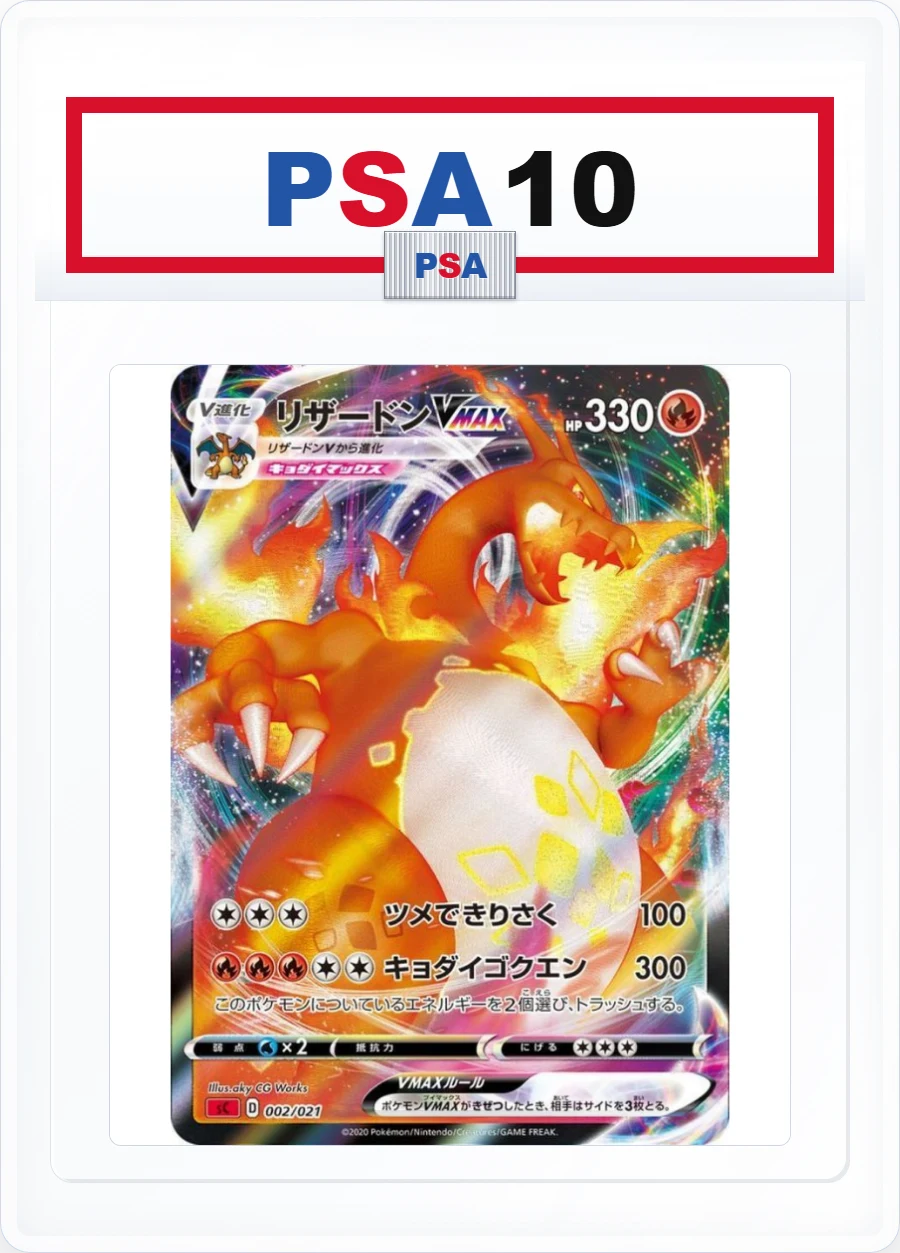
A few live card examples show why this matters for buying workflow. On June 4, 2026, PriceCharting’s Japanese Star Birth index listed Charizard V #103 at $150.81 ungraded and $418.96 in PSA 10. PriceCharting listed Japanese Charizard VMAX #002 at $32.61 ungraded and $127.40 in PSA 10, with PSA 10 volume shown as one sale per day. For a lower-ticket example, Japanese VMAX Climax Eevee #210 was listed at $12.74 ungraded and $69.00 in PSA 10, also with PSA 10 volume shown as one sale per day.

Those examples are useful because they show the difference between buying raw upside and buying graded certainty. They are not promises about SST inventory, future appreciation, or guaranteed resale margin. A reseller should still check the latest sold listings, the exact Japanese card number, whether the listing is PSA 10 rather than another grader, and whether shipping costs erase the expected spread. A collector should use the same data differently: the PSA 10 premium may be rational when the buyer wants a clean display copy and does not want to gamble on condition.

Before a larger order, the comp check should run in a fixed order. First, confirm the exact SST product or collection page so the buyer is looking at real available inventory. Second, compare the same Japanese card number in PSA 10, not only the English version or a raw copy. Third, check whether the most recent sales are clustered around one level or scattered across outlier prices. Fourth, convert the result into an order role: anchor card, mid-tier display card, value-depth card, or "skip for now." This keeps the article useful for buyers who want action, not just market commentary.

That workflow also improves the wholesale inquiry. Instead of asking only for "cheap PSA 10 cards," a stronger buyer request says which theme, price band, character group, and resale use case the order needs. SST can then respond with a current list that matches the buyer’s actual plan, while the buyer avoids treating a public article as a permanent price sheet.

For SST buyers, the decision rule is simple: use the PSA 10 collection and product pages to confirm actual available slabs, then ask for a current wholesale quote if the order is larger than a one-card purchase. If the market is moving, the safest article CTA is not a fixed public price list; it is a current inventory check with a dated quote.

PSA10 Charizard V 103/100 SA
Use exact card identity and current comps before treating a PSA 10 spread as margin.

What To Check Before Buying Multiple PSA 10 Cards

Check Why it matters Buyer action
Exact card identity Similar names, promos, and reprints can have very different demand. Match card name, number, rarity, language, and artwork before comparing price.
PSA grade wording The article is about PSA 10, so grade wording must be clear in the product title or quote. Confirm PSA 10 in the product title, product page, or current wholesale list before ordering.
Grade/title consistency Buyers want the product title, card number, and PSA 10 wording to line up. Confirm grade wording and card identity through the product page or current quote.
Liquidity Some slabs are beautiful but slow to resell. Separate collector gems from fast-moving inventory.
Quantity fit Bulk buying fails when the assortment is wrong. Ask whether the order needs many recognizable names or a narrower premium theme.
Price date PSA 10 markets move. Add the access date for live SST price, sold comps, or quote table.
Shipping/import Slabs need protected packing and clear international expectations. Link wholesale/import guidance near the CTA.

Inventory Themes To Build Around

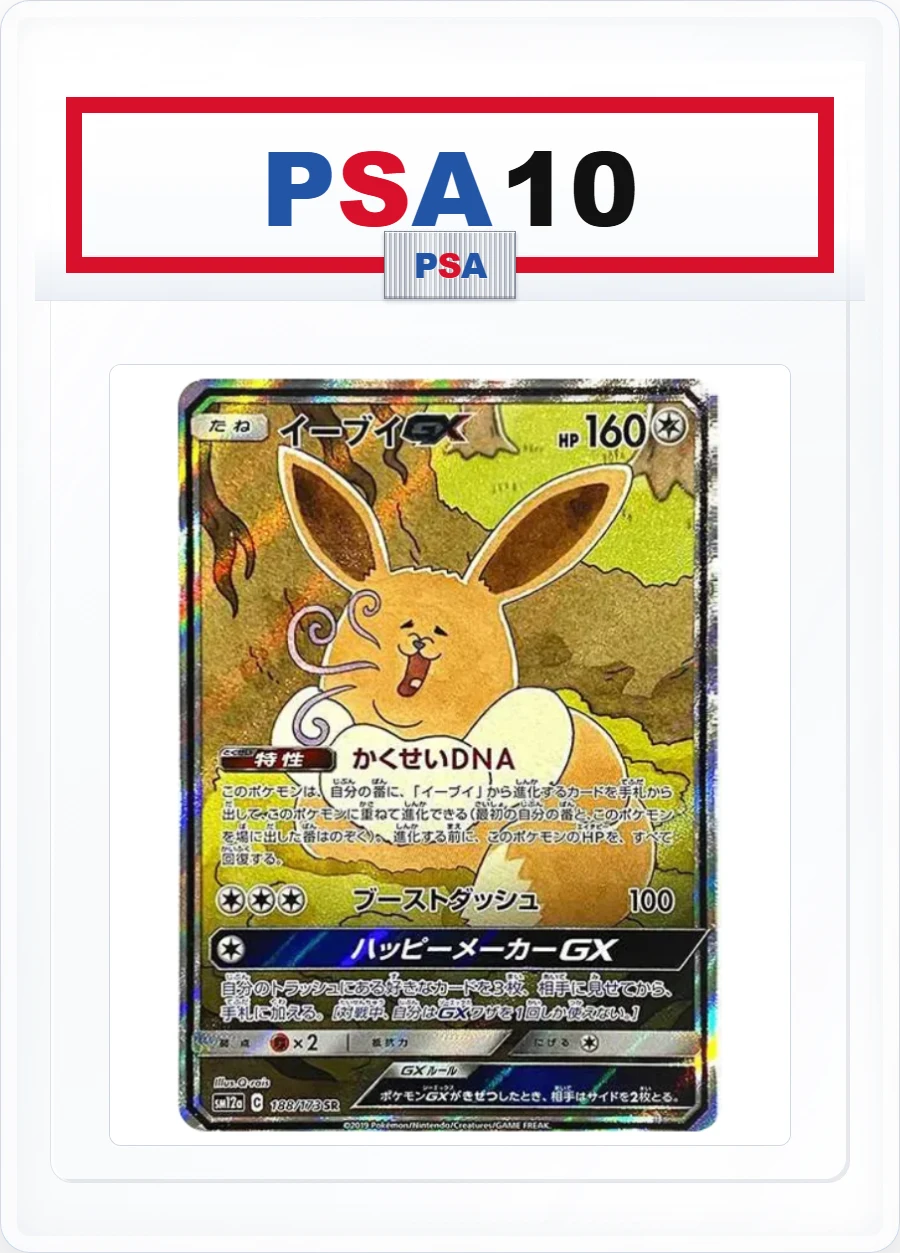
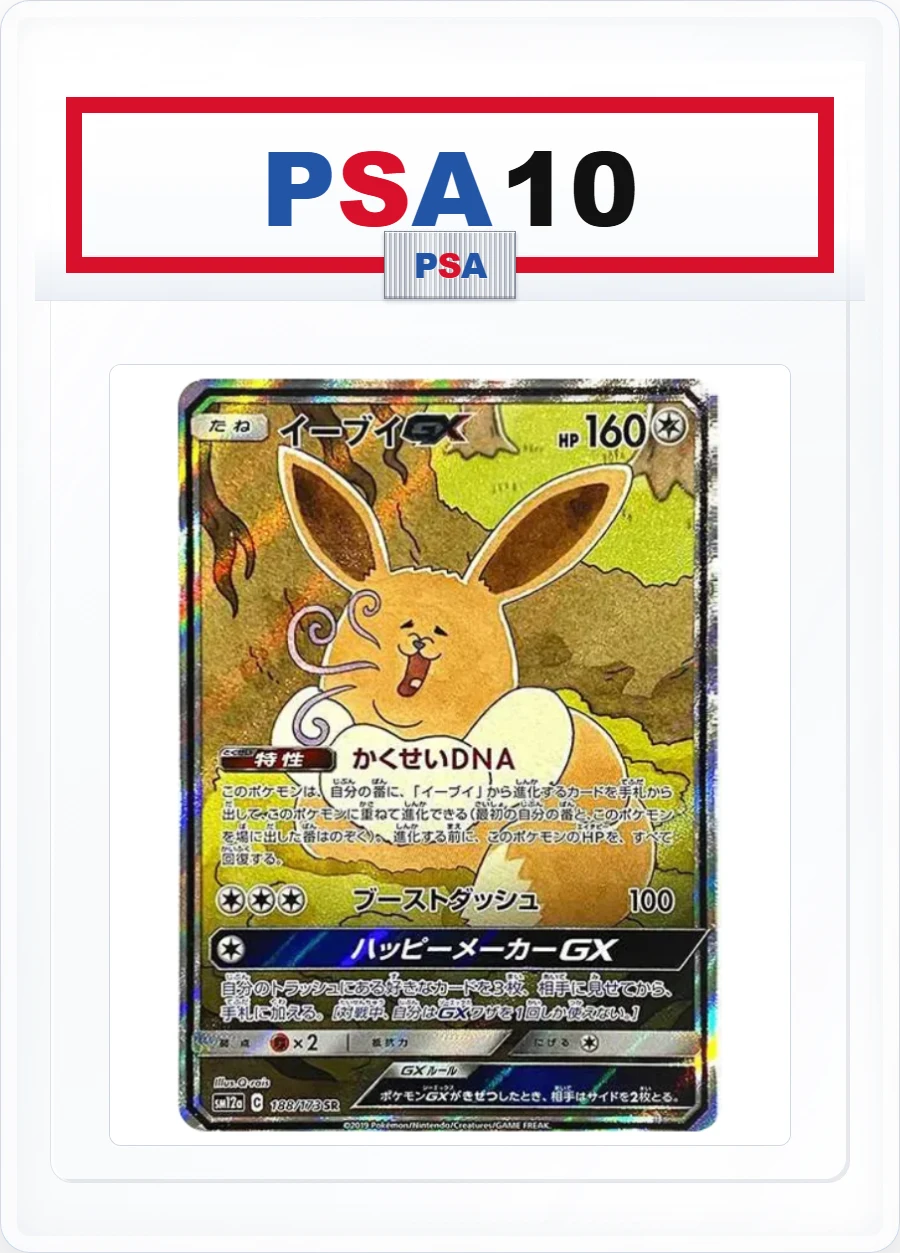
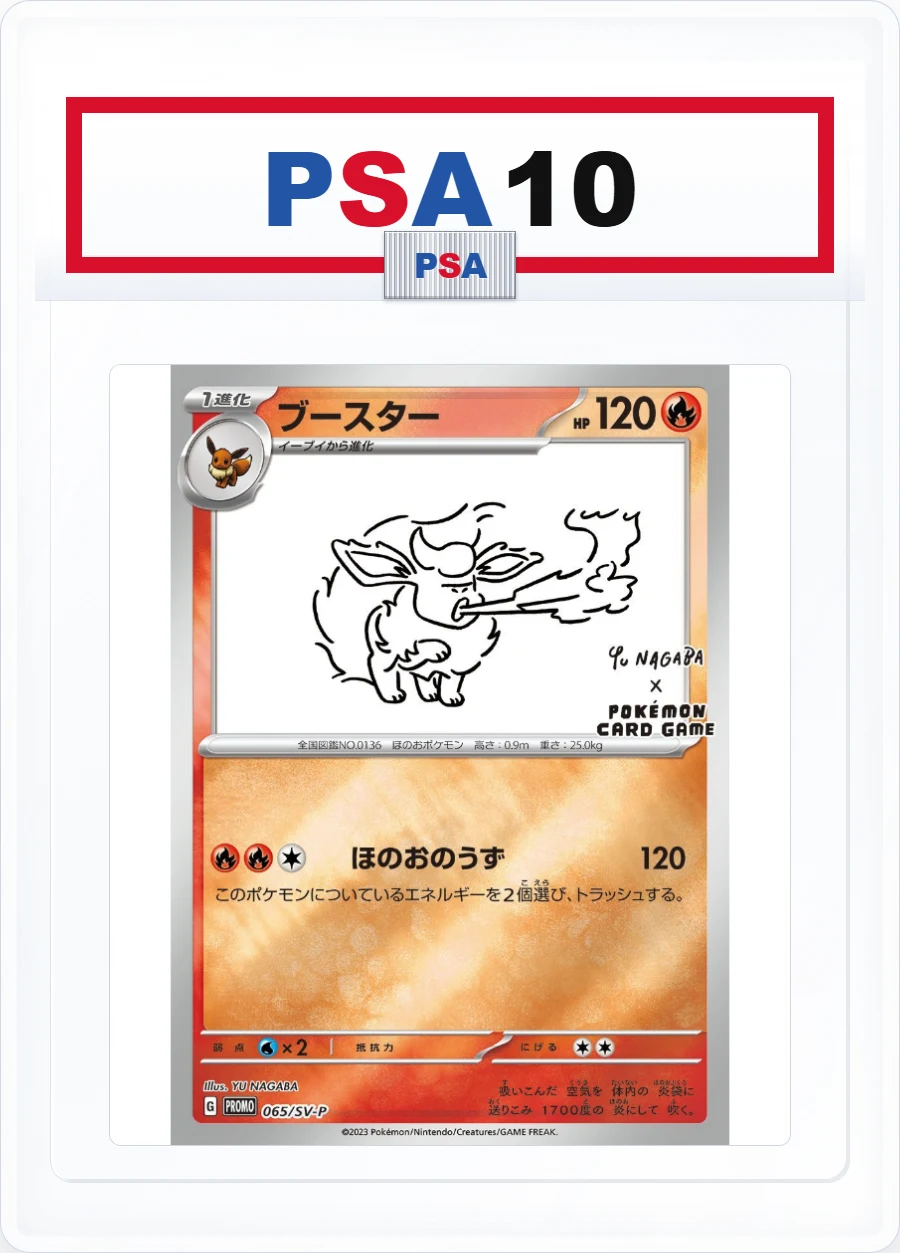
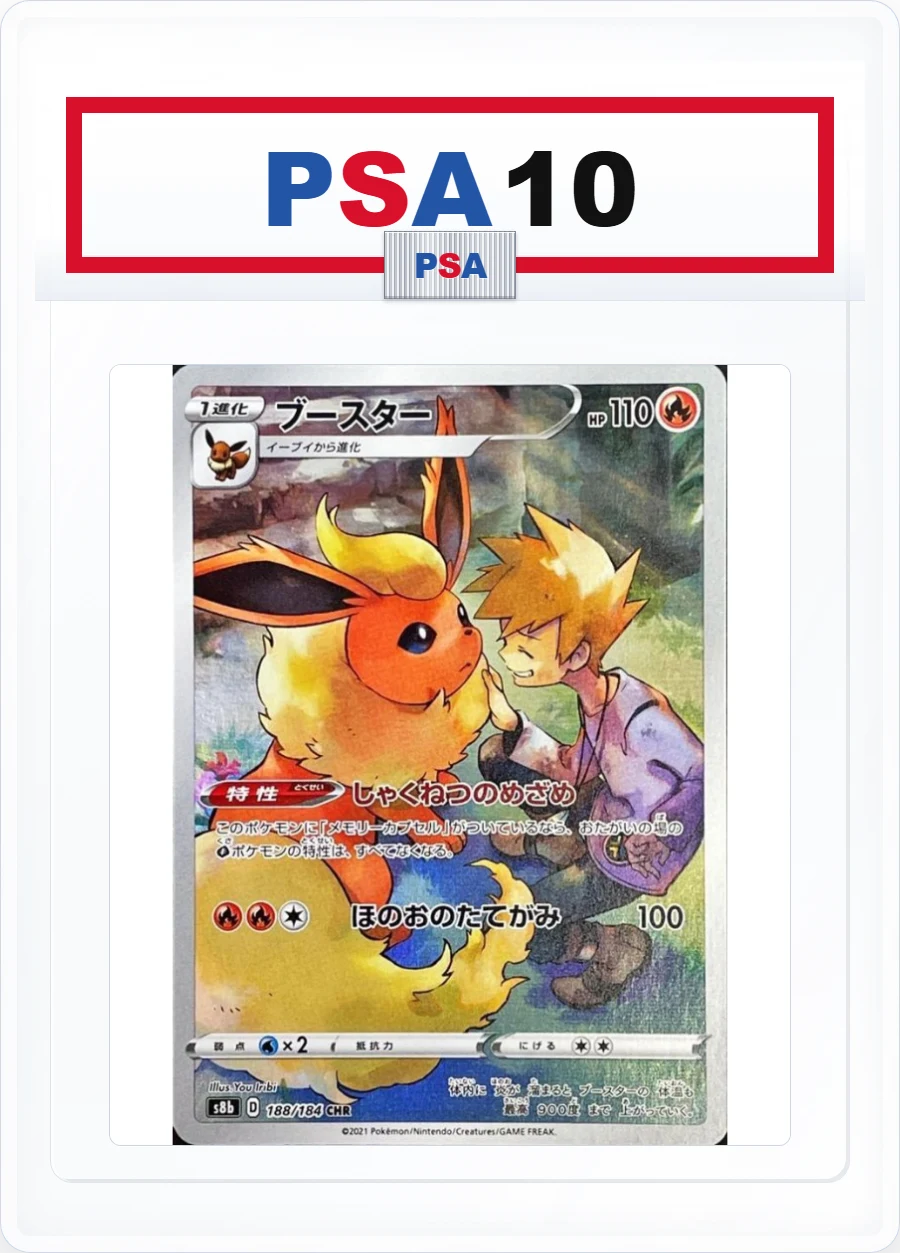
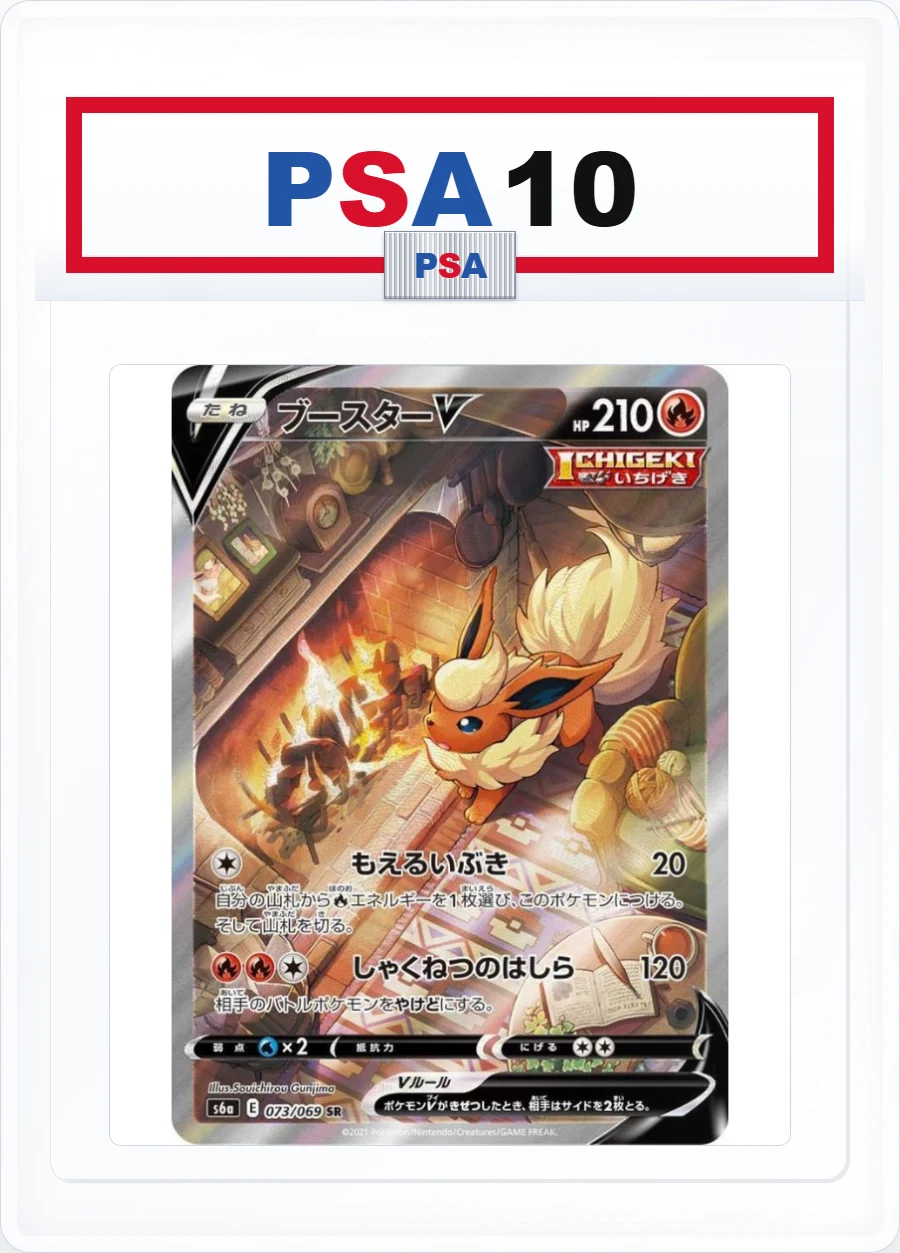
The linked product pages in this article represent the type of PSA 10 Japanese Pokemon inventory buyers often compare before a larger order. Card examples include: PSA10 Acerola 056/049 SR, PSA10 Ash’s Pikachu GX 005/026, PSA10 Charizard V 103/100 SA, PSA10 Charizard ex SSR 331/190, PSA10 Charizard VMAX 002/021, PSA10 Eevee GX 188/173 SA, PSA10 Eevee 210/184 CHR, PSA10 Eevee Munch Exhibition 287/SM-P PROMO. Availability can change quickly, so use the current SST product pages or a wholesale inquiry for the live list.

A larger PSA 10 order is easier to compare when the inventory is grouped into buyer-readable themes:

  • Icon Pokemon: Pikachu, Charizard, Mew, Mewtwo, Eeveelutions, starter Pokemon, and legendary Pokemon.
  • Character Trainers: cards where the Trainer name, artwork, and Japanese demand drive collector interest.
  • Promos: cards where the distribution story matters as much as the card number.
  • Modern SAR/AR cards: visually strong cards that can work in stores and online listings.
  • Vintage or nostalgia routes: slower but deeper collector appeal when the card has history.

PSA10 Ash's Pikachu GX 005/026
Theme-led PSA 10 orders work best when every slab has a clear role in the buyer plan.

Which PSA 10 Buyer Are You?

A PSA 10 buying plan works better when it does not treat every reader as the same buyer. The same slab can be a personal grail for one customer, a store showcase card for another, and a slow-moving capital trap for a third. The tradeoff changes with the buyer segment.

Buyer segment What they care about What to verify Best SST path
Overseas collector Authenticity, artwork, exact card identity, safe shipping. Product title, card number, PSA 10 wording, and shipping route. Product page or PSA 10 collection.
Reseller Turnover, margin, recognizable names, listing speed. Whether the card can be listed quickly and explained simply. Wholesale inquiry.
Local card shop Showcase appeal, category breadth, repeat supply. Whether the order builds a balanced display case, not just one expensive card. Wholesale inquiry.
High-end buyer Premium scarcity, display value, confidence. Exact version, grade wording, card number, and documentation. Specific product pages.
New graded-card buyer Avoiding mistakes, understanding grade premium. Whether PSA 10 certainty is worth the premium over raw cards. Collection first, then FAQ.

Choose the path that matches the order. A reseller should focus on margin and assortment. A collector should focus on card identity and authenticity. A store should focus on category breadth and reorder potential.

Assortment Strategy For A PSA 10 Order

The biggest mistake in graded-card buying is assuming that a high grade alone creates demand. PSA 10 is the entry filter, not the full reason to buy. A stronger order usually mixes a few high-recognition anchors with mid-tier cards that fit the same story.

Assortment type Example use Strength Risk
Icon-led order Pikachu, Charizard, Mew, Mewtwo, Eeveelutions. Easy to explain and merchandise. Competitive pricing and higher capital requirement.
Trainer-led order Acerola, Lillie, Iono, Erika, Cynthia-style demand. Strong collector identity and display appeal. Character demand can be volatile by market.
Promo-led order Japanese promos, campaign cards, limited distribution. Story-driven, good for content and premium listings. Requires accurate release context.
Value-depth order Multiple lower-price PSA 10 slabs. Good for stores that need breadth. Slower cards can accumulate if selection is weak.
Theme order Rocket, Eeveelutions, starters, legends, anniversary cards. Easy to build a landing page or showcase around. Theme must match actual stock.

A grouped order is easier to review than a random list of slabs. Decide the role each card plays in the order, then use the PSA collection or wholesale route to confirm current availability.

Risk Controls Before Payment

A serious PSA buying guide should reduce buyer anxiety without pretending that every risk disappears. Even with PSA 10 slabs, buyers should confirm exact identity, availability, price date, and shipping expectations before payment.

Risk Why it happens What the buyer should do
Wrong version Similar artwork, Japanese/English variants, promos, and reprints can blur together. Match the exact product title, card number, rarity, and linked product page before comparing price.
Stale availability PSA inventory can move faster than evergreen blog pages. Open the current product or collection page before assuming stock is available.
Old price reference Graded markets change and quote lists expire. Ask for the quote date and avoid relying on old screenshots or stale price lists.
Product-page mismatch Article examples, old carts, and saved links can drift from current stock. Confirm the exact card, PSA 10 wording, live availability, and any extra confirmation needs through the product page or wholesale quote.
Overstated PSA relationship Sellers can describe PSA-graded cards but should not imply endorsement. Treat PSA as the grading company, not a seller endorsement.
Shipping expectations Slabs need protection and international buyers need clarity. Confirm packing, shipping method, destination limits, and timing before a large order.

If any of these checks are unclear, use the wholesale inquiry path before relying on a saved price list or an old product screenshot.

PSA 10 vs Raw Cards

Raw Japanese cards can be cheaper and may have grading upside, but that upside is not free. The buyer absorbs condition risk, grading cost, grading time, and the chance of receiving a 9 instead of a 10. PSA 10 slabs move that risk into the purchase price. That can be rational for overseas buyers who need certainty, faster listing, or a clean showcase product.

Ruta Ideal para Main risk Article CTA
PSA 10 slab Buyers who need certainty and resale-ready inventory. Paying too much for the wrong card. PSA 10 collection and product links.
Raw card Buyers with grading skill or local grading access. Estado and grade uncertainty. Mention only when SST has raw/single links.
Mixed order Stores that need both premium slabs and accessible singles. Assortment complexity. Wholesale inquiry page.

How A Wholesale Buyer Should Use This Page

A strong B2B reader path should look like this:

  1. Understand the PSA 10 buying angle in plain language.
  2. See live SST collection and product links.
  3. Use the article tables to narrow the desired theme or quantity.
  4. Open the wholesale page when the order needs pricing support, recurring supply, or a custom list.
  5. Confirm the final quote, availability, shipping route, and payment terms before relying on any price in the article.

A wholesale article should not promise a fixed discount or guaranteed price list unless SST confirms it for that order. Safer buyer language is "request current pricing" or "ask for an available PSA 10 list."

Ready To Browse Or Request A PSA 10 List?

Use the route that matches your order size. If you want to browse immediately, start with the PSA 10 collection. If you are buying multiple slabs, sourcing for a store, or need a recurring supply path, use the wholesale inquiry route and ask for current availability.

Buyer intent Best route Link
Browse current graded cards or inspect one-card examples PSA 10 collection Browse current PSA 10 graded cards
Request quantity, B2B pricing, or recurring supply Wholesale inquiry Request current PSA 10 wholesale availability

For larger orders, include the card theme, target quantity, budget range, destination country, and whether substitutions are acceptable. That gives SST enough context to answer with a useful list instead of a generic reply.

How To Keep Availability And Pricing Accurate

PSA 10 inventory and graded-card prices move quickly, so the safest buying process is to treat the article as a decision framework and verify live availability at the point of order:

  • Open the current PSA 10 collection before assuming a card is available.
  • Match the exact card name, card number, rarity, language, and PSA grade before comparing prices.
  • For a large order, ask for a current list instead of relying on an old screenshot or saved cart.
  • Use product pages as the browsing starting point, then verify the grade wording, card number, and availability through the product page or quote.
  • Treat marketplace chatter and social posts as research signals, not as final authority for SST availability.
  • Date any external price comparison you use internally, because graded-card comps can change fast.

The rule is simple: if a claim can change, verify it at the point of order. That keeps the buying decision grounded without pretending that a static blog page can freeze the PSA market.

Final Pre-Order Checklist

Before placing a larger PSA 10 order, confirm the following points with the product page or wholesale contact:

  • The slab is PSA 10 and the card identity matches the intended version.
  • The product or quoted list is currently available.
  • The quote date, currency, quantity, and substitutions are clear.
  • Shipping method, packing expectations, and destination country are confirmed.
  • Any external price comparison is recent enough to matter.
  • The order mix fits your goal: collector purchase, resale inventory, shop showcase, or recurring B2B supply.

FAQ

Is buying PSA 10 Pokemon cards in bulk from Japan only for stores?

No. Stores and resellers are the clearest B2B audience, but serious collectors may also buy multiple slabs when they are building a theme such as Pikachu promos, Charizard cards, Trainers, or Eeveelutions. The key is whether the buyer needs a repeatable sourcing path rather than a single retail checkout.

Should I buy PSA 10 slabs or raw Japanese cards?

Buy PSA 10 slabs when certainty, speed, and resale-ready presentation matter. Buy raw cards when you have grading skill, accept condition risk, and want upside. For overseas buyers, slabs can reduce friction because the grade is already settled.

Can I treat every PSA 10 card as equally liquid?

No. Liquidity depends on Pokemon or Trainer popularity, artwork, release type, card number, rarity, price point, and current market attention. Separate fast-moving names from niche collector cards before buying quantity.

What should I ask before placing a wholesale PSA order?

Ask for current availability, price date, quantity, card list, extra confirmation needs, shipping method, packing expectations, and whether substitutions are allowed. Never build a public price claim from an old quote.

Does using PSA in the article imply PSA official partnership?

No. Use PSA only to describe graded products. Do not use PSA official logos or imply SST is endorsed by PSA unless that relationship is formally confirmed.

Bottom Line

Japanese PSA 10 Pokemon Cards Wholesale Guide: How Overseas Buyers Can Source From Tokyo is a buying-workflow guide first and a PSA education page second. The practical route is clear: decide the order theme, verify exact slab identity, check live SST inventory, and use the wholesale CTA when the order needs quantity, current pricing, or recurring supply.

Guía de la lista de precios al por mayor de PSA 10 de Pokémon: qué verificar...

Pokemon PSA 10 Wholesale Price List Guide: What To Check Before Ordering

Last updated: June 4, 2026. Market data, canonical CTA links, and gallery product links were refreshed before upload packaging.

This guide focuses on the buying workflow for PSA 10 Japanese Pokemon cards, including how to browse current SST inventory and when to use the wholesale inquiry path for larger orders.

Key Takeaway: PSA 10 price-list review should be treated as a buying workflow, not a simple card list. The strongest SST angle is direct access to Japanese PSA 10 inventory, wholesale inquiry paths, and product pages that help buyers comparing many slabs at once move from research to action.

This guide explains how to read a PSA 10 price list before ordering: what the price tells you, what it does not tell you, and which checks matter before payment.

The buying decision is different from a sealed-box set guide. A PSA 10 buyer is not only asking "which card is best?" They are asking whether the seller can confirm current graded inventory, whether the order can scale, how to compare product pages quickly, and which link to click when they are ready to request pricing or buy.

Quick Answer

For PSA 10 price-list review, start with the PSA 10 collection, then use the wholesale page if the order is multi-card, recurring, or B2B. Individual product pages are the place to confirm exact card identity, PSA 10 wording, and current availability before ordering.

Buyer question Short answer SST action
I want to browse available graded cards. Start with the PSA 10 collection. Open SST PSA 10 graded cards and compare current listings.
I need quantity or a price list. Use the wholesale inquiry path. Start from SST wholesale and request a current PSA 10 list or quote.
I need to verify current SST inventory. Open the linked PSA 10 product pages and exact card identities. Compare card name, card number, PSA 10 wording, product title, and current availability before ordering.
I need current prices. Use live product pages or a current quote. Treat any old screenshot or saved price list as expired until SST confirms availability.

Where To Browse Or Request PSA 10 Inventory

Buyer need SST path How to use it
Browse current PSA 10 inventory Shop PSA 10 graded cards Use this for a broad stock check before narrowing by character, price point, or card number.
Ask for quantity or recurring supply Wholesale inquiry page Use this when the order needs a current list, quote date, shipping discussion, or B2B handling.
Open a product page PSA10 Acerola 056/049 SR Use the product page or quote to confirm the exact card, PSA 10 wording, and live availability.
Open a product page PSA10 Ash’s Pikachu GX 005/026 Use the product page or quote to confirm the exact card, PSA 10 wording, and live availability.
Open a product page PSA10 Charizard V 103/100 SA Use the product page or quote to confirm the exact card, PSA 10 wording, and live availability.
Open a product page PSA10 Charizard ex SSR 331/190 Use the product page or quote to confirm the exact card, PSA 10 wording, and live availability.

Use the broad collection when you are still comparing options. Use individual product pages when the exact card matters. Use the wholesale path when you need current quantity, pricing, or recurring supply.
Why Japanese PSA 10 Cards Work For Overseas Buyers

Japanese Pokemon cards have several advantages for graded-card buyers: Japanese print quality is often strong, Japanese-only promos create collector stories, and overseas buyers frequently want inventory that is difficult to source locally. A PSA 10 slab also removes a large part of the condition-risk conversation because the buyer can compare grade wording, product title, card identity, and price before ordering.

That does not make every PSA 10 card a good buy. The practical question is what changes buyer action. A reseller cares about liquidity and margin. A collector cares about exact artwork and long-term desire. A store cares about showcase appeal, category breadth, and how quickly each slab can be explained to a customer. A breaker or content seller may care about recognizable names that perform well on camera.

For this topic, the practical hook is price-list QA, product matching, and quote-to-order workflow. Start with the buying workflow, then check risk controls and order planning before committing budget.

Market Signal: PSA Demand Is Still Elevated In 2026

The useful recent data is not "every PSA 10 card is automatically going up." The stronger claim is narrower and more actionable: PSA grading volume is still running at very high levels in 2026, PSA 10 cards carry a large premium over raw cards in broad Pokemon price data, and individual slab prices need a dated comp check before a buyer commits budget.

As of GemRate’s June 3, 2026 dashboard, PSA recorded 482,480 grades over the trailing seven days, up 10% from the prior seven days, and 2,125,904 grades over the trailing 30 days, up 4% from the prior 30 days. GemRate also reported that April 2026 was a record month for card grading, with 3.10 million total cards graded and PSA at 2.21 million cards, up 42% year over year. May cooled from April, but still reached 2.95 million total cards and PSA graded 2.07 million cards, up 25% year over year.

Dated source What changed Buyer implication
GemRate dashboard, updated June 3, 2026 PSA trailing seven-day grades: 482,480, up 10% vs the prior seven days; trailing 30-day grades: 2,125,904, up 4%. PSA supply and demand signals are active now, so stale price lists should not drive a bulk order.
GemRate April 2026 recap, published May 2, 2026 Overall grading hit a record 3.10 million cards; PSA graded 2.21 million cards, up 42% year over year. The market is not quiet. Buyers should compare current inventory and quote dates, not last season’s assumptions.
GemRate May 2026 recap, published June 2, 2026 Overall grading was 2.95 million cards, still up 20% year over year; PSA graded 2.07 million cards, up 25% year over year. Even after the April record, graded-card activity remained elevated.
Pulled Pokemon Market Report, published May 20, 2026 Across tracked Pokemon cards, raw averaged $42.25 while PSA 10 averaged $273.45, a 547.3% premium. PSA 10 certainty can be worth a real premium, but the premium must be checked card by card.

The chart below is the practical reading for a bulk buyer. It separates demand direction from pricing discipline, which matters because a high PSA 10 premium can create margin but can also hide an overpay if the wrong card, wrong version, or old comp is used.

Market signal What it supports What it does not prove
PSA grading volume remains elevated The graded-card market is active enough to justify a dedicated PSA 10 buying page and current inventory CTA. It does not prove every individual PSA 10 card is rising.
PSA 10 average premium is much higher than raw in broad Pokemon data Buyers often pay for certainty, grade, and resale-ready presentation. It does not replace checking the exact card, language, set, and recent sold comps.
Icon cards show wide raw-to-PSA10 spreads Charizard, Eevee, Pikachu, Mew, Mewtwo, Trainers, and promos can be useful anchors for a slab order. It does not mean a random assortment of slabs is good wholesale inventory.
SST has linked product pages The article can move readers from research to actual browse/request actions. Availability and exact order details still need the product page or current quote.

A few live card examples show why this matters for buying workflow. On June 4, 2026, PriceCharting’s Japanese Star Birth index listed Charizard V #103 at $150.81 ungraded and $418.96 in PSA 10. PriceCharting listed Japanese Charizard VMAX #002 at $32.61 ungraded and $127.40 in PSA 10, with PSA 10 volume shown as one sale per day. For a lower-ticket example, Japanese VMAX Climax Eevee #210 was listed at $12.74 ungraded and $69.00 in PSA 10, also with PSA 10 volume shown as one sale per day.

Those examples are useful because they show the difference between buying raw upside and buying graded certainty. They are not promises about SST inventory, future appreciation, or guaranteed resale margin. A reseller should still check the latest sold listings, the exact Japanese card number, whether the listing is PSA 10 rather than another grader, and whether shipping costs erase the expected spread. A collector should use the same data differently: the PSA 10 premium may be rational when the buyer wants a clean display copy and does not want to gamble on condition.

Before a larger order, the comp check should run in a fixed order. First, confirm the exact SST product or collection page so the buyer is looking at real available inventory. Second, compare the same Japanese card number in PSA 10, not only the English version or a raw copy. Third, check whether the most recent sales are clustered around one level or scattered across outlier prices. Fourth, convert the result into an order role: anchor card, mid-tier display card, value-depth card, or "skip for now." This keeps the article useful for buyers who want action, not just market commentary.

That workflow also improves the wholesale inquiry. Instead of asking only for "cheap PSA 10 cards," a stronger buyer request says which theme, price band, character group, and resale use case the order needs. SST can then respond with a current list that matches the buyer’s actual plan, while the buyer avoids treating a public article as a permanent price sheet.

For SST buyers, the decision rule is simple: use the PSA 10 collection and product pages to confirm actual available slabs, then ask for a current wholesale quote if the order is larger than a one-card purchase. If the market is moving, the safest article CTA is not a fixed public price list; it is a current inventory check with a dated quote.

PSA10 Charizard V 103/100 SA
Use exact card identity and current comps before treating a PSA 10 spread as margin.

What To Check Before Buying Multiple PSA 10 Cards

Check Why it matters Buyer action
Exact card identity Similar names, promos, and reprints can have very different demand. Match card name, number, rarity, language, and artwork before comparing price.
PSA grade wording The article is about PSA 10, so grade wording must be clear in the product title or quote. Confirm PSA 10 in the product title, product page, or current wholesale list before ordering.
Grade/title consistency Buyers want the product title, card number, and PSA 10 wording to line up. Confirm grade wording and card identity through the product page or current quote.
Liquidity Some slabs are beautiful but slow to resell. Separate collector gems from fast-moving inventory.
Quantity fit Bulk buying fails when the assortment is wrong. Ask whether the order needs many recognizable names or a narrower premium theme.
Price date PSA 10 markets move. Add the access date for live SST price, sold comps, or quote table.
Shipping/import Slabs need protected packing and clear international expectations. Link wholesale/import guidance near the CTA.

Inventory Themes To Build Around

The linked product pages in this article represent the type of PSA 10 Japanese Pokemon inventory buyers often compare before a larger order. Card examples include: PSA10 Acerola 056/049 SR, PSA10 Ash’s Pikachu GX 005/026, PSA10 Charizard V 103/100 SA, PSA10 Charizard ex SSR 331/190, PSA10 Charizard VMAX 002/021, PSA10 Eevee GX 188/173 SA, PSA10 Eevee 210/184 CHR, PSA10 Eevee Munch Exhibition 287/SM-P PROMO. Availability can change quickly, so use the current SST product pages or a wholesale inquiry for the live list.

A larger PSA 10 order is easier to compare when the inventory is grouped into buyer-readable themes:

  • Icon Pokemon: Pikachu, Charizard, Mew, Mewtwo, Eeveelutions, starter Pokemon, and legendary Pokemon.
  • Character Trainers: cards where the Trainer name, artwork, and Japanese demand drive collector interest.
  • Promos: cards where the distribution story matters as much as the card number.
  • Modern SAR/AR cards: visually strong cards that can work in stores and online listings.
  • Vintage or nostalgia routes: slower but deeper collector appeal when the card has history.

PSA10 Ash's Pikachu GX 005/026
Theme-led PSA 10 orders work best when every slab has a clear role in the buyer plan.

Which PSA 10 Buyer Are You?

A PSA 10 buying plan works better when it does not treat every reader as the same buyer. The same slab can be a personal grail for one customer, a store showcase card for another, and a slow-moving capital trap for a third. The tradeoff changes with the buyer segment.

Buyer segment What they care about What to verify Best SST path
Overseas collector Authenticity, artwork, exact card identity, safe shipping. Product title, card number, PSA 10 wording, and shipping route. Product page or PSA 10 collection.
Reseller Turnover, margin, recognizable names, listing speed. Whether the card can be listed quickly and explained simply. Wholesale inquiry.
Local card shop Showcase appeal, category breadth, repeat supply. Whether the order builds a balanced display case, not just one expensive card. Wholesale inquiry.
High-end buyer Premium scarcity, display value, confidence. Exact version, grade wording, card number, and documentation. Specific product pages.
New graded-card buyer Avoiding mistakes, understanding grade premium. Whether PSA 10 certainty is worth the premium over raw cards. Collection first, then FAQ.

Choose the path that matches the order. A reseller should focus on margin and assortment. A collector should focus on card identity and authenticity. A store should focus on category breadth and reorder potential.

Assortment Strategy For A PSA 10 Order

The biggest mistake in graded-card buying is assuming that a high grade alone creates demand. PSA 10 is the entry filter, not the full reason to buy. A stronger order usually mixes a few high-recognition anchors with mid-tier cards that fit the same story.

Assortment type Example use Strength Risk
Icon-led order Pikachu, Charizard, Mew, Mewtwo, Eeveelutions. Easy to explain and merchandise. Competitive pricing and higher capital requirement.
Trainer-led order Acerola, Lillie, Iono, Erika, Cynthia-style demand. Strong collector identity and display appeal. Character demand can be volatile by market.
Promo-led order Japanese promos, campaign cards, limited distribution. Story-driven, good for content and premium listings. Requires accurate release context.
Value-depth order Multiple lower-price PSA 10 slabs. Good for stores that need breadth. Slower cards can accumulate if selection is weak.
Theme order Rocket, Eeveelutions, starters, legends, anniversary cards. Easy to build a landing page or showcase around. Theme must match actual stock.

A grouped order is easier to review than a random list of slabs. Decide the role each card plays in the order, then use the PSA collection or wholesale route to confirm current availability.

Risk Controls Before Payment

A serious PSA buying guide should reduce buyer anxiety without pretending that every risk disappears. Even with PSA 10 slabs, buyers should confirm exact identity, availability, price date, and shipping expectations before payment.

Risk Why it happens What the buyer should do
Wrong version Similar artwork, Japanese/English variants, promos, and reprints can blur together. Match the exact product title, card number, rarity, and linked product page before comparing price.
Stale availability PSA inventory can move faster than evergreen blog pages. Open the current product or collection page before assuming stock is available.
Old price reference Graded markets change and quote lists expire. Ask for the quote date and avoid relying on old screenshots or stale price lists.
Product-page mismatch Article examples, old carts, and saved links can drift from current stock. Confirm the exact card, PSA 10 wording, live availability, and any extra confirmation needs through the product page or wholesale quote.
Overstated PSA relationship Sellers can describe PSA-graded cards but should not imply endorsement. Treat PSA as the grading company, not a seller endorsement.
Shipping expectations Slabs need protection and international buyers need clarity. Confirm packing, shipping method, destination limits, and timing before a large order.

If any of these checks are unclear, use the wholesale inquiry path before relying on a saved price list or an old product screenshot.

PSA 10 vs Raw Cards

Raw Japanese cards can be cheaper and may have grading upside, but that upside is not free. The buyer absorbs condition risk, grading cost, grading time, and the chance of receiving a 9 instead of a 10. PSA 10 slabs move that risk into the purchase price. That can be rational for overseas buyers who need certainty, faster listing, or a clean showcase product.

Ruta Ideal para Main risk Article CTA
PSA 10 slab Buyers who need certainty and resale-ready inventory. Paying too much for the wrong card. PSA 10 collection and product links.
Raw card Buyers with grading skill or local grading access. Estado and grade uncertainty. Mention only when SST has raw/single links.
Mixed order Stores that need both premium slabs and accessible singles. Assortment complexity. Wholesale inquiry page.

How A Wholesale Buyer Should Use This Page

A strong B2B reader path should look like this:

  1. Understand the PSA 10 buying angle in plain language.
  2. See live SST collection and product links.
  3. Use the article tables to narrow the desired theme or quantity.
  4. Open the wholesale page when the order needs pricing support, recurring supply, or a custom list.
  5. Confirm the final quote, availability, shipping route, and payment terms before relying on any price in the article.

A wholesale article should not promise a fixed discount or guaranteed price list unless SST confirms it for that order. Safer buyer language is "request current pricing" or "ask for an available PSA 10 list."

Ready To Browse Or Request A PSA 10 List?

Use the route that matches your order size. If you want to browse immediately, start with the PSA 10 collection. If you are buying multiple slabs, sourcing for a store, or need a recurring supply path, use the wholesale inquiry route and ask for current availability.

Buyer intent Best route Link
Browse current graded cards or inspect one-card examples PSA 10 collection Browse current PSA 10 graded cards
Request quantity, B2B pricing, or recurring supply Wholesale inquiry Request current PSA 10 wholesale availability

For larger orders, include the card theme, target quantity, budget range, destination country, and whether substitutions are acceptable. That gives SST enough context to answer with a useful list instead of a generic reply.

How To Keep Availability And Pricing Accurate

PSA 10 inventory and graded-card prices move quickly, so the safest buying process is to treat the article as a decision framework and verify live availability at the point of order:

  • Open the current PSA 10 collection before assuming a card is available.
  • Match the exact card name, card number, rarity, language, and PSA grade before comparing prices.
  • For a large order, ask for a current list instead of relying on an old screenshot or saved cart.
  • Use product pages as the browsing starting point, then verify the grade wording, card number, and availability through the product page or quote.
  • Treat marketplace chatter and social posts as research signals, not as final authority for SST availability.
  • Date any external price comparison you use internally, because graded-card comps can change fast.

The rule is simple: if a claim can change, verify it at the point of order. That keeps the buying decision grounded without pretending that a static blog page can freeze the PSA market.

Final Pre-Order Checklist

Before placing a larger PSA 10 order, confirm the following points with the product page or wholesale contact:

  • The slab is PSA 10 and the card identity matches the intended version.
  • The product or quoted list is currently available.
  • The quote date, currency, quantity, and substitutions are clear.
  • Shipping method, packing expectations, and destination country are confirmed.
  • Any external price comparison is recent enough to matter.
  • The order mix fits your goal: collector purchase, resale inventory, shop showcase, or recurring B2B supply.

FAQ

Is buying PSA 10 Pokemon cards in bulk from Japan only for stores?

No. Stores and resellers are the clearest B2B audience, but serious collectors may also buy multiple slabs when they are building a theme such as Pikachu promos, Charizard cards, Trainers, or Eeveelutions. The key is whether the buyer needs a repeatable sourcing path rather than a single retail checkout.

Should I buy PSA 10 slabs or raw Japanese cards?

Buy PSA 10 slabs when certainty, speed, and resale-ready presentation matter. Buy raw cards when you have grading skill, accept condition risk, and want upside. For overseas buyers, slabs can reduce friction because the grade is already settled.

Can I treat every PSA 10 card as equally liquid?

No. Liquidity depends on Pokemon or Trainer popularity, artwork, release type, card number, rarity, price point, and current market attention. Separate fast-moving names from niche collector cards before buying quantity.

What should I ask before placing a wholesale PSA order?

Ask for current availability, price date, quantity, card list, extra confirmation needs, shipping method, packing expectations, and whether substitutions are allowed. Never build a public price claim from an old quote.

Does using PSA in the article imply PSA official partnership?

No. Use PSA only to describe graded products. Do not use PSA official logos or imply SST is endorsed by PSA unless that relationship is formally confirmed.

Bottom Line

Pokemon PSA 10 Wholesale Price List Guide: What To Check Before Ordering is a buying-workflow guide first and a PSA education page second. The practical route is clear: decide the order theme, verify exact slab identity, check live SST inventory, and use the wholesale CTA when the order needs quantity, current pricing, or recurring supply.

Guía de compra de cartas japonesas Eeveelutions PSA 10: Umbreon, Espeon...

PSA 10 Eeveelutions Japanese Cards Guide: Umbreon, Espeon, Sylveon And More

Last updated: June 4, 2026. Market data, canonical CTA links, and gallery product links were refreshed before upload packaging.

This guide focuses on the buying workflow for PSA 10 Japanese Pokemon cards, including how to browse current SST inventory and when to use the wholesale inquiry path for larger orders.

Key Takeaway: PSA 10 Eeveelutions buying should be treated as a buying workflow, not a simple card list. The strongest SST angle is direct access to Japanese PSA 10 inventory, wholesale inquiry paths, and product pages that help Eeveelution collectors and graded-card stores move from research to action.

Eeveelution PSA 10 demand is fragmented across Umbreon, Espeon, Sylveon, Eevee promos, and set-specific art, so this guide helps buyers compare the family rather than one card.

The buying decision is different from a sealed-box set guide. A PSA 10 buyer is not only asking "which card is best?" They are asking whether the seller can confirm current graded inventory, whether the order can scale, how to compare product pages quickly, and which link to click when they are ready to request pricing or buy.

Quick Answer

For PSA 10 Eeveelutions buying, start with the PSA 10 collection, then use the wholesale page if the order is multi-card, recurring, or B2B. Individual product pages are the place to confirm exact card identity, PSA 10 wording, and current availability before ordering.

Buyer question Short answer SST action
I want to browse available graded cards. Start with the PSA 10 collection. Open SST PSA 10 graded cards and compare current listings.
I need quantity or a price list. Use the wholesale inquiry path. Start from SST wholesale and request a current PSA 10 list or quote.
I need to verify current SST inventory. Open the linked PSA 10 product pages and exact card identities. Compare card name, card number, PSA 10 wording, product title, and current availability before ordering.
I need current prices. Use live product pages or a current quote. Treat any old screenshot or saved price list as expired until SST confirms availability.

Where To Browse Or Request PSA 10 Inventory

Buyer need SST path How to use it
Browse current PSA 10 inventory Shop PSA 10 graded cards Use this for a broad stock check before narrowing by character, price point, or card number.
Ask for quantity or recurring supply Wholesale inquiry page Use this when the order needs a current list, quote date, shipping discussion, or B2B handling.
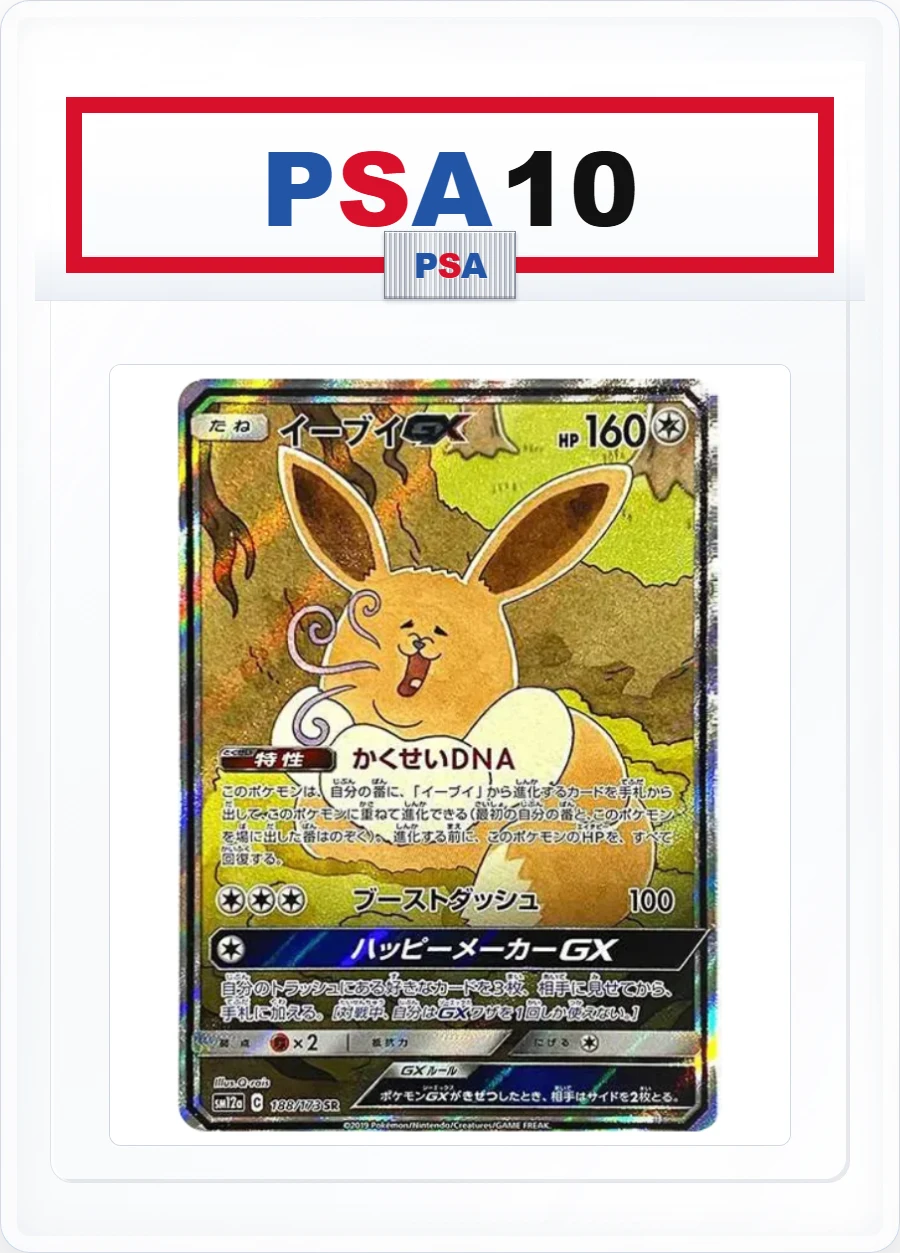
Open a product page PSA10 Eevee GX 188/173 SA Use the product page or quote to confirm the exact card, PSA 10 wording, and live availability.
Open a product page PSA10 Eevee 210/184 CHR Use the product page or quote to confirm the exact card, PSA 10 wording, and live availability.
Open a product page PSA10 Eevee Munch Exhibition 287/SM-P PROMO Use the product page or quote to confirm the exact card, PSA 10 wording, and live availability.
Open a product page PSA10 Flareon 065/SV-P PROMO Use the product page or quote to confirm the exact card, PSA 10 wording, and live availability.

Use the broad collection when you are still comparing options. Use individual product pages when the exact card matters. Use the wholesale path when you need current quantity, pricing, or recurring supply.
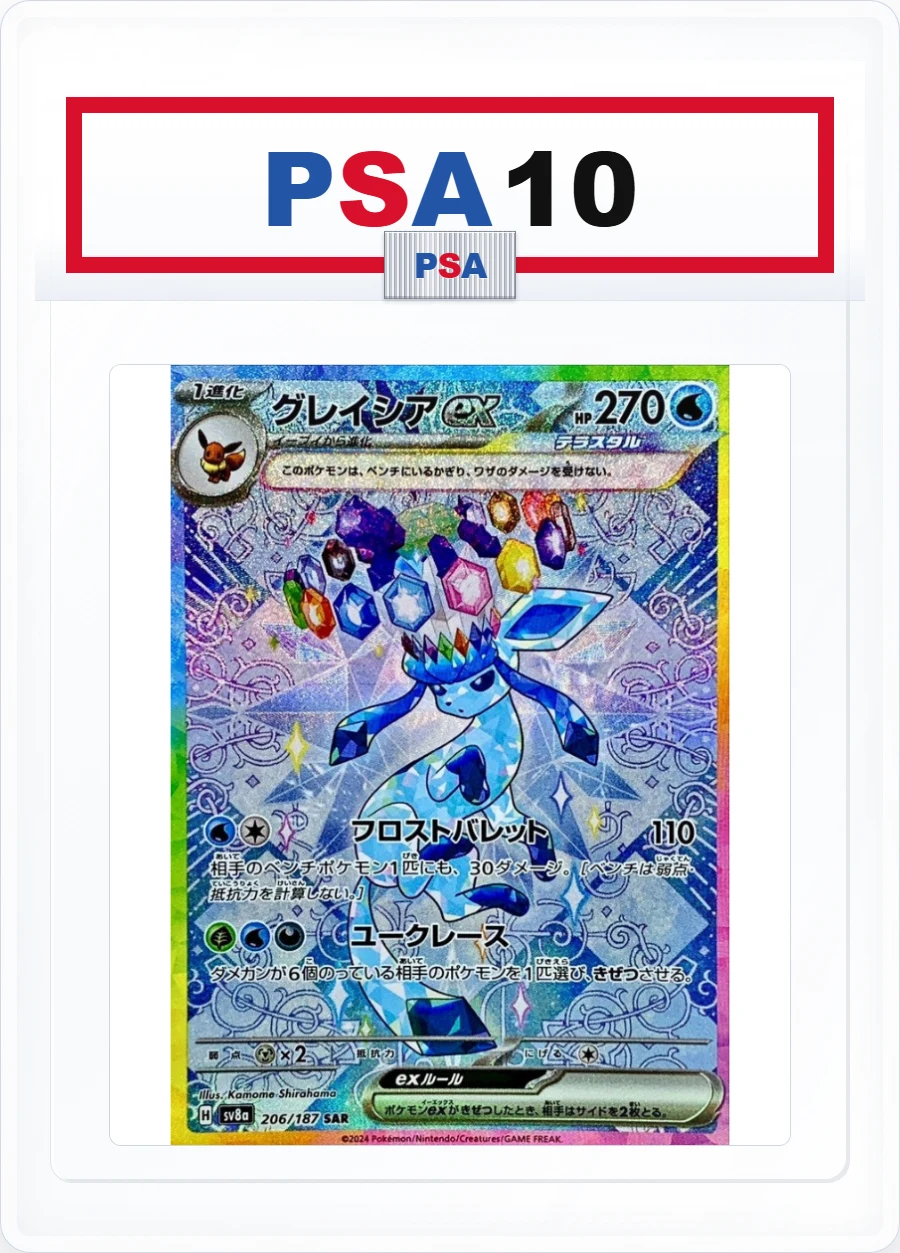
Why Japanese PSA 10 Cards Work For Overseas Buyers

Japanese Pokemon cards have several advantages for graded-card buyers: Japanese print quality is often strong, Japanese-only promos create collector stories, and overseas buyers frequently want inventory that is difficult to source locally. A PSA 10 slab also removes a large part of the condition-risk conversation because the buyer can compare grade wording, product title, card identity, and price before ordering.

That does not make every PSA 10 card a good buy. The practical question is what changes buyer action. A reseller cares about liquidity and margin. A collector cares about exact artwork and long-term desire. A store cares about showcase appeal, category breadth, and how quickly each slab can be explained to a customer. A breaker or content seller may care about recognizable names that perform well on camera.

For this topic, the practical hook is character-family merchandising and cross-card comparison. Start with the buying workflow, then check risk controls and order planning before committing budget.

Market Signal: PSA Demand Is Still Elevated In 2026

The useful recent data is not "every PSA 10 card is automatically going up." The stronger claim is narrower and more actionable: PSA grading volume is still running at very high levels in 2026, PSA 10 cards carry a large premium over raw cards in broad Pokemon price data, and individual slab prices need a dated comp check before a buyer commits budget.

As of GemRate’s June 3, 2026 dashboard, PSA recorded 482,480 grades over the trailing seven days, up 10% from the prior seven days, and 2,125,904 grades over the trailing 30 days, up 4% from the prior 30 days. GemRate also reported that April 2026 was a record month for card grading, with 3.10 million total cards graded and PSA at 2.21 million cards, up 42% year over year. May cooled from April, but still reached 2.95 million total cards and PSA graded 2.07 million cards, up 25% year over year.

Dated source What changed Buyer implication
GemRate dashboard, updated June 3, 2026 PSA trailing seven-day grades: 482,480, up 10% vs the prior seven days; trailing 30-day grades: 2,125,904, up 4%. PSA supply and demand signals are active now, so stale price lists should not drive a bulk order.
GemRate April 2026 recap, published May 2, 2026 Overall grading hit a record 3.10 million cards; PSA graded 2.21 million cards, up 42% year over year. The market is not quiet. Buyers should compare current inventory and quote dates, not last season’s assumptions.
GemRate May 2026 recap, published June 2, 2026 Overall grading was 2.95 million cards, still up 20% year over year; PSA graded 2.07 million cards, up 25% year over year. Even after the April record, graded-card activity remained elevated.
Pulled Pokemon Market Report, published May 20, 2026 Across tracked Pokemon cards, raw averaged $42.25 while PSA 10 averaged $273.45, a 547.3% premium. PSA 10 certainty can be worth a real premium, but the premium must be checked card by card.

The chart below is the practical reading for a bulk buyer. It separates demand direction from pricing discipline, which matters because a high PSA 10 premium can create margin but can also hide an overpay if the wrong card, wrong version, or old comp is used.

Market signal What it supports What it does not prove
PSA grading volume remains elevated The graded-card market is active enough to justify a dedicated PSA 10 buying page and current inventory CTA. It does not prove every individual PSA 10 card is rising.
PSA 10 average premium is much higher than raw in broad Pokemon data Buyers often pay for certainty, grade, and resale-ready presentation. It does not replace checking the exact card, language, set, and recent sold comps.
Icon cards show wide raw-to-PSA10 spreads Charizard, Eevee, Pikachu, Mew, Mewtwo, Trainers, and promos can be useful anchors for a slab order. It does not mean a random assortment of slabs is good wholesale inventory.
SST has linked product pages The article can move readers from research to actual browse/request actions. Availability and exact order details still need the product page or current quote.

A few live card examples show why this matters for buying workflow. On June 4, 2026, PriceCharting’s Japanese Star Birth index listed Charizard V #103 at $150.81 ungraded and $418.96 in PSA 10. PriceCharting listed Japanese Charizard VMAX #002 at $32.61 ungraded and $127.40 in PSA 10, with PSA 10 volume shown as one sale per day. For a lower-ticket example, Japanese VMAX Climax Eevee #210 was listed at $12.74 ungraded and $69.00 in PSA 10, also with PSA 10 volume shown as one sale per day.

Those examples are useful because they show the difference between buying raw upside and buying graded certainty. They are not promises about SST inventory, future appreciation, or guaranteed resale margin. A reseller should still check the latest sold listings, the exact Japanese card number, whether the listing is PSA 10 rather than another grader, and whether shipping costs erase the expected spread. A collector should use the same data differently: the PSA 10 premium may be rational when the buyer wants a clean display copy and does not want to gamble on condition.

Before a larger order, the comp check should run in a fixed order. First, confirm the exact SST product or collection page so the buyer is looking at real available inventory. Second, compare the same Japanese card number in PSA 10, not only the English version or a raw copy. Third, check whether the most recent sales are clustered around one level or scattered across outlier prices. Fourth, convert the result into an order role: anchor card, mid-tier display card, value-depth card, or "skip for now." This keeps the article useful for buyers who want action, not just market commentary.

That workflow also improves the wholesale inquiry. Instead of asking only for "cheap PSA 10 cards," a stronger buyer request says which theme, price band, character group, and resale use case the order needs. SST can then respond with a current list that matches the buyer’s actual plan, while the buyer avoids treating a public article as a permanent price sheet.

For SST buyers, the decision rule is simple: use the PSA 10 collection and product pages to confirm actual available slabs, then ask for a current wholesale quote if the order is larger than a one-card purchase. If the market is moving, the safest article CTA is not a fixed public price list; it is a current inventory check with a dated quote.

PSA10 Eevee Munch Exhibition 287/SM-P PROMO
Use exact card identity and current comps before treating a PSA 10 spread as margin.

What To Check Before Buying Multiple PSA 10 Cards

Check Why it matters Buyer action
Exact card identity Similar names, promos, and reprints can have very different demand. Match card name, number, rarity, language, and artwork before comparing price.
PSA grade wording The article is about PSA 10, so grade wording must be clear in the product title or quote. Confirm PSA 10 in the product title, product page, or current wholesale list before ordering.
Grade/title consistency Buyers want the product title, card number, and PSA 10 wording to line up. Confirm grade wording and card identity through the product page or current quote.
Liquidity Some slabs are beautiful but slow to resell. Separate collector gems from fast-moving inventory.
Quantity fit Bulk buying fails when the assortment is wrong. Ask whether the order needs many recognizable names or a narrower premium theme.
Price date PSA 10 markets move. Add the access date for live SST price, sold comps, or quote table.
Shipping/import Slabs need protected packing and clear international expectations. Link wholesale/import guidance near the CTA.

Inventory Themes To Build Around

The linked product pages in this article represent the type of PSA 10 Japanese Pokemon inventory buyers often compare before a larger order. Card examples include: PSA10 Eevee GX 188/173 SA, PSA10 Eevee 210/184 CHR, PSA10 Eevee Munch Exhibition 287/SM-P PROMO, PSA10 Flareon 065/SV-P PROMO, PSA10 Flareon 188/184 CHR, PSA10 Flareon V SR 073/069 SA, PSA10 Glaceon ex 206/187 SAR, PSA10 Glaceon GX 073/066 HR. Availability can change quickly, so use the current SST product pages or a wholesale inquiry for the live list.

A larger PSA 10 order is easier to compare when the inventory is grouped into buyer-readable themes:

  • Icon Pokemon: Pikachu, Charizard, Mew, Mewtwo, Eeveelutions, starter Pokemon, and legendary Pokemon.
  • Character Trainers: cards where the Trainer name, artwork, and Japanese demand drive collector interest.
  • Promos: cards where the distribution story matters as much as the card number.
  • Modern SAR/AR cards: visually strong cards that can work in stores and online listings.
  • Vintage or nostalgia routes: slower but deeper collector appeal when the card has history.

PSA10 Eevee GX 188/173 SA
Theme-led PSA 10 orders work best when every slab has a clear role in the buyer plan.

Which PSA 10 Buyer Are You?

A PSA 10 buying plan works better when it does not treat every reader as the same buyer. The same slab can be a personal grail for one customer, a store showcase card for another, and a slow-moving capital trap for a third. The tradeoff changes with the buyer segment.

Buyer segment What they care about What to verify Best SST path
Overseas collector Authenticity, artwork, exact card identity, safe shipping. Product title, card number, PSA 10 wording, and shipping route. Product page or PSA 10 collection.
Reseller Turnover, margin, recognizable names, listing speed. Whether the card can be listed quickly and explained simply. Wholesale inquiry.
Local card shop Showcase appeal, category breadth, repeat supply. Whether the order builds a balanced display case, not just one expensive card. Wholesale inquiry.
High-end buyer Premium scarcity, display value, confidence. Exact version, grade wording, card number, and documentation. Specific product pages.
New graded-card buyer Avoiding mistakes, understanding grade premium. Whether PSA 10 certainty is worth the premium over raw cards. Collection first, then FAQ.

Choose the path that matches the order. A reseller should focus on margin and assortment. A collector should focus on card identity and authenticity. A store should focus on category breadth and reorder potential.

Assortment Strategy For A PSA 10 Order

The biggest mistake in graded-card buying is assuming that a high grade alone creates demand. PSA 10 is the entry filter, not the full reason to buy. A stronger order usually mixes a few high-recognition anchors with mid-tier cards that fit the same story.

Assortment type Example use Strength Risk
Icon-led order Pikachu, Charizard, Mew, Mewtwo, Eeveelutions. Easy to explain and merchandise. Competitive pricing and higher capital requirement.
Trainer-led order Acerola, Lillie, Iono, Erika, Cynthia-style demand. Strong collector identity and display appeal. Character demand can be volatile by market.
Promo-led order Japanese promos, campaign cards, limited distribution. Story-driven, good for content and premium listings. Requires accurate release context.
Value-depth order Multiple lower-price PSA 10 slabs. Good for stores that need breadth. Slower cards can accumulate if selection is weak.
Theme order Rocket, Eeveelutions, starters, legends, anniversary cards. Easy to build a landing page or showcase around. Theme must match actual stock.

A grouped order is easier to review than a random list of slabs. Decide the role each card plays in the order, then use the PSA collection or wholesale route to confirm current availability.

Risk Controls Before Payment

A serious PSA buying guide should reduce buyer anxiety without pretending that every risk disappears. Even with PSA 10 slabs, buyers should confirm exact identity, availability, price date, and shipping expectations before payment.

Risk Why it happens What the buyer should do
Wrong version Similar artwork, Japanese/English variants, promos, and reprints can blur together. Match the exact product title, card number, rarity, and linked product page before comparing price.
Stale availability PSA inventory can move faster than evergreen blog pages. Open the current product or collection page before assuming stock is available.
Old price reference Graded markets change and quote lists expire. Ask for the quote date and avoid relying on old screenshots or stale price lists.
Product-page mismatch Article examples, old carts, and saved links can drift from current stock. Confirm the exact card, PSA 10 wording, live availability, and any extra confirmation needs through the product page or wholesale quote.
Overstated PSA relationship Sellers can describe PSA-graded cards but should not imply endorsement. Treat PSA as the grading company, not a seller endorsement.
Shipping expectations Slabs need protection and international buyers need clarity. Confirm packing, shipping method, destination limits, and timing before a large order.

If any of these checks are unclear, use the wholesale inquiry path before relying on a saved price list or an old product screenshot.

PSA 10 vs Raw Cards

Raw Japanese cards can be cheaper and may have grading upside, but that upside is not free. The buyer absorbs condition risk, grading cost, grading time, and the chance of receiving a 9 instead of a 10. PSA 10 slabs move that risk into the purchase price. That can be rational for overseas buyers who need certainty, faster listing, or a clean showcase product.

Ruta Ideal para Main risk Article CTA
PSA 10 slab Buyers who need certainty and resale-ready inventory. Paying too much for the wrong card. PSA 10 collection and product links.
Raw card Buyers with grading skill or local grading access. Estado and grade uncertainty. Mention only when SST has raw/single links.
Mixed order Stores that need both premium slabs and accessible singles. Assortment complexity. Wholesale inquiry page.

How A Wholesale Buyer Should Use This Page

A strong B2B reader path should look like this:

  1. Understand the PSA 10 buying angle in plain language.
  2. See live SST collection and product links.
  3. Use the article tables to narrow the desired theme or quantity.
  4. Open the wholesale page when the order needs pricing support, recurring supply, or a custom list.
  5. Confirm the final quote, availability, shipping route, and payment terms before relying on any price in the article.

A wholesale article should not promise a fixed discount or guaranteed price list unless SST confirms it for that order. Safer buyer language is "request current pricing" or "ask for an available PSA 10 list."

Ready To Browse Or Request A PSA 10 List?

Use the route that matches your order size. If you want to browse immediately, start with the PSA 10 collection. If you are buying multiple slabs, sourcing for a store, or need a recurring supply path, use the wholesale inquiry route and ask for current availability.

Buyer intent Best route Link
Browse current graded cards or inspect one-card examples PSA 10 collection Browse current PSA 10 graded cards
Request quantity, B2B pricing, or recurring supply Wholesale inquiry Request current PSA 10 wholesale availability

For larger orders, include the card theme, target quantity, budget range, destination country, and whether substitutions are acceptable. That gives SST enough context to answer with a useful list instead of a generic reply.

How To Keep Availability And Pricing Accurate

PSA 10 inventory and graded-card prices move quickly, so the safest buying process is to treat the article as a decision framework and verify live availability at the point of order:

  • Open the current PSA 10 collection before assuming a card is available.
  • Match the exact card name, card number, rarity, language, and PSA grade before comparing prices.
  • For a large order, ask for a current list instead of relying on an old screenshot or saved cart.
  • Use product pages as the browsing starting point, then verify the grade wording, card number, and availability through the product page or quote.
  • Treat marketplace chatter and social posts as research signals, not as final authority for SST availability.
  • Date any external price comparison you use internally, because graded-card comps can change fast.

The rule is simple: if a claim can change, verify it at the point of order. That keeps the buying decision grounded without pretending that a static blog page can freeze the PSA market.

Final Pre-Order Checklist

Before placing a larger PSA 10 order, confirm the following points with the product page or wholesale contact:

  • The slab is PSA 10 and the card identity matches the intended version.
  • The product or quoted list is currently available.
  • The quote date, currency, quantity, and substitutions are clear.
  • Shipping method, packing expectations, and destination country are confirmed.
  • Any external price comparison is recent enough to matter.
  • The order mix fits your goal: collector purchase, resale inventory, shop showcase, or recurring B2B supply.

FAQ

Is buying PSA 10 Pokemon cards in bulk from Japan only for stores?

No. Stores and resellers are the clearest B2B audience, but serious collectors may also buy multiple slabs when they are building a theme such as Pikachu promos, Charizard cards, Trainers, or Eeveelutions. The key is whether the buyer needs a repeatable sourcing path rather than a single retail checkout.

Should I buy PSA 10 slabs or raw Japanese cards?

Buy PSA 10 slabs when certainty, speed, and resale-ready presentation matter. Buy raw cards when you have grading skill, accept condition risk, and want upside. For overseas buyers, slabs can reduce friction because the grade is already settled.

Can I treat every PSA 10 card as equally liquid?

No. Liquidity depends on Pokemon or Trainer popularity, artwork, release type, card number, rarity, price point, and current market attention. Separate fast-moving names from niche collector cards before buying quantity.

What should I ask before placing a wholesale PSA order?

Ask for current availability, price date, quantity, card list, extra confirmation needs, shipping method, packing expectations, and whether substitutions are allowed. Never build a public price claim from an old quote.

Does using PSA in the article imply PSA official partnership?

No. Use PSA only to describe graded products. Do not use PSA official logos or imply SST is endorsed by PSA unless that relationship is formally confirmed.

Bottom Line

PSA 10 Eeveelutions Japanese Cards Guide: Umbreon, Espeon, Sylveon And More is a buying-workflow guide first and a PSA education page second. The practical route is clear: decide the order theme, verify exact slab identity, check live SST inventory, and use the wholesale CTA when the order needs quantity, current pricing, or recurring supply.
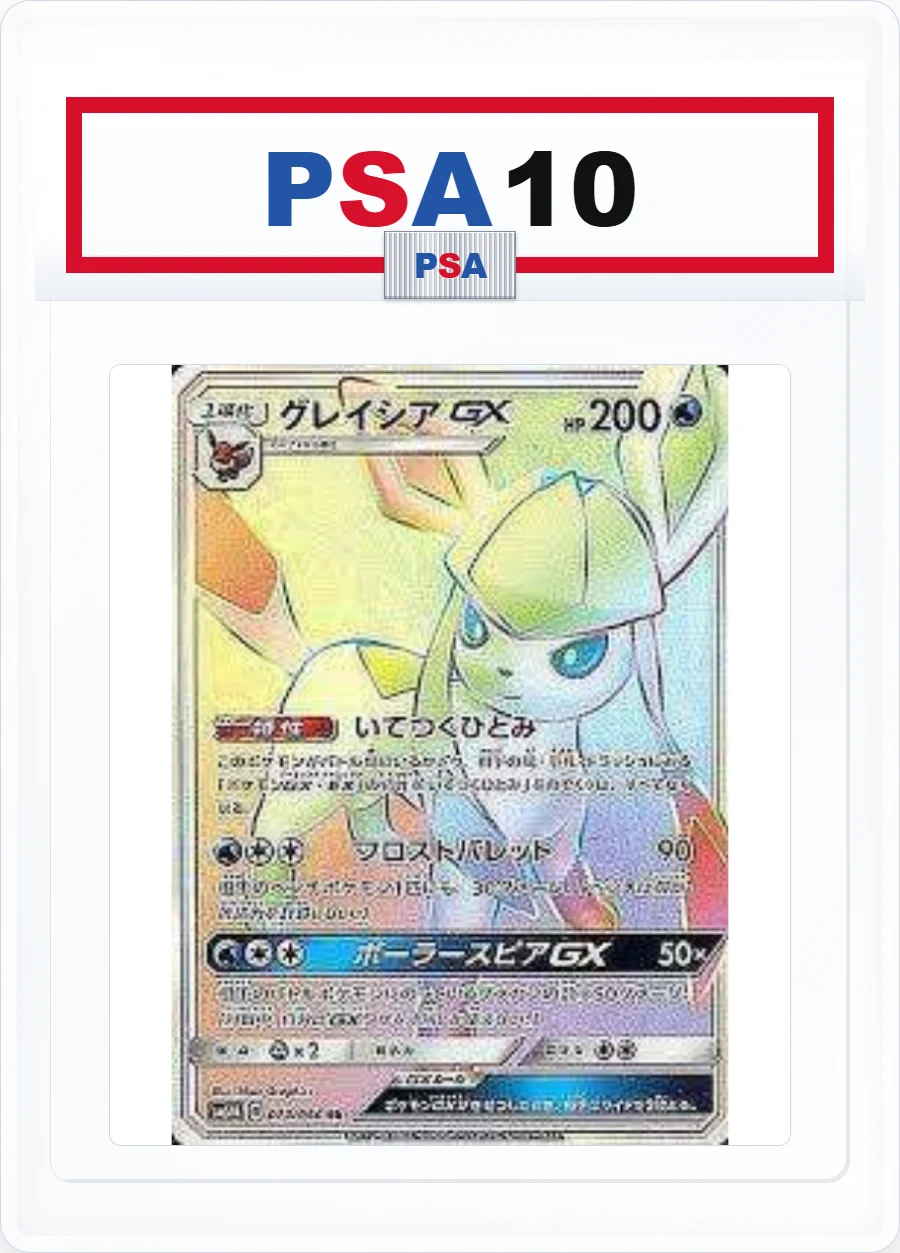

Guía de compra de cartas japonesas PSA 10 de Mew y Mewtwo

PSA 10 Mew And Mewtwo Japanese Cards Buying Guide

Last updated: June 4, 2026. Market data, canonical CTA links, and gallery product links were refreshed before upload packaging.

This guide focuses on the buying workflow for PSA 10 Japanese Pokemon cards, including how to browse current SST inventory and when to use the wholesale inquiry path for larger orders.

Key Takeaway: PSA 10 Mew and Mewtwo buying should be treated as a buying workflow, not a simple card list. The strongest SST angle is direct access to Japanese PSA 10 inventory, wholesale inquiry paths, and product pages that help nostalgia collectors and graded Pokemon buyers move from research to action.

Mew and Mewtwo PSA 10 cards sit between nostalgia, promo demand, modern art cards, and long-term character collecting.

The buying decision is different from a sealed-box set guide. A PSA 10 buyer is not only asking "which card is best?" They are asking whether the seller can confirm current graded inventory, whether the order can scale, how to compare product pages quickly, and which link to click when they are ready to request pricing or buy.

Quick Answer

For PSA 10 Mew and Mewtwo buying, start with the PSA 10 collection, then use the wholesale page if the order is multi-card, recurring, or B2B. Individual product pages are the place to confirm exact card identity, PSA 10 wording, and current availability before ordering.

Buyer question Short answer SST action
I want to browse available graded cards. Start with the PSA 10 collection. Open SST PSA 10 graded cards and compare current listings.
I need quantity or a price list. Use the wholesale inquiry path. Start from SST wholesale and request a current PSA 10 list or quote.
I need to verify current SST inventory. Open the linked PSA 10 product pages and exact card identities. Compare card name, card number, PSA 10 wording, product title, and current availability before ordering.
I need current prices. Use live product pages or a current quote. Treat any old screenshot or saved price list as expired until SST confirms availability.

Where To Browse Or Request PSA 10 Inventory

Buyer need SST path How to use it
Browse current PSA 10 inventory Shop PSA 10 graded cards Use this for a broad stock check before narrowing by character, price point, or card number.
Ask for quantity or recurring supply Wholesale inquiry page Use this when the order needs a current list, quote date, shipping discussion, or B2B handling.
Open a product page PSA10 Mewtwo & Mew GX 052/173 RR Use the product page or quote to confirm the exact card, PSA 10 wording, and live availability.
Open a product page PSA10 Mewtwo EX 022/025 PROMO Use the product page or quote to confirm the exact card, PSA 10 wording, and live availability.
Open a product page PSA10 Mewtwo VSTAR 084/071 HR Use the product page or quote to confirm the exact card, PSA 10 wording, and live availability.
Open a product page PSA10 Mewtwo VSTAR 091/071 UR Use the product page or quote to confirm the exact card, PSA 10 wording, and live availability.

Use the broad collection when you are still comparing options. Use individual product pages when the exact card matters. Use the wholesale path when you need current quantity, pricing, or recurring supply.
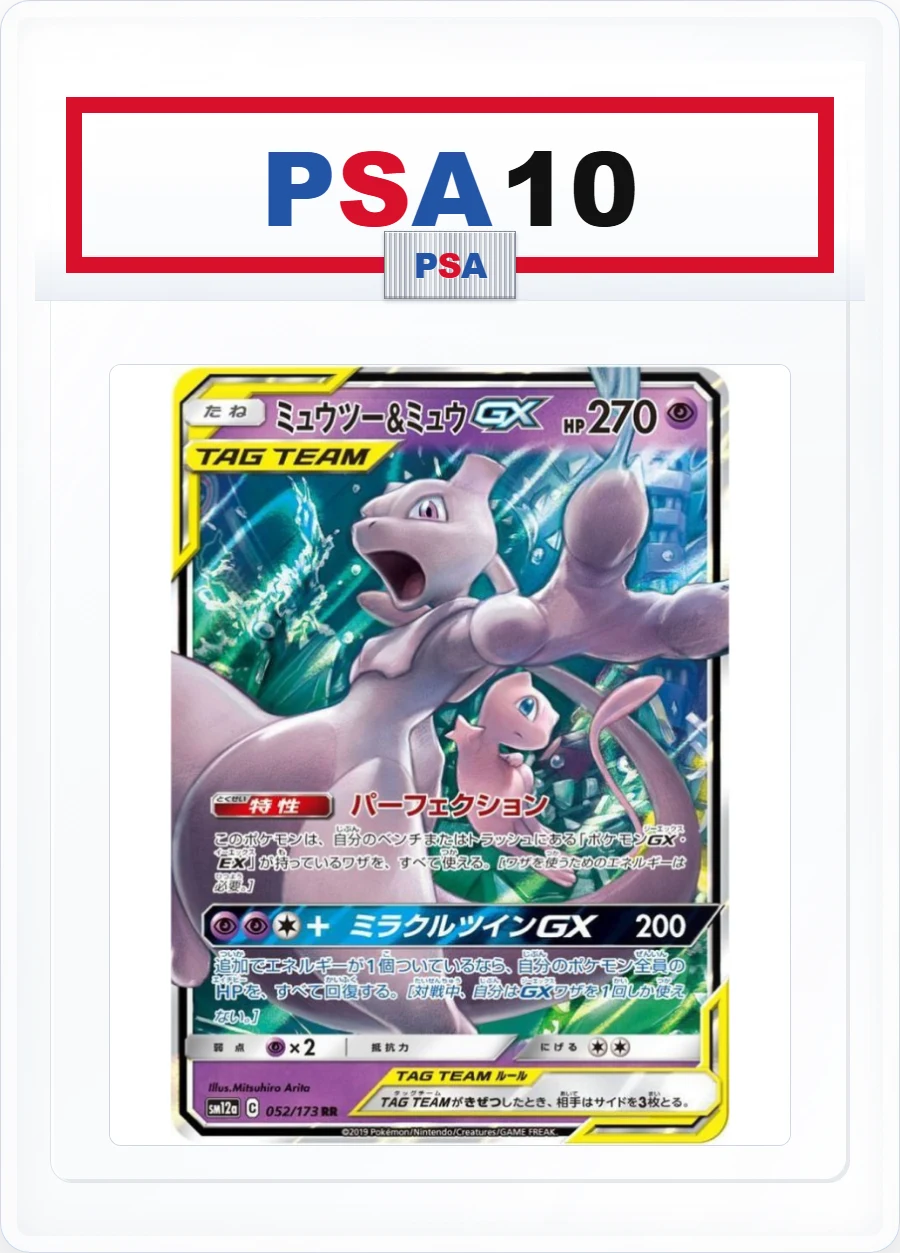
Why Japanese PSA 10 Cards Work For Overseas Buyers

Japanese Pokemon cards have several advantages for graded-card buyers: Japanese print quality is often strong, Japanese-only promos create collector stories, and overseas buyers frequently want inventory that is difficult to source locally. A PSA 10 slab also removes a large part of the condition-risk conversation because the buyer can compare grade wording, product title, card identity, and price before ordering.

That does not make every PSA 10 card a good buy. The practical question is what changes buyer action. A reseller cares about liquidity and margin. A collector cares about exact artwork and long-term desire. A store cares about showcase appeal, category breadth, and how quickly each slab can be explained to a customer. A breaker or content seller may care about recognizable names that perform well on camera.

For this topic, the practical hook is character-pair demand, promo vs set cards, and liquidity checks. Start with the buying workflow, then check risk controls and order planning before committing budget.

Market Signal: PSA Demand Is Still Elevated In 2026

The useful recent data is not "every PSA 10 card is automatically going up." The stronger claim is narrower and more actionable: PSA grading volume is still running at very high levels in 2026, PSA 10 cards carry a large premium over raw cards in broad Pokemon price data, and individual slab prices need a dated comp check before a buyer commits budget.

As of GemRate’s June 3, 2026 dashboard, PSA recorded 482,480 grades over the trailing seven days, up 10% from the prior seven days, and 2,125,904 grades over the trailing 30 days, up 4% from the prior 30 days. GemRate also reported that April 2026 was a record month for card grading, with 3.10 million total cards graded and PSA at 2.21 million cards, up 42% year over year. May cooled from April, but still reached 2.95 million total cards and PSA graded 2.07 million cards, up 25% year over year.

Dated source What changed Buyer implication
GemRate dashboard, updated June 3, 2026 PSA trailing seven-day grades: 482,480, up 10% vs the prior seven days; trailing 30-day grades: 2,125,904, up 4%. PSA supply and demand signals are active now, so stale price lists should not drive a bulk order.
GemRate April 2026 recap, published May 2, 2026 Overall grading hit a record 3.10 million cards; PSA graded 2.21 million cards, up 42% year over year. The market is not quiet. Buyers should compare current inventory and quote dates, not last season’s assumptions.
GemRate May 2026 recap, published June 2, 2026 Overall grading was 2.95 million cards, still up 20% year over year; PSA graded 2.07 million cards, up 25% year over year. Even after the April record, graded-card activity remained elevated.
Pulled Pokemon Market Report, published May 20, 2026 Across tracked Pokemon cards, raw averaged $42.25 while PSA 10 averaged $273.45, a 547.3% premium. PSA 10 certainty can be worth a real premium, but the premium must be checked card by card.

The chart below is the practical reading for a bulk buyer. It separates demand direction from pricing discipline, which matters because a high PSA 10 premium can create margin but can also hide an overpay if the wrong card, wrong version, or old comp is used.

Market signal What it supports What it does not prove
PSA grading volume remains elevated The graded-card market is active enough to justify a dedicated PSA 10 buying page and current inventory CTA. It does not prove every individual PSA 10 card is rising.
PSA 10 average premium is much higher than raw in broad Pokemon data Buyers often pay for certainty, grade, and resale-ready presentation. It does not replace checking the exact card, language, set, and recent sold comps.
Icon cards show wide raw-to-PSA10 spreads Charizard, Eevee, Pikachu, Mew, Mewtwo, Trainers, and promos can be useful anchors for a slab order. It does not mean a random assortment of slabs is good wholesale inventory.
SST has linked product pages The article can move readers from research to actual browse/request actions. Availability and exact order details still need the product page or current quote.

A few live card examples show why this matters for buying workflow. On June 4, 2026, PriceCharting’s Japanese Star Birth index listed Charizard V #103 at $150.81 ungraded and $418.96 in PSA 10. PriceCharting listed Japanese Charizard VMAX #002 at $32.61 ungraded and $127.40 in PSA 10, with PSA 10 volume shown as one sale per day. For a lower-ticket example, Japanese VMAX Climax Eevee #210 was listed at $12.74 ungraded and $69.00 in PSA 10, also with PSA 10 volume shown as one sale per day.

Those examples are useful because they show the difference between buying raw upside and buying graded certainty. They are not promises about SST inventory, future appreciation, or guaranteed resale margin. A reseller should still check the latest sold listings, the exact Japanese card number, whether the listing is PSA 10 rather than another grader, and whether shipping costs erase the expected spread. A collector should use the same data differently: the PSA 10 premium may be rational when the buyer wants a clean display copy and does not want to gamble on condition.

Before a larger order, the comp check should run in a fixed order. First, confirm the exact SST product or collection page so the buyer is looking at real available inventory. Second, compare the same Japanese card number in PSA 10, not only the English version or a raw copy. Third, check whether the most recent sales are clustered around one level or scattered across outlier prices. Fourth, convert the result into an order role: anchor card, mid-tier display card, value-depth card, or "skip for now." This keeps the article useful for buyers who want action, not just market commentary.

That workflow also improves the wholesale inquiry. Instead of asking only for "cheap PSA 10 cards," a stronger buyer request says which theme, price band, character group, and resale use case the order needs. SST can then respond with a current list that matches the buyer’s actual plan, while the buyer avoids treating a public article as a permanent price sheet.

For SST buyers, the decision rule is simple: use the PSA 10 collection and product pages to confirm actual available slabs, then ask for a current wholesale quote if the order is larger than a one-card purchase. If the market is moving, the safest article CTA is not a fixed public price list; it is a current inventory check with a dated quote.

PSA10 Mewtwo VSTAR 084/071 HR
Use exact card identity and current comps before treating a PSA 10 spread as margin.

What To Check Before Buying Multiple PSA 10 Cards

Check Why it matters Buyer action
Exact card identity Similar names, promos, and reprints can have very different demand. Match card name, number, rarity, language, and artwork before comparing price.
PSA grade wording The article is about PSA 10, so grade wording must be clear in the product title or quote. Confirm PSA 10 in the product title, product page, or current wholesale list before ordering.
Grade/title consistency Buyers want the product title, card number, and PSA 10 wording to line up. Confirm grade wording and card identity through the product page or current quote.
Liquidity Some slabs are beautiful but slow to resell. Separate collector gems from fast-moving inventory.
Quantity fit Bulk buying fails when the assortment is wrong. Ask whether the order needs many recognizable names or a narrower premium theme.
Price date PSA 10 markets move. Add the access date for live SST price, sold comps, or quote table.
Shipping/import Slabs need protected packing and clear international expectations. Link wholesale/import guidance near the CTA.

Inventory Themes To Build Around

The linked product pages in this article represent the type of PSA 10 Japanese Pokemon inventory buyers often compare before a larger order. Card examples include: PSA10 Mewtwo & Mew GX 052/173 RR, PSA10 Mewtwo EX 022/025 PROMO, PSA10 Mewtwo VSTAR 084/071 HR, PSA10 Mewtwo VSTAR 091/071 UR, PSA10 Team Rocket’s Mewtwo ex P 043/M-P, PSA10 Mewtwo GX 082/072, PSA10 Mew 002/028, PSA10 Mew 017/036. Availability can change quickly, so use the current SST product pages or a wholesale inquiry for the live list.

A larger PSA 10 order is easier to compare when the inventory is grouped into buyer-readable themes:

  • Icon Pokemon: Pikachu, Charizard, Mew, Mewtwo, Eeveelutions, starter Pokemon, and legendary Pokemon.
  • Character Trainers: cards where the Trainer name, artwork, and Japanese demand drive collector interest.
  • Promos: cards where the distribution story matters as much as the card number.
  • Modern SAR/AR cards: visually strong cards that can work in stores and online listings.
  • Vintage or nostalgia routes: slower but deeper collector appeal when the card has history.

PSA10 Mewtwo & Mew GX 052/173 RR
Theme-led PSA 10 orders work best when every slab has a clear role in the buyer plan.

Which PSA 10 Buyer Are You?

A PSA 10 buying plan works better when it does not treat every reader as the same buyer. The same slab can be a personal grail for one customer, a store showcase card for another, and a slow-moving capital trap for a third. The tradeoff changes with the buyer segment.

Buyer segment What they care about What to verify Best SST path
Overseas collector Authenticity, artwork, exact card identity, safe shipping. Product title, card number, PSA 10 wording, and shipping route. Product page or PSA 10 collection.
Reseller Turnover, margin, recognizable names, listing speed. Whether the card can be listed quickly and explained simply. Wholesale inquiry.
Local card shop Showcase appeal, category breadth, repeat supply. Whether the order builds a balanced display case, not just one expensive card. Wholesale inquiry.
High-end buyer Premium scarcity, display value, confidence. Exact version, grade wording, card number, and documentation. Specific product pages.
New graded-card buyer Avoiding mistakes, understanding grade premium. Whether PSA 10 certainty is worth the premium over raw cards. Collection first, then FAQ.

Choose the path that matches the order. A reseller should focus on margin and assortment. A collector should focus on card identity and authenticity. A store should focus on category breadth and reorder potential.

Assortment Strategy For A PSA 10 Order

The biggest mistake in graded-card buying is assuming that a high grade alone creates demand. PSA 10 is the entry filter, not the full reason to buy. A stronger order usually mixes a few high-recognition anchors with mid-tier cards that fit the same story.

Assortment type Example use Strength Risk
Icon-led order Pikachu, Charizard, Mew, Mewtwo, Eeveelutions. Easy to explain and merchandise. Competitive pricing and higher capital requirement.
Trainer-led order Acerola, Lillie, Iono, Erika, Cynthia-style demand. Strong collector identity and display appeal. Character demand can be volatile by market.
Promo-led order Japanese promos, campaign cards, limited distribution. Story-driven, good for content and premium listings. Requires accurate release context.
Value-depth order Multiple lower-price PSA 10 slabs. Good for stores that need breadth. Slower cards can accumulate if selection is weak.
Theme order Rocket, Eeveelutions, starters, legends, anniversary cards. Easy to build a landing page or showcase around. Theme must match actual stock.

A grouped order is easier to review than a random list of slabs. Decide the role each card plays in the order, then use the PSA collection or wholesale route to confirm current availability.

Risk Controls Before Payment

A serious PSA buying guide should reduce buyer anxiety without pretending that every risk disappears. Even with PSA 10 slabs, buyers should confirm exact identity, availability, price date, and shipping expectations before payment.

Risk Why it happens What the buyer should do
Wrong version Similar artwork, Japanese/English variants, promos, and reprints can blur together. Match the exact product title, card number, rarity, and linked product page before comparing price.
Stale availability PSA inventory can move faster than evergreen blog pages. Open the current product or collection page before assuming stock is available.
Old price reference Graded markets change and quote lists expire. Ask for the quote date and avoid relying on old screenshots or stale price lists.
Product-page mismatch Article examples, old carts, and saved links can drift from current stock. Confirm the exact card, PSA 10 wording, live availability, and any extra confirmation needs through the product page or wholesale quote.
Overstated PSA relationship Sellers can describe PSA-graded cards but should not imply endorsement. Treat PSA as the grading company, not a seller endorsement.
Shipping expectations Slabs need protection and international buyers need clarity. Confirm packing, shipping method, destination limits, and timing before a large order.

If any of these checks are unclear, use the wholesale inquiry path before relying on a saved price list or an old product screenshot.

PSA 10 vs Raw Cards

Raw Japanese cards can be cheaper and may have grading upside, but that upside is not free. The buyer absorbs condition risk, grading cost, grading time, and the chance of receiving a 9 instead of a 10. PSA 10 slabs move that risk into the purchase price. That can be rational for overseas buyers who need certainty, faster listing, or a clean showcase product.

Ruta Ideal para Main risk Article CTA
PSA 10 slab Buyers who need certainty and resale-ready inventory. Paying too much for the wrong card. PSA 10 collection and product links.
Raw card Buyers with grading skill or local grading access. Estado and grade uncertainty. Mention only when SST has raw/single links.
Mixed order Stores that need both premium slabs and accessible singles. Assortment complexity. Wholesale inquiry page.

How A Wholesale Buyer Should Use This Page

A strong B2B reader path should look like this:

  1. Understand the PSA 10 buying angle in plain language.
  2. See live SST collection and product links.
  3. Use the article tables to narrow the desired theme or quantity.
  4. Open the wholesale page when the order needs pricing support, recurring supply, or a custom list.
  5. Confirm the final quote, availability, shipping route, and payment terms before relying on any price in the article.

A wholesale article should not promise a fixed discount or guaranteed price list unless SST confirms it for that order. Safer buyer language is "request current pricing" or "ask for an available PSA 10 list."

Ready To Browse Or Request A PSA 10 List?

Use the route that matches your order size. If you want to browse immediately, start with the PSA 10 collection. If you are buying multiple slabs, sourcing for a store, or need a recurring supply path, use the wholesale inquiry route and ask for current availability.

Buyer intent Best route Link
Browse current graded cards or inspect one-card examples PSA 10 collection Browse current PSA 10 graded cards
Request quantity, B2B pricing, or recurring supply Wholesale inquiry Request current PSA 10 wholesale availability

For larger orders, include the card theme, target quantity, budget range, destination country, and whether substitutions are acceptable. That gives SST enough context to answer with a useful list instead of a generic reply.

How To Keep Availability And Pricing Accurate

PSA 10 inventory and graded-card prices move quickly, so the safest buying process is to treat the article as a decision framework and verify live availability at the point of order:

  • Open the current PSA 10 collection before assuming a card is available.
  • Match the exact card name, card number, rarity, language, and PSA grade before comparing prices.
  • For a large order, ask for a current list instead of relying on an old screenshot or saved cart.
  • Use product pages as the browsing starting point, then verify the grade wording, card number, and availability through the product page or quote.
  • Treat marketplace chatter and social posts as research signals, not as final authority for SST availability.
  • Date any external price comparison you use internally, because graded-card comps can change fast.

The rule is simple: if a claim can change, verify it at the point of order. That keeps the buying decision grounded without pretending that a static blog page can freeze the PSA market.

Final Pre-Order Checklist

Before placing a larger PSA 10 order, confirm the following points with the product page or wholesale contact:

  • The slab is PSA 10 and the card identity matches the intended version.
  • The product or quoted list is currently available.
  • The quote date, currency, quantity, and substitutions are clear.
  • Shipping method, packing expectations, and destination country are confirmed.
  • Any external price comparison is recent enough to matter.
  • The order mix fits your goal: collector purchase, resale inventory, shop showcase, or recurring B2B supply.

FAQ

Is buying PSA 10 Pokemon cards in bulk from Japan only for stores?

No. Stores and resellers are the clearest B2B audience, but serious collectors may also buy multiple slabs when they are building a theme such as Pikachu promos, Charizard cards, Trainers, or Eeveelutions. The key is whether the buyer needs a repeatable sourcing path rather than a single retail checkout.

Should I buy PSA 10 slabs or raw Japanese cards?

Buy PSA 10 slabs when certainty, speed, and resale-ready presentation matter. Buy raw cards when you have grading skill, accept condition risk, and want upside. For overseas buyers, slabs can reduce friction because the grade is already settled.

Can I treat every PSA 10 card as equally liquid?

No. Liquidity depends on Pokemon or Trainer popularity, artwork, release type, card number, rarity, price point, and current market attention. Separate fast-moving names from niche collector cards before buying quantity.

What should I ask before placing a wholesale PSA order?

Ask for current availability, price date, quantity, card list, extra confirmation needs, shipping method, packing expectations, and whether substitutions are allowed. Never build a public price claim from an old quote.

Does using PSA in the article imply PSA official partnership?

No. Use PSA only to describe graded products. Do not use PSA official logos or imply SST is endorsed by PSA unless that relationship is formally confirmed.

Bottom Line

PSA 10 Mew And Mewtwo Japanese Cards Buying Guide is a buying-workflow guide first and a PSA education page second. The practical route is clear: decide the order theme, verify exact slab identity, check live SST inventory, and use the wholesale CTA when the order needs quantity, current pricing, or recurring supply.
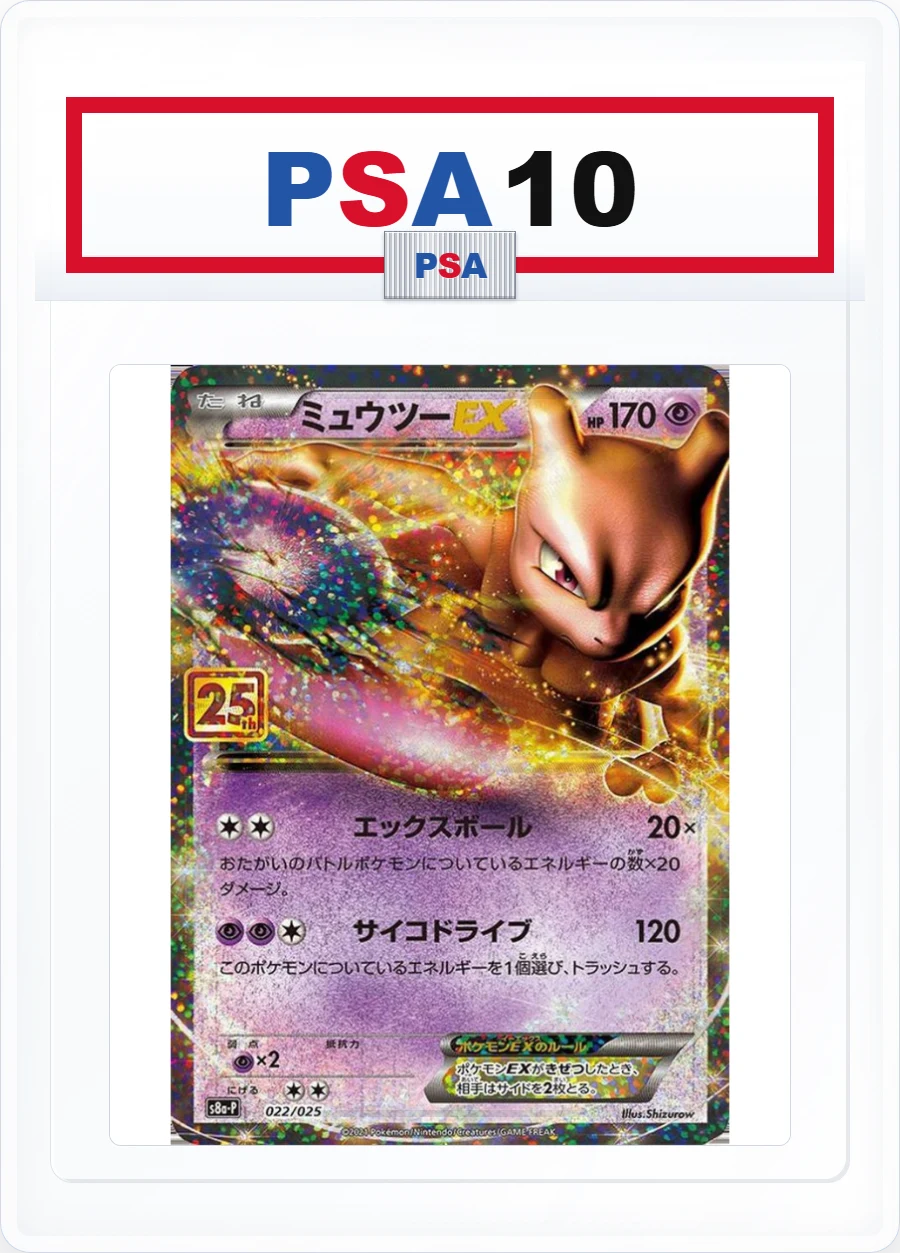

Guía de cartas promocionales Pokémon japonesas PSA 10: cómo comparar las ediciones limitadas

PSA 10 Japanese Pokemon Promo Cards Guide: How To Compare Limited Releases

Last updated: June 4, 2026. Market data, canonical CTA links, and gallery product links were refreshed before upload packaging.

This guide focuses on the buying workflow for PSA 10 Japanese Pokemon cards, including how to browse current SST inventory and when to use the wholesale inquiry path for larger orders.

Key Takeaway: PSA 10 Japanese promo comparison should be treated as a buying workflow, not a simple card list. The strongest SST angle is direct access to Japanese PSA 10 inventory, wholesale inquiry paths, and product pages that help promo collectors and buyers building a premium slab case move from research to action.

Japanese Pokemon promos can be powerful PSA 10 buys because the story behind the release often matters as much as the card number.

The buying decision is different from a sealed-box set guide. A PSA 10 buyer is not only asking "which card is best?" They are asking whether the seller can confirm current graded inventory, whether the order can scale, how to compare product pages quickly, and which link to click when they are ready to request pricing or buy.

Quick Answer

For PSA 10 Japanese promo comparison, start with the PSA 10 collection, then use the wholesale page if the order is multi-card, recurring, or B2B. Individual product pages are the place to confirm exact card identity, PSA 10 wording, and current availability before ordering.

Buyer question Short answer SST action
I want to browse available graded cards. Start with the PSA 10 collection. Open SST PSA 10 graded cards and compare current listings.
I need quantity or a price list. Use the wholesale inquiry path. Start from SST wholesale and request a current PSA 10 list or quote.
I need to verify current SST inventory. Open the linked PSA 10 product pages and exact card identities. Compare card name, card number, PSA 10 wording, product title, and current availability before ordering.
I need current prices. Use live product pages or a current quote. Treat any old screenshot or saved price list as expired until SST confirms availability.

Where To Browse Or Request PSA 10 Inventory

Buyer need SST path How to use it
Browse current PSA 10 inventory Shop PSA 10 graded cards Use this for a broad stock check before narrowing by character, price point, or card number.
Ask for quantity or recurring supply Wholesale inquiry page Use this when the order needs a current list, quote date, shipping discussion, or B2B handling.
Open a product page PSA10 Kanazawa Pikachu No Mark 147/S-P PROMO Use the product page or quote to confirm the exact card, PSA 10 wording, and live availability.
Open a product page PSA10 Kanazawa Pikachu With Mark 144/S-P PROMO Use the product page or quote to confirm the exact card, PSA 10 wording, and live availability.
Open a product page PSA10 Pikachu 001/SV-P PROMO Use the product page or quote to confirm the exact card, PSA 10 wording, and live availability.
Open a product page PSA10 Pikachu Seven-Eleven 001/S-P PROMO Use the product page or quote to confirm the exact card, PSA 10 wording, and live availability.

Use the broad collection when you are still comparing options. Use individual product pages when the exact card matters. Use the wholesale path when you need current quantity, pricing, or recurring supply.
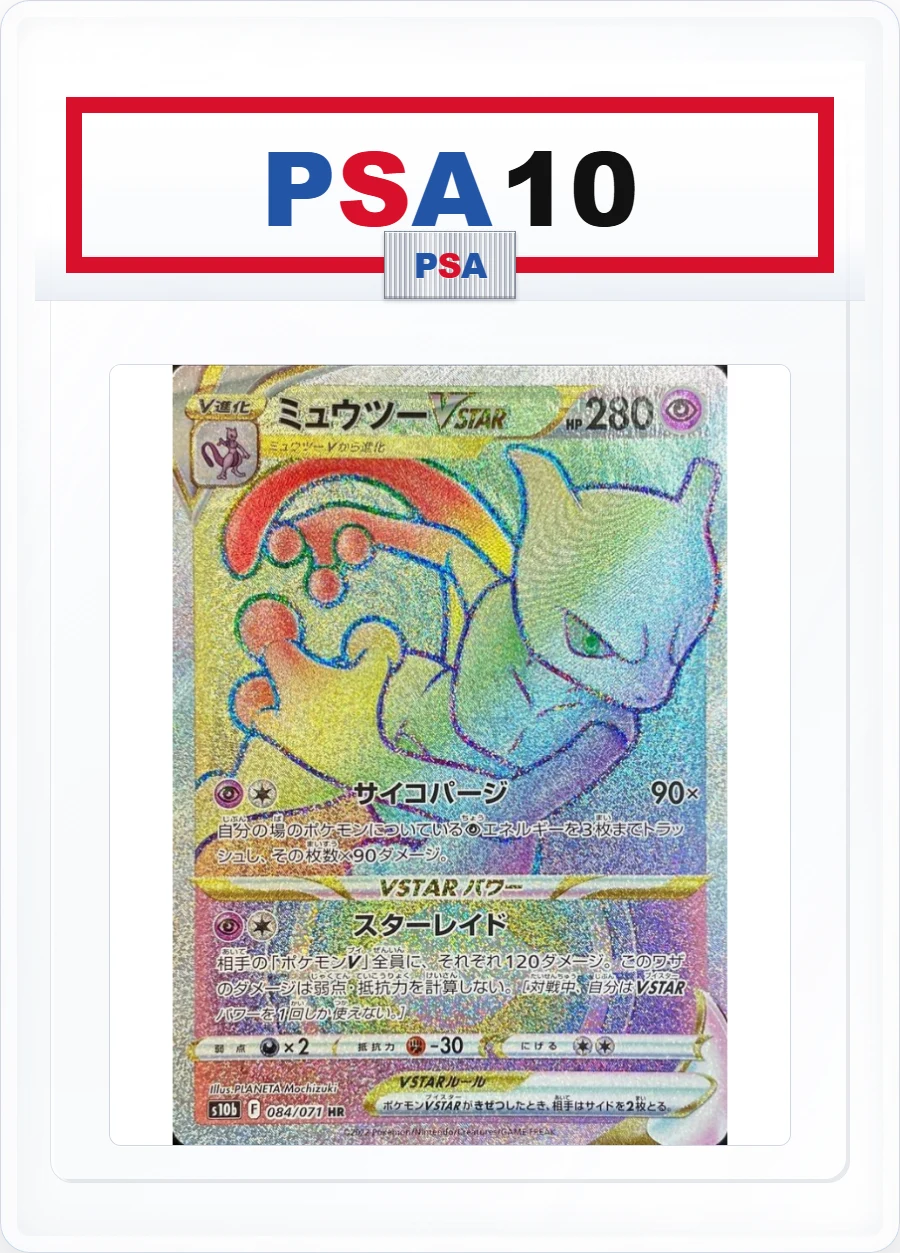
Why Japanese PSA 10 Cards Work For Overseas Buyers

Japanese Pokemon cards have several advantages for graded-card buyers: Japanese print quality is often strong, Japanese-only promos create collector stories, and overseas buyers frequently want inventory that is difficult to source locally. A PSA 10 slab also removes a large part of the condition-risk conversation because the buyer can compare grade wording, product title, card identity, and price before ordering.

That does not make every PSA 10 card a good buy. The practical question is what changes buyer action. A reseller cares about liquidity and margin. A collector cares about exact artwork and long-term desire. A store cares about showcase appeal, category breadth, and how quickly each slab can be explained to a customer. A breaker or content seller may care about recognizable names that perform well on camera.

For this topic, the practical hook is release-channel context, limited distribution, and card-story fit. Start with the buying workflow, then check risk controls and order planning before committing budget.

Market Signal: PSA Demand Is Still Elevated In 2026

The useful recent data is not "every PSA 10 card is automatically going up." The stronger claim is narrower and more actionable: PSA grading volume is still running at very high levels in 2026, PSA 10 cards carry a large premium over raw cards in broad Pokemon price data, and individual slab prices need a dated comp check before a buyer commits budget.

As of GemRate’s June 3, 2026 dashboard, PSA recorded 482,480 grades over the trailing seven days, up 10% from the prior seven days, and 2,125,904 grades over the trailing 30 days, up 4% from the prior 30 days. GemRate also reported that April 2026 was a record month for card grading, with 3.10 million total cards graded and PSA at 2.21 million cards, up 42% year over year. May cooled from April, but still reached 2.95 million total cards and PSA graded 2.07 million cards, up 25% year over year.

Dated source What changed Buyer implication
GemRate dashboard, updated June 3, 2026 PSA trailing seven-day grades: 482,480, up 10% vs the prior seven days; trailing 30-day grades: 2,125,904, up 4%. PSA supply and demand signals are active now, so stale price lists should not drive a bulk order.
GemRate April 2026 recap, published May 2, 2026 Overall grading hit a record 3.10 million cards; PSA graded 2.21 million cards, up 42% year over year. The market is not quiet. Buyers should compare current inventory and quote dates, not last season’s assumptions.
GemRate May 2026 recap, published June 2, 2026 Overall grading was 2.95 million cards, still up 20% year over year; PSA graded 2.07 million cards, up 25% year over year. Even after the April record, graded-card activity remained elevated.
Pulled Pokemon Market Report, published May 20, 2026 Across tracked Pokemon cards, raw averaged $42.25 while PSA 10 averaged $273.45, a 547.3% premium. PSA 10 certainty can be worth a real premium, but the premium must be checked card by card.

The chart below is the practical reading for a bulk buyer. It separates demand direction from pricing discipline, which matters because a high PSA 10 premium can create margin but can also hide an overpay if the wrong card, wrong version, or old comp is used.

Market signal What it supports What it does not prove
PSA grading volume remains elevated The graded-card market is active enough to justify a dedicated PSA 10 buying page and current inventory CTA. It does not prove every individual PSA 10 card is rising.
PSA 10 average premium is much higher than raw in broad Pokemon data Buyers often pay for certainty, grade, and resale-ready presentation. It does not replace checking the exact card, language, set, and recent sold comps.
Icon cards show wide raw-to-PSA10 spreads Charizard, Eevee, Pikachu, Mew, Mewtwo, Trainers, and promos can be useful anchors for a slab order. It does not mean a random assortment of slabs is good wholesale inventory.
SST has linked product pages The article can move readers from research to actual browse/request actions. Availability and exact order details still need the product page or current quote.

A few live card examples show why this matters for buying workflow. On June 4, 2026, PriceCharting’s Japanese Star Birth index listed Charizard V #103 at $150.81 ungraded and $418.96 in PSA 10. PriceCharting listed Japanese Charizard VMAX #002 at $32.61 ungraded and $127.40 in PSA 10, with PSA 10 volume shown as one sale per day. For a lower-ticket example, Japanese VMAX Climax Eevee #210 was listed at $12.74 ungraded and $69.00 in PSA 10, also with PSA 10 volume shown as one sale per day.

Those examples are useful because they show the difference between buying raw upside and buying graded certainty. They are not promises about SST inventory, future appreciation, or guaranteed resale margin. A reseller should still check the latest sold listings, the exact Japanese card number, whether the listing is PSA 10 rather than another grader, and whether shipping costs erase the expected spread. A collector should use the same data differently: the PSA 10 premium may be rational when the buyer wants a clean display copy and does not want to gamble on condition.

Before a larger order, the comp check should run in a fixed order. First, confirm the exact SST product or collection page so the buyer is looking at real available inventory. Second, compare the same Japanese card number in PSA 10, not only the English version or a raw copy. Third, check whether the most recent sales are clustered around one level or scattered across outlier prices. Fourth, convert the result into an order role: anchor card, mid-tier display card, value-depth card, or "skip for now." This keeps the article useful for buyers who want action, not just market commentary.

That workflow also improves the wholesale inquiry. Instead of asking only for "cheap PSA 10 cards," a stronger buyer request says which theme, price band, character group, and resale use case the order needs. SST can then respond with a current list that matches the buyer’s actual plan, while the buyer avoids treating a public article as a permanent price sheet.

For SST buyers, the decision rule is simple: use the PSA 10 collection and product pages to confirm actual available slabs, then ask for a current wholesale quote if the order is larger than a one-card purchase. If the market is moving, the safest article CTA is not a fixed public price list; it is a current inventory check with a dated quote.

PSA10 Pikachu 001/SV-P PROMO
Use exact card identity and current comps before treating a PSA 10 spread as margin.

What To Check Before Buying Multiple PSA 10 Cards

Check Why it matters Buyer action
Exact card identity Similar names, promos, and reprints can have very different demand. Match card name, number, rarity, language, and artwork before comparing price.
PSA grade wording The article is about PSA 10, so grade wording must be clear in the product title or quote. Confirm PSA 10 in the product title, product page, or current wholesale list before ordering.
Grade/title consistency Buyers want the product title, card number, and PSA 10 wording to line up. Confirm grade wording and card identity through the product page or current quote.
Liquidity Some slabs are beautiful but slow to resell. Separate collector gems from fast-moving inventory.
Quantity fit Bulk buying fails when the assortment is wrong. Ask whether the order needs many recognizable names or a narrower premium theme.
Price date PSA 10 markets move. Add the access date for live SST price, sold comps, or quote table.
Shipping/import Slabs need protected packing and clear international expectations. Link wholesale/import guidance near the CTA.

Inventory Themes To Build Around

The linked product pages in this article represent the type of PSA 10 Japanese Pokemon inventory buyers often compare before a larger order. Card examples include: PSA10 Kanazawa Pikachu No Mark 147/S-P PROMO, PSA10 Kanazawa Pikachu With Mark 144/S-P PROMO, PSA10 Pikachu 001/SV-P PROMO, PSA10 Pikachu Seven-Eleven 001/S-P PROMO, PSA10 Ash’s Pikachu GX 005/026, PSA10 Celebrate Fanfare 306/S-P, PSA10 Flareon 065/SV-P PROMO, PSA10 Gentleman Pikachu 210/SM-P PROMO. Availability can change quickly, so use the current SST product pages or a wholesale inquiry for the live list.

A larger PSA 10 order is easier to compare when the inventory is grouped into buyer-readable themes:

  • Icon Pokemon: Pikachu, Charizard, Mew, Mewtwo, Eeveelutions, starter Pokemon, and legendary Pokemon.
  • Character Trainers: cards where the Trainer name, artwork, and Japanese demand drive collector interest.
  • Promos: cards where the distribution story matters as much as the card number.
  • Modern SAR/AR cards: visually strong cards that can work in stores and online listings.
  • Vintage or nostalgia routes: slower but deeper collector appeal when the card has history.

PSA10 Kanazawa Pikachu No Mark 147/S-P PROMO
Theme-led PSA 10 orders work best when every slab has a clear role in the buyer plan.

Which PSA 10 Buyer Are You?

A PSA 10 buying plan works better when it does not treat every reader as the same buyer. The same slab can be a personal grail for one customer, a store showcase card for another, and a slow-moving capital trap for a third. The tradeoff changes with the buyer segment.

Buyer segment What they care about What to verify Best SST path
Overseas collector Authenticity, artwork, exact card identity, safe shipping. Product title, card number, PSA 10 wording, and shipping route. Product page or PSA 10 collection.
Reseller Turnover, margin, recognizable names, listing speed. Whether the card can be listed quickly and explained simply. Wholesale inquiry.
Local card shop Showcase appeal, category breadth, repeat supply. Whether the order builds a balanced display case, not just one expensive card. Wholesale inquiry.
High-end buyer Premium scarcity, display value, confidence. Exact version, grade wording, card number, and documentation. Specific product pages.
New graded-card buyer Avoiding mistakes, understanding grade premium. Whether PSA 10 certainty is worth the premium over raw cards. Collection first, then FAQ.

Choose the path that matches the order. A reseller should focus on margin and assortment. A collector should focus on card identity and authenticity. A store should focus on category breadth and reorder potential.

Assortment Strategy For A PSA 10 Order

The biggest mistake in graded-card buying is assuming that a high grade alone creates demand. PSA 10 is the entry filter, not the full reason to buy. A stronger order usually mixes a few high-recognition anchors with mid-tier cards that fit the same story.

Assortment type Example use Strength Risk
Icon-led order Pikachu, Charizard, Mew, Mewtwo, Eeveelutions. Easy to explain and merchandise. Competitive pricing and higher capital requirement.
Trainer-led order Acerola, Lillie, Iono, Erika, Cynthia-style demand. Strong collector identity and display appeal. Character demand can be volatile by market.
Promo-led order Japanese promos, campaign cards, limited distribution. Story-driven, good for content and premium listings. Requires accurate release context.
Value-depth order Multiple lower-price PSA 10 slabs. Good for stores that need breadth. Slower cards can accumulate if selection is weak.
Theme order Rocket, Eeveelutions, starters, legends, anniversary cards. Easy to build a landing page or showcase around. Theme must match actual stock.

A grouped order is easier to review than a random list of slabs. Decide the role each card plays in the order, then use the PSA collection or wholesale route to confirm current availability.

Risk Controls Before Payment

A serious PSA buying guide should reduce buyer anxiety without pretending that every risk disappears. Even with PSA 10 slabs, buyers should confirm exact identity, availability, price date, and shipping expectations before payment.

Risk Why it happens What the buyer should do
Wrong version Similar artwork, Japanese/English variants, promos, and reprints can blur together. Match the exact product title, card number, rarity, and linked product page before comparing price.
Stale availability PSA inventory can move faster than evergreen blog pages. Open the current product or collection page before assuming stock is available.
Old price reference Graded markets change and quote lists expire. Ask for the quote date and avoid relying on old screenshots or stale price lists.
Product-page mismatch Article examples, old carts, and saved links can drift from current stock. Confirm the exact card, PSA 10 wording, live availability, and any extra confirmation needs through the product page or wholesale quote.
Overstated PSA relationship Sellers can describe PSA-graded cards but should not imply endorsement. Treat PSA as the grading company, not a seller endorsement.
Shipping expectations Slabs need protection and international buyers need clarity. Confirm packing, shipping method, destination limits, and timing before a large order.

If any of these checks are unclear, use the wholesale inquiry path before relying on a saved price list or an old product screenshot.

PSA 10 vs Raw Cards

Raw Japanese cards can be cheaper and may have grading upside, but that upside is not free. The buyer absorbs condition risk, grading cost, grading time, and the chance of receiving a 9 instead of a 10. PSA 10 slabs move that risk into the purchase price. That can be rational for overseas buyers who need certainty, faster listing, or a clean showcase product.

Ruta Ideal para Main risk Article CTA
PSA 10 slab Buyers who need certainty and resale-ready inventory. Paying too much for the wrong card. PSA 10 collection and product links.
Raw card Buyers with grading skill or local grading access. Estado and grade uncertainty. Mention only when SST has raw/single links.
Mixed order Stores that need both premium slabs and accessible singles. Assortment complexity. Wholesale inquiry page.

How A Wholesale Buyer Should Use This Page

A strong B2B reader path should look like this:

  1. Understand the PSA 10 buying angle in plain language.
  2. See live SST collection and product links.
  3. Use the article tables to narrow the desired theme or quantity.
  4. Open the wholesale page when the order needs pricing support, recurring supply, or a custom list.
  5. Confirm the final quote, availability, shipping route, and payment terms before relying on any price in the article.

A wholesale article should not promise a fixed discount or guaranteed price list unless SST confirms it for that order. Safer buyer language is "request current pricing" or "ask for an available PSA 10 list."

Ready To Browse Or Request A PSA 10 List?

Use the route that matches your order size. If you want to browse immediately, start with the PSA 10 collection. If you are buying multiple slabs, sourcing for a store, or need a recurring supply path, use the wholesale inquiry route and ask for current availability.

Buyer intent Best route Link
Browse current graded cards or inspect one-card examples PSA 10 collection Browse current PSA 10 graded cards
Request quantity, B2B pricing, or recurring supply Wholesale inquiry Request current PSA 10 wholesale availability

For larger orders, include the card theme, target quantity, budget range, destination country, and whether substitutions are acceptable. That gives SST enough context to answer with a useful list instead of a generic reply.

How To Keep Availability And Pricing Accurate

PSA 10 inventory and graded-card prices move quickly, so the safest buying process is to treat the article as a decision framework and verify live availability at the point of order:

  • Open the current PSA 10 collection before assuming a card is available.
  • Match the exact card name, card number, rarity, language, and PSA grade before comparing prices.
  • For a large order, ask for a current list instead of relying on an old screenshot or saved cart.
  • Use product pages as the browsing starting point, then verify the grade wording, card number, and availability through the product page or quote.
  • Treat marketplace chatter and social posts as research signals, not as final authority for SST availability.
  • Date any external price comparison you use internally, because graded-card comps can change fast.

The rule is simple: if a claim can change, verify it at the point of order. That keeps the buying decision grounded without pretending that a static blog page can freeze the PSA market.

Final Pre-Order Checklist

Before placing a larger PSA 10 order, confirm the following points with the product page or wholesale contact:

  • The slab is PSA 10 and the card identity matches the intended version.
  • The product or quoted list is currently available.
  • The quote date, currency, quantity, and substitutions are clear.
  • Shipping method, packing expectations, and destination country are confirmed.
  • Any external price comparison is recent enough to matter.
  • The order mix fits your goal: collector purchase, resale inventory, shop showcase, or recurring B2B supply.

FAQ

Is buying PSA 10 Pokemon cards in bulk from Japan only for stores?

No. Stores and resellers are the clearest B2B audience, but serious collectors may also buy multiple slabs when they are building a theme such as Pikachu promos, Charizard cards, Trainers, or Eeveelutions. The key is whether the buyer needs a repeatable sourcing path rather than a single retail checkout.

Should I buy PSA 10 slabs or raw Japanese cards?

Buy PSA 10 slabs when certainty, speed, and resale-ready presentation matter. Buy raw cards when you have grading skill, accept condition risk, and want upside. For overseas buyers, slabs can reduce friction because the grade is already settled.

Can I treat every PSA 10 card as equally liquid?

No. Liquidity depends on Pokemon or Trainer popularity, artwork, release type, card number, rarity, price point, and current market attention. Separate fast-moving names from niche collector cards before buying quantity.

What should I ask before placing a wholesale PSA order?

Ask for current availability, price date, quantity, card list, extra confirmation needs, shipping method, packing expectations, and whether substitutions are allowed. Never build a public price claim from an old quote.

Does using PSA in the article imply PSA official partnership?

No. Use PSA only to describe graded products. Do not use PSA official logos or imply SST is endorsed by PSA unless that relationship is formally confirmed.

Bottom Line

PSA 10 Japanese Pokemon Promo Cards Guide: How To Compare Limited Releases is a buying-workflow guide first and a PSA education page second. The practical route is clear: decide the order theme, verify exact slab identity, check live SST inventory, and use the wholesale CTA when the order needs quantity, current pricing, or recurring supply.
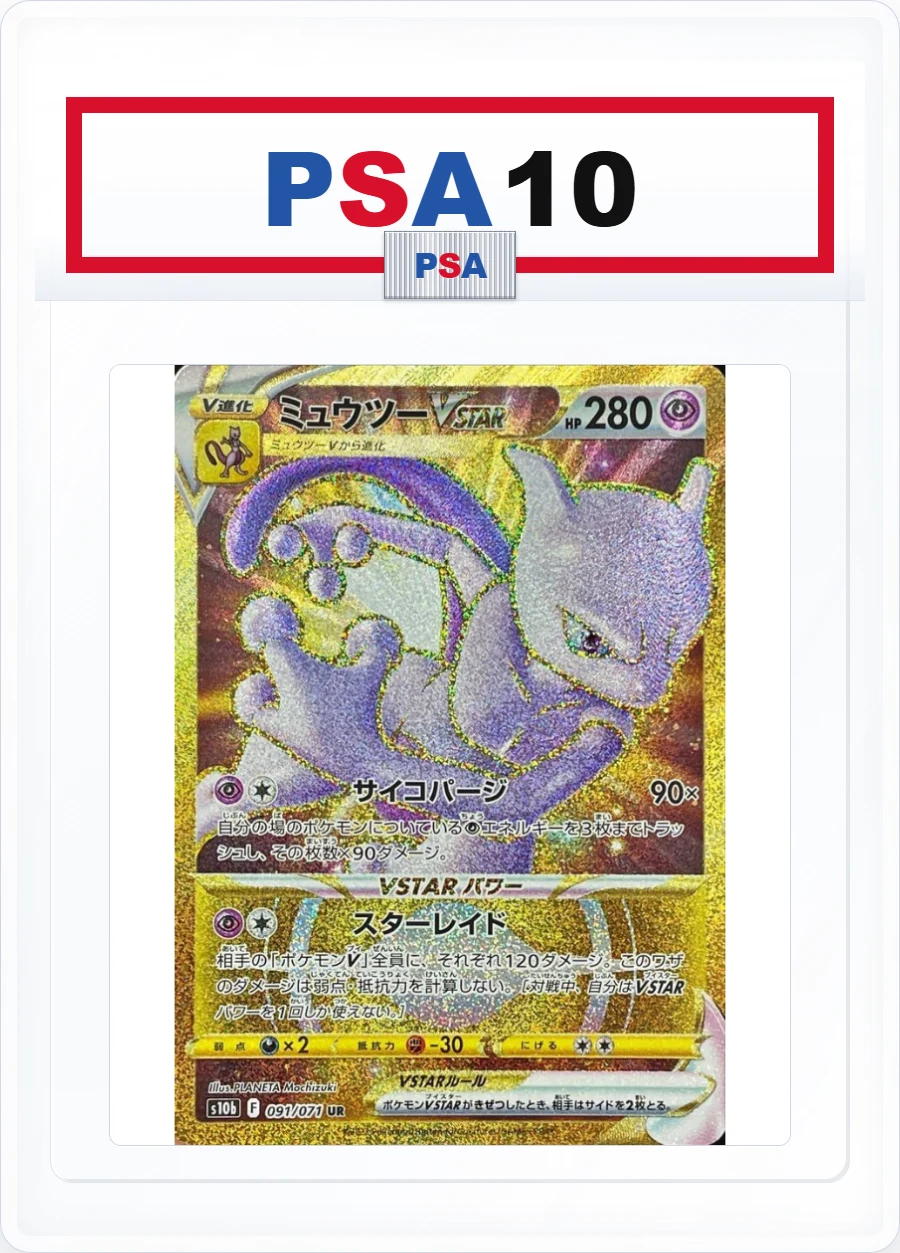

Guía de cartas japonesas PSA 10 de Team Rocket: demanda vintage y moderna

PSA 10 Team Rocket Japanese Cards Guide: Vintage And Modern Rocket Demand

Last updated: June 4, 2026. Market data, canonical CTA links, and gallery product links were refreshed before upload packaging.

This guide focuses on the buying workflow for PSA 10 Japanese Pokemon cards, including how to browse current SST inventory and when to use the wholesale inquiry path for larger orders.

Key Takeaway: PSA 10 Team Rocket buying should be treated as a buying workflow, not a simple card list. The strongest SST angle is direct access to Japanese PSA 10 inventory, wholesale inquiry paths, and product pages that help Rocket collectors and stores merchandising villain-themed slabs move from research to action.

Team Rocket PSA 10 cards combine villain nostalgia, modern Rocket releases, and character-driven Japanese demand.

The buying decision is different from a sealed-box set guide. A PSA 10 buyer is not only asking "which card is best?" They are asking whether the seller can confirm current graded inventory, whether the order can scale, how to compare product pages quickly, and which link to click when they are ready to request pricing or buy.

Quick Answer

For PSA 10 Team Rocket buying, start with the PSA 10 collection, then use the wholesale page if the order is multi-card, recurring, or B2B. Individual product pages are the place to confirm exact card identity, PSA 10 wording, and current availability before ordering.

Buyer question Short answer SST action
I want to browse available graded cards. Start with the PSA 10 collection. Open SST PSA 10 graded cards and compare current listings.
I need quantity or a price list. Use the wholesale inquiry path. Start from SST wholesale and request a current PSA 10 list or quote.
I need to verify current SST inventory. Open the linked PSA 10 product pages and exact card identities. Compare card name, card number, PSA 10 wording, product title, and current availability before ordering.
I need current prices. Use live product pages or a current quote. Treat any old screenshot or saved price list as expired until SST confirms availability.

Where To Browse Or Request PSA 10 Inventory

Buyer need SST path How to use it
Browse current PSA 10 inventory Shop PSA 10 graded cards Use this for a broad stock check before narrowing by character, price point, or card number.
Ask for quantity or recurring supply Wholesale inquiry page Use this when the order needs a current list, quote date, shipping discussion, or B2B handling.
Open a product page PSA10 Team Rocket’s Diglett 100/098 AR Use the product page or quote to confirm the exact card, PSA 10 wording, and live availability.
Open a product page PSA10 Team Rocket’s Evil Deeds 103/098 AR Use the product page or quote to confirm the exact card, PSA 10 wording, and live availability.
Open a product page PSA10 Team Rocket’s Great Ball 205/193 AR Use the product page or quote to confirm the exact card, PSA 10 wording, and live availability.
Open a product page PSA10 Team Rocket’s Mewtwo ex P 043/M-P Use the product page or quote to confirm the exact card, PSA 10 wording, and live availability.

Use the broad collection when you are still comparing options. Use individual product pages when the exact card matters. Use the wholesale path when you need current quantity, pricing, or recurring supply.
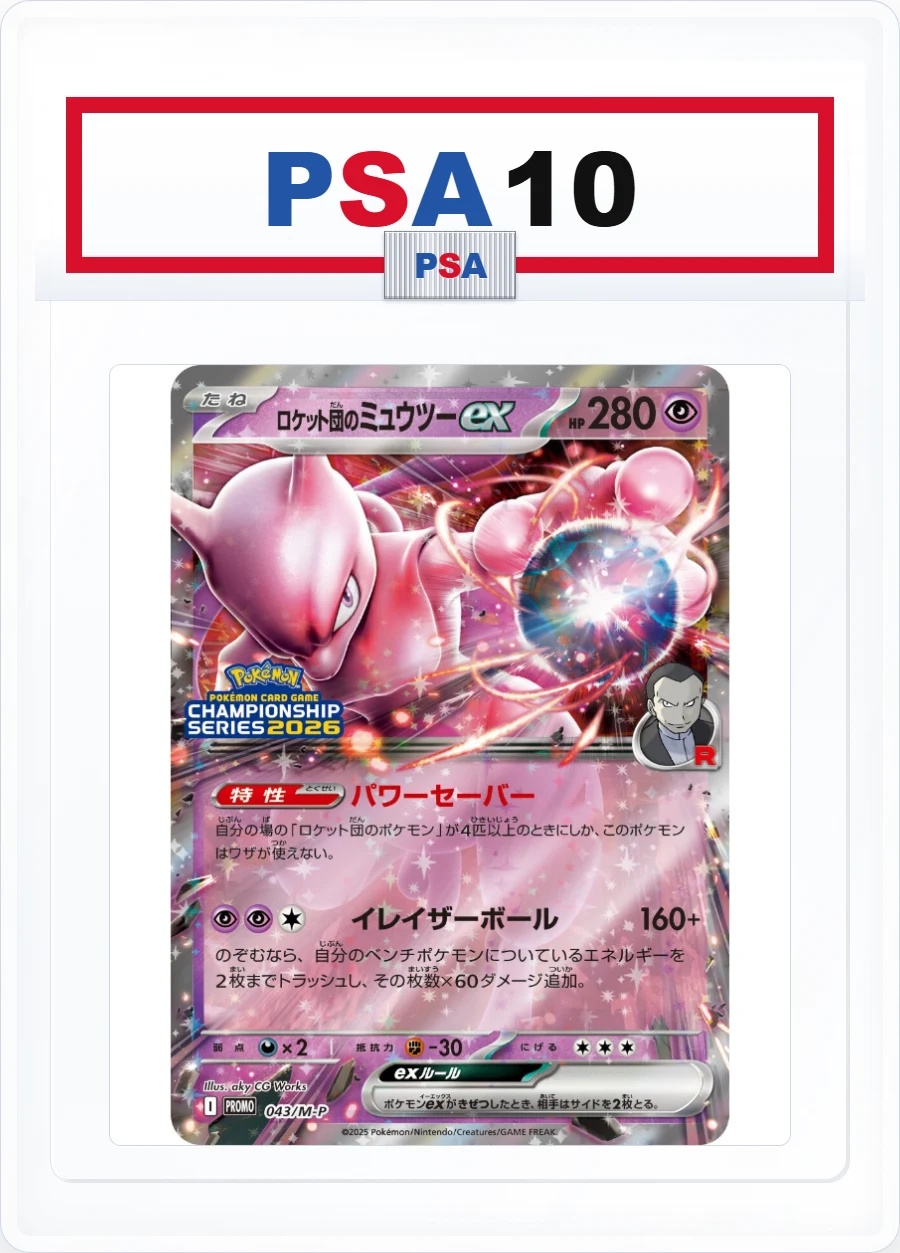
Why Japanese PSA 10 Cards Work For Overseas Buyers

Japanese Pokemon cards have several advantages for graded-card buyers: Japanese print quality is often strong, Japanese-only promos create collector stories, and overseas buyers frequently want inventory that is difficult to source locally. A PSA 10 slab also removes a large part of the condition-risk conversation because the buyer can compare grade wording, product title, card identity, and price before ordering.

That does not make every PSA 10 card a good buy. The practical question is what changes buyer action. A reseller cares about liquidity and margin. A collector cares about exact artwork and long-term desire. A store cares about showcase appeal, category breadth, and how quickly each slab can be explained to a customer. A breaker or content seller may care about recognizable names that perform well on camera.

For this topic, the practical hook is vintage-to-modern Rocket demand and theme-based inventory planning. Start with the buying workflow, then check risk controls and order planning before committing budget.

Market Signal: PSA Demand Is Still Elevated In 2026

The useful recent data is not "every PSA 10 card is automatically going up." The stronger claim is narrower and more actionable: PSA grading volume is still running at very high levels in 2026, PSA 10 cards carry a large premium over raw cards in broad Pokemon price data, and individual slab prices need a dated comp check before a buyer commits budget.

As of GemRate’s June 3, 2026 dashboard, PSA recorded 482,480 grades over the trailing seven days, up 10% from the prior seven days, and 2,125,904 grades over the trailing 30 days, up 4% from the prior 30 days. GemRate also reported that April 2026 was a record month for card grading, with 3.10 million total cards graded and PSA at 2.21 million cards, up 42% year over year. May cooled from April, but still reached 2.95 million total cards and PSA graded 2.07 million cards, up 25% year over year.

Dated source What changed Buyer implication
GemRate dashboard, updated June 3, 2026 PSA trailing seven-day grades: 482,480, up 10% vs the prior seven days; trailing 30-day grades: 2,125,904, up 4%. PSA supply and demand signals are active now, so stale price lists should not drive a bulk order.
GemRate April 2026 recap, published May 2, 2026 Overall grading hit a record 3.10 million cards; PSA graded 2.21 million cards, up 42% year over year. The market is not quiet. Buyers should compare current inventory and quote dates, not last season’s assumptions.
GemRate May 2026 recap, published June 2, 2026 Overall grading was 2.95 million cards, still up 20% year over year; PSA graded 2.07 million cards, up 25% year over year. Even after the April record, graded-card activity remained elevated.
Pulled Pokemon Market Report, published May 20, 2026 Across tracked Pokemon cards, raw averaged $42.25 while PSA 10 averaged $273.45, a 547.3% premium. PSA 10 certainty can be worth a real premium, but the premium must be checked card by card.

The chart below is the practical reading for a bulk buyer. It separates demand direction from pricing discipline, which matters because a high PSA 10 premium can create margin but can also hide an overpay if the wrong card, wrong version, or old comp is used.

Market signal What it supports What it does not prove
PSA grading volume remains elevated The graded-card market is active enough to justify a dedicated PSA 10 buying page and current inventory CTA. It does not prove every individual PSA 10 card is rising.
PSA 10 average premium is much higher than raw in broad Pokemon data Buyers often pay for certainty, grade, and resale-ready presentation. It does not replace checking the exact card, language, set, and recent sold comps.
Icon cards show wide raw-to-PSA10 spreads Charizard, Eevee, Pikachu, Mew, Mewtwo, Trainers, and promos can be useful anchors for a slab order. It does not mean a random assortment of slabs is good wholesale inventory.
SST has linked product pages The article can move readers from research to actual browse/request actions. Availability and exact order details still need the product page or current quote.

A few live card examples show why this matters for buying workflow. On June 4, 2026, PriceCharting’s Japanese Star Birth index listed Charizard V #103 at $150.81 ungraded and $418.96 in PSA 10. PriceCharting listed Japanese Charizard VMAX #002 at $32.61 ungraded and $127.40 in PSA 10, with PSA 10 volume shown as one sale per day. For a lower-ticket example, Japanese VMAX Climax Eevee #210 was listed at $12.74 ungraded and $69.00 in PSA 10, also with PSA 10 volume shown as one sale per day.

Those examples are useful because they show the difference between buying raw upside and buying graded certainty. They are not promises about SST inventory, future appreciation, or guaranteed resale margin. A reseller should still check the latest sold listings, the exact Japanese card number, whether the listing is PSA 10 rather than another grader, and whether shipping costs erase the expected spread. A collector should use the same data differently: the PSA 10 premium may be rational when the buyer wants a clean display copy and does not want to gamble on condition.

Before a larger order, the comp check should run in a fixed order. First, confirm the exact SST product or collection page so the buyer is looking at real available inventory. Second, compare the same Japanese card number in PSA 10, not only the English version or a raw copy. Third, check whether the most recent sales are clustered around one level or scattered across outlier prices. Fourth, convert the result into an order role: anchor card, mid-tier display card, value-depth card, or "skip for now." This keeps the article useful for buyers who want action, not just market commentary.

That workflow also improves the wholesale inquiry. Instead of asking only for "cheap PSA 10 cards," a stronger buyer request says which theme, price band, character group, and resale use case the order needs. SST can then respond with a current list that matches the buyer’s actual plan, while the buyer avoids treating a public article as a permanent price sheet.

For SST buyers, the decision rule is simple: use the PSA 10 collection and product pages to confirm actual available slabs, then ask for a current wholesale quote if the order is larger than a one-card purchase. If the market is moving, the safest article CTA is not a fixed public price list; it is a current inventory check with a dated quote.

PSA10 Team Rocket's Great Ball 205/193 AR
Use exact card identity and current comps before treating a PSA 10 spread as margin.

What To Check Before Buying Multiple PSA 10 Cards

Check Why it matters Buyer action
Exact card identity Similar names, promos, and reprints can have very different demand. Match card name, number, rarity, language, and artwork before comparing price.
PSA grade wording The article is about PSA 10, so grade wording must be clear in the product title or quote. Confirm PSA 10 in the product title, product page, or current wholesale list before ordering.
Grade/title consistency Buyers want the product title, card number, and PSA 10 wording to line up. Confirm grade wording and card identity through the product page or current quote.
Liquidity Some slabs are beautiful but slow to resell. Separate collector gems from fast-moving inventory.
Quantity fit Bulk buying fails when the assortment is wrong. Ask whether the order needs many recognizable names or a narrower premium theme.
Price date PSA 10 markets move. Add the access date for live SST price, sold comps, or quote table.
Shipping/import Slabs need protected packing and clear international expectations. Link wholesale/import guidance near the CTA.

Inventory Themes To Build Around

The linked product pages in this article represent the type of PSA 10 Japanese Pokemon inventory buyers often compare before a larger order. Card examples include: PSA10 Team Rocket’s Diglett 100/098 AR, PSA10 Team Rocket’s Evil Deeds 103/098 AR, PSA10 Team Rocket’s Great Ball 205/193 AR, PSA10 Team Rocket’s Mewtwo ex P 043/M-P, PSA10 Team Rocket’s Murkrow 126/098 SAR, PSA10 Team Rocket’s Meowth 109/098 AR, PSA10 Team Rocket’s Weezing 105/098 AR. Availability can change quickly, so use the current SST product pages or a wholesale inquiry for the live list.

A larger PSA 10 order is easier to compare when the inventory is grouped into buyer-readable themes:

  • Icon Pokemon: Pikachu, Charizard, Mew, Mewtwo, Eeveelutions, starter Pokemon, and legendary Pokemon.
  • Character Trainers: cards where the Trainer name, artwork, and Japanese demand drive collector interest.
  • Promos: cards where the distribution story matters as much as the card number.
  • Modern SAR/AR cards: visually strong cards that can work in stores and online listings.
  • Vintage or nostalgia routes: slower but deeper collector appeal when the card has history.

PSA10 Team Rocket's Diglett 100/098 AR
Theme-led PSA 10 orders work best when every slab has a clear role in the buyer plan.

Which PSA 10 Buyer Are You?

A PSA 10 buying plan works better when it does not treat every reader as the same buyer. The same slab can be a personal grail for one customer, a store showcase card for another, and a slow-moving capital trap for a third. The tradeoff changes with the buyer segment.

Buyer segment What they care about What to verify Best SST path
Overseas collector Authenticity, artwork, exact card identity, safe shipping. Product title, card number, PSA 10 wording, and shipping route. Product page or PSA 10 collection.
Reseller Turnover, margin, recognizable names, listing speed. Whether the card can be listed quickly and explained simply. Wholesale inquiry.
Local card shop Showcase appeal, category breadth, repeat supply. Whether the order builds a balanced display case, not just one expensive card. Wholesale inquiry.
High-end buyer Premium scarcity, display value, confidence. Exact version, grade wording, card number, and documentation. Specific product pages.
New graded-card buyer Avoiding mistakes, understanding grade premium. Whether PSA 10 certainty is worth the premium over raw cards. Collection first, then FAQ.

Choose the path that matches the order. A reseller should focus on margin and assortment. A collector should focus on card identity and authenticity. A store should focus on category breadth and reorder potential.

Assortment Strategy For A PSA 10 Order

The biggest mistake in graded-card buying is assuming that a high grade alone creates demand. PSA 10 is the entry filter, not the full reason to buy. A stronger order usually mixes a few high-recognition anchors with mid-tier cards that fit the same story.

Assortment type Example use Strength Risk
Icon-led order Pikachu, Charizard, Mew, Mewtwo, Eeveelutions. Easy to explain and merchandise. Competitive pricing and higher capital requirement.
Trainer-led order Acerola, Lillie, Iono, Erika, Cynthia-style demand. Strong collector identity and display appeal. Character demand can be volatile by market.
Promo-led order Japanese promos, campaign cards, limited distribution. Story-driven, good for content and premium listings. Requires accurate release context.
Value-depth order Multiple lower-price PSA 10 slabs. Good for stores that need breadth. Slower cards can accumulate if selection is weak.
Theme order Rocket, Eeveelutions, starters, legends, anniversary cards. Easy to build a landing page or showcase around. Theme must match actual stock.

A grouped order is easier to review than a random list of slabs. Decide the role each card plays in the order, then use the PSA collection or wholesale route to confirm current availability.

Risk Controls Before Payment

A serious PSA buying guide should reduce buyer anxiety without pretending that every risk disappears. Even with PSA 10 slabs, buyers should confirm exact identity, availability, price date, and shipping expectations before payment.

Risk Why it happens What the buyer should do
Wrong version Similar artwork, Japanese/English variants, promos, and reprints can blur together. Match the exact product title, card number, rarity, and linked product page before comparing price.
Stale availability PSA inventory can move faster than evergreen blog pages. Open the current product or collection page before assuming stock is available.
Old price reference Graded markets change and quote lists expire. Ask for the quote date and avoid relying on old screenshots or stale price lists.
Product-page mismatch Article examples, old carts, and saved links can drift from current stock. Confirm the exact card, PSA 10 wording, live availability, and any extra confirmation needs through the product page or wholesale quote.
Overstated PSA relationship Sellers can describe PSA-graded cards but should not imply endorsement. Treat PSA as the grading company, not a seller endorsement.
Shipping expectations Slabs need protection and international buyers need clarity. Confirm packing, shipping method, destination limits, and timing before a large order.

If any of these checks are unclear, use the wholesale inquiry path before relying on a saved price list or an old product screenshot.

PSA 10 vs Raw Cards

Raw Japanese cards can be cheaper and may have grading upside, but that upside is not free. The buyer absorbs condition risk, grading cost, grading time, and the chance of receiving a 9 instead of a 10. PSA 10 slabs move that risk into the purchase price. That can be rational for overseas buyers who need certainty, faster listing, or a clean showcase product.

Ruta Ideal para Main risk Article CTA
PSA 10 slab Buyers who need certainty and resale-ready inventory. Paying too much for the wrong card. PSA 10 collection and product links.
Raw card Buyers with grading skill or local grading access. Estado and grade uncertainty. Mention only when SST has raw/single links.
Mixed order Stores that need both premium slabs and accessible singles. Assortment complexity. Wholesale inquiry page.

How A Wholesale Buyer Should Use This Page

A strong B2B reader path should look like this:

  1. Understand the PSA 10 buying angle in plain language.
  2. See live SST collection and product links.
  3. Use the article tables to narrow the desired theme or quantity.
  4. Open the wholesale page when the order needs pricing support, recurring supply, or a custom list.
  5. Confirm the final quote, availability, shipping route, and payment terms before relying on any price in the article.

A wholesale article should not promise a fixed discount or guaranteed price list unless SST confirms it for that order. Safer buyer language is "request current pricing" or "ask for an available PSA 10 list."

Ready To Browse Or Request A PSA 10 List?

Use the route that matches your order size. If you want to browse immediately, start with the PSA 10 collection. If you are buying multiple slabs, sourcing for a store, or need a recurring supply path, use the wholesale inquiry route and ask for current availability.

Buyer intent Best route Link
Browse current graded cards or inspect one-card examples PSA 10 collection Browse current PSA 10 graded cards
Request quantity, B2B pricing, or recurring supply Wholesale inquiry Request current PSA 10 wholesale availability

For larger orders, include the card theme, target quantity, budget range, destination country, and whether substitutions are acceptable. That gives SST enough context to answer with a useful list instead of a generic reply.

How To Keep Availability And Pricing Accurate

PSA 10 inventory and graded-card prices move quickly, so the safest buying process is to treat the article as a decision framework and verify live availability at the point of order:

  • Open the current PSA 10 collection before assuming a card is available.
  • Match the exact card name, card number, rarity, language, and PSA grade before comparing prices.
  • For a large order, ask for a current list instead of relying on an old screenshot or saved cart.
  • Use product pages as the browsing starting point, then verify the grade wording, card number, and availability through the product page or quote.
  • Treat marketplace chatter and social posts as research signals, not as final authority for SST availability.
  • Date any external price comparison you use internally, because graded-card comps can change fast.

The rule is simple: if a claim can change, verify it at the point of order. That keeps the buying decision grounded without pretending that a static blog page can freeze the PSA market.

Final Pre-Order Checklist

Before placing a larger PSA 10 order, confirm the following points with the product page or wholesale contact:

  • The slab is PSA 10 and the card identity matches the intended version.
  • The product or quoted list is currently available.
  • The quote date, currency, quantity, and substitutions are clear.
  • Shipping method, packing expectations, and destination country are confirmed.
  • Any external price comparison is recent enough to matter.
  • The order mix fits your goal: collector purchase, resale inventory, shop showcase, or recurring B2B supply.

FAQ

Is buying PSA 10 Pokemon cards in bulk from Japan only for stores?

No. Stores and resellers are the clearest B2B audience, but serious collectors may also buy multiple slabs when they are building a theme such as Pikachu promos, Charizard cards, Trainers, or Eeveelutions. The key is whether the buyer needs a repeatable sourcing path rather than a single retail checkout.

Should I buy PSA 10 slabs or raw Japanese cards?

Buy PSA 10 slabs when certainty, speed, and resale-ready presentation matter. Buy raw cards when you have grading skill, accept condition risk, and want upside. For overseas buyers, slabs can reduce friction because the grade is already settled.

Can I treat every PSA 10 card as equally liquid?

No. Liquidity depends on Pokemon or Trainer popularity, artwork, release type, card number, rarity, price point, and current market attention. Separate fast-moving names from niche collector cards before buying quantity.

What should I ask before placing a wholesale PSA order?

Ask for current availability, price date, quantity, card list, extra confirmation needs, shipping method, packing expectations, and whether substitutions are allowed. Never build a public price claim from an old quote.

Does using PSA in the article imply PSA official partnership?

No. Use PSA only to describe graded products. Do not use PSA official logos or imply SST is endorsed by PSA unless that relationship is formally confirmed.

Bottom Line

PSA 10 Team Rocket Japanese Cards Guide: Vintage And Modern Rocket Demand is a buying-workflow guide first and a PSA education page second. The practical route is clear: decide the order theme, verify exact slab identity, check live SST inventory, and use the wholesale CTA when the order needs quantity, current pricing, or recurring supply.
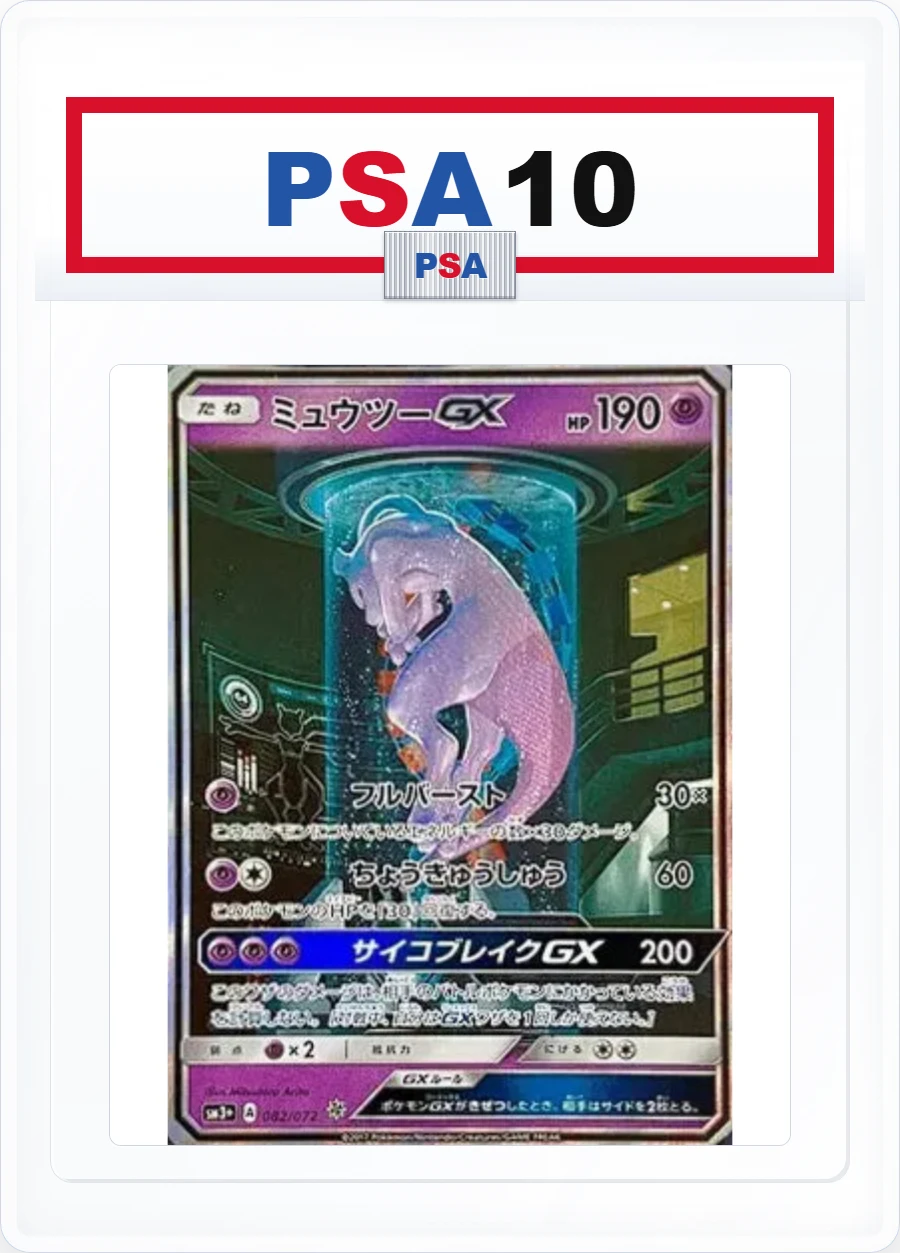

PSA 10 vs cartas Pokémon japonesas sin gradar: ¿qué deberían elegir los compradores en el extranjero?

PSA 10 vs Raw Japanese Pokemon Cards: Which Should Overseas Buyers Choose?

Last updated: June 4, 2026. Market data, canonical CTA links, and gallery product links were refreshed before upload packaging.

This guide focuses on the buying workflow for PSA 10 Japanese Pokemon cards, including how to browse current SST inventory and when to use the wholesale inquiry path for larger orders.

Key Takeaway: PSA 10 vs raw card buying should be treated as a buying workflow, not a simple card list. The strongest SST angle is direct access to Japanese PSA 10 inventory, wholesale inquiry paths, and product pages that help buyers choosing between graded certainty and raw upside move from research to action.

This guide compares PSA 10 slabs with raw Japanese cards for overseas buyers deciding where money should go first.

The buying decision is different from a sealed-box set guide. A PSA 10 buyer is not only asking "which card is best?" They are asking whether the seller can confirm current graded inventory, whether the order can scale, how to compare product pages quickly, and which link to click when they are ready to request pricing or buy.

Quick Answer

For PSA 10 vs raw card buying, start with the PSA 10 collection, then use the wholesale page if the order is multi-card, recurring, or B2B. Individual product pages are the place to confirm exact card identity, PSA 10 wording, and current availability before ordering.

Buyer question Short answer SST action
I want to browse available graded cards. Start with the PSA 10 collection. Open SST PSA 10 graded cards and compare current listings.
I need quantity or a price list. Use the wholesale inquiry path. Start from SST wholesale and request a current PSA 10 list or quote.
I need to verify current SST inventory. Open the linked PSA 10 product pages and exact card identities. Compare card name, card number, PSA 10 wording, product title, and current availability before ordering.
I need current prices. Use live product pages or a current quote. Treat any old screenshot or saved price list as expired until SST confirms availability.

Where To Browse Or Request PSA 10 Inventory

Buyer need SST path How to use it
Browse current PSA 10 inventory Shop PSA 10 graded cards Use this for a broad stock check before narrowing by character, price point, or card number.
Ask for quantity or recurring supply Wholesale inquiry page Use this when the order needs a current list, quote date, shipping discussion, or B2B handling.
Open a product page PSA10 Acerola 056/049 SR Use the product page or quote to confirm the exact card, PSA 10 wording, and live availability.
Open a product page PSA10 Ash’s Pikachu GX 005/026 Use the product page or quote to confirm the exact card, PSA 10 wording, and live availability.
Open a product page PSA10 Charizard V 103/100 SA Use the product page or quote to confirm the exact card, PSA 10 wording, and live availability.
Open a product page PSA10 Charizard ex SSR 331/190 Use the product page or quote to confirm the exact card, PSA 10 wording, and live availability.

Use the broad collection when you are still comparing options. Use individual product pages when the exact card matters. Use the wholesale path when you need current quantity, pricing, or recurring supply.
Why Japanese PSA 10 Cards Work For Overseas Buyers

Japanese Pokemon cards have several advantages for graded-card buyers: Japanese print quality is often strong, Japanese-only promos create collector stories, and overseas buyers frequently want inventory that is difficult to source locally. A PSA 10 slab also removes a large part of the condition-risk conversation because the buyer can compare grade wording, product title, card identity, and price before ordering.

That does not make every PSA 10 card a good buy. The practical question is what changes buyer action. A reseller cares about liquidity and margin. A collector cares about exact artwork and long-term desire. A store cares about showcase appeal, category breadth, and how quickly each slab can be explained to a customer. A breaker or content seller may care about recognizable names that perform well on camera.

For this topic, the practical hook is risk transfer, grading premium, and inventory strategy. Start with the buying workflow, then check risk controls and order planning before committing budget.

Market Signal: PSA Demand Is Still Elevated In 2026

The useful recent data is not "every PSA 10 card is automatically going up." The stronger claim is narrower and more actionable: PSA grading volume is still running at very high levels in 2026, PSA 10 cards carry a large premium over raw cards in broad Pokemon price data, and individual slab prices need a dated comp check before a buyer commits budget.

As of GemRate’s June 3, 2026 dashboard, PSA recorded 482,480 grades over the trailing seven days, up 10% from the prior seven days, and 2,125,904 grades over the trailing 30 days, up 4% from the prior 30 days. GemRate also reported that April 2026 was a record month for card grading, with 3.10 million total cards graded and PSA at 2.21 million cards, up 42% year over year. May cooled from April, but still reached 2.95 million total cards and PSA graded 2.07 million cards, up 25% year over year.

Dated source What changed Buyer implication
GemRate dashboard, updated June 3, 2026 PSA trailing seven-day grades: 482,480, up 10% vs the prior seven days; trailing 30-day grades: 2,125,904, up 4%. PSA supply and demand signals are active now, so stale price lists should not drive a bulk order.
GemRate April 2026 recap, published May 2, 2026 Overall grading hit a record 3.10 million cards; PSA graded 2.21 million cards, up 42% year over year. The market is not quiet. Buyers should compare current inventory and quote dates, not last season’s assumptions.
GemRate May 2026 recap, published June 2, 2026 Overall grading was 2.95 million cards, still up 20% year over year; PSA graded 2.07 million cards, up 25% year over year. Even after the April record, graded-card activity remained elevated.
Pulled Pokemon Market Report, published May 20, 2026 Across tracked Pokemon cards, raw averaged $42.25 while PSA 10 averaged $273.45, a 547.3% premium. PSA 10 certainty can be worth a real premium, but the premium must be checked card by card.

The chart below is the practical reading for a bulk buyer. It separates demand direction from pricing discipline, which matters because a high PSA 10 premium can create margin but can also hide an overpay if the wrong card, wrong version, or old comp is used.

Market signal What it supports What it does not prove
PSA grading volume remains elevated The graded-card market is active enough to justify a dedicated PSA 10 buying page and current inventory CTA. It does not prove every individual PSA 10 card is rising.
PSA 10 average premium is much higher than raw in broad Pokemon data Buyers often pay for certainty, grade, and resale-ready presentation. It does not replace checking the exact card, language, set, and recent sold comps.
Icon cards show wide raw-to-PSA10 spreads Charizard, Eevee, Pikachu, Mew, Mewtwo, Trainers, and promos can be useful anchors for a slab order. It does not mean a random assortment of slabs is good wholesale inventory.
SST has linked product pages The article can move readers from research to actual browse/request actions. Availability and exact order details still need the product page or current quote.

A few live card examples show why this matters for buying workflow. On June 4, 2026, PriceCharting’s Japanese Star Birth index listed Charizard V #103 at $150.81 ungraded and $418.96 in PSA 10. PriceCharting listed Japanese Charizard VMAX #002 at $32.61 ungraded and $127.40 in PSA 10, with PSA 10 volume shown as one sale per day. For a lower-ticket example, Japanese VMAX Climax Eevee #210 was listed at $12.74 ungraded and $69.00 in PSA 10, also with PSA 10 volume shown as one sale per day.

Those examples are useful because they show the difference between buying raw upside and buying graded certainty. They are not promises about SST inventory, future appreciation, or guaranteed resale margin. A reseller should still check the latest sold listings, the exact Japanese card number, whether the listing is PSA 10 rather than another grader, and whether shipping costs erase the expected spread. A collector should use the same data differently: the PSA 10 premium may be rational when the buyer wants a clean display copy and does not want to gamble on condition.

Before a larger order, the comp check should run in a fixed order. First, confirm the exact SST product or collection page so the buyer is looking at real available inventory. Second, compare the same Japanese card number in PSA 10, not only the English version or a raw copy. Third, check whether the most recent sales are clustered around one level or scattered across outlier prices. Fourth, convert the result into an order role: anchor card, mid-tier display card, value-depth card, or "skip for now." This keeps the article useful for buyers who want action, not just market commentary.

That workflow also improves the wholesale inquiry. Instead of asking only for "cheap PSA 10 cards," a stronger buyer request says which theme, price band, character group, and resale use case the order needs. SST can then respond with a current list that matches the buyer’s actual plan, while the buyer avoids treating a public article as a permanent price sheet.

For SST buyers, the decision rule is simple: use the PSA 10 collection and product pages to confirm actual available slabs, then ask for a current wholesale quote if the order is larger than a one-card purchase. If the market is moving, the safest article CTA is not a fixed public price list; it is a current inventory check with a dated quote.

PSA10 Charizard V 103/100 SA
Use exact card identity and current comps before treating a PSA 10 spread as margin.

What To Check Before Buying Multiple PSA 10 Cards

Check Why it matters Buyer action
Exact card identity Similar names, promos, and reprints can have very different demand. Match card name, number, rarity, language, and artwork before comparing price.
PSA grade wording The article is about PSA 10, so grade wording must be clear in the product title or quote. Confirm PSA 10 in the product title, product page, or current wholesale list before ordering.
Grade/title consistency Buyers want the product title, card number, and PSA 10 wording to line up. Confirm grade wording and card identity through the product page or current quote.
Liquidity Some slabs are beautiful but slow to resell. Separate collector gems from fast-moving inventory.
Quantity fit Bulk buying fails when the assortment is wrong. Ask whether the order needs many recognizable names or a narrower premium theme.
Price date PSA 10 markets move. Add the access date for live SST price, sold comps, or quote table.
Shipping/import Slabs need protected packing and clear international expectations. Link wholesale/import guidance near the CTA.

Inventory Themes To Build Around

The linked product pages in this article represent the type of PSA 10 Japanese Pokemon inventory buyers often compare before a larger order. Card examples include: PSA10 Acerola 056/049 SR, PSA10 Ash’s Pikachu GX 005/026, PSA10 Charizard V 103/100 SA, PSA10 Charizard ex SSR 331/190, PSA10 Charizard VMAX 002/021, PSA10 Flying Pikachu VMAX 024/028 RRR, PSA10 Gentleman Pikachu 210/SM-P PROMO, PSA10 Kanazawa Pikachu No Mark 147/S-P PROMO. Availability can change quickly, so use the current SST product pages or a wholesale inquiry for the live list.

A larger PSA 10 order is easier to compare when the inventory is grouped into buyer-readable themes:

  • Icon Pokemon: Pikachu, Charizard, Mew, Mewtwo, Eeveelutions, starter Pokemon, and legendary Pokemon.
  • Character Trainers: cards where the Trainer name, artwork, and Japanese demand drive collector interest.
  • Promos: cards where the distribution story matters as much as the card number.
  • Modern SAR/AR cards: visually strong cards that can work in stores and online listings.
  • Vintage or nostalgia routes: slower but deeper collector appeal when the card has history.

PSA10 Ash's Pikachu GX 005/026
Theme-led PSA 10 orders work best when every slab has a clear role in the buyer plan.

Which PSA 10 Buyer Are You?

A PSA 10 buying plan works better when it does not treat every reader as the same buyer. The same slab can be a personal grail for one customer, a store showcase card for another, and a slow-moving capital trap for a third. The tradeoff changes with the buyer segment.

Buyer segment What they care about What to verify Best SST path
Overseas collector Authenticity, artwork, exact card identity, safe shipping. Product title, card number, PSA 10 wording, and shipping route. Product page or PSA 10 collection.
Reseller Turnover, margin, recognizable names, listing speed. Whether the card can be listed quickly and explained simply. Wholesale inquiry.
Local card shop Showcase appeal, category breadth, repeat supply. Whether the order builds a balanced display case, not just one expensive card. Wholesale inquiry.
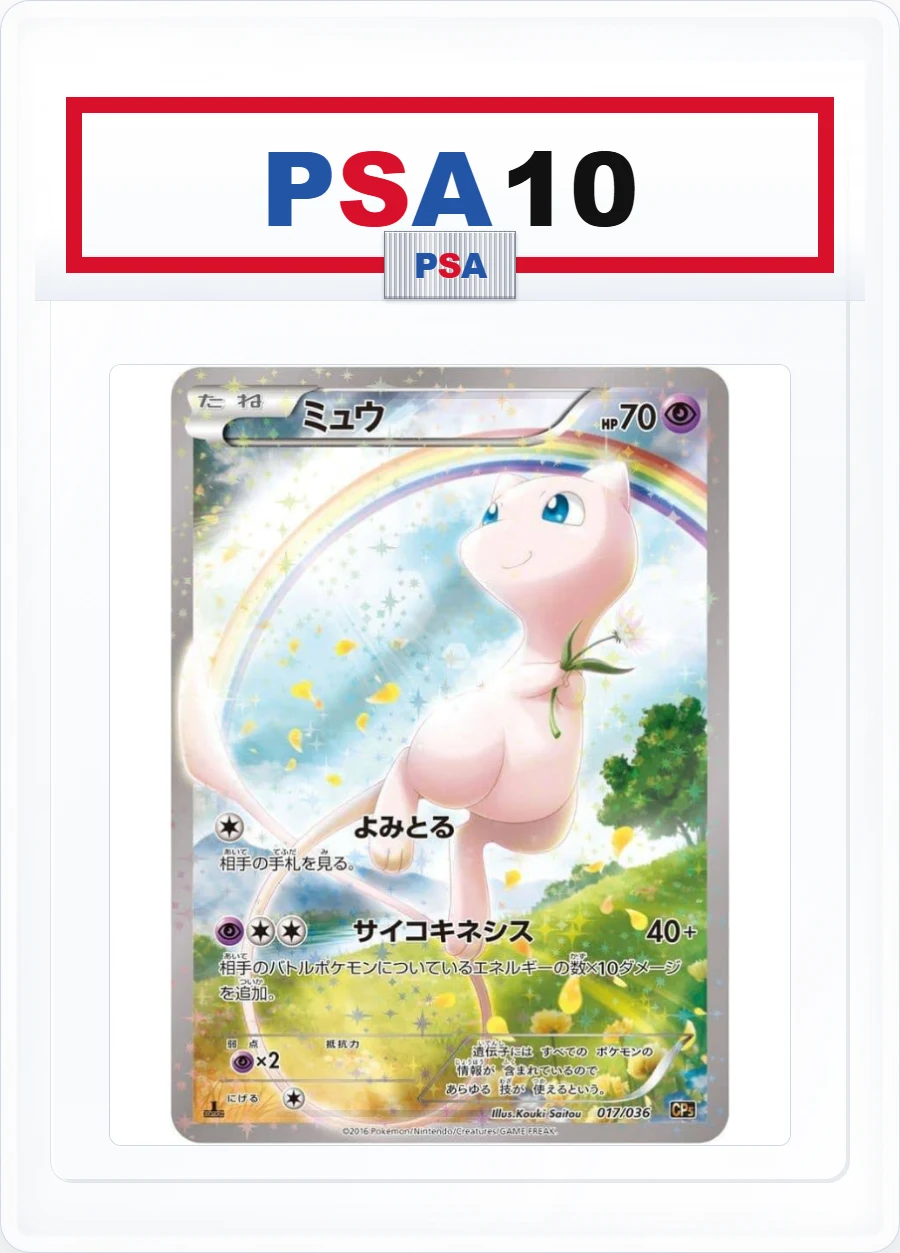
High-end buyer Premium scarcity, display value, confidence. Exact version, grade wording, card number, and documentation. Specific product pages.
New graded-card buyer Avoiding mistakes, understanding grade premium. Whether PSA 10 certainty is worth the premium over raw cards. Collection first, then FAQ.

Choose the path that matches the order. A reseller should focus on margin and assortment. A collector should focus on card identity and authenticity. A store should focus on category breadth and reorder potential.

Assortment Strategy For A PSA 10 Order

The biggest mistake in graded-card buying is assuming that a high grade alone creates demand. PSA 10 is the entry filter, not the full reason to buy. A stronger order usually mixes a few high-recognition anchors with mid-tier cards that fit the same story.

Assortment type Example use Strength Risk
Icon-led order Pikachu, Charizard, Mew, Mewtwo, Eeveelutions. Easy to explain and merchandise. Competitive pricing and higher capital requirement.
Trainer-led order Acerola, Lillie, Iono, Erika, Cynthia-style demand. Strong collector identity and display appeal. Character demand can be volatile by market.
Promo-led order Japanese promos, campaign cards, limited distribution. Story-driven, good for content and premium listings. Requires accurate release context.
Value-depth order Multiple lower-price PSA 10 slabs. Good for stores that need breadth. Slower cards can accumulate if selection is weak.
Theme order Rocket, Eeveelutions, starters, legends, anniversary cards. Easy to build a landing page or showcase around. Theme must match actual stock.

A grouped order is easier to review than a random list of slabs. Decide the role each card plays in the order, then use the PSA collection or wholesale route to confirm current availability.

Risk Controls Before Payment

A serious PSA buying guide should reduce buyer anxiety without pretending that every risk disappears. Even with PSA 10 slabs, buyers should confirm exact identity, availability, price date, and shipping expectations before payment.

Risk Why it happens What the buyer should do
Wrong version Similar artwork, Japanese/English variants, promos, and reprints can blur together. Match the exact product title, card number, rarity, and linked product page before comparing price.
Stale availability PSA inventory can move faster than evergreen blog pages. Open the current product or collection page before assuming stock is available.
Old price reference Graded markets change and quote lists expire. Ask for the quote date and avoid relying on old screenshots or stale price lists.
Product-page mismatch Article examples, old carts, and saved links can drift from current stock. Confirm the exact card, PSA 10 wording, live availability, and any extra confirmation needs through the product page or wholesale quote.
Overstated PSA relationship Sellers can describe PSA-graded cards but should not imply endorsement. Treat PSA as the grading company, not a seller endorsement.
Shipping expectations Slabs need protection and international buyers need clarity. Confirm packing, shipping method, destination limits, and timing before a large order.

If any of these checks are unclear, use the wholesale inquiry path before relying on a saved price list or an old product screenshot.

PSA 10 vs Raw Cards

Raw Japanese cards can be cheaper and may have grading upside, but that upside is not free. The buyer absorbs condition risk, grading cost, grading time, and the chance of receiving a 9 instead of a 10. PSA 10 slabs move that risk into the purchase price. That can be rational for overseas buyers who need certainty, faster listing, or a clean showcase product.

Ruta Ideal para Main risk Article CTA
PSA 10 slab Buyers who need certainty and resale-ready inventory. Paying too much for the wrong card. PSA 10 collection and product links.
Raw card Buyers with grading skill or local grading access. Estado and grade uncertainty. Mention only when SST has raw/single links.
Mixed order Stores that need both premium slabs and accessible singles. Assortment complexity. Wholesale inquiry page.

How A Wholesale Buyer Should Use This Page

A strong B2B reader path should look like this:

  1. Understand the PSA 10 buying angle in plain language.
  2. See live SST collection and product links.
  3. Use the article tables to narrow the desired theme or quantity.
  4. Open the wholesale page when the order needs pricing support, recurring supply, or a custom list.
  5. Confirm the final quote, availability, shipping route, and payment terms before relying on any price in the article.

A wholesale article should not promise a fixed discount or guaranteed price list unless SST confirms it for that order. Safer buyer language is "request current pricing" or "ask for an available PSA 10 list."

Ready To Browse Or Request A PSA 10 List?

Use the route that matches your order size. If you want to browse immediately, start with the PSA 10 collection. If you are buying multiple slabs, sourcing for a store, or need a recurring supply path, use the wholesale inquiry route and ask for current availability.

Buyer intent Best route Link
Browse current graded cards or inspect one-card examples PSA 10 collection Browse current PSA 10 graded cards
Request quantity, B2B pricing, or recurring supply Wholesale inquiry Request current PSA 10 wholesale availability

For larger orders, include the card theme, target quantity, budget range, destination country, and whether substitutions are acceptable. That gives SST enough context to answer with a useful list instead of a generic reply.

How To Keep Availability And Pricing Accurate

PSA 10 inventory and graded-card prices move quickly, so the safest buying process is to treat the article as a decision framework and verify live availability at the point of order:

  • Open the current PSA 10 collection before assuming a card is available.
  • Match the exact card name, card number, rarity, language, and PSA grade before comparing prices.
  • For a large order, ask for a current list instead of relying on an old screenshot or saved cart.
  • Use product pages as the browsing starting point, then verify the grade wording, card number, and availability through the product page or quote.
  • Treat marketplace chatter and social posts as research signals, not as final authority for SST availability.
  • Date any external price comparison you use internally, because graded-card comps can change fast.

The rule is simple: if a claim can change, verify it at the point of order. That keeps the buying decision grounded without pretending that a static blog page can freeze the PSA market.

Final Pre-Order Checklist

Before placing a larger PSA 10 order, confirm the following points with the product page or wholesale contact:

  • The slab is PSA 10 and the card identity matches the intended version.
  • The product or quoted list is currently available.
  • The quote date, currency, quantity, and substitutions are clear.
  • Shipping method, packing expectations, and destination country are confirmed.
  • Any external price comparison is recent enough to matter.
  • The order mix fits your goal: collector purchase, resale inventory, shop showcase, or recurring B2B supply.
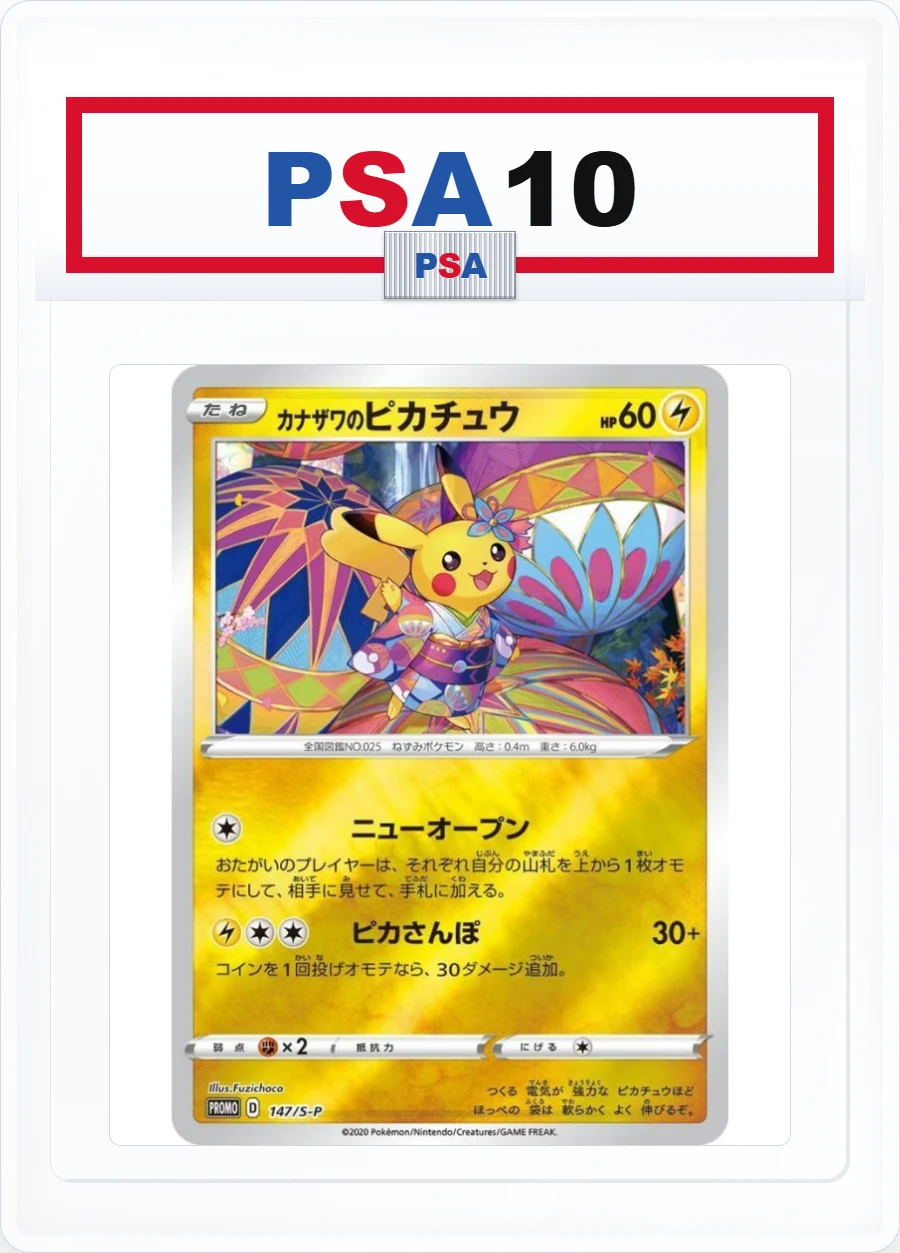
FAQ

Is buying PSA 10 Pokemon cards in bulk from Japan only for stores?

No. Stores and resellers are the clearest B2B audience, but serious collectors may also buy multiple slabs when they are building a theme such as Pikachu promos, Charizard cards, Trainers, or Eeveelutions. The key is whether the buyer needs a repeatable sourcing path rather than a single retail checkout.

Should I buy PSA 10 slabs or raw Japanese cards?

Buy PSA 10 slabs when certainty, speed, and resale-ready presentation matter. Buy raw cards when you have grading skill, accept condition risk, and want upside. For overseas buyers, slabs can reduce friction because the grade is already settled.

Can I treat every PSA 10 card as equally liquid?

No. Liquidity depends on Pokemon or Trainer popularity, artwork, release type, card number, rarity, price point, and current market attention. Separate fast-moving names from niche collector cards before buying quantity.

What should I ask before placing a wholesale PSA order?

Ask for current availability, price date, quantity, card list, extra confirmation needs, shipping method, packing expectations, and whether substitutions are allowed. Never build a public price claim from an old quote.

Does using PSA in the article imply PSA official partnership?

No. Use PSA only to describe graded products. Do not use PSA official logos or imply SST is endorsed by PSA unless that relationship is formally confirmed.

Bottom Line

PSA 10 vs Raw Japanese Pokemon Cards: Which Should Overseas Buyers Choose? is a buying-workflow guide first and a PSA education page second. The practical route is clear: decide the order theme, verify exact slab identity, check live SST inventory, and use the wholesale CTA when the order needs quantity, current pricing, or recurring supply.
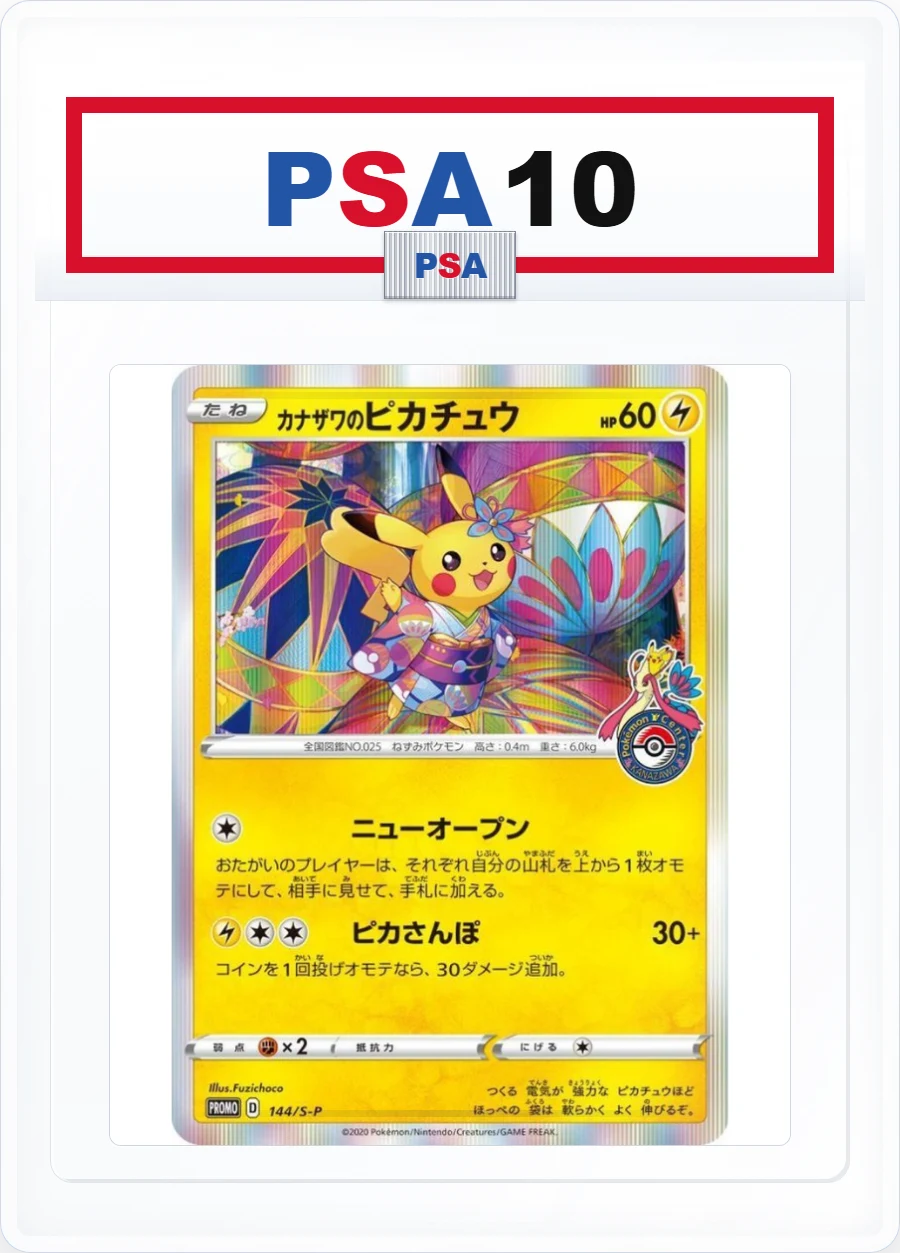

S11A Incandescent Arcana: Tasas de Pull, Mejores Cartas y Guía de la Caja — Guía de Abril de 2026

Serena SR from S11A Incandescent Arcana remains one of the most iconic trainer cards from the entire Sword & Shield era — and at roughly $75 today, it sits far below its $300+ peak from 2022. This Incandescent Arcana set, released in September 2022 as an Enhanced Expansion Pack, introduced Character Rare (CHR) cards that pair Pokemon with their trainers in stunning full-art illustrations, plus Alolan Vulpix VSTAR — the first unevolved Pokemon to ever receive the VSTAR treatment.

With boxes currently at $48–62, S11A offers one of the more affordable entry points into Sword & Shield era collecting. But is it actually worth opening? How rare is that Serena SR pull? And what does a box’s expected value look like 3.5 years after release?

This guide covers the TOP 10 most valuable Incandescent Arcana cards ranked by current JPN market prices from SNKRDUNK, complete pull rate data per box, an expected value breakdown translated from Japanese sources, and 3.5 years of price history showing how both the box and the Serena SR have evolved since launch.

We handle hundreds of Japanese Pokemon TCG boxes every month. Here’s what you need to know before opening or investing in S11A.

Key Takeaway

S11A Incandescent Arcana features the iconic Serena SR (~$75) and some of the finest Character Rare artwork in the Sword & Shield era. At ~¥7,000–8,980/box (~$48–62), it’s one of the most affordable S&S sets with a chase card worth more than the box itself. Production has ended and post-reprint supply is stabilizing.

$75
Top Card (Serena SR)

~$48–62
BOX Market Price

20 Packs
Per Box

94 Cards
Total Set

S11A Incandescent Arcana Set Overview

Incandescent Arcana is a compact but chase-heavy Enhanced Expansion Pack that punches well above its size. Released on September 2, 2022 as part of the Sword & Shield series, S11A packs 94 cards — including 26 secret rares — into a 20-pack box format.

Set Specs

Spec Detail
Set Code S11A
Set Name Incandescent Arcana (白熱のアルカナ)
Series Sword & Shield
Category Enhanced Expansion Pack
JP Release September 2, 2022
Packs per Box 20
Cards per Pack 6
Main Set 68 cards
Secret Rares 26 cards (6 CHR, 9 SR, 2 CSR, 6 HR, 3 UR)
Total Cards 94
MSRP ¥5,200 → Market price: ~¥7,000–8,980 ($48–62) as of April 2026
EN Equivalent Silver Tempest (partial — also includes S12, S11 cards)

Unlike standard 30-pack expansion boxes, Enhanced Expansion Packs contain 20 packs with higher rarity density. Fewer packs per box, but a stronger chance at pulling secret rares relative to total pack count.

What Makes This Set Special

Three features define Incandescent Arcana’s collector appeal:

  1. Character Rare (CHR) cards. S11A showcases the CHR mechanic at its peak, featuring full-art illustrations of Pokemon alongside their trainers. Braixen appears with Serena, Gardevoir with Diantha, and Jynx with Furisode Girl — each one a display-worthy piece of art. These CHR cards sit in the $5–12 range, making them accessible collector targets.
  2. Serena SR (081/068). Illustrated by Mizutani Megumi, this card became the defining trainer full art of the Sword & Shield era. It peaked above ¥50,000 ($350+) at launch and still commands ~¥10,927 (~$75) after 3.5 years — a testament to enduring character popularity.
  3. Alolan Vulpix VSTAR. The first unevolved Pokemon to receive VSTAR status. This design choice spotlighted the set’s theme of celebrating beloved Pokemon regardless of their evolutionary stage. Alolan Vulpix’s enduring fan popularity — it has consistently ranked among the top Pokemon in official popularity polls — made this a crowd-pleasing choice.

The set also includes three Radiant Pokemon — Radiant Jirachi, Radiant Tsareena, and Radiant Alakazam — which use the Sword & Shield era’s unique Radiant mechanic (one Radiant per deck, guaranteed 1 per box).

JPN vs English — The Silver Tempest Connection

The English set Silver Tempest combines cards from three Japanese sets: Incandescent Arcana (S11A), Paradigm Trigger (S12), and select cards from Lost Abyss (S11). This means Silver Tempest dilutes S11A’s concentrated chase card pool across a much larger set.

For collectors specifically targeting Serena SR, Furisode Girl SR, or the CHR cards, the Japanese S11A version offers better odds per box. The JPN texturing and print quality also carry a collector premium that typically ranges 15–40% above English equivalents.

JPN Premium

The Japanese Serena SR (~$75) commands a consistent premium over the English Silver Tempest version. JPN cards from S11A typically trade 15–40% higher than their ENG equivalents, driven by superior print quality and a more focused card pool.

Top 10 Most Valuable Incandescent Arcana Cards

Serena SR dominates this set’s value chart at roughly 5× the price of the second-most valuable card. Here are the top 10 cards ranked by current JPN market data.

Serena SR 081/068 from S11A Incandescent Arcana — most valuable card in the set
Serena SR (081/068) — ¥10,927 (~$75)
Rango Carta Number Rarity JPN Price (¥) USD Price
1 Serena 081/068 SR ¥10,927 ~$75
2 Furisode Girl 082/068 SR ¥3,400 ~$23
3 Alolan Vulpix VSTAR 087/068 HR ¥2,500 ~$18
4 Serperior V 084/068 CSR ¥2,200 ~$15
5 Serena 089/068 HR ¥1,800 ~$12
6 Alolan Vulpix V 077/068 SR ¥1,500 ~$10
7 Gardevoir (Diantha) 072/068 CHR ¥1,200 ~$8
8 Braixen (Serena) 069/068 CHR ¥1,000 ~$7
9 Ho-Oh V 080/068 SR ¥800 ~$6
10 Mawile V 085/068 CSR ¥700 ~$5
Price Note

JPN prices from SNKRDUNK and pokeka-atari (April 2026). JPN cards typically trade at a 15–40% premium over English equivalents for high-demand cards.

#1 Serena SR (081/068) — ~$75

The Serena SR isn’t just the most valuable card in Incandescent Arcana — it’s one of the most recognizable trainer cards in the entire Sword & Shield era. Illustrated by Mizutani Megumi, the card depicts Kalos protagonist Serena in a flowing pose that immediately became a collector icon.

At launch, this card traded above ¥50,000 (~$350). After the inevitable correction and a 2024 reprint that increased box supply, it settled at approximately ¥10,927 (~$75). That’s still a commanding premium — more than the cost of the box itself — and speaks to the enduring popularity of both the character and the artwork.

Serena’s dual appeal as a competitive Supporter card (she saw significant play in the Sword & Shield Standard format) and a collector centerpiece creates a demand floor that few trainer cards can match.

#2 Furisode Girl SR (082/068) — ~$23

Furisode Girl SR 082/068 from S11A Incandescent Arcana
Furisode Girl SR (082/068) — ¥3,400 (~$23)

Furisode Girl in traditional Japanese attire brings a distinctly cultural aesthetic to the SR lineup. At ~¥3,400 (~$23), she ranks as the set’s second most valuable card with steady collector interest. The furisode — a long-sleeved kimono worn at coming-of-age ceremonies — gives this card an elegance that resonates with both Japanese and international collectors.

#3 Alolan Vulpix VSTAR HR (087/068) — ~$18

Alolan Vulpix VSTAR HR 087/068 rainbow rare from S11A Incandescent Arcana
Alolan Vulpix VSTAR HR (087/068) — ¥2,500 (~$18)

The rainbow-rare treatment of Alolan Vulpix VSTAR at ~¥2,500 (~$18) captures the charm of this fan-favorite Pokemon. As the first unevolved Pokemon to receive VSTAR status, this card represents a historic milestone in the TCG’s design philosophy.

Other Notable Cards

Serperior V CSR 084/068 Character Super Rare from S11A Incandescent Arcana
Serperior V CSR (084/068) — ¥2,200 (~$15)

The Serperior V CSR (084/068) at ~$15 is one of two Character Super Rares in the set, pairing Serperior with its trainer in an extended-art treatment. Two CHR cards stand out as affordable highlights: Gardevoir with Diantha (072/068, ~$8) and Braixen with Serena (069/068, ~$7). These trainer-Pokemon pairings capture the heart of what makes Incandescent Arcana special for collectors at any budget.

  • Serena HR (089/068) (¥1,800 / $12) — Rainbow rare Hyper Rare treatment of the set’s flagship trainer card.
  • Alolan Vulpix V SR (077/068) (¥1,500 / $10) — Full-art V card featuring the set mascot in classic SR style.
  • Ho-Oh V SR (080/068) (¥800 / $6) — One of the more striking full-art compositions, with the legendary bird rendered in vivid gold and crimson.
  • Mawile V CSR (085/068) (¥700 / $5) — The second Character Super Rare, pairing Mawile V with its trainer.

Even the lower-value pulls carry attractive full-art illustrations that hold genuine display appeal — a hallmark of the Incandescent Arcana set as a whole.

Should You Buy an Incandescent Arcana Box?

At $48–62 per box, Incandescent Arcana offers affordable access to one of the most art-driven sets in the Sword & Shield era. Here’s how the decision breaks down.

Buyer’s Tip

If you’re chasing the Serena SR specifically, buying the single at ~$75 is more cost-efficient than opening boxes. But for the CHR artwork experience with a genuine shot at the set’s premium cards, the $48–62 box price is hard to beat.

For Collectors

S11A is a set built for collectors. The CHR cards — Braixen with Serena, Gardevoir with Diantha, Milotic with Wallace — are arguably the best Character Rare artwork in the entire Sword & Shield series. At $5–12 each as singles, these are achievable targets from regular box openings.

The Serena SR at ~$75 is the flagship chase card. While pulling it from a single box is unlikely, every box guarantees at least one SR-or-higher pull, plus 1–2 CHR cards. Even a box without the Serena hit delivers display-worthy art.

For Box Openers

Twenty packs at $48–62 means roughly $2.50–3.00 per pack — strong value for a Sword & Shield Enhanced Expansion. Each box guarantees approximately 2 RRR cards, 4–5 RR cards, 1 Radiant Pokemon (Jirachi, Tsareena, or Alakazam), and 1–2 CHR cards. The guaranteed high-rarity hit adds excitement to every opening.

The compact 20-pack format also means shorter sessions — a quick, focused opening experience compared to 30-pack standard boxes.

For Long-Term Holders

The box has been reprinted (most recently in June 2024), which pushed market prices to the ¥6,000–7,000 range. That reprint stock has since been absorbed, and prices have stabilized around ¥7,000–8,980 (~$48–62). With production now ended and the Serena SR maintaining its price floor, sealed boxes carry a stable outlook.

As a Sword & Shield era Enhanced Expansion, S11A belongs to a completed product cycle — no further reprints are expected. Historical patterns across Japanese Pokemon TCG show that sealed product from completed eras tends to appreciate gradually once remaining supply tightens.

Singles vs. Box — The Math

Approach Cost What You Get
Buy Serena SR single ~$75 The exact card you want, guaranteed
Buy 5–18 boxes (estimated for Serena) $240–1,100 1 specific SR out of 9 possible × ~1 SR per 1–2 boxes
Buy 1 box for the experience $48–62 20 packs + guaranteed SR-tier pull + CHR cards

If you value the opening experience and the CHR/CSR artwork alongside any SR pull, boxes deliver more cumulative enjoyment than chasing a single card at market price.

Incandescent Arcana Pull Rates

Every S11A box guarantees at least one SR-tier card — and the Enhanced Expansion format delivers higher rarity density per pack than standard 30-pack boxes. Here’s the complete breakdown.

Pull Rate Breakdown (Per Box — 20 Packs)

Rarity Cards in Set Expected per Box Notes
RRR 3 ~2 Serperior VSTAR, Alolan Vulpix VSTAR, Mawile VSTAR
RR ~8 4–5 V and VSTAR cards
Radiant 3 1 Radiant Jirachi, Tsareena, or Alakazam
CHR 6 1–2 Character Rare — Pokemon with trainers
SR 9 ~1 per 1–2 boxes Full art V cards and Supporter cards
CSR 2 ~1 per 3–4 boxes Serperior V, Mawile V
HR 6 ~1 per 5 boxes Rainbow rare treatment
UR 3 ~1 per 10 boxes Gold rare — lowest pull rate
Disclaimer

Pull rates are estimated based on community opening data. Not officially confirmed by The Pokemon Company. Actual results vary.

Each box guarantees one card from the SR-or-higher pool (SR, CSR, HR, or UR). In practice, most boxes yield an SR. CSR pulls run approximately 1 in 3–4 boxes, HR cards appear roughly 1 in 5 boxes, and UR cards are the rarest at approximately 1 in 10 boxes.

CHR & CSR Cards Explained

Character Rare (CHR) cards are one of the defining innovations of late Sword & Shield era sets. These full-art illustrations show Pokemon alongside their trainers — a concept that resonated deeply with collectors and turned Incandescent Arcana into a collector favorite.

S11A’s 6 CHR cards:

  • Braixen CHR (069/068) — with Serena
  • Milotic CHR (070/068) — with Wallace
  • Jynx CHR (071/068) — with Furisode Girl
  • Gardevoir CHR (072/068) — with Diantha
  • Smeargle CHR (073/068)
  • Altaria CHR (074/068)
Braixen CHR 069/068 featuring Braixen and Serena — S11A Incandescent Arcana Character Rare
Braixen CHR (069/068) — with Serena

The two Character Super Rare (CSR) cards — Serperior V CSR (084/068) and Mawile V CSR (085/068) — take this concept further with full-art V card treatments. At $5–15, CSR cards are among the best value-for-art cards in the set.

Box EV Breakdown

Every box of Pokemon cards has negative expected value on average — that’s standard across all TCG products. The manufacturer’s margin, distributor costs, and retail markup are built into the price. What matters for S11A is the guaranteed CHR, RRR, and Radiant slots that provide a value floor, while the SR slot introduces high variance.

Component Est. Value per Box
1 SR/CSR/HR/UR hit ~¥2,500 (weighted avg.)
1–2 CHR cards ~¥800
2 RRR cards ~¥400
4–5 RR cards ~¥400
1 Radiant Pokemon ~¥200
Remaining R/U/C ~¥100
Estimated Box EV ~¥5,115 (~$35)
EV Summary

Box cost: ~¥7,000–8,980 ($48–62) | Average EV: ~¥5,115 ($35). The guaranteed SR slot provides ~¥2,500 baseline. A Serena SR pull ($75) brings a single box well above its cost. The EV gap is standard for Pokemon TCG products.

For reference, sets like VSTAR Universe and most other Sword & Shield products show a similar EV structure. Box purchases in the Pokemon TCG are driven by the opening experience, collector value of the art, and the upside potential from chase card pulls.

Where to Buy Incandescent Arcana

Sealed S11A boxes are available through Japanese TCG specialty retailers that ship internationally — here’s what to look for when buying.

Buying from Japan

Authenticity markers: Genuine S11A boxes have a Creatures Inc. factory seal (not re-shrunk clear wrap), Japanese text on all packaging, and 20 individually sealed 6-card packs inside. The box weight should be consistent — significantly lighter boxes may indicate tampering.

20 packs per box — Enhanced Expansion boxes are smaller than standard 30-pack boxes, which is normal for this product type. If a seller advertises 30 packs, it’s either mislabeled or a different set.

Shipping considerations: Japanese booster boxes ship well due to sturdy packaging. Expect 5–10 business days to the US via tracked shipping. Customs duties vary by country — US buyers generally face no duty on orders under $800.

We stock Incandescent Arcana boxes from our warehouse in Tokyo with tracked international shipping. Every box is sourced directly from authorized Japanese distributors.

Bottom Line

Three things to remember about S11A Incandescent Arcana:

  1. The Serena SR ($75) is the engine — one card’s value exceeds the box price, creating the asymmetric upside that drives box demand.
  2. CHR artwork defines this set — Braixen with Serena, Gardevoir with Diantha, and four other trainer-Pokemon pairings make S11A one of the most art-focused sets in Sword & Shield history.
  3. Post-reprint stability — the 2024 reprint corrected prices to an accessible $48–62 range, and production has now ended. Current prices reflect genuine collector value.

At $48–62 per box, Incandescent Arcana offers a genuine balance between chase-card potential, collector-grade artwork, and affordable entry. For Sword & Shield era collectors, this is one of the defining art-driven sets to own — sealed or opened.

Shop This Set
Incandescent Arcana (S11A) Booster Box
From ~$48–62 / ~¥7,000–8,980
Ships from Tokyo · Tracked delivery

View Product →

Preguntas frecuentes

What are the pull rates for Incandescent Arcana?

Each 20-pack box guarantees approximately 2 RRR cards, 4–5 RR cards, 1 Radiant Pokemon, 1–2 CHR cards, and 1 SR or higher card. UR cards appear roughly 1 in 10 boxes. Pull rates are estimated from community opening data and not officially confirmed.

What is the most expensive card in Incandescent Arcana?

Serena SR (081/068) at approximately ¥10,927 (~$75) as of April 2026. It peaked above ¥50,000 ($350+) at launch in September 2022. The second most valuable card is Furisode Girl SR at ¥3,400 (~$23).

Is Incandescent Arcana worth buying?

At $48–62 per box, S11A offers affordable access to iconic CHR artwork and the chase Serena SR. Box EV (~¥5,115) runs below box cost, which is standard for Pokemon TCG products. The set’s value lies in its collector-grade art and the chance at one of the most recognized trainer cards in Sword & Shield history.

What is the English equivalent of Incandescent Arcana?

Silver Tempest is the English set that includes cards from S11A Incandescent Arcana, along with cards from S12 Paradigm Trigger and S11 Lost Abyss. The Japanese version offers a more concentrated card pool with better odds for targeting specific pulls.

What are Character Rare (CHR) cards?

CHR cards feature Pokemon alongside their trainers in full-art illustrations. S11A includes 6 CHR cards: Braixen with Serena, Milotic with Wallace, Jynx with Furisode Girl, Gardevoir with Diantha, Smeargle, and Altaria. They typically range from $5–12 and are among the most collectible cards in the set.

How many secret rares are in Incandescent Arcana?

S11A contains 26 secret rare cards beyond the 68-card main set: 6 CHR, 9 SR, 2 CSR, 6 HR, and 3 UR cards, for a total of 94 cards in the complete set.


Related Guides

One Piece PRB-01 THE BEST: Pull Rates y Probabilidades de God Pack [2026]

A single Monkey D. Luffy Comic Parallel from PRB-01 sells for over $2,900 ungraded. The mythical God Pack — ten historic Comic Parallels sealed in one pack — has traded above $9,000. And Gold DON!! cards, exclusive to this set, now command $200–$500 each.

ONE PIECE CARD THE BEST (PRB-01) is the first-ever premium booster in the ONE PIECE CARD GAME. Released in Japan on July 27, 2024, and internationally on November 8, 2024, this set packages the most iconic cards from OP-01 through OP-06 with brand-new artwork, a new Sanji Leader card, and 30 exclusive Gold DON!! cards.

Whether you’re eyeing the Gold DON cards for your collection, hunting for reprinted tournament staples, or simply wondering if a PRB-01 box is worth opening in 2026, this guide covers everything: the top 10 most valuable cards, estimated pull rates, current market prices, and a clear buying strategy. We track JPN market data from SNKRDUNK and Mercari alongside EN pricing from TCGPlayer and eBay daily.
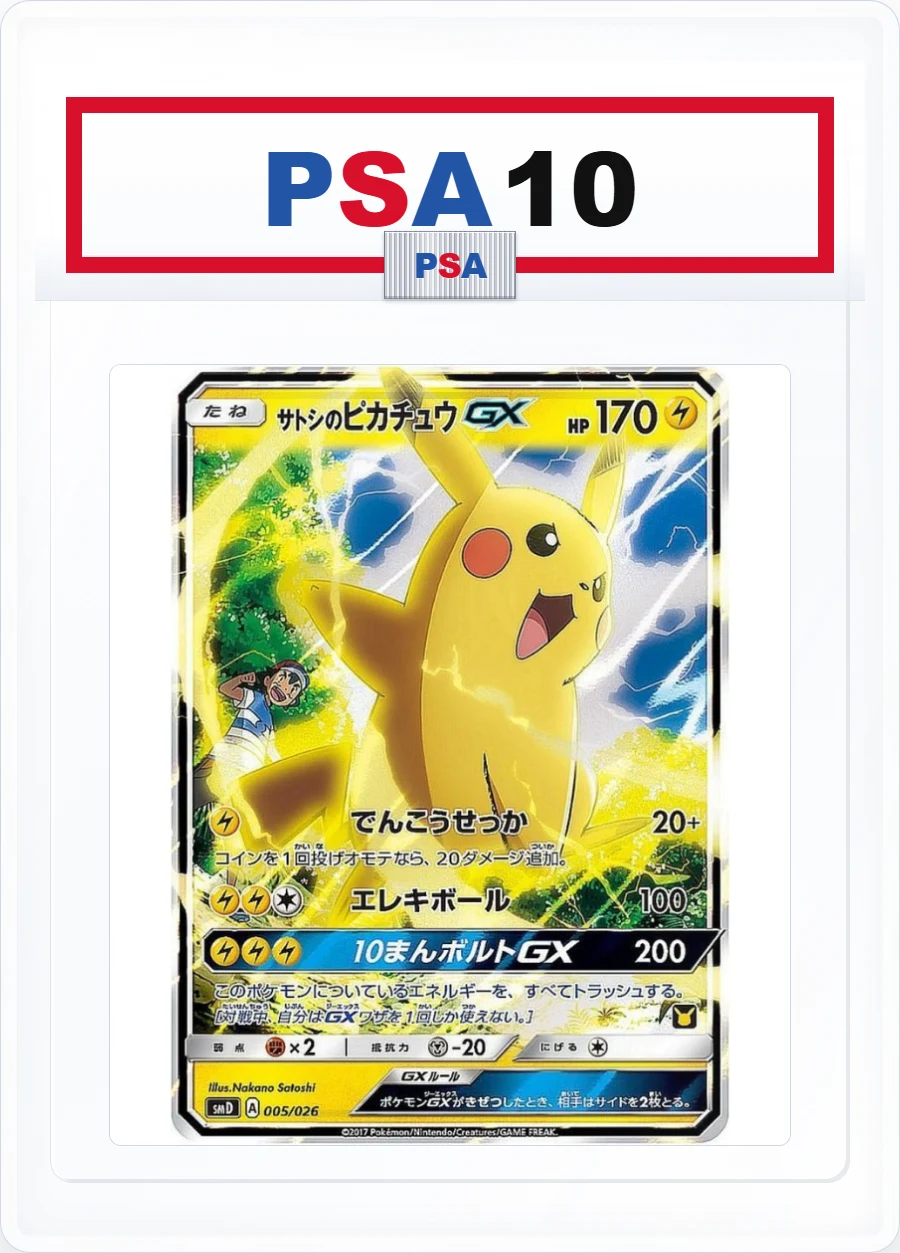
¥8,900
Box Price

141
Cards

~1/box
SEC Rate

10
Packs/Box

PRB-01 — Set Overview

PRB-01 breaks from the standard booster format. Instead of 24 packs with 6 cards each, a premium booster box contains 10 packs of 10 cards — 100 cards total por caja.

Release Info & BOX Specs

Spec Detail
Set Name ONE PIECE CARD THE BEST (PRB-01)
JPN Release July 27, 2024
EN Release November 8, 2024
MSRP ¥5,500 (JPN) / ~$54.99 (EN)
Market Price ~¥8,900 (JPN, SNKRDUNK) / ~$858 (EN, PriceCharting)
Packs per Box 10
Cards per Pack 10
Total Tipos de cartas 111 + 30 DON!! = 141 types
Card Breakdown 1 Leader, 23 C, 25 UC, 4 Promo, 21 R, 29 SR, 8 SEC, 30 DON!!

Prices as of March 2026.

JPN boxes trade around ¥8,900 on SNKRDUNK, while EN sealed boxes have surged to approximately $858 on PriceCharting — driven by the EN Gold DON cards’ strong collector demand.

PRB-01 ONE PIECE CARD THE BEST booster box product image
PRB-01 ONE PIECE CARD THE BEST Booster Box

What’s Inside — Reprints, New Art & Exclusives

PRB-01 collects fan-favorite cards from the first six main booster sets (OP-01 through OP-06) and pairs them with fresh artwork. Over 50 cards feature newly commissioned alternate-art parallels with premium foil treatments.

Key inclusions:

  • Sanji (PRB01-001) — A brand-new Leader card exclusive to this set. 5 Life, 5000 Power with Strike. His ability grants Rush to characters costing 8 or less without On Play effects, once per turn
  • Reprinted tournament staples — Green 10-cost Doflamingo (OP-04), Charlotte Katakuri (OP-03), Dracule Mihawk (OP-01), Gum-Gum Red Roc
  • 30 exclusive DON!! cards — Character-art DON cards featuring Zoro, Uta, Law, Ace, Luffy, Yamato, Perona, Vivi, Reiju, Sabo, and more. Gold foil versions are the primary chase cards
  • 8 Secret Rares — Including manga-art Comic Parallels of Luffy, Nami, Zoro, Sogeking, Shanks, and Katakuri
What Makes PRB-01 Unique

PRB-01 is the only source for Gold DON!! cards in the entire OPTCG lineup. Combined with reprinted fan-favorites in new artwork and the legendary God Pack, this set offers a collecting experience no standard booster can match.

The God Pack — OPTCG’s Rarest Pull

The God Pack is PRB-01’s most exclusive feature. One sealed pack containing all ten historic Comic Parallel cards — the manga-panel artwork versions that individually sell for hundreds to thousands of dollars.

Estimated pull rate: roughly 1 God Pack per 100 cartons (1,000 boxes). Complete God Packs have sold for ¥1,380,000 (approximately $9,200) in the JPN market.

God Pack Odds

A carton is 10 boxes. At ¥8,900 per box, you’d spend ¥8,900,000 (~$59,300) opening 1,000 boxes before statistically expecting one God Pack. This makes it a collector’s dream — something to celebrate if you pull one, not something to chase by volume.

Premium Booster (PRB-01) Standard Booster (e.g., OP-09)
10 packs × 10 cards 24 packs × 6 cards
100 cards per box 144 cards per box
¥5,500 retail ¥5,940 retail
Gold DON!! cards (exclusive) No DON variants
Reprints with new art All original cards
God Pack (~1/1,000 boxes) No God Pack
8 Secret Rares 2-4 Secret Rares (varies)

Top 10 Most Valuable PRB-01 Cards

PRB-01’s value is concentrated in two categories: the ultra-rare Comic Parallel reprints and the set-exclusive Gold DON!! cards. Here are the cards worth knowing about, ranked by current market value.

Rango Carta Rarity JPN Price EN/Intl Price
1 Monkey D. Luffy (OP05-119) Comic Parallel ~¥440,000 ~$2,950
2 Nami (OP01-016) Comic Parallel ~¥80,000 ~$700
3 Roronoa Zoro (OP06-118) Comic Parallel ~¥100,000 ~$665
4 DON!! Card — Zoro (Gold) SP DON ~¥30,000 ~$525
5 Shanks (OP01-120) Comic Parallel ~¥100,000 ~$600
6 Sogeking (OP03-122) Comic Parallel ~¥65,000 ~$430
7 DON!! Card — Uta (Gold) SP DON ~¥25,000 ~$215
8 DON!! Card — Law (Gold) SP DON ~¥18,000 ~$170
9 DON!! Card — Ace (Gold) SP DON ~¥16,000 ~$105
10 DON!! Card — Perona (Gold) SP DON ~¥16,000 ~$103

Prices as of March 2026. JPN prices from Mercari/Card Rush. EN prices from PriceCharting/eBay sold listings.

Monkey D. Luffy OP05-119 Comic Parallel PRB-01

#1 — Comic COMIC PARALLEL
Monkey D. Luffy (OP05-119)
~$2,950 · JPN: ~¥440,000
The Gear 5 Luffy Comic Parallel is PRB-01’s crown jewel, featuring the iconic manga panel of Luffy’s awakening rendered across the full card face. Ungraded copies trade around $2,950, while PSA 10 specimens have reached $7,500. A BGS 10 Black Label sold for $10,601 in November 2025. Three factors drive this card’s value: Luffy’s status as the franchise protagonist, the Gear 5 transformation being the series’ most celebrated moment, and the Comic Parallel treatment being the rarest card type in OPTCG.

Rarity Check

All three top cards are Comic Parallels with an estimated pull rate of 1 per 6–8 cartons. At 10 boxes per carton, that’s roughly 1 in every 60–80 boxes. Their value reflects genuine scarcity.
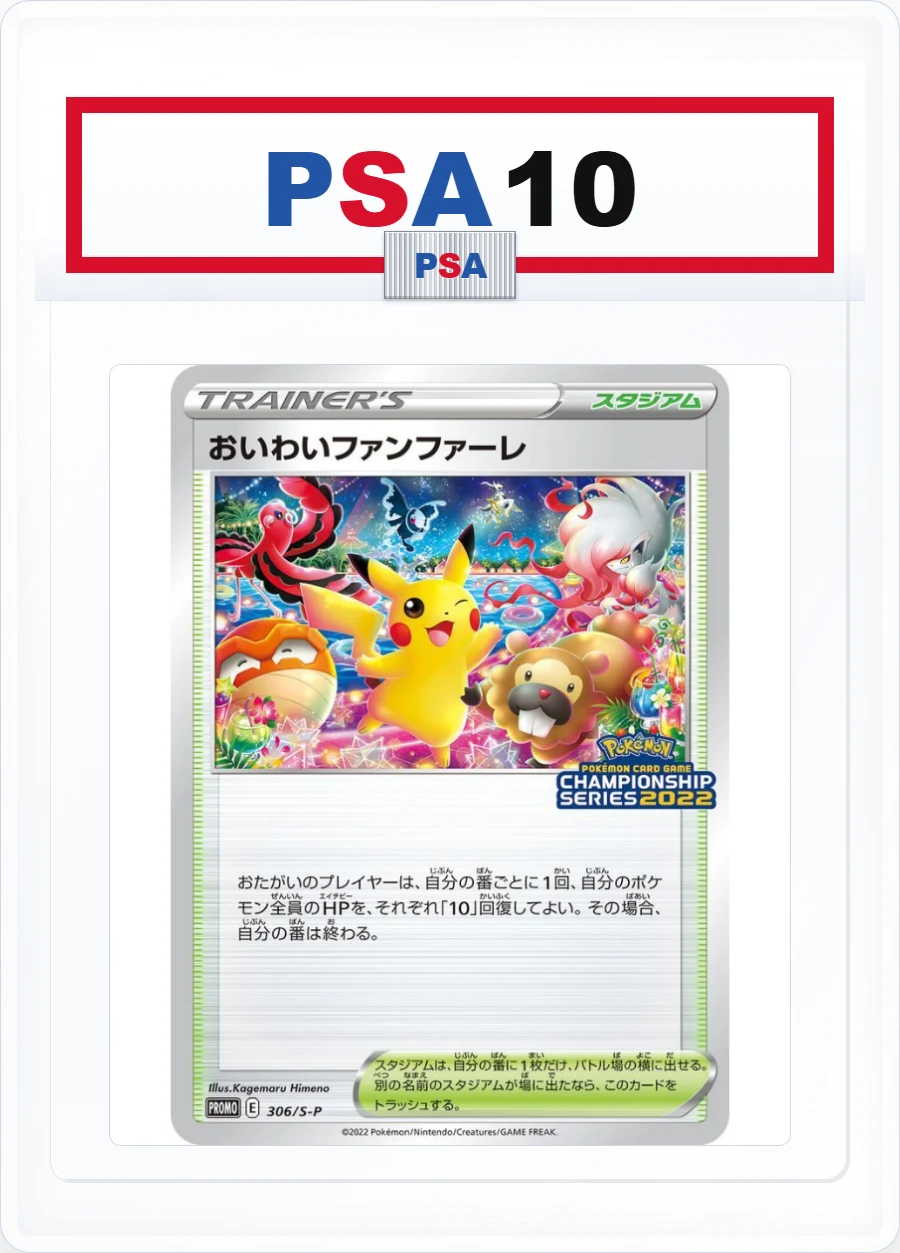
Nami OP01-016 Comic Parallel PRB-01

#2 — Comic COMIC PARALLEL
Nami (OP01-016)
~$700 · JPN: ~¥80,000
Nami’s Comic Parallel is the signature card of PRB-01 — created specifically for this set rather than reprinted from an earlier booster. Character popularity drives much of the value. Nami consistently ranks among the top three most popular ONE PIECE characters in fan polls, and this is her first (and to date, only) Comic Parallel card. From a play perspective, the base OP01-016 Nami is a staple 2-cost character in Red decks.
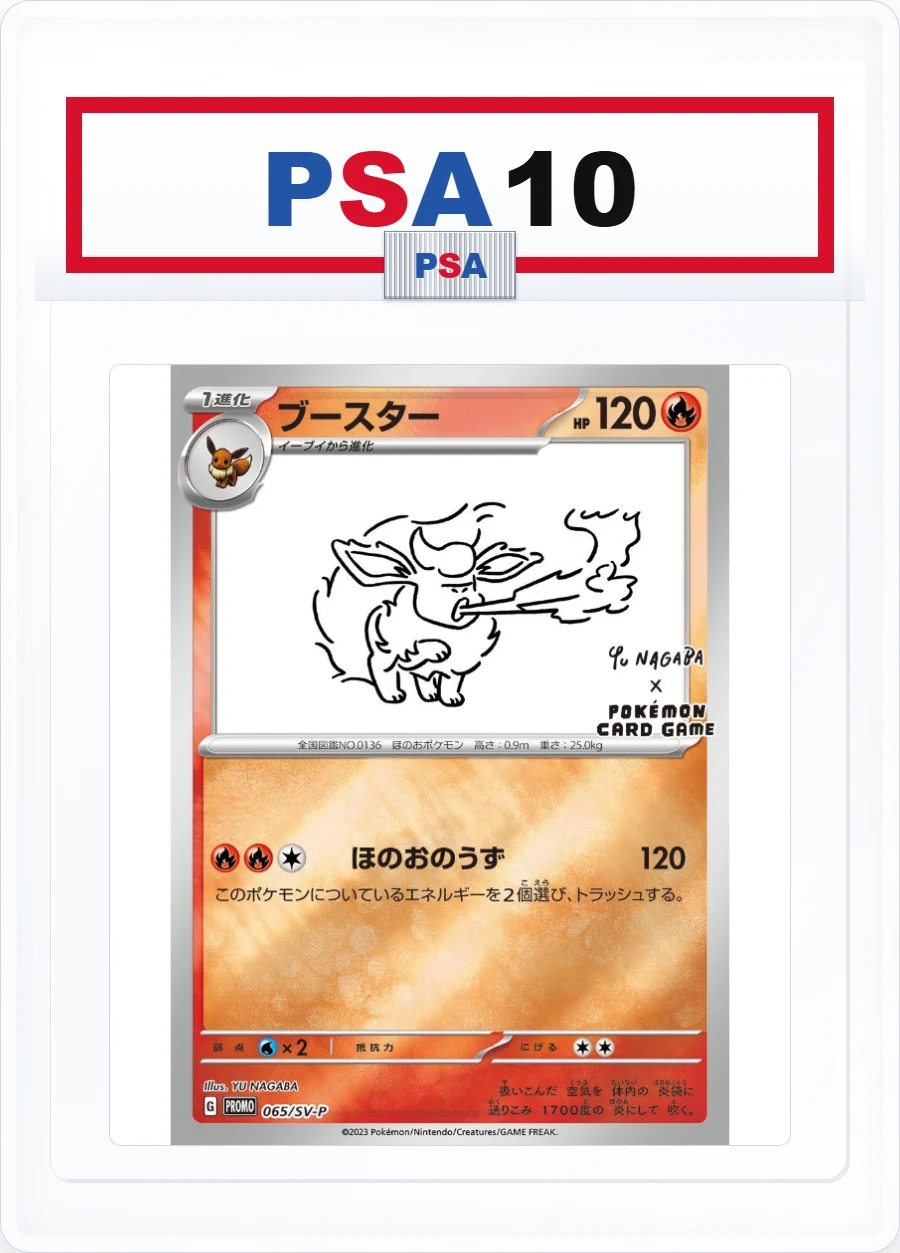
Roronoa Zoro OP06-118 Comic Parallel PRB-01

#3 — Comic COMIC PARALLEL
Roronoa Zoro (OP06-118)
~$665 · JPN: ~¥100,000
Zoro’s Comic Parallel showcases one of his signature sword techniques in striking black-and-white manga composition. Zoro’s position as the Straw Hat crew’s second-in-command gives this card consistent collector demand. The JPN market has held relatively stable since launch, suggesting the price has found its floor.

#4–10: Gold DON!! Cards & More Comic Parallels

The remaining top cards split between Comic Parallels and the set-exclusive Gold DON!! cards:

4

DON Card Zoro Gold

DON!! Zoro (Gold) SP
~$525 · JPN: ~¥30,000
Most accessible high-value chase card. Gold DON cards appear at ~1 per carton.

5

Shanks OP01-120 Comic Parallel

Shanks (OP01-120) Comic
~$600 · JPN: ~¥100,000
Iconic character with manga-panel artwork carrying strong emotional resonance.

6

Sogeking OP03-122 Comic Parallel

Sogeking (OP03-122) Comic
~$430 · JPN: ~¥65,000
Captures the «brave warrior of the sea» moment — a top fan-voted scene.

7

DON Card Uta Gold

DON!! Uta (Gold) SP
~$215 · JPN: ~¥25,000
FILM RED crossover appeal between movie fans and card collectors.

8

DON Card Law Gold

DON!! Law (Gold) SP
~$170 · JPN: ~¥18,000
Trafalgar Law’s consistent popularity keeps demand steady across all media.

9

DON Card Ace Gold

DON!! Ace (Gold) SP
~$105 · JPN: ~¥16,000
Sleeper hit — undervalued relative to Ace’s cultural impact in ONE PIECE.

10

DON Card Perona Gold

DON!! Perona (Gold) SP
~$103 · JPN: ~¥16,000
Surprise entry driven by Perona’s dedicated fanbase and striking artwork.

Beyond the Top 10

Additional Gold DON cards worth noting: Yamato (~$103), Luffy (~$97), Sabo (~$90), and Vivi (~$80). The full 30-card Gold DON lineup means meaningful chase value across many packs.

Should You Buy PRB-01?

PRB-01 remains one of the most compelling premium products in OPTCG, even 20 months after its JPN release. The answer depends on what you’re after.

For Collectors

Verdict: Strong buy for Gold DON cards and new-art parallels.

The 30 exclusive Gold DON cards cannot be found in any other set. If you want gold-foiled character DON cards for your collection or tournament deck, PRB-01 is your only source. The new-art parallels across 50+ cards also provide unique versions of classic cards that look distinctly different from their original printings.

The God Pack dream is a bonus — not a strategy. With odds around 1 in 1,000 boxes, treat any God Pack pull as a celebration rather than an expected outcome.

Collector Tip

Gold DON cards from PRB-01 are tournament-legal and make excellent display pieces. Many collectors frame their Gold DON alongside the matching character’s Comic Parallel for a premium showcase.

For Players

Verdict: Consider singles for specific staples. Buy a box for DON card variety.

PRB-01 reprinted several tournament-relevant cards with fresh artwork:

  • Sanji Leader (PRB01-001) grants Rush to cost-8-or-less characters — a unique aggressive strategy for blue/purple builds
  • Green Doflamingo (10-cost) remains a meta-relevant finisher
  • Charlotte Katakuri continues to see play as a removal tool
  • Gum-Gum Red Roc is still one of the most efficient removal events in the game

Buying singles is almost always more cost-effective for competitive decks. But if you also want Gold DON cards to personalize your deck’s DON pile, a box gives you parallel DON cards (roughly 1 per box) plus a chance at the Gold variants.

Sanji Leader Impact

The Sanji Leader (PRB01-001) with Rush-granting ability has carved out a niche in blue/purple aggressive builds. If you’re building around this strategy, opening a box gives you the best chance at pulling the Leader Parallel version.

For Investors

Verdict: Monitor the EN sealed box market.

EN sealed PRB-01 boxes have climbed from ~$55 at launch to approximately $858 — driven by limited print runs and Gold DON card demand. JPN boxes have been more stable, rising from ¥5,500 to ¥8,900 — a 62% gain, but modest compared to some standard booster sets.

Gold DON singles, particularly the Zoro variant, have shown steady price growth. Cards that serve both competitive and collector purposes tend to hold value well in OPTCG.

PRB-02 (Premium Booster Vol. 2) has been announced. New premium booster releases can either boost interest in the product category (positive for PRB-01) or redistribute collector attention (short-term pressure on PRB-01 prices).

Buy Now If
  • You want Gold DON cards (exclusive to PRB-01)
  • You’re a collector seeking Comic Parallel chase
  • JPN box at ~¥8,900 fits your budget
Consider Waiting If
  • You only need specific reprinted staples (buy singles)
  • You’re watching for PRB-02’s impact on prices
  • EN sealed boxes at ~$858 feel overextended

Pull Rates — What’s in Your PRB-01 Box

Every TCG booster box carries negative expected value on average — that’s the standard business model. What matters is how the value distributes and what your realistic expectations should be.

Rarity Pull Rates (Estimated)

These rates are community-estimated based on JPN opening data. They are not officially confirmed by BANDAI.

Rarity Estimated Rate Per Box Expectation
Common / Uncommon Guaranteed Multiple per pack
Rare (R) Common Several per box
Super Rare (SR) ~2-3 per box Reliable presence
Secret Rare (SEG) ~1 per box One per box on average
Parallel DON!! ~1 per box Alternate-art DON card
Gold DON!! (SP) ~1 per carton (10 boxes) ~10% chance per box
Comic Parallel ~1 per 6-8 cartons ~1-2% chance per box
Leader Parallel (L) Sanji ~1 per 3 cartons ~3% chance per box
God Pack ~1 per 100 cartons ~0.1% chance per box

Estimated rates based on JPN opening reports. Not officially confirmed by BANDAI.

PRB-01 pull rates chart showing rarity distribution per box
PRB-01 Estimated Pull Rate Distribution

Box Contents Breakdown

A typical PRB-01 box yields roughly:

  • 4-5 Super Rares with varying value (most SRs trade under ¥2,000 / $15)
  • 1 Secret Rare — the floor for box value. SECs range from ¥3,000 to ¥15,000 depending on the card
  • 1 Parallel DON!! — standard parallel (not gold), trading around ¥1,000-3,000
  • Filler — Commons, Uncommons, and Rares with minimal individual value
Box Value Floor

The SR and SEC guaranteed slots support a baseline box value. Pulling a Gold DON or Comic Parallel pushes a box into profit territory — but those pulls require luck or volume.

Singles vs Box Strategy

Strategy Cost What You Get Best For
Buy 1 BOX ~¥8,900 (~$59 JPN) 1 SEC + 2-3 SRs + 1 Parallel DON + filler Opening experience + DON card variety
Buy Gold DON single $100-525 Exactly the card you want Targeting specific Gold DON
Buy SEC single $10-50 (most) Exact card, exact condition Building competitive decks

Premium Booster vs Standard Booster — Which Is Better?

Both serve different purposes. Here’s a direct comparison:

Factor PRB-01 Premium Booster Standard Booster (e.g., OP-09)
Price (JPN market) ~¥8,900 ¥6,000–15,000 (varies by set)
Cards per box 100 (10×10) 144 (24×6)
New original cards 1 Leader + 30 DON!! Full set (80-120 new cards)
Chase card type Gold DON + Comic Parallels SEC + SP + Manga Rare
Competitive impact Reprints only (except Sanji) New meta-defining cards
Collector appeal Unique DON cards + God Pack Set-exclusive parallels
Ideal para DON collectors, reprint hunters Meta players, set completionists
Which to Pick?

Standard boosters offer more new cards and competitive impact. PRB-01 offers something no standard set can — exclusive Gold DON cards and the chance at a God Pack. Serious collectors often buy both.

Where to Buy PRB-01

JPN boxes ship directly from Tokyo with tracked delivery. At approximately ¥8,900 (~$59), a JPN PRB-01 box remains one of the most affordable premium products in OPTCG relative to its chase card potential.

When buying from Japan, factor in shipping (typically $15-25 for a single box) and potential customs duties depending on your country. Boxes arrive sealed with original BANDAI shrink wrap.

For more on the process, see our guide to buying ONE PIECE cards from Japan.

Shop This Set
PRB-01 ONE PIECE CARD THE BEST Booster Box
From ~$59 / ~¥8,900
Ships from Tokyo · Tracked delivery

View Product →

The Bottom Line

Three things to remember about PRB-01:

  1. Gold DON cards are the real chase — 30 exclusive character DON cards with gold foil, available nowhere else. Prices range from $75 to $525.
  2. Comic Parallels are lottery tickets — Beautiful manga-panel artwork on cards worth $430 to $2,950, but pull rates of 1 per 60-80 boxes make them celebration pulls, not expectations.
  3. JPN boxes are the sweet spot — At ~¥8,900 (~$59), JPN boxes offer the Gold DON chase at a fraction of EN sealed prices (~$858). The guaranteed SEC and SR pulls provide baseline value.

PRB-01 carved out a unique niche in OPTCG as the first premium booster. With no other source for Gold DON cards and the legendary God Pack, it remains a collector essential heading into 2026.

1

Monkey D. Luffy Comic Parallel

Luffy (OP05-119) Comic
~$2,950
PRB-01’s crown jewel — Gear 5 manga-panel artwork.

2

Nami Comic Parallel

Nami (OP01-016) Comic
~$700
PRB-01 exclusive — her first and only Comic Parallel.

3

Zoro Comic Parallel

Zoro (OP06-118) Comic
~$665
Stable demand from Zoro’s signature sword technique art.

Preguntas frecuentes

What are the best cards in PRB-01 ONE PIECE CARD THE BEST?

The most valuable card is the Monkey D. Luffy (OP05-119) Comic Parallel, trading around $2,950 ungraded. The Nami (OP01-016) Comic Parallel and Gold DON Zoro card are the next highest-value pulls. Gold DON cards across all 30 character variants range from $75 to $525, making them the primary chase cards for most collectors opening boxes.

What is the pull rate for Gold DON cards in PRB-01?

Gold DON cards (Super Parallel DON) are estimated at approximately 1 per carton (10 boxes). Regular Parallel DON cards appear at roughly 1 per box. These rates are community-estimated from JPN opening data and are not officially confirmed by BANDAI.

Is the PRB-01 Premium Booster worth buying in 2026?

For collectors wanting Gold DON cards, yes — these exclusive cards cannot be found in any other set. For competitive players, buying singles of specific reprinted staples is more cost-effective. JPN boxes at ~¥8,900 (~$59) offer reasonable value given the guaranteed SEC pull and chance at Gold DON cards. EN sealed boxes at ~$858 are primarily investment/collector purchases.

What is a God Pack in ONE PIECE CARD THE BEST?

The God Pack is an ultra-rare sealed pack containing all ten Comic Parallel cards from the set. Estimated pull rate is roughly 1 per 100 cartons (1,000 boxes). Complete God Packs have sold for approximately ¥1,380,000 (~$9,200). This is the rarest pull in any OPTCG product released to date.

How many packs are in a PRB-01 box?

A PRB-01 premium booster box contains 10 packs with 10 cards each (100 cards total). This differs from standard booster boxes, which contain 24 packs of 6 cards (144 cards total).

How does PRB-01 compare to PRB-02?

PRB-01 features cards from OP-01 through OP-06, while PRB-02 covers later sets. PRB-01 is notable for its Gold DON cards and the God Pack feature. Both sets share the premium booster format (10 packs, 10 cards per box). PRB-01 has had more time on the market, so its prices are more established, while PRB-02 offers newer chase cards including a highly sought-after Manga Sanji.

Can I use Gold DON cards in tournaments?

Yes. Gold DON cards are functionally identical to standard DON!! cards and are fully tournament-legal. Many competitive players specifically seek Gold DON versions of their favorite characters to personalize their DON deck.


Ready to Open Packs?

Get the PRB-01 ONE PIECE CARD THE BEST booster box — shipped directly from Tokyo, Japan with tracking & insurance.

Buy PRB-01 ONE PIECE CARD THE BEST Box

Browse All One Piece Booster Boxes →

Related Guides