무료 회원가입으로 포인트 적립과 등급을 시작하세요
Samurai Sword Tokyo
주문 장바구니

MEGA Start Deck 100: Regular vs White Box 가격 가이드
One product line, two listings, and a 41.7x gap in price. The regular listing draws one random deck from a confirmed pool of 102 possible decks; what the White Box listing actually contains beyond that isn’t specified. Neither one tells you which deck is inside until you open it.

The MEGA Start Deck 100 Battle Collection is a Japanese blind-deck product — buy one unit, get one random deck out of 102 possibilities, one of which is a gold-etched Mega Charizard Y ex variant. We list it two ways: a regular listing at ¥1,200, and a “White Box” listing at ¥50,000. This guide lays out exactly what’s verified about each, what isn’t, and why the gap between them is larger than it might look at first glance.

Key Takeaway

The regular MEGA Start Deck 100 listing is currently ¥1,200 (~$8); the White Box listing is ¥50,000 (~$314) — a 41.7x difference. “White Box” is our own listing name, not a term used by Pokemon’s official product documentation, and no odds or contents guarantee has been published for either listing. Read the gap as a pricing fact, not a promise.

102
Possible Decks

742
Unique Cards in the Pool

¥50,000
White Box Listing

41.7x
Price Gap vs Regular

Prices are our own live listings as of September 2026, converted at ¥159/USD.

What Is the MEGA Start Deck 100 Battle Collection?

The MEGA Start Deck 100 Battle Collection released in Japan on December 19, 2025, followed by a Traditional Chinese release on January 9, 2026, and a Korean release on February 13, 2026. Each purchased unit is one random deck drawn from a pool of 102 possible decks: 100 standard numbered decks, one secret deck, and one special gold-etched Mega Charizard Y ex variant of Deck No. 001. Across all 102 possible decks, the total unique card pool runs to 742 cards — described by Bulbapedia as the largest single Japanese card collection issued in this format to date.
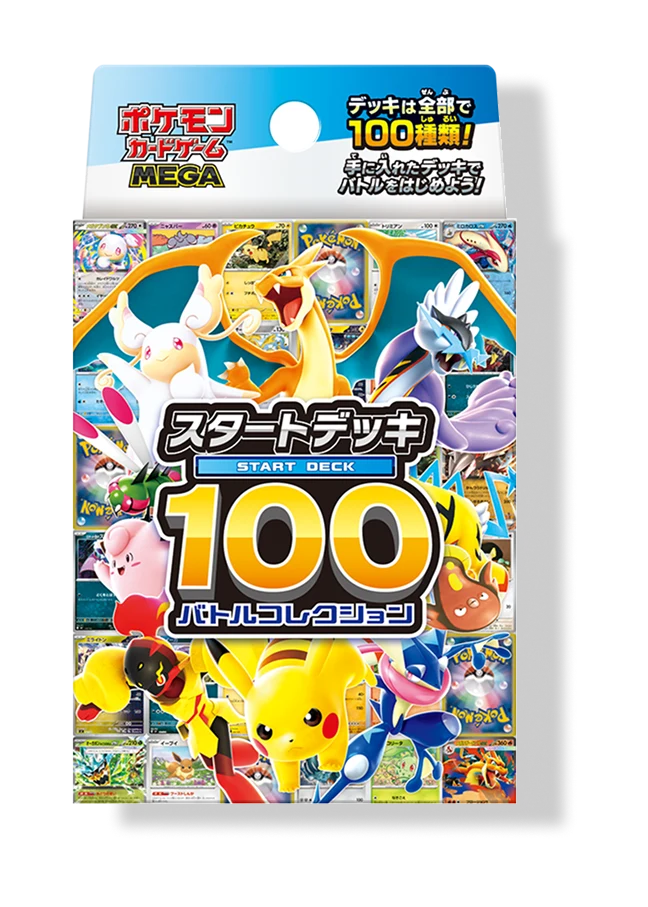
MEGA Start Deck 100 Battle Collection product listing photo
Our own product listing photo for the MEGA Start Deck 100 Battle Collection — the same photo appears on both the regular and White Box listings.

A separate, related product — “Start Deck 100 Battle Collection CoroCiao Version” (Deck No. 000) — released simultaneously in Japan as a magazine tie-in. It is a distinct SKU from the standard product and is not covered by the two listings compared in this guide.

We don’t have a verified breakdown of what’s inside any individual numbered deck — card counts, energy split, or the exact 60-card list — so this guide sticks to what’s confirmed: the release timeline, the size of the deck pool, and our own two prices.

The Regular Listing: One Random Deck for ¥1,200

The regular MEGA Start Deck 100 Battle Collection listing is currently priced at ¥1,200 (~$8). Buying it draws one deck at random from the full 102-deck pool — the same pool that includes the gold Mega Charizard Y ex variant. Nothing about the packaging or listing tells you in advance which of the 102 decks you’ll receive.

This is the standard way most collectors will experience the product: a low-cost entry into a large, unsorted pool of decks, with the gold chase variant sitting somewhere in the mix alongside 101 other outcomes.

The White Box Listing: What We Know and What We Don’t

The White Box listing is priced at ¥50,000 (~$314). It’s important to be precise about what that name does and doesn’t mean.

“White Box” is not a term used by Bulbapedia or found on Limitless TCG for this product, and no official Pokemon Company documentation describing a “white box” variant or tier could be verified. Our two listings — regular and White Box — are priced 41.7x apart, which may reflect a reseller or collector-market distinction, such as a specially selected or marked outer box. The official product page does not list it as a product tier, and we are not stating what it guarantees, what’s inside it, or why it is priced the way it is beyond that being our current listing price.

Read This Before Buying Either Listing

No odds or pull-rate figures for the gold Mega Charizard Y ex deck have been published for this product, and neither listing is confirmed or guaranteed to contain that deck. Both are described here strictly as what they are: our own listings, at our own current prices.

What is factual and checkable: both the regular and White Box product pages currently use the identical product photo — the same image file appears on both listings. That’s worth noting as an observation, but it isn’t evidence for or against any claim about what’s inside either box.

The 41.7x Price Gap, Read Correctly

¥50,000 divided by ¥1,200 works out to a 41.7x gap between the two listings — the number that frames this whole comparison. Here’s the same information side by side:

Regular White Box
가격 ¥1,200 (~$8) ¥50,000 (~$314)
What you get One random deck from the 102-deck pool Not specified by the listing — contents beyond the regular product’s 102-deck pool are unconfirmed
Official product tier? Standard product Not listed on the official product page — our own listing name
Contents guaranteed? No No
Product photo Same image as White Box listing Same image as regular listing

Laid out this way, the gap is a pricing fact we can fully source — both numbers come from our own live product pages — but the reason for the gap is not something we can verify or explain beyond that. Anyone comparing the two should treat the 41.7x figure as exactly what it is: a ratio between two listing prices, not a stated multiple on expected value.

Where This Sits in the Mega Evolution Era

The Start Deck 100 Battle Collection’s December 19, 2025 release places it inside the current Mega Evolution (“M-series”) stretch of Japanese releases, landing between the M2a MEGA Dream ex expansion (November 28, 2025) and M3 Nihil Zero (January 23, 2026). It’s a tie-in product built around the same Mega-era cast rather than a numbered main-series expansion.

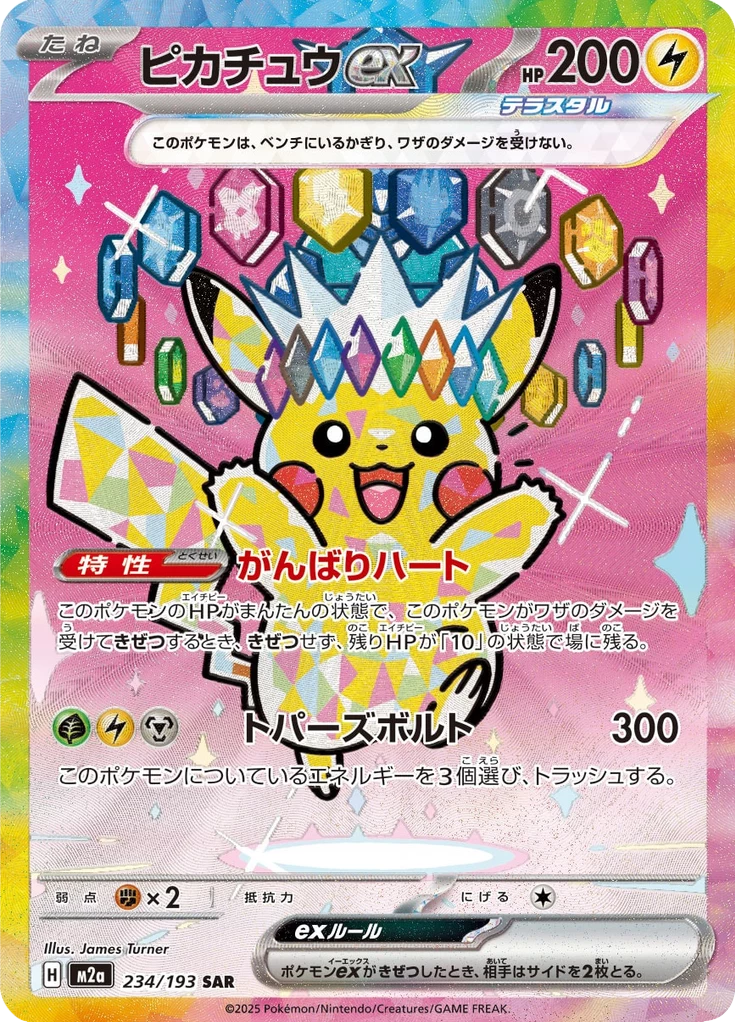
The card art below is from M2a — illustrative of the Mega Evolution era this product belongs to, not confirmed contents of any specific Start Deck 100 deck.
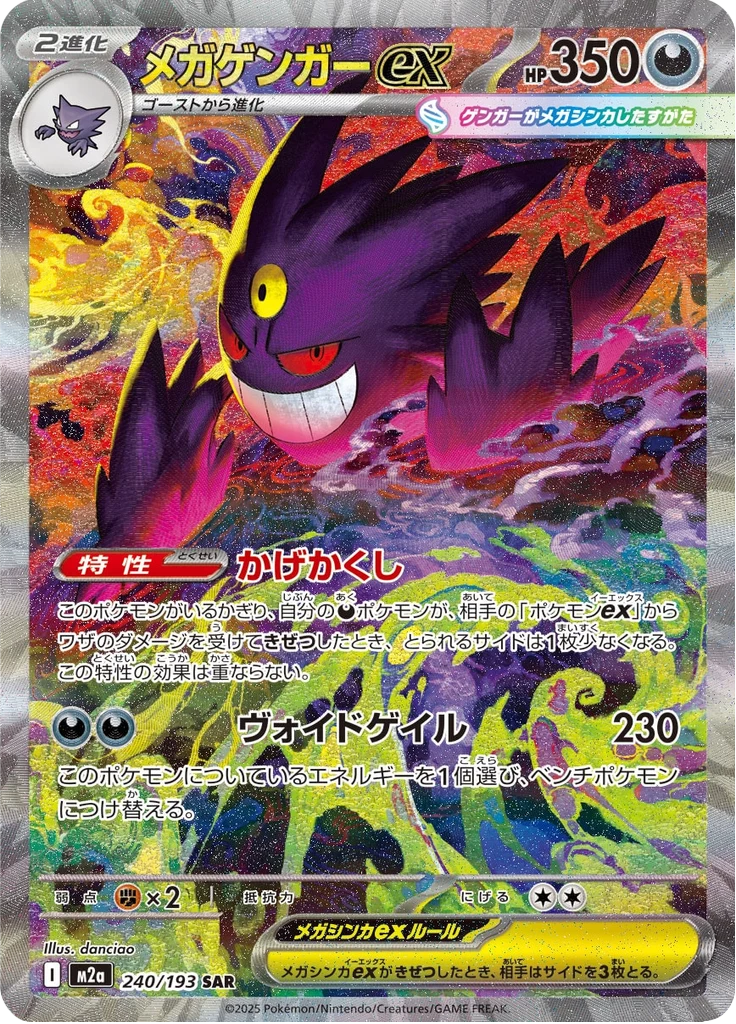
Mega Gengar ex, M2a #240
Mega Gengar ex, M2a #240 — illustrative Mega Evolution-era card art, not confirmed contents of this Start Deck 100 product.
Pikachu ex, M2a #234
Pikachu ex, M2a #234 — illustrative Mega Evolution-era card art, not confirmed contents of this Start Deck 100 product.
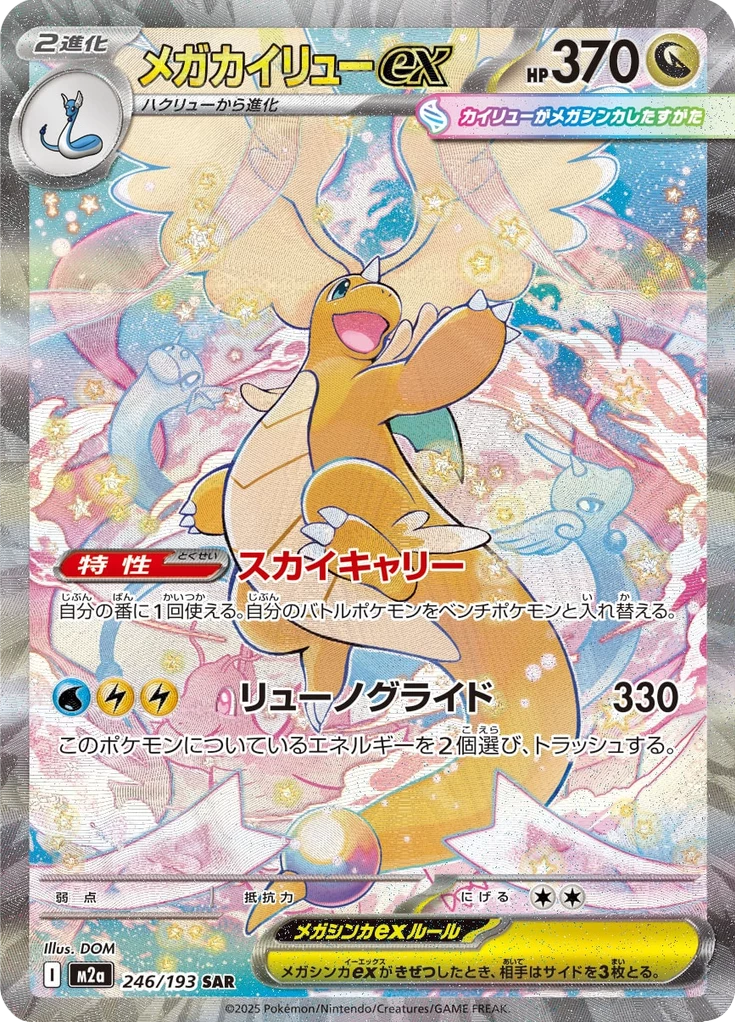
Mega Dragonite ex, M2a #246
Mega Dragonite ex, M2a #246 — illustrative Mega Evolution-era card art, not confirmed contents of this Start Deck 100 product.
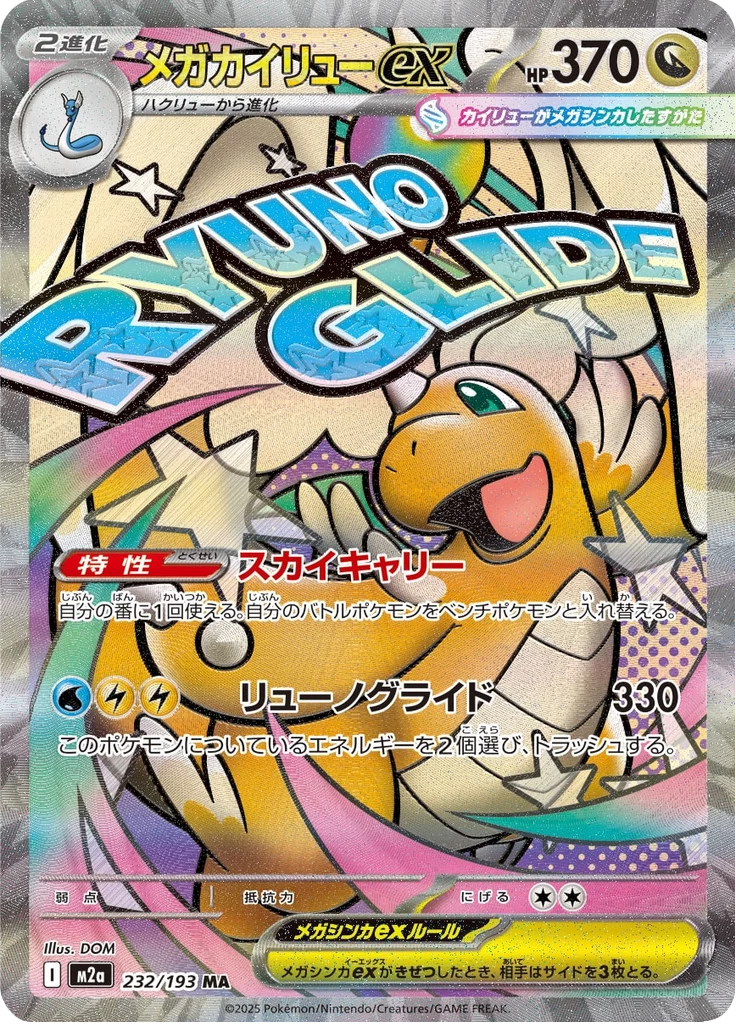
Mega Kairyu ex alt print, M2a #232
Mega Kairyu (Dragonite) ex alt print, M2a #232 — illustrative Mega Evolution-era card art, not confirmed contents of this Start Deck 100 product.

For a wider view of what’s come out during this stretch, see our Mega Evolution era sets in order guide and our Mega Charizard cards value guide — useful context for the chase variant riding along inside this deck pool.

Which Listing Fits Your Approach

Because neither listing carries a published odds figure or contents guarantee, this isn’t a value calculation we can make for you — it’s a question of how much randomness and how much spend you’re comfortable with.

  • Lowest entry point: the regular listing at ¥1,200 (~$8) puts you into the same 102-deck pool at the lowest possible cost per attempt.
  • Higher spend, same pool, per our listing: the White Box listing at ¥50,000 (~$314) is priced well above the regular listing. As covered above, we cannot state what that premium is based on beyond our own current pricing.
  • Either way: treat this as a blind-deck product first. If getting a specific deck matters to you, there is currently no verified way to guarantee that outcome through either listing.
Shop This Listing
MEGA Start Deck 100 Battle Collection – White Box (Japanese)
Currently listed at ¥50,000 (~$314)
Ships from Tokyo · Tracked delivery

View Product →

For broader budget context across the current Mega Evolution lineup, our budget Mega ex cards guide and Mega Evolution chase card guide cover lower-cost ways to build toward the same cast of cards.

Where to Buy the MEGA Start Deck 100 Battle Collection

We ship Japanese sealed product worldwide out of Tokyo with tracked delivery. Both listings covered in this guide are currently on our site:

For a broader look at the full product line and related decks, start with our Start Deck 100 Battle Collection guide. For anything not listed individually, our Quick Order page is the fastest way to build a mixed order alongside these decks.

자주 묻는 질문

What is the MEGA Start Deck 100 Battle Collection?

A Japanese blind-deck product released December 19, 2025 (Traditional Chinese release January 9, 2026; Korean release February 13, 2026). Each unit is one random deck from a pool of 102 possible decks — 100 standard numbered decks, one secret deck, and one gold-etched Mega Charizard Y ex variant — covering 742 unique cards in total.

Is the “White Box” an official Pokemon Company product tier?

Not confirmed. “White Box” is not a term found on Bulbapedia or Limitless TCG for this product. It is the name of our own listing, priced separately from the regular listing, and it should not be read as an official tier, guarantee, or stated contents distinction.

What is the price difference between the regular and White Box listings?

The regular listing is currently ¥1,200 (~$8) and the White Box listing is ¥50,000 (~$314) — a 41.7x gap between the two.

Does buying the White Box guarantee the gold Mega Charizard Y ex deck?

No. No odds or contents guarantee has been published for either listing, and it isn’t confirmed whether the White Box draws from the same 102-deck pool as the regular listing or something different.

When was the Start Deck 100 Battle Collection released?

December 19, 2025 in Japan, followed by a Traditional Chinese release on January 9, 2026 and a Korean release on February 13, 2026. A related magazine tie-in product, the CoroCiao Version (Deck No. 000), released in Japan at the same time as a separate SKU.
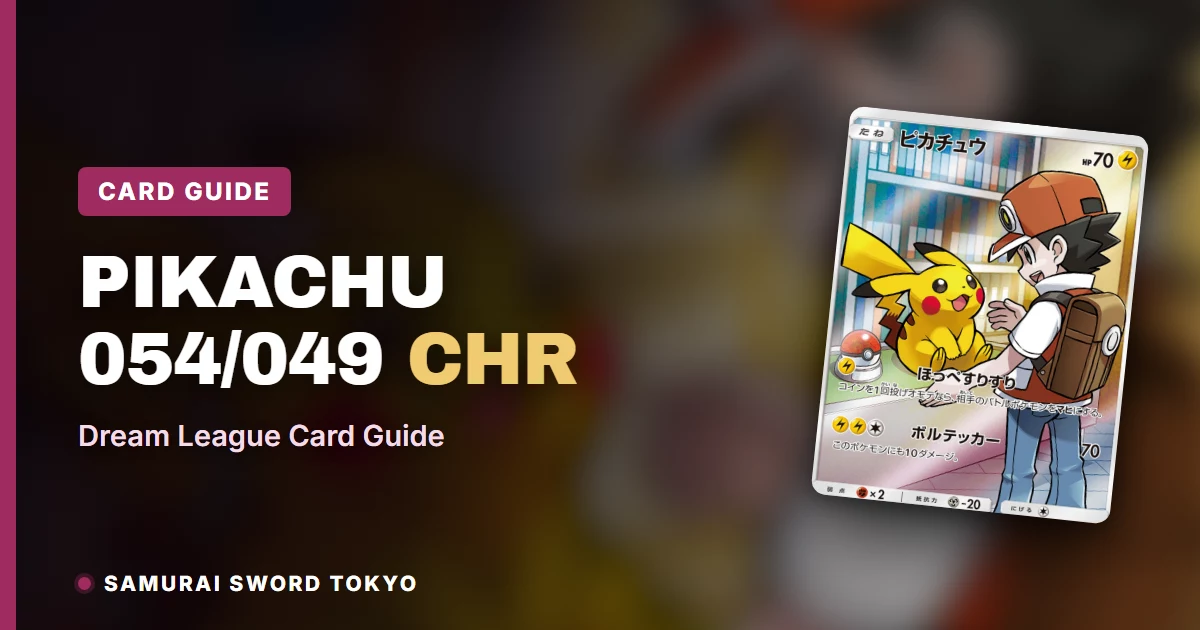
Pikachu 054/049 CHR: Dream League 카드 가이드

The number on this card doesn’t add up — and that’s exactly the point.
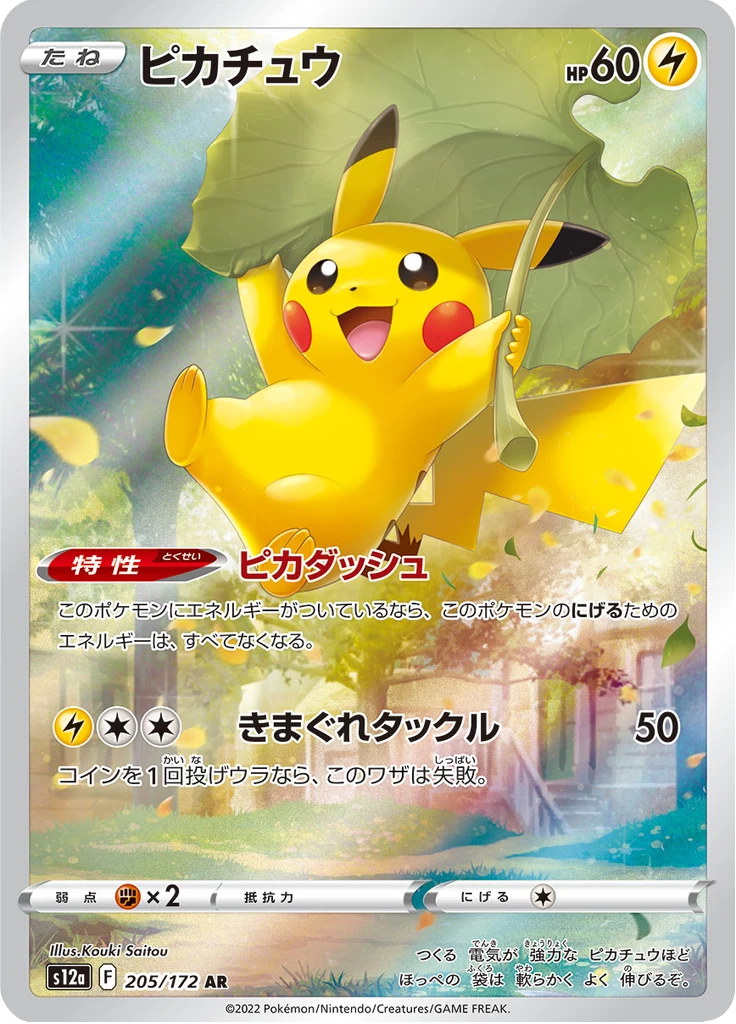
Dream League (SM11b) is a 49-card Japanese subset. Pikachu 054/049 is numbered five higher than the set’s own total. That isn’t a printing error; it’s the standard convention Japanese TCG sets use to flag a bonus-style parallel print, and it’s the reason this particular Pikachu carries the “CHR” — Character Rare — label instead of sitting alongside the regular common print at 016/049.

This guide identifies exactly what the Pikachu 054/049 CHR is, how it differs from the standard Dream League Pikachu, who illustrated it, and where the card number convention comes from. We ship Japanese singles and sealed product out of Tokyo, including a PSA 10 copy of this exact card, so the sourcing details here come from stock we’ve actually handled.

Key Takeaway

Pikachu 054/049 is a CHR (Character Rare) print from Dream League (SM11b), released August 2, 2019 — a 70 HP Basic Lightning-type illustrated by Hitoshi Ariga. Its card number sits above the set’s printed total of 49, the same pattern used for other bonus-style parallel prints in this generation. Our own PSA 10 copy is currently listed at ¥73,700 (~$464).

70
HP

CHR
Rarity Class

49
Main Set Size

2019
Release Year

Exchange rate for USD conversions in this guide: ¥159/USD (September 2026).

What Is the Pikachu 054/049 CHR?

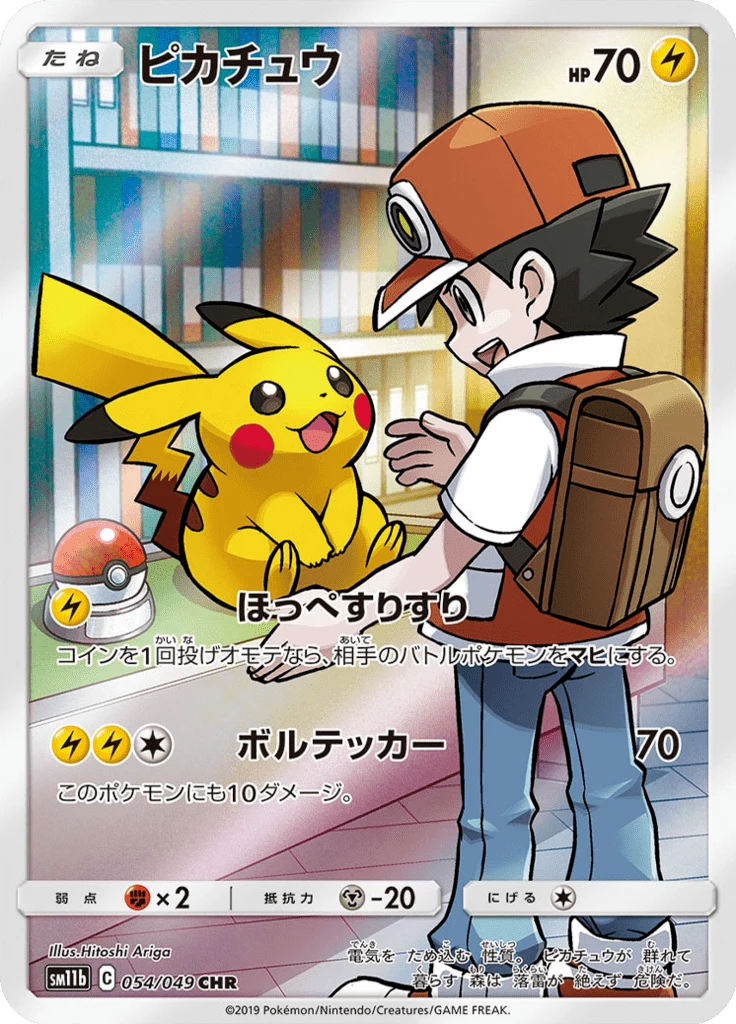
Pikachu 054/049 is a Basic Lightning-type with 70 HP, a Fighting-type weakness, and Metal resistance. It carries two attacks: “ほっべすりすり” (Cheek Rub) and “ボルテッカー” (Volt Tackle). The card was released as part of Dream League, the 18th Japanese subset of the Sun & Moon Era, on August 2, 2019.

Pikachu 054/049 CHR Dream League Japanese Pokemon card
Pikachu 054/049, CHR — Dream League (SM11b)

The “CHR” rarity label and the “054/049” card number are independently corroborated across two separate card databases — one of the more reliable ways to confirm you’re looking at the correct print when a card number doesn’t match the set’s printed total.

The Dream League Set and Where This Card Sits

Dream League (SM11b) has a main set total of 49 cards. A regular, common-rarity Pikachu already exists in that main run at 016/049 — its English-language equivalent is Cosmic Eclipse 66/236, for anyone cross-referencing Western checklists.

Our card, at 054/049, numerically exceeds that 49-card total. In Japanese TCG numbering, a card sitting above the printed set total is the standard convention for a bonus or secret-style parallel print — the same pattern used across other CHR and secret-rarity cards from this generation. It’s not a second “regular” Pikachu; it’s a separate, higher-rarity insert built around the same character.

Quick Way to Check

If the number printed on your card is higher than the set’s stated total, you’re almost certainly holding a bonus-tier parallel rather than a base-set common — check the rarity mark in the corner to confirm.

What Makes a CHR Card Different from a Regular Print

“CHR” stands for Character Rare, a Japanese-exclusive rarity tier introduced during the Sun & Moon Era that reworks a specific Pokemon into fuller, more detailed artwork than its standard counterpart in the same set. Our 054/049 print carries that CHR designation, and it’s listed under the identical “054/049 CHR” description on a second retailer’s card database, independent of the primary reference source — useful confirmation if you’re trying to verify a copy against multiple listings before buying.

One thing we can’t confirm: the exact print run size or how CHR-tier cards like this one were originally distributed within Dream League packs. Neither of our reference sources documents a distribution method for this specific print, so we’re not going to invent a scarcity story here — treat any claim about print numbers or pull odds for this card as unverified until a primary source publishes one.

For more on how this rarity tier compares to others in the Japanese TCG, see our CHR Character Rare Cards collector’s guide.

How to Tell It Apart from the Regular 016/049

Because both cards share the same character and set, the card number in the bottom corner is the fastest way to confirm which one you’re holding.

Pikachu 054/049 CHR Dream League Japanese Pokemon card

Pikachu 054/049 — CHR

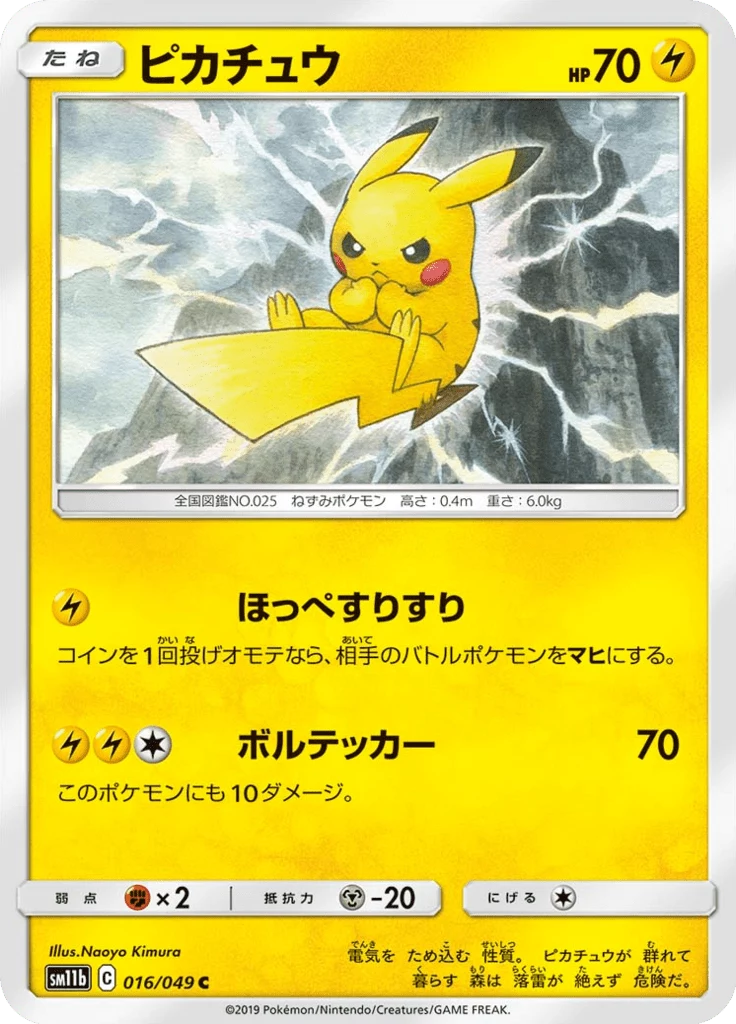
Pikachu 016/049 C Dream League Japanese Pokemon card

Pikachu 016/049 — Regular (C)

The 016/049 copy is the standard common-rarity Pikachu that fills out the main 49-card run. The 054/049 CHR reworks the same character with the fuller Character Rare treatment and sits outside that main numbering entirely. If your card’s number is at or below 049, you’re holding the regular print; if it reads 054/049, it’s the CHR.

The Artist Behind the Card

Pikachu 054/049 CHR was illustrated by Hitoshi Ariga, an artist credited on more than 140 Pokemon cards across the franchise’s history. Ariga’s illustration work spans multiple Japanese subsets from this era, and this Dream League CHR print is one of his contributions to the set.

Other Pikachu Prints from the Same Era

Pikachu is one of the most frequently reprinted characters in the Japanese TCG, and the years around Dream League produced several other promotional versions worth knowing about if you’re building out a Pikachu collection rather than chasing one specific card.

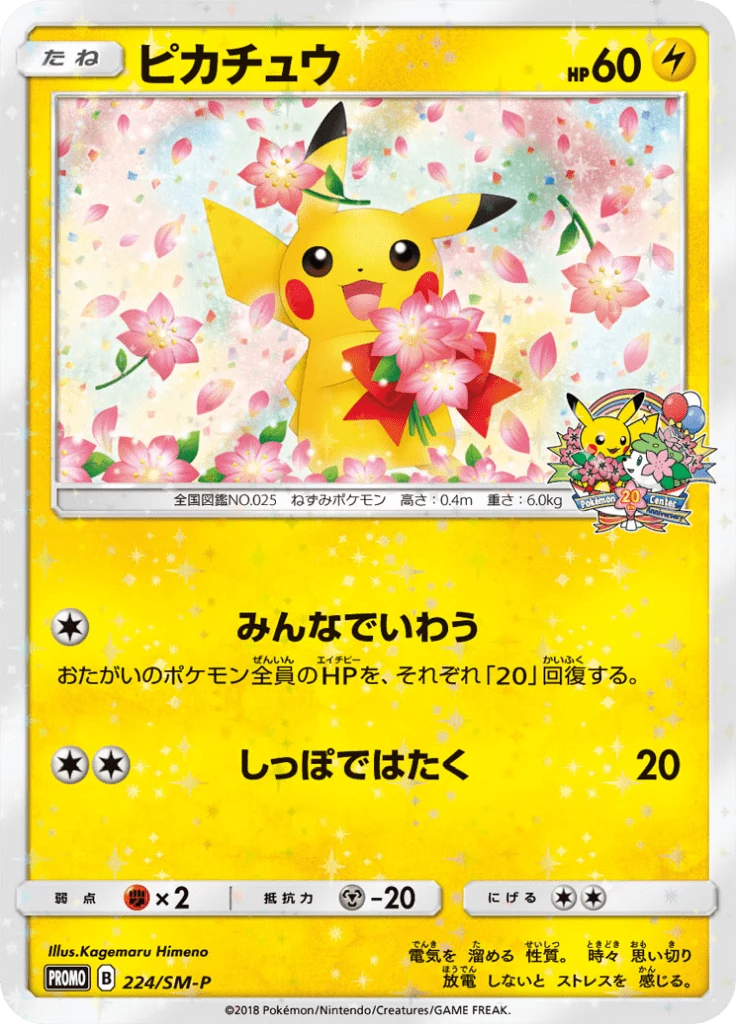
Pikachu 224 SM-P Promotional Japanese Pokemon card

Pikachu — SM-P Promotional #224

Pikachu 1 SV-P Promotional Japanese Pokemon card

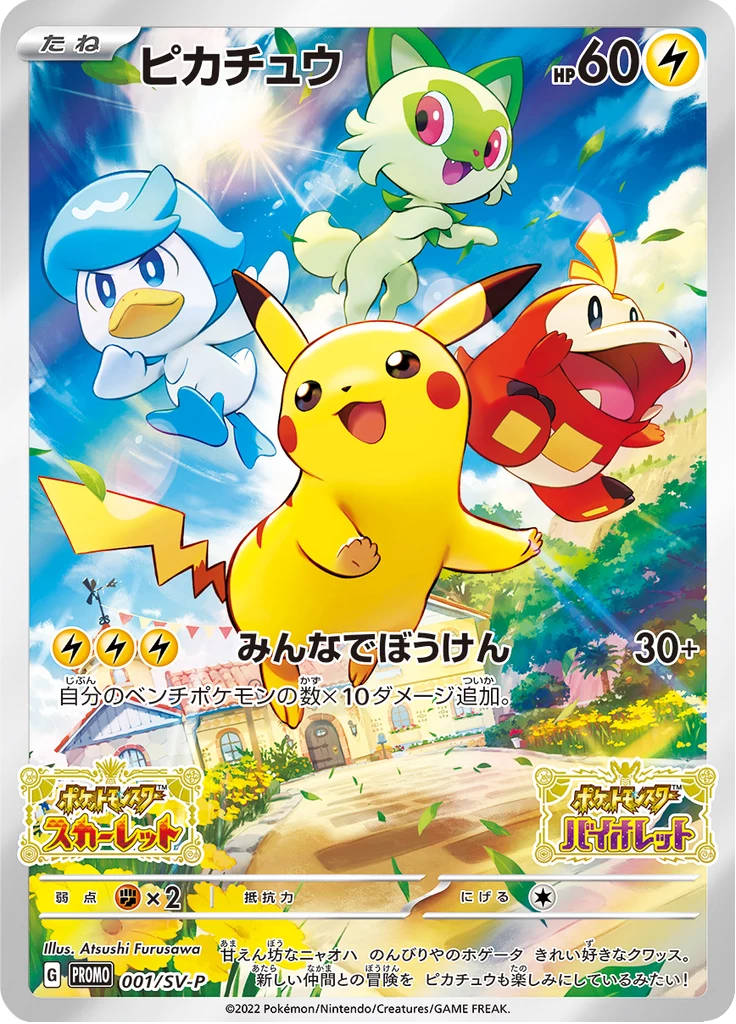
Pikachu — SV-P Promotional #1

These sit in separate promo lines from Dream League and from each other, and we haven’t collected price data on either for this guide — they’re included here purely as reference points for how often Pikachu recurs across Japanese promo cycles. If you’re comparing Pikachu chases more broadly, our Best Pikachu Cards in Japanese Pokemon TCG guide and Top 10 Pikachu Japanese Cards round-up cover the wider field, and our Pikachu VMAX Cards value guide covers the VMAX side of the character’s catalogue.

Our PSA 10 Copy and Why Grading Matters

A PSA 10 graded copy of the Pikachu 054/049 CHR is listed at ¥73,700 (~$464). We don’t have competitor pricing data to compare it against, so we’re presenting our own listing as a single reference point rather than a market-wide valuation.

Grading matters more for CHR-tier cards than it might look at first glance: the fuller character-focused artwork on this rarity tier tends to run edge-to-edge or close to it, which makes centring and edge wear more visible than on a simpler common-rarity frame. A PSA 10 designation confirms the copy has been independently assessed against that standard rather than taken on the seller’s word. For a broader look at how grading affects Pikachu cards specifically, see our PSA 10 Pikachu Japanese Cards buying guide.

Where to Buy the Pikachu 054/049 CHR

We ship Japanese singles and sealed product worldwide from Tokyo with tracked delivery. Our PSA 10 copy of this card is the direct route if you want a graded, verified example rather than sourcing raw.

Shop This Card
PSA 10 Pikachu 054/049 CHR
Currently listed at ¥73,700 (~$464)
Ships from Tokyo · Tracked delivery

View Product →

If this exact copy has already sold or you’re after a different grade or condition, our Quick Order page is the fastest way to send us a request and get sourcing options directly.

자주 묻는 질문

What is Pikachu 054/049 CHR from Dream League?

It’s a Character Rare (CHR) print of Pikachu from the Japanese Dream League (SM11b) set, released August 2, 2019. It’s a 70 HP Basic Lightning-type illustrated by Hitoshi Ariga, distinct from the regular common Pikachu at 016/049 in the same set.

Why does the card number 054/049 exceed the set’s total of 49 cards?

A card number above a set’s printed total is the standard Japanese-TCG convention for a bonus or secret-style parallel print — the same pattern used for other CHR and secret-rarity cards from this generation, rather than an error.

Who illustrated Pikachu 054/049 CHR?

Hitoshi Ariga, an artist credited on more than 140 Pokemon cards across the franchise.

How is Pikachu 054/049 CHR different from Pikachu 016/049?

016/049 is the regular, common-rarity Pikachu in Dream League’s main 49-card run. 054/049 is the Character Rare (CHR) version of the same character, numbered outside that main set and built around fuller artwork.

Where can I buy a PSA 10 graded copy of this card?

We currently list a PSA 10 graded copy at ¥73,700 (about $464), shipped from Tokyo with tracked delivery. If that copy is unavailable, requests can be submitted through our Quick Order page.

Random PSA10 "1 Card" 미스터리 박스: ¥6,300 도박, 과연 살 만할까?

¥6,300 gets you one card. Which card, nobody can tell you in advance — not us, not the listing, not anyone.

The Random PSA10 – 1 Card product on samuraiswordtokyo.com is exactly what the name says: a single, already-graded PSA 10 card, chosen at random, for a flat price. No card list. No published odds. No stated minimum value. That makes it either an interesting way to try graded cards cheaply, or a bad way to spend ¥6,300, depending entirely on information nobody is publishing — including us.

This guide sticks to what is actually verifiable: the price, what the product does and doesn’t tell you, and where that price sits next to individually listed Japanese PSA10 cards we sell separately. We are not going to invent odds, a minimum value, or an expected-value calculation, because none of that data exists in any form we can check.

Key Takeaways

The Random PSA10 – 1 Card product is currently listed at ¥6,300 (~$40 at ¥159/USD, September 2026). It is one randomly selected, PSA 10–graded card — no odds, card pool, or minimum guaranteed value are published anywhere. Separately, our cheapest individually listed PSA10 Japanese cards start around ¥6,800, where you know exactly which card you’re buying before you pay.

¥6,300
Listed Price

~$40
USD at ¥159/USD

1
Card, Randomly Selected

0
Odds Published

Prices are as listed on samuraiswordtokyo.com as of September 1, 2026, converted at ¥159/USD. Live prices can move after publish date — check the product page for the current figure.

What the Random PSA10 Product Actually Is

The listing is titled Random PSA10 – 1 Card, and the product itself is one unit: a single trading card that has already been graded PSA 10 by PSA, selected at random rather than chosen by the buyer. You don’t pick a franchise, a set, or a card — you pay the listed price and receive whatever card is allocated. If you’re new to what a PSA 10 grade actually signifies, our guide to what PSA 10 means on a Pokemon card covers the grading side separately from this product.

That’s the entire product description we can verify. There is no accompanying list of which cards are eligible to be pulled, no breakdown by franchise or set, and no card gallery tied to this specific listing. Anything beyond “one random PSA10 card for a fixed price” would be us guessing, so we’re not going to do that.

Price: ¥6,300 (~$40)

The Random PSA10 – 1 Card product is currently listed at ¥6,300 (~$40 at ¥159/USD, September 2026). It’s a single price point — there’s no tiered version of this product (no “premium” random box at a higher price, no bulk discount for ordering more than one) in our current catalogue.

That price buys you a PSA 10–graded card and nothing else — no choice of card, no visibility into what’s being selected from, and no stated floor on what the card might be worth. Whether that’s a reasonable price depends entirely on information the listing doesn’t provide, which brings us to the actual problem with evaluating this product.

What We Don’t Know — And Why It Matters

Here is the honest gap in this product, stated plainly: we do not know, and cannot find published anywhere, any of the following about the Random PSA10 – 1 Card listing:

  • The odds of receiving any specific card, franchise, set, or rarity tier.
  • The composition of the pool the card is drawn from — how many distinct cards, what range of grades beyond “PSA 10,” or which franchises are included.
  • A minimum guaranteed value for the card you receive.
Why We’re Not Calculating “Expected Value”

An expected-value calculation for a random product needs two inputs: the range of possible outcomes, and the odds of each one. Neither is published for this listing. Any number you see elsewhere claiming to tell you the “average value” of this specific product is not something we can verify, and we’re not going to manufacture one here.

This isn’t a criticism unique to this listing — blind and randomised card products across the hobby generally don’t publish pull rates. It just means the honest answer to “is it worth it” is that nobody outside the person building the pool actually knows, and that includes us.

What Individually Listed Japanese PSA10 Promos Look Like

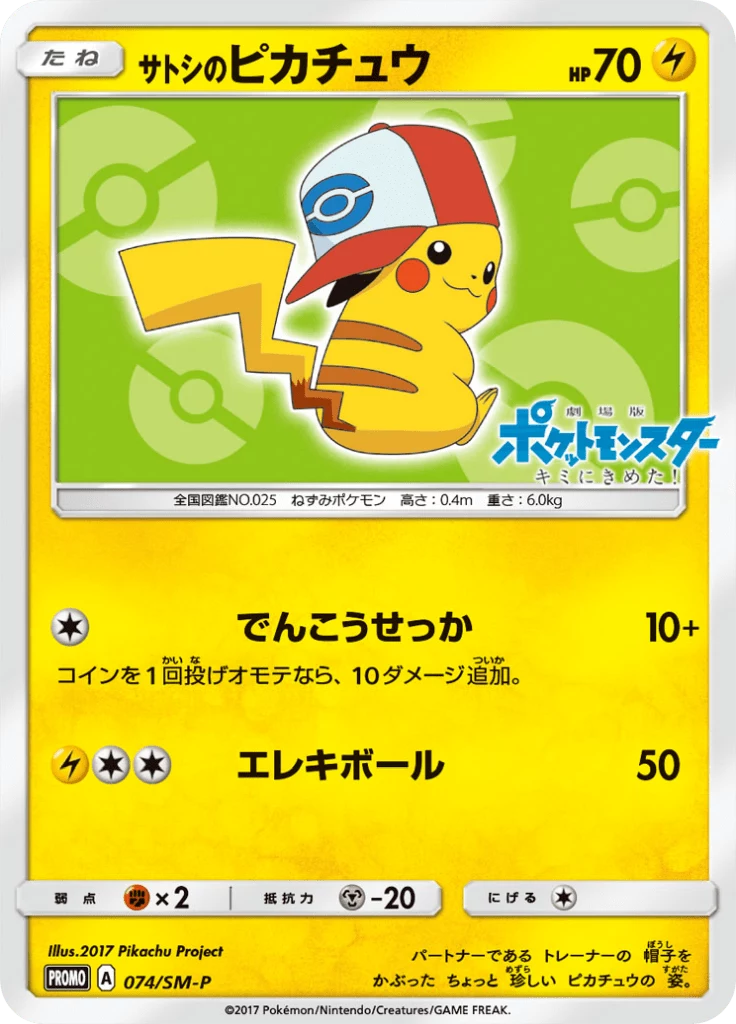
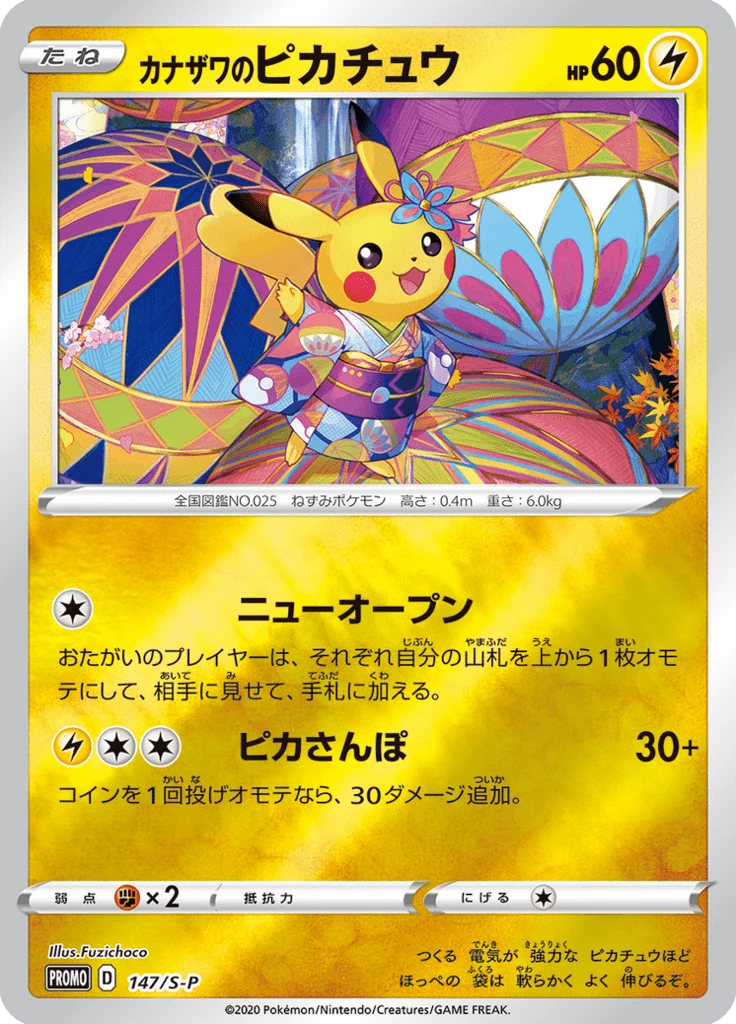
To be clear before this section: none of the cards shown below are connected to the Random PSA10 – 1 Card product. We have no data linking any specific card to that listing’s pool. These are simply examples of Japanese PSA10 promo cards from our own catalogue, shown here so you can see what an individually graded, individually listed Japanese card looks like in hand — the kind of thing you’d be choosing directly if you bought a named card instead of a random one.

Ash's Pikachu SM-P 074 Japanese promo card

Ash’s Pikachu, SM-P 074 (Japanese promo)

Kanazawa Pikachu No Mark S-P 147 Japanese promo card

Kanazawa Pikachu No Mark, S-P 147 (Japanese promo)

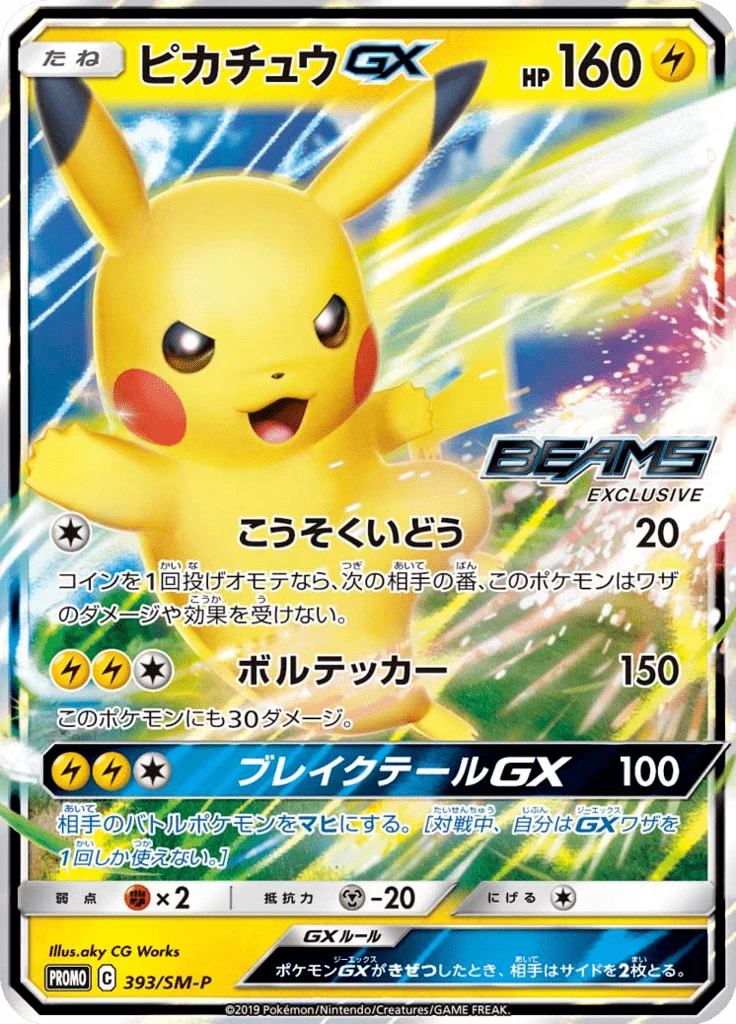
Pikachu GX SM-P 393 Japanese promo card

Pikachu GX, SM-P 393 (Japanese promo)

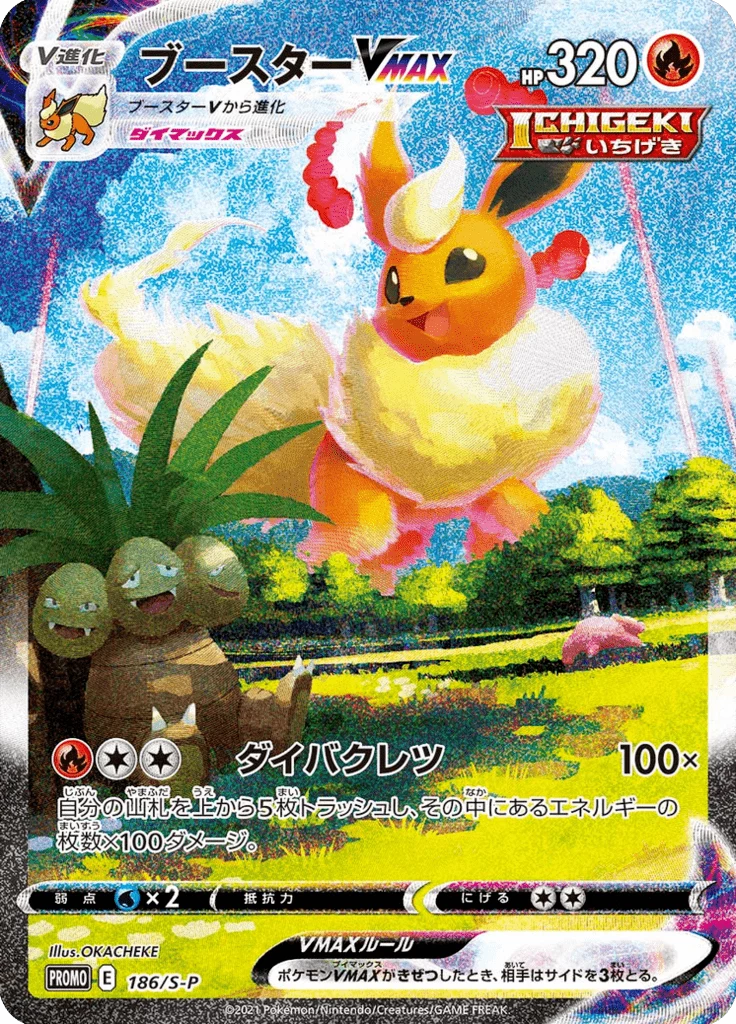
Flareon VMAX Summer S-P 186 Japanese promo card

Flareon VMAX Summer, S-P 186 (Japanese promo)

With a named card, what you see is what you get, before you pay — card, number, rarity, set, all fixed. That certainty is the trade-off you give up with a random product, in exchange for a lower entry price and the novelty of not knowing.

Where ¥6,300 Sits Against Named PSA10 Cards

Separately from the Random PSA10 – 1 Card product, we also sell individually listed, individually graded PSA10 Japanese cards where the card is fixed and known before you buy. Our cheapest examples currently in that category price close to the random product’s ¥6,300, which gives a useful reference point — not a claim about what the random product might contain.

상품 카드 가격
Random PSA10 – 1 Card Unknown — randomly selected ¥6,300 (~$40)
Individually listed PSA10 single Team Rocket’s Murkrow AR [SV10 106/098] ¥6,820 (~$43)
Individually listed PSA10 single Friends of Paldea SR [SV8a 195/187] ¥7,700 (~$48)

Read that table as a price comparison only. Separately, other individually listed PSA10 cards in our catalogue start around ¥6,800 — close to the random product’s ¥6,300 — but those two named cards are not possible outcomes of the Random PSA10 listing, and we have no evidence connecting the two products in any way. The difference is what you’re actually paying for: with the named cards above, the specific card is guaranteed before you check out; with the random product, only the grade (PSA 10) and the price are fixed. For a sense of what the top of the same PSA10 market looks like by contrast, see our roundup of the most expensive PSA 10 Pokemon cards we’ve listed.

Who This Product Actually Suits

Given what is and isn’t known, a few honest use cases stand out:

  • Buyers who want a low-cost way to own a graded card, full stop. ¥6,300 gets you a slabbed PSA 10 card of some kind, without needing to research or choose a specific one.
  • Collectors treating it as a novelty add-on to a larger order. As one item alongside sealed product or chosen singles, the unknown factor is a small, contained variable rather than the whole purchase.
  • Buyers who want certainty over cost. If knowing exactly which card you’ll receive matters more than the price, an individually listed PSA10 single — like the two named above — removes the unknown entirely, usually for a similar or only slightly higher price. Our broader PSA10-versus-raw comparison covers that trade-off in more general terms.

What it isn’t, based on the information available, is a calculable value play. Without published odds or a disclosed pool, there’s no way to state that the card you receive will be worth more, less, or the same as ¥6,300 — and we’re not going to frame it as either a bargain or a loss when the underlying numbers to make that call don’t exist publicly. If you’re buying PSA10 cards with resale or bulk sourcing in mind rather than as a one-off purchase, see our notes on Japanese graded cards for resellers and buying PSA10 cards in bulk from Japan — both are about named, chosen cards rather than random ones.

Where to Buy

The Random PSA10 – 1 Card product is currently listed at ¥6,300 (~$40) on samuraiswordtokyo.com, shipping from Tokyo.

Shop This Product
Random PSA10 – 1 Card
One randomly selected PSA10-graded card — currently ¥6,300 (~$40)
Ships from Tokyo · Tracked delivery

View Product →

If you’d rather choose your card outright, our individually listed PSA10 singles — including Team Rocket’s Murkrow AR at ¥6,820 (~$43) and Friends of Paldea SR at ¥7,700 (~$48) — sit in the same price range with the card fixed in advance. For a mixed order across either product type, our Quick Order page is the fastest way to build one out.

자주 묻는 질문

What exactly is the Random PSA10 – 1 Card product?

It’s a single trading card that has already been graded PSA 10, selected at random rather than chosen by the buyer. Samurai Sword Tokyo does not publish a list of which cards can appear, so the specific card you receive is unknown until it arrives.

How much does the Random PSA10 – 1 Card cost?

It is currently listed at ¥6,300, about $40 at ¥159/USD (September 2026 rates).

Are the odds of getting a specific card published anywhere?

No. There is no published data on the odds of any particular card, rarity, or value tier, and no minimum guaranteed value is stated for this product. Any expected-value claim would require that data, and it does not exist publicly.

Is a Random PSA10 card guaranteed to be worth more than ¥6,300?

There is no guarantee either way. Because the selection pool and odds are not published, it is not possible to state that the card received will be worth more, less, or the same as the ¥6,300 price.

How does ¥6,300 compare with buying an individually listed PSA10 card?

Separately, our individually listed PSA10 Japanese cards start around ¥6,800 for specific, chosen cards, such as Team Rocket’s Murkrow AR (SV10 106/098) at ¥6,820 and Friends of Paldea SR (SV8a 195/187) at ¥7,700. Those are fixed, known cards; the Random PSA10 product does not offer that certainty.

SV2D Clay Burst vs SV2P Snow Hazard: 박스 가이드

Same release date. Same card count. Two different boxes.

SV2D Clay Burst and SV2P Snow Hazard hit the Japanese market on the same day back in April 2023, and together they make up the Japanese-language half of what English-language collectors know as Paldea Evolved. If you’re trying to work out which one to add to a Scarlet & Violet-era collection — or whether you need both — this guide lines up what’s actually verified about each set: release facts, one confirmed card from each, and the sealed box prices we currently list out of Tokyo.

Key Takeaways

SV2D Clay Burst and SV2P Snow Hazard both released in Japan on April 14, 2023, each with 99 cards, forming the Japanese basis for the English “Paldea Evolved” set. Both are listed on our site as sealed Japanese booster boxes: SV2D Clay Burst is currently listed at ¥11,270, and SV2P Snow Hazard at ¥12,250. We have not independently verified pull-rate figures or a mascot ex Pokémon for either set — see the dedicated pull-rate articles linked below for that detail.

2
Twin Sets Compared

99
Cards in Each Set

Apr 14, 2023
Japan Release Date

2nd
SV-Era Twin Pairing

Prices below are our current store listings as of September 2026, converted at ¥159/USD for reference.

SV2D vs SV2P at a Glance

SV2D Clay Burst and SV2P Snow Hazard are the second twin-set pairing of the Scarlet & Violet era in Japan, following the earlier SV1S/SV1V split. Both carry 99 cards, both released on the same day, and combined they form the Japanese card pool behind the English-language Paldea Evolved set.

세트 세트 코드 Cards Release date Our listed price
Clay Burst SV2D 99 April 14, 2023 ¥11,270
Snow Hazard SV2P 99 April 14, 2023 ¥12,250

On paper the two sets are structurally identical — same card count, same release day, same era. The differences that matter for a buying decision come down to the individual cards each set contains and the price gap between the two sealed boxes, both covered below.

SV2D Clay Burst: What’s Inside

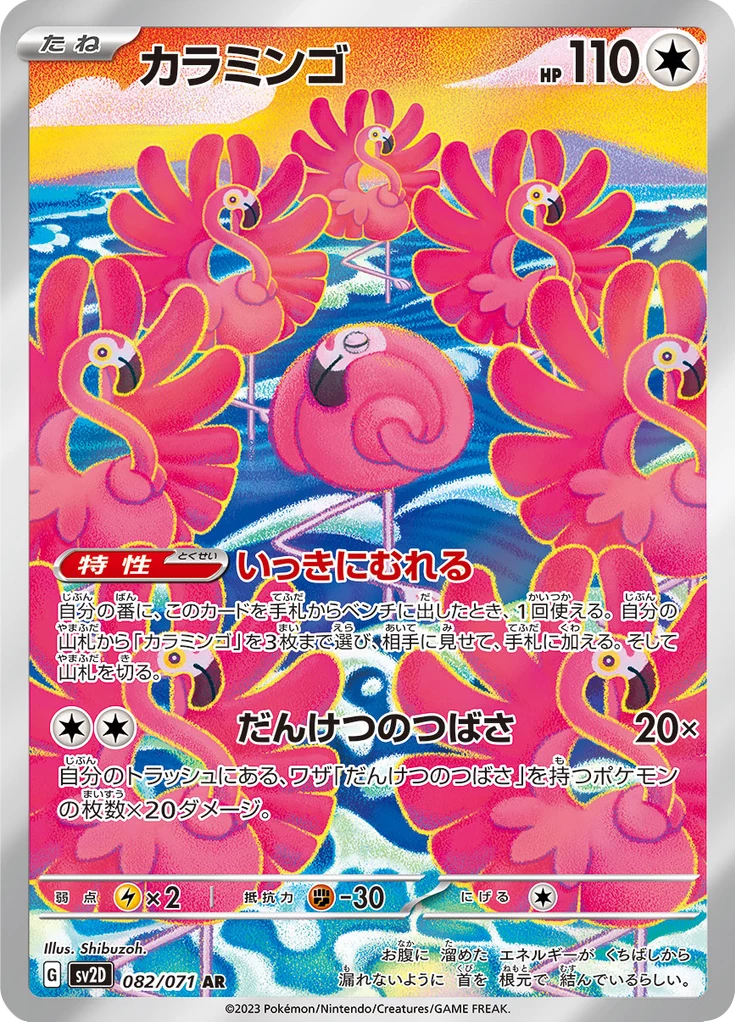
SV2D Clay Burst is a 99-card Japanese set released April 14, 2023. One verified card from the set is Flamigo, card SV2D 082/071, an Art Rare with 110 HP, Colorless type, illustrated by Shibuzoh.

Flamigo SV2D 082/071 Art Rare Japanese Pokemon card from Clay Burst
Flamigo, SV2D 082/071, Art Rare — SV2D Clay Burst

For the complete 99-card checklist, see our Clay Burst (SV2D) complete card list. We haven’t independently verified pull-rate figures for this set in this guide — our SV2D pull-rates and best-cards article covers that separately. A sealed SV2D Clay Burst booster box is currently listed at ¥11,270 (~$71) on our site, shipping from Tokyo.

SV2P Snow Hazard: What’s Inside

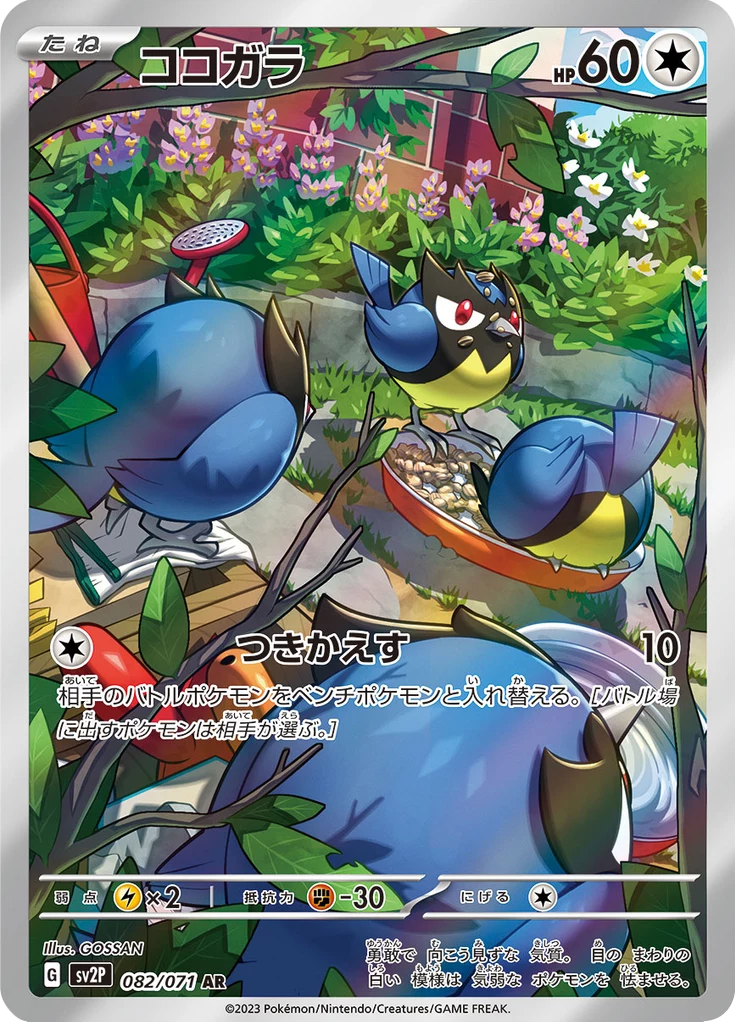
SV2P Snow Hazard is also a 99-card Japanese set, released the same day as SV2D — April 14, 2023. One verified card from this set is Rookidee (ココガラ), card SV2P 082/071, also an Art Rare, with 60 HP, Colorless type, illustrated by GOSSAN.

Rookidee SV2P 082/071 Art Rare Japanese Pokemon card from Snow Hazard
Rookidee, SV2P 082/071, Art Rare — SV2P Snow Hazard

Notice both sets land their Art Rare at card 82 of 99 — Flamigo for SV2D, Rookidee for SV2P. That’s a structural echo, not a coincidence unique to these two, and it’s the kind of detail worth checking if you’re trying to identify a loose card. Full spoilers for this set are in our Snow Hazard (SV2P) complete card list, and pull-rate specifics are in the SV2P pull-rates and best-cards article rather than repeated here. A sealed SV2P Snow Hazard booster box is currently listed at ¥12,250 (~$77).

Same Day, Same Era: How the Two Sets Connect

SV2D and SV2P aren’t a random pairing. They’re the second time the Scarlet & Violet era used the Japanese twin-set format — splitting one English-language set’s card pool across two simultaneous Japanese releases, the way SV1S and SV1V did before them. Combined, SV2D Clay Burst and SV2P Snow Hazard supply the Japanese card pool behind the English Paldea Evolved set.

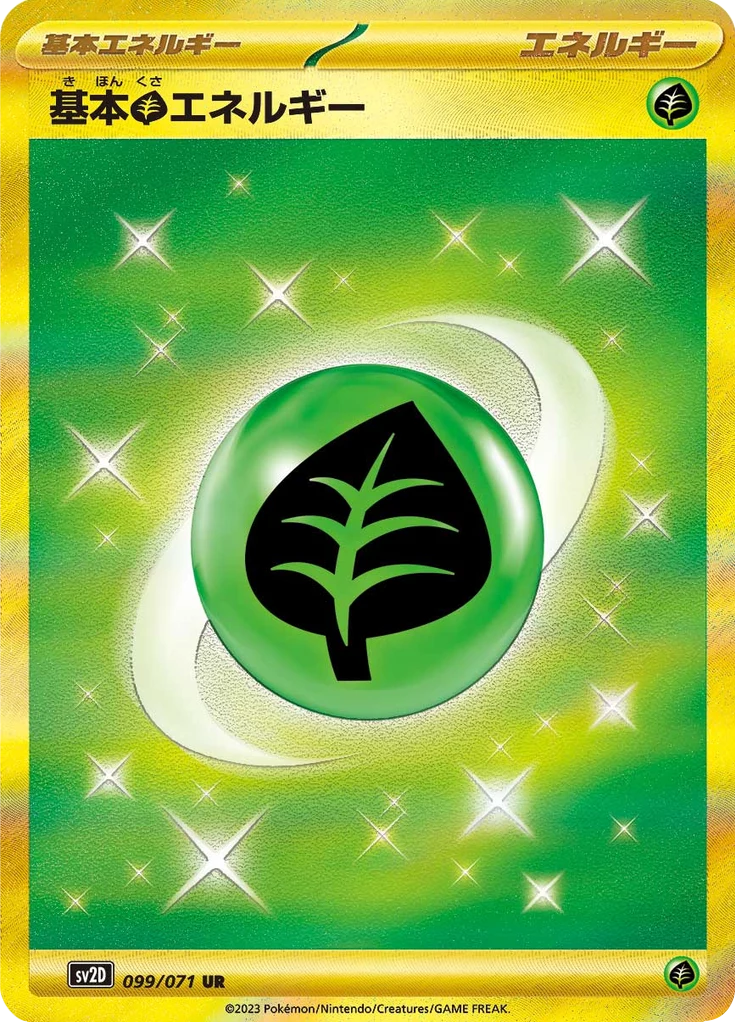
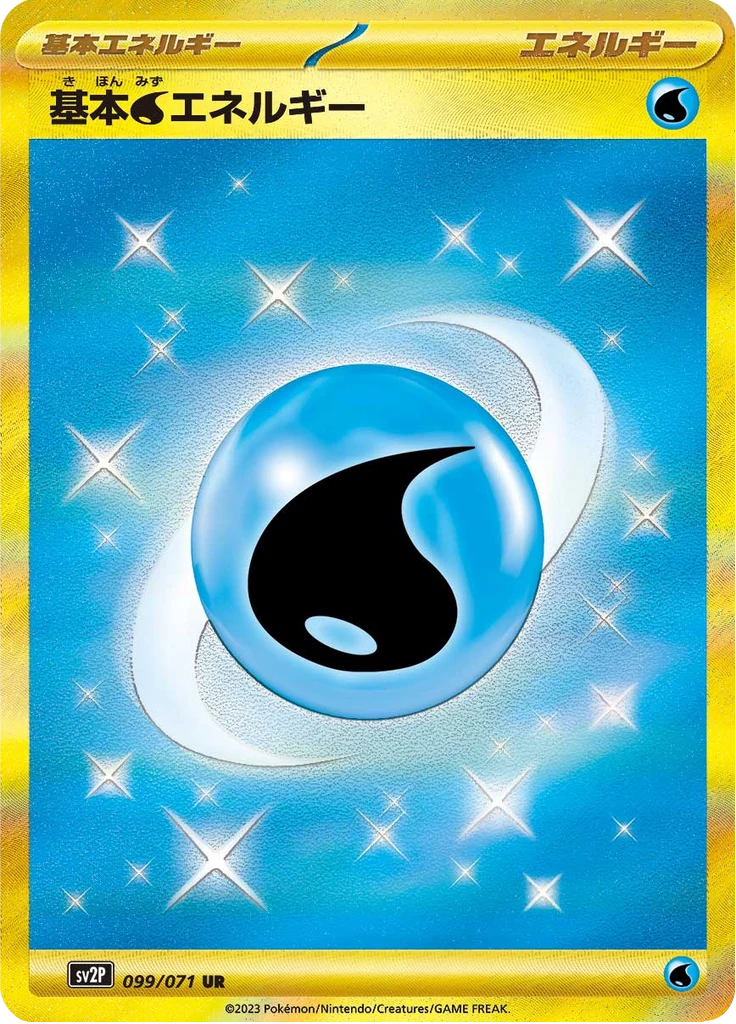
The two sets also share a quieter structural detail: each one closes out its numbered checklist with a full-art Ultra Rare Basic Energy card at slot 99 of 99. SV2D ends on a Grass Energy; SV2P ends on a Water Energy. Neither is flashy compared to the Art Rares, but both are legitimate Ultra Rare slots and a useful marker if you’re trying to confirm you have a complete set.

Basic Grass Energy SV2D 099/071 Ultra Rare full-art Japanese Pokemon energy card
Basic Grass Energy, SV2D 099/071, Ultra Rare — SV2D Clay Burst
Basic Water Energy SV2P 099/071 Ultra Rare full-art Japanese Pokemon energy card
Basic Water Energy, SV2P 099/071, Ultra Rare — SV2P Snow Hazard

Price Comparison: Clay Burst vs Snow Hazard

Both boxes come from the same era and the same card count, but they don’t currently list at the same price. Here’s the direct comparison of our own current listings, shipping from Tokyo:

박스 Currently listed at Approx. USD
SV2D Clay Burst ¥11,270 ~$71
SV2P Snow Hazard ¥12,250 ~$77

That’s roughly a ¥980 gap between the two sealed boxes. We haven’t verified packs-per-box or cards-per-pack counts for either set, so we can’t translate that gap into a per-pack or per-card comparison — treat it as a box-to-box price difference only.

On the Price Gap

A single listed price per box doesn’t tell you which set has moved more in the secondary market since 2023 — we don’t have independently verified secondary-market data for either set beyond our own current sealed-box listings. Treat the figures above as “currently listed at,” not as a historical price trend.

Which Box Should You Buy?

There’s no verified pull-rate or profitability data separating SV2D from SV2P, so this isn’t a case where one box is objectively the stronger buy. What we can say from the confirmed facts:

  • Set completeness. Because SV2D and SV2P together form the Japanese basis for Paldea Evolved, collectors chasing the full English-equivalent card pool typically want both rather than one or the other.
  • Budget. SV2D Clay Burst is currently the cheaper of the two sealed boxes at ¥11,270 versus ¥12,250 for SV2P Snow Hazard — a modest but real difference if you’re choosing just one.
  • Art preference. The one verified Art Rare from each set carries a different illustrator — Shibuzoh’s Flamigo for SV2D, GOSSAN’s Rookidee for SV2P. If a specific illustration style is the deciding factor, check the full checklists linked above before buying, since we’ve only independently verified one card per set here.

If pull rates matter to your decision, don’t rely on this guide for that — check the dedicated SV2D pull-rates article and SV2P pull-rates article for that specific data.

Where to Buy SV2D and SV2P from Japan

We ship sealed Japanese booster boxes worldwide from Tokyo with tracked delivery. Both SV2D Clay Burst and SV2P Snow Hazard are currently in our catalogue as sealed boxes.

Shop This Set
SV2D Clay Burst Japanese Pokemon Booster Box
Currently listed at ¥11,270
Ships from Tokyo · Tracked delivery

View Product →

Prefer Snow Hazard, or want both? The SV2P Snow Hazard booster box is listed separately at ¥12,250. For singles from either set or a mixed order across both, our Quick Order page is the fastest way to build a combined order.

자주 묻는 질문

What’s the difference between SV2D Clay Burst and SV2P Snow Hazard?

They’re the twin Japanese sets released on the same day, April 14, 2023, each with 99 cards. Together they form the Japanese basis for the English “Paldea Evolved” set. The verified Art Rares differ — Flamigo (SV2D 082/071, illustrated by Shibuzoh) versus Rookidee (SV2P 082/071, illustrated by GOSSAN) — and the two sealed boxes currently list at different prices.

When were SV2D and SV2P released?

Both released in Japan on April 14, 2023, on the same day.

How many cards are in each set?

99 cards each.

Which set has better pull rates?

We haven’t independently verified pull-rate figures for either set in this guide. See our dedicated SV2D and SV2P pull-rates articles for that specific data rather than treating anything here as a pull-rate claim.

Is there an English equivalent to SV2D and SV2P?

Yes — combined, the two Japanese sets correspond to the English-language “Paldea Evolved” set.

Charizard V SSR 307/190: Shiny Star V의 Shiny Vault 체이스를 위한 PSA 10 가이드

Two Charizard cards can sit side by side in the same binder page, share the same artist credit, and still sell for very different prices — because one carries a card number from inside a set’s Shiny Vault sub-checklist, and the other doesn’t.

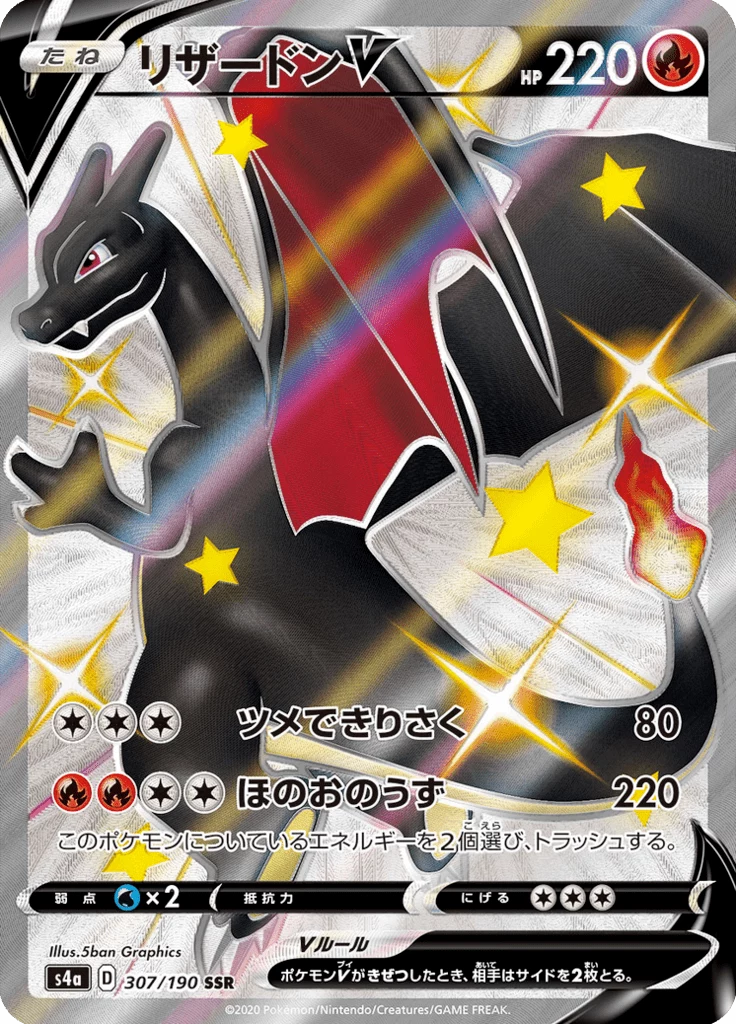
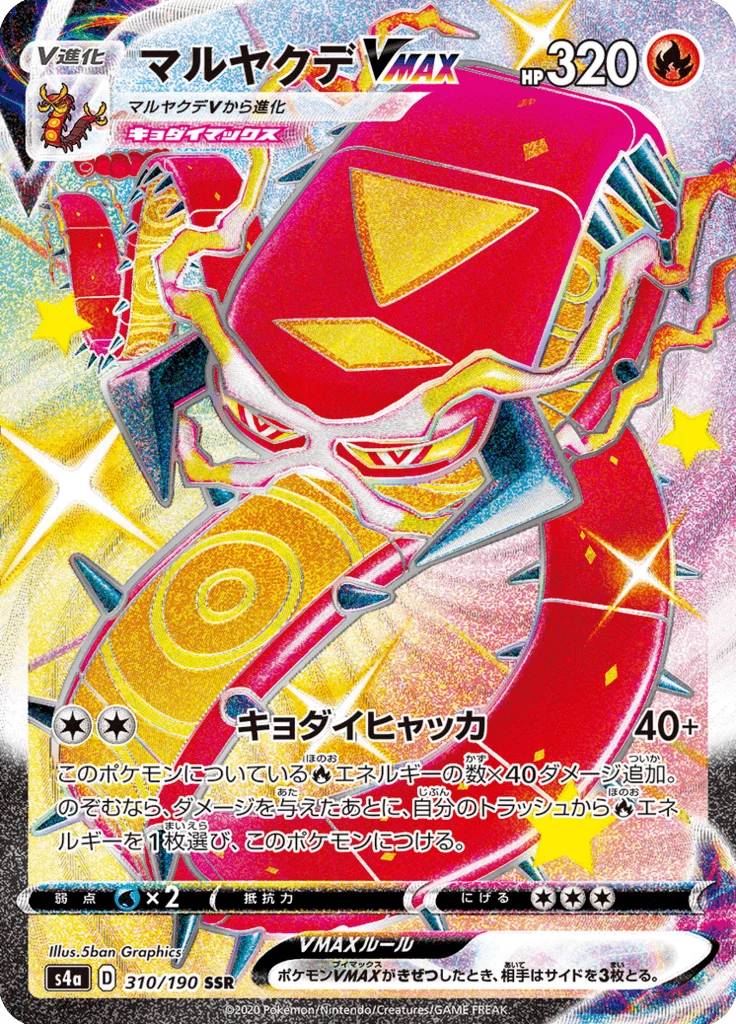
Charizard V, card number 307/190, is that first kind of card. It comes from the Shiny Vault inside Shiny Star V (S4a), the Japanese high-class pack Pokemon released on November 20, 2020, with 326 cards total. The “307” in its number sits well above the set’s 190-card base checklist — the tell that a print belongs to the Shiny Vault sub-set rather than the main set.

This guide covers what the card actually is, why you’ll see its rarity written two different ways, how Shiny Star V relates to the English-market Shining Fates release, and what our own PSA 10 copy is currently listed at.

Key Takeaway

Charizard V SSR (307/190) is a Shiny Vault print from Shiny Star V (S4a), Japan’s November 2020 high-class pack with 326 cards total. Limitless Card Database labels its rarity tier “Shiny Ultra Rare”; the shorthand overseas collectors commonly use for it is SSR. Our own PSA 10 copy is currently listed at ¥41,908 (~$264).

326
Cards in Shiny Star V

307/190
Card Number

2020
Japan Release Year

$264
Current Listing (Ours)

Prices are converted at ¥159/USD (September 2026). The only price referenced in this guide is our own current listing — no third-party auction or marketplace prices have been verified for this specific card.

What Is Charizard V SSR 307/190?

Charizard V SSR card number 307/190 Shiny Star V Japanese Pokemon card
リザードンV / Charizard V, card number 307/190, Shiny Star V (S4a) — artist 5ban Graphics

The Japanese name printed on the card is リザードンV (Charizard V). It was illustrated by 5ban Graphics and carries card number 307/190. The “/190” is the base-set checklist total for Shiny Star V, and any card numbered above that count belongs to the set’s Shiny Vault sub-checklist rather than the main 190-card set.

Shiny Star V (S4a) itself is a Japanese “Shiny Vault” high-class pack, released on November 20, 2020, with 326 cards total across the full set once the base checklist and Shiny Vault sub-set are combined.

If you’re chasing the modern Mega Evolution mechanic instead, that’s a different lineage entirely — our Mega Charizard X ex guide covers every printing from the Inferno X MUR down to vintage XY prints. This 307/190 card predates that mechanic and uses the Pokemon V system instead, with no Mega Evolution involved.

Inside Shiny Star V’s Shiny Vault

The Shiny Vault is the reason Shiny Star V remains one of the most talked-about Japanese sets from the Sword & Shield era. It’s the block of cards numbered above the 190-card base checklist, running up through the set’s overall total of 326, and it groups shiny-color reprints of that generation’s key Pokemon V and VMAX cards together in one dedicated chase section.

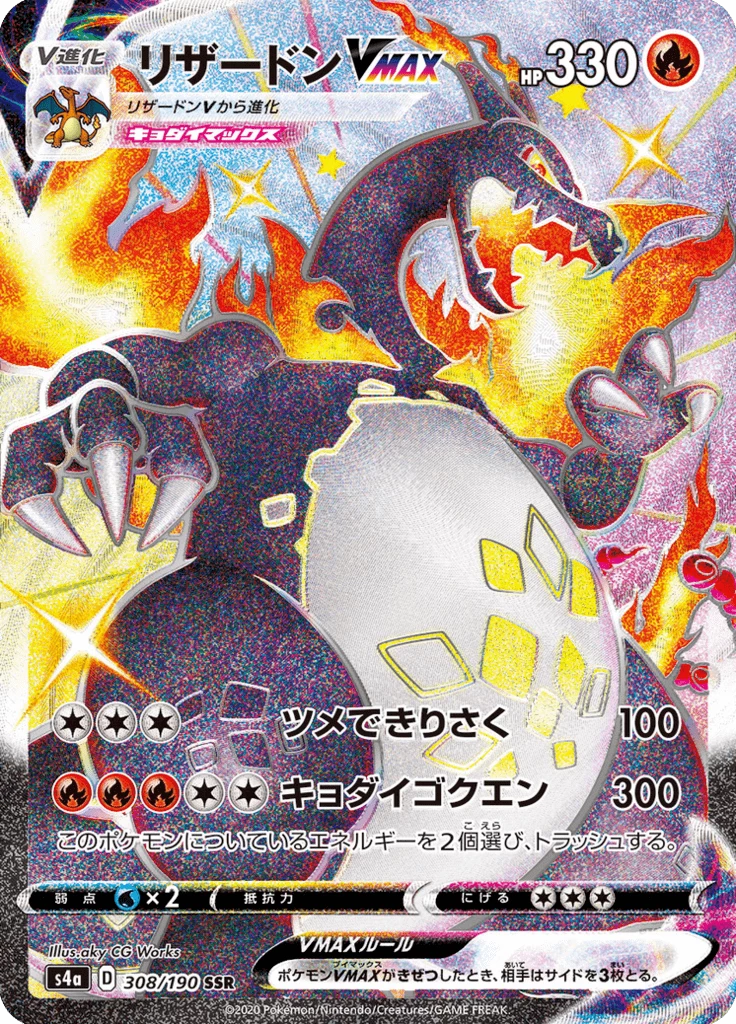
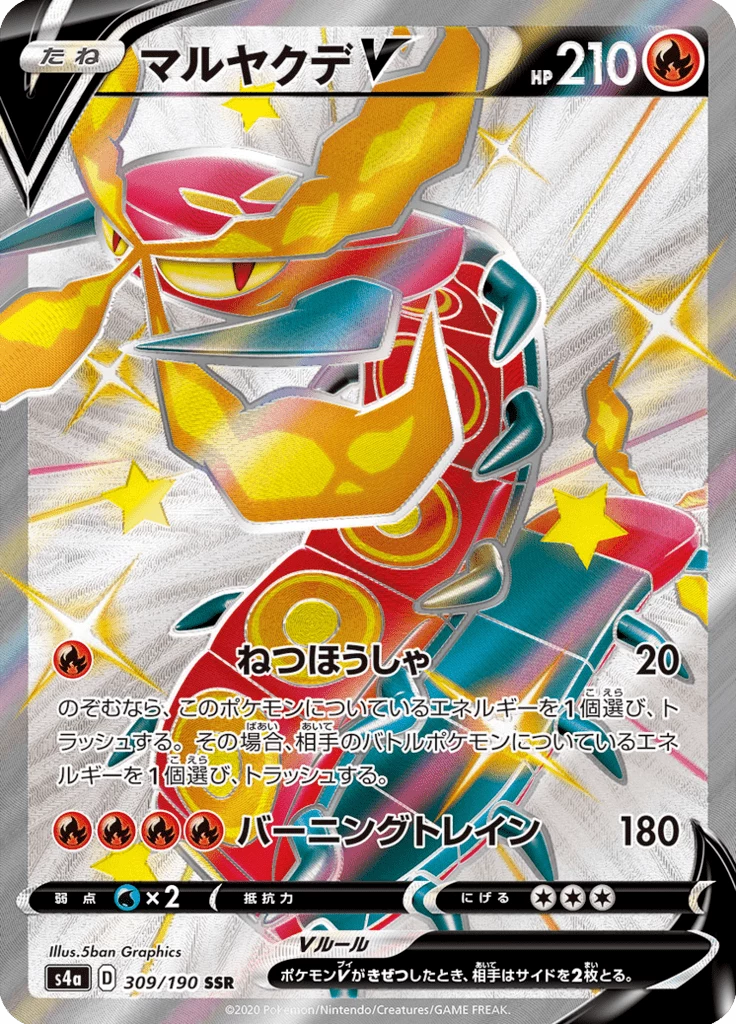
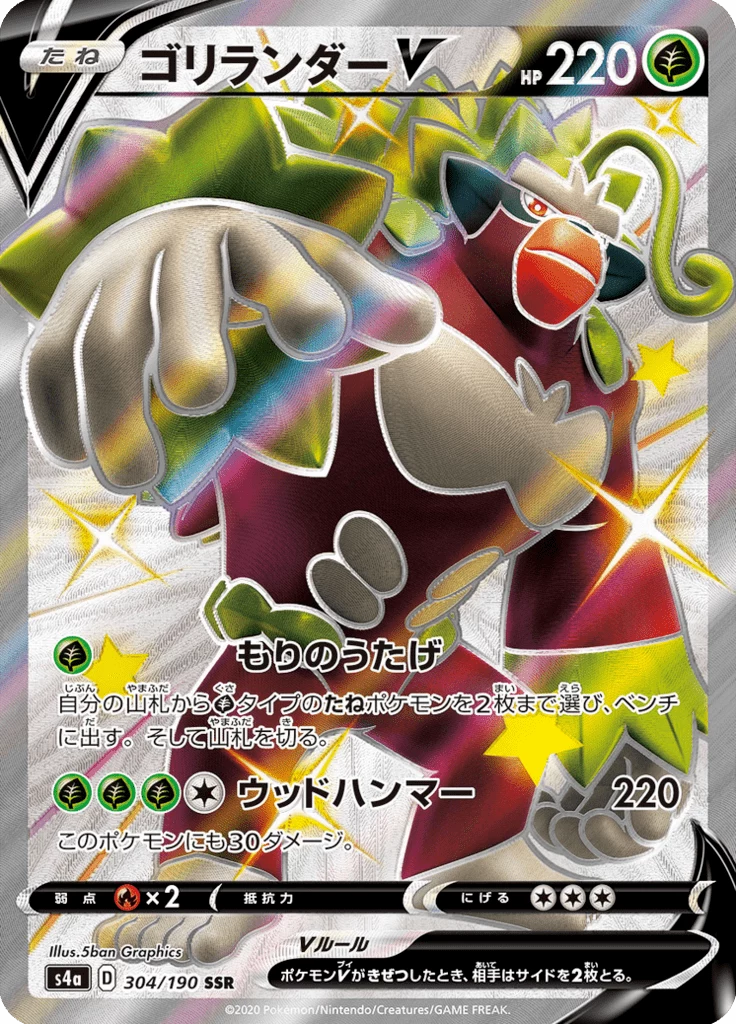
Charizard V at 307/190 sits inside that block, and it isn’t alone. Its own VMAX evolution appears in the same Shiny Vault, alongside other Pokemon V/VMAX shiny reprints from the set.

Charizard VMAX SSR card number 308/190 Shiny Star V

Charizard VMAX SSR — 308/190 — Shiny Star V (S4a)

Centiskorch V SSR card number 309/190 Shiny Star V

Centiskorch V SSR — 309/190 — Shiny Star V (S4a)

Shiny Star V card number 304/190 Shiny Vault

Shiny Vault card — 304/190 — Shiny Star V (S4a)

Reading the Card Number

Charizard VMAX at 308/190 evolves directly from Charizard V at 307/190, and both sit in the same Shiny Vault — a useful pairing if you’re building the evolution line rather than a single card.

For the full 326-card checklist, see our Top 10 Charizard Japanese Cards Ranked guide for how this print compares across eras — that article is a ranked roundup spanning multiple sets, while this one stays focused on the single 307/190 SSR print.

SSR, Shiny Super Rare, or Shiny Ultra Rare?

One thing that trips up buyers researching this card is the rarity label itself. Limitless Card Database, which catalogues the card at card number 307, lists the tier as “Shiny Ultra Rare.” Overseas collectors, however, commonly render the same Japanese-side rarity as “Shiny Super Rare,” abbreviated SSR — and that’s the label our own listing and roster use.

These aren’t two different cards or two different tiers — it’s one rarity slot with two names circulating in English-language collector shorthand. When you see “SSR 307/190” and “Shiny Ultra Rare 307/190” used for the same card, they refer to the identical print.

We haven’t verified exact pull odds for the Shiny Vault SSR slot in Shiny Star V, so we won’t state a number here. If pull-rate data is something you need for opening product from this set, treat any figure you find elsewhere as unconfirmed unless it cites a source.

Shiny Star V vs Shining Fates: Related, Not Identical

Shiny Star V card number 310/190 Shiny Vault Japanese Pokemon card
Another Shiny Vault card from the same 326-card Shiny Star V (S4a) set — card number 310/190

Shiny Star V (S4a) is the Japanese-side product. Its English-market counterpart is Shining Fates, which localised the same Shiny Vault concept under its own English-side rarity naming for shiny cards.

It’s important not to treat these as the same release, though. Shiny Star V and Shining Fates are separate market products with separate print runs, sold in different regions on different schedules. A Shiny Star V 307/190 and a Shining Fates equivalent are not interchangeable copies of one print — they’re parallel releases of the same design concept in two languages.

For more on how Japanese chase cards compare with their PSA 10 counterparts generally, our PSA 10 Charizard Japanese Cards buying guide covers the wider category; this article stays specific to the 307/190 SSR print rather than surveying the full Charizard PSA 10 market.

What This Card Is Worth Today

Detail Value
Card name リザードンV / Charizard V
세트 Shiny Star V (S4a)
Card number 307/190
Rarity SSR (Shiny Ultra Rare)
Artist 5ban Graphics
Japan release date November 20, 2020
Our PSA 10 price ¥41,908 (~$264)

Our own PSA 10 graded copy is currently listed at ¥41,908 (~$264). We haven’t fetched or verified third-party auction or marketplace prices for this specific card, so this listing is the only price point we can state with confidence — treat any outside figure you encounter separately as unverified against our own data.

To see how this listing sits within our broader Charizard price range, our Most Expensive PSA 10 Japanese Pokemon Cards We Have Listed price ladder is a useful reference point.

Shop This Card
PSA10 Charizard V SSR 307/190 (Shiny Star V)
Currently listed at ¥41,908 (~$264)
Ships from Tokyo · Tracked delivery

View Product →

Where to Buy Charizard V SSR from Japan

We ship graded singles and sealed Japanese product worldwide from Tokyo with tracked delivery. Our PSA 10 copy of Charizard V SSR 307/190 is currently listed at ¥41,908 (~$264), and it’s the exact Shiny Star V print covered throughout this guide.

If you’re building out the same Shiny Vault set — the VMAX evolution, Centiskorch V, or other numbered entries — or looking for a different Charizard era such as the 30th Celebration reprint (137/103) or the 25th Anniversary promo (001/025), our Quick Order page is the fastest way to build a mixed order across singles and sealed product.

자주 묻는 질문

What is Charizard V SSR 307/190?

It’s the Charizard V print from the Shiny Vault sub-set of Shiny Star V (S4a), a Japanese high-class pack released November 20, 2020, with 326 cards total. Card number 307/190 places it above the set’s 190-card base checklist, and it was illustrated by 5ban Graphics.

Is “SSR” the official rarity name for this card?

Limitless Card Database labels the tier “Shiny Ultra Rare.” “SSR” (Shiny Super Rare) is the shorthand overseas collectors commonly use for the same Japanese-side rarity, and it’s the label our own listing uses — both refer to the identical print.

Is Shiny Star V the same as the English Shining Fates set?

No. Shiny Star V is the Japanese-side product; Shining Fates is its English-market counterpart with its own rarity naming for the Shiny Vault, but the two are separate releases with separate print runs.

What other cards share the Shiny Vault with Charizard V 307/190?

Charizard VMAX SSR (308/190) evolves directly from this Charizard V print and shares the same Shiny Vault, alongside cards such as Centiskorch V SSR (309/190) and other numbered entries running up through the set’s 326-card total.

How much is Charizard V SSR 307/190 worth?

Our own PSA 10 copy is currently listed at ¥41,908 (~$264). We haven’t verified third-party auction or marketplace prices for this specific card, so we don’t quote outside figures here.

Friends in Hisui SR (249/172): VSTAR Universe Supporter 카드 가이드

Not every high-value chase in VSTAR Universe is a Pokemon. Friends in Hisui is a Supporter — a Trainer card, plain text, no attack, no HP — and it still pulls at Secret Rare, the same tier the set reserves for its most sought-after full-art Pokemon.

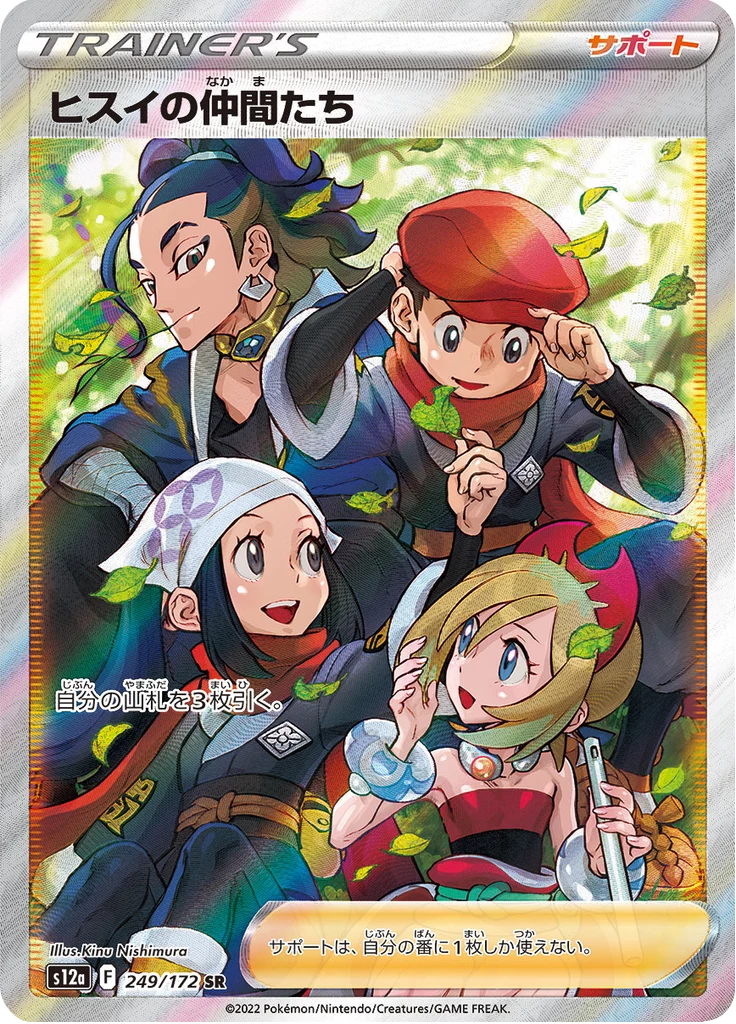
ヒスイの仲間たち (Friends in Hisui) is card #249 in VSTAR Universe (S12a), illustrated by Kinu Nishimura. It draws three cards when played, which is a strong but not unusual effect for a Supporter — the reason collectors chase this particular printing is the SR treatment, not the card text. This guide covers what the card is, how its numbering works, its English reprint history, and where it sits next to the set’s other chase cards. A PSA 10 graded copy is currently listed on our site.

Key Takeaway

The Friends in Hisui SR (249/172) is card #249 from VSTAR Universe (S12a, JP release 2 December 2022), a Supporter Trainer card illustrated by Kinu Nishimura, one of 254 total cards in the set. It was later reprinted in English as part of Crown Zenith. We currently list a PSA 10 graded copy at ¥19,184 (~$121 at ¥159/USD, September 2026).

SR
Rarity Tier

254
Total S12a Cards

¥19,184
Currently Listed (PSA 10)

Dec 2022
JP Release

Prices are current listings as of September 2026, converted at ¥159/USD.

What Is Friends in Hisui SR (249/172)?

Friends in Hisui card number 249, Secret Rare, VSTAR Universe S12a
Friends in Hisui, #249, SR, VSTAR Universe (S12a)

ヒスイの仲間たち (Friends in Hisui) is card #249 in VSTAR Universe, the Japanese set coded S12a. It’s a Trainer card in the Supporter subcategory — a once-per-turn card played from hand rather than a Pokemon — and its effect draws three cards. The artwork, a wide scene of Hisuian-region Pokemon and their trainers, is credited to illustrator Kinu Nishimura.

It’s printed at Secret Rare (SR), a chase-tier rarity VSTAR Universe uses across both Pokemon and Trainer cards alike. A PSA 10 graded copy is currently listed at ¥19,184 (~$121).

VSTAR Universe (S12a): The Set Behind the Card

VSTAR Universe released in Japan on 2 December 2022 and runs to 254 cards in total — a large count built by stacking multiple special-rarity tiers (SR, SAR, UR) on top of a standard base set rather than a conventional single expansion.

Field Detail
카드 ヒスイの仲間たち (Friends in Hisui)
Card number 249/172
세트 VSTAR Universe (S12a)
Rarity Secret Rare (SR)
Card type Trainer – Supporter
Effect Draw 3 cards
Artist Kinu Nishimura
JP release date 2 December 2022
Total cards in set 254

For the full breakdown of what else is in the set, see our VSTAR Universe (S12a) card list, and for box-buying context see our VSTAR Universe booster box buying guide.

Reading the 249/172 Numbering

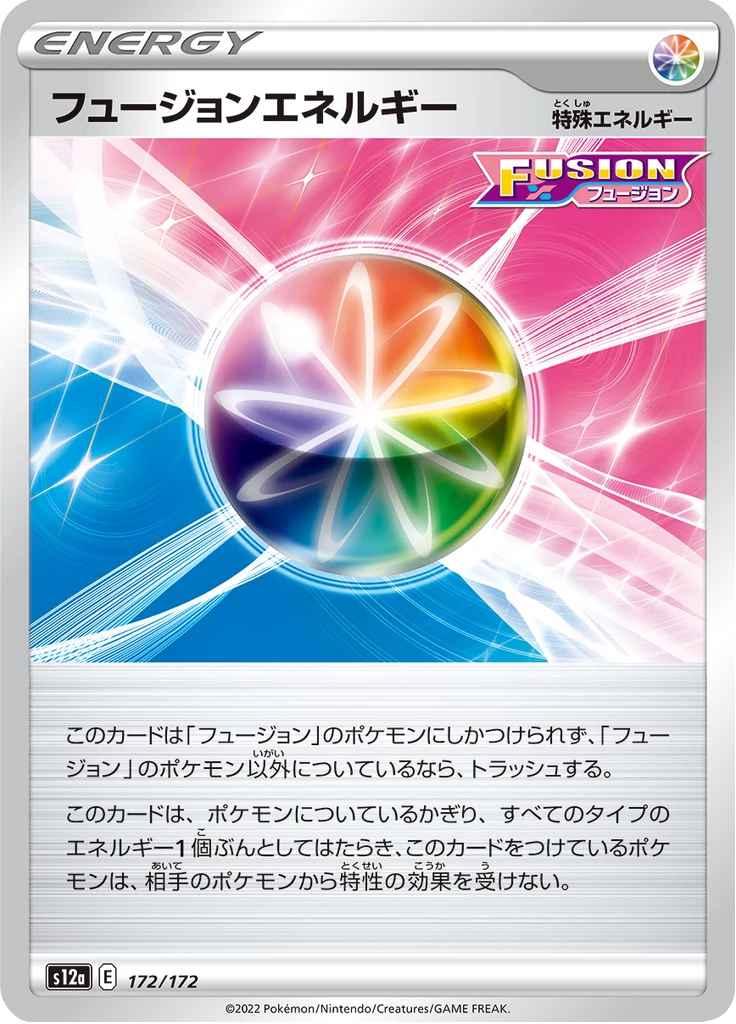
Fusion Energy card number 172, VSTAR Universe S12a
Fusion Energy, #172, Special Energy, VSTAR Universe (S12a) — the base-set card the SR numbering runs alongside

The “172” printed against Friends in Hisui isn’t the set’s actual total — it’s the anchor point shared by every VSTAR Universe chase card. Card #172 in the set is Fusion Energy, a Special Energy trainer card sitting at the top of the standard base-set run. Chase-tier cards like Friends in Hisui continue the sequential numbering past that point, through the SR, SAR, and UR tiers, up to a set-wide total of 254 cards.

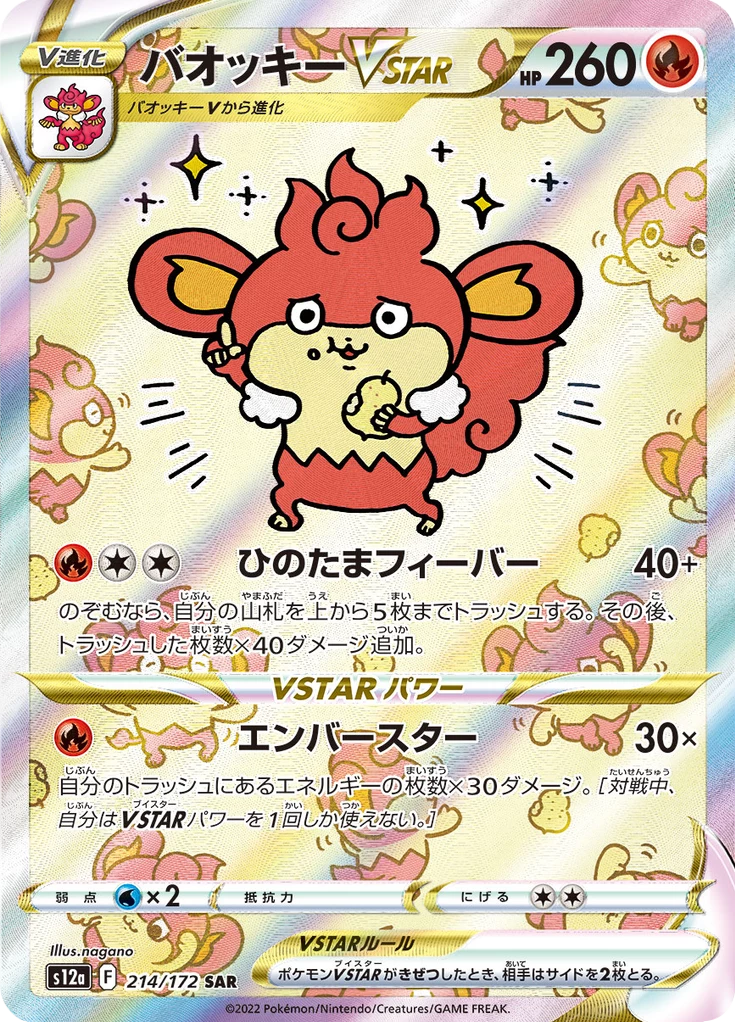
So “249/172” tells you two things: card #249 in the full print run, denominated against “172,” the number that marks where the base set ends and the special-rarity run begins. It’s the same convention that applies to the set’s Simisear VSTAR SAR (214/172) and every other VSTAR Universe chase card — not something unique to this Supporter.

The English Crown Zenith Reprint

Friends in Hisui isn’t exclusive to VSTAR Universe. The same Supporter — same draw-3 effect, same card — was later printed in English as part of Crown Zenith, appearing at both #130 and #148 in that set. That’s a cross-reference on the card’s international print history, not a claim about how this specific Japanese SR is numbered; the 249/172 numbering above applies only to the S12a printing.

Because a Supporter’s game text doesn’t change between printings, the Crown Zenith copies are functionally identical on the table. What differs is presentation and market: the Japanese SR carries the set’s full-art secret-rare treatment and its own collector demand, separate from the English reprint’s pricing.

Friends in Hisui vs Hisuian Zoroark: Don’t Confuse Them

Simisear VSTAR card number 214, Special Art Rare, VSTAR Universe S12a

Simisear VSTAR, #214, SAR
VSTAR Universe (S12a)

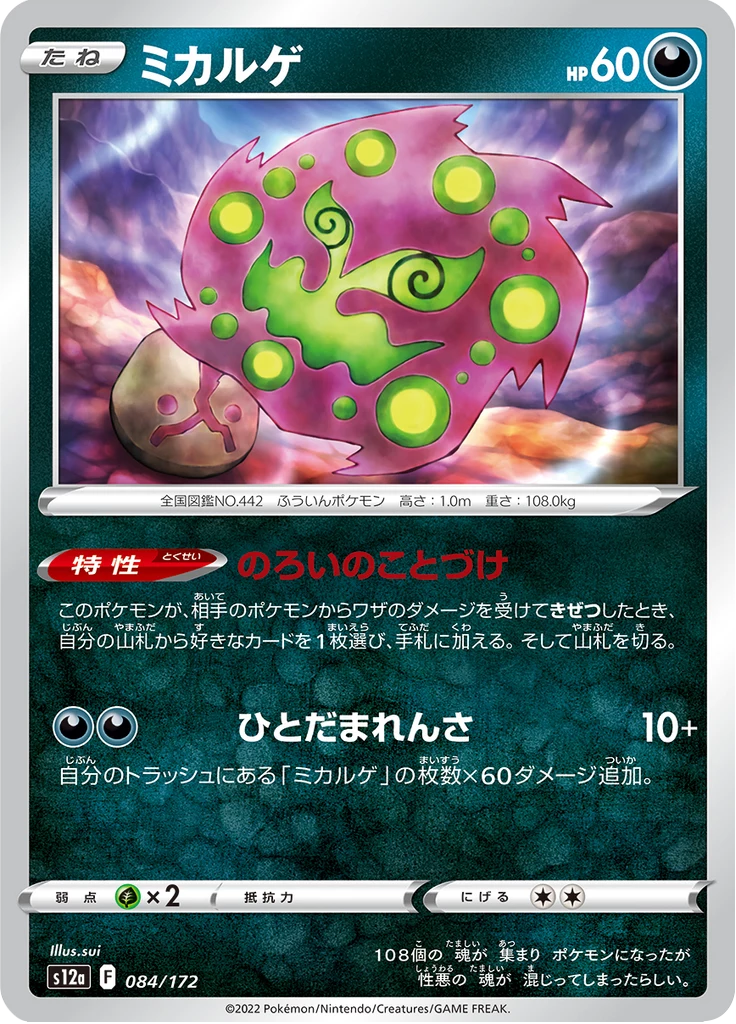
Spiritomb card number 84, VSTAR Universe S12a base card

Spiritomb (ミカルゲ), #84
VSTAR Universe (S12a)

Both cards share the word “Hisui” and the same set, which makes them easy to mix up in a search or a want-list — but they’re different cards entirely. Friends in Hisui (#249) is the Trainer Supporter covered here, drawing three cards. Hisuian Zoroark VSTAR is a separate Pokemon card, a different chase tier and card type from the same S12a set. If you’re after the Pokemon-side Hisuian chase, our Hisuian Zoroark VSTAR guide covers that card specifically; for the broader Zoroark family across sets, see our Zoroark cards guide.

The two Simisear and Spiritomb cards above are shown for set context only — neither is a Hisuian-themed card, they’re simply other VSTAR Universe printings that illustrate how varied the set’s card pool is, from full-art SARs down to ordinary base-set holos.

Secret Rare: A Trainer Card at the Top of the Set

Secret Rare (SR) in VSTAR Universe covers full-art cards printed above the set’s numbered card count — a tier that includes both Pokemon and Trainer cards, which is unusual compared with sets where the highest rarities are Pokemon-only. Friends in Hisui is one of the set’s Trainer-side SRs, alongside a small number of other Supporter and Item cards that received the same full-art treatment.

If you want the general rundown of how SR compares to the SAR and UR tiers across Japanese sets, our SAR and alt-art rarity explainer covers that in depth. We won’t restate pull-rate figures for VSTAR Universe here since we don’t have a sourced number specific to this card — for that side of the set, see our VSTAR Universe pull rates and best cards breakdown.

Where to Buy the Friends in Hisui SR from Japan

We ship graded Japanese singles worldwide out of Tokyo with tracked delivery. Our PSA 10 Friends in Hisui SR is currently listed at ¥19,184 (~$121).

Shop This Card
PSA10 Friends in Hisui 249/172 SR
Currently listed at ¥19,184 (~$121)
Ships from Tokyo · Tracked delivery

View Product →

If this exact copy has already sold by the time you’re reading this, we’re regularly sourcing more VSTAR Universe singles — the fastest way to request one is through our Quick Order page. For the rest of the set, our VSTAR Universe (S12a) card list is the full reference, and the Friends in Hisui SR listing itself has our current stock notes.

자주 묻는 질문

What is Friends in Hisui SR (249/172)?

It’s ヒスイの仲間たち (Friends in Hisui), card #249 in VSTAR Universe (S12a), a Japanese Pokemon TCG set released 2 December 2022. It’s a Trainer – Supporter card that draws three cards, printed at Secret Rare (SR) and illustrated by Kinu Nishimura.

What does the “172” in 249/172 mean?

172 refers to card #172, Fusion Energy, the card at the top of VSTAR Universe’s standard base-set run. Chase-tier SR, SAR, and UR cards like this one continue the numbering past that point, up to a set-wide total of 254 cards, and are denominated against 172 as a result.

Is Friends in Hisui the same card as Hisuian Zoroark VSTAR?

No. Friends in Hisui is a Trainer Supporter card that draws three cards. Hisuian Zoroark VSTAR is a separate Pokemon card in the same VSTAR Universe set. They share a “Hisui” theme and a set, but they are different cards with different card types and rarities.

Was Friends in Hisui reprinted in English?

Yes. The same Supporter card was printed in English as part of Crown Zenith, appearing at #130 and #148 in that set. This is a cross-reference to the same card text, not a claim about how the Japanese Secret Rare printing is numbered.

How much does the Friends in Hisui SR cost?

A PSA 10 graded copy is currently listed at ¥19,184, roughly $121 at ¥159/USD (September 2026 rate).

Kahili SR: Thunderclap Spark Supporter 카드 가이드

A professional golfer, a hotel heiress, and a member of the Alola Elite Four — Kahili is one of the more specific character concepts the Pokemon games have produced, and her Supporter card is built around a simple but useful piece of card advantage: draw two, then get a chance to keep the card in your hand instead of losing it.

This guide covers who Kahili is in the games, exactly what her Supporter card does, where the 065/060 Secret Rare sits inside the Thunderclap Spark (SM7a) set, and the other prints of the same character across Japanese and English releases. A PSA 10 copy of the 065/060 SR is currently listed on our site, shipped from Tokyo.

Key Takeaway

Kahili’s Supporter card — 065/060, Secret Rare in the Japanese Thunderclap Spark (SM7a) set (2018) — draws 2 cards, then flips a coin for a chance to return itself to your hand instead of the trash. One PSA 10 copy of the 065/060 SR is currently listed at ¥25,173 (~$158).

SR
Rarity

2018
JP Release Year

065/060
Card Number

PSA 10
Our Stock Grade

Prices are current listings as of September 2026, converted at ¥159/USD.

Who Is Kahili? Alola Elite Four Profile

Kahili is a member of the Alola Elite Four and a former Island Challenge Champion, first appearing in Pokemon Sun and Moon and returning in Ultra Sun and Ultra Moon. She specialises in Flying-type Pokemon, and her in-game team includes Skarmory, Crobat, Oricorio, and Mandibuzz, backed by her signature Toucannon.

Outside of battling, Kahili is written as a professional golfer and the daughter of the owner of the Hano Grand Resort — a detail that separates her from the more generic “Trainer class” characters (Sightseer, Lady) that also appear as Supporter cards in the same era. Kahili is a named, recurring in-game character, not a stand-in for an anonymous NPC type.

For more Alola-region cards from our stock, see our Alola starters card guide.

The Kahili SR 065/060: Set, Print & Illustrator Details

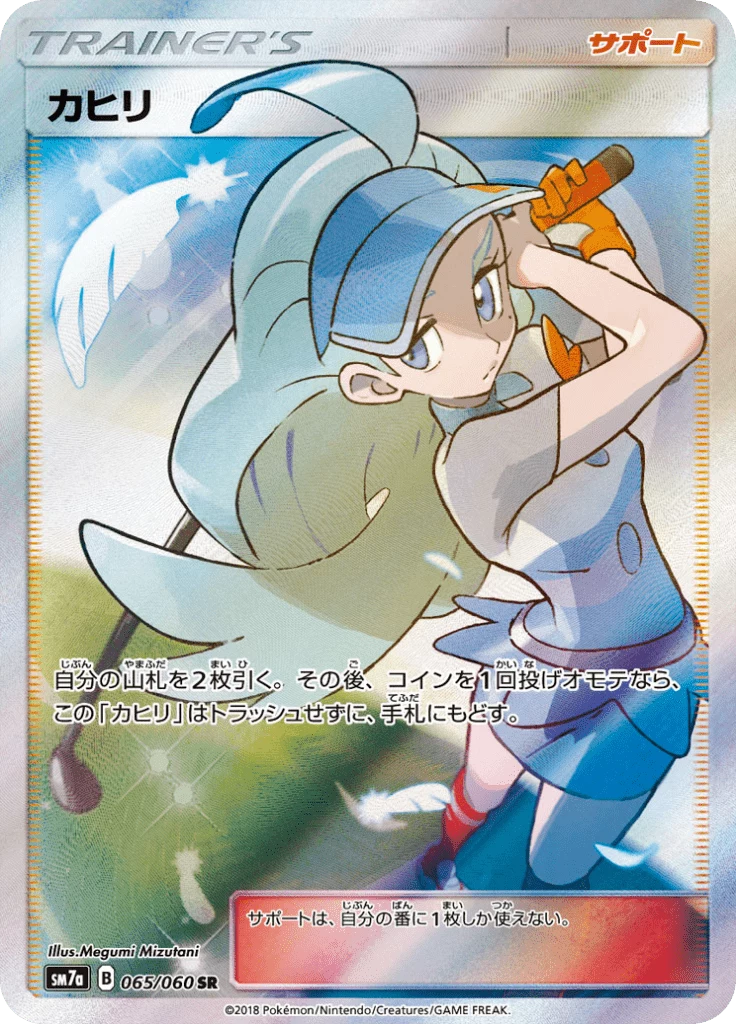
Kahili 065/060 Secret Rare, Thunderclap Spark (SM7a)
Kahili 065/060, Secret Rare — Thunderclap Spark (SM7a), illustrated by Megumi Mizutani

The card covered in this guide is the Japanese Secret Rare printing, numbered 065/060, from the set Thunderclap Spark (SM7a). The set released on 6 July 2018 and contains 73 total cards. Kahili’s Japanese name on the card is カヒリ, and the SR artwork is illustrated by Megumi Mizutani.

Currently listed is a graded copy: PSA 10 Kahili 065/060 SR, currently listed at ¥25,173 (~$158).

For background on how Japanese Secret Rares from this period grade and trade, our Japanese Pokemon card grading guide covers the process end to end.

What the Kahili Supporter Card Does

As a Supporter card, Kahili can only be played once per turn, and the effect is straightforward on paper: draw 2 cards from your deck. That part alone puts it in line with other card-advantage Supporters of the era.

The twist is the second half of the effect: after drawing, you flip a coin. Land on heads, and instead of the card going to the trash the way most Supporters do after use, Kahili returns to your hand. In practice, that means the card has a roughly even chance of coming right back into your hand for another turn, rather than being a one-time-use resource like most Supporter draw effects.

The set context matters here too — Thunderclap Spark (SM7a) sits in the Sun & Moon era of the Japanese TCG. For more on cards from this period, see our Sun & Moon era Japanese Pokemon guide.

Reading the Effect

The coin flip only decides where the card goes after it resolves — the draw 2 happens regardless of the flip result. A flip of tails simply means Kahili goes to the trash as a normal Supporter would.

Other Kahili Prints: JP Regular, English Lost Thunder & Promo

The 065/060 SR is not the only printing of this card. The same Thunderclap Spark set also contains a non-secret version, and the character was later reprinted in English. None of the prints below other than our own 065/060 SR are currently listed on our site — they are included here for identification context only.

Print 세트 Card # 언어 Notes
Kahili SR (our stock, PSA 10) Thunderclap Spark (SM7a) 065/060 일본어 Secret Rare, illus. Megumi Mizutani
Kahili (regular) Thunderclap Spark (SM7a) 055/060 일본어 Illus. Ken Sugimori — context only, not currently listed
Kahili Lost Thunder 179/214 English Regular print, illus. Ken Sugimori — context only
Kahili (Full Art) Lost Thunder 210/214 English Full Art, illus. Megumi Mizutani — context only
Kahili (Promo) SM-P 333/SM-P 일본어 Distributed to Event Organizers, April 2019 — context only

The English Lost Thunder set carried Kahili twice — once as a regular print sharing the same Ken Sugimori artwork as the Japanese 055/060, and once as a Full Art version using the same Megumi Mizutani illustration as the Japanese SR we stock. If you want more background on how Full Art treatments compare to Secret Rares like this one, see our Full Art Pokemon cards guide.

Elite Four & Gym Leader Supporter SRs: A Visual Comparison

Kahili’s SR sits within a broader run of Secret Rare Supporter cards built around named Trainer characters — Elite Four members and Gym Leaders among them. The four cards below are shown for visual comparison only; we are not citing pricing or stock information for any of them here.

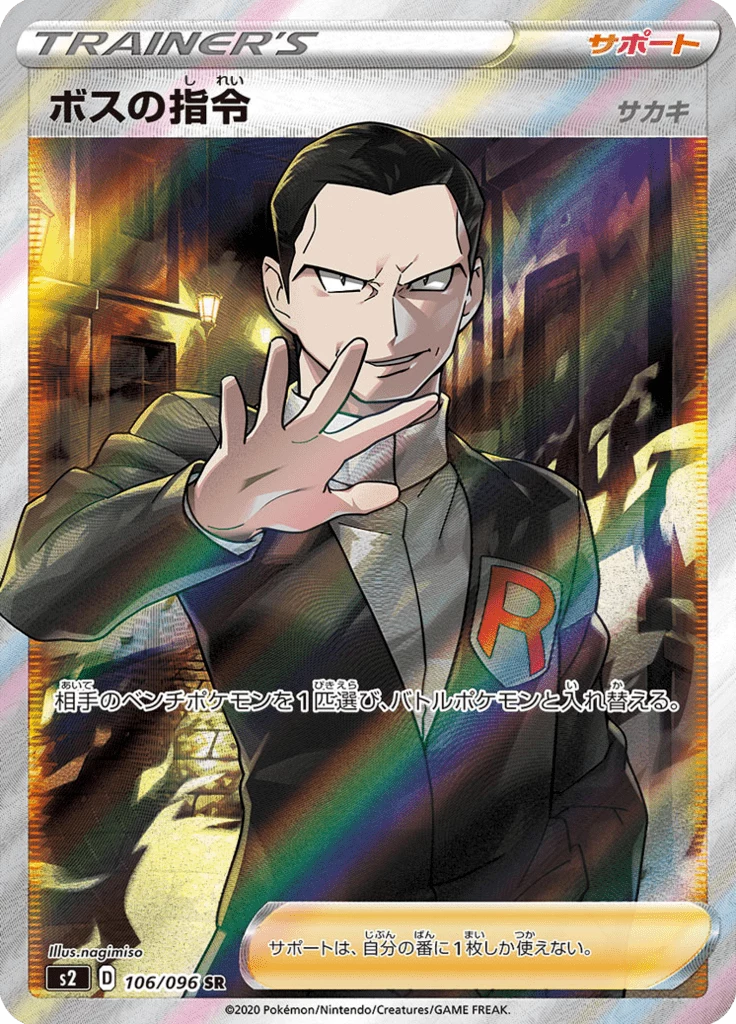
Boss's Orders (Giovanni) 106, Secret Rare, S2

Boss’s Orders (Giovanni) SR — S2 #106

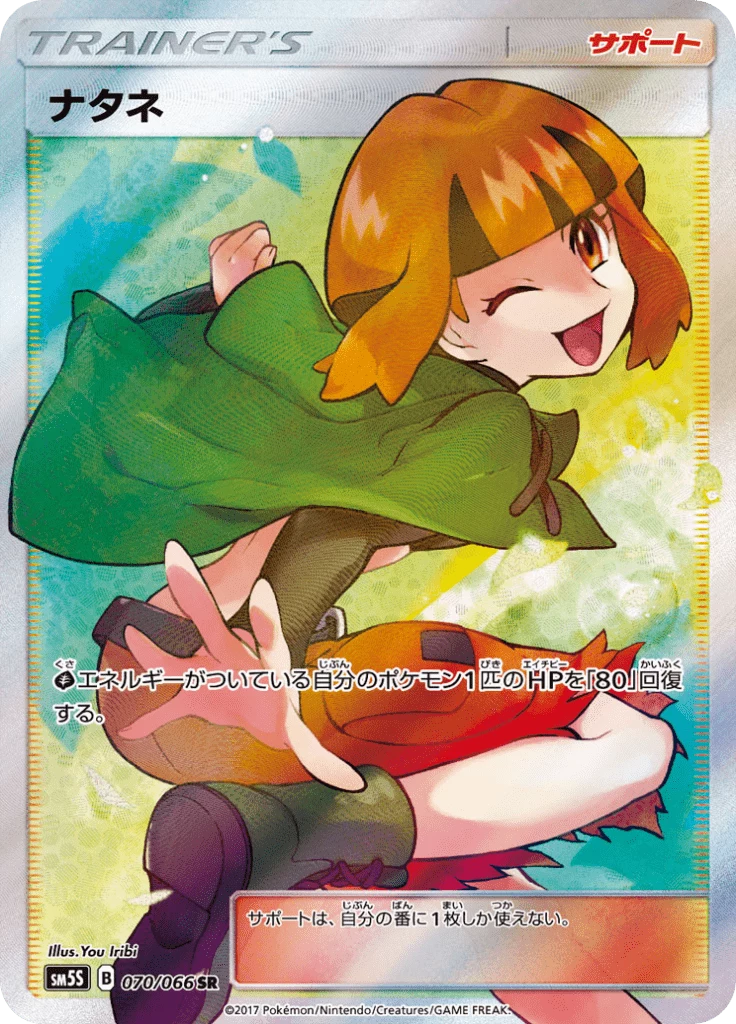
Gardenia 70, Secret Rare, SM5S

Gardenia SR — SM5S #70

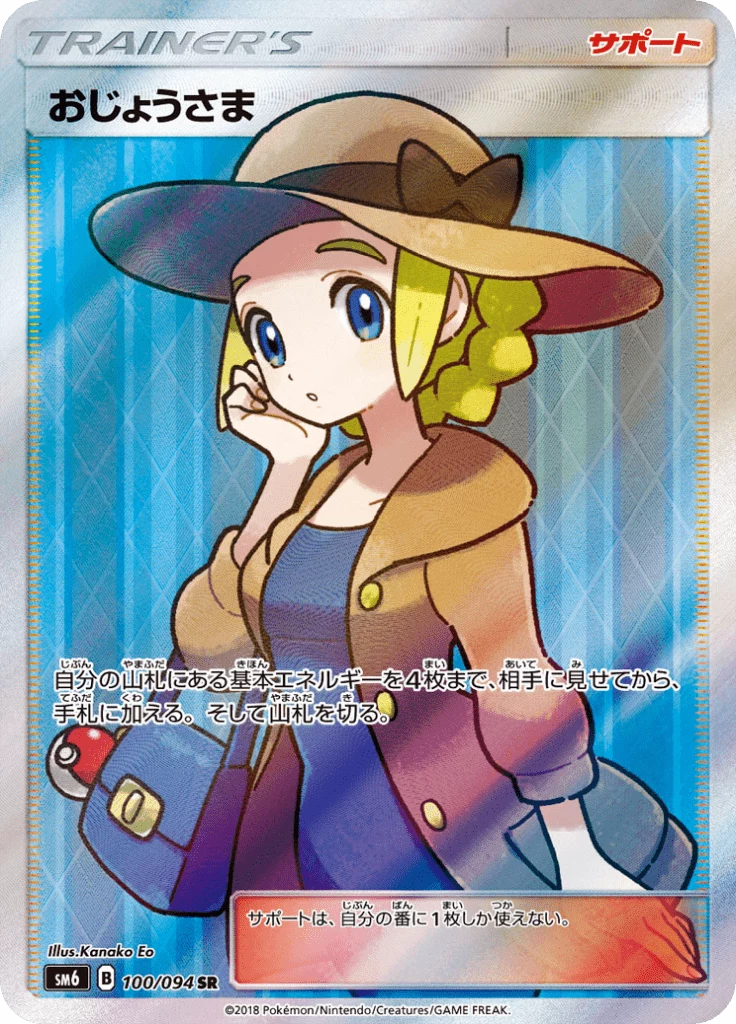
Lady 100, Secret Rare, SM6

Lady SR — SM6 #100

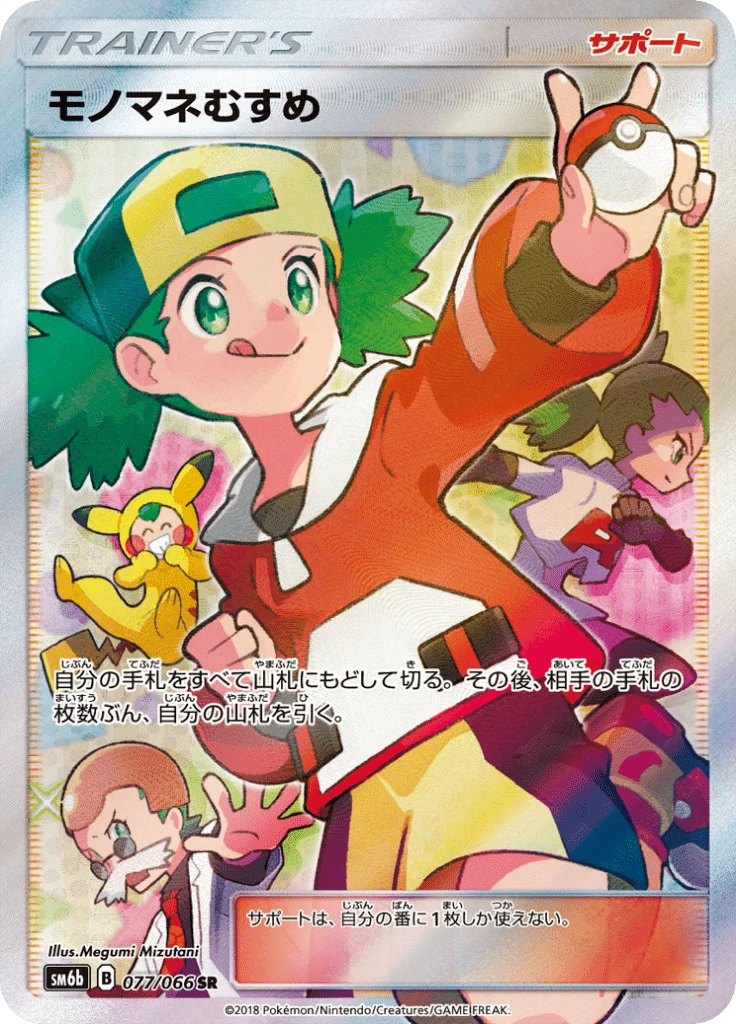
Copycat 77, Secret Rare, SM6b

Copycat SR — SM6b #77

Gardenia is the closest thematic match to Kahili — both are Elite Four or Gym Leader figures rather than generic Trainer classes, printed as Secret Rares in the same broad Sun & Moon era stretch of Japanese sets. For a wider round-up of character-based Trainer and Supporter cards, see our PSA 10 Trainer cards guide.

Where to Buy the Kahili SR from Japan

We ship Japanese Pokemon singles worldwide from Tokyo with tracked delivery. Our current listing for this card is a single graded copy, so availability is limited to the one unit shown below.

Shop This Card
PSA 10 Kahili 065/060 SR (Japanese)
Currently listed at ¥25,173 (~$158)
Ships from Tokyo · Tracked delivery

View Product →

Looking for other Trainer or Supporter singles from Japan? Our Quick Order page is the fastest way to build a mixed order across sets.

자주 묻는 질문

Who is Kahili in the Pokemon games?

Kahili is a member of the Alola Elite Four and a former Island Challenge Champion, appearing in Pokemon Sun, Moon, Ultra Sun, and Ultra Moon. She specialises in Flying-type Pokemon, with a team including Skarmory, Crobat, Oricorio, Mandibuzz, and her signature Toucannon. She is also written as a professional golfer and the daughter of the Hano Grand Resort’s owner.

What does the Kahili Supporter card do?

It draws 2 cards from your deck, then you flip a coin. On heads, Kahili returns to your hand instead of going to the trash after use; on tails, it goes to the trash like a normal Supporter.

What set is the Kahili SR 065/060 from?

It is from Thunderclap Spark (SM7a), a Japanese set released on 6 July 2018 with 73 total cards. The Secret Rare is numbered 065/060 and illustrated by Megumi Mizutani.

Is there a non-Secret Rare version of Kahili in Thunderclap Spark?

Yes. The same set includes a regular print numbered 055/060, illustrated by Ken Sugimori. This is a different, lower-rarity card from the 065/060 Secret Rare covered in this guide.

Was Kahili reprinted in English?

Yes. She appeared in the English Lost Thunder set as a regular print (#179/214, illus. Ken Sugimori) and as a Full Art card (#210/214, illus. Megumi Mizutani), and separately as a Japanese promo card (#333/SM-P) distributed to Event Organizers in April 2019.

Mega Tokyo Pikachu 프로모 카드 가이드: XY-P 098 이케부쿠로 오픈 기념 카드

A Pikachu that makes both players show their hand. That is the one move printed on Mega Tokyo’s Pikachu, and it exists because of a single store opening in Ikebukuro in December 2014.

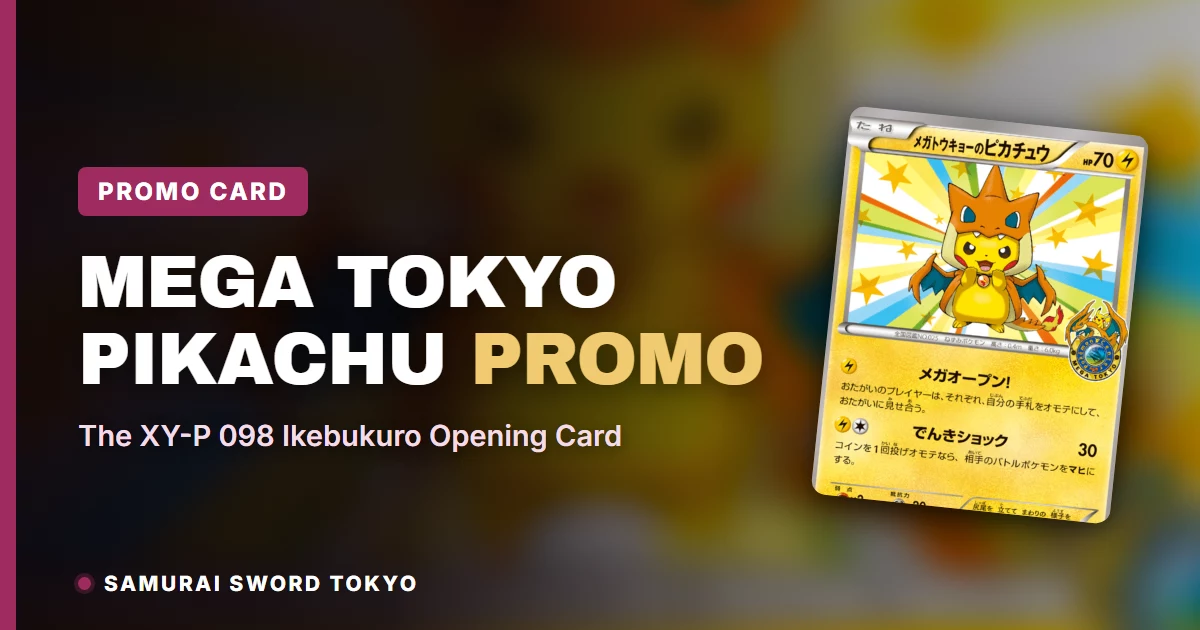
Card number 098/XY-P was never sold on a shelf. It was handed over the counter to anyone who bought something at the relaunch of Pokémon Center Tokyo, newly rebranded as Pokémon Center Mega Tokyo. A second, unrelated card shares the same artwork name and a nearby catalogue number — 204/XY-P — and the two get mixed up constantly online. They are not the same distribution, and this guide keeps them separate.

Below: what the card actually does, how it was given out, how the two XY-P prints differ, and what a graded PSA 10 copy is currently listed at from our own Tokyo stock.

Key Takeaway

Mega Tokyo’s Pikachu (098/XY-P) was a purchase-with-any-item giveaway at the December 2014 opening of Pokémon Center Mega Tokyo in Ikebukuro. It is not the same card as 204/XY-P, a separate 2016 event promo with roughly 960 copies distributed. Our own graded copy, a PSA 10 Mega Tokyo Pikachu (098/XY-P), is currently listed at ¥466,180 (~$2,932 at ¥159/USD).

098/XY-P
Card Number

70 HP
Lightning Type

Dec 2014
Ikebukuro Opening

¥466,180
Own-Stock PSA 10

Prices below are converted at ¥159/USD (September 2026).

What Is Mega Tokyo’s Pikachu (098/XY-P)?

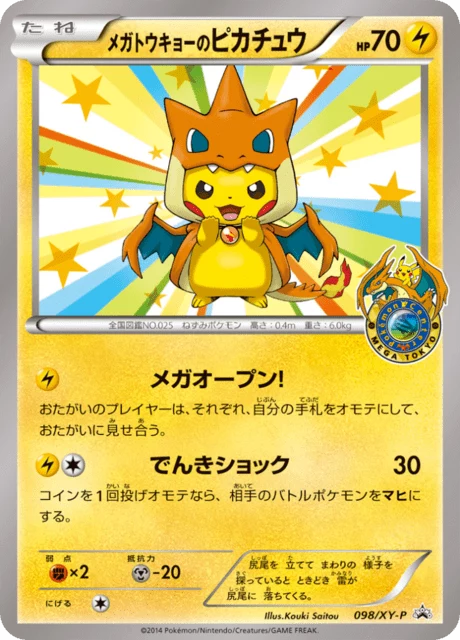
Mega Tokyo's Pikachu 098/XY-P Japanese promotional card
Mega Tokyo’s Pikachu — 098/XY-P — XY-P Promotional Cards

Mega Tokyo’s Pikachu is a Basic Pokémon, Lightning type, with 70 HP. It was illustrated by Kouki Saitou. The card carries two attacks, and the first one is the reason it stands out from an ordinary promo Pikachu:

Attack Cost Effect
Mega Open! 1 Lightning Energy Each player reveals his or her hand.
Thunder Shock 1 Lightning + 1 Colorless 30 damage. Flip a coin — if heads, the opponent’s Active Pokémon is Paralyzed.

“Mega Open!” does no damage at all — it is an information attack, forcing both players to show their hand. That is an unusual thing to print on a giveaway promo, and it ties the card directly to its distribution: it was made for the “Mega” rebrand of the store that handed it out, not for competitive play.

Thunder Shock is the more conventional half of the card — a 2-energy attack with a coin-flip Paralyze, in line with basic Lightning-type Pikachu printed across the XY era.

The Ikebukuro Store Opening: How This Card Was Given Out

098/XY-P was not sold as a set insert or won in a lottery. It was given to customers who made any purchase at the opening of Pokémon Center Mega Tokyo in Ikebukuro, starting December 12, 2014 and continuing through January 16, 2015.

The Mega Tokyo branch was a relocation: Pokémon Center Tokyo moved from its earlier Hamamatsuchō location and reopened in Ikebukuro under the new “Mega Tokyo” name. The Pikachu promo marked that relaunch, and its “Mega Open!” attack is a direct nod to the branding.

Distribution, Not a Pull

This card was a store-opening giveaway tied to a purchase, over a roughly five-week window. It was not a booster pack chase card, and no pull rate applies to it.

098/XY-P vs 204/XY-P: Two Different Cards

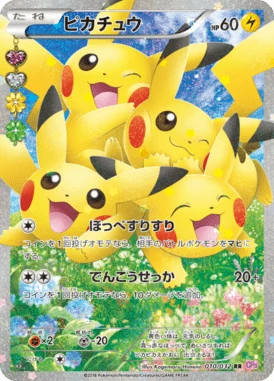
Pikachu 010/032 RR Japanese card, shown for comparison alongside Mega Tokyo's Pikachu
A different Japanese Pikachu card, 010/032 (RR), from the same broader XY era — shown here for visual comparison, not the same card as 098/XY-P

A second XY-P Pikachu print, numbered 204/XY-P, shares the “Mega Tokyo’s Pikachu” name but is a separate print from a separate event. It was given to participants of the “Pokémon Center Mega Battle + Creatures Challenge”, held across four venues on January 16–17, 2016 — roughly thirteen months after the Ikebukuro store opening. Distribution for that event totalled approximately 960 copies.

098/XY-P 204/XY-P
Distribution event Pokémon Center Mega Tokyo opening (Ikebukuro) “Mega Battle + Creatures Challenge” (4 venues)
Dates Dec 12, 2014 – Jan 16, 2015 Jan 16–17, 2016
How it was obtained Any purchase at the store opening Event participation
Approximate copies Not disclosed ~960

If you’re trying to identify which one you have, the print number in the card’s bottom corner settles it — 098/XY-P or 204/XY-P. This guide covers 098/XY-P, the print currently listed on our site.

Current Value: The Own-Stock PSA 10 Anchor

A graded PSA 10 copy of Mega Tokyo’s Pikachu (098/XY-P) is currently listed at ¥466,180 (~$2,932). This is a single listing price, not a market-wide average, and it should be read as one data point rather than a benchmark for every raw or graded copy in circulation.

As a store-opening giveaway rather than a set-insert or booster pull, surviving high-grade copies of 098/XY-P are limited by how many customers kept their promo in good condition over more than a decade, not by a printed pull rate. That is a structurally different scarcity story from a chase card pulled from packs.

Mega Tokyo’s Pikachu Next to Other Japanese Pikachu Cards

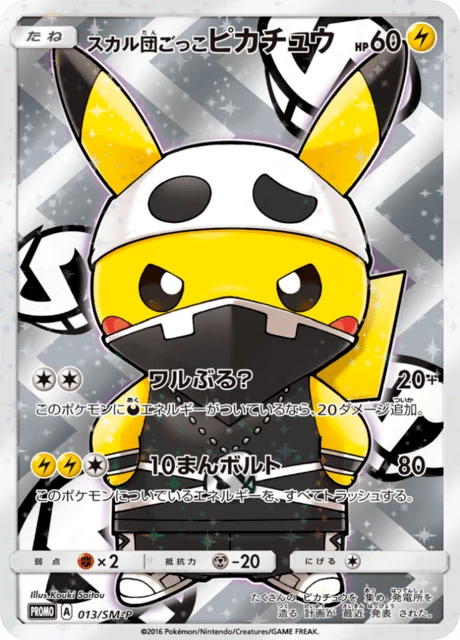
A later-era Japanese Pikachu SM-P promotional card, shown for comparison alongside Mega Tokyo's Pikachu
A different, later-era Japanese Pikachu promotional card (SM-P 013) — shown for comparison across Pokémon Center-era promos, not the same card as 098/XY-P
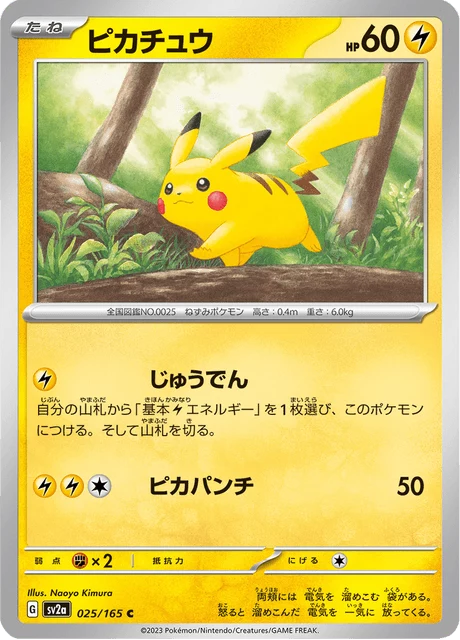
Pikachu Common card 025/165 from Pokemon Card 151 (SV2a), shown for comparison alongside Mega Tokyo's Pikachu
A different, modern-era Japanese Pikachu print — Common, SV2a 025/165, Pokémon Card 151 — shown for comparison only, not the same card as 098/XY-P

Mega Tokyo’s Pikachu sits inside a long-running pattern in the Japanese Pokémon TCG: Pokémon Center branches and store events routinely produce their own exclusive Pikachu promos, each tied to a specific place and date rather than a general set release. The 010/032 card pictured above comes from the same broader XY era; the SM-P promo above it is a later Pokémon Center-style promo, and the SV2a Common shows how far the species’ ordinary set prints have continued since. None of these is 098/XY-P or 204/XY-P — they’re included here to show how consistently Japan’s retail and set calendar generates its own Pikachu prints, year after year.

For the full family of XY-era promotional Pikachu, see our XY-P promo best cards guide. For the broader pattern of Pokémon Center store exclusives across eras, see our Pokémon Center Pikachu promo guide.

Where to Buy Mega Tokyo’s Pikachu and Other Japanese Promos

We ship graded and sealed Japanese Pokémon product worldwide from Tokyo. Our current PSA 10 Mega Tokyo Pikachu is a single, own-stock copy:

Own-Stock Graded Card
PSA 10 Mega Tokyo’s Pikachu (098/XY-P)
Currently listed at ¥466,180 (~$2,932)
Ships from Tokyo · Tracked delivery

View Product →

For other Japanese Pikachu promos and graded singles, browse our top 10 Pikachu Japanese cards roundup and our PSA 10 Pikachu Japanese cards buying guide. If you’re after a specific card that isn’t currently listed, our Quick Order page is the fastest way to submit a request.

자주 묻는 질문

What is Mega Tokyo’s Pikachu (098/XY-P)?

It’s a Japanese XY-P promotional card — a Basic, Lightning-type Pikachu with 70 HP, illustrated by Kouki Saitou. It was given out at the December 2014 opening of Pokémon Center Mega Tokyo in Ikebukuro.

How was 098/XY-P distributed?

It was handed to customers who made any purchase during the opening of Pokémon Center Mega Tokyo in Ikebukuro, from December 12, 2014 through January 16, 2015. That store was a relocation of Pokémon Center Tokyo from its earlier Hamamatsuchō site.

Is 098/XY-P the same card as 204/XY-P?

No. They share the “Mega Tokyo’s Pikachu” name but come from separate distributions. 204/XY-P was given to participants of the “Pokémon Center Mega Battle + Creatures Challenge” across four venues on January 16–17, 2016, with roughly 960 copies distributed.

What attacks does Mega Tokyo’s Pikachu have?

“Mega Open!” for 1 Lightning Energy, which makes each player reveal their hand, and Thunder Shock for 1 Lightning plus 1 Colorless Energy, dealing 30 damage with a coin-flip chance to Paralyze the opponent’s Active Pokémon.

How much is a PSA 10 Mega Tokyo Pikachu worth?

Our own graded copy is currently listed at ¥466,180 (about $2,932 at ¥159/USD). This reflects a single own-stock listing, not a broad market average.

Pikachu AR (205/172): VSTAR Universe의 Art Rare 설명

One Pikachu, two names, two countries. In Japan it is card 205/172 from VSTAR Universe, an Art Rare with a full illustration by Kouki Saitou. In English-language sets, the same character — different card number, different rarity code — shows up inside Crown Zenith’s Galarian Gallery subset.

If you are trying to work out exactly what you are holding, or what a graded copy is trading for, this guide lays out the card’s identifying details, where it sits relative to a couple of other modern Pikachu chase prints, and what our own PSA 10 listing looks like.

Key Takeaway

Pikachu AR 205/172 is a Basic Lightning-type card (HP 60, ability “Pika Dash”) from VSTAR Universe (S12a), a Japanese high-class expansion released 2 December 2022. Its English equivalent is Crown Zenith’s Galarian Gallery GG30/GG70 (rarity GGH). On September 1, 2026, we listed a PSA10 example at ¥101,177 (~$636 at ¥159/USD), and you can also build a mixed order through 빠른 주문.

AR
Rarity (Art Rare)

60
HP

Dec 2022
VSTAR Universe Release (JP)

$636
Our PSA10 Listing (¥101,177)

Pikachu AR 205/172: Card Overview

The card is a Basic, Lightning-type Pikachu with 60 HP, numbered 205/172 in VSTAR Universe (S12a). The “over-172” numbering is a giveaway that this is a secret/bonus-slot print rather than one of the set’s core 172 cards — a common pattern for the rarer illustration cards in a Japanese high-class pack.

Its printed ability is Pika Dash (ピカダッシュ): once an Energy card is attached to Pikachu, its Retreat Cost is removed entirely, letting you swap it out of the Active Spot for free. The card carries no attack of its own in this print — the illustration and ability are the draw.

The artwork is credited to illustrator Kouki Saitou, and the rarity is listed as Art Rare (AR).

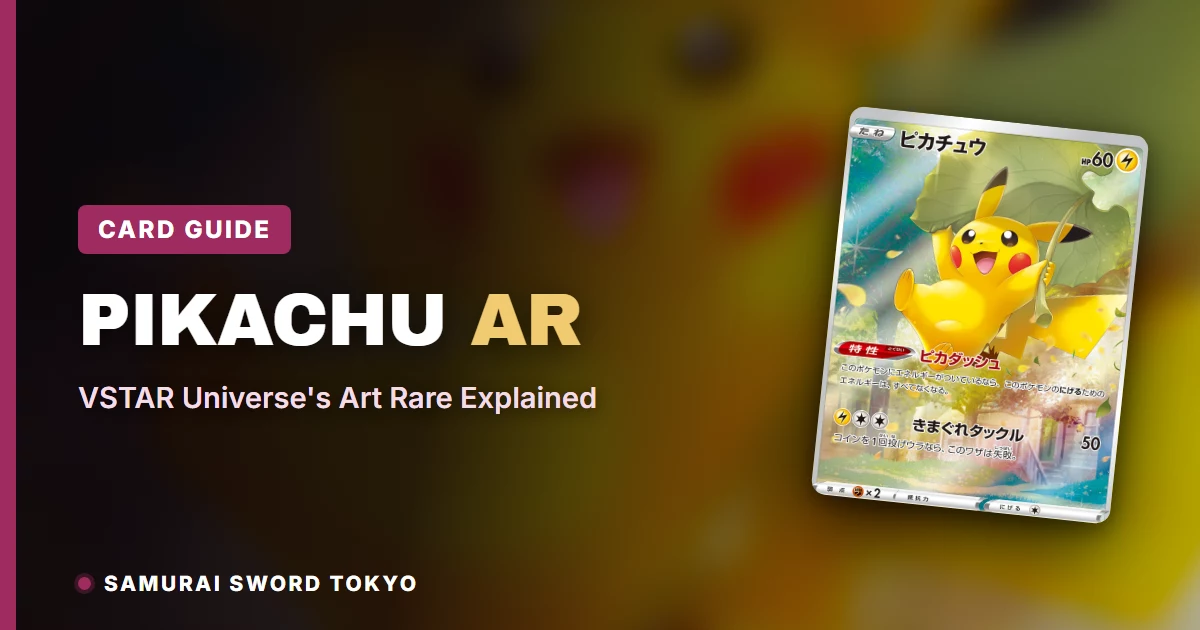
Pikachu 205/172 Art Rare, VSTAR Universe (S12a)
Pikachu 205/172 Art Rare, VSTAR Universe (S12a) — illustrated by Kouki Saitou
Check This First

Confirm the card number in the bottom corner reads 205/172 and the rarity mark matches Art Rare. VSTAR Universe shares Pikachu as a subject across several different prints and rarities within the same release, so the number is what pins down exactly which one you have.

What Does “Art Rare” Mean?

Art Rare is one of the illustration-focused rarity tiers used in Japan’s Pokemon Trading Card Game. Cards in this tier carry an expanded, full-illustration treatment built around the artwork rather than around competitive utility — this Pikachu print, for instance, ships with a support ability but no attack, which fits the pattern of AR cards being aimed squarely at collectors and illustration fans.

Because the number 205/172 places this card outside the set’s main numbered run, it slots into VSTAR Universe’s bonus tier of secret and illustration-rarity cards — the section of a Japanese high-class pack collectors open a box specifically hoping to hit.

We are not citing pull-rate figures or population data for this specific card, since neither has been independently verified for this guide. If you want that level of detail before buying, treat any pull-rate number you see elsewhere as a community estimate rather than an official figure.

VSTAR Universe: The Set Behind the Card

VSTAR Universe (S12a) is a Japanese high-class expansion pack, released in Japan on 2 December 2022. As a high-class pack rather than a standard main-series set, it is built around a denser concentration of secret and illustration-rarity cards — Pikachu AR 205/172 is one of those bonus-slot prints.

Another VSTAR Universe (S12a) card, shown for set context

VSTAR Universe (S12a) — set context

Another VSTAR Universe (S12a) card, shown for set context

VSTAR Universe (S12a) — set context

For the full checklist of what else shipped in the set, see our VSTAR Universe (S12a) card list. If you are deciding whether to buy sealed product from this release, our VSTAR Universe booster box buying guide and our Shiny Treasure vs VSTAR Universe box comparison cover box-level context that sits outside the scope of this single-card guide.

The English Equivalent: Crown Zenith’s Galarian Gallery

The English-language release does not carry the same card number or rarity code. This Pikachu appears in Crown Zenith, inside the Galarian Gallery subset, as card GG30/GG70, with the rarity listed as GGH (Galarian Gallery Holo).

In practice that means a collector working only from English checklists needs to look under Crown Zenith’s Galarian Gallery numbering (the “GG” prefix) rather than the main set list to find this print. The Japanese VSTAR Universe AR and the English Crown Zenith GGH are different print codes for the same character and illustration concept, issued in their respective regions’ set structures.

How It Compares to Other Modern Pikachu Chase Cards

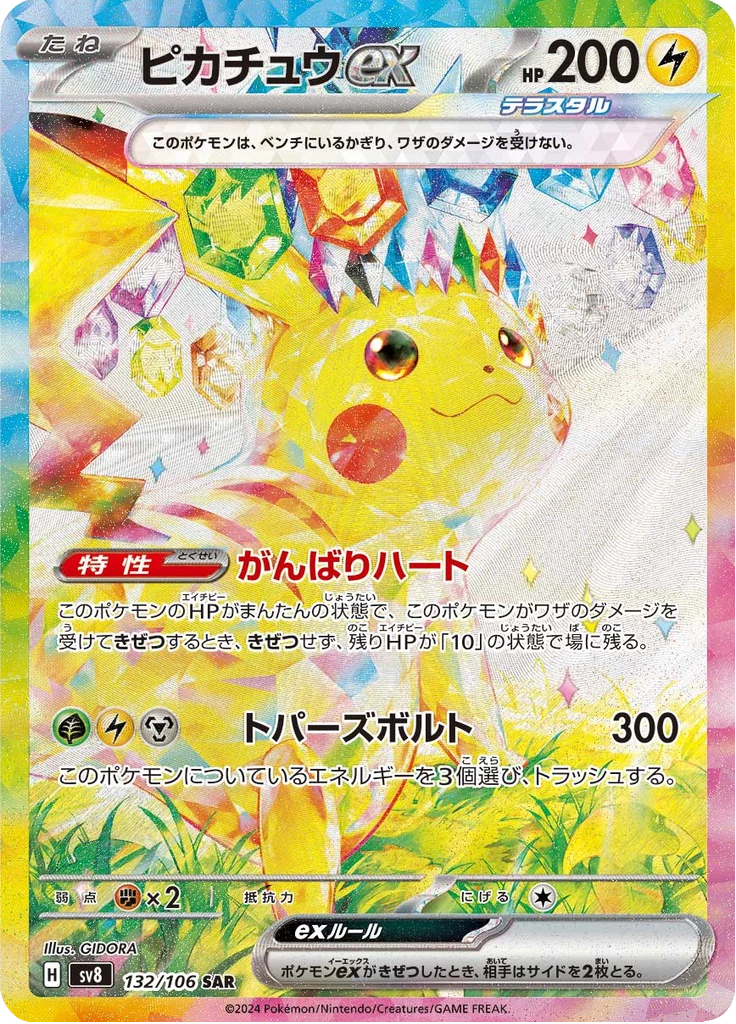
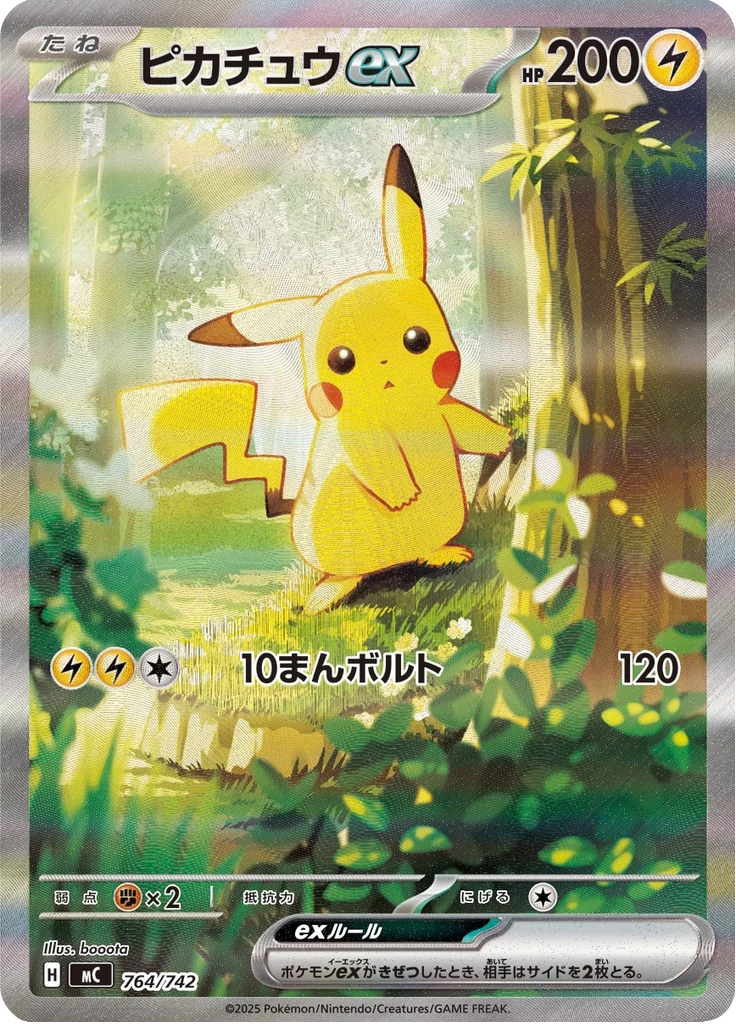
Pikachu AR 205/172 is not the only high-rarity Pikachu print to come out of recent Japanese sets. Two other modern comparison prints worth knowing, purely as identification reference points, are Pikachu ex 132/106 SAR and Pikachu ex 764/742 SAR.

카드 Number Rarity 세트
Pikachu (AR) 205/172 AR VSTAR Universe
Pikachu ex (SAR) 132/106 SAR Super Electric Breaker
Pikachu ex (SAR) 764/742 SAR Start Deck 100 Battle Collection
Pikachu ex 132/106 SAR, Super Electric Breaker

Pikachu ex 132/106 SAR (Super Electric Breaker)

Pikachu ex 764/742 SAR, Start Deck 100 Battle Collection

Pikachu ex 764/742 SAR (Start Deck 100 Battle Collection)

The distinction that matters when you are sorting a collection: AR and SAR are separate rarity tiers with separate numbering conventions, and none of these three cards are alternate prints of each other — they are three different Pikachu releases from three different products. Card number and set name, not just “Pikachu” and a rarity badge, are what confirm which one you are holding.

Our PSA 10 Listing and What It’s Worth

PSA 10 is the top grade on PSA’s 1–10 scale, reserved for a copy judged essentially flawless under the grader’s inspection — centering, surface, corners, and edges all graded to the highest tier.

Our listing, PSA10 Pikachu 205/172 AR, was listed at ¥101,177 (~$636 at ¥159/USD) on September 1, 2026. This is our own asking price rather than a broader market average — we have not sourced independent third-party comparables for this specific graded card, so treat this figure as our current listing rather than a market-wide benchmark.

If you collect Pikachu prints more broadly and want to see how this one sits against other Japanese Pikachu chase cards, our Top 10 Pikachu Japanese cards roundup and our best Pikachu cards from the Japanese Pokemon TCG guide are the places to look next.

Where to Buy This Card from Japan

We ship graded and raw Japanese singles out of Tokyo with tracked delivery. The listing below for this card is graded PSA 10.

Shop This Card
PSA10 Pikachu 205/172 AR
Listed at ¥101,177 (~$636) on September 1, 2026
Ships from Tokyo · Tracked delivery

View Product →

Looking for a raw copy, a different grade, or want to combine this with other VSTAR Universe singles in one shipment? Our Quick Order page is the fastest way to build a mixed order.

자주 묻는 질문

What rarity is Pikachu 205/172?

It is an Art Rare (AR), the rarity printed on the card. The illustration is credited to Kouki Saitou.

What set is Pikachu AR 205/172 from?

VSTAR Universe (S12a), a Japanese high-class expansion pack released in Japan on 2 December 2022.

Is there an English version of this card?

Yes. The English equivalent is in Crown Zenith’s Galarian Gallery subset, card GG30/GG70, with the rarity GGH (Galarian Gallery Holo).

What does Pikachu’s Pika Dash ability do?

Once an Energy card is attached to this Pikachu, Pika Dash removes its Retreat Cost, letting you switch it out of the Active Spot for free.

How much is a PSA 10 copy of this card worth?

Based on our own current listing, a PSA 10 copy is priced at ¥101,177 (about $636 at ¥159/USD). This reflects our listing price, not an independently verified market average.

Ribombee 일본 카드 가이드: Lillie's Art Rare와 검증된 모든 프린트

A pink-and-white Fairy Pokemon that debuted back in 2016 now has a starring role in one of Scarlet & Violet’s most collected character-pairing sets — and the two cards look nothing alike.

Ribombee (アブリボン) has been printed in Japan across at least four confirmed sets, from a plain Rare in 2016’s Collection Sun to a bonus-numbered Art Rare tied to Lillie in 2025’s Battle Partners. If you’re trying to work out which Ribombee you’re holding, or which one is worth tracking down, this guide runs through every verified print with its set, number, rarity and illustrator — plus where the one we carry in graded PSA 10 condition currently sits on price.

We ship Japanese singles and sealed product out of Tokyo, and the pricing below is our own live listing, converted at ¥159/USD (September 2026).

Key Takeaway

Four verified Japanese Ribombee prints exist across three sets released between 2016 and 2025. The character-paired Lillie’s Ribombee AR from Battle Partners (SV9 105/100) is the chase version and the one we carry — a PSA 10 copy is currently listed at ¥8,052 (~$50.64). The same set also printed a plain Uncommon version of the identical character card at card number SV9 042/100 — easy to mix up if you’re only glancing at the artwork.

4
Verified Prints

2016–2025
Years Covered

AR
Own-Stock Rarity

¥8,052
Own-Stock PSA10

Card data verified via limitlesstcg.com/cards/jp, September 2026. Pricing shown is our own PSA 10 listing, converted at ¥159/USD.

Every Verified Ribombee Print in Japanese

Four Japanese prints of Ribombee have been confirmed for this guide, spanning a non-character base card and a later character pairing with Lillie:

카드 세트 Year Rarity HP / Type
Lillie’s Ribombee 105/100 Battle Partners (SV9) 2025 AR 70 HP, Psychic
Lillie’s Ribombee 042/100 Battle Partners (SV9) 2025 Uncommon —
Ribombee 034/071 Cyber Judge (SV5M) 2024 Uncommon 70 HP, Psychic
Ribombee 042/060 Collection Sun (SM1S) 2016 Rare 60 HP, Fairy

Only the Battle Partners Art Rare is a card we currently list, so it’s the only print in this guide with a live price attached. The others are included for identification purposes — useful if you’re trying to work out which set a copy in your binder came from.

Note the type shift: Ribombee’s earliest JP print (Collection Sun) carries a Fairy typing, while the two Scarlet & Violet-era prints (Cyber Judge and Battle Partners) are typed Psychic. That’s a rules-era change, not a printing error, and it’s the fastest way to sort an older copy from a newer one at a glance.

Lillie’s Ribombee: The Art Rare From Battle Partners

Lillie's Ribombee card number 105/100 Art Rare from Battle Partners set
Lillie’s Ribombee, SV9 105/100, Art Rare — Battle Partners

Lillie’s Ribombee, card SV9 105/100, is an Art Rare — a bonus-numbered card that sits beyond the set’s official 100-card total, which is typically how Japanese sets slot in their alternate-art chase pulls. It’s a 70 HP Psychic-type illustrated by saino misaki, evolving from “Lillie’s Abra” in the same set, and it comes from Battle Partners (SV9), released 24 January 2025. For the full run of Lillie’s paired character cards, see our Lillie cards guide.

This is the copy we carry in graded condition. A PSA 10 copy is currently listed at ¥8,052 (~$50.64) as a single-copy anchor on our site — if it’s sold by the time you check, restock requests for Battle Partners singles go through our Quick Order page.

Identifying This Print

Look for the bonus number 105/100 in the bottom corner — anything above the set’s stated 100-card count on a Battle Partners Ribombee confirms you have the Art Rare, not the standard-numbered version below.

The Same Card, Different Rarity: SV9 042/100

Lillie's Ribombee card number 042/100 Uncommon from Battle Partners set
Lillie’s Ribombee, SV9 042/100, Uncommon — Battle Partners

Battle Partners also prints “Lillie’s Ribombee” as a standard Uncommon at card number 042/100 — a within-count print, not a bonus number. Same character pairing, same set, but the plain frame and in-range card number mean it doesn’t carry the Art Rare treatment.

If you’ve pulled a Battle Partners pack and are trying to tell your two Ribombee cards apart, the number is the whole story: 042/100 sits inside the set’s normal run, while 105/100 is the bonus-numbered Art Rare covered above.

Where It Started: Collection Sun, 2016

Ribombee card number 042/060 Rare from Collection Sun set
Ribombee, SM1S 042/060, Rare — Collection Sun

Ribombee first appeared in Japan in Collection Sun (SM1S), released 9 December 2016 — the same wave that introduced the Alola region to the Sun & Moon card series, where Ribombee is a native Pokemon. This print, card 042/060, is a Rare with 60 HP and a Fairy typing, illustrated by Shin Nagasawa.

Fairy typing was still in active use for Pokemon TCG design in 2016; it was later folded back into Psychic for most Fairy-type Pokemon in subsequent rules updates, which is why the 2024 and 2025 Ribombee prints below are typed Psychic instead. If you own an original Collection Sun copy, the Fairy typing on the card is a reliable way to confirm it’s the 2016 print rather than a later reissue.

The 2024 Reprint: Cyber Judge

Ribombee card number 034/071 Uncommon from Cyber Judge set
Ribombee, SV5M 034/071, Uncommon — Cyber Judge

Eight years after its debut, Ribombee returned as a non-character base print in Cyber Judge (SV5M) — the Japanese equivalent of the English Temporal Forces set, part of the wider Scarlet & Violet era — released 26 January 2024. Card 034/071 is an Uncommon, 70 HP, Psychic-type, illustrated by Tika Matsuno.

This is a standard, unpaired Ribombee print with no connection to Lillie or any other trainer character — a straightforward inclusion in the set’s Pokemon lineup rather than a chase card. It’s the most recent non-character print before Ribombee was picked up for the Lillie pairing a year later in Battle Partners.

Which Ribombee Print Fits Your Collection

With only one of the four prints carrying a tracked market price on our end, here’s how to think about the set instead of a straight price ladder:

  • Want the chase version — Lillie’s Ribombee Art Rare, SV9 105/100. Bonus-numbered, alternate-art treatment, and the print we carry in graded PSA 10 at ¥8,052 (~$50.64).
  • Want the same character for less — the Uncommon SV9 042/100 from the same Battle Partners set gets you the Lillie’s Ribombee pairing without the Art Rare premium.
  • Want the earliest print — Collection Sun 042/060 from 2016 is Ribombee’s first Japanese appearance and carries the original Fairy typing.
  • Want a current-era standard card — Cyber Judge 034/071 (2024) is the most recent non-character print, useful if you’re building a set-complete Cyber Judge collection rather than chasing a specific card.

Why Character-Paired Cards Like Lillie’s Ribombee Trade Differently

Japanese sets increasingly pair a trainer character with a specific Pokemon — Lillie’s Ribombee, Lillie’s Abra, and similar combinations across other trainers — and print that pairing at both a standard rarity and a bonus-numbered alternate-art rarity within the same set. The Art Rare version isn’t a separate release; it’s the same character concept given the alternate-art treatment and a card number that sits outside the set’s stated total.

That structure is why two “Lillie’s Ribombee” cards from the identical set and release date can look completely different and sit at different collecting tiers — the artwork, card number, and bonus-slot placement do the separating, not the character or Pokemon themselves. Readers interested in how this pairing format plays out with other Scarlet & Violet trainers can see a similar structure in our Iono cards guide.

Where to Buy Ribombee Cards from Japan

We ship Japanese singles worldwide from Tokyo with tracked delivery. Our current Ribombee listing is the graded PSA 10 Lillie’s Ribombee Art Rare from Battle Partners.

Shop This Card
PSA10 Lillie’s Ribombee [SV9 105/100 AR]
Currently listed at ¥8,052 (~$50.64)
Ships from Tokyo · Tracked delivery

View Product →

For the other Battle Partners, Cyber Judge, or Collection Sun singles covered in this guide, or to request a specific Ribombee print we don’t currently have listed, our Quick Order page is the fastest way to send us a want list.

자주 묻는 질문

How many Japanese Ribombee cards are there?

At least four verified Japanese prints exist: the 2016 Collection Sun Rare (SM1S 042/060), the 2024 Cyber Judge Uncommon (SV5M 034/071), and two 2025 Battle Partners prints of the same “Lillie’s Ribombee” character card — a standard Uncommon (SV9 042/100) and a bonus-numbered Art Rare (SV9 105/100).

What is Lillie’s Ribombee and why does it have two different cards?

Lillie’s Ribombee is a character-paired print from Battle Partners (SV9). The set includes both a standard Uncommon (042/100) and a bonus-numbered Art Rare (105/100) of the identical character pairing — the same set and release date, but different rarities and artwork.

Why is the 2016 Ribombee card Fairy-type while newer prints are Psychic-type?

Fairy typing was standard Pokemon TCG design in 2016 when Collection Sun released. Fairy-type Pokemon were later folded back into Psychic typing in subsequent rules updates, which is why the 2024 Cyber Judge and 2025 Battle Partners prints are typed Psychic instead.

How much is the Lillie’s Ribombee Art Rare worth?

Our own graded PSA 10 copy [SV9 105/100 AR] is currently listed at ¥8,052 (about $50.64 at ¥159/USD). We don’t track third-party market pricing for the other three verified prints.

Which set is the Lillie’s Ribombee Art Rare from?

Battle Partners (SV9), released 24 January 2025. It evolves from “Lillie’s Abra” in the same set and is illustrated by saino misaki.