무료 회원가입으로 포인트 적립과 등급을 시작하세요
Samurai Sword Tokyo
주문 장바구니

Precious Collector Box 구매 가이드: 이 일본판 포켓몬 스페셜 박스 안에는 무엇이 들어있을까
Search Limitless TCG for card number 323 in Japan’s “S-P” promo series and you get nothing. No scan, no listing, no entry — the index runs SP_321, SP_322, then jumps straight to SP_324. That gap sits at the centre of the Precious Collector Box, a Japanese retail product that isn’t a booster box at all, but a sealed collector box built around exactly one confirmed insert card.

Our own catalog describes it as “a premium Japanese Pokemon Card Game collector box built for sealed collection value, display appeal, and special-release inventory.” There’s no pack structure, no chase-pull mechanic, and — as far as we’ve been able to verify today — no published official contents list. What we can confirm, sourced from our own deep-dive on the card itself, is that this box is the distribution product for Pikachu, numbered 323/S-P, in Japan’s long-running Sword & Shield Promotional Cards series.

This guide covers what’s actually confirmed to be inside, why the insert card has no reference photo anywhere online, how 323/S-P compares to its sibling Pikachu promos, and how the box itself is listed on our site. For the full deep dive on the card itself — including the Limitless numbering gap in detail — see our Pikachu 323/S-P promo card guide; this article is the box-buying angle.

Key Takeaway

The Precious Collector Box is currently listed at ¥63,000 (~$396) and is confirmed to be the distribution product for Pikachu 323/S-P, a fixed insert card — not a randomised pull. A PSA 10 graded copy of that exact card, PSA10 Pikachu 323/S-P, is separately currently listed at ¥106,200 (~$668). No further official contents beyond the 323/S-P insert are confirmed for this box, and no independent card scan of 323/S-P exists on Limitless TCG.

1
Confirmed Insert Card

323/S-P
Insert Card Number

¥63,000
Listed Box Price (~$396)

Unconfirmed
Official Release Date

Prices are our own listed prices on samuraiswordtokyo.com as of September 2026, converted at ¥159/USD. These are not third-party market prices.

What’s Actually Inside a Precious Collector Box

The Precious Collector Box is a Sword & Shield–era Japanese retail collector box, sold sealed. It is not a booster box in the pull-rate sense — there’s no set of packs printed to a known ratio, and it isn’t tied to a specific numbered TCG expansion the way a booster box is tied to its set.

What we can confirm is narrow but concrete: this box is the distribution source for Pikachu 323/S-P, per Bulbapedia’s S-P promotional card table (cited in our own fetched research on the card). That promo ships as a fixed insert in this specific retail product — not a chase pull drawn at random from randomised packs the way a booster secret rare would be.
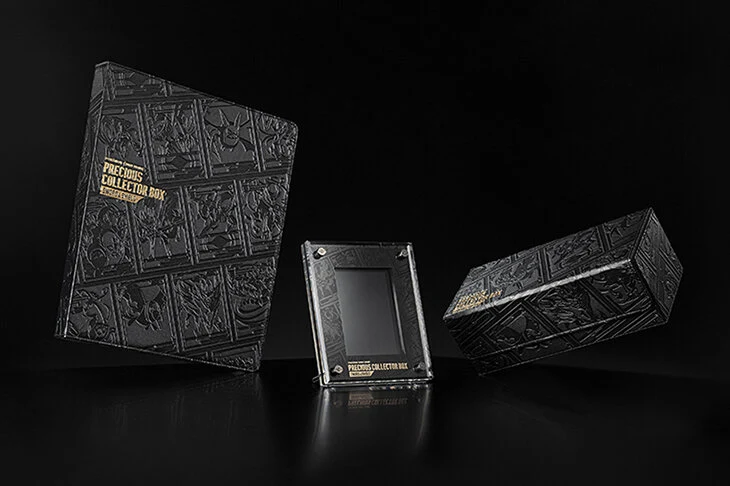
Precious Collector Box, sealed Japanese Pokemon Card Game retail box
Precious Collector Box, listed on samuraiswordtokyo.com

Beyond the 323/S-P insert, no itemised official contents list has been verified — no confirmation of additional booster packs, playmats, or other inserts. We’re treating that as unconfirmed rather than assuming it doesn’t exist; our research on pokemon-card.com and Bulbapedia simply didn’t turn one up as of this writing. If you’re buying this box to open, budget for the confirmed 323/S-P insert as the return, not for extras we haven’t been able to confirm.

Not a Booster Product

There’s no pack-per-box or card-per-pack count to quote here, because this box doesn’t work that way. One confirmed insert card, no published pull rates — that’s the whole distribution model as far as our sources go.

The Confirmed Insert: Pikachu 323/S-P

Pikachu 323/S-P

Pikachu 323/S-P is numbered within Japan’s running “S-P” (Sword & Shield Promotional Cards) series — a JP-only promo numbering line, separate from any standalone booster set, that indexes well over 300 individual cards, each tied to its own retail promotion or product bundle.
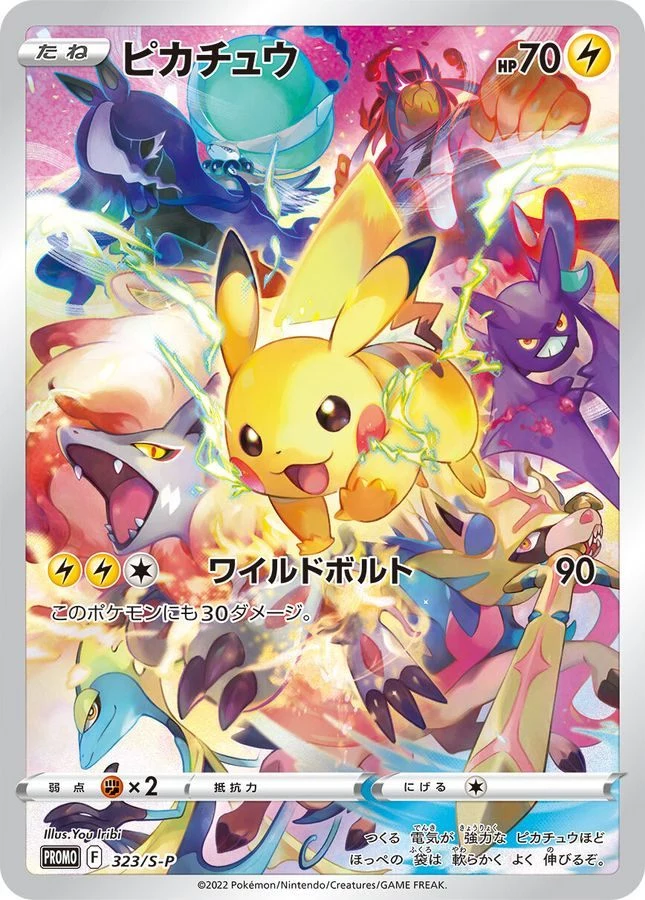
PSA 10 Pikachu 323/S-P graded slab, our own listed copy
PSA 10 Pikachu 323/S-P slab, listed on samuraiswordtokyo.com — no independent card scan for this number exists on Limitless TCG

That last point is worth dwelling on. Limitless TCG’s S-P index runs SP_321, SP_322, then jumps straight to SP_324 — there is no entry, and no reference scan, for card 323 anywhere we checked. The card’s existence is confirmed by Bulbapedia’s promo table and by graded PSA examples changing hands, but if you’re trying to visually authenticate a raw example against a database photo, that photo doesn’t exist. A PSA 10–graded example, currently listed at ¥106,200 (~$668), removes that authentication guesswork by having already gone through third-party grading.

For the full breakdown of the numbering gap and how it affects buying raw examples, our dedicated 323/S-P card guide covers it card-first; this article covers the box it comes from.

Where 323/S-P Sits in the S-P Promo Family

323/S-P isn’t the only Pikachu promo running through the S-P numbering line. Here’s how the ones we currently track compare, by our own listed prices:

카드 S-P number Source product Our listed price (PSA 10)
Pikachu 323/S-P Precious Collector Box: Sword & Shield ¥106,200 (~$668)
Pikachu (Seven-Eleven) 001/S-P Seven-Eleven promotional tie-in ¥237,676 (~$1,495)
Pikachu (Pokémon Stamp Box) 227/S-P Pokémon Stamp Box ¥612,420 (~$3,852)
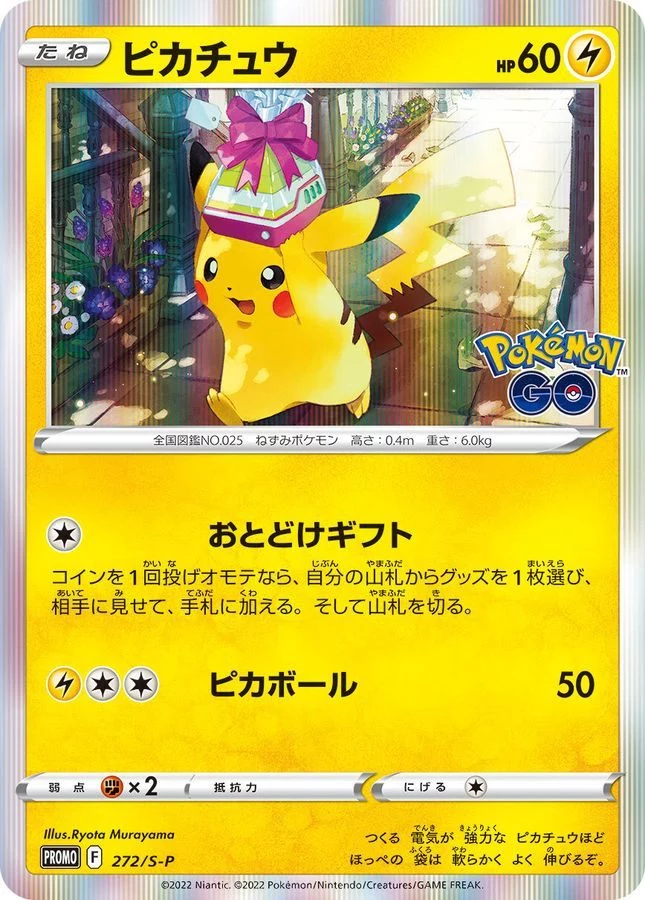
Pikachu 272/S-P Source product unconfirmed ¥17,974 (~$113)

Four separate S-P numbers, four different retail moments, and a wide price spread between them — from ¥17,974 up to ¥612,420 for graded PSA 10 examples. That spread is a function of how each promo was distributed and how many graded examples exist, not of the artwork; Pikachu is the constant across the whole family.
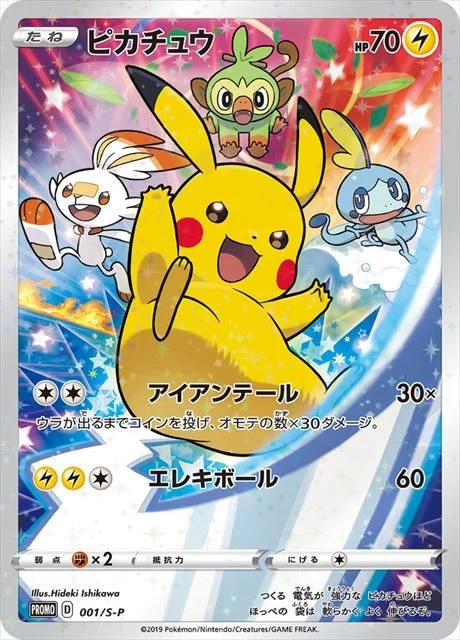
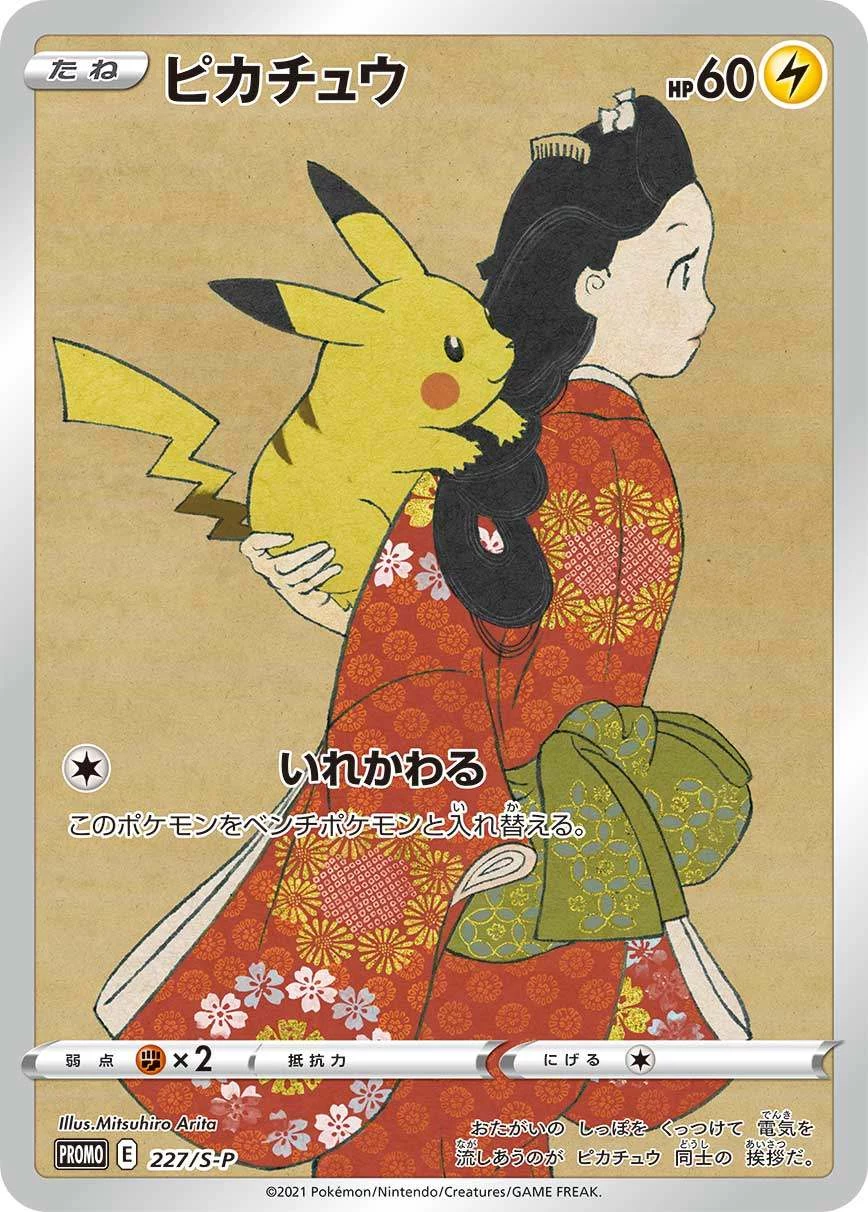
PSA 10 Pikachu Seven-Eleven, PROMO S-P 001, graded slab

Pikachu Seven-Eleven, 001/S-P
¥237,676 (~$1,495)

PSA 10 Pikachu Pokemon Stamp Box, PROMO S-P 227, graded slab

Pikachu (Pokémon Stamp Box), 227/S-P
¥612,420 (~$3,852)

PSA 10 Pikachu 272/S-P graded slab
PSA 10 Pikachu 272/S-P — source retail product for this number is unconfirmed in our research

Not every S-P number in this range belongs to Pikachu. PSA10 Cramorant, 226/S-P currently listed at ¥108,323 (~$681), sits nearby in the same running series — it’s included here only to show how densely packed the S-P numbering is release to release, not because it shares an insert with the Precious Collector Box.
PSA 10 Cramorant, PROMO S-P 226, graded slab
PSA 10 Cramorant 226/S-P — a different card in the same S-P series, shown for context only

How the Precious Collector Box Is Listed on Our Site

At the time of writing we list one listing for this product: the sealed Precious Collector Box currently listed at ¥63,000 (~$396). There’s no separate damaged-box or no-shrink listing for this specific product on our site right now — unlike some of our booster-box lines, this is a single sealed-box listing.

That’s a different buying decision than the PSA 10 singles in the table above. The box is a sealed product purchase with the 323/S-P insert as its confirmed contents; the graded singles are individually authenticated examples of specific promo numbers, already pulled from whatever product they originally shipped in. Which one makes sense depends on whether you want the sealed box experience or the specific card, already graded.

Japanese vs English: Is There an English Version?

No. The Precious Collector Box is a Japan-only retail bundle product, not a translated or re-issued booster set, so there is no English-language edition of this specific box. If you want the 323/S-P insert card itself, the Japanese-market route — either the sealed box or a graded single — is the only path we’ve confirmed, since the card was distributed through a Japan-only retail campaign in the first place.

Where to Buy the Precious Collector Box from Tokyo

We ship Japanese sealed product and PSA-graded singles worldwide from Tokyo with tracked delivery.

Shop This Box
Precious Collector Box (Japanese)
Currently listed at ¥63,000 (~$396)
Ships from Tokyo · Tracked delivery

View Product →

If you specifically want the graded insert card rather than the sealed box, PSA10 Pikachu 323/S-P is currently listed separately, and our full PSA 10 graded card collection covers the rest of the S-P family and beyond.

Chasing other Sword & Shield–era Pikachu box promos in the same numbering family? Our Pokemon Center Pikachu promo guide, Boss Pikachu promo series guide, and Poncho Pikachu promo cards guide cover adjacent promo lines built the same way. For general context on buying sealed Japanese product from us, see our vintage Japanese booster box guide. For anything not covered above, our Quick Order page is the fastest way to build a mixed order or send a sourcing request.

자주 묻는 질문

What is a Precious Collector Box?

A sealed Sword & Shield–era Japanese Pokemon Card Game retail collector box. It isn’t a booster box tied to a numbered expansion; it’s confirmed as the distribution product for the Pikachu 323/S-P promo card, sold as sealed inventory.

What card comes inside the Precious Collector Box?

The confirmed insert is Pikachu, numbered 323/S-P in Japan’s running Sword & Shield Promotional Cards series, per Bulbapedia’s S-P promotional card table. No further official contents beyond that insert are confirmed in our research.

Why is there no photo of Pikachu 323/S-P online?

Limitless TCG, the reference database most collectors check first for S-P scans, has no entry for card 323 — its numbering jumps from SP_322 straight to SP_324. The card is confirmed by Bulbapedia’s promo table and by graded PSA examples, but no independent reference photo is indexed anywhere we checked.

Is the Precious Collector Box a booster box?

No. It doesn’t have a pack-per-box structure or published pull rates. The confirmed insert, 323/S-P, ships as a fixed card in the box rather than a randomised pull from packs.

Is there an English version of the Precious Collector Box?

No. It’s a Japan-only retail bundle product with no translated or re-issued English edition. The 323/S-P insert card is likewise only sourceable through the Japanese market.

How much does the Precious Collector Box cost, and can I buy the insert card graded?

The sealed box is currently listed at ¥63,000 (~$396). A PSA 10–graded copy of the 323/S-P insert card is available separately, currently listed at ¥106,200 (~$668).
Slowking 포켓몬 카드 가이드: 알아둬야 할 모든 일본판 인쇄판

The earliest Japanese Slowking print verified for this guide comes from Neo Genesis, released February 4, 2000 — more than two decades before the Scarlet & Violet-era cards that dominate today’s search results. Ten prints across nine Japanese sets and promotions carry the name Yadokingu (ヤドキング), and between them they cover two of the odder corners of Pokemon TCG history: a pizza-chain card giveaway and a set number that doesn’t match the set it’s supposed to belong to.

Slowking is not a stage evolution of Slowbro. Both evolve from Slowpoke, but Slowbro gets there by levelling up, while Slowking evolves only when a Slowpoke holding a King’s Rock item is traded — two separate branches from the same base Pokemon, not a three-stage chain with each other. If you’re after the Slowbro side of the family, our Slowpoke and Slowbro Pokemon Card Guide covers that branch; this guide is Slowking only.

What follows walks through every Slowking print the record turns up: eight modern-era Rare cards a Limitless TCG search returns, the 2009 Domino’s Pizza promo, and the Neo Genesis original. None of the eight modern prints are listed on our site at the moment — sourcing requests for any of them go through Quick Order. What we do carry, both graded PSA 10, are the two vintage anchors below.

Key Takeaways

Ten Slowking prints are covered here: a Neo Genesis original from 2000, a 2009 Domino’s Pizza promo, and eight modern-era Rare cards a Limitless TCG search index returns. The Domino’s Pizza promo PSA 10 example is currently listed at ¥587,640 (~$3,696), and the Neo Genesis Old Back PSA 10 example is currently listed at ¥245,440 (~$1,544) (rate: ¥159/USD, September 2026). None of the eight modern-era singles are listed on our site at the moment; sourcing requests go through Quick Order.

10
Japanese Prints Covered

9
Sets & Promos

2000–Present
Years Spanned

Sep 2026
Prices Checked

Every Japanese Slowking Print We’ve Verified

A Limitless TCG search for pokemon:slowking returns eight modern-era cards, all marked Rare on the search index. Add the two vintage and promo prints documented through secondary sources, and ten Slowking prints are covered across nine Japanese sets and promotions:

세트 No. Rarity Illustrator Notes
SVM (Starter Decks Generations) 28 R Oswaldo KATO Individually verified — 130 HP, Water type
SV7 39 R not verified Confirmed via search index and card image only
SV2P 30 R not verified Confirmed via search index only
SV2P 86 R not verified Confirmed via search index only
SM8 25 R not verified Confirmed via search index and card image only
SM2p 23 R not verified Confirmed via search index only
XY9 15 R not verified Confirmed via search index and card image only
BW4 34 R not verified Confirmed via search index only
L-P (Domino’s Pizza promo) 030 Promo Noriko Hatta Not indexed on Limitless; distribution confirmed via PokeBeach
neo1 (Neo Genesis) catalogued as No.199 Rare Holo not verified Not indexed on Limitless; set confirmed via Bulbapedia

Only the SVM 28 print has been checked card by card for its full details. The other seven modern prints are confirmed to exist through the search index and, in most cases, a loading card image — but illustrator credit and HP haven’t been individually re-verified for each one, so those details aren’t cited here until they have been. Older and promotional Japanese product also isn’t always fully indexed on card databases, which is why this table reflects the prints we’ve verified rather than a claim that ten is the definitive total.

The Modern Era: SVM Through SV7

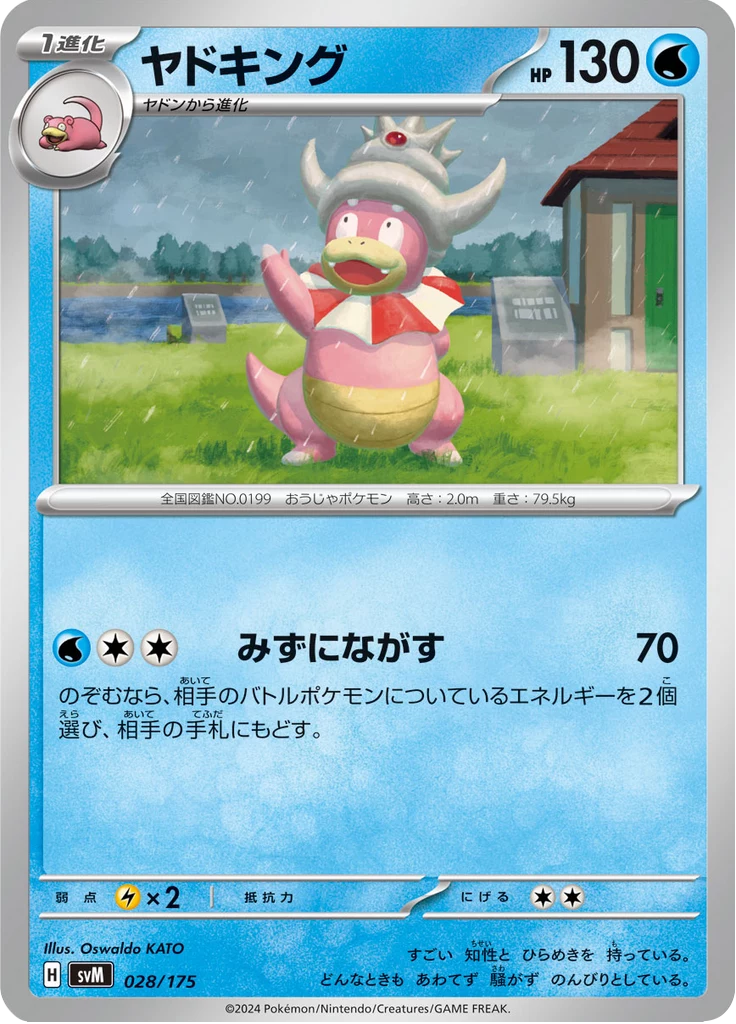
Starter Decks Generations (SVM) carries the one modern Slowking checked card by card for this guide: number 28, 130 HP, Water type, illustrated by Oswaldo KATO.

Slowking SVM 28 R Starter Decks Generations
Slowking, SVM 28, R, Starter Decks Generations

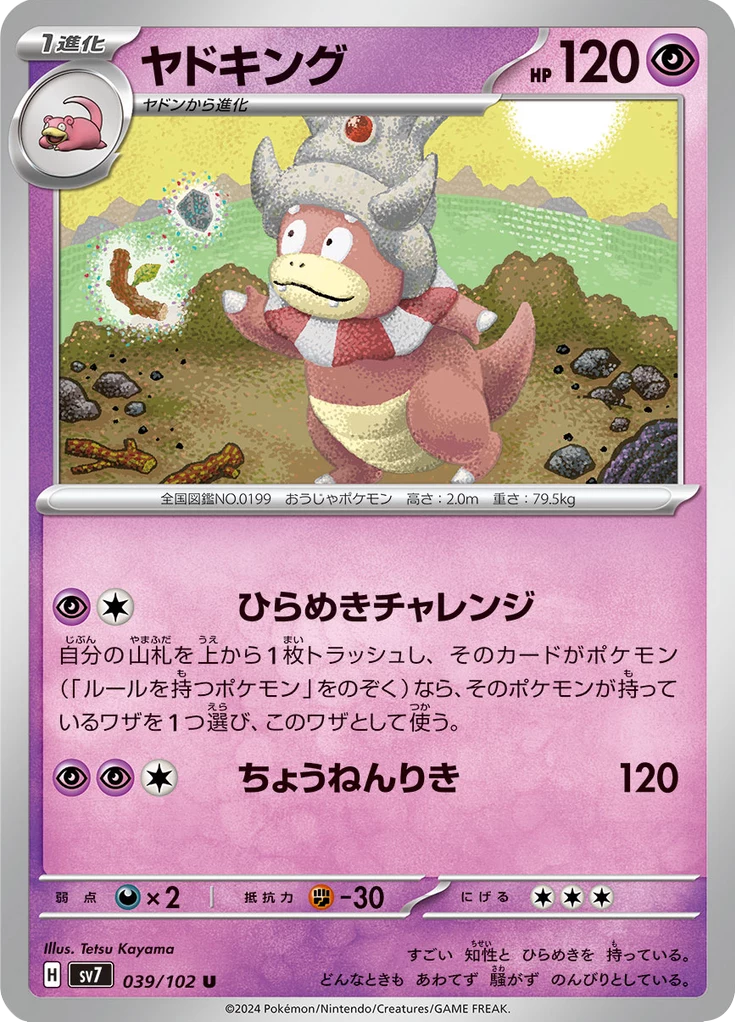
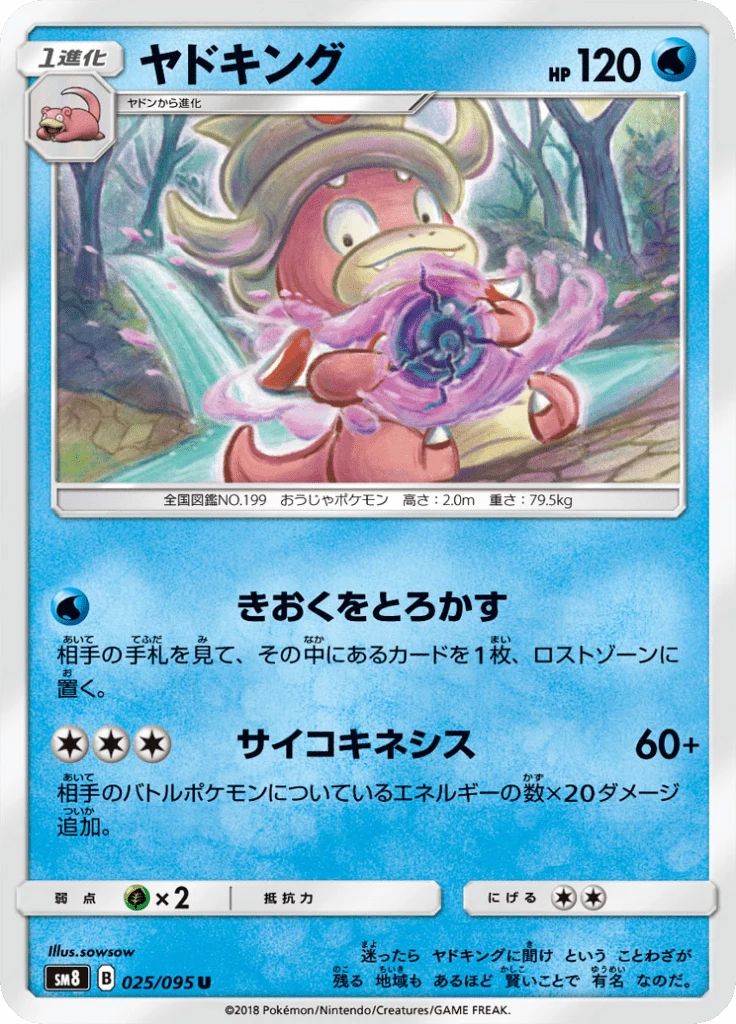
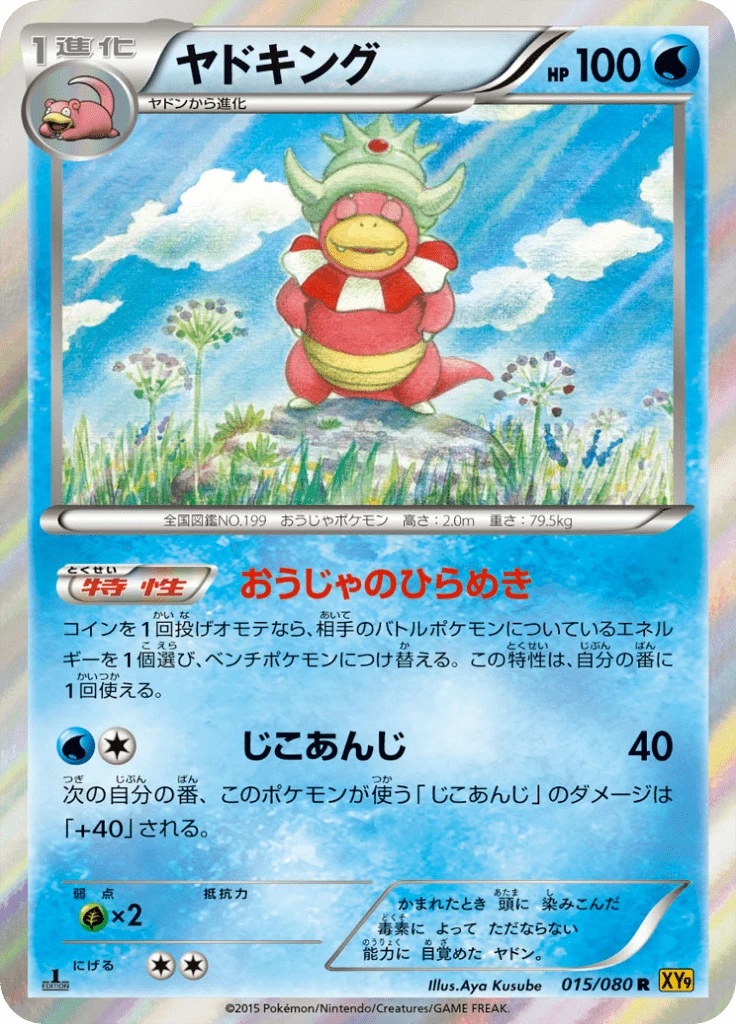
Three more of the index-confirmed prints have card images that load and check out: SV7 39, SM8 25, and XY9 15. Illustrator credit and HP for these three haven’t been individually re-verified, so the artwork is shown here without citing details that haven’t been confirmed.

Slowking SV7 39 R

Slowking, SV7 39, R

Slowking SM8 25 R

Slowking, SM8 25, R

Slowking XY9 15 R

Slowking, XY9 15, R

Four more index-confirmed prints — SV2P 30, SV2P 86, SM2p 23, and BW4 34 — are documented in the table above but don’t have a checked card image to show here. In the video games, Slowking carries a dual Water/Psychic typing; the Trading Card Game has always printed it as a single type, and which type a given print uses depends on that era’s design conventions rather than a change in the Pokemon’s own type line. None of the eight modern-era prints in this section are listed on our site at the moment; sourcing requests go through our Quick Order page.

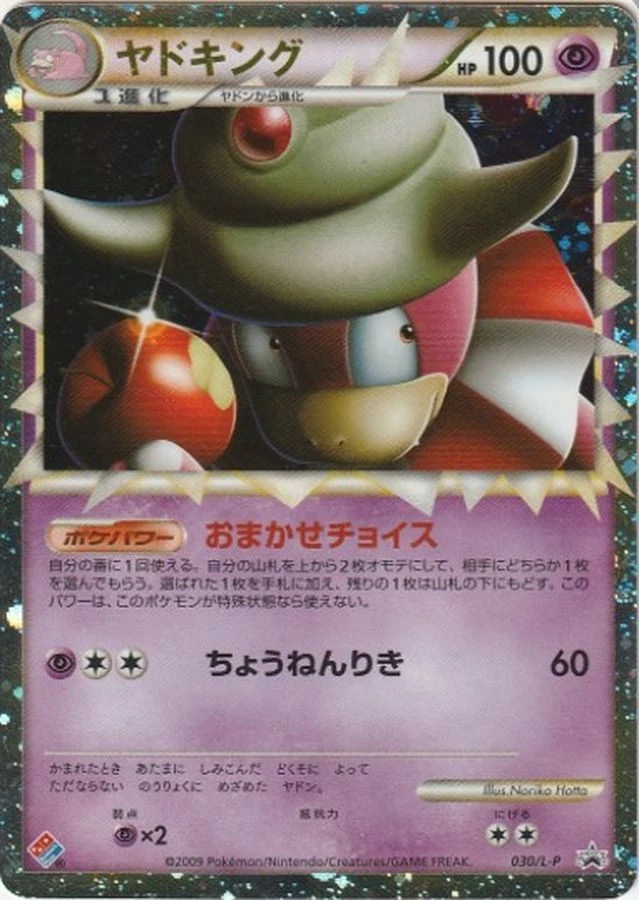
The 2009 Domino’s Pizza Promo: L-P 030

PSA 10 Slowking Domino's Pizza Promo L-P 030 slab, listed on samuraiswordtokyo.com
PSA 10 Slowking, Domino’s Pizza Promo L-P 030

The card behind our higher-value Slowking anchor didn’t come from a booster pack. Between December 11, 2009 and January 14, 2010, Domino’s Pizza Japan ran an “Exciting Pokemon Pack” promotion: customers who bought the pack received this Slowking card, a Slowpoke card, and a set of Ho-Oh, Lugia, and Domino’s-branded card sleeves (via PokeBeach, a secondary TCG-news source; this promo is not indexed on Limitless TCG). The card carries the Domino’s logo in its lower-left corner and is illustrated by Noriko Hatta. It’s the Japan-exclusive version of “Slowking Prime,” whose English equivalent is Undaunted (UD) #66 — the same artwork, matched by the L-P 030 print number on our own listing.

A PSA 10 example is currently listed at ¥587,640 (~$3,696).

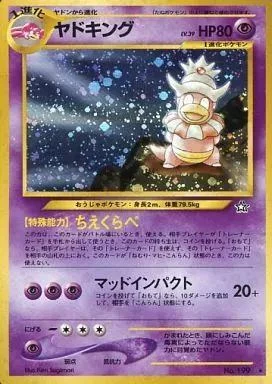
The Old Back Original: Neo Genesis

PSA 10 Slowking Old Back Neo Genesis slab, listed on samuraiswordtokyo.com
PSA 10 Slowking, Old Back Neo Genesis

The other vintage anchor traces back to Neo Genesis, Japan’s seventh main TCG set, released February 4, 2000 under the Japanese title “Gold, Silver, to a New World…” (金、銀、新世界へ…, per Bulbapedia). The set ran to 96 main cards in Japan, expanded to 111 for the later English release, and Slowking appeared in it as a Rare Holo. It uses the pre-July-2001 Old Back card design — for the full design-era breakdown, see our Old Back vs New Back guide.

A Note on the Print Number

Our listing catalogues this print as “No.199,” but that number doesn’t fit a 96-to-111-card set — it’s most likely an internal catalogue reference rather than the official Japanese print number. The English Neo Genesis checklist lists the same card as #14/111. For more on how Old Back print numbers and condition generally work, see our Japanese Old Back cards guide.

A PSA 10 example is currently listed at ¥245,440 (~$1,544).

Chase Prints and What Makes Them Collectible

None of the ten prints above carry a Secret Rare, Special Art Rare, or other top-tier chase-card marking — the search index lists all eight modern cards as Rare, and the two vintage prints are a Rare Holo and an unspecified promo rarity. What separates the two prints in our own listings from the eight modern ones isn’t a rarity tier; it’s distribution. A Rare from a current Scarlet & Violet-era set was printed in the normal run of a modern set that’s still fairly easy to find. A promo distributed for roughly five weeks through a pizza-chain giveaway in 2009, or a Rare Holo from a 96-card set printed in 2000, went through a far smaller and far older print run.

That’s the gap the two PSA 10 prints covered here sit in, and it’s a distribution story rather than a rarity-tier story — both cards would read as ordinary rarities on a checklist, and both are collectible mainly because of when and how narrowly they were released.

Sourcing a Slowking Card from Japan

Neither vintage anchor comes from a currently listed sealed box. Neo Genesis and the Domino’s Pizza promotion are both long out of print, so the two PSA 10 examples above are the direct route to either one. For the eight modern-era Rare prints — SVM 28, SV7 39, SV2P 30, SV2P 86, SM8 25, SM2p 23, XY9 15, and BW4 34 — none are listed on our site at the moment; sourcing requests for any of them go through our Quick Order page.

Shop This Card
PSA 10 Slowking [L-P 030] — Domino’s Pizza Promo
Currently listed at ¥587,640 (~$3,696)
Ships from Tokyo · Tracked delivery

View Product →

Where to Buy Slowking Cards from Tokyo

We ship graded and sealed Japanese product worldwide out of Tokyo with tracked delivery. For Slowking specifically, both of our listed anchors are vintage PSA 10 examples: the Domino’s Pizza promo, currently listed at ¥587,640 (~$3,696), and the Neo Genesis Old Back print, currently listed at ¥245,440 (~$1,544). Browse the wider PSA 10 graded card collection for other vintage and modern Pokemon singles, or request a quote for any of the eight modern-era Slowking Rares through our Quick Order page. For the Slowbro side of the family, see our Slowpoke and Slowbro Pokemon Card Guide.

자주 묻는 질문

How many Japanese Slowking card prints are there?

A Limitless TCG search returns eight modern-era Rare prints, and this guide also covers two vintage and promo prints found through secondary sources — ten in total across nine Japanese sets and promotions. Older and promotional Japanese product isn’t always fully indexed, so this reflects the prints we’ve verified rather than a definitive total.

What is the oldest Japanese Slowking card?

The Neo Genesis Rare Holo, released February 4, 2000 under the Japanese title “Gold, Silver, to a New World…”. It uses the pre-July-2001 Old Back card design and is listed as #14/111 on the English Neo Genesis checklist.

What is the Domino’s Pizza Slowking promo card?

A Slowking card distributed through a Domino’s Pizza Japan “Exciting Pokemon Pack” promotion between December 11, 2009 and January 14, 2010. It’s the Japan-exclusive version of “Slowking Prime” (English equivalent: Undaunted #66), illustrated by Noriko Hatta, and carries the Domino’s logo in its lower-left corner.

Is Slowking a stage evolution of Slowbro?

No. Both evolve from Slowpoke, but along separate branches — Slowbro evolves by levelling up, while Slowking evolves only when a Slowpoke holding a King’s Rock item is traded. They aren’t a three-stage evolution chain with each other.

Where can I buy a graded Japanese Slowking card?

Two PSA 10 examples are currently listed on our site: the 2009 Domino’s Pizza promo at ¥587,640 (~$3,696) and the Neo Genesis Old Back print at ¥245,440 (~$1,544). For any of the eight modern-era Rare prints, sourcing requests go through our Quick Order page.

Cal Steelix Old Back 일본판 카드 가이드 (2000년 프로모)

Cal Steelix is a magazine bonus card, not a set card — and that single fact explains almost everything odd about how it gets catalogued online.

The card is an unnumbered Japanese promo inserted into Pokémon Card Official Magazine “Trainers” Vol. 5, released in Japan on 1 March 2000. It carries the old “Pocket Monsters Card Game” back design used before July 2001, which is why collectors group it with the “old back” era. Many marketplace listings tag it “[neo4 No.208],” as if it belonged to the Neo Destiny set — it does not. This guide covers what the card actually is, why that marketplace label is misleading, how it fits into the old-back timeline, and where our own graded copy sits in the catalogue.

Key Takeaways

Our graded PSA 10 Cal Steelix : Old Back — the 2000 Trainers Vol. 5 magazine promo — is currently listed at ¥4,720,000 (~$29,686). It is unnumbered on the card itself; “[neo4 No.208]” is a third-party marketplace catalogue index, not an official printed number, and the card is unrelated to Neo Destiny’s own 105-card main set. For another Japanese old-back PSA 10 from the same Neo Destiny catalogue era, our PSA 10 Dark Espeon : Old Back [neo4 No.196] is currently listed at ¥442,500 (~$2,783).

100
HP

Holo Promo
Rarity

1
Verified JP Print

Mar 2000
Japan Release

Prices below are current samuraiswordtokyo.com listings, converted at ¥159/USD (September 2026).

The Card: Cal Steelix Old Back Promo

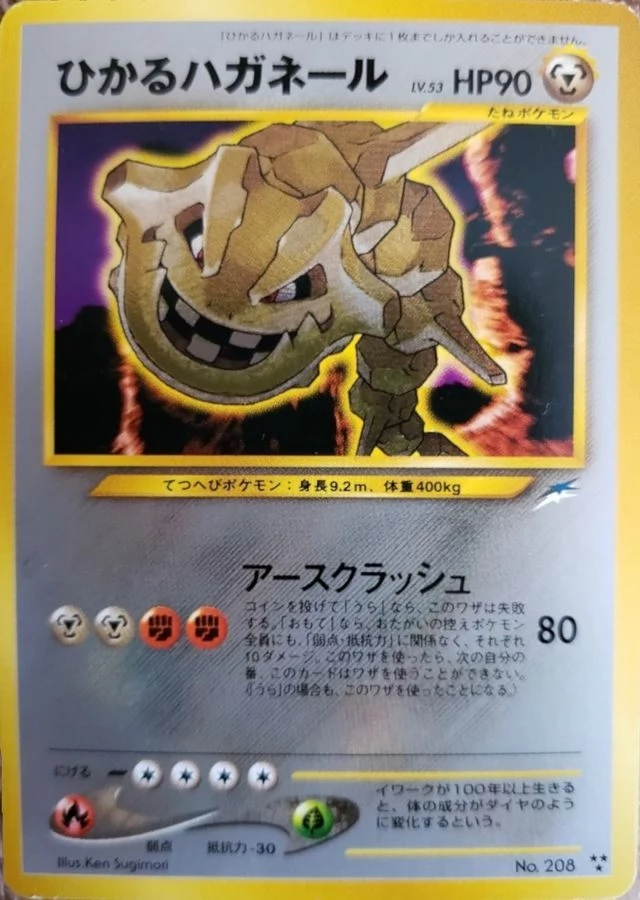
Cal Steelix is a Metal-type Stage 1 Pokémon evolving from Onix, with 100 HP. Its attacks are “Metal Crash” (1 Metal Energy, 50 damage, coin-flip mechanic) and “Rumble” (1 Fighting Energy + 1 Colorless Energy, 20 damage, prevents the opponent’s Pokémon from retreating on its next turn). Weakness is Fire ×2, Resistance is Grass −30, and the retreat cost is 4. The card is illustrated by Benimaru Itoh.

PSA 10 Cal Steelix Old Back promo, listed on samuraiswordtokyo.com
PSA 10 Cal Steelix : Old Back, Pokémon Card Official Magazine “Trainers” Vol. 5 promo (2000)

It was distributed as a bonus card included with Pokémon Card Official Magazine “Trainers” Vol. 5, released in Japan on 1 March 2000. Per Bulbapedia, the card’s border text reads: “Pokémon Card Official Magazine ‘Trainers Vol. 5’ bonus card.” The rarity is Holographic — a promotional treatment, with no standard set-rarity letter attached. Our own graded example of this print is currently listed at ¥4,720,000 (~$29,686), PSA 10, shipped from Tokyo.

On the Numbering

Cal Steelix carries no fraction or number printed on its face. “[neo4 No.208]” is a cataloguing convention used by marketplaces such as SNKRDUNK to sequentially index unnumbered Neo-era promos — it is not an official card number, and the card is not part of Neo Destiny’s numbered main set.

The Magazine Promo and the “Old Back” Era

Cal Steelix was never part of a numbered expansion pack — it came bundled with an issue of a hobby magazine, Pokémon Card Official Magazine “Trainers” Vol. 5, on 1 March 2000. Because it was never sold as a booster product, there is no booster box tied to this card.

What it does share with an entire generation of Japanese cards is the “old back” design. The original “Pocket Monsters Card Game” card back — the POCKET MONSTERS wordmark curved across the top, with CARD GAME on a ribbon under the Poké Ball — ran from the game’s debut on 20 October 1996 through every set released before 19 July 2001. The back design changed with the VS expansion, released 19 July 2001; per Bulbapedia, “the back of the card was changed from the ‘Pocket Monsters Card Game’ to the ‘Pokémon’ design used in international prints.” Cal Steelix’s own March 2000 release date sits well before that cutover, which is what makes it an old-back card in its own right — independent of any set it gets associated with on marketplaces.

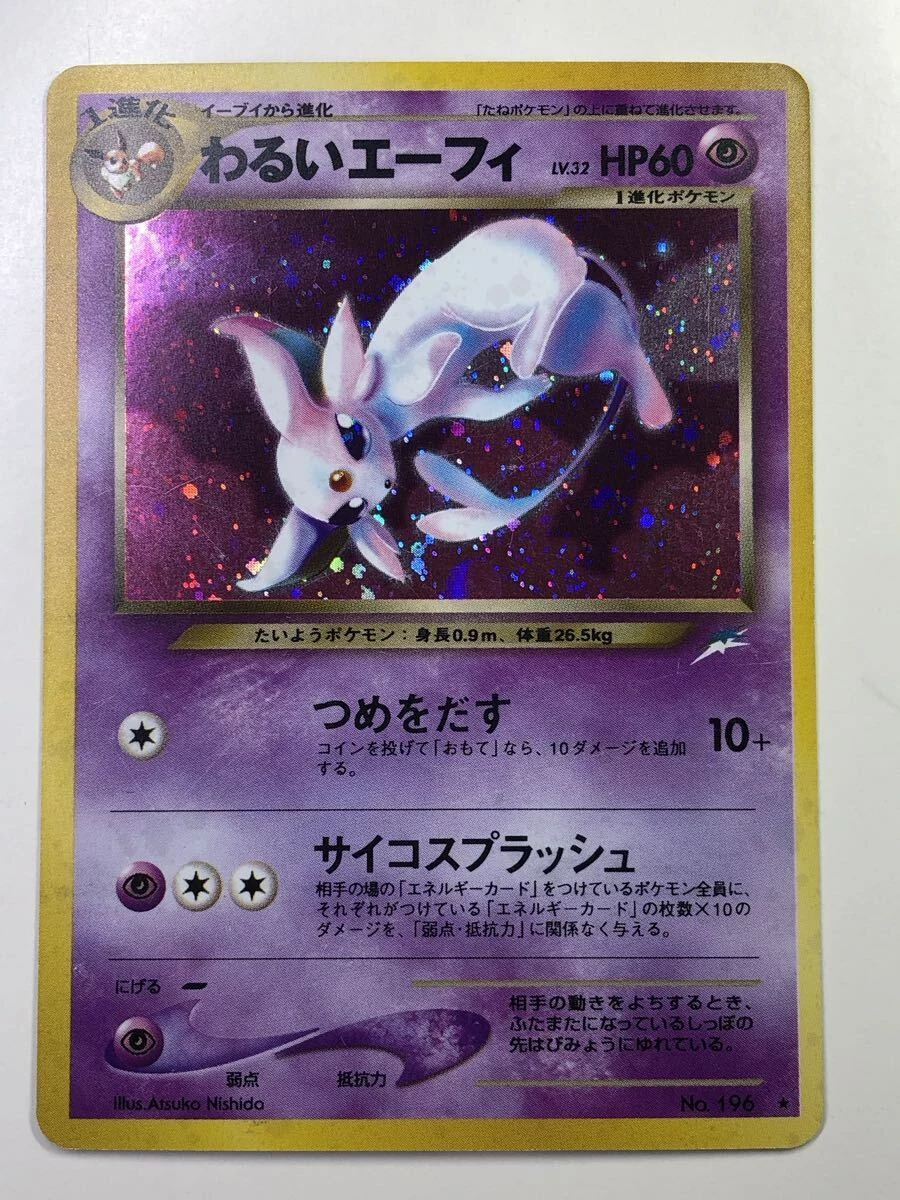
PSA 10 Dark Espeon Old Back, listed on samuraiswordtokyo.com
PSA 10 Dark Espeon : Old Back [neo4 No.196] — an actual Neo Destiny (neo4) old-back print, for comparison

The set referenced in the marketplace label — Neo Destiny (neo4) — also predates the cutover: it released in Japan on 20 April 2001, titled “闇、そして光へ…” (“Darkness, and to Light…”), with 113 cards across the English and Japanese releases. Neo Genesis, Neo Discovery, and Neo Revelation, the other three Neo-block sets, all predate July 2001 as well and carry the same old-back design. For the broader explainer on what “old back” covers across Japanese sets generally, see our Japanese Old Back Pokemon Cards guide — that page covers the whole category, where this article stays focused on the one Cal Steelix promo. Our Japanese Pokémon card back guide covers the design-change history in more depth, and our Japanese Pokémon card backs explained hub covers the same topic from a different angle if you want a second pass at it.

Japanese vs English Print

In the source checked for this guide, no English-language release of this exact promo is documented. That does not rule out an English release turning up elsewhere, but the print we verified shows no English counterpart — consistent with its original distribution as a Japanese hobby-magazine insert rather than a set card sold internationally.

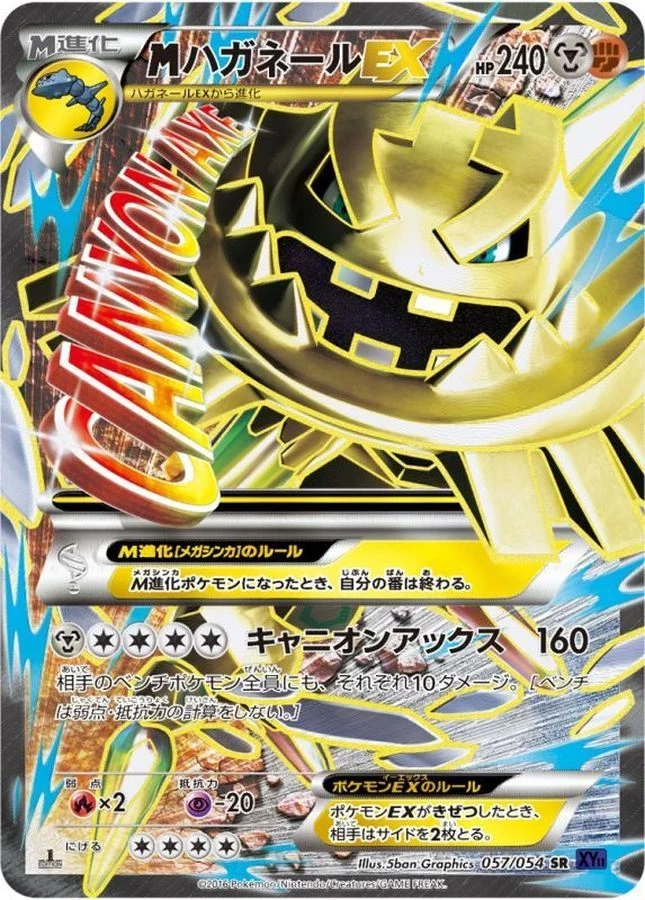
This is separate from the question of whether “Steelix” as a Pokémon has appeared in English cards — it has, many times, across the mainline Neo Genesis print, later reprints, and the modern Steelix AR and M Steelix EX SR prints noted above. What is specific to Cal Steelix is this one Trainers Vol. 5 promo, and that is the print with no documented English equivalent.

Where This Promo Sits Among Japanese Old-Back Rarity Tiers

Cal Steelix carries no standard set-rarity letter — it is listed simply as Holographic, a promotional finish tied to its magazine-insert distribution rather than to a pull slot inside a booster set. That puts it in a different lane entirely from the numbered holo-rare cards inside Neo Destiny (neo4) itself, which were pulled from packs rather than bundled with a magazine.

Two of those neo4 catalogue prints sit in our own listings alongside Cal Steelix and Dark Espeon:

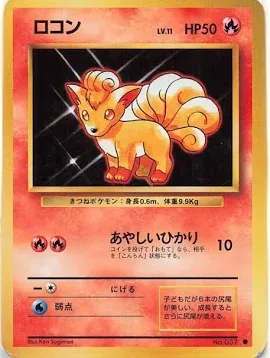
Our Vulpix : Old Back [neo4 No.037] listing does not carry a displayed set price — enquiries route through our Quick Order page. Our Light Arcanine : Old Back [neo4 No.059] is currently listed at ¥310,104 (~$1,951). Neither is the same card as Cal Steelix, but all three sit in the same broad “old back, Neo Destiny catalogue era” grouping.

For the full print family under the Steelix name across every era, see our Steelix Cards guide — that hub covers every Japanese printing, where this article stays scoped to the one 2000 promo. For a sibling old-back single-promo write-up in the same content pattern, see our Celebi Old Back (Premium File) promo card guide. For the vintage XY-era Mega Steelix EX print specifically, see our M Steelix EX SR card guide — a different card, covered separately.

Shop This Card
PSA 10 Cal Steelix : Old Back
Currently listed at ¥4,720,000 (~$29,686)
Ships from Tokyo · Tracked delivery

View Product →

Where to Buy Cal Steelix from Tokyo

Our graded PSA 10 Cal Steelix : Old Back is currently listed at ¥4,720,000 (~$29,686), shipped from Tokyo with tracked delivery. Neo Destiny (neo4) is a 1999–2001-era release with no booster box sold as new product today, so there is no sealed source product to point to — the graded promo itself is the listing.

For related Japanese old-back PSA 10 cards from the same catalogue era, our Dark Espeon : Old Back [neo4 No.196] is currently listed at ¥442,500 (~$2,783), our Light Arcanine : Old Back [neo4 No.059] at ¥310,104 (~$1,951), and our Vulpix : Old Back [neo4 No.037] by enquiry through Quick Order. Browse the wider range in our PSA 10 graded card collection, or see our sibling Here Comes Team Rocket! Old Back card guide for another single-promo deep dive in the same “old back” category. For other vintage Japanese singles not shown here, our Quick Order page is the fastest way to build a sourcing request.

자주 묻는 질문

What is the Cal Steelix Old Back promo?

It is an unnumbered Japanese promo card, HP 100, bundled with Pokémon Card Official Magazine “Trainers” Vol. 5, released in Japan on 1 March 2000. It carries the “old back” card design and a Holographic promotional rarity. We list a PSA 10 graded example, currently listed at ¥4,720,000 (~$29,686).

Why is Cal Steelix labelled “[neo4 No.208]” if it’s not part of Neo Destiny?

“[neo4 No.208]” is a marketplace cataloguing convention — used by sites such as SNKRDUNK to sequentially index unnumbered Neo-era promos — not an official printed card number. The card is not numbered on its face and is unrelated to Neo Destiny’s own 105-card main set.

Is Cal Steelix the same card as Steelix or Shining Steelix?

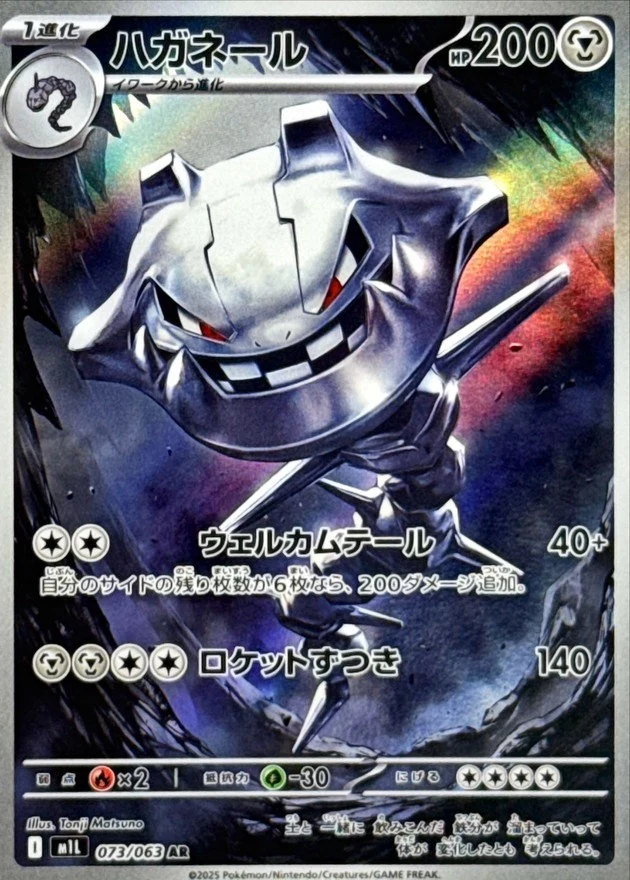
No. The mainline Steelix is Neo Genesis No. 15 and Shining Steelix is Neo Destiny No. 112 — both separate cards with separate artwork and rarity. Our catalogue also lists a modern Steelix AR (M1L 073/063) and a vintage M Steelix EX SR :1ED (XY11-2 057/054), which are different cards again.

Does Cal Steelix have an English print?

In the source checked for this guide, no English-language release of this exact promo is documented. The print we verified shows no English counterpart, consistent with its original distribution as a Japanese magazine insert.

What does “old back” mean on a Japanese Pokémon card?

It refers to the original “Pocket Monsters Card Game” card-back design used from the game’s October 1996 debut through every set released before 19 July 2001, when the VS expansion introduced the newer “Pokémon” back design. Cal Steelix’s March 2000 release places it in that earlier window.

Where can I buy Cal Steelix and other Japanese old-back PSA 10 cards from Tokyo?

Our graded Cal Steelix is currently listed at ¥4,720,000 (~$29,686), shipped from Tokyo with tracked delivery. We also list other old-back PSA 10 cards from the same Neo Destiny catalogue era, including Dark Espeon, Light Arcanine, and Vulpix (by Quick Order enquiry).

Hex Maniac 181/171 SR 카드 가이드: 모든 일본판 인쇄 (XY 시대 트레이너 카드)

Hex Maniac has one of the more unusual print trails of the XY era — five separate Japanese releases across four product formats, running from a 2015 uncommon insert to a 2017 full art secret rare that trades in an entirely different bracket. The card anchoring this guide is オカルトマニア — Hex Maniac, No. 181/171, printed as a Full Art Secret Rare in the Japanese 하이클래스팩 「THE BEST OF XY」/ “The Best of XY” (store code XY-BEST). We currently list a PSA 10 graded copy of this exact print, shipped from Tokyo, and this guide walks through every documented Japanese print of the card, where the 181/171 full art sits among them, and how it compares to its English equivalent.

Key Takeaways

Hex Maniac XY-BEST 181/171 Full Art Secret Rare is a PSA 10, currently listed at ¥1,078,284 (~$6,782). It comes from The Best of XY (XY-BEST), a Japanese 하이클래스팩 released 21 April 2017 with a 171-card base checklist plus a secret-rare tier running to 188. Hex Maniac has five confirmed Japanese prints going back to a 2015 Bandit Ring uncommon — the 181/171 full art is the highest-tier of them. If you want another secret-rare Supporter from the same set, our PSA 10 Karen 183/171 is currently listed at ¥266,680 (~$1,677).

Supporter
Card Type

Full Art SR
Rarity (181/171)

171
Set Size (XY-BEST)

Apr 2017
Japan Release

Prices below are current samuraiswordtokyo.com listings, converted at ¥159/USD (September 2026).

The Card: Hex Maniac 181/171 Full Art SR

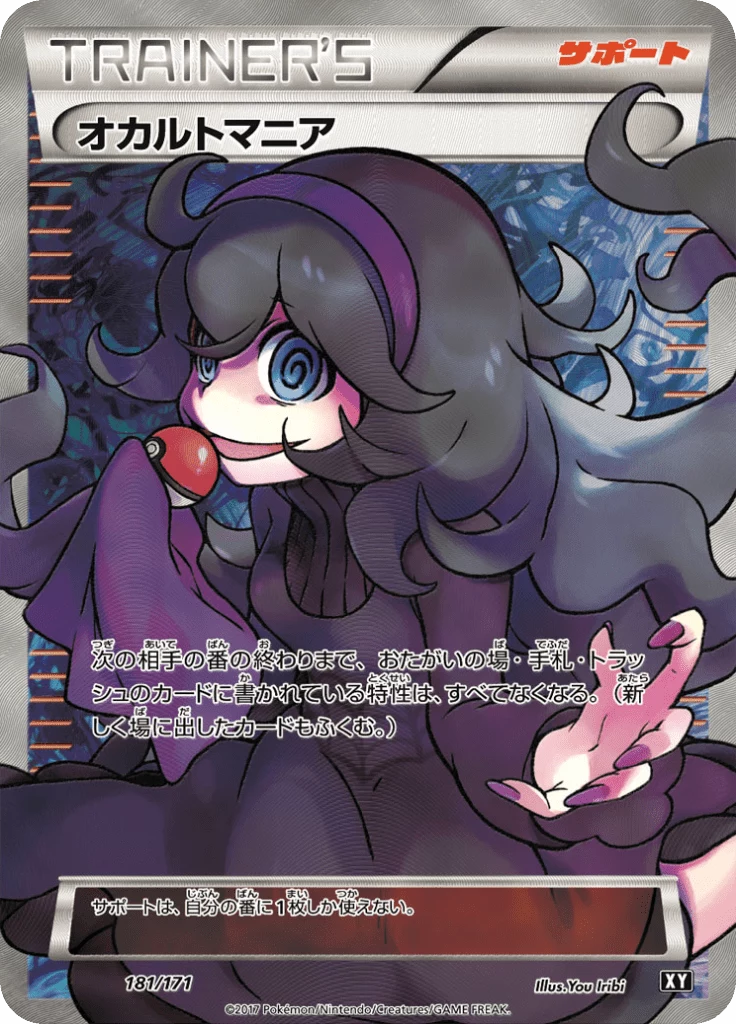
Hex Maniac is a Trainer — Supporter card, so it carries no HP or Pokemon type. Its effect: until the opponent’s next turn ends, every Pokemon in play, in either player’s hand, and in either player’s discard pile loses its Ability. That is a full-board Ability lock, not just active Pokemon, which is what makes the card a distinctive Supporter within the XY era.

The 181/171 print is illustrated by You Iribi. Its position at #181 in a “171” set — ten past the set’s own base count — marks it as part of the secret-rare tier rather than the main numbered run. The Best of XY’s secret-rare cards run from 172 up to the highest confirmed card number in the set, Shaymin EX at 188/171.

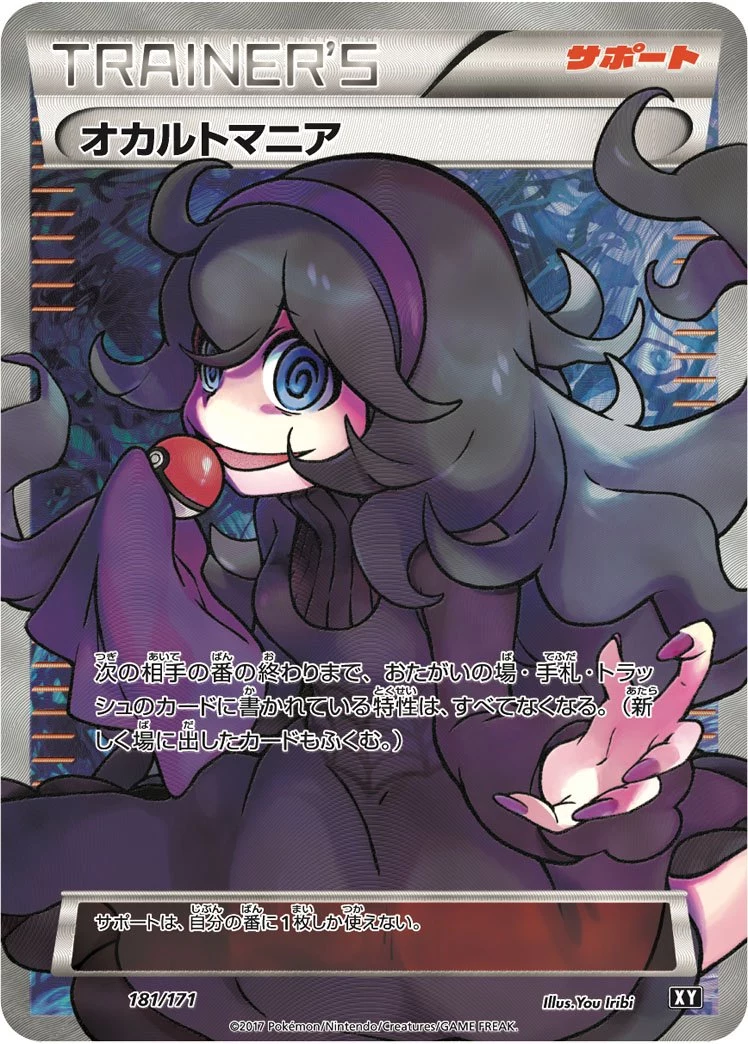
Hex Maniac 181/171 Full Art Secret Rare, The Best of XY (XY-BEST)
Hex Maniac 181/171 Full Art Secret Rare — The Best of XY (XY-BEST), illustrated by You Iribi

Our graded copy of this print is currently listed at ¥1,078,284 (~$6,782), PSA 10.

PSA 10 Hex Maniac 181/171 Full Art Secret Rare slab, listed on samuraiswordtokyo.com
PSA 10 Hex Maniac 181/171 slab, listed on samuraiswordtokyo.com

The Set: The Best of XY (XY-BEST)

The Best of XY — ハイクラスパック「THE BEST OF XY」in Japanese — is a 하이클래스팩, Limitless set code XY (store-facing code XY-BEST), released 21 April 2017 as a retrospective set closing out the XY era. Its base checklist runs to 171 cards, with a secret-rare tier numbered from 172 up to the highest confirmed card in the set, Shaymin EX at 188/171.

The set carries several other secret-rare Supporters in the same full art treatment as Hex Maniac, including Karen 183/171 and N 180/171, both of which we also list in PSA 10. For the set’s full secret-rare checklist and a buying guide to the set as a whole, see our The Best of XY 하이클래스팩 guide — that piece is a buying guide to the whole set and its 172–188 secret-rare run, while this article is a single-card deep dive into Hex Maniac’s full print lineage across all five of its Japanese releases, which the hub does not cover in this depth.

For more on the wider XY era’s Japanese releases, see our XY-era Japanese Pokemon guide.

Japanese vs English Print

Hex Maniac’s English-set appearance is Ancient Origins #75, a regular Uncommon print that matches the original Japanese Bandit Ring release. English also has a full art treatment of the card — card #75a, released as part of a “Yellow A Alternate” cards collection in October 2017 — but that alternate-art print is English-only. It corresponds functionally to the Japanese 181/171 full art treatment in that both are full-art versions of the same artwork and effect, but it does not share a direct 1:1 number equivalent with any single Japanese print.

If you are matching a Japanese copy against an English one, treat the two full art versions as separate collectibles that happen to share artwork and effect, rather than assuming one is a straight reprint of the other.

Where This Full Art SR Sits Among Japanese Rarity Tiers

Within The Best of XY, Hex Maniac’s 181/171 print sits in the set’s secret-rare tier — the full art treatment reserved for cards numbered above the 171-card base checklist. That puts it on the same rung as the set’s other secret-rare Supporters, including Karen 183/171 and N 180/171, both graded PSA 10 in our own catalogue.

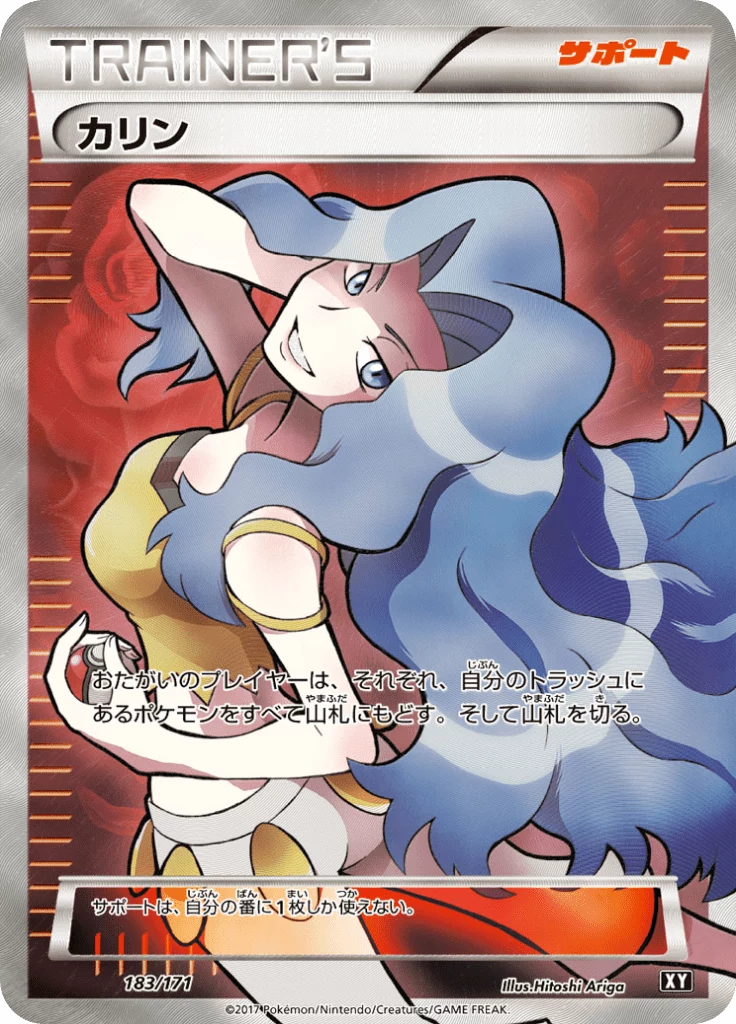
Karen 183/171 Full Art Secret Rare, The Best of XY (XY-BEST)

Karen 183/171 (Full Art SR)

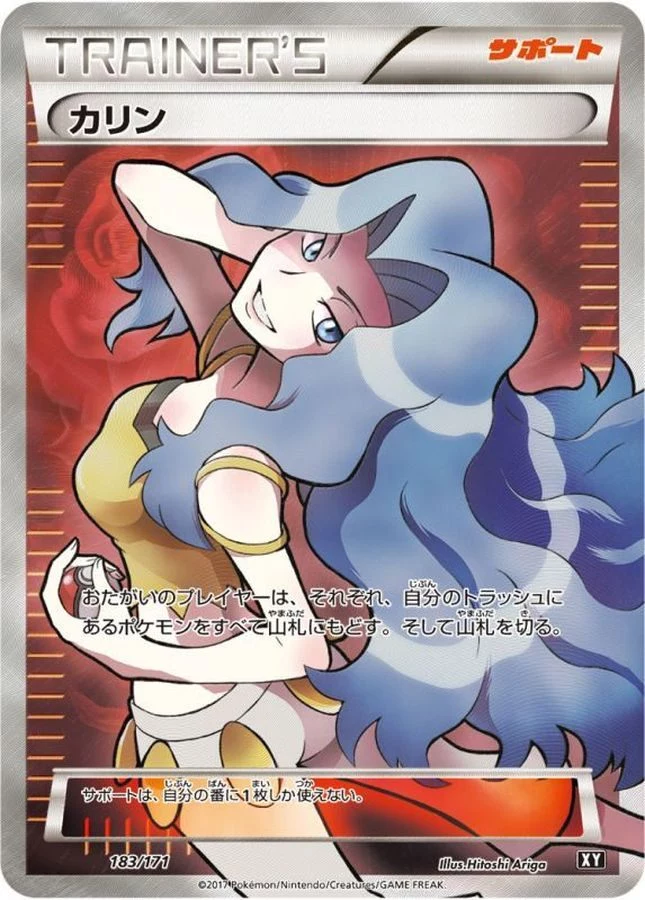
PSA 10 Karen 183/171 Full Art Secret Rare slab, listed on samuraiswordtokyo.com

PSA 10 Karen 183/171 slab

Hex Maniac’s full art print carries the same secret-rare treatment the set gives its other headline Trainer cards, distinguished by its effect: a full-board Ability lock covering active Pokemon, hands, and discard piles alike. For a broader look at full art Trainer secret rares across Japanese sets, see our full art Trainer cards guide, and for graded Supporters specifically, our PSA 10 Trainer cards hub. Hex Maniac is also one of several female Trainer-class characters covered in our female Pokemon Trainer cards roundup, alongside single-card guides like our Ortega Supporter card guide.

Shop This Card
PSA 10 Hex Maniac 181/171 Full Art Secret Rare
Currently listed at ¥1,078,284 (~$6,782)
Ships from Tokyo · Tracked delivery

View Product →

Where to Buy Hex Maniac from Tokyo

Our graded copy of PSA 10 Hex Maniac 181/171 Full Art Secret Rare is currently listed at ¥1,078,284 (~$6,782), shipped from Tokyo with tracked delivery. If you are building out the rest of The Best of XY’s secret-rare Supporters, we also list PSA 10 Karen 183/171 at ¥266,680 (~$1,677) and PSA 10 N 180/171 at ¥472,000 (~$2,969).

For the full secret-rare checklist and a buying guide to the set itself, see our The Best of XY 하이클래스팩 guide. For the wider graded catalogue, browse our PSA 10 graded card collection, or use our Quick Order page to build a mixed order across singles and sealed product.

자주 묻는 질문

What is Hex Maniac 181/171 Full Art Secret Rare?

It is the full art secret rare print of Hex Maniac (オカルトマニア), card 181/171 from the Japanese 하이클래스팩 The Best of XY (store code XY-BEST), released 21 April 2017. We list a PSA 10 copy of this print, currently at ¥1,078,284 (~$6,782).

How many Japanese prints of Hex Maniac exist?

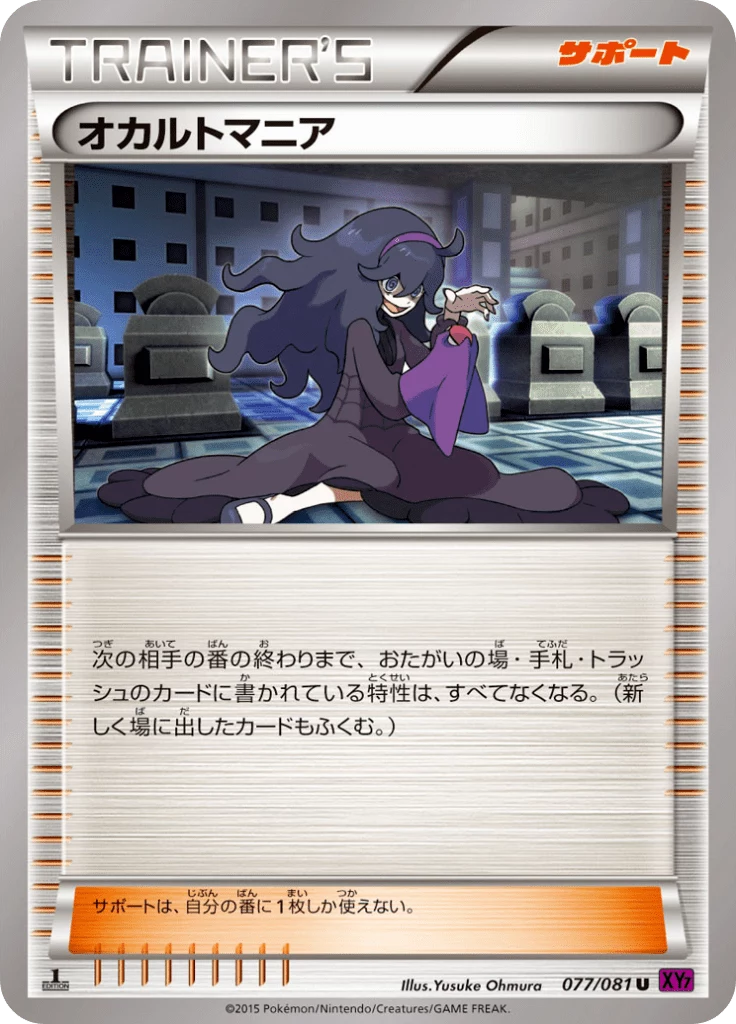
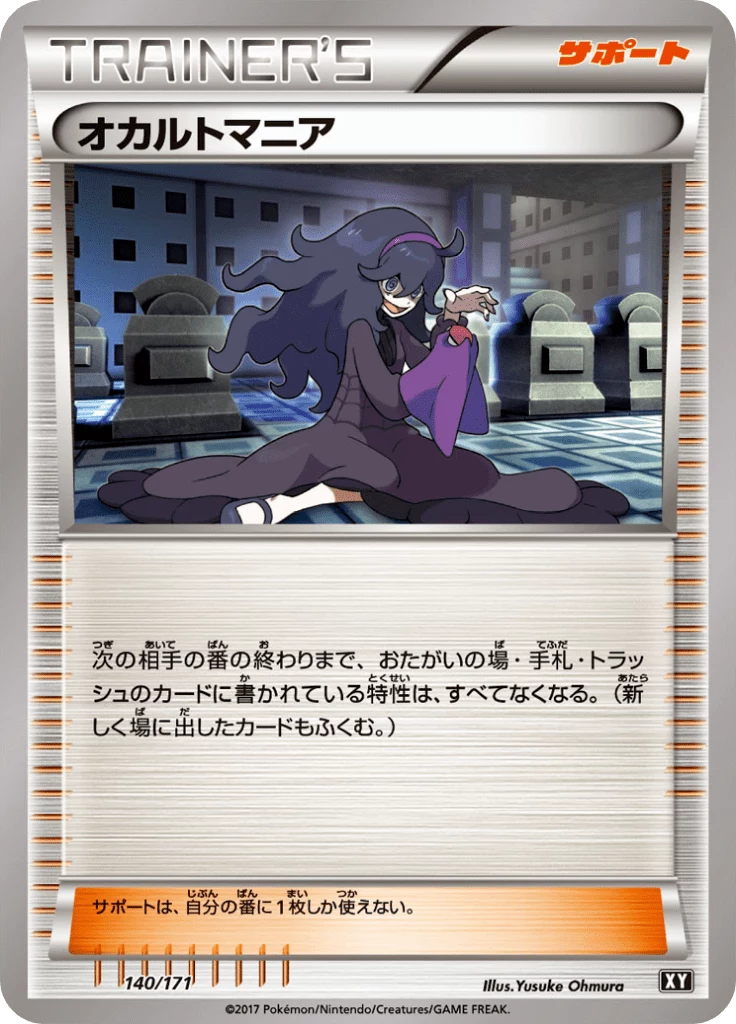
Five confirmed releases: the 2015 Bandit Ring Uncommon (077/081), an XY-P Mirror Holofoil tournament promo (173/XY-P), a reported second Best of XY appearance (140/171, rarity unverified), the 181/171 full art secret rare, and an Ultra Sun Deck Build Box reprint (027/041, rarity unverified).

What does Hex Maniac’s card effect do?

Until the opponent’s next turn ends, every Pokemon in play, in either player’s hand, and in either player’s discard pile loses its Ability.

Does Hex Maniac have an English print?

Yes — Ancient Origins #75 matches the original Bandit Ring Uncommon print, and a separate English-only full art version (#75a) released as part of a “Yellow A Alternate” cards collection in October 2017. Neither has a direct 1:1 number match to the Japanese 181/171 print.

How is this guide different from your Best of XY set guide?

Our Best of XY 하이클래스팩 guide is a buying guide to the whole set and its 172–188 secret-rare checklist. This article is a single-card deep dive into Hex Maniac specifically, covering all five of its Japanese print releases.

Where can I buy a PSA 10 Hex Maniac from Tokyo?

Our graded 181/171 full art secret rare copy is currently listed at ¥1,078,284 (~$6,782) with tracked shipping from Tokyo.

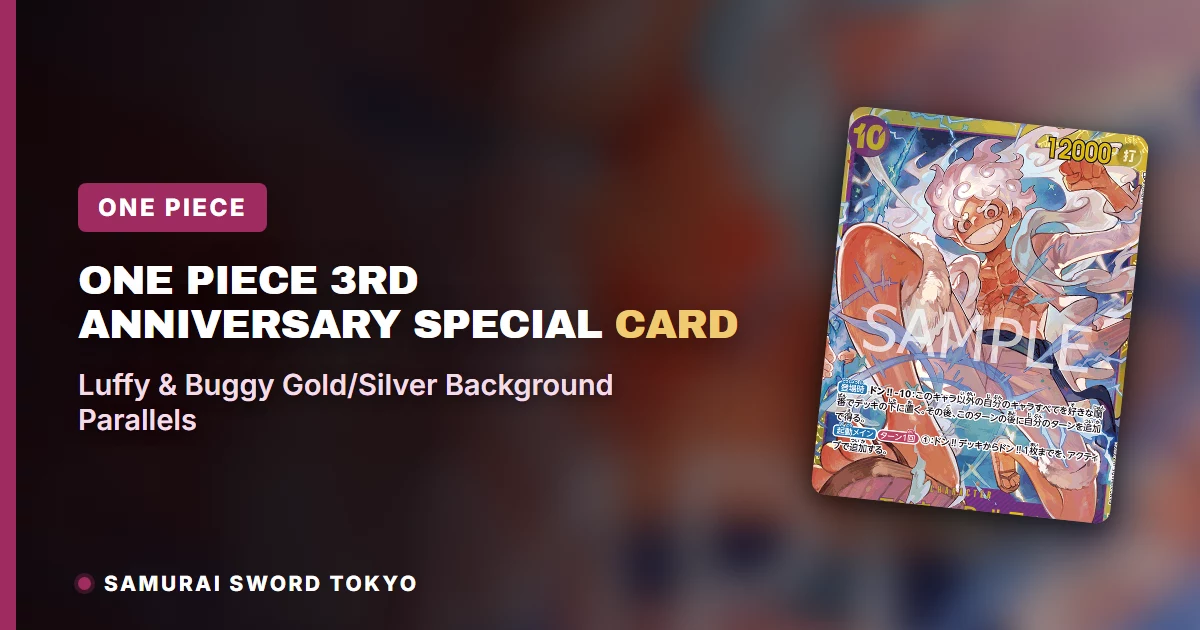
One Piece 3rd Anniversary Special Card(SPC) 가이드: Monkey.D. Luffy & Buggy 골드/실버 배경 패러렐

Not every parallel in the One Piece Card Game shows up on a set list. Some only exist as a name in a store’s own catalogue.

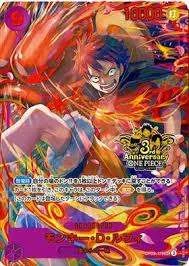
That’s the case with the three PSA10-graded cards behind this guide. This store lists them under the catalogue name “3rd Anniversary Special Card” (shortened here to SPC) — two Gold/Silver Background treatments of Monkey.D. Luffy [OP05-119] and one Gold Background treatment of Buggy [OP09-051]. We looked for an official Bandai announcement using the exact phrase “3rd Anniversary Special Card” or “SPC” and could not confirm one this session. What follows is what we can verify about the two underlying cards, plus what the naming most likely corresponds to, based on our own separately-researched printing history for OP09-051.

We ship graded singles and sealed Japanese product out of Tokyo, and all three anchors below are graded PSA10 examples currently listed on this site.

Key Takeaways

Two base card numbers carry this store’s “3rd Anniversary Special Card” tag: Monkey.D. Luffy [OP05-119], Gold Background, currently listed at ¥2,562,960 (~$16,119) PSA10, and Buggy [OP09-051], Gold Background, currently listed at ¥453,120 (~$2,850) PSA10. Neither card’s “SPC” designation has been confirmed against an official Bandai source this session — treat it as this store’s own catalogue naming for a parallel treatment, not a Bandai-printed term.

3
SPC Treatments Covered

2
Base Card Numbers

7
Confirmed Parallel Forms (each number)

Sep 2026
Prices Checked

Prices are this store’s current listed prices as of September 2026, converted at ¥159/USD.

The Three SPC Treatments at a Glance

All three are PSA10-graded parallels, catalogued by this store under two base card numbers:

카드 Base # 세트 Confirmed parallel forms Currently listed
Monkey.D. Luffy, Gold Background SPC OP05-119 -A Fist of Divine Speed- (OP-05) Base + p1–p6 ¥2,562,960 (~$16,119)
Monkey.D. Luffy, Silver Background SPC OP05-119 -A Fist of Divine Speed- (OP-05) Base + p1–p6 ¥1,204,308 (~$7,574)
Buggy, Gold Background SPC OP09-051 -Emperors in the New World- (OP-09); this anchor catalogued under -The Azure Sea’s Seven- (OP-14) Base + p1–p6 (p7 returns 404) ¥453,120 (~$2,850)

“Confirmed parallel forms” here means what the official card list image server actually returns — a base print plus “_p” suffixed parallel images numbered p1 through p6 for both OP05-119 and OP09-051, all reachable, with p7 returning a 404 for OP09-051. That confirms multiple parallel treatments exist for both numbers. It does not, by itself, tell us which specific p-number is the one this store labels “3rd Anniversary Special Card” — more on that below.

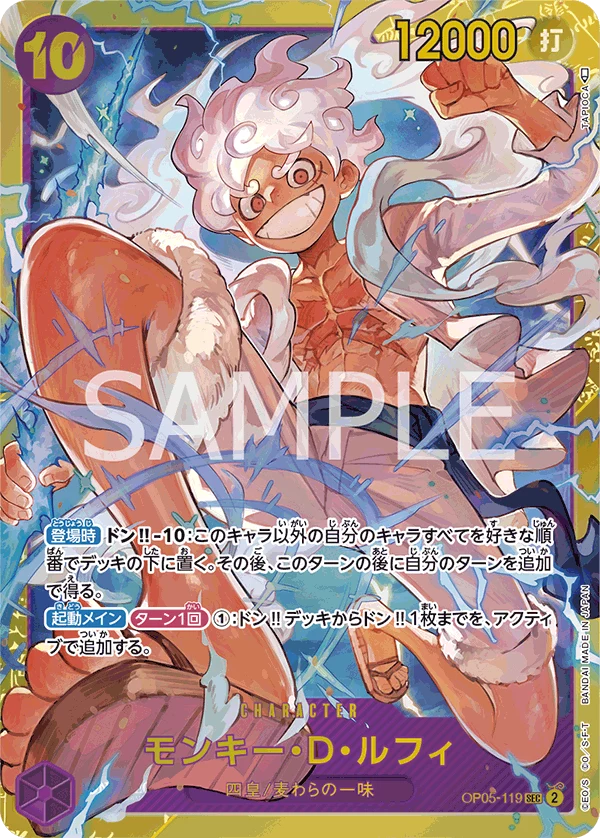
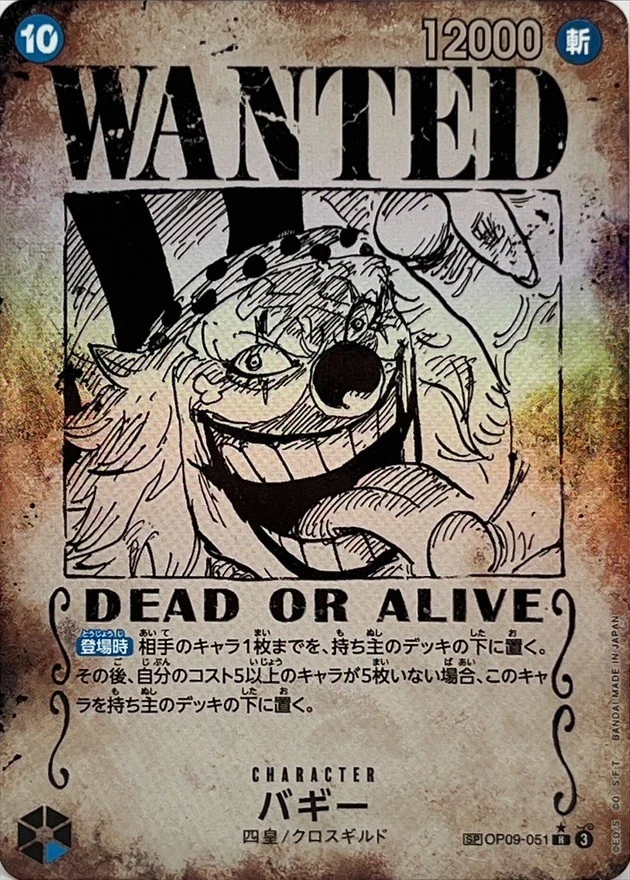
OP05-119 Monkey.D. Luffy base print official card list reference A Fist of Divine Speed

OP05-119 Monkey.D. Luffy — base print, official card list reference

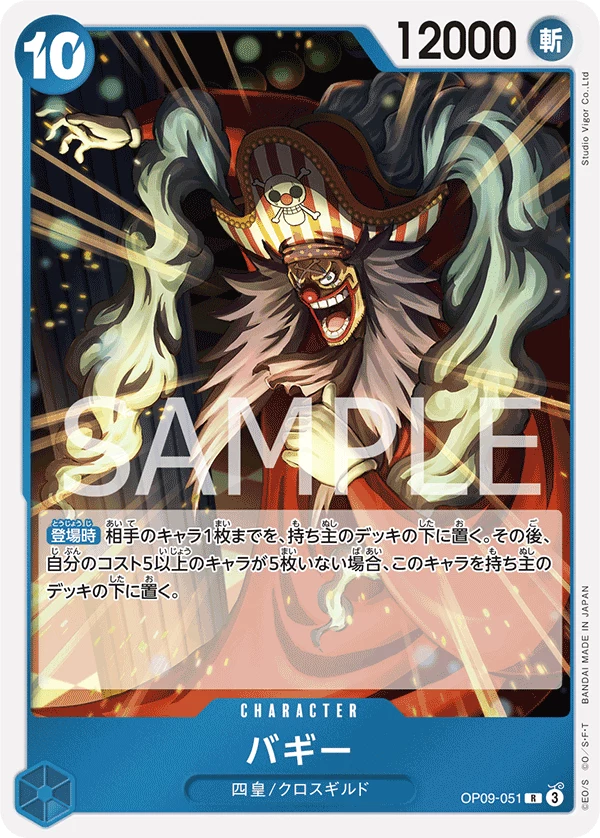
OP09-051 Buggy base print R rarity official card list reference Emperors in the New World

OP09-051 Buggy — base print, official card list reference

These two images show the base, non-parallel print of each number as it appears on the official card list — useful for confirming card identity, artwork and text, separately from the Gold/Silver Background SPC treatment shown in the photos below.

Monkey.D. Luffy: Gold & Silver Background SPC (OP05-119)

OP05-119 Monkey.D. Luffy is printed in -A Fist of Divine Speed- (OP-05). This store catalogues two parallel treatments of that number under the “3rd Anniversary Special Card” name: a Gold Background version and a Silver Background version.

Monkey.D. Luffy OP05-119 Gold Background SEC-SPC 3rd Anniversary Special Card A Fist of Divine Speed

Monkey.D. Luffy, Gold Background SPC (OP05-119)
Currently listed at ¥2,562,960 (~$16,119), PSA10

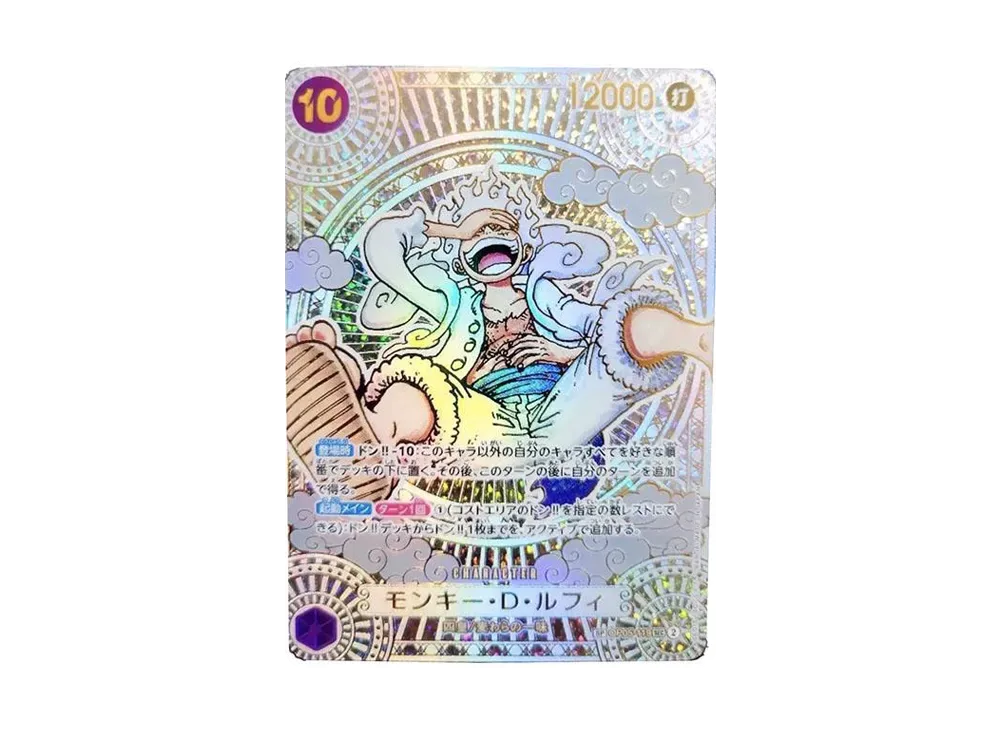
Monkey.D. Luffy OP05-119 Silver Background SEC-SPC 3rd Anniversary Special Card A Fist of Divine Speed

Monkey.D. Luffy, Silver Background SPC (OP05-119)
Currently listed at ¥1,204,308 (~$7,574), PSA10

The Gold Background and Silver Background treatments share the same base card number and artwork; the background finish is what separates the two listings, and it’s also what separates the two prices — the Gold Background example is currently listed at roughly double the Silver Background one. Both are catalogued by this store with a compound “SEC-SPC” tag, which we address in the next section.

“SEC” Is a Catalogue Tag, Not a Confirmed Rarity Letter

This store’s product listings pair the SPC name with a “SEC” prefix. It is not independently verified that “SEC” is Bandai’s own printed rarity letter for this specific parallel. Treat “SEC-SPC” as this store’s internal shorthand for the treatment until a first-party source confirms the printed rarity.

Buggy: Gold Background SPC (OP09-051)

Buggy OP09-051 Gold Background R-SPC 3rd Anniversary Special Card The Azure Sea's Seven
Buggy, Gold Background SPC (OP09-051), catalogued under -The Azure Sea’s Seven- (OP-14)

OP09-051 Buggy is originally printed in -Emperors in the New World- (OP-09) as a Blue, Cost 10, Power 12000 card in the Four Emperors/Cross Guild family. Its base printed rarity is independently confirmed as R — not SEC — so the “R-SPC” compound tag on this listing again pairs a catalogue series name with a rarity marker that this store applies internally, rather than a rarity string lifted directly from a single Bandai print.

The Gold Background SPC anchor here is catalogued under the booster pack -The Azure Sea’s Seven- (OP-14), not the card’s original OP-09 release. That detail matters: our own, separately-researched Buggy One Piece cards guide already confirms that OP09-051 exists in eight forms under the same number — the standard print, parallels p1, p2 and p4, a true SP CARD variant (p3), two further SP parallels printed later in -The Azure Sea’s Seven- [OP-14] (p5, p6), and a reprint (r1) in the -Blue Buggy- [ST-25] starter deck. Our OP-14-catalogued anchor lines up with those later p5/p6 SP parallels far more closely than with the original OP-09 print run.

Where the “SPC” Naming Comes From

We want to be precise about what we did and didn’t confirm this session. The official Asia-English card list image server confirms that multiple “_p” suffixed parallel images exist for both OP05-119 and OP09-051 (p1 through p6 for each, all returning HTTP 200; OP09-051’s p7 returns a 404). That’s real evidence that both numbers carry several parallel treatments. It is not, on its own, a confirmation that any specific one of those parallels is the treatment this store’s catalogue calls “3rd Anniversary Special Card.”

The strongest connecting evidence comes from our own Buggy guide’s research, which independently mapped OP09-051’s full eight-form printing history and confirmed that two of those forms (p5, p6) are SP parallels printed later in the OP-14 booster pack — the exact pack this store’s Buggy SPC anchor is catalogued under. That’s a reasonable corroborating link, but it is inference from our own research, not a first-party Bandai statement using the term “3rd Anniversary Special Card” or “SPC.” We could not locate such a statement this session (our search budget was exhausted partway through), so the distribution mechanism and date behind the “SPC” name stay unconfirmed here. For the rarity letters referenced throughout this article, our One Piece card rarity explained guide covers what SEC and R mean on an official printed card.

None of this changes what’s verifiable about the cards themselves: OP05-119 is Monkey.D. Luffy from OP-05, OP09-051 is Buggy from OP-09, and both carry multiple confirmed parallel forms. It’s the specific “3rd Anniversary” label — not the underlying cards — that remains a store catalogue name pending further confirmation.

Grading and What PSA10 Means for These Parallels

All three anchors in this guide are graded PSA10, PSA’s Gem Mint grade — the top of PSA’s ten-point scale, reserved for cards with sharp corners, clean edges, strong centring and no visible surface flaws under standard inspection. A PSA10 label on a slab confirms the physical condition of that specific card at the time it was graded; it says nothing about how many other examples of the same parallel exist or have been graded, and we’re not going to guess at that number here.

For parallels like these Gold and Silver Background SPC treatments, where even the base identification (which p-number, which official name) has open questions, grading is the one part of the picture with an independent, verifiable stamp — the certification number on each slab. Everything else in this guide is either confirmed against the base card number or flagged as this store’s own catalogue naming.

Featured Card
PSA10 Monkey.D. Luffy, Gold Background SPC (OP05-119)
Currently listed at ¥2,562,960 (~$16,119)
Ships from Tokyo · Tracked delivery

View Product →

Where to Buy One Piece 3rd Anniversary Special Cards from Tokyo

We ship graded One Piece singles and sealed Japanese product worldwide from Tokyo with tracked delivery. All three SPC treatments covered in this guide are currently listed:

For OP09-051’s other parallel forms, including the Comic Parallel and the -Blue Buggy- starter deck reprint, our Buggy One Piece cards guide covers the full eight-form printing history. For a wider view of parallel treatments tied to tournaments and events rather than a store catalogue name, see our One Piece Flagship Battle promo cards guide. Our One Piece promo cards guide is the broader hub for promo-era cards, and our One Piece serial-numbered cards guide covers a different, numbered-print collecting lane worth comparing against this SPC naming. For rarity letters like SEC and R, see One Piece card rarity explained.

Browse the wider One Piece booster box collection, or use our Quick Order page to build a mixed order across graded singles and sealed product.

자주 묻는 질문

What is a One Piece “3rd Anniversary Special Card” (SPC)?

It’s a catalogue name this store uses for a set of PSA10-graded parallels — two Gold/Silver Background treatments of Monkey.D. Luffy [OP05-119] and one Gold Background treatment of Buggy [OP09-051]. We could not confirm a first-party Bandai announcement using this exact term, so treat “SPC” as this store’s own naming for the treatment rather than a term printed on Bandai’s official card list.

Is “SEC” the official printed rarity of these SPC cards?

We haven’t confirmed that. OP09-051 Buggy’s base rarity is independently confirmed as R, not SEC. The “SEC-SPC” and “R-SPC” tags on these listings are this store’s own compound catalogue labels combining a rarity marker with the SPC series name.

Which base cards do the Luffy and Buggy SPC parallels come from?

The Luffy SPC parallels (Gold Background and Silver Background) come from OP05-119 Monkey.D. Luffy, printed in -A Fist of Divine Speed- (OP-05). The Buggy SPC parallel (Gold Background) comes from OP09-051 Buggy, originally printed in -Emperors in the New World- (OP-09).

Is the Buggy 3rd Anniversary Special Card the same as other OP09-051 parallels?

No. OP09-051 has multiple confirmed parallel forms across several releases, including a Comic Parallel, a true SP CARD variant, two later SP parallels in -The Azure Sea’s Seven- (OP-14), and a reprint in the -Blue Buggy- (ST-25) starter deck. This store’s Gold Background SPC anchor is catalogued under OP-14, lining up with those later SP parallels rather than the original OP-09 print run.

Where can I buy these One Piece SPC cards from Tokyo?

All three PSA10-graded treatments in this guide are currently listed on this site, shipping from Tokyo with tracked delivery: Luffy Gold Background at ¥2,562,960 (~$16,119), Luffy Silver Background at ¥1,204,308 (~$7,574), and Buggy Gold Background at ¥453,120 (~$2,850). Use Quick Order to add other One Piece cards to the same order.

Pretend Pikachu 프로모 시리즈 가이드: Team Skull, Member, Magikarp & Gyarados (일본판 SM-P/XY-P)

Four Japanese Pikachu promos share the same cosplay-style naming trick — “Pretend ___ Pikachu” — and the same illustrator. They did not, however, share a release date.

Two of the four came out in a Sun & Moon Special Box in December 2016. The other two came out roughly eighteen months earlier, in June 2015, in a completely different Special Box. All four are Lightning-type Basic Pokemon cards, all four were illustrated by Kouki Saitou, and none of the four has been released in English — but they are two separate box products from two separate years, not one continuous drop.

This guide sorts out which card came from which box, what each box was actually called, and where a PSA 10 of each print currently stands on our site. We ship Japanese sealed product and graded singles out of Tokyo, and all four cards below are graded examples from our own catalogue.

Key Takeaways

The “Pretend ___ Pikachu” name spans two unrelated box releases: the 2015 Pretend Magikarp & Pretend Gyarados Pikachu Special Box and the 2016 Sun & Moon Special Box carrying Pretend Team Skull Pikachu and Pretend Grunt Pikachu. A PSA 10 Pretend Team Skull Pikachu (SM-P 013) is currently listed at ¥2,702,200 (~$16,995), and a PSA 10 Pretend Gyarados Pikachu (151/XY-P) is currently listed at ¥2,596,000 (~$16,327). None of the four cards has an official English-language release.

4
Cards in the Series

2015–16
Release Years

2
Separate Special Boxes

Sep 2026
Prices Checked

Prices are this store’s current listed prices as of September 2026, converted at ¥159/USD.

Two Pretend Pikachu Boxes, 18 Months Apart

All four cards use the same “Pretend ___ Pikachu” pattern — Pikachu dressed up as (or referencing) another character or Pokemon — and all four were illustrated by Kouki Saitou. That shared naming convention and illustrator credit is the only thing tying them together. They came from two different Special Box products, released about a year and a half apart, and the earlier box is not the one most collectors think of first.

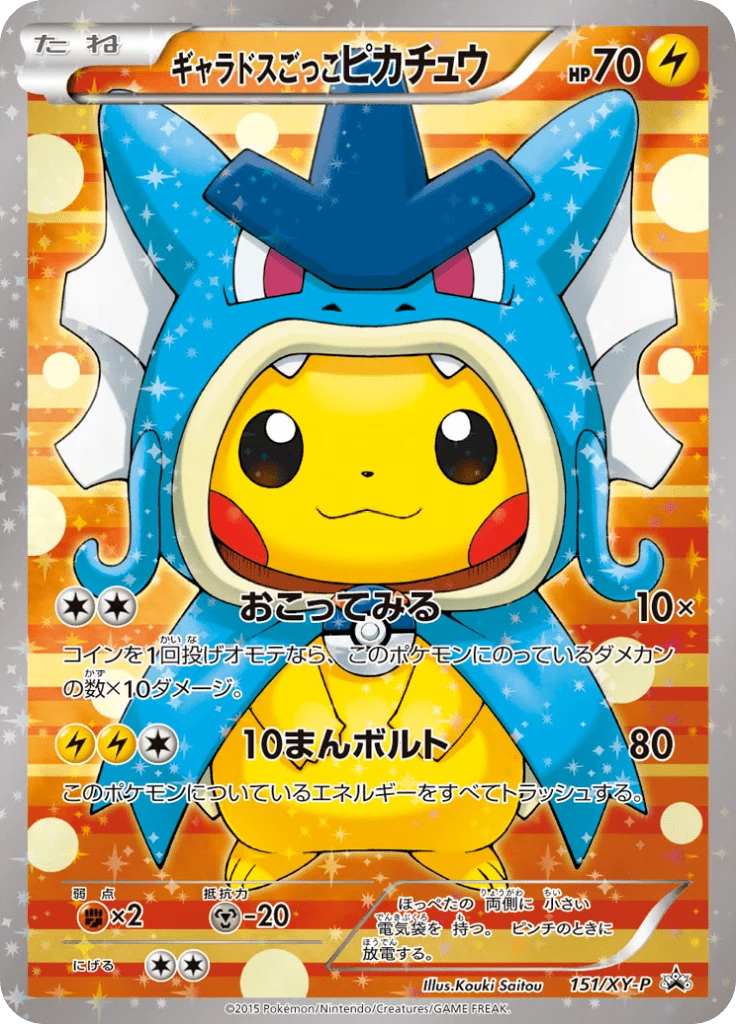
The Pretend Magikarp & Pretend Gyarados Pikachu Special Box released on 26 June 2015, ahead of the Sun & Moon-era box by roughly eighteen months. The Sun & Moon Special Box carrying Pretend Team Skull Pikachu and Pretend Grunt Pikachu followed on 17 December 2016. Our own product catalogue groups all four under one “Pretend Pikachu” umbrella for browsing convenience, but they are two distinct release products, not one drop.

카드 Promo # 박스 Released
Pretend Magikarp Pikachu 150/XY-P Pretend Magikarp & Pretend Gyarados Pikachu Special Box 26 Jun 2015
Pretend Gyarados Pikachu 151/XY-P Pretend Magikarp & Pretend Gyarados Pikachu Special Box 26 Jun 2015
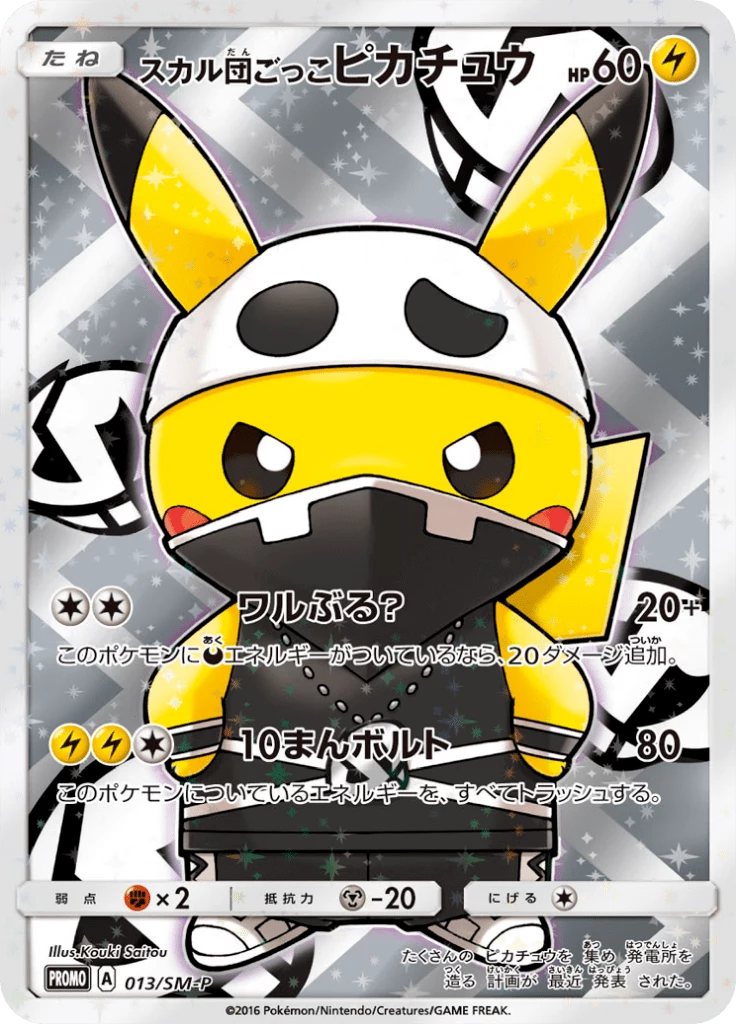
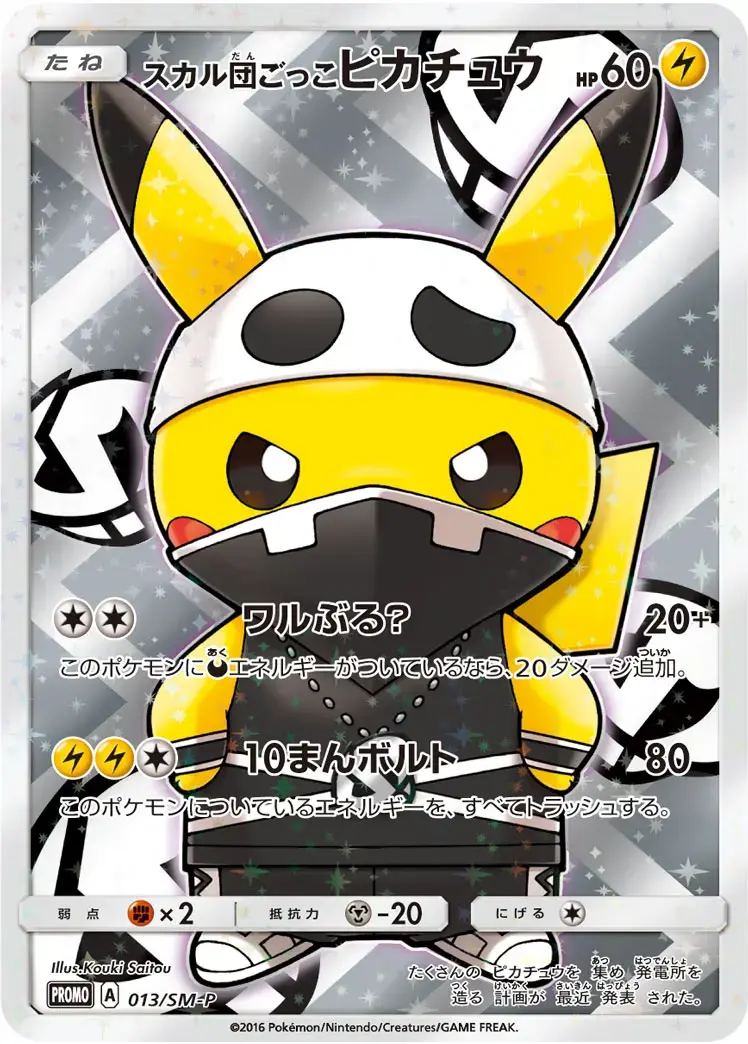
Pretend Team Skull Pikachu 013/SM-P Sun & Moon Special Box 17 Dec 2016
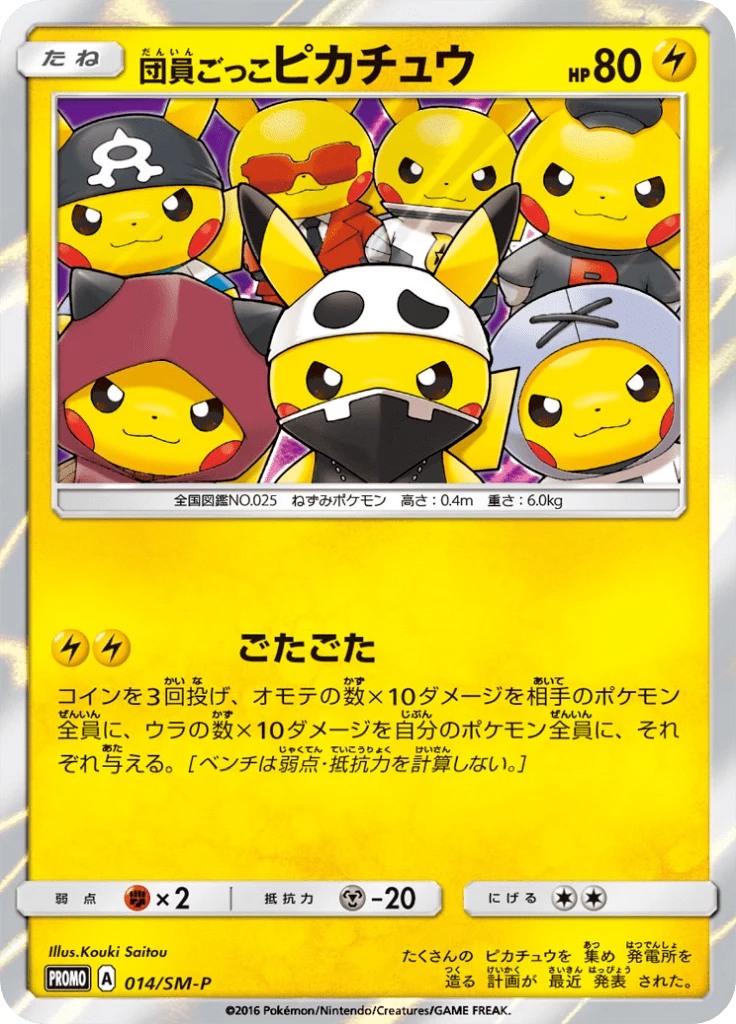
Pretend Grunt Pikachu (our listing: “Member Pretend Pikachu”) 014/SM-P Sun & Moon Special Box 17 Dec 2016

All four are Lightning-type Basic Pokemon cards, and none of the four has an official English-language release — every print in this guide exists only as a Japanese card.

The 2015 Box: Pretend Magikarp Pikachu & Pretend Gyarados Pikachu

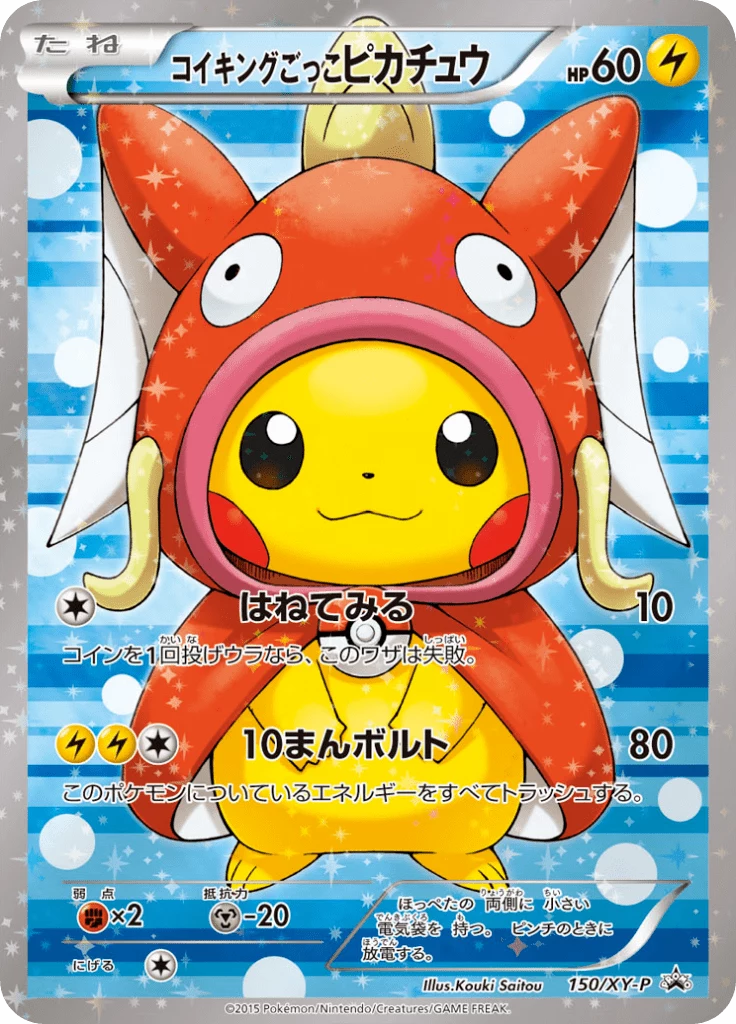
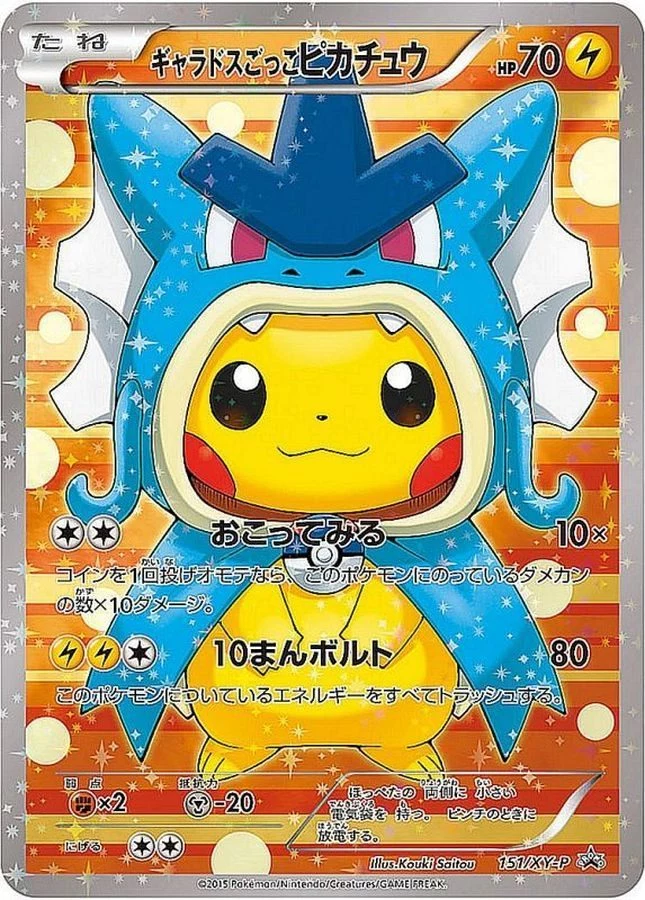
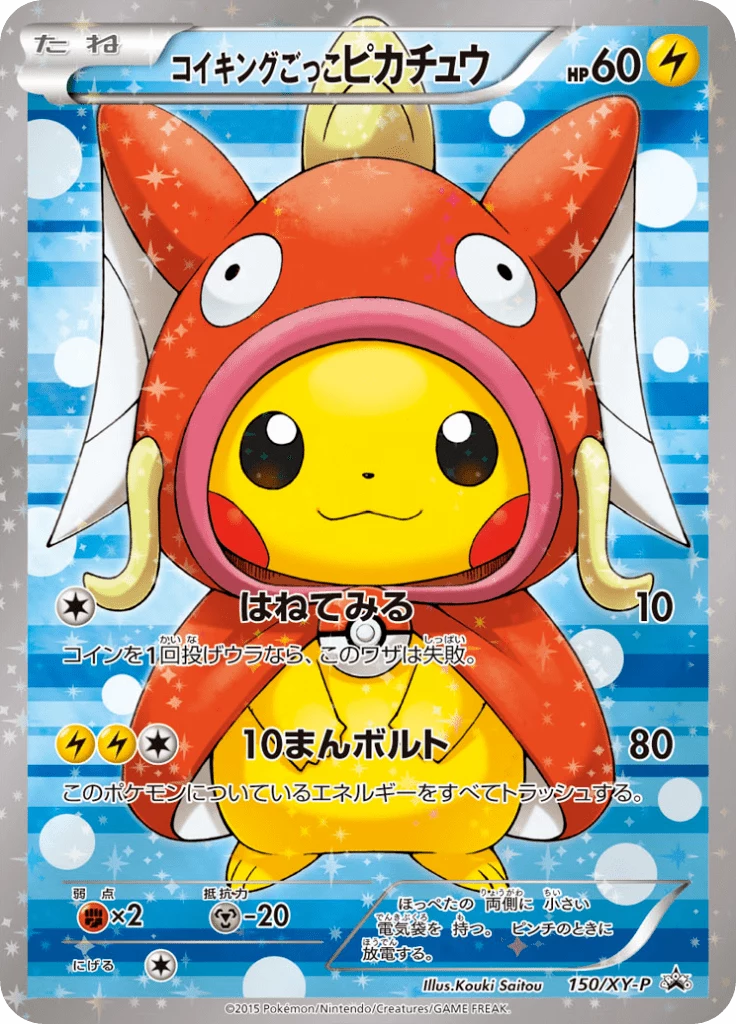
The earlier of the two boxes, released 26 June 2015, paired two cards around the Magikarp-to-Gyarados evolution line: 150/XY-P Pretend Magikarp Pikachu (Japanese: コイキングごっこピカチュウ) and 151/XY-P Pretend Gyarados Pikachu (Japanese: ギャラドスごっこピカチュウ). Both are numbered as part of the XY-P Promotional cards line, and both share the Kouki Saitou illustration credit that runs across this entire series.

Pretend Magikarp Pikachu, 150/XY-P promo, Pretend Magikarp & Pretend Gyarados Pikachu Special Box

Pretend Magikarp Pikachu, 150/XY-P

Pretend Gyarados Pikachu, 151/XY-P promo, Pretend Magikarp & Pretend Gyarados Pikachu Special Box

Pretend Gyarados Pikachu, 151/XY-P

A PSA 10 Pretend Magikarp Pikachu (150/XY-P) is currently listed at ¥2,336,400 (~$14,694), and a PSA 10 Pretend Gyarados Pikachu (151/XY-P) is currently listed at ¥2,596,000 (~$16,327). Both cards are numbered consecutively in the XY-P run and were sold together as a matched pair inside the same box, rather than as two separate products.

The 2016 Box: Pretend Team Skull Pikachu & Pretend Grunt Pikachu

The second box, released 17 December 2016, is the Sun & Moon Special Box, themed around Team Skull, the delinquent faction from the Sun & Moon games. It contains 013/SM-P Pretend Team Skull Pikachu (Japanese: スカル団ごっこピカチュウ) and 014/SM-P Pretend Grunt Pikachu (Japanese: 団員ごっこピカチュウ). Both are Holographic Full Art prints, again illustrated by Kouki Saitou.

Pretend Team Skull Pikachu, 013/SM-P promo, Holographic Full Art, Sun & Moon Special Box

Pretend Team Skull Pikachu, 013/SM-P

Pretend Grunt Pikachu, 014/SM-P promo, Holographic Full Art, Sun & Moon Special Box

Pretend Grunt Pikachu, 014/SM-P

One Box, Two Names

Our own catalogue lists 014/SM-P as “Member Pretend Pikachu,” while Bulbapedia and this store’s separate novelty Special-BOX Pikachu promos guide both call the box the “Pretend Grunt Pikachu Special Box.” It’s the same physical box and the same card — just two different naming conventions used across sources and, at different times, across this site’s own listings.

A PSA 10 Pretend Team Skull Pikachu (013/SM-P) is currently listed at ¥2,702,200 (~$16,995), and a PSA 10 Member Pretend Pikachu (014/SM-P) is currently listed at ¥589,764 (~$3,709). The gap between the two prices is one reason to check the promo number in the corner before assuming which card you’re looking at.

How the Pretend Pikachu Series Was Distributed

Both boxes followed the same basic format: two Promo-line cards, packaged together as one Special Box product, sold as a set rather than as individual singles. Neither release came out of a standard TCG booster pack — buying the box was the only way to get either card inside it.

The naming convention itself — Pikachu “pretending” to be another character or Pokemon — was reused across both boxes with the same illustrator, Kouki Saitou, credited on all four cards. That consistency in name pattern and artist is the clearest link between the 2015 and 2016 releases; nothing in the record ties the two boxes together as a planned, continuous series rather than a naming convention that got reused a year and a half later.

As with the rest of this store’s Japanese promo-card guides, none of the four cards has an official English-language release, which is consistent with these being Japan-market Special Box products rather than cards distributed through the wider international TCG channel.

Grading and What PSA 10 Means for These Promos

PSA grades cards on a 1–10 scale, and a PSA 10 sits at the top of that scale — the designation PSA uses for a card that meets its gem-mint standard across centering, corners, edges, and surface. For Holographic Full Art prints like Pretend Team Skull Pikachu and Pretend Grunt Pikachu, the full-bleed foil surface makes surface flaws and print lines easier to spot under grading light, which is part of why a graded example carries a meaningfully different price than a raw card of unknown condition.

PSA10 Pretend Team Skull Pikachu SM-P 013 promo, listed on samuraiswordtokyo.com
PSA 10 Pretend Team Skull Pikachu, 013/SM-P — a graded example from our own stock

The same applies to the 2015 pair. Pretend Magikarp Pikachu and Pretend Gyarados Pikachu are printed on the same style of foil stock as most XY-era promos, and small edge or surface issues that are easy to miss by eye tend to show up clearly once a card is under a grader’s loupe.

PSA10 Gyarados Pretend Pikachu XY-P 151 promo, listed on samuraiswordtokyo.com
PSA 10 Pretend Gyarados Pikachu, 151/XY-P — a graded example from our own stock

Every anchor card in this guide is a PSA 10-graded example rather than a raw card, which is why each is priced and linked individually below instead of as a single flat “promo” price.

Where to Buy Pretend Pikachu Cards from Tokyo

We ship Japanese sealed product and graded singles worldwide from Tokyo with tracked delivery. All four Pretend Pikachu promos in this guide are PSA 10-graded examples currently listed on our site.

Featured Card
PSA10 Pretend Team Skull Pikachu (013/SM-P)
Currently listed at ¥2,702,200 (~$16,995)
Ships from Tokyo · Tracked delivery

View Product →

The rest of the series is also listed: PSA 10 Member Pretend Pikachu (014/SM-P) at ¥589,764 (~$3,709), PSA 10 Pretend Gyarados Pikachu (151/XY-P) at ¥2,596,000 (~$16,327), and PSA 10 Pretend Magikarp Pikachu (150/XY-P) at ¥2,336,400 (~$14,694). Browse more graded Japanese promos in our PSA 10 graded card collection, or use our Quick Order page to build a mixed order with other Japanese promo-era Pikachu cards.

For related Pikachu promo lanes, see our novelty Special-BOX Pikachu promos guide (a different, earlier “Pretend Grunt Pikachu Special Box” writeup paired with an unrelated Japan Post stamp-box promo), our Boss Pikachu promo series guide (the later 2018 “Pretend Boss Pikachu” seven-team series, a different campaign under the same naming pattern), our Pitch Pikachu soccer promo guide, and our Poncho Pikachu card guide for other Japanese Pikachu costume and cosplay promos.

자주 묻는 질문

What is the “Pretend Pikachu” promo series?

It’s a naming convention used across two separate Japanese Special Box releases: the 2015 Pretend Magikarp & Pretend Gyarados Pikachu Special Box (150/XY-P and 151/XY-P) and the 2016 Sun & Moon Special Box carrying Pretend Team Skull Pikachu and Pretend Grunt Pikachu (013/SM-P and 014/SM-P). All four cards were illustrated by Kouki Saitou.

Are all four Pretend Pikachu cards from the same release?

No. The Pretend Magikarp and Pretend Gyarados pair released 26 June 2015, about eighteen months before the Pretend Team Skull and Pretend Grunt pair, which released 17 December 2016. They are two separate Special Box products that happen to share a naming pattern and illustrator.

Is “Member Pretend Pikachu” the same card as Pretend Grunt Pikachu?

Yes — it’s the same card, 014/SM-P. “Member Pretend Pikachu” is this store’s own catalogue name for it; Bulbapedia and the box itself refer to it as Pretend Grunt Pikachu, from the Sun & Moon Special Box.

Do any of these cards have an English release?

No. None of the four Pretend Pikachu cards covered here has an official English-language release — each exists only as a Japanese Special Box promo.

Where can I buy Pretend Pikachu cards from Japan?

All four cards in this guide are PSA 10-graded examples currently listed on our site, shipping from Tokyo with tracked delivery: Pretend Team Skull Pikachu, Member Pretend Pikachu, Pretend Gyarados Pikachu, and Pretend Magikarp Pikachu. Use our Quick Order page to add other Japanese promos to the same order.

Slowpoke & Psyduck-GX SA 096/094 카드 가이드: Miracle Twin Special Full Art 인쇄판

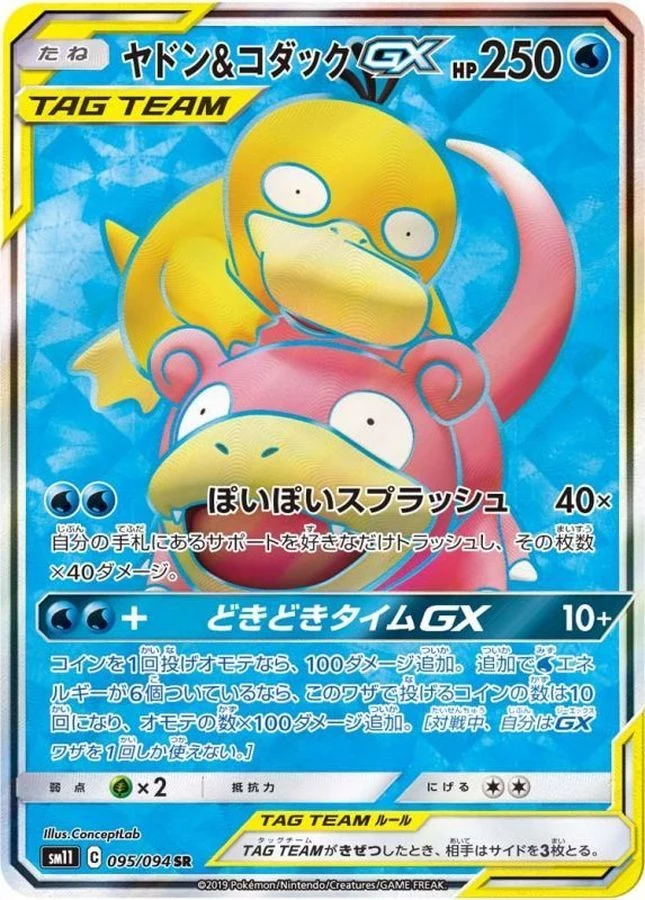
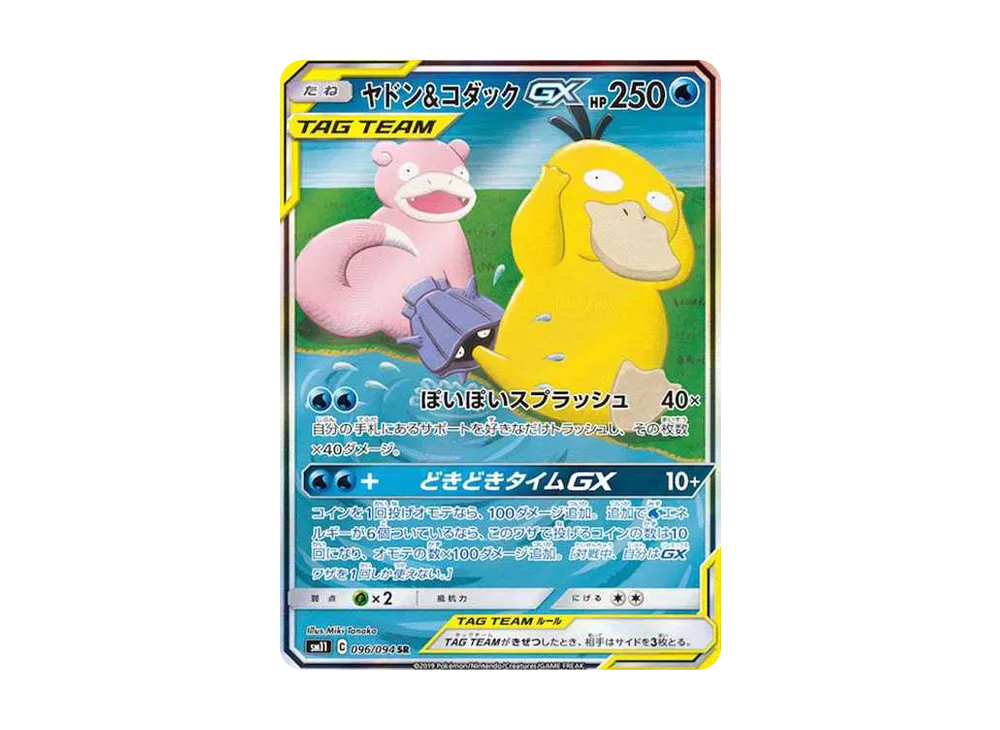
Three print tiers of the same Tag Team-GX card, all currently listed on the same site, at the same time. That’s the situation right now with Slowpoke & Psyduck-GX out of the Japanese 확장팩 “Miracle Twin” (SM11) — a card that exists in four distinct Japanese treatments, and three of them are currently listed as PSA 10s.

This guide covers the card our store lists as the “SA”: Slowpoke & Psyduck-GX, SR — Special Full Art, number 096/094, from Miracle Twin (SM11). We’ll walk through the full Japanese print history, where 096/094 sits against its regular and Full Art siblings, how the set maps onto its English-language equivalent, and where to buy a graded copy from Tokyo.

Key Takeaways

Our PSA 10 Slowpoke & Psyduck-GX SR: SA, 096/094 from Miracle Twin (SM11) is currently listed at ¥235,162 (~$1,479). It’s one of three Japanese print tiers of this card currently listed together — alongside the 095/094 Full Art (SR) currently listed at ¥71,031 (~$447). A fourth tier, the 107/094 Rainbow Rare, is not listed on our site at the moment. The full four-tier Japanese lineup maps directly onto four numbers in the English set Unified Minds.

250 HP
Water Type

SR — SA
Rarity (096/094)

106
Set Size (SM11)

Sun & Moon
Era

The Card: Slowpoke & Psyduck-GX SR: SA 096/094

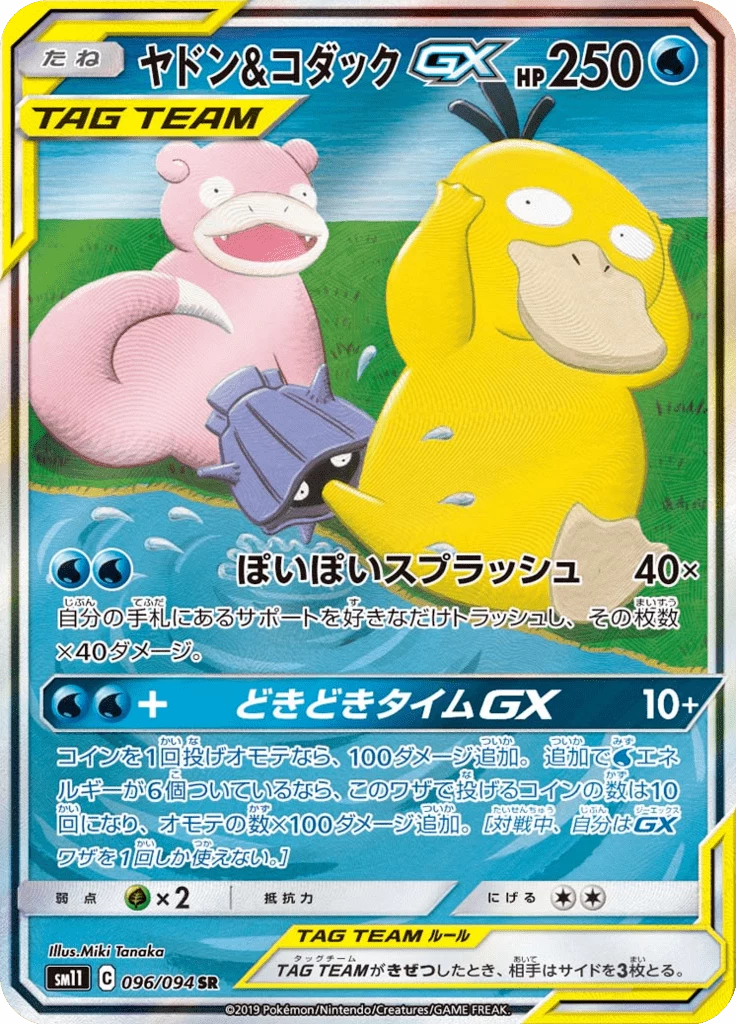
Slowpoke & Psyduck-GX is a Tag Team-GX card — a Water-type card carrying 250 HP, built around the paired Slowpoke and Psyduck line rather than a single evolving Pokemon. The print this guide focuses on is number 096/094, the Special Full Art treatment illustrated by Miki Tanaka, which our store shorthand-labels “SA” to separate it from the set’s other, plainer Full Art print of the same card.

Slowpoke & Psyduck-GX 096/094 SR Special Full Art, Miracle Twin SM11
Slowpoke & Psyduck-GX 096/094, SR — Special Full Art (our store’s “SA”) — Miracle Twin (SM11)

The card’s number, 096, sits above the set’s /094 denominator — the standard Japanese convention of numbering secret and special-rarity slots beyond a set’s main numbered run. Our own graded copy of this exact print is currently listed at ¥235,162 (~$1,479), PSA 10.

PSA 10 Slowpoke & Psyduck GX SA 096/094 slab, listed on samuraiswordtokyo.com
PSA 10 Slowpoke & Psyduck-GX SR: SA, 096/094 — the slab currently listed on samuraiswordtokyo.com

The Set: Miracle Twin (SM11)

Miracle Twin is the Japanese 확장팩 carrying set code SM11, part of the Sun & Moon-era numbering family. It released alongside the SMM starter decks, which are separate products.

Our own Miracle Twin (SM11) complete card list catalogues 106 total Japanese cards in the set, spanning the main numbered run plus the secret and special-rarity slots numbered above the /094 denominator — the same slot pattern that carries 095/094, 096/094 and 107/094 above the regular-run cards.

The set’s other headline Tag Team-GX pull is Mewtwo & Mew-GX, which we cover in a separate Mewtwo & Mew-GX card guide. For a broader look at which cards in the set pull most often, see our Miracle Twin pull-rates and best-cards hub.

We do not currently have a Miracle Twin booster box listed in our own sealed-product stock. For sealed-product background on this set, see our Miracle Twin booster box buying guide.

Japanese vs English Print

Slowpoke & Psyduck-GX has a full English-language equivalent, and unlike some Tag Team-GX cards, the four Japanese tiers map cleanly onto four separate numbers in the English set Unified Minds (UNM):

Japanese print (Miracle Twin) Tier English equivalent (Unified Minds)
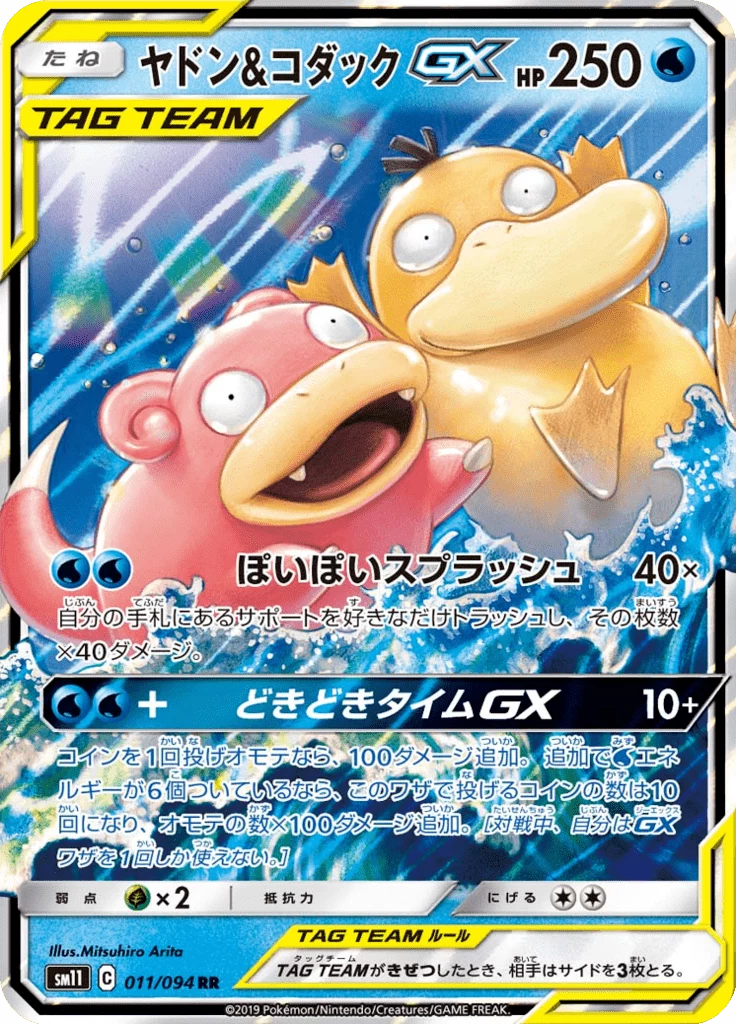
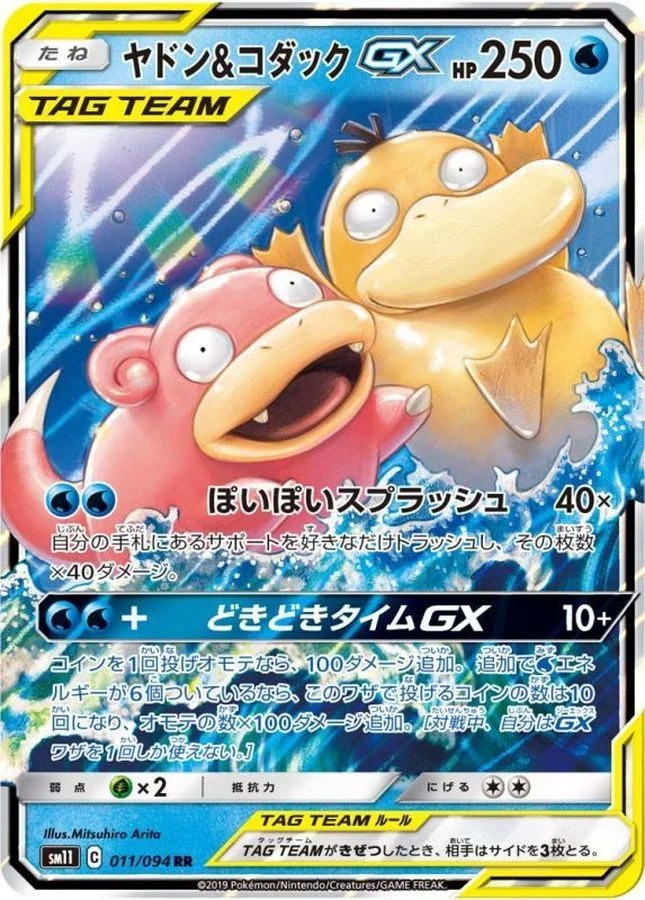
011/094 RR (regular) UNM #35, Regular
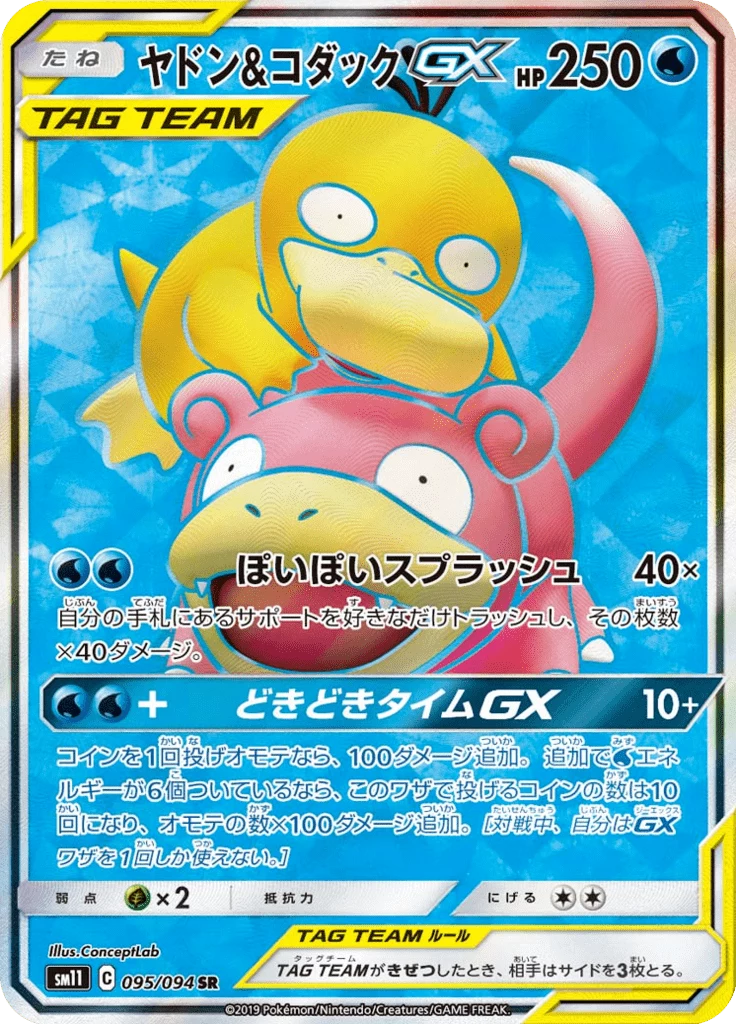
095/094 SR — Full Art UNM #217, Full Art
096/094 SR — Special Full Art (“SA”) UNM #218, Special Full Art
107/094 HR — Rainbow Rare UNM #239, Rainbow Rare

Because the tier structure lines up one-to-one, this is a straightforward card to cross-reference between languages compared with Tag Team-GX prints where the English set splits a single Japanese secret slot across two or more numbers. If you already own a Unified Minds copy and want to compare it against a Japanese print, the tier name — Regular, Full Art, Special Full Art, or Rainbow Rare — is the reliable way to match them up.

Where This SA Sits Among Japanese Chase Rarities

Within Miracle Twin, the four documented Slowpoke & Psyduck-GX prints sit on four different rungs of the set’s rarity structure: the regular numbered RR at 011/094, the SR Full Art at 095/094, the SR Special Full Art (our “SA”) at 096/094, and the HR Rainbow Rare at 107/094.

The Special Full Art sits above the plain Full Art in the set’s own tier language, and the Rainbow Rare sits in its own alternate-colour category again — each is a separate secret-slot treatment rather than a straightforward step up in the same artwork. We currently list the RR and both SR tiers together; the HR is the one tier not currently listed at the moment, and sourcing requests for it go through Quick Order.

Having the regular RR, the Full Art SR, and the Special Full Art SR all listed at once means a buyer can compare all three tiers of the same card side by side rather than tracking down each one separately.

Shop This Card
PSA 10 Slowpoke & Psyduck-GX SR: SA, 096/094
Currently listed at ¥235,162 (~$1,479)
Ships from Tokyo · Tracked delivery

View Product →

Where to Buy Slowpoke and Psyduck GX from Tokyo

Our graded copy of PSA 10 Slowpoke & Psyduck-GX SR: SA, 096/094 is currently listed at ¥235,162 (~$1,479), shipped from Tokyo with tracked delivery. If you’d rather start with a lower-tier print of the same card, the 095/094 Full Art is currently listed at ¥71,031 (~$447), and the 011/094 regular RR is currently listed at ¥41,088 (~$258).
For the wider species survey of these two Pokemon across Japanese sets, see our Slowpoke and Slowbro Pokemon card guide — that article covers every Japanese printing of the species line, while this page is a deep dive on this one Tag Team-GX card’s SA print. For other graded Tag Team-GX cards from the same set, see our Mewtwo & Mew-GX card guide, or browse the full range in our PSA 10 graded card collection. For a specific-print sourcing request, including the 107/094 Rainbow Rare we don’t currently list, our Quick Order page is the fastest way to build a request.

자주 묻는 질문

What is Slowpoke & Psyduck-GX SR: SA, 096/094?

It’s the Special Full Art print of Slowpoke & Psyduck-GX, card 096/094 from the Japanese 확장팩 Miracle Twin (set code SM11). “SA” is our own store shorthand for this specific Special Full Art treatment, used to separate it from the set’s plainer Full Art print of the same card. We list a PSA 10 copy, currently listed at ¥235,162 (~$1,479).
What other Japanese prints of Slowpoke & Psyduck-GX exist?

Four documented tiers, all from Miracle Twin (SM11), all released the same day: the 011/094 regular RR, the 095/094 SR Full Art, the 096/094 SR Special Full Art (our “SA”), and the 107/094 HR Rainbow Rare. We currently list the first three; the Rainbow Rare is not in our stock at the moment.

Are 095/094 and 096/094 the same rarity?

They’re both officially SR-tier, but they’re two different secret-slot numbers with two different artwork treatments — 095/094 is a standard Full Art layout, and 096/094 (our “SA”) uses the more elaborate Special Full Art frame. They are two separate prints on two separate numbers, not a single print repeated.

Does Slowpoke & Psyduck-GX have an English print?

Yes — Unified Minds (UNM) carries all four Japanese tiers as four separate numbers: #35 (Regular), #217 (Full Art), #218 (Special Full Art), and #239 (Rainbow Rare). The tier names line up one-to-one between the Japanese and English versions.

What set is Slowpoke & Psyduck-GX from?

Miracle Twin, Japanese set code SM11, with a 106-card total count including the main numbered run and its secret/special-rarity slots. The set’s other headline Tag Team-GX card is Mewtwo & Mew-GX.

Where can I buy a PSA 10 Slowpoke & Psyduck-GX from Tokyo?

Our graded 096/094 SA copy is currently listed at ¥235,162 (~$1,479) with tracked shipping from Tokyo. The 095/094 Full Art and 011/094 RR siblings are also currently listed, and sourcing requests for the unlisted 107/094 Rainbow Rare go through our Quick Order page.

Cassiopeia 포켓몬 카드 가이드: SV6a Night Wanderer 트레이너 SAR & SR

Cassiopeia (カシオペア) is a Trainer Supporter card in the Japanese Pokemon TCG, and her effect is a strict hand-for-search trade: she can only be played while she is the only card in your hand, and doing so lets you search your deck for up to two cards, add them to your hand, then shuffle the deck. Two Japanese prints of this Supporter exist, both from the same set.

Both come from 強化拡張パック「ナイトワンダラー」 — the Night Wanderer enhanced expansion pack, catalogued as SV6a, released 7 June 2024 as a 94-card Japanese set. The English-set equivalent is Shrouded Fable (SFA), where the card was reprinted across three separate card numbers — #56, #86, and #94. This guide covers both Japanese prints, how they differ, and where each sits in the Japanese rarity system.

Key Takeaways

Cassiopeia has two confirmed Japanese Supporter prints from SV6a Night Wanderer: a Special Art Rare, PSA 10 Cassiopeia SAR 091/064 listed at ¥9,204 (~$58) in September 2026, and a Secret Rare 085/064 print (covered below). Both cards share the same play-your-whole-hand search effect. The sealed SV6a Night Wanderer Japanese Booster Box that produced both prints was listed at ¥10,192 in September 2026.

2
Confirmed JP Prints

SAR & SR
Rarities

SV6a
Night Wanderer Set

Sep 2026
Prices Checked

Prices are our own listed prices as of September 2026, converted at ¥159/USD.

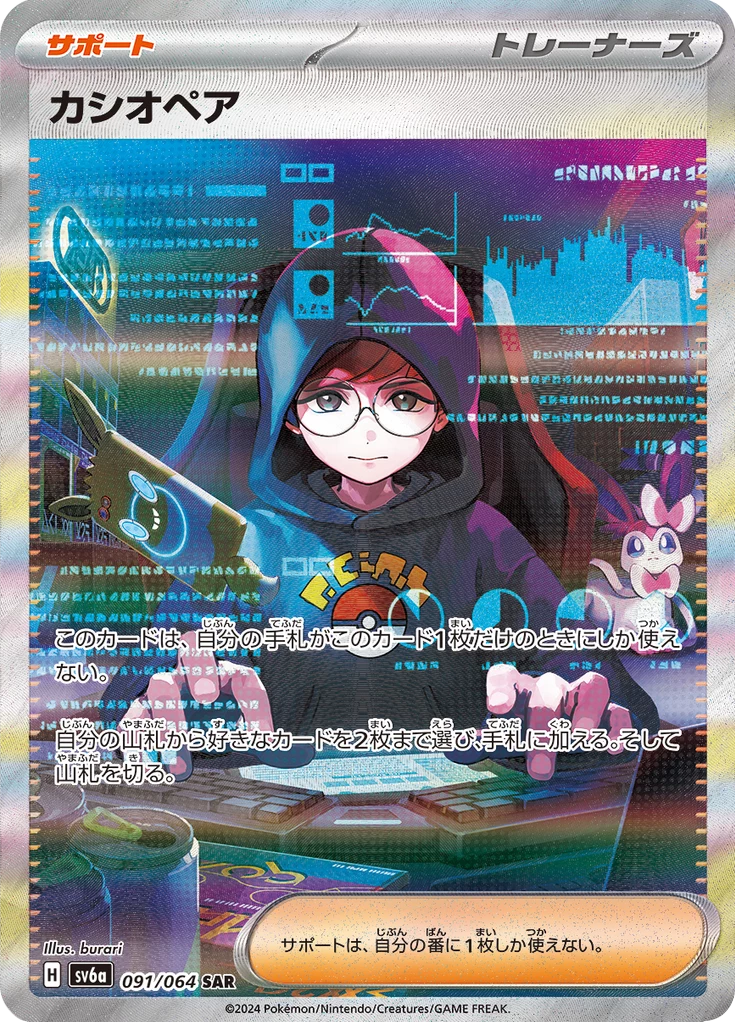
Cassiopeia SAR 091/064: Night Wanderer (SV6a)

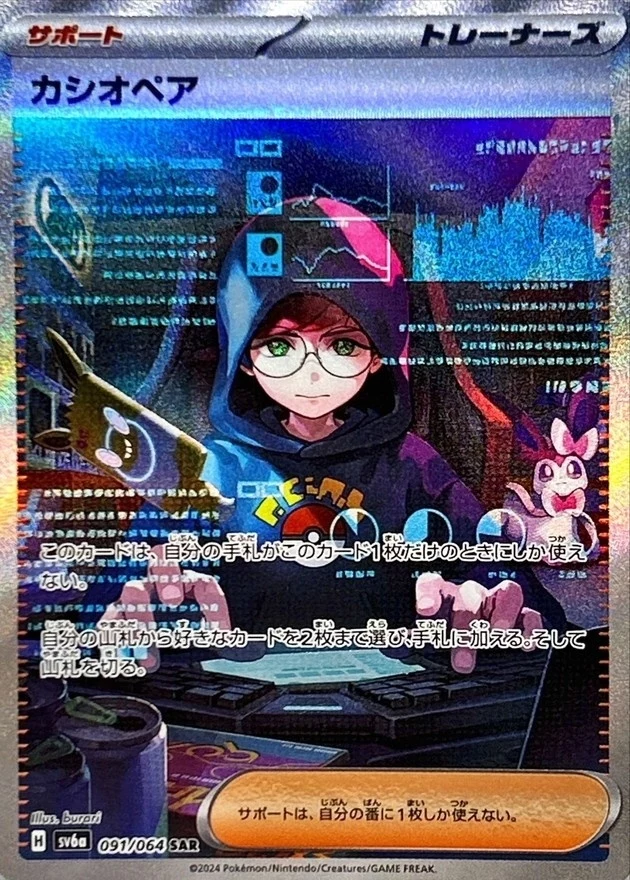
Cassiopeia SAR 091/064 Night Wanderer Japanese Pokemon Supporter card
Cassiopeia 091/064, Special Art Rare — Night Wanderer (SV6a)

Cassiopeia’s highest-rarity Japanese print appears in Night Wanderer, catalogued as SV6a and released 7 June 2024 as a 94-card Japanese set. This printing is numbered 091/064, Special Art Rare (SAR), illustrated by burari.

The card’s effect is unusual for a Supporter: it can only be played while it is the only card in your hand. In exchange, you search your deck for up to two cards, add them to your hand, then shuffle the deck. That restriction rewards planning your hand size around the card rather than treating it as a flexible any-turn play.

A PSA 10 example of this SAR print was listed at ¥9,204 (~$58) in September 2026.

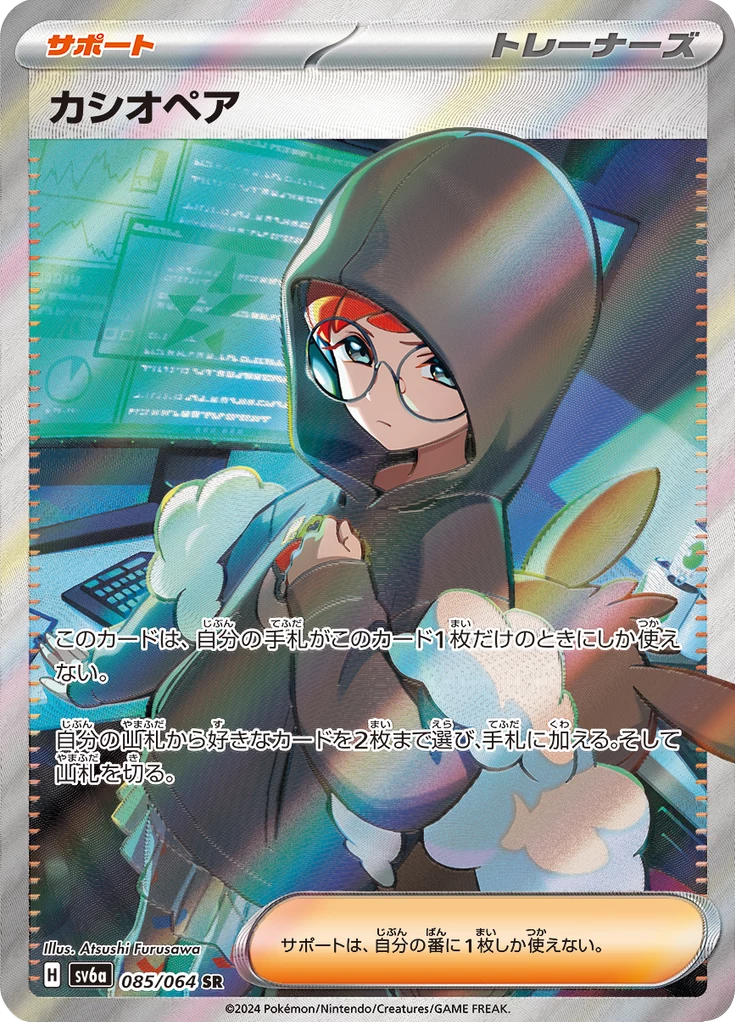
Cassiopeia SR 085/064: Night Wanderer (SV6a)

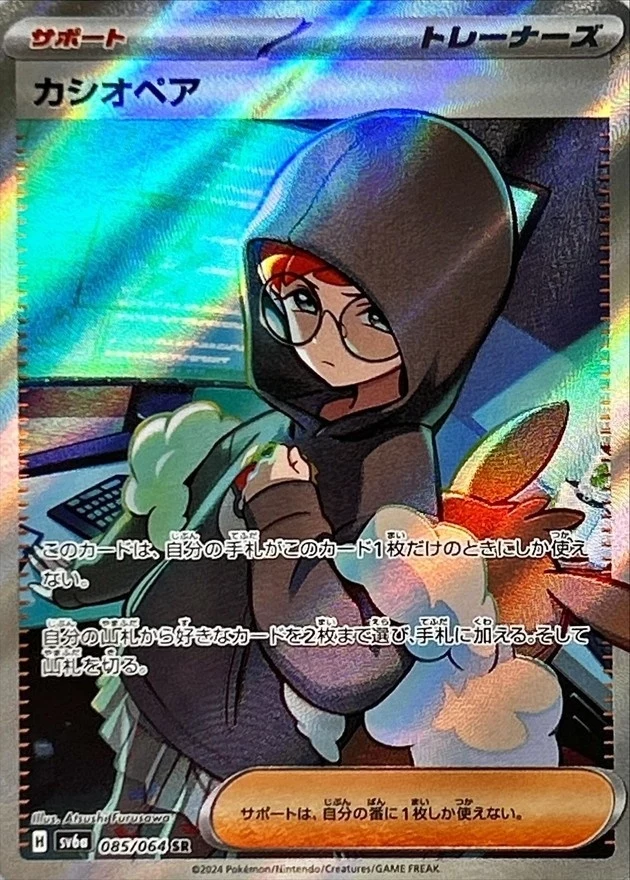
Cassiopeia SR 085/064 Night Wanderer Japanese Pokemon Supporter card
Cassiopeia 085/064, Secret Rare — Night Wanderer (SV6a)

The same set also carries a second Cassiopeia print, numbered 085/064, illustrated by Atsushi Furusawa. Our own product listing catalogues this print as a Secret Rare (SR) — worth noting that Limitless TCG’s Japanese card pages don’t render a text rarity field, so this SR label reflects our store’s own catalogue rather than a scraped source.

Mechanically it’s the same card text as the 091/064 SAR — the same only-card-in-hand restriction and the same up-to-two-card search. What separates the two prints is the illustration treatment, the card number, and the rarity slot within the set, not the effect.

A PSA 10 example of this SR print was listed at ¥7,056 (~$44) in September 2026.

Japanese vs English Print

The English-set equivalent for the Cassiopeia Supporter is Shrouded Fable (SFA), where the card was reprinted across three separate card numbers — #56, #86, and #94 — spanning multiple print runs within that set. That’s a different split from the Japanese side, where Night Wanderer carries the card at two numbers: 091/064 SAR and 085/064 SR.

We haven’t cross-verified card-for-card which of the three Shrouded Fable print numbers corresponds to which Japanese rarity, so treat the EN–JP number pairing as unconfirmed. What’s confirmed is that both markets print more than one version of this Supporter, and the Japanese side splits its rarity tiers differently than the English side does.

Where These Prints Sit in Japanese Rarity Tiers

Special Art Rare (SAR) is the full-art alternate-illustration treatment used across current Scarlet & Violet-era Japanese Trainer and Supporter cards, and it sits above the standard Secret Rare (SR) full-art slot within the same set — both are alt-art Trainer positions, but the SAR carries the more elaborate treatment and the higher card number within Night Wanderer’s secret-rare range.

PSA 10 Cassiopeia SAR SV6a 091/064 slab, listed on samuraiswordtokyo.com

PSA 10 Cassiopeia SAR 091/064 (SV6a)

PSA 10 Cassiopeia SR SV6a 085/064 slab, listed on samuraiswordtokyo.com

PSA 10 Cassiopeia SR 085/064 (SV6a)

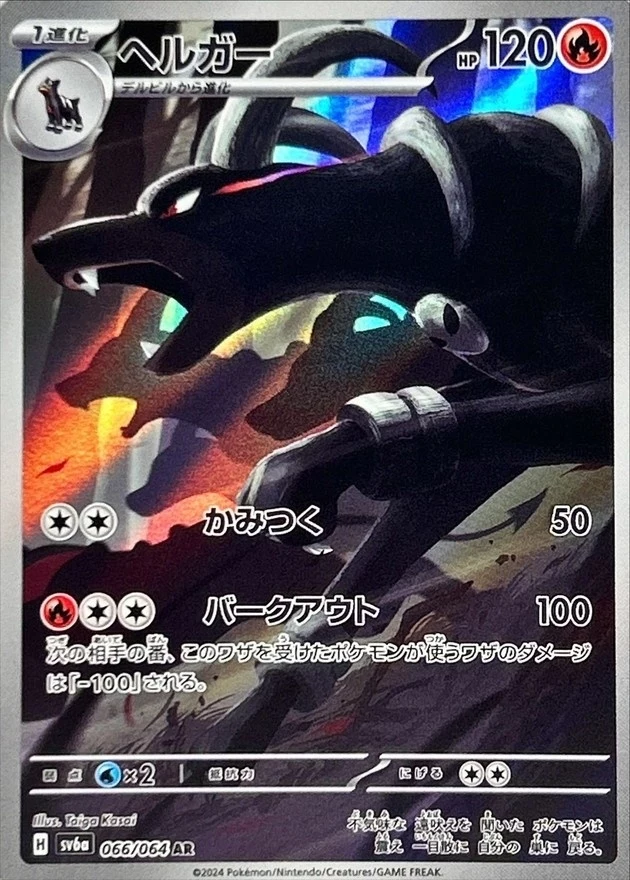
Night Wanderer’s alt-art Trainer slots sit alongside the set’s own Pokemon alt-art range. One example pulled from the same 94-card set, shown here for visual reference rather than as a price comparison:

PSA 10 Houndoom AR SV6a 066/064 slab, listed on samuraiswordtokyo.com
Houndoom AR 066/064, Night Wanderer (SV6a) — a same-set sibling pull, shown for visual reference

Shop This Card
PSA 10 Cassiopeia SAR 091/064 (Night Wanderer, SV6a)
Listed at ¥9,204 (~$58) in September 2026
Ships from Tokyo · Tracked delivery

View Product →

Where to Buy Cassiopeia Cards from Tokyo

We ship graded and raw Japanese singles out of Tokyo with tracked delivery. Both Cassiopeia prints covered here are listed as PSA 10s in our shop, and the set that produced them is one we also list sealed.

The SAR, PSA 10 Cassiopeia SAR 091/064, is listed at ¥9,204 (~$58). The SR, PSA 10 Cassiopeia SR 085/064, is listed at ¥7,056 (~$44). If you’d rather chase your own print by opening packs, the sealed SV6a Night Wanderer Japanese Booster Box is listed at ¥10,192.

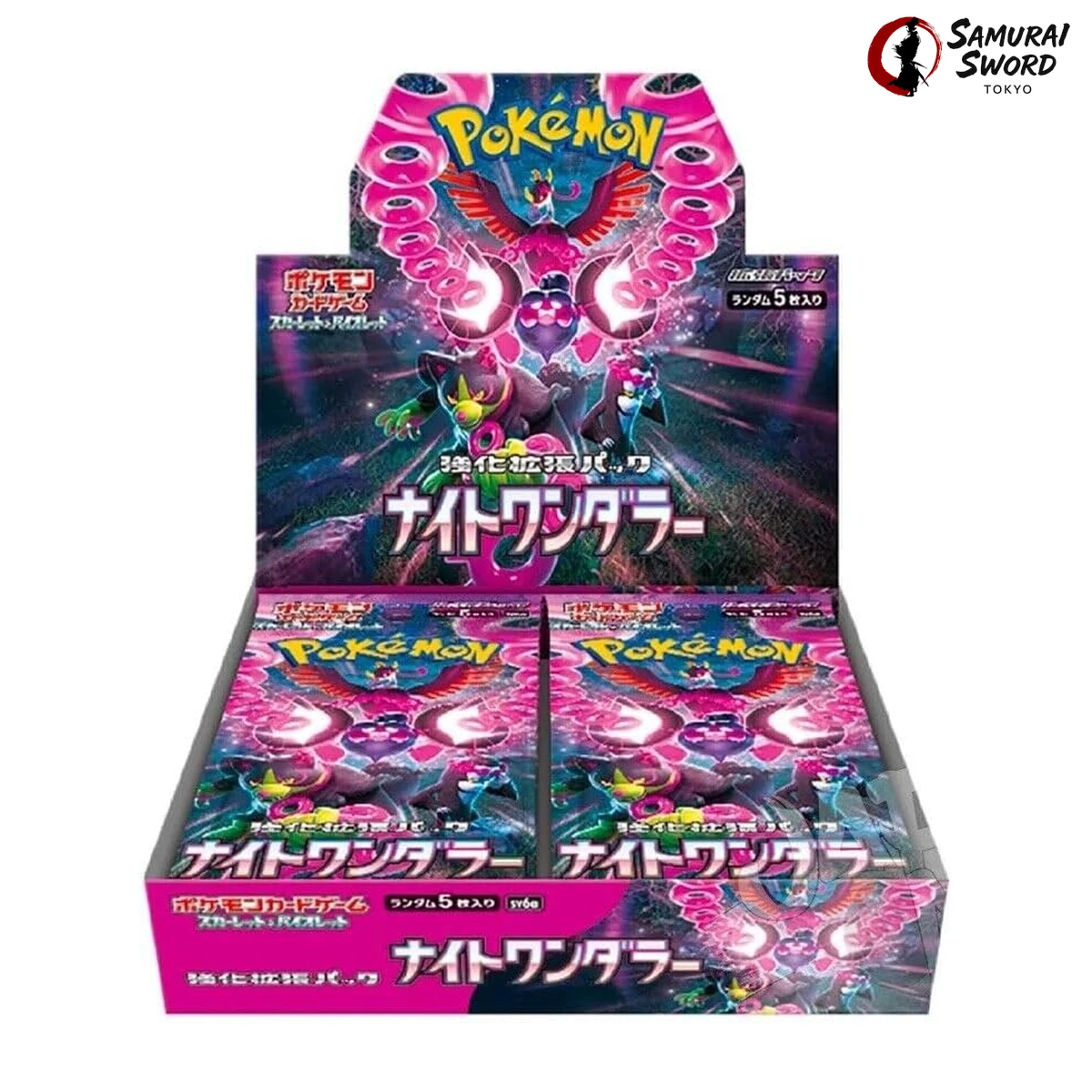
SV6a Night Wanderer Japanese Pokemon Booster Box product photo
SV6a Night Wanderer Japanese Booster Box — the set that produced both Cassiopeia prints

Sourcing requests for a specific card go through our Quick Order page — it’s the fastest way to build a mixed order. For more graded Trainer and Supporter singles from Japan, browse our PSA 10 graded card collection.

For the broader category this card belongs to, see our female Pokemon trainer card roundup and our wider PSA 10 Trainer card guide. For the SAR/SR alt-art tier specifically, our Japanese full-art Trainer card guide explains how it fits alongside other rarities. For the complete Night Wanderer checklist rather than this single-card deep dive, see the Night Wanderer (SV6a) full card list, or our Night Wanderer pull-rates and best-cards roundup. If you’re building a box order around this set, our Night Wanderer booster box buying guide covers the sealed side in detail.

자주 묻는 질문

What is the Cassiopeia Pokemon card?

Cassiopeia is a Trainer Supporter card in the Japanese Pokemon TCG. She can only be played when she is the only card in your hand, and doing so lets you search your deck for up to two cards, add them to your hand, then shuffle. Two Japanese prints exist, both from the Night Wanderer (SV6a) set released 7 June 2024.

What does the Cassiopeia Supporter card do?

It can only be played while it is the only card in your hand. Playing it lets you search your deck for up to two cards, add them to your hand, then shuffle the deck. Both Japanese prints — the 091/064 SAR and the 085/064 SR — share this same effect.

How many Japanese Cassiopeia prints exist?

Two confirmed prints, both from Night Wanderer (SV6a): a Special Art Rare numbered 091/064, illustrated by burari, and a Secret Rare (per our own product listing) numbered 085/064, illustrated by Atsushi Furusawa.

Is there an English version of Cassiopeia?

Yes — the English-set equivalent is Shrouded Fable (SFA), where the card was reprinted across three separate numbers: #56, #86, and #94. We haven’t confirmed which English number pairs with which Japanese rarity.

Where can I buy a PSA 10 Cassiopeia card?

The 091/064 SAR was listed at ¥9,204 (~$58) and the 085/064 SR at ¥7,056 (~$44) in September 2026. The sealed Night Wanderer booster box that produced both is listed at ¥10,192 if you’d rather open packs. Sourcing requests for a specific card go through Quick Order.

Imakuni? 포켓몬 카드 가이드: 우리가 확인한 모든 일본판 인쇄물

Imakuni? is not a Pokemon. He’s a real person — a Creatures, Inc. staff member and musician — and the Pokemon TCG has printed his name onto at least ten different Japanese cards and promos since the CoroCoro Comic era, none of which were built for competitive play. We checked our full live catalogue for an Imakuni? card today and found none listed.

This guide lists every Imakuni?-named card and promo we could verify, explains the CoroCoro/vending-machine/CD-promo channels they came out of, and points you toward the adjacent Japanese promo cards we do currently list — plus how to request an Imakuni? print through Quick Order.

Key Takeaways

We verified ten Japanese cards and promos carrying the Imakuni? name or likeness, spanning CoroCoro Comic, e-Reader promo packs, a CD promo, vending machines, and standard promo-card numbering. None is currently listed on our site — sourcing requests go through 빠른 주문. For a currently listed example from the same magazine-promo channel, our PSA10 Charizard EX 030/XY-P CoroCoro Comic promo is currently listed at ¥176,000 (~$1,107).

10
Imakuni?-Named Cards Verified

Sep 2026
Prices Checked

2,453
Products Searched

5
Distribution Channels

Yen figures convert at ¥159/USD (September 2026). Prices shown are our own listed prices for the adjacent products named below — not for any Imakuni? card, since none is currently listed.

Who Is Imakuni?

Imakuni? (今宮) is Tomoaki Imakuni, a staff member at Creatures, Inc. — the company behind the Pokemon TCG — involved in various parts of the card game including illustration. Outside the office he performs as an eccentric musician and contributed music to the Pokemon anime, and inside the hobby he’s known for a deliberately comedic public persona that the TCG’s promo output has leaned into for decades.

That persona is why his name keeps showing up on cards that are jokes first and playable Trainer cards a distant second. Nothing below is a competitive staple, and none of it was designed to be one.

For collectors, that’s exactly the appeal. Japan’s TCG promo history is full of cards that exist because of a magazine issue, a vending machine, or a one-off event rather than a set release — and an in-joke aimed at Creatures, Inc.’s own staff is about as niche as that history gets. The rest of this guide lays out what’s actually been confirmed to carry his name, so you know exactly what you’re looking for before you go hunting.

Every Imakuni?-Named Card and Promo We Verified

Ten Japanese cards and promos carry Imakuni?’s name or likeness. They split into three groups: Trainer-card promos named directly after him, vending-machine promos referencing him, and Pokemon-species cards themed around him.

Card / promo Type Distribution
“Imakuni?” Trainer CoroCoro Comic magazine promo
“Shining Imakuni?” Trainer P Promo 18, e-Reader-linked promo pack
“Dance! Neo Imakuni?” Trainer CD promo
“Suzukisan” Trainer XY-P Promo 297 — references the band Imakuni? performs in
“Lose?” Vending-machine promo Japanese vending machine
“Imakuni?’s PC” Vending-machine promo Japanese vending machine
“Imakuni?’s Nasty Plot” Vending-machine promo Japanese vending machine
“Imakuni?’s Corner” Vending-machine promo Japanese vending machine
“Imakuni?’s Doduo” Pokemon card themed around him Challenge from the Darkness / Evolutions
“Imakuni?’s Whismur, Loudred & Exploud ex” Pokemon card themed around him T Promo series

No photograph of any of these ten appears in our own product photography — we’ve never stocked one. The card images further down this page are from the same magazine and promo-pack channels, not Imakuni? cards themselves; each caption says exactly what it is.

CoroCoro Comic magazine promo card distribution, Japanese Pokemon TCG
CoroCoro Comic — the same magazine-insert channel that carried the original “Imakuni?” promo

How These Were Distributed: CoroCoro, e-Reader Packs, CDs and Vending Machines

The ten cards above didn’t come from booster boxes. Between them, they cover five distinct Japanese distribution channels:

  • CoroCoro Comic magazine insert — the “Imakuni?” Trainer card itself. Our own CoroCoro promo cards guide covers this channel in depth, including our verified CoroCoro anchor.
  • e-Reader-linked promo pack — “Shining Imakuni?” as P Promo 18.
  • CD promo — “Dance! Neo Imakuni?”, tied to Imakuni?’s music releases rather than a set or magazine.
  • Vending machines — “Lose?”, “Imakuni?’s PC”, “Imakuni?’s Nasty Plot” and “Imakuni?’s Corner”, all dispensed rather than sold as sealed packs.
  • Standard promo-card numbering — “Suzukisan” (XY-P Promo 297), “Imakuni?’s Doduo” and “Imakuni?’s Whismur, Loudred & Exploud ex” (T Promo series), issued the way most ordinary Japanese promo cards are.

The XY-P numbering on “Suzukisan” puts it in the same promo family as several cards we do currently list — the Charizard EX CoroCoro anchor below is numbered 030/XY-P in that same series.

XY-P Promotional Cards print

XY-P Promotional Cards print

XY-P Promotional Cards print

XY-P Promotional Cards print

Neither of the two prints shown above is an Imakuni? card — they’re shown here only to illustrate the XY-P numbering family that “Suzukisan” also belongs to.

Prank Cards, Not Tournament Staples

Every card and promo listed above is explicitly comedic. They’re built around Imakuni?’s persona as a joke, not as a competitive tool, and none of them were printed to see meaningful play. If you’re building a deck for tournament use, none of the ten belong on your list — they belong in a binder as a piece of the TCG’s promo history instead.

That’s also why grading and pricing conversations around Imakuni? cards look different from a normal chase-card discussion: there’s no set to open, no pull rate to quote, and no booster-box context to compare against. Each one is tied to a single, dated distribution event — a specific magazine issue, a specific vending machine run, a specific CD release — rather than an ongoing print. That’s also true of most of the wider CoroCoro and vending-machine promo category these cards sit inside, which is one reason those categories get collected and catalogued so carefully even when individual cards were never meant to be taken seriously.

Charizard EX 030/XY-P, CoroCoro Comic promo, Japanese
Charizard EX 030/XY-P — a CoroCoro Comic magazine promo from the same distribution channel as the original “Imakuni?” card

Where Imakuni? Cards Fit in Our Catalogue Today

We searched our full live catalogue — 2,453 products, checked today — for “Imakuni” in any product title. Zero matches. This print is not listed on our site at the moment; sourcing requests for Imakuni? cards go through 빠른 주문.

What we do list is a card from the same CoroCoro Comic distribution channel: the PSA10 Charizard EX 030/XY-P, currently listed at ¥176,000 (~$1,107), distributed as a magazine insert rather than pulled from a booster box — the same mechanism that put the original “Imakuni?” card into collectors’ hands. Our dedicated Charizard EX CoroCoro guide covers that card’s own history in full.

PSA 10 graded slab, Charizard EX 030/XY-P, CoroCoro Comic promo
PSA10 slab, Charizard EX 030/XY-P — the graded example we currently list

If your interest in Imakuni? is really an interest in Japanese promo cards as a category, two more of our guides are worth a look: the Munch/Scream promo cards guide covers another novelty character-promo series in the same spirit, and since “Imakuni?” is itself a Trainer card, our female Pokemon Trainer cards guide approaches Japanese Trainer-card collecting from a different angle.

Where to Buy Japanese Promo Cards from Tokyo

We ship Japanese sealed product and graded singles worldwide out of Tokyo with tracked delivery. For the CoroCoro-channel example covered above:

Featured Example
PSA10 Charizard EX 030/XY-P (CoroCoro Comic Promo)
Currently listed at ¥176,000 (~$1,107)
Ships from Tokyo · Tracked delivery

View Product →

Browse our full PSA10 graded card collection for more Japanese promo and set singles, or use 빠른 주문 to submit a specific Imakuni? print request alongside anything else you’re after — we can’t promise a source, but Quick Order is where that request starts.

자주 묻는 질문

What is an Imakuni? Pokemon card?

Imakuni? is a real person — Tomoaki Imakuni, a Creatures, Inc. staff member and musician known for a comedic persona in the Pokemon TCG community. Several Japanese promo cards carry his name or likeness, including the CoroCoro Comic promo “Imakuni?”, “Shining Imakuni?”, and “Dance! Neo Imakuni?”, plus vending-machine promos and two Pokemon-species cards themed around him.

Do you have any Imakuni? cards currently listed?

No. We searched our full live catalogue of 2,453 products for “Imakuni” in any title and found zero matches. This print is not listed on our site at the moment; sourcing requests go through Quick Order.

What’s the difference between “Imakuni?” and “Shining Imakuni?”

“Imakuni?” was a CoroCoro Comic magazine promo. “Shining Imakuni?” is a separate card, distributed as P Promo 18 and linked to the e-Reader promo-pack era — a different distribution channel and a different printing.

Are Imakuni? cards legal or useful in tournament play?

They’re built as comedic prank cards rather than competitive tools. None of the ten we verified were printed with tournament play as the goal.

What is “Imakuni?’s Doduo”?

It’s a Pokemon-species card themed around Imakuni? rather than a Trainer card bearing his name directly, printed in Challenge from the Darkness / Evolutions. A second themed card, “Imakuni?’s Whismur, Loudred & Exploud ex”, was issued in the T Promo series.

Where can I buy Japanese promo cards like these from Tokyo?

We ship Japanese sealed product and graded singles worldwide. Our currently listed CoroCoro-channel example, the PSA10 Charizard EX 030/XY-P, is available now, and Quick Order is the route for requesting a specific Imakuni? print or any other Japanese promo card we don’t currently list.

One Piece Area Tournament 카드 가이드: Benn Beckman & Yasopp

One card says you made it to the finals. The other says you were one of the best players once you got there. Same One Piece Card Game season, same OP-09 set, two different messages built into a parallel illustration.

Both cards come from the Championship 25-26 Season 1 Area Tournament, an official Bandai One Piece Card Game event tier — one level of the wider Championship 25-26 ladder, run across multiple regional venues in Japan rather than as a single fixed date. Bandai’s own event page confirms both card codes directly, and it places them on two different prize rungs rather than one.

This guide covers what each prize actually represents, how the two differ, and where our own PSA10-graded examples of both are currently listed. We source and grade Japanese One Piece Card Game product out of Tokyo, and both cards below are from our own stock.

Key Takeaways

Two Area Tournament parallels from OP-09 —Emperors in the New World—, both Red-Haired Pirates Character cards, but two different prize tiers per Bandai’s own event page: Benn Beckman SR (OP09-009), the Finals Tournament Top-Placement Commemorative Gift, currently listed at ¥350,224 (~$2,203) PSA10; and Yasopp R (OP09-013), the Season 1 Area Finals Advancement Right, currently listed at ¥188,800 (~$1,187) PSA10. Neither parallel was sold at retail — both were awarded through tournament results.

2
Cards Covered

2025
Tournament Season

Prize Only
Distribution

Sep 2026
Prices Checked

Prices are this store’s current listed prices as of September 2026, converted at ¥159/USD.

What Was the Season 1 Area Tournament?

The Championship 25-26 Season 1 Area Tournament (チャンピオンシップ25-26 Season 1 エリア大会) is an official tournament tier inside Bandai’s One Piece Card Game Championship 25-26 event ladder. It’s a nationwide, multi-venue series rather than a single tournament — regional Area Tournaments were held at different locations across Japan through 2025, each feeding into the same season structure.

One confirmed leg: the Aichi Tournament, held Saturday, 24 May 2025, at Aichi Sky Expo Exhibition Hall D. Bandai’s official event page also references a separate venue address at Yume Messe Miyagi’s Main Building Exhibition Hall A in Sendai, Miyagi Prefecture, though the exact date for that specific stop isn’t confirmed in the material we’ve checked. Treat these as two example stops within a season that ran at multiple venues, not as “the” date the Area Tournament happened.

Bandai’s event page lists both of this guide’s cards by their exact card codes, and — importantly — it does not list them under the same heading:

카드 Official prize heading What it’s awarded for
Yasopp R (OP09-013, parallel) Season 1 Area Finals Advancement Right Advancing to / qualifying for the Area finals tournament
Benn Beckman SR (OP09-009, parallel) Finals Tournament Top-Placement Commemorative Gift Placing highly once inside the finals tournament
Two Prizes, Two Different Tiers

It’s easy to assume both cards are simply “the Area Tournament prize,” but Bandai’s own event page separates them. Yasopp’s parallel sits under a finals-advancement heading — a reward for qualifying into the Area finals stage. Benn Beckman’s parallel sits under a top-placement heading — a reward for how a player actually finished once there. They’re both genuine Area Tournament prizes, but not necessarily the same achievement.

Benn Beckman OP09-009: The Top-Placement Prize

Benn Beckman is a Character card from OP-09 —Emperors in the New World—, base rarity SR, and a member of the Red-Haired Pirates crew led by Shanks. The Area Tournament version is marked on Bandai’s event page as a parallel-illustration print (※パラレルイラスト版) listed directly under the Finals Tournament Top-Placement Commemorative Gift heading — a prize for players who placed highly once they reached the finals stage of a given Area Tournament leg.

Benn Beckman SR OP09-009 Area Tournament Top Placement Commemorative Prize parallel, PSA10 slab
Benn Beckman SR, OP09-009 — Area Tournament Top-Placement Commemorative Prize parallel, PSA10

Our graded copy is currently listed at ¥350,224 (~$2,203), PSA10.

Benn Beckman SR OP09-009 standard Emperors in the New World booster print, official card list reference
Benn Beckman OP09-009 SR — the standard Emperors in the New World booster print, shown for comparison. This is not the tournament parallel above.

Yasopp OP09-013: The Finals-Advancement Prize

Yasopp is also a Character card from OP-09, base rarity R, and part of the same Red-Haired Pirates crew as Benn Beckman. His base OP09-013 print is Red, cost 5, 6000 power, with an On Play effect that gives one of the player’s Leaders +1000 power. Bandai’s event page marks the Area Tournament version as a parallel-illustration print as well, but lists it under a different heading than Benn Beckman’s: Season 1 Area Finals Advancement Right — a prize for reaching the Area finals tournament, rather than for a specific placement inside it.

Yasopp R OP09-013 Area Tournament Finals Advancement prize parallel, PSA10 slab
Yasopp R, OP09-013 — Area Tournament Finals-Advancement prize parallel, PSA10

Our graded copy is currently listed at ¥188,800 (~$1,187), PSA10.

Yasopp R OP09-013 standard Emperors in the New World booster print, official card list reference
Yasopp OP09-013 R — the standard Emperors in the New World booster print, shown for comparison. This is not the tournament parallel above.

Our own Yasopp One Piece Cards Guide covers every officially listed printing of the character, and confirms that Bandai’s own card list does not currently document any parallel or alt-art version of OP09-013 beyond this base R print. That makes the Area Tournament parallel a tournament-exclusive treatment layered onto the same card number — distinct from any retail parallel the standard card list documents. That article is the full printing-history reference for Yasopp; this one stays focused on the Area Tournament prize specifically.

How the Prizes Were Distributed

Neither card entered retail distribution. Both were awarded directly through the Season 1 Area Tournament’s competitive structure — Yasopp’s parallel to players who advanced to a given Area finals tournament, and Benn Beckman’s parallel to players who placed highly once inside that finals stage. That’s a tournament-prize distribution model, not a booster-pull or storefront one, which is why neither print shows up as a standard set listing.

Area Tournament sits alongside other tournament-tier prize categories in the One Piece Card Game’s competitive calendar, and it’s worth keeping the tiers separate. Our One Piece Flagship Battle Promo Cards Guide covers a different event tier entirely — Flagship Battle runs at authorized shops with its own Victory and Top 8 souvenir structure, separate from the Area Tournament’s advancement and top-placement prizes covered here.

Flagship Battle Victory souvenir parallel example, a different One Piece Card Game tournament prize tier
A Flagship Battle Victory souvenir parallel — a different tournament-prize tier, shown only for comparison against the Area Tournament prizes above.

Two other prize and special-print categories worth distinguishing from Area Tournament parallels: our One Piece Serial-Numbered Cards Guide covers cards individually numbered on the print itself, which is a different mechanic from the tournament-tier parallels here; and our One Piece 3rd Anniversary Special Cards (SPC) Guide covers a milestone-anniversary print category, awarded on a different basis again. For the wider landscape of Japanese promo categories in general, our One Piece Promo Cards Japan hub and our broader One Piece Promo Cards Guide both cover the categories more generally.

Grading and What PSA10 Means for These Promos

PSA10 is the top grade on PSA’s 10-point scale, reserved for cards that meet a gem-mint standard across centering, edges, corners and surface. For tournament-prize cards specifically, that standard matters more than it might for a fresh booster pull: these parallels passed through a live event and a player’s hands before ever reaching a grading submission, rather than coming straight from a sealed pack. A PSA10 label gives buyers a third-party, verifiable condition standard for a card whose history already involves more handling than a box-fresh pull.

For a wider look at what SR and R mean inside the One Piece Card Game’s Japanese rarity structure, see our One Piece Card Rarity Explained guide.

Shop This Card
PSA10 Benn Beckman SR (OP09-009), Area Tournament Top-Placement Prize
Currently listed at ¥350,224 (~$2,203)
Ships from Tokyo · Tracked delivery

View Product →

Where to Buy Area Tournament Cards from Tokyo

Both Area Tournament parallels covered here are graded PSA10 examples from our own stock, shipped from Tokyo with tracked delivery: Benn Beckman SR (OP09-009) currently listed at ¥350,224 (~$2,203), and Yasopp R (OP09-013) currently listed at ¥188,800 (~$1,187).

Both base prints come from the same set, OP-09 —Emperors in the New World—. Sealed OP-09 —The New Emperor— (Damaged Box) is currently listed at ¥20,900 (~$131) if you’d rather open the set the base cards come from — note this gets you the standard booster prints, not the tournament parallels, which were never packed in boosters. For the rest of our Japanese One Piece stack, browse the One Piece booster box collection, and for specific singles or sourcing requests not currently listed, our Quick Order page is the fastest way to build a mixed order.

자주 묻는 질문

What is the One Piece Area Tournament?

It’s an official Bandai One Piece Card Game tournament tier, part of the Championship 25-26 Season 1 event ladder, run at multiple regional venues across Japan during 2025 rather than as a single fixed-date event.

Are Benn Beckman and Yasopp’s Area Tournament cards the same prize tier?

No. Bandai’s official event page lists Yasopp’s parallel (OP09-013) under a Season 1 Area Finals Advancement Right heading, awarded for reaching the Area finals tournament. Benn Beckman’s parallel (OP09-009) sits under a separate Finals Tournament Top-Placement Commemorative Gift heading, awarded for placing highly once inside that finals stage.

Do these Area Tournament parallels have a standard retail print too?

Both characters have standard OP-09 booster prints — Benn Beckman SR and Yasopp R — but the Area Tournament versions are separate parallel-illustration prints awarded through tournament results, not sold in boosters. Our Yasopp guide confirms Bandai’s own card list does not currently document any other parallel of OP09-013 beyond the base R print.

When and where was the Season 1 Area Tournament held?

It ran across multiple regional venues in Japan during 2025. One confirmed leg is the Aichi Tournament, held Saturday, 24 May 2025 at Aichi Sky Expo Exhibition Hall D; Bandai’s event page also references a Yume Messe Miyagi venue in Sendai, though we haven’t confirmed an exact date for that specific stop.

Where can I buy PSA10 Benn Beckman and Yasopp Area Tournament cards from Tokyo?

Both are currently listed on our site as graded PSA10 singles, shipped from Tokyo with tracked delivery: Benn Beckman SR (OP09-009) at ¥350,224 (~$2,203) and Yasopp R (OP09-013) at ¥188,800 (~$1,187). Sourcing requests for other Area Tournament or One Piece promo cards go through our Quick Order page.