Crea una cuenta gratis y suma puntos y rango
Samurai Sword Tokyo
Pedidos Carrito

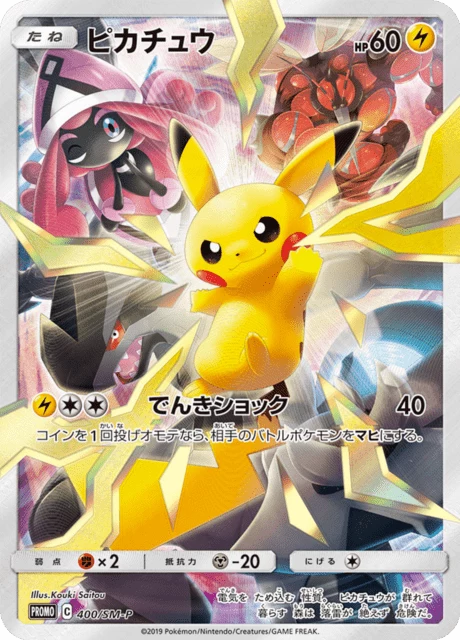
Guía de la carta promo Pikachu 400/SM-P: la impresión del Master Battle Set
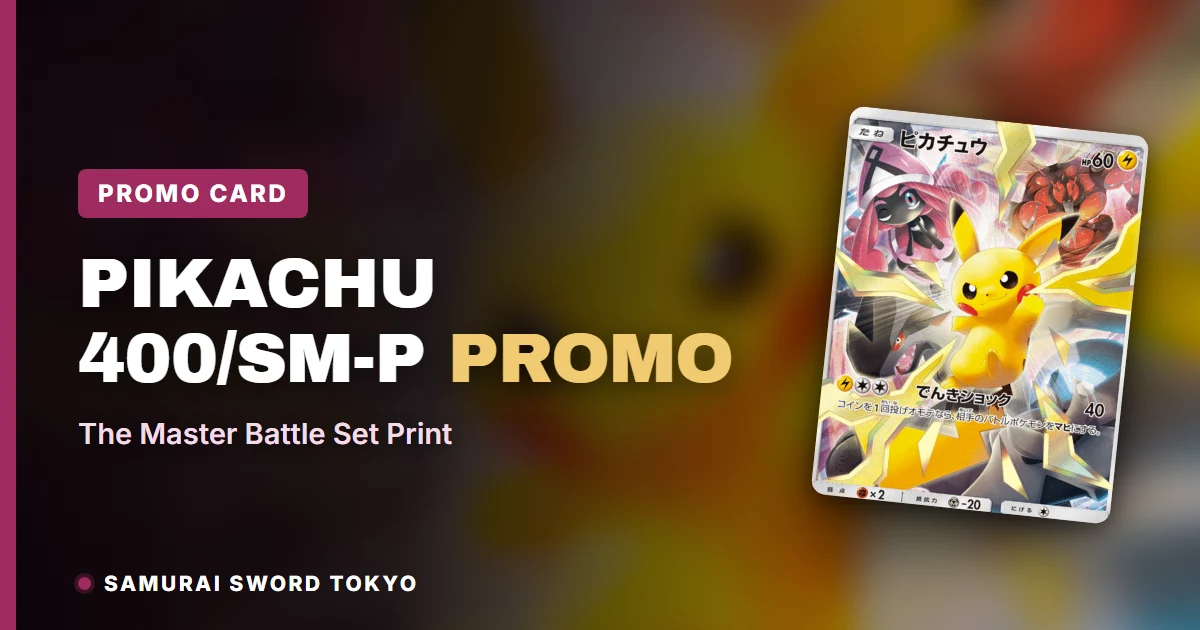
SM-P Pikachu promos have reached collectors through a range of channels — booster pulls, magazine bundles, store-opening giveaways. Pikachu 400/SM-P came out of an order form.

This card was a guaranteed insert in Japan’s Limited Collection Master Battle Set, a Pokémon Center product that customers reserved rather than gambled on. That distribution method — combined with a card number that gets mixed up with an unrelated Black Star Promos print of the same artwork — is why collectors still ask basic questions about this card years after release. This guide covers what 400/SM-P actually is, how it reached collectors, and what a PSA 10 copy is worth today based on our own listed stock.

Key Takeaway

Pikachu 400/SM-P is a Lightning-type promo from Japan’s Limited Collection Master Battle Set (reservations opened August 16, 2019; sets shipped from early December 2019). It is a guaranteed set insert, not a pack pull. A PSA 10 copy is currently listed at ¥1,028,476 (~$6,468 at ¥159/USD) in our own stock.

400/SM-P
Card Number

2019
Master Battle Set Release

¥1,028,476
Own-Stock PSA 10 (~$6,468)

60 HP
Lightning, Basic Pokémon

Prices are our own listed stock as of September 2026, converted at ¥159/USD.

Pikachu 400/SM-P: The Card Itself

Pikachu 400/SM-P is a Lightning-type Basic Pokémon with 60 HP, part of the SM-P Promotional Cards line. Its single attack, Thunder Shock, costs one Lightning Energy plus two Colorless Energy for 40 damage, with a coin flip to paralyze the opponent’s Active Pokémon.

The card shares its artwork and attack text with the internationally-catalogued Pikachu (SM Promo 206) — the same illustration was released as a Japanese SM-P promo under a different number. That relationship matters for anyone cross-referencing this card against English-language databases: 400/SM-P is the Japanese-market number for the print described in this guide.

Attribute Detail
Card number 400/SM-P
Type Lightning, Basic Pokémon
HP 60
Attack Thunder Shock — 1 Lightning + 2 Colorless, 40 damage, coin flip Paralyze
Illustrator (400/SM-P print) Kouki Saitou
Distribution Limited Collection Master Battle Set
Pikachu, 400/SM-P, SM-P Promotional Cards
Pikachu, 400/SM-P, SM-P Promotional Cards — the Limited Collection Master Battle Set print

The Limited Collection Master Battle Set

400/SM-P was not something you pulled from a booster pack. It was included in the Limited Collection Master Battle Set, a bundled product sold through Japanese Pokémon Centers. Reservations opened on August 16, 2019, and the sets themselves began shipping to customers in early December 2019.

That order-based structure is the single most important context for this card: every buyer who reserved the set received the same promo. It is a guaranteed insert tied to a specific retail product, not a chase card with a pull rate attached to it.

A Related but Separate Product

A similarly-illustrated Pikachu print was also bundled in the Toys «R» Us-exclusive «Eevee-GX Battle Triple Starter Set,» released on November 23, 2018. That is a distinct product from the Limited Collection Master Battle Set, from a different retailer and a different date — worth knowing if you’re trying to trace where a Pikachu promo in your collection actually came from, but not the same distribution event as 400/SM-P.

Kouki Saitou’s Artwork — and the Print It Gets Confused With

The Japanese 400/SM-P print was illustrated by Kouki Saitou. That detail is worth pinning down because a separate SM Black Star Promos version of what looks like the same character was illustrated by a different artist, Akira Komayama. These are two distinct prints from two distinct product lines, and mixing them up is one of the more common mistakes collectors make when researching this card.

Kouki Saitou’s work also appears elsewhere in the Pikachu promo family — the illustrator behind the Pretend Team Skull Pikachu (013/SM-P) print is the same, and the two cards make for a useful side-by-side reference if you want to see how the artist’s Pikachu style carried across different SM-P releases.
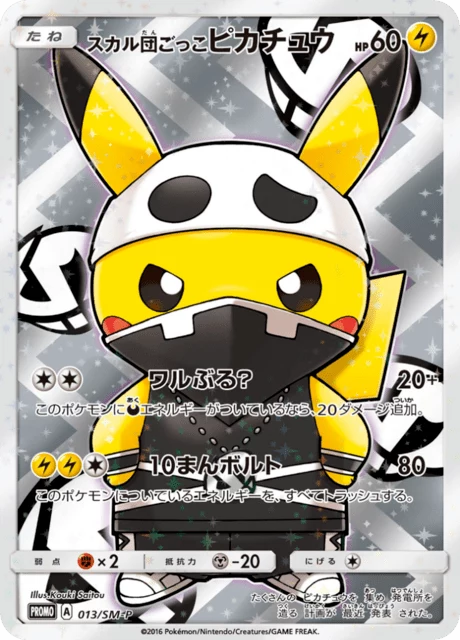
Pretend Team Skull Pikachu, 013/SM-P, SM-P Promotional Cards
Pretend Team Skull Pikachu, 013/SM-P, SM-P Promotional Cards — a different card from the same promo line

For the wider set of SM-P releases, our SM-P promo best cards guide covers the family in full; this article stays focused on 400/SM-P specifically.

How to Identify Your Copy

The card number printed on the card — 400/SM-P — is the fastest way to confirm what you’re holding. Because the artwork is shared with the SM Promo 206 listing used in English-language databases, relying on the artwork alone will not tell you which physical print, box, or region a card came from. The printed number is the anchor point.

If you’re comparing against a Black Star Promos Pikachu that looks similar, check the illustrator credit rather than the pose or color palette — Kouki Saitou versus Akira Komayama is the actual dividing line between the two prints, not a cosmetic detail on the card face.
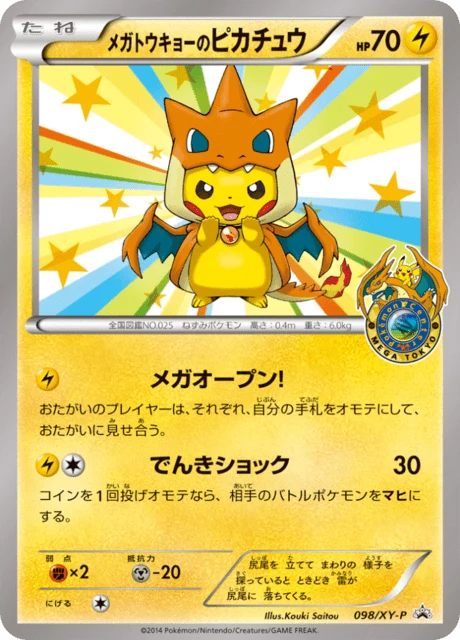
Mega Tokyo's Pikachu, 098/XY-P, XY-P Promotional Cards
Mega Tokyo’s Pikachu, 098/XY-P, XY-P Promotional Cards — an earlier-era Pikachu promo shown for comparison, not the card covered in this guide

Our broader PSA 10 Pikachu Japanese cards buying guide walks through this same identification approach across other Pikachu promo eras.

What a PSA 10 Pikachu 400/SM-P Is Worth

We currently list a PSA 10 Pikachu 400/SM-P at ¥1,028,476 (~$6,468 at ¥159/USD). That figure reflects our own listed stock and is not a claim about broader third-party marketplace pricing.

Because this card was a guaranteed set insert rather than a booster pull, the pool of copies in circulation is tied directly to how many Master Battle Sets were reserved and shipped in 2019 — not to pack-opening odds. That distribution model is part of why grading population and condition matter so much for a card like this one: every copy started from the same retail channel, so scarcity at the PSA 10 level comes down to how well individual copies were stored before submission, not how rare the pull was.

Pikachu, 400/SM-P, SM-P Promotional Cards
Pikachu, 400/SM-P, SM-P Promotional Cards — the card behind our current PSA 10 listing

Where to Buy Japanese Pikachu Promos

We ship Japanese Pokémon TCG singles and sealed product worldwide out of Tokyo. Our PSA 10 Pikachu 400/SM-P is a single-copy listing:

Shop This Card
PSA 10 Pikachu 400/SM-P (Japanese Promo)
Currently listed at ¥1,028,476 (~$6,468)
Ships from Tokyo · Tracked delivery

View Product →

Looking for a different Pikachu promo, a raw copy, or another SM-P era print? Our Quick Order page is the fastest way to submit a request, and our top 10 Pikachu Japanese cards and best Pikachu cards in the Japanese TCG guides are good starting points if you’re still narrowing down what to look for. For Pikachu promos with a similar giveaway-style history, see our Detective Pikachu cards guide as well.

Preguntas frecuentes

What is Pikachu 400/SM-P?

It’s a Lightning-type, 60 HP Pikachu promo card, number 400/SM-P, from Japan’s SM-P Promotional Cards line. It shares its artwork and attack text with the internationally-catalogued Pikachu (SM Promo 206), and its single attack is Thunder Shock.

How was Pikachu 400/SM-P distributed?

It was a guaranteed insert in the Limited Collection Master Battle Set, sold through Japanese Pokémon Centers. Reservations opened August 16, 2019, and sets began shipping in early December 2019. It was not a booster pull.

Who illustrated Pikachu 400/SM-P?

Kouki Saitou illustrated the Japanese 400/SM-P print. A separate SM Black Star Promos version of a similar-looking Pikachu was illustrated by Akira Komayama — the two are different prints and should not be treated as the same card.

Is Pikachu 400/SM-P the same as the Toys «R» Us Eevee-GX Starter Set Pikachu?

No. A similarly-illustrated Pikachu was bundled in the Toys «R» Us-exclusive «Eevee-GX Battle Triple Starter Set» on November 23, 2018 — a related but separate product from the 2019 Limited Collection Master Battle Set that 400/SM-P comes from.

How much is a PSA 10 Pikachu 400/SM-P worth?

We currently list a PSA 10 copy at ¥1,028,476 (about $6,468 at ¥159/USD), based on our own stock. This is not a third-party marketplace valuation.
Cartas Pokémon de saino misaki: guía del ilustrador de Nessa, Erika's Invitation y Melony

Three of Japan’s most collected Trainer alt-art cards from the last five years share one illustrator credit: saino misaki.

Nessa’s Secret Rare from VMAX Climax, Erika’s Invitation from Pokémon Card 151, and Melony’s Special Art Rare from VSTAR Universe all list «saino misaki» as the artist on Limitless TCG — three different sets, three different Gym Leaders, one name behind the artwork. If you’ve been trying to work out who illustrated any of these three cards, or which of your other Japanese pulls share the same artist, this guide gathers what’s publicly documented about saino misaki and lists every card currently listed on our site in PSA 10.

Key Takeaway

saino misaki is credited on 51 Japanese-language cards and 43 English-language cards in the Limitless TCG database. The three flagship Trainer alt-arts covered here are Nessa SR (VMAX Climax, currently listed at ¥15,400 / ~$97), Erika’s Invitation SR (Pokémon Card 151, ¥23,496 / ~$148), and Melony SAR (VSTAR Universe, ¥10,912 / ~$69). Bulbapedia records the artist’s debut credits as Flaaffy and Mimikyu V from the Japanese VMAX Climax subset.

51
JP Cards (Limitless)

43
EN Cards (Limitless)

3
Flagship Cards Covered

2021–23
Years Covered

Prices below are our current listings as of September 2026, converted at ¥159/USD. Card release dates and artist credits are sourced from Limitless TCG and Bulbapedia as cited throughout.

Who Is saino misaki?

Public documentation on saino misaki is thin, and we’re not filling the gaps with guesswork. Bulbapedia’s page on the artist uses the pronoun «they» throughout, and we’ve followed that convention here — no gender, no real name, and no biography beyond what’s published anywhere we could verify.

What is documented: according to Bulbapedia, saino misaki’s first Pokémon TCG credits were Flaaffy and Mimikyu V, both from the Japanese VMAX Climax subset (later reprinted into the English Silver Tempest and Brilliant Stars sets). From that debut, the artist’s Trainer alt-art work has become some of the more recognisable Supporter card art in recent Japanese sets.

Card counts vary depending on how you’re counting. A Limitless TCG artist search returns 51 cards tagged «saino misaki» in the Japanese-language database and 43 cards in the English-language database — these totals include reprints across languages and sets. Bulbapedia’s own count, which tracks unique artwork rather than every printing, lists 41 cards plus 16 more in Pokémon TCG Pocket. Neither figure is wrong — they’re counting different things, so we’re citing each separately rather than adding them together.

Whether saino misaki works alone or as part of a studio isn’t stated on Bulbapedia or anywhere else we could verify, so we’re leaving that question open rather than assuming either way.

Every saino misaki Card We Cover

Five cards with a confirmed saino misaki artist credit on their Limitless TCG pages:

Carta Set (JP) N.º Rarity Set release
Nessa (ルリナ) VMAX Climax (S8b) 277/184 Secret Rare (SR) 03 Dec 2021
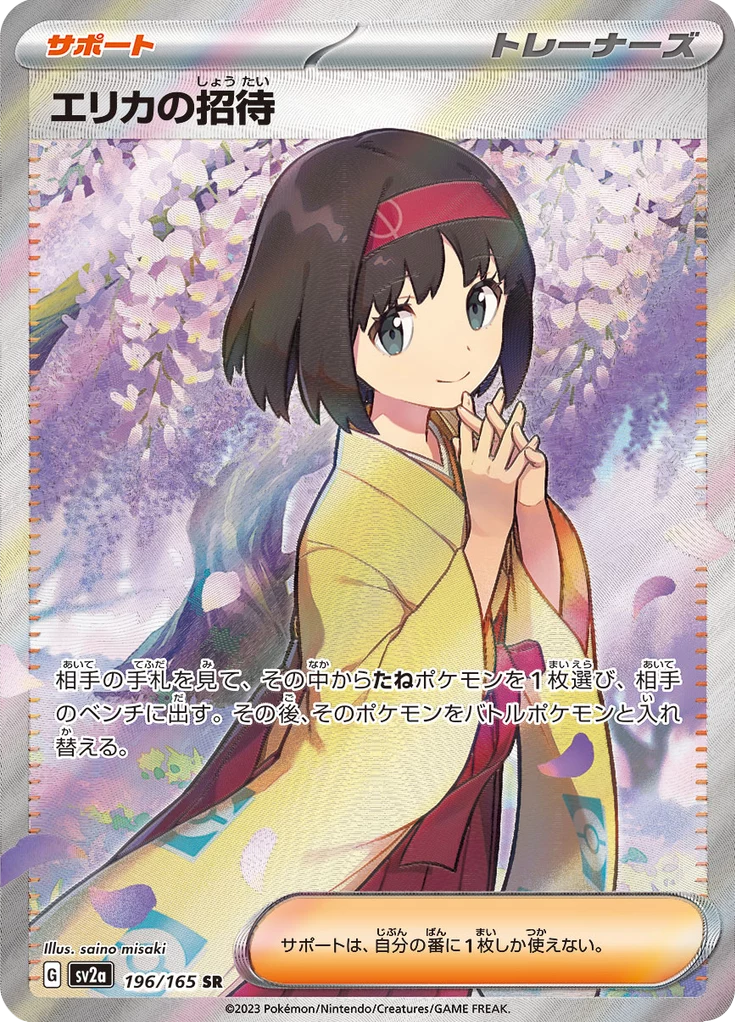
Erika’s Invitation (エリカの招待) Pokémon Card 151 (SV2a) 196/165 Secret Rare (SR) 16 Jun 2023
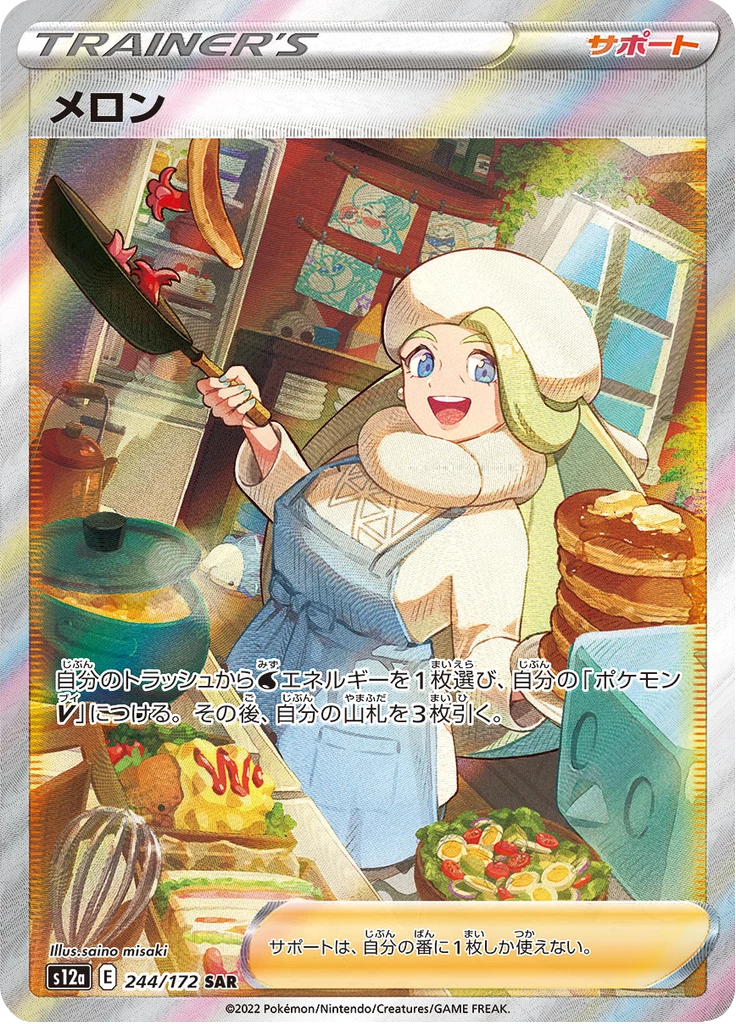
Melony (メロン) VSTAR Universe (S12a) 244/172 Special Art Rare (SAR) 02 Dec 2022
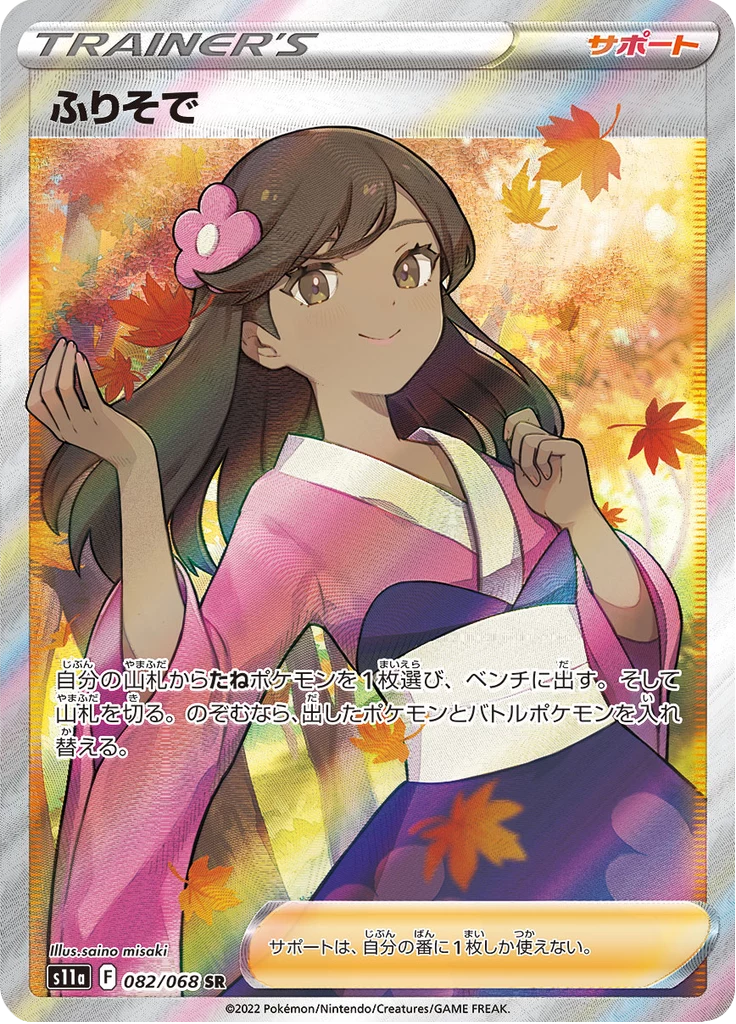
Furisode Girl (ふりそで) Incandescent Arcana (S11a) 082 Secret Rare —
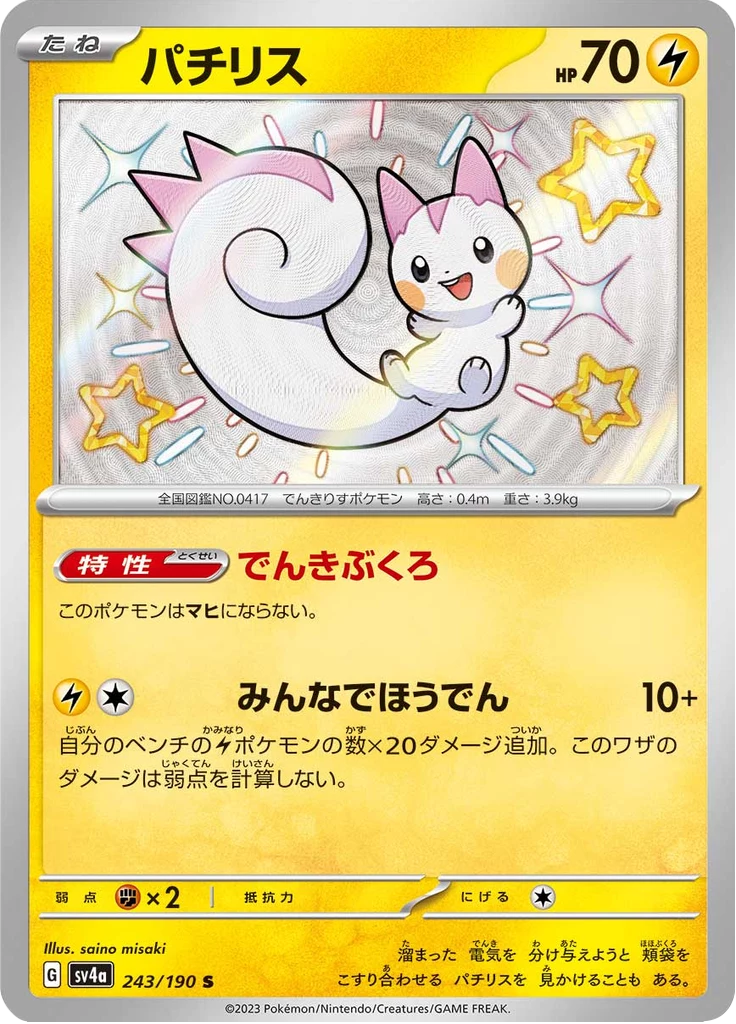
Pachirisu (パチリス) Shiny Treasure ex (SV4a) 243 Shiny Rare —

The next three sections cover the cards currently listed on our site in PSA 10 in detail; the two after that round out saino misaki’s broader Trainer and Pokémon work for context.

Confirm by Card Number

A shared character doesn’t mean a shared illustrator. Different printings of the same Trainer are frequently illustrated by different artists across sets, and even within the same set. Always check the specific card number against its Limitless TCG page rather than assuming based on the character alone.

Nessa SR — VMAX Climax (S8b 277/184)

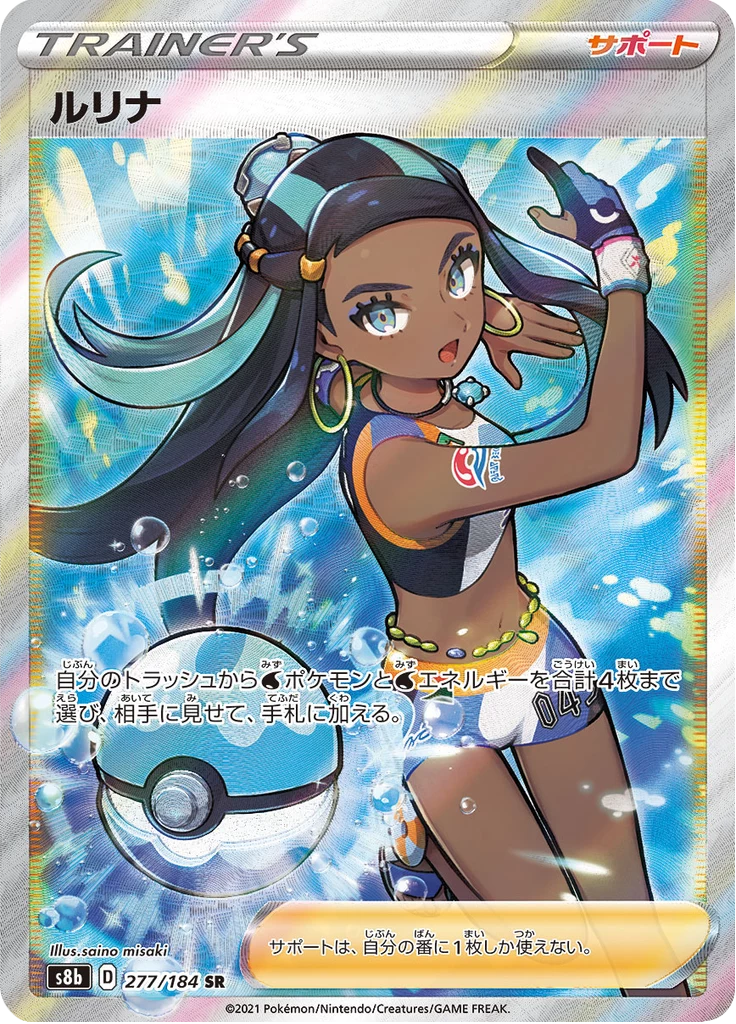
Nessa SR 277/184 VMAX Climax card
Nessa SR 277/184 · VMAX Climax (S8b)

Nessa, the Water-type Gym Leader from Galar, received her Secret Rare Supporter treatment in VMAX Climax (S8b), released 03 December 2021 — card 277 out of a 184-card base set, the telltale numbering of a secret rare slot. The artist credit on the Limitless TCG card page is saino misaki.

We currently have a PSA 10 copy listed at ¥15,400 (~$97). For the full print run and every other Nessa card across sets, our dedicated Nessa card guide covers pricing and variants in more depth — this article stays focused on the illustrator angle.

Erika’s Invitation SR — Pokémon Card 151 (SV2a 196/165)

Erika's Invitation SR 196/165 Pokemon Card 151 card
Erika’s Invitation SR 196/165 · Pokémon Card 151 (SV2a)

Erika’s Invitation is one of the standout Secret Rares from Pokémon Card 151 (SV2a), released 16 June 2023 — card 196 in a 165-card base set. The same artist credit appears on Limitless: saino misaki.

This is the highest-value of the three flagship cards in this guide. Our PSA 10 copy is currently listed at ¥23,496 (~$148). For the full Pokémon Card 151 set list, see our Pokémon Card 151 (SV2a) card list, and our separate Erika card guide covers every Erika printing across sets, not just this one.

Shop This Card
PSA 10 Erika’s Invitation SR [SV2a 196/165]
Currently listed at ¥23,496 (~$148)
Ships from Tokyo · Tracked delivery

View Product →

Melony SAR — VSTAR Universe (S12a 244/172)

Melony SAR 244/172 VSTAR Universe card
Melony SAR 244/172 · VSTAR Universe (S12a)

Melony, the Ice-type Gym Leader introduced alongside Nessa in the Galar region, appears as a Special Art Rare in VSTAR Universe (S12a), released 02 December 2022 — card 244 in a 172-card base set. Limitless credits the artwork to saino misaki.

Our PSA 10 copy is currently listed at ¥10,912 (~$69), the most affordable entry point among the three flagship cards here. For the rest of the set’s chase cards, see our VSTAR Universe (S12a) card list.

Other saino misaki Illustrations

Beyond the three flagship Trainer alt-arts above, saino misaki’s Limitless credit list runs to dozens of cards. Two more worth flagging, both outside our current PSA 10 stock but useful for spotting the artist’s style elsewhere in your collection:

Furisode Girl Secret Rare 082 Incandescent Arcana card

Furisode Girl (ふりそで) 082 · Incandescent Arcana (S11a)
Secret Rare

Pachirisu Shiny Rare 243 Shiny Treasure ex card

Pachirisu (パチリス) 243 · Shiny Treasure ex (SV4a)
Shiny Rare

Furisode Girl is listed under that name on Limitless (ふりそで as printed on the Japanese card) as a Secret Rare from Incandescent Arcana. Pachirisu appears as a Shiny Rare in Shiny Treasure ex — a single-Pokémon illustration rather than the full-scene Trainer art the artist is better known for. Both confirm the same credit pattern: Trainer Supporters and select Pokémon across multiple Scarlet & Violet-era Japanese sets.

Where saino misaki’s Work Appears Online

Bulbapedia lists several public profile links for saino misaki, and we checked that each one still resolves as of September 2026: ArtStation, Pixiv, a Tumblr, and a YouTube channel. We haven’t reviewed what’s posted on any of them, so we can’t speak to the content — they’re included here purely as the documented links for anyone who wants to see the artist’s broader portfolio. An older personal-site URL listed in some records no longer resolves and isn’t included.

Where to Buy These Cards from Japan

All three flagship cards in this guide — Nessa SR, Erika’s Invitation SR, and Melony SAR — are graded PSA 10 and ship from our Tokyo warehouse with tracked delivery. Current listings:

Looking for raw copies, the Flaaffy/Mimikyu V debut cards, or the Furisode Girl and Pachirisu prints instead? Send us the card name and set through our Quick Order page and we’ll check current availability out of Japan. For related Trainer alt-art work by a different illustrator, our kirisaki illustrator guide and female Pokémon Trainer card roundup are good next reads, and our PSA 10 Trainer card buying guide covers grading considerations across the whole category.

Preguntas frecuentes

Who is saino misaki?

saino misaki is a Pokémon TCG illustrator credited on 51 Japanese-language cards and 43 English-language cards in the Limitless TCG database. Bulbapedia, which uses «they» for the artist, records their first cards as Flaaffy and Mimikyu V from the Japanese VMAX Climax subset. No real name, gender, or studio affiliation has been publicly confirmed.

How many Pokémon cards has saino misaki illustrated?

It depends on how you count. Limitless TCG’s artist search returns 51 cards in its Japanese-language database and 43 in its English-language database, which include reprints across sets. Bulbapedia’s count tracks unique artwork instead and lists 41 cards plus 16 more in Pokémon TCG Pocket.

What was saino misaki’s first Pokémon card?

According to Bulbapedia, saino misaki’s debut credits were Flaaffy and Mimikyu V, both from the Japanese VMAX Climax subset, later reprinted into the English Silver Tempest and Brilliant Stars sets.

Are Nessa SR and Erika’s Invitation SR illustrated by the same artist?

Yes. Both cards list saino misaki as the artist on their respective Limitless TCG pages, along with Melony SAR from VSTAR Universe.

Where can I buy PSA 10 saino misaki cards from Japan?

PSA 10 copies of Nessa SR, Erika’s Invitation SR, and Melony SAR are currently listed on our site, all shipped from Tokyo with tracked delivery. For other prints, our Quick Order page can check current availability.

SV9a Heat Wave Arena vs SV8a Terastal Festival ex: guía de High Class Pack

One of these boxes has 92 cards in it. The other has 237. On our site today they are priced about ¥515 apart.

SV9a Heat Wave Arena and SV8a Terastal Festival ex are two Japanese Scarlet & Violet-era sets released about three months apart — SV8a in December 2024, SV9a in March 2025. SV8a is a High Class Pack set; SV9a is an Enhanced Expansion Pack, a different, smaller-scale product tier. Both carry a headline Special Art Rare or Ultra Rare lineup, and both are still live products, not discontinued stock. The card-count gap between them is the single biggest structural difference, and it doesn’t map onto price the way you might expect.

We ship sealed Japanese product out of Tokyo every week, so the figures below come from our own live listings rather than a marketplace snapshot. Here’s how the two sets actually compare, card for card and yen for yen.

Key Takeaway

SV9a Heat Wave Arena packs 92 cards around three Special Art Rare chase cards and is currently listed at ¥16,995 (~$107). SV8a Terastal Festival ex runs 237 cards — roughly 2.6x the card count — headlined by Ogerpon Teal Mask ex, and is currently listed at ¥17,510 (~$110). Despite that size gap, the two boxes sit only about ¥515 apart on price.

92
SV9a Cards

237
SV8a Cards

¥515
Box Price Gap

~3 mo
Release Gap

Prices are our current live listings as of September 2026, converted at ¥159/USD.

SV9a vs SV8a: The Basics

Both sets belong to the Scarlet & Violet-era Japanese release line, but they sit at different product tiers and were built at very different scale: SV8a is a High Class Pack, while SV9a is an Enhanced Expansion Pack.

Colección JP code Cards Release date Booster box price
Heat Wave Arena SV9a 92 March 14, 2025 ¥16,995 (~$107)
Terastal Festival ex SV8a 237 December 6, 2024 ¥17,510 (~$110)

SV8a arrived first, in December 2024, with a 237-card checklist — unusually large for a high class pack set. SV9a followed about three months later with a much tighter 92-card list. Card count is a structural fact about how big each set’s full print run is; it isn’t, by itself, a claim about how easy either chase card is to pull, and we don’t have verified pull-rate data for either set.

Inside SV9a Heat Wave Arena: The Three Special Art Rares

SV9a’s chase lineup is built around three Special Art Rare ex cards, all illustrated in the full-art SAR treatment:

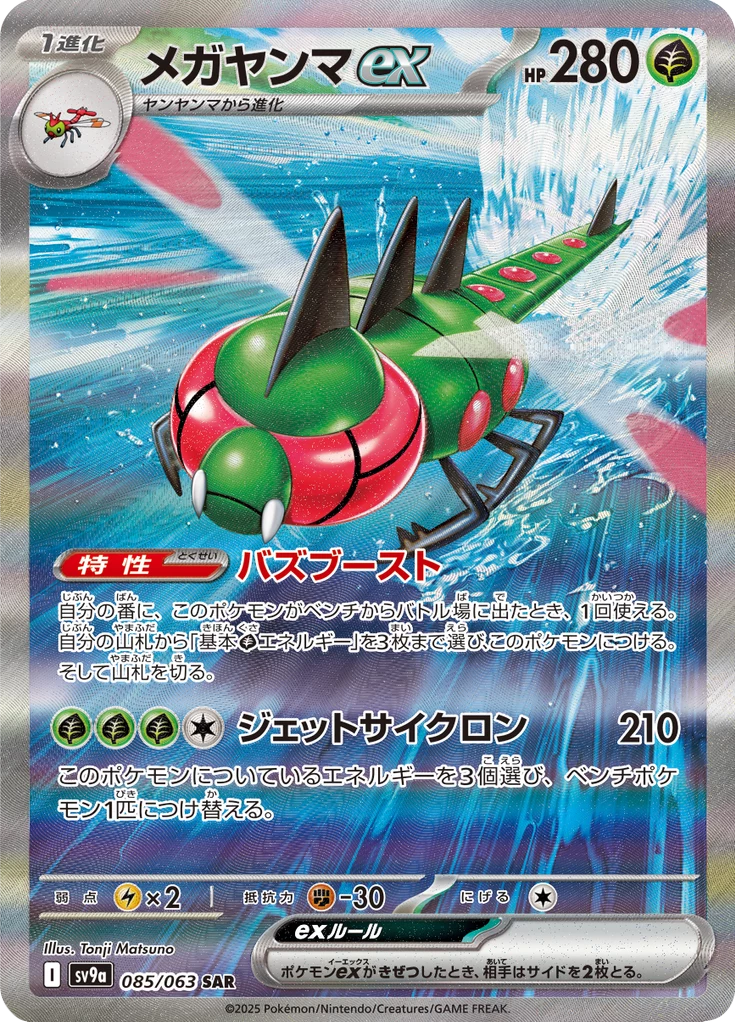
Mega Yanma ex, SV9a #85, Special Art Rare, Heat Wave Arena (SV9a)

Mega Yanma ex · SV9a #85 SAR

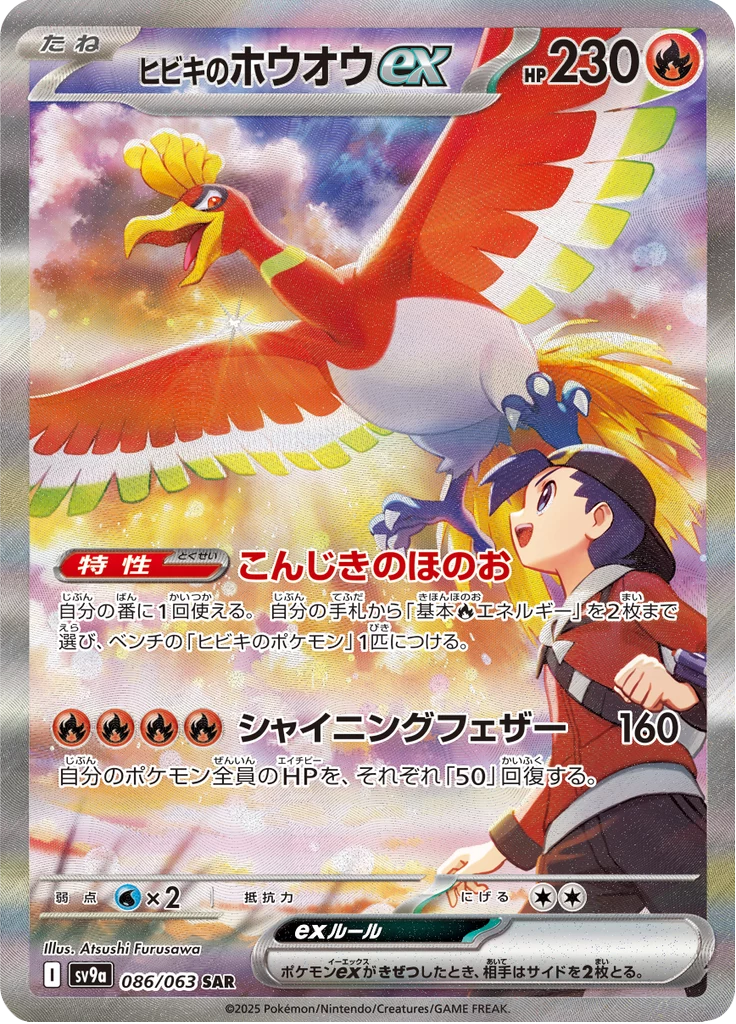
Hibiki's Ho-Oh ex, SV9a #86, Special Art Rare, Heat Wave Arena (SV9a)

Hibiki’s Ho-Oh ex · SV9a #86 SAR

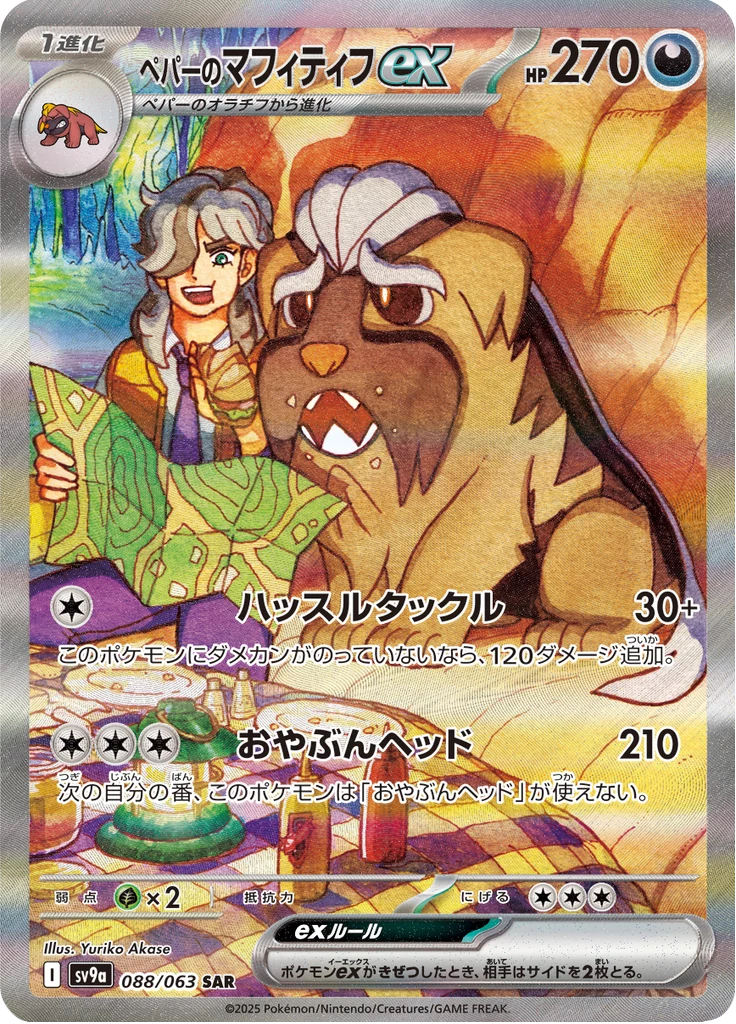
Pepper's Mabosstiff ex, SV9a #88, Special Art Rare, Heat Wave Arena (SV9a)

Pepper’s Mabosstiff ex · SV9a #88 SAR

Mega Yanma ex (#85, Grass type, 280 HP) is the set’s headline card and the one most collectors are chasing. Hibiki’s Ho-Oh ex (#86, Fire type, 230 HP) and Pepper’s Mabosstiff ex (#88, Darkness type, 270 HP) round out the trio at the same Special Art Rare slot. All three sit inside a 92-card set, which is a small checklist for an Enhanced Expansion Pack.

For the full 92-card checklist, see our Heat Wave Arena (SV9a) card list.

Inside SV8a Terastal Festival ex: The Larger Set’s Chase Cards

SV8a’s 237 cards give it a much wider chase pool, topped by an Ultra Rare that also has an English-language footprint:

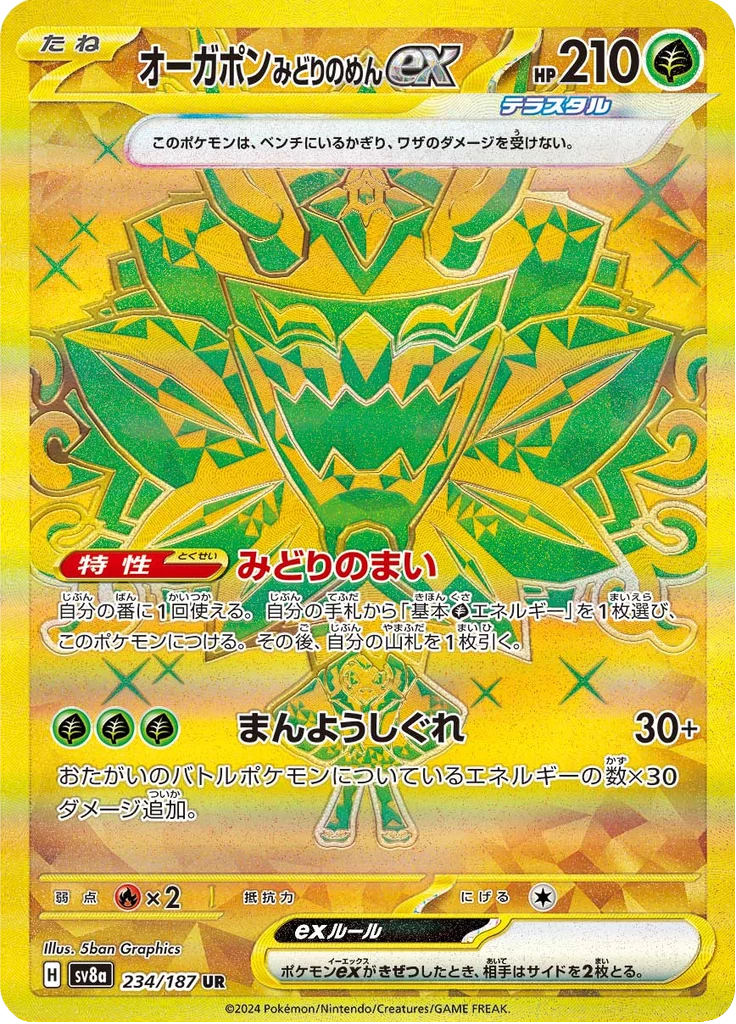
Ogerpon Teal Mask ex, SV8a #234, Ultra Rare, Terastal Festival ex (SV8a)

Ogerpon Teal Mask ex · SV8a #234 UR

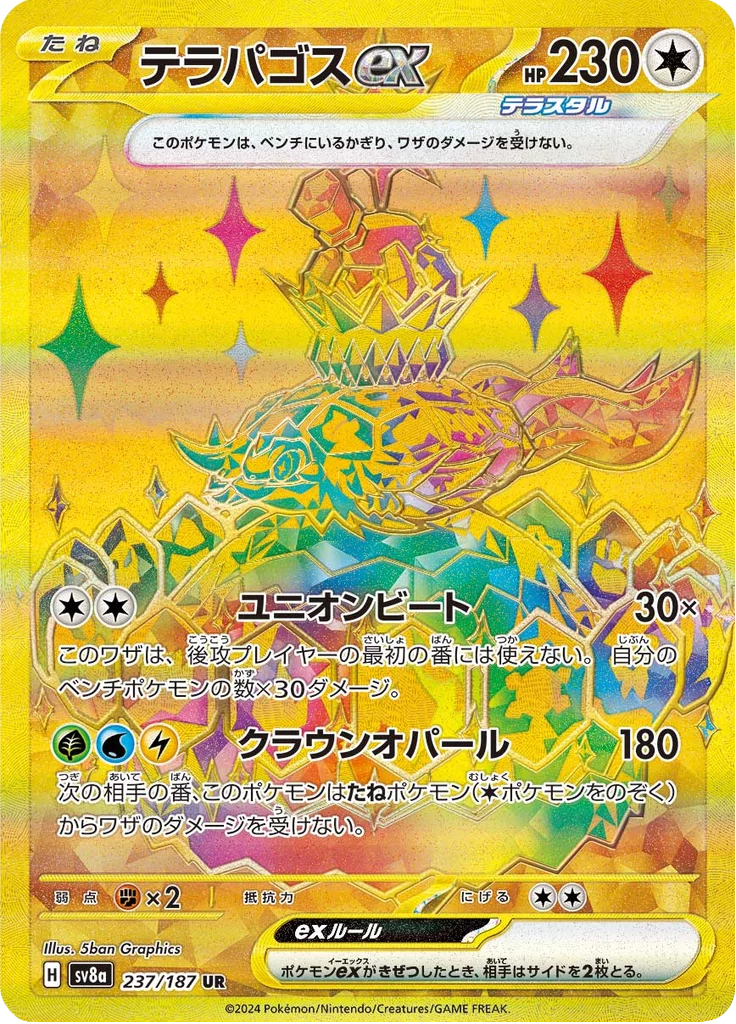
Terapagos ex, SV8a #237, Ultra Rare, Terastal Festival ex (SV8a)

Terapagos ex · SV8a #237 UR

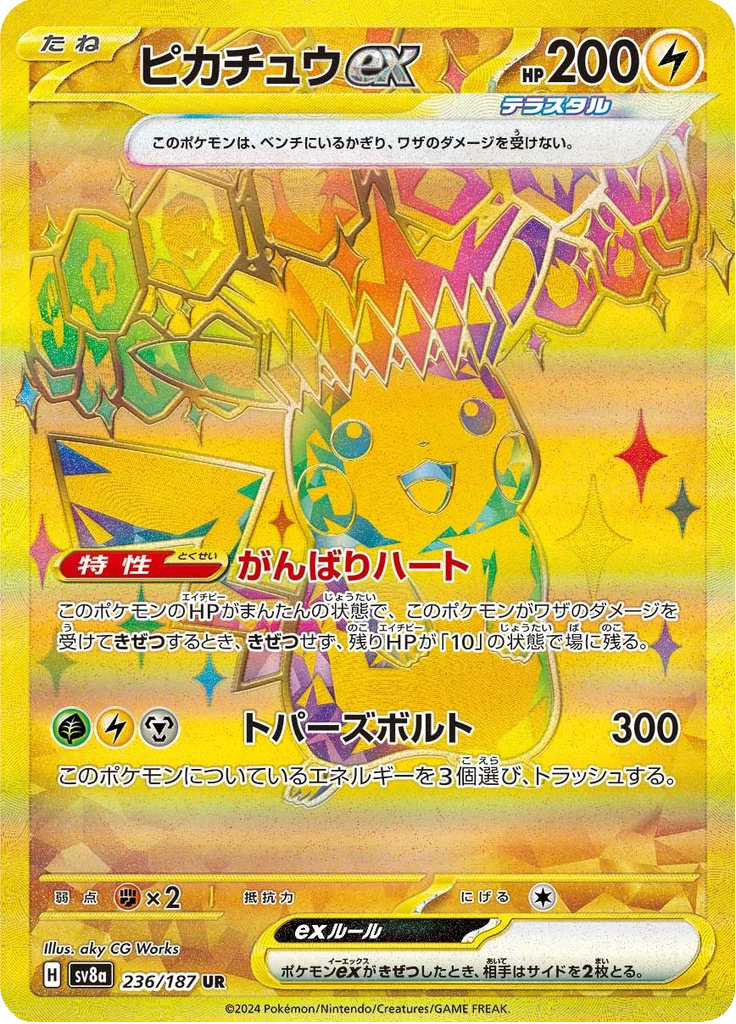
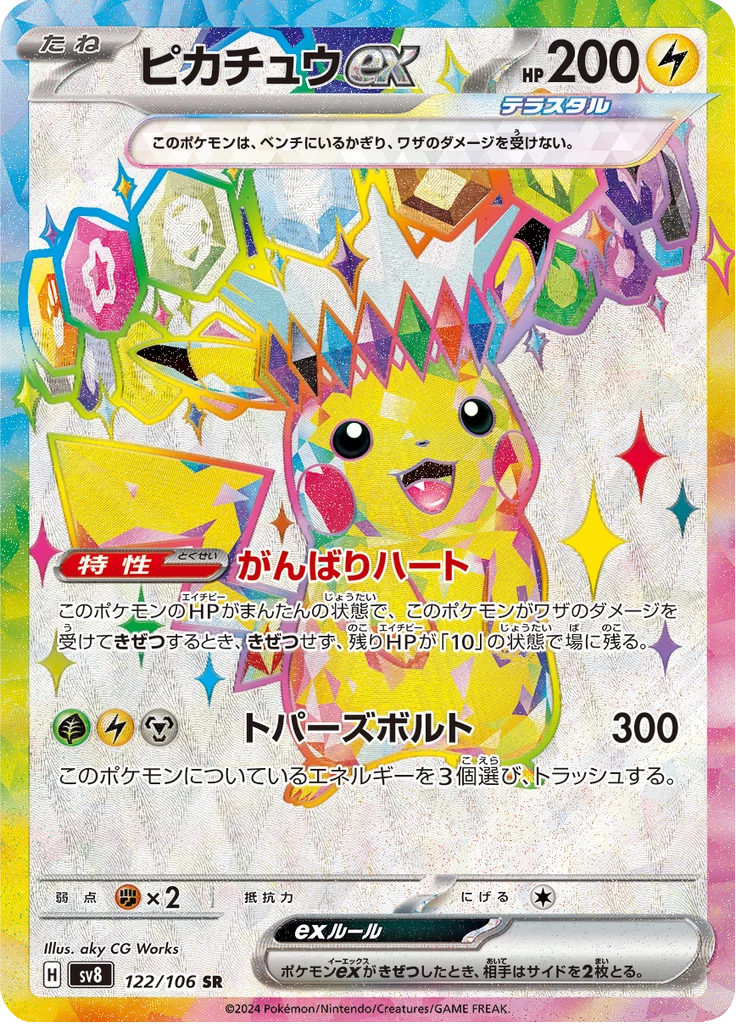
Pikachu ex, SV8a #236, Terastal Festival ex (SV8a)

Pikachu ex · SV8a #236

Ogerpon Teal Mask ex (#234, Grass type, 210 HP, illustrated by 5ban Graphics) is the set’s Ultra Rare headliner, and it’s the one name here with a life outside Japan — its English-language reprint appears in Twilight Masquerade and Prismatic Evolutions. Terapagos ex (#237, Colorless type, 230 HP) closes out the numbered checklist at the same Ultra Rare tier, and Pikachu ex (#236) rounds out the set’s marquee slots.

See the complete checklist in our Terastal Festival ex (SV8a) card list.

Card Count vs Box Price: Why the Numbers Don’t Match

Here’s the part that surprises people who assume «bigger set means pricier box»: SV8a has 2.6x the card count of SV9a, but the boxes are currently only about ¥515 apart — ¥16,995 (~$107) for SV9a against ¥17,510 (~$110) for SV8a.

Card count tells you how large a set’s full print run and checklist are — it’s a real, citable structural difference. It does not, on its own, tell you how often any specific chase card shows up in a box, and we don’t have verified pull-rate figures to back a claim either way. What the price gap does confirm is that box pricing on a set this size is driven by more than raw card count — each set’s specific chase-card lineup and release timing carry their own weight.

Our Terastal Festival ex booster box buying guide covers SV8a’s box economics in more depth if you want the deeper dive on that set specifically.

Which Box Should You Buy

Both are live, current-listing products, so the choice comes down to what you’re actually collecting for:

  • Want a tighter, smaller checklist to chase — SV9a’s 92 cards concentrate the hunt around three Special Art Rare exes rather than spreading it across a much larger set.
  • Want the wider card pool and an Ultra Rare with English-market recognition — SV8a’s 237-card list and Ogerpon Teal Mask ex give you both scale and a card that collectors outside Japan will also recognise from its Twilight Masquerade / Prismatic Evolutions reprint.
  • Buying on price alone — the two boxes are close enough (¥515 apart) that price shouldn’t be the deciding factor either way; set content is the more useful filter.
Check the Release Order First

SV8a released in December 2024 and SV9a followed in March 2025. If you’re building a chronological Scarlet & Violet-era collection, SV8a comes first on the shelf.

Mega Yanma ex: A Reprint, Not a Mega-Series Release

Mega Yanma ex’s presence in SV9a is worth a specific note, because it’s easy to mistake it for something it isn’t. «Mega Yanma» is simply this Pokemon’s Japanese species name — the name is unrelated to the dedicated Mega-series expansions that begin with M1L, which launched later. This is a standalone Scarlet & Violet-era ex card, not a release from that separate M-series line.

If you’re specifically collecting the numbered M-series sets, Heat Wave Arena sits outside that line entirely, despite one of its cards sharing the word «Mega» in its name. It’s an SV9a card, full stop — the naming overlap with the M-series is a coincidence, not a connection.

Where to Buy SV9a and SV8a from Japan

We ship both boxes sealed, out of Tokyo, with tracked delivery worldwide.

Shop This Set
SV9a Heat Wave Arena Japanese Pokemon Booster Box
Currently listed at ¥16,995 (~$107)
Ships from Tokyo · Tracked delivery

View Product →

Prefer the larger checklist instead? The SV8a Terastal Festival ex booster box is currently listed at ¥17,510 (~$110). For singles from either set, or to build a mixed order, use our Quick Order page.

Preguntas frecuentes

Which is bigger, SV9a Heat Wave Arena or SV8a Terastal Festival ex?

SV8a Terastal Festival ex is bigger — 237 cards versus SV9a Heat Wave Arena’s 92 cards, roughly a 2.6x difference in checklist size.

Is Mega Yanma ex part of the Pokemon Mega-series (M-series)?

No. Mega Yanma ex is a Special Art Rare inside SV9a Heat Wave Arena, a standalone Scarlet & Violet-era set. «Mega Yanma» is just this Pokemon’s Japanese species name; it has no connection to the dedicated M-series expansions that begin with M1L, which launched later.

What is the chase card in SV8a Terastal Festival ex?

Ogerpon Teal Mask ex (#234), an Ultra Rare illustrated by 5ban Graphics. It also has an English-language reprint that appeared in Twilight Masquerade and Prismatic Evolutions.

Why are the SV9a and SV8a box prices so close despite the card-count gap?

On our current listings, SV9a is ¥16,995 (about $107) and SV8a is ¥17,510 (about $110) — only about ¥515 apart, even though SV8a has 2.6 times as many cards. Card count reflects the scale of a set’s print run and checklist; it doesn’t directly determine box pricing, which is shaped by each set’s specific chase cards and release timing as well.

When did SV9a Heat Wave Arena and SV8a Terastal Festival ex release?

SV8a Terastal Festival ex released December 6, 2024, and SV9a Heat Wave Arena followed on March 14, 2025 — about three months apart.

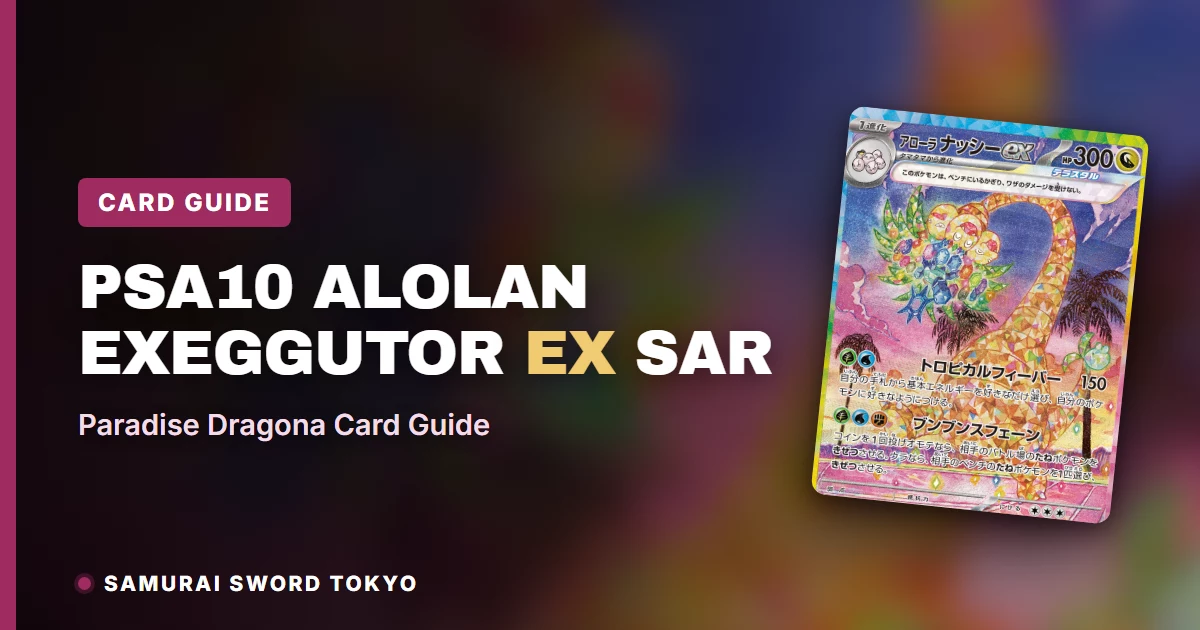
PSA10 Alolan Exeggutor ex SAR (089/064): Guía de la carta de Paradise Dragona

Exeggutor is a Grass Pokemon in every game it has appeared in. On this card, it is not.

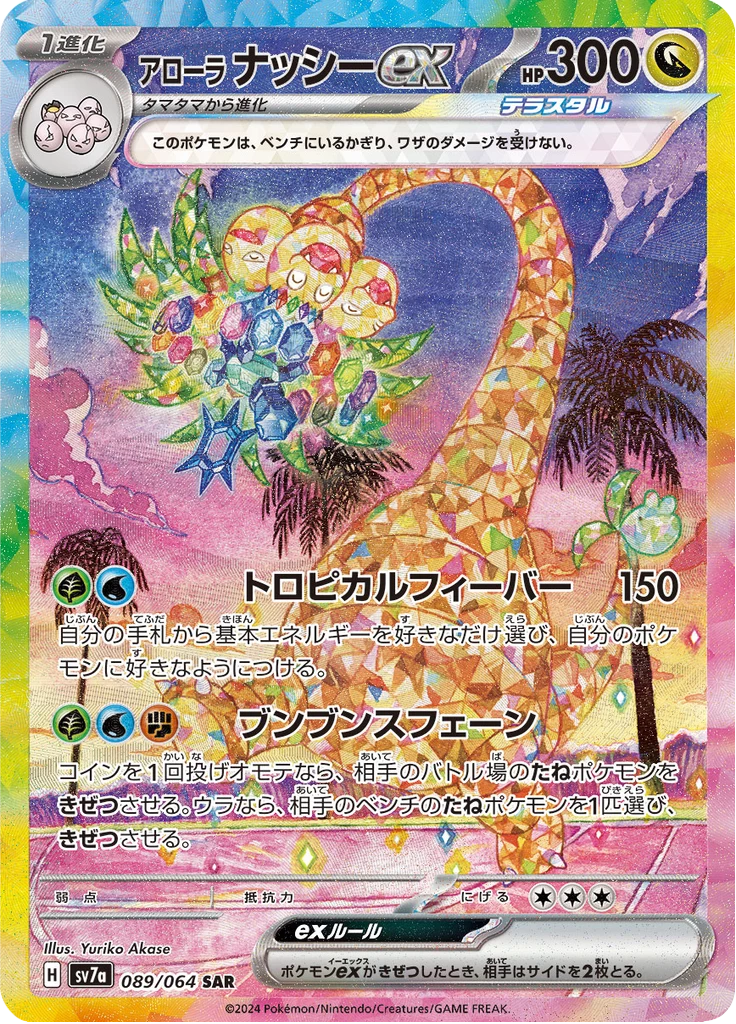
Alolan Exeggutor ex SAR (089/064) is the special-art-rare chase card from Paradise Dragona, and the first thing most collectors notice — after the towering full-art illustration — is that the Pokemon Company printed it as a Dragon-type. That is not a misprint. It is a deliberate TCG-rules choice that sits alongside a 300 HP stat line and a coin-flip attack built to punish small Basic Pokemon.

This guide covers exactly what the card is, where it comes from, why its typing looks unusual, and what a PSA10 copy is currently listed at on our site.

Key Takeaway

Alolan Exeggutor ex SAR (089/064) is a 300 HP Stage 1 card from Paradise Dragona (SV7a), Japan’s September 13, 2024 enhanced expansion pack. In this print it is typed as Dragon — not Grass, despite the species being Grass/Dragon in the core games. A PSA10 graded copy is currently listed at ¥13,345 (~$83.9).

300
HP

SAR
Rarity

94
Cards in Set

2024
JPN Release

Prices are converted at ¥159/USD (September 2026). The figure below is our own currently listed price for this graded card, not a third-party market average.

What Is Alolan Exeggutor ex SAR (089/064)?

Alolan Exeggutor ex 089/064 SAR Paradise Dragona full art card
Alolan Exeggutor ex, card 089/064, Special Art Rare — Paradise Dragona (SV7a)

Alolan Exeggutor ex (JP: アローラ ナッシーex) is a Stage 1 Pokemon that evolves from Exeggcute. It carries 300 HP and two attacks: Tropical Fever, which attaches a basic Energy card straight from hand, and Bumblebee Sphere, a coin-flip attack that targets an opponent’s Basic Pokemon.

Field Detail
Card name Alolan Exeggutor ex
Card number 089/064
Rarity SAR (Special Art Rare)
Colección Paradise Dragona (SV7a)
HP 300
TCG type Dragon
Stage Stage 1 (evolves from Exeggcute)
JPN release September 13, 2024

The two-attack kit is straightforward on paper — ramp Energy with Tropical Fever, then look for a Bumblebee Sphere coin flip against a vulnerable Basic — but the card’s real draw for most buyers is the full-art SAR illustration rather than tournament output. It is one of the set’s headline chase pulls from Paradise Dragona.

Why Is Alolan Exeggutor a Dragon-Type Card?

In the core Pokemon video games, Alolan Exeggutor is a Grass/Dragon dual-type Pokemon. On this card, the Pokemon Trading Card Game assigns it a single TCG energy type — Dragon — rather than Grass. That is a factual quirk of how the TCG maps video-game typing onto its own energy-type system, not an error on the card or in this guide.

Check This First

If you are cataloguing your collection by TCG energy type rather than video-game typing, file this card under Dragon, alongside other Alolan Exeggutor prints that share the same TCG-type treatment.

This is worth flagging because the mismatch trips up collectors sorting by species type rather than by the card’s printed energy type. The card itself, its attacks, and its Weakness/Resistance lines are all built around the Dragon typing as printed.

Paradise Dragona: The Set It Comes From

Paradise Dragona (SV7a) is a Japanese enhanced expansion pack released on September 13, 2024, with a set total of 94 cards. As the name suggests, Dragon-type Pokemon are the set’s organizing theme, which is exactly why a species normally associated with Grass energy shows up here printed as Dragon — Alolan Exeggutor ex’s TCG typing lines up with the set’s Dragon focus rather than its in-game typing.

For the complete card-by-card breakdown, see our Paradise Dragona (SV7a) set list. If you’re weighing whether to chase this SAR out of sealed product, our Paradise Dragona pull rates and best cards guide covers box-value context for the set.

Paradise Dragona sits within the broader Scarlet & Violet Japanese card era; our Scarlet & Violet Japanese card list indexes every SV-era set released to date.

Card Number and What SAR Rarity Means

The card is numbered 089/064 — a number higher than the set’s nominal 64-card main count, which is the standard Japanese TCG convention for secret and special-art-rare slots printed beyond a set’s base numbering. SAR stands for Special Art Rare: a full-art illustration treatment reserved for a small number of chase cards per set, distinct from the set’s regular holo and ultra-rare tiers.

Because SAR slots are limited per set and print run, only a fixed number of chase-card copies exist beyond a set’s regular numbering. A PSA10 graded copy of this SAR is currently listed at ¥13,345 (~$83.9).

Alolan Exeggutor and the Alola Region

Alolan Exeggutor is a regional-form evolution first introduced with the Alola region in the Pokemon Sun & Moon games — a regional variant of the original Exeggutor line, not a starter Pokemon. Regional forms like this one are a distinct category from the three starter Pokemon each region introduces, and Alolan Exeggutor’s tall, elongated Dragon-typed design is one of the more visually distinctive regional forms in the franchise.

If you’re building out a broader Alola-region collection, our Alola starters card guide covers the region’s actual starter Pokemon line for comparison.

Where This SAR Sits Among Other Modern ex Chase Cards

Paradise Dragona’s Alolan Exeggutor ex SAR belongs to a wider run of full-art SAR and SR chase cards that Japanese Scarlet & Violet-era sets have produced since 2023 — each tied to its own set, character, and Pokemon rather than a single unified «chase card» line. A few for visual comparison:

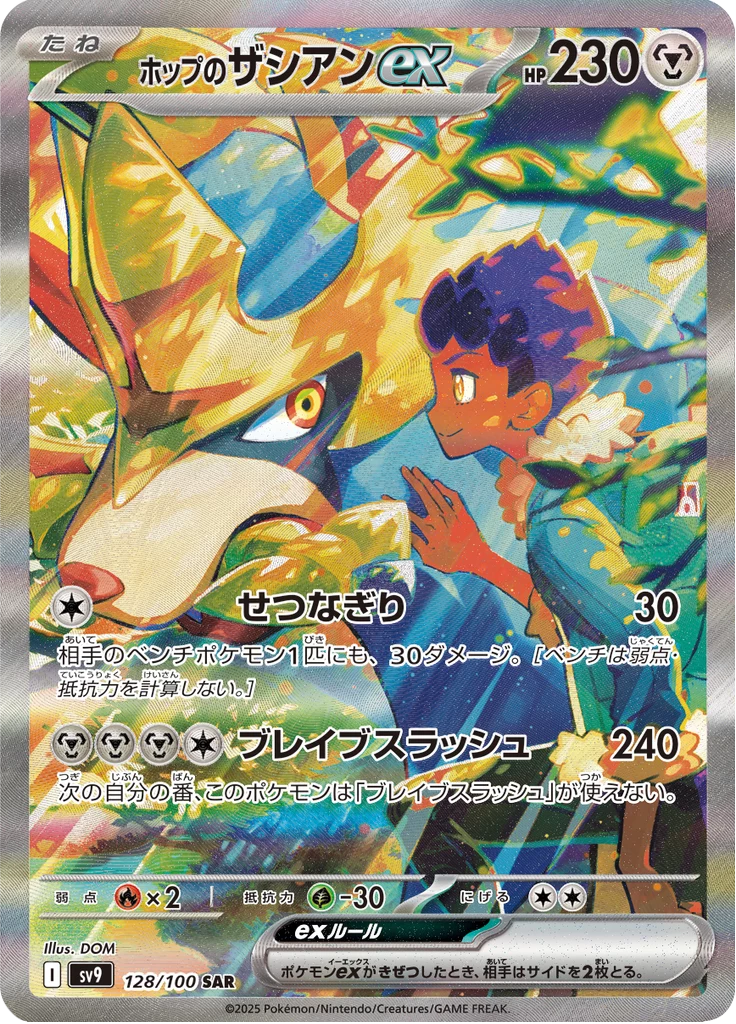
Hop's Zacian ex 128/100 SAR Battle Partners

Hop’s Zacian ex 128/100 SAR — Battle Partners (SV9)

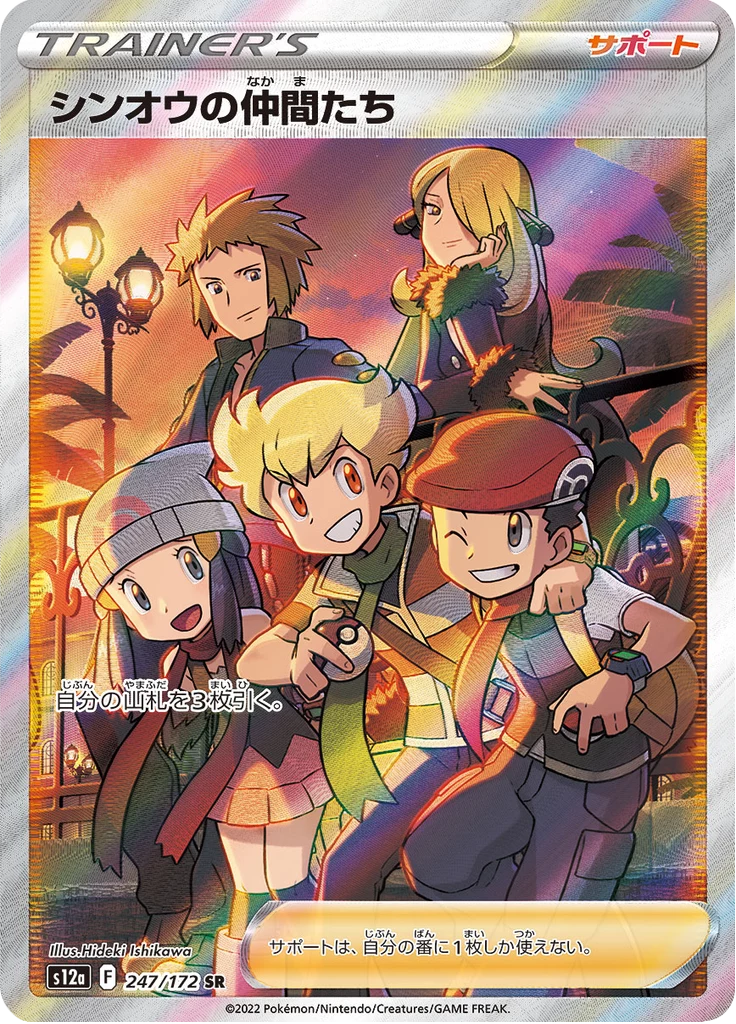
Friends in Sinnoh 247/172 SR VSTAR Universe

Friends in Sinnoh 247/172 SR — VSTAR Universe (S12a)

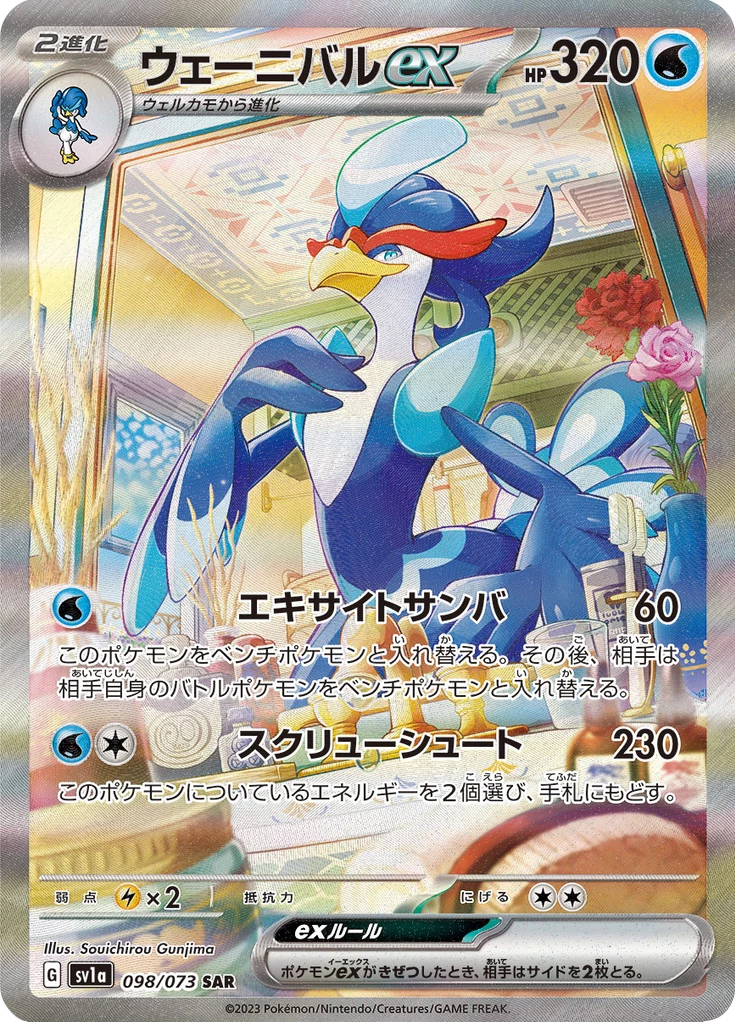
Quaquaval ex 098/073 SAR Triplet Beat

Quaquaval ex 098/073 SAR — Triplet Beat (SV1a)

None of these are printings of Alolan Exeggutor ex, and none share its set, number, or artwork — they’re shown purely to illustrate the wider full-art SAR/SR category this card belongs to. Each set runs its own independent pull rates and secondary-market pricing, so treat these as separate collecting targets rather than substitutes for the Paradise Dragona SAR.

If you’re shopping by price bracket rather than by set, our best PSA10 Japanese cards under ¥30,000 guide lists this card alongside other graded singles in the same range.

Where to Buy PSA10 Alolan Exeggutor ex SAR

We ship graded Japanese singles and sealed product worldwide from Tokyo with tracked delivery. This exact PSA10 copy is currently listed at ¥13,345 (~$83.9).

Shop This Card
PSA10 Alolan Exeggutor ex 089/064 SAR
Currently listed at ¥13,345 (~$83.9)
Ships from Tokyo · Tracked delivery

View Product →

Looking for other Paradise Dragona singles or a mixed order across sets? Our Quick Order page is the fastest way to build one out.

Preguntas frecuentes

Is Alolan Exeggutor ex a Grass-type card?

No. In the core video games Alolan Exeggutor is Grass/Dragon, but on this Paradise Dragona TCG print it is typed as Dragon only. This is a factual TCG-typing quirk, not a printing error.

What set is Alolan Exeggutor ex SAR (089/064) from?

Paradise Dragona (SV7a), a Japanese enhanced expansion pack with a 94-card set total, released September 13, 2024.

Is Alolan Exeggutor a starter Pokemon?

No. It is a regional-form evolution introduced with the Alola region, not one of the region’s three starter Pokemon.

What are Alolan Exeggutor ex’s attacks?

Tropical Fever, which attaches a basic Energy card from hand, and Bumblebee Sphere, a coin-flip attack aimed at an opponent’s Basic Pokemon.

How much does a PSA10 Alolan Exeggutor ex SAR cost?

Our PSA10 graded copy is currently listed at ¥13,345 (about $83.9 at ¥159/USD).

Damaged Box: Cuánto ahorras realmente en Booster Boxes japonesas de Pokemon

«Damaged Box» sounds like a discount. Today, for five of the six Japanese Pokemon sets we checked, it isn’t one.

We compared the live price of the regular sealed booster box against its «Damaged Box» listing across six current Japanese Pokemon sets — SV10 Glory of Team Rocket, SV11B Black Bolt, SV11W White Flare, S12 Paradigm Trigger, SV4A Shiny Treasure ex, and SV4K Ancient Roar. In one pair the two prices are identical. In the other five, the Damaged Box is priced the same or higher than the regular box, by anywhere from ¥45 to ¥1,138.

That’s the whole finding, and it’s worth publishing precisely because it cuts against the assumption. This guide lays out the exact numbers for each pair, checked today at ¥159/USD (September 2026), and what to actually do before clicking «Damaged Box» expecting a bargain.

Key Takeaway

Across 6 regular-vs-Damaged Box pairs checked live today, only 1 is priced identically and 5 show the Damaged Box costing more, not less — up to ¥1,138 (+11.2%) more for SV4K Ancient Roar versus its Damaged Box listing. Never assume «Damaged» means cheaper — check both listings first.

6
Pairs Checked

5 of 6
Damaged Priced Same or Higher

+11.2%
Biggest Premium (SV4K)

¥0
Smallest Gap (SV10, tied)

Prices are live JSON-LD figures pulled from each product page today, converted at ¥159/USD (September 2026). Prices move over time — treat the table below as a snapshot as of publish date, not a permanent number.

All 6 Regular vs Damaged Box Pairs, Compared

Every pair we found live on the site today, sorted by the size of the gap:

Colección Regular box Damaged Box Delta
SV4K Ancient Roar ¥10,192 (~$64) ¥11,330 (~$71) +¥1,138 (+11.2%)
SV11W White Flare ¥20,600 (~$130) ¥21,424 (~$135) +¥824 (+4.0%)
SV4A Shiny Treasure ex ¥16,640 (~$105) ¥16,995 (~$107) +¥355 (+2.1%)
SV11B Black Bolt ¥22,472 (~$141) ¥22,660 (~$143) +¥188 (+0.8%)
S12 Paradigm Trigger ¥21,070 (~$133) ¥21,115 (~$133) +¥45 (+0.2%)
SV10 Glory of Team Rocket ¥22,660 (~$143) ¥22,660 (~$143) ¥0 — identical

Three of the sets on this list released in 2025 — SV10 Glory of Team Rocket (April 18, 2025), and SV11B Black Bolt and SV11W White Flare (both June 6, 2025) — and sit closer to a tie than the older SV4K Ancient Roar (October 27, 2023) and SV4A Shiny Treasure ex (December 1, 2023) do. That’s a pattern worth noting rather than a rule: S12 Paradigm Trigger (October 21, 2022), the oldest set here, doesn’t fit it — its gap is the second-smallest on the list.

The Biggest Gap: SV4K Ancient Roar (+11.2%)

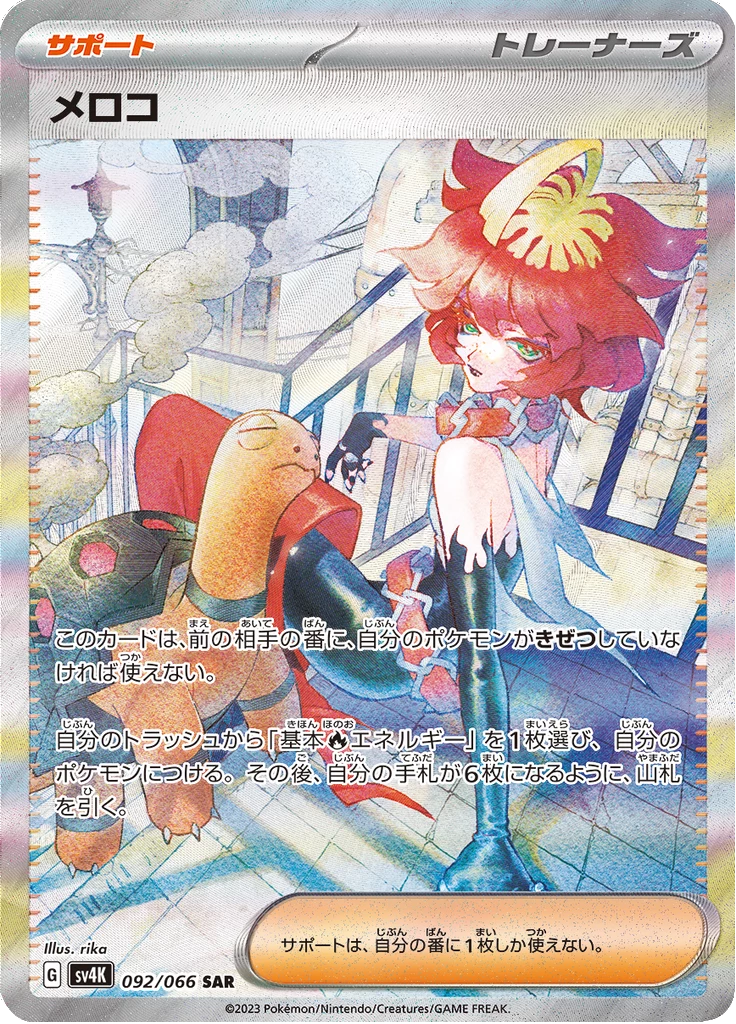
Mela SAR card number 092/066 SV4K Ancient Roar
Mela SAR, SV4K 092/066 — Ancient Roar

The widest gap of the six pairs belongs to the oldest set on this list. SV4K Ancient Roar (released October 27, 2023) is currently listed at ¥10,192 (~$64) for the regular box. The Damaged Box listing for the same set is ¥11,330 (~$71) — ¥1,138 more, an 11.2% premium.

We don’t have data confirming why this specific pair diverges this far — the two listings simply aren’t guaranteed to move together. What is confirmed is the number on the page today: for SV4K Ancient Roar, the regular box is the better buy right now. For the set’s full card breakdown, see our SV4K Ancient Roar pull rates and best cards guide.

The One Exact Tie: SV10 Glory of Team Rocket

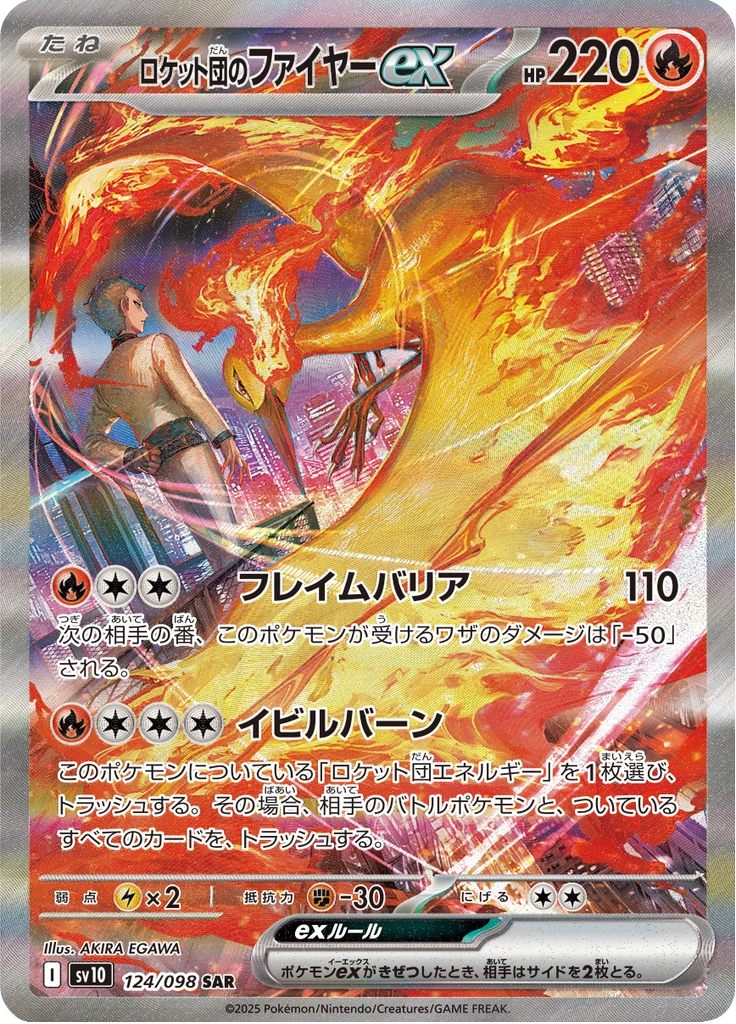
Team Rocket's Moltres ex SAR card number 124/098 SV10 Glory of Team Rocket
Team Rocket’s Moltres ex SAR, SV10 124/098 — Glory of Team Rocket

SV10 Glory of Team Rocket (released April 18, 2025) is the only pair on this list priced identically: ¥22,660 (~$143) for the regular box, and ¥22,660 (~$143) for the Damaged Box. Neither listing carries a cost advantage today, so the choice between the two comes down to whichever listing has stock or ships fastest for you — not price. See our Glory of Team Rocket pull rates and best cards guide for what’s inside the box.

Why «Damaged» Doesn’t Automatically Mean Cheaper

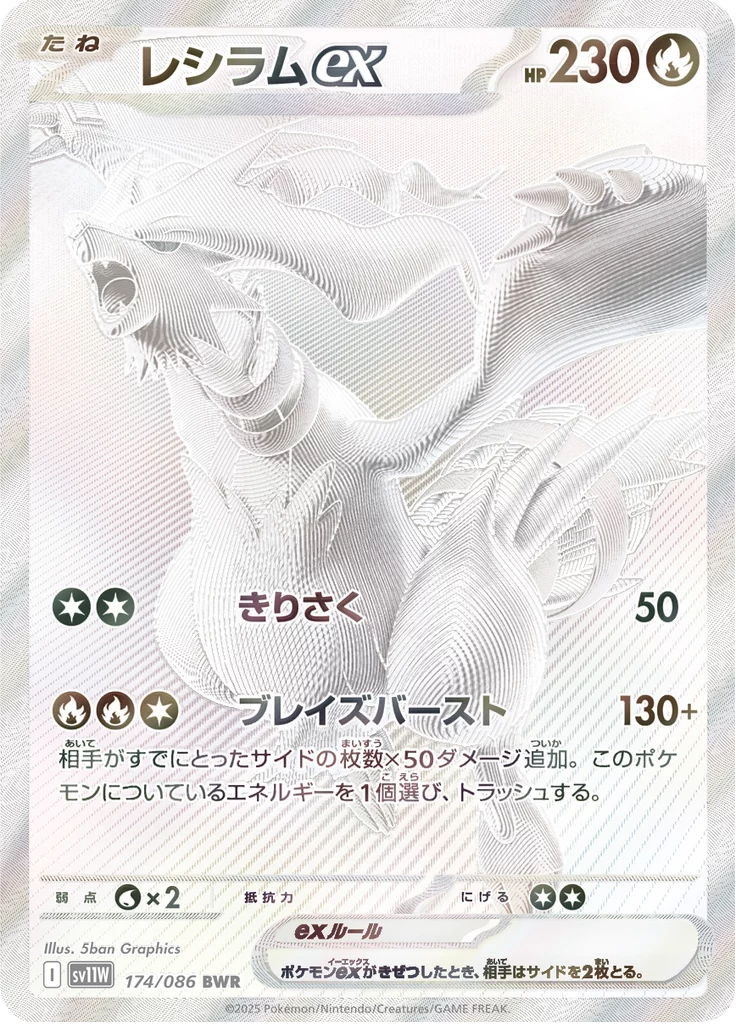
Reshiram ex BWR card number 174/086 SV11W White Flare
Reshiram ex BWR, SV11W 174/086 — White Flare

The instinct to treat «Damaged» as a synonym for «discounted» comes from how the term is used for other retail goods. Here, the two listings for the same set behave as separate SKUs that can move on their own schedules rather than one product with two price points. SV11W White Flare at ¥20,600 (~$130) regular versus ¥21,424 (~$135) Damaged is a clean example: a ¥824 gap on the same release date, same set.

We don’t know the specific cause behind any individual price gap. What the data shows, reliably, is that the two listings for the same set can differ from one another, and the «Damaged» label alone isn’t a discount signal on this site as of today. For a deeper look at what’s in the set itself, our White Flare pull rates and best cards guide covers the card list.

How to Check Before You Buy

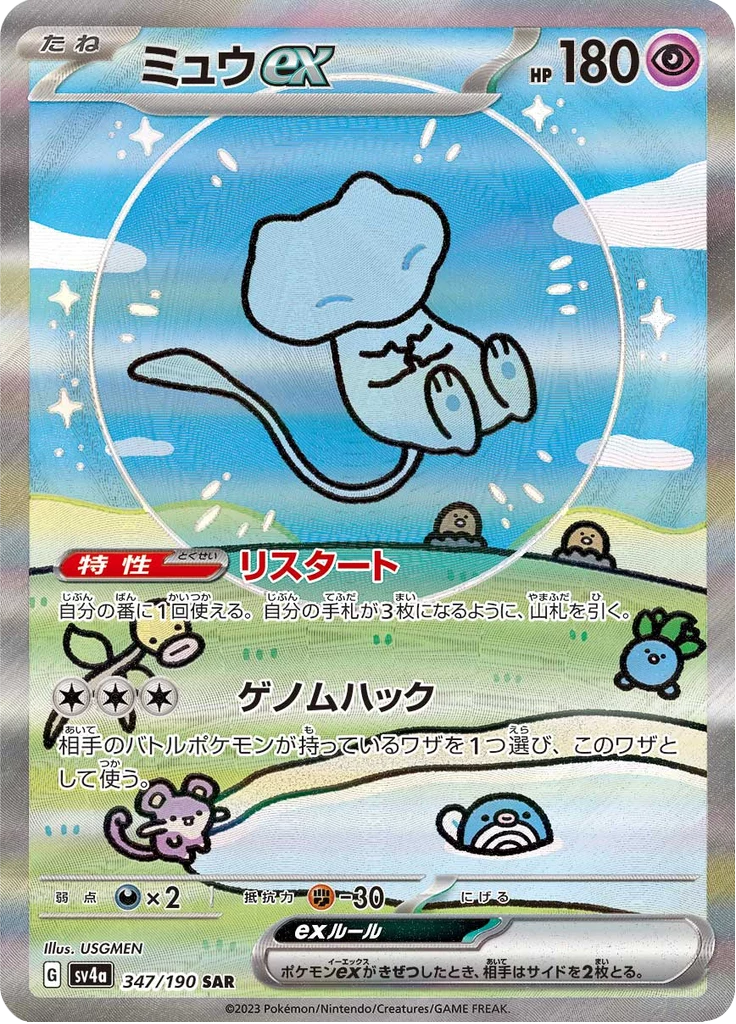
Mew ex SAR card number 347/190 SV4A Shiny Treasure ex
Mew ex SAR, SV4a 347/190 — Shiny Treasure ex
  1. Open both listings side by side. Search the set name plus «Damaged Box» alongside the regular booster box listing before adding either to your cart.
  2. Compare the number on the page, not the label. As shown above, the «Damaged» label carried a ¥0 difference on SV10 Glory of Team Rocket and a ¥1,138 premium on SV4K Ancient Roar on the same day.
  3. Read what the specific listing says about condition. Any «Damaged» detail is set out on each individual product page — it isn’t a fixed, uniform category across sets.
  4. Re-check at the time of purchase. All six pairs above were priced live today; none of these numbers are locked in, and a gap that favours the regular box today can change.

Our SV4A Shiny Treasure ex regular box is currently ¥16,640 (~$105) against ¥16,995 (~$107) for its Damaged Box — a smaller, but still real, ¥355 gap that follows the same pattern as the rest of the list.

The One Exception: One Piece’s OP-16

Not every regular-vs-Damaged pair on the site behaves this way. OP-16 The Time of Battle, a One Piece Card Game set, is a genuine exception — its Damaged Box is priced ¥460 below the regular box (3.8% less), a real discount rather than a premium. We cover that pair, and only that pair, in our OP-16 regular vs Damaged Box guide. It’s a useful contrast: two Damaged-listing pairs on the same site, one costs more, the other costs less. The label tells you nothing on its own — only the live price does.

Where to Buy Regular and Damaged Boxes

We ship sealed Japanese Pokemon product out of Tokyo with tracked delivery. Every set from the table above is listed individually, regular and Damaged, so you can compare the live number before ordering.

Shop This Set
SV10 Glory of Team Rocket Japanese Pokemon Booster Box
Regular and Damaged Box listings priced identically today
Ships from Tokyo · Tracked delivery

View Product →

For the other five sets covered here — SV11B Black Bolt, SV11W White Flare, S12 Paradigm Trigger, SV4A Shiny Treasure ex, and SV4K Ancient Roar — the regular box listing is the one to check first, given today’s numbers. If you’re building a mixed order across sets or want singles from any of these sets, our Quick Order page is the fastest route.

Preguntas frecuentes

Is a Damaged Box always cheaper than the regular booster box?

No. Checked live today across 6 Japanese Pokemon sets, only 1 pair (SV10 Glory of Team Rocket) was priced identically, and the other 5 had the Damaged Box priced higher — by ¥45 up to ¥1,138. Always compare both listings before buying.

Which set has the biggest price gap between regular and Damaged Box?

SV4K Ancient Roar, at ¥1,138 more for the Damaged Box (11.2% higher) than the regular box, as of today.

Is there any set where the Damaged Box is actually cheaper?

Not among the six Japanese Pokemon pairs in this guide. One Piece’s OP-16 The Time of Battle is a documented exception on the same site, with its Damaged Box priced ¥460 (3.8%) below the regular box.

Why would a Damaged Box cost more than the regular box for the same set?

We don’t have confirmed data on the specific cause for any individual pair. The two listings can move independently, so the safest approach is to check the live price of both before buying rather than assume either is cheaper.

What does «Damaged Box» mean on these listings?

It refers to a separate product listing from the regular sealed box for the same set. Specifics of what is damaged are set out on each individual product page rather than a single fixed definition across all sets.

Gardenia y Gardenia's Vigor: guía de cartas Supporter del líder de gimnasio de Sinnoh

One Gym Leader, two Supporter cards, five years apart — and the second one carries a card number that looks like a typo until you know the convention behind it.

Gardenia is the Grass-type Gym Leader of Eterna City in the Sinnoh region, and her name has appeared on two very different Japanese Supporter cards: a straightforward healing effect from 2017’s Ultra Sun, and a VSTAR-era draw-and-attach effect reprinted in VSTAR Universe under the name Gardenia’s Vigor. This guide covers both prints — what each card does, how to tell them apart, and why the second one is numbered 243 out of a set that only lists 172.

Key Takeaways

Two Gardenia Supporter cards exist: Gardenia SR (070/066, Ultra Sun), which restores 80 HP to a Pokemon with a Grass Energy attached, and Gardenia’s Vigor SAR (243/172, VSTAR Universe), a VSTAR Power Supporter that draws 2 cards and attaches Grass Energy from hand. The «243/172» numbering is correct as printed — VSTAR Universe’s Special Art Rares run above the set’s stated card count, which is a normal Japanese TCG convention rather than an error.

2
Printings Covered

¥57,058
Gardenia SR (~$359)

¥13,492
Gardenia’s Vigor SAR (~$85)

Eterna Gym
Sinnoh Region

Prices are our own listed prices as of September 2026, converted at ¥159/USD.

Who Is Gardenia?

Gardenia is the Grass-type Gym Leader of Eterna Gym in Eterna City, part of the Sinnoh region. In-game, she’s billed as the «Master of Vivid Plant Pokemon» and awards the Forest Badge to trainers who beat her. Her signature Pokemon is Roserade, and she’s notably averse to Ghost-type Pokemon — a detail that recurs across her in-game dialogue.

She appears across the core Sinnoh games — Diamond, Pearl, and Platinum — as well as the Brilliant Diamond/Shining Pearl remakes. She resurfaces later at the Pokemon World Tournament in Black 2/White 2, and again in the mobile game Pokemon Masters EX. That long-running presence is part of why she’s shown up on two separate Japanese TCG Supporter cards across different eras of the game.

Quick Reference

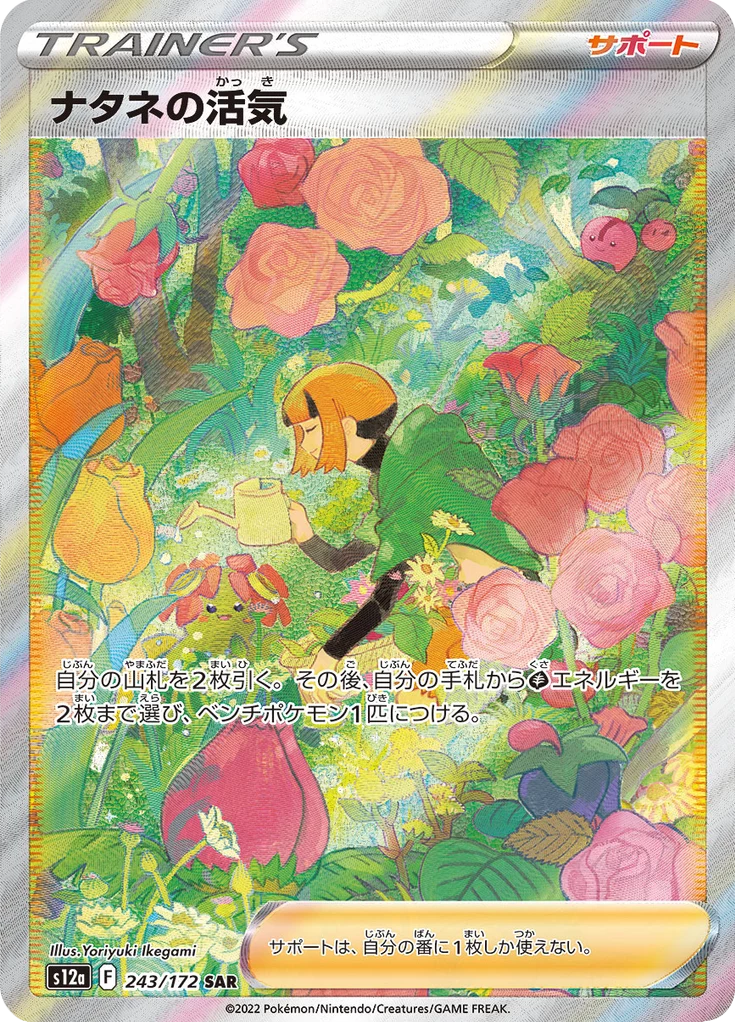
Both cards below use Gardenia’s Japanese name, ナタネ (Natane), on the card itself. If you’re searching Japanese marketplaces or grading databases, that’s the name to search rather than the English localisation.
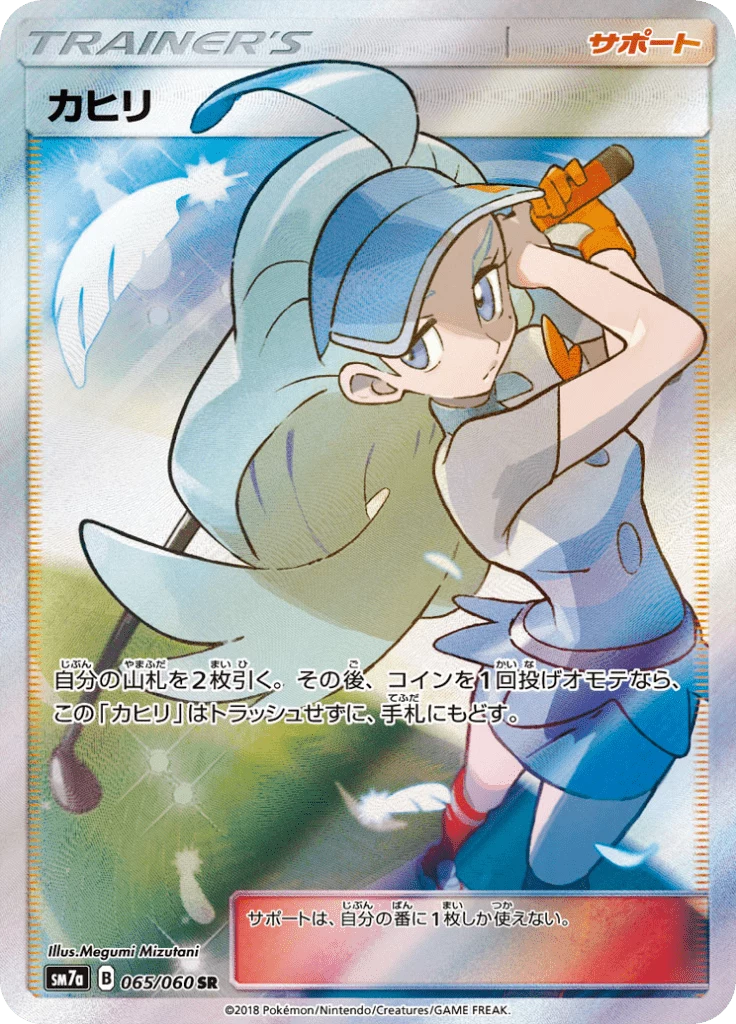
Gardenia SR: The Original Ultra Sun Card

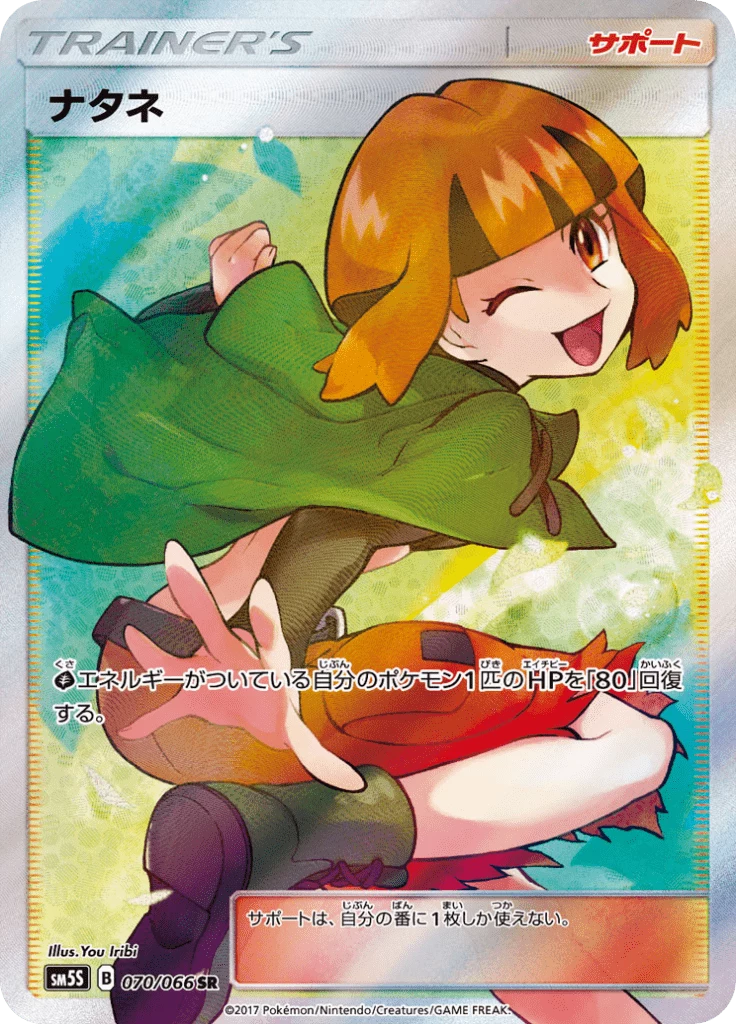
Gardenia SR 070/066 Ultra Sun Japanese Pokemon Supporter card
Gardenia 070/066, Secret Rare — Ultra Sun (SM5S)

Gardenia’s first Supporter card appeared in Ultra Sun (SM5S), released 2017-12-08, as card 070/066, Secret Rare. The illustration is credited to You Iribi.

The effect is straightforward: restore 80 HP to one of your own Pokemon that has a Grass Energy attached. It’s a healing Supporter built around a Grass-type energy requirement, in keeping with Gardenia’s own typing as Eterna Gym’s Grass specialist.

A PSA 10 copy of this print is currently listed at ¥57,058 (~$359).

Gardenia’s Vigor SAR: The VSTAR Universe Reprint

Gardenia's Vigor SAR 243/172 VSTAR Universe Japanese Pokemon Supporter card
Gardenia’s Vigor 243/172, Special Art Rare — VSTAR Universe (S12a)

Five years on, Gardenia returned as Gardenia’s Vigor (Japanese name: ナタネの活気), card 243/172, Special Art Rare, in the VSTAR Universe (S12a) set. This printing’s artwork is credited to Yoriyuki Ikegami.

Mechanically it’s a different card entirely, classified as a VSTAR Power Supporter: draw 2 cards, then attach up to 2 Grass Energy cards from your hand to 1 of your Benched Pokemon. That’s a card-advantage-plus-setup effect, distinct from the pure healing role of the original 2017 Gardenia.

Gardenia’s Vigor wasn’t new to VSTAR Universe — the card was originally illustrated by Yuu Nishida for its first Japanese release, in the Astral Radiance-era Time Gazer set. The VSTAR Universe print we sell is a reprint of that card with new Special Art Rare artwork by Ikegami; we’re not listing a Time Gazer card number here because our listed print is specifically the VSTAR Universe 243/172 print.

A PSA 10 copy of the VSTAR Universe SAR is currently listed at ¥13,492 (~$85).

Why Is It Numbered 243/172?

If you’ve never handled a VSTAR Universe card before, «243/172» looks wrong at first glance — how can a card be numbered higher than the set’s total? It isn’t an error. VSTAR Universe’s Special Art Rare and secret-rare cards are printed with numbers that run above the set’s stated «/172» denominator, since the set’s full physical print run is larger than the number used in its official name. That’s a standard convention in Japanese TCG numbering for sets with a high-rarity secret tier, not a misprint or a listing mistake.

Print Colección Card # Rarity Illustrator Our price
Gardenia Ultra Sun (SM5S) 070/066 SR You Iribi ¥57,058 (~$359)
Gardenia’s Vigor VSTAR Universe (S12a) 243/172 SAR Yoriyuki Ikegami ¥13,492 (~$85)

Both card numbers, once you know the set they came from, tell you exactly which print you’re holding — SM5S 070/066 for the original, S12a 243/172 for the VSTAR-era reprint. There’s no ambiguity between the two once you check the set code printed on the card.

Gardenia Compared to Other Supporter SRs

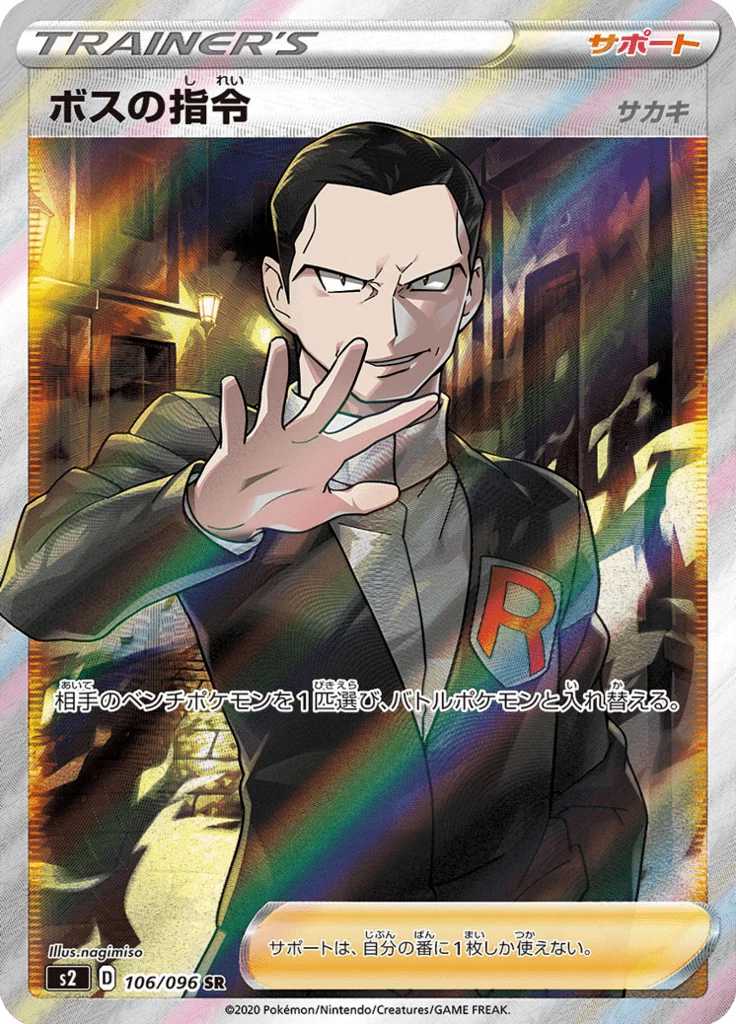
Gardenia’s two cards sit inside a broader category of Japanese Secret Rare and Special Art Rare Supporter cards — full-art or textured-foil treatments of Trainer-class and named characters across different eras of the Sun & Moon and Sword & Shield-era Japanese sets. A few other examples for reference:

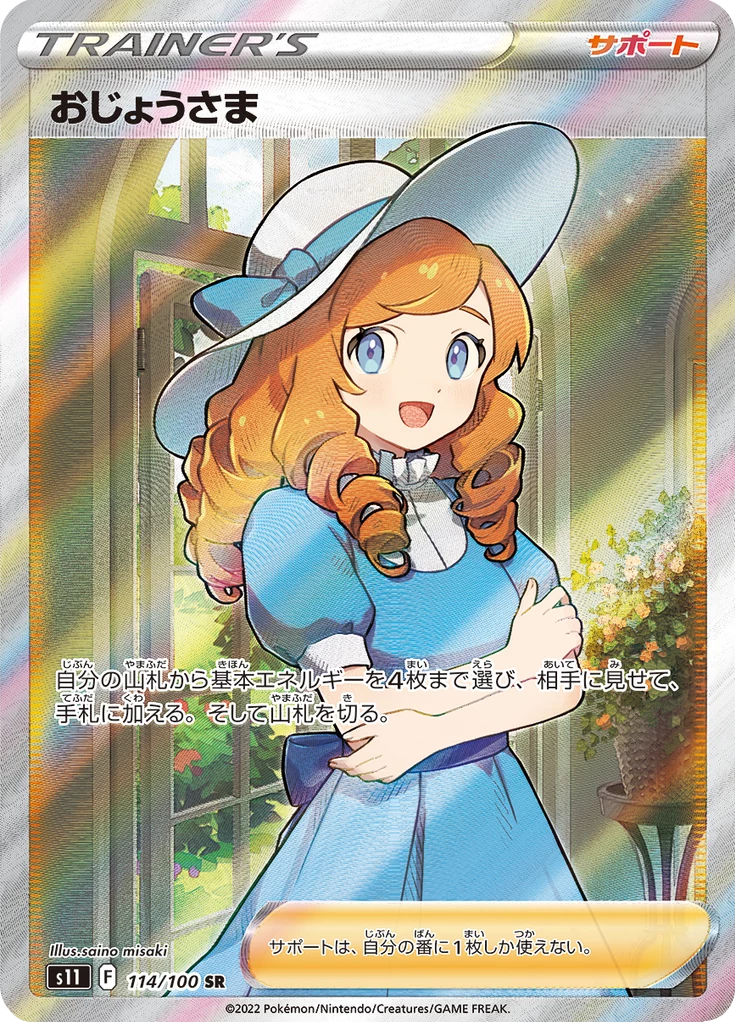
Lady SR Japanese Pokemon Supporter card

Lady SR

Boss's Orders Giovanni SR Japanese Pokemon Supporter card

Boss’s Orders (Giovanni) SR

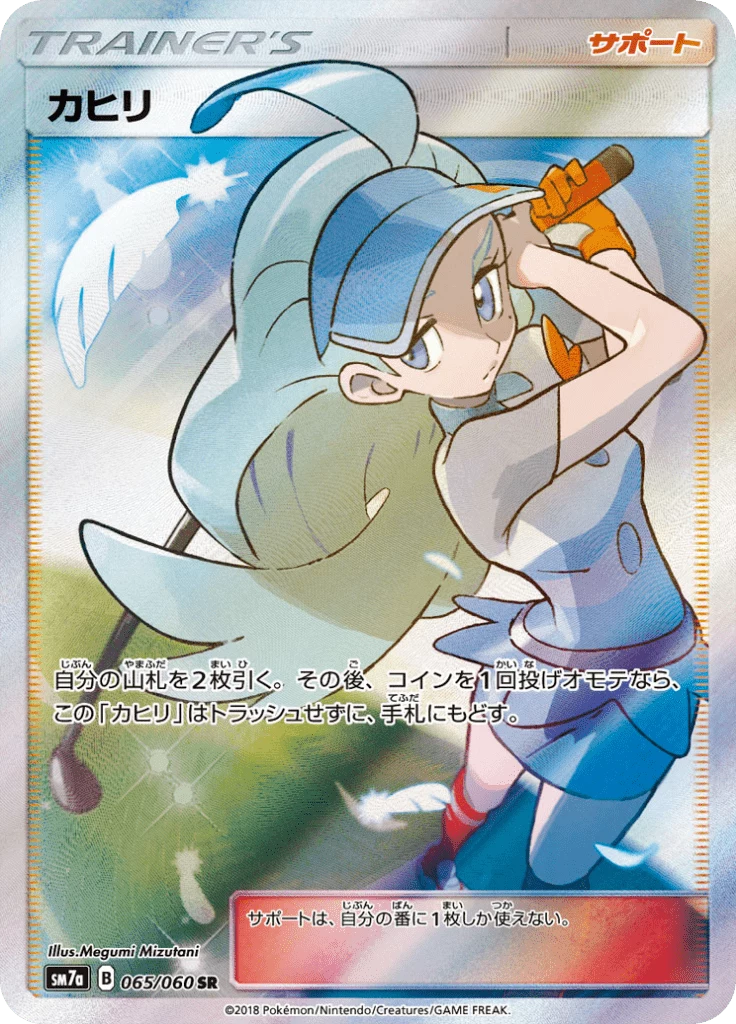
Kahili SR Japanese Pokemon Supporter card

Kahili SR

What separates these cards from one another isn’t just artwork — it’s set, print run, and card effect, exactly as with Gardenia’s two prints. If you’re building out a collection of Gym Leader or character Supporter cards, our female Pokemon trainer card roundup and our wider PSA 10 trainer card guide cover more of this category in depth.

For the Special Art Rare tier specifically — which is what Gardenia’s Vigor belongs to — our Japanese alt-art SAR guide explains how that rarity tier fits alongside Secret Rares and Hyper Rares.

Where to Buy Gardenia Cards from Japan

We ship graded and raw Japanese singles out of Tokyo with tracked delivery. Both Gardenia prints covered here are single PSA 10 units currently listed in our shop — here’s the direct route to each.

Shop This Card
PSA 10 Gardenia SR (070/066, Ultra Sun)
Currently listed at ¥57,058 (~$359)
Ships from Tokyo · Tracked delivery

View Product →

The VSTAR Universe reprint, PSA 10 Gardenia’s Vigor SAR (243/172), is listed separately at ¥13,492 (~$85). Treat both prices as listing snapshots rather than an ongoing supply.

For general grading background on either card, see our Japanese Pokemon card grading guide. For Sinnoh-region product more broadly, our Sinnoh starters card guide is a related starting point. If you’re after other Japanese singles or sealed product to combine into one order, our Quick Order page is the fastest way to build a mixed order.

Preguntas frecuentes

Who is Gardenia in the Pokemon games?

Gardenia is the Grass-type Gym Leader of Eterna Gym in Eterna City, Sinnoh region. She awards the Forest Badge, her signature Pokemon is Roserade, and she dislikes Ghost-type Pokemon. She appears in Diamond, Pearl, Platinum, Brilliant Diamond/Shining Pearl, the Pokemon World Tournament in Black 2/White 2, and Pokemon Masters EX.

What does the Gardenia SR (070/066) card do?

It restores 80 HP to one of your own Pokemon that has a Grass Energy attached. It’s from Ultra Sun (SM5S), released 2017-12-08, illustrated by You Iribi.

What does Gardenia’s Vigor SAR (243/172) do?

It’s a VSTAR Power Supporter: draw 2 cards, then attach up to 2 Grass Energy cards from your hand to 1 of your Benched Pokemon. It’s from VSTAR Universe (S12a), illustrated by Yoriyuki Ikegami.

Why is Gardenia’s Vigor numbered 243/172 when the set only has 172 cards?

That numbering is correct as printed. VSTAR Universe’s Special Art Rare and secret-rare cards are numbered above the set’s stated «/172» denominator, which is a normal Japanese TCG convention rather than a printing error.

Is Gardenia’s Vigor a reprint of an earlier card?

Yes. It was originally illustrated by Yuu Nishida for its first Japanese release in the Astral Radiance-era Time Gazer set. The VSTAR Universe 243/172 print is a reprint with new Special Art Rare artwork by Yoriyuki Ikegami.

Lady SR: guía de cartas Supporter de Forbidden Light y Lost Abyss

Two Secret Rares. Same Supporter, same effect, same «Lady» in fancy dress on the artwork — and a five-times gap in what collectors pay for them.

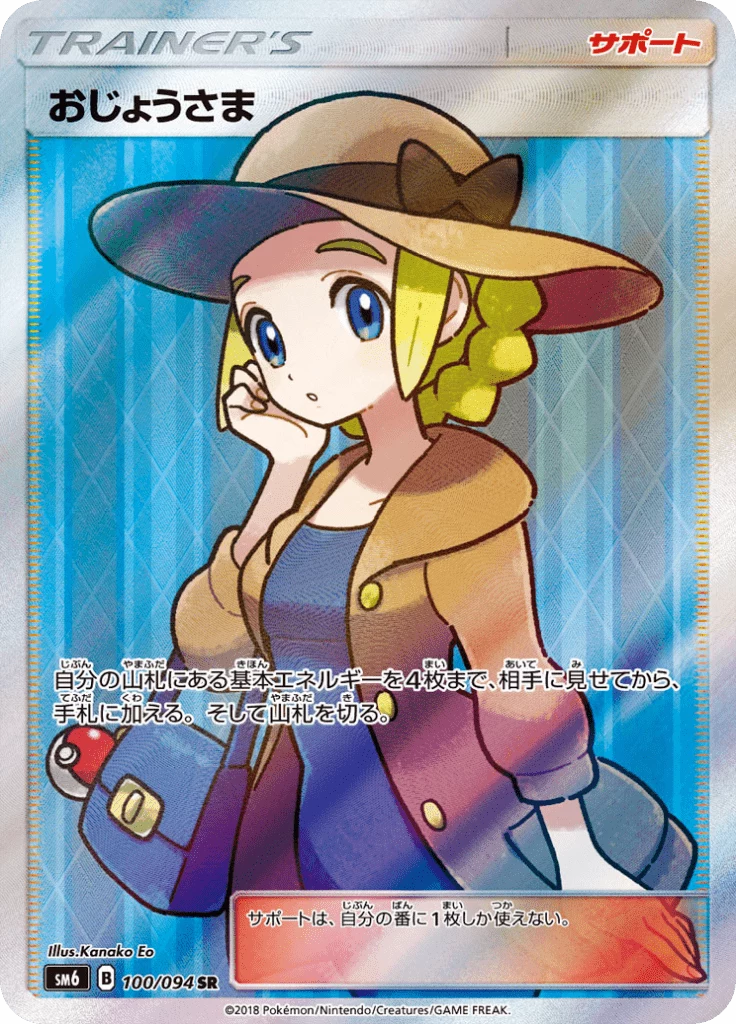
The Lady Supporter has been printed as a Secret Rare twice in Japan: once in Forbidden Light (SM6) and once in Lost Abyss (S11). Neither print changes what the card does on the field, but they were illustrated years apart by different artists, and the secondary market treats them as two entirely separate collectibles. If you’re trying to work out which «Lady SR» you’re looking at — or which one is worth chasing — the card number in the corner tells you everything. This guide covers both prints in one place, with our own PSA10 stock as the pricing anchor for each. The Forbidden Light SR is currently listed at ¥68,310 (~$430), while the Lost Abyss SR sits at ¥13,596 (~$85).

Key Takeaway

«Lady» has two Japanese Secret Rare prints: Forbidden Light (SM6) 100/094, illustrated by Kanako Eo, and Lost Abyss (S11) 114/100, illustrated by saino misaki. Both do the same thing on the field — search your deck for up to 4 Basic Energy cards, add them to hand, then shuffle the deck — but the Forbidden Light print currently trades at roughly five times the Lost Abyss print’s value.

2
JP Secret Rare Prints

¥68,310
Forbidden Light SR (~$430)

¥13,596
Lost Abyss SR (~$85)

SR
Rarity, Both Prints

Prices shown are our own PSA10 stock, converted at ¥159/USD (September 2026).

Who Is Lady? The Trainer Class Behind the Card

«Lady» is not a named individual — it’s a female Trainer class that has appeared in the core Pokemon games since Generation III, starting with Ruby, Sapphire and Emerald and continuing through X/Y, Omega Ruby/Alpha Sapphire, Brilliant Diamond/Shining Pearl, and Legends: Z-A. In-game, Ladies are recognisable by elaborate, fancy clothing, and their gameplay gimmick has nothing to do with battle strength: they tend to carry high-value hold items such as Nuggets and Stardust, and lean on Full Restores to stay in a fight longer than their Pokemon roster alone would suggest. The class has a male counterpart, Rich Boy, built around the same «wealthy NPC» concept.

On the Trading Card Game side, that flavour translates into a Supporter card themed around the same idea of abundance — not battle-field tricks, but resource generation. It’s a recurring pattern in Japanese TCG design: take a well-known NPC class and build a Supporter whose effect echoes what that class represents in the games.
What the Lady Supporter Card Does

Both Japanese Secret Rare prints of Lady share the identical effect: search your deck for up to 4 Basic Energy cards, reveal them, add them to your hand, then shuffle your deck. It’s a Supporter, so it costs your one-per-turn Supporter play, and it’s a pure resource card — no damage, no disruption, no coin flips. The value is in the consistency it gives an Energy-hungry deck, refilling your hand in one action rather than drawing into Energy cards over several turns.

Because the effect is identical across both prints, nothing about how the card plays changes based on which version you own. The difference between the two is entirely about artwork, illustrator, and print rarity — which is exactly what drives the price gap covered below.

Print 1: Lady SR, Forbidden Light (SM6 100/094)

The first Secret Rare print of Lady comes from Forbidden Light (SM6), card number 100/094. The Japanese name on the card is おじょうさま, and the Secret Rare artwork was illustrated by Kanako Eo.

This is the print currently commanding the higher price of the two. Our own graded copy, PSA10 Lady SR (100/094, Forbidden Light), is currently listed at ¥68,310 (~$430). It’s a single graded unit in our stock, so treat that as a snapshot of current listed value rather than an ongoing baseline price. For the full Forbidden Light card list, see our SM6 set-list guide, and for pull-rate context on the set as a whole, our Forbidden Light pull-rate breakdown covers that separately — we don’t repeat pull-rate figures here.

Print 2: Lady SR, Lost Abyss (S11 114/100)

Lady SR card, number 114/100, from the Lost Abyss Japanese Pokemon set
Lady SR (114/100) — Lost Abyss (S11), regulation mark F

The second Secret Rare print arrives in Lost Abyss (S11), card number 114/100, carrying regulation mark F. This version was illustrated by saino misaki — a different artist from the Forbidden Light print, giving the two SRs distinct artwork despite the shared subject and identical card text.

This is the more affordable of the two prints. Our graded copy, PSA10 Lady SR (114/100, Lost Abyss), is currently listed at ¥13,596 (~$85). For the complete Lost Abyss card list, see our S11 set-list guide, and our dedicated Lost Abyss pull-rate article has the odds detail for that set.

Comparing the Two Prints

Side by side, the gap between the two Lady SRs is stark for a card with an identical effect on both:

Print Colección Card # Rarity Illustrator Our PSA10 price
Lady SR Forbidden Light (SM6) 100/094 Secret Rare Kanako Eo ¥68,310 (~$430)
Lady SR Lost Abyss (S11) 114/100 Secret Rare saino misaki ¥13,596 (~$85)

Both cards carry the identical Secret Rare rarity tier and the same in-game effect, so the value split comes down to factors outside the card text itself — artwork, illustrator, and how each print sits within its own set’s pull structure. We haven’t verified pull-rate figures for either set in this guide, so rather than speculate on scarcity, we’ve linked each set’s dedicated pull-rate breakdown above for readers who want that detail.

One print is not simply «the better one» — they’re separate collectibles from separate sets with separate artwork, and each should be judged on its own current listed price rather than compared as if they were the same product with two labels.

Lady Among Japan’s «Flavor» Supporter SRs

Lady sits in a recognisable lane of Japanese Secret Rare Supporters: cards built around a Trainer class or recurring NPC rather than a named main-series character, each illustrated as a Secret Rare across a Sun & Moon-era set. A few others from the same design lineage:

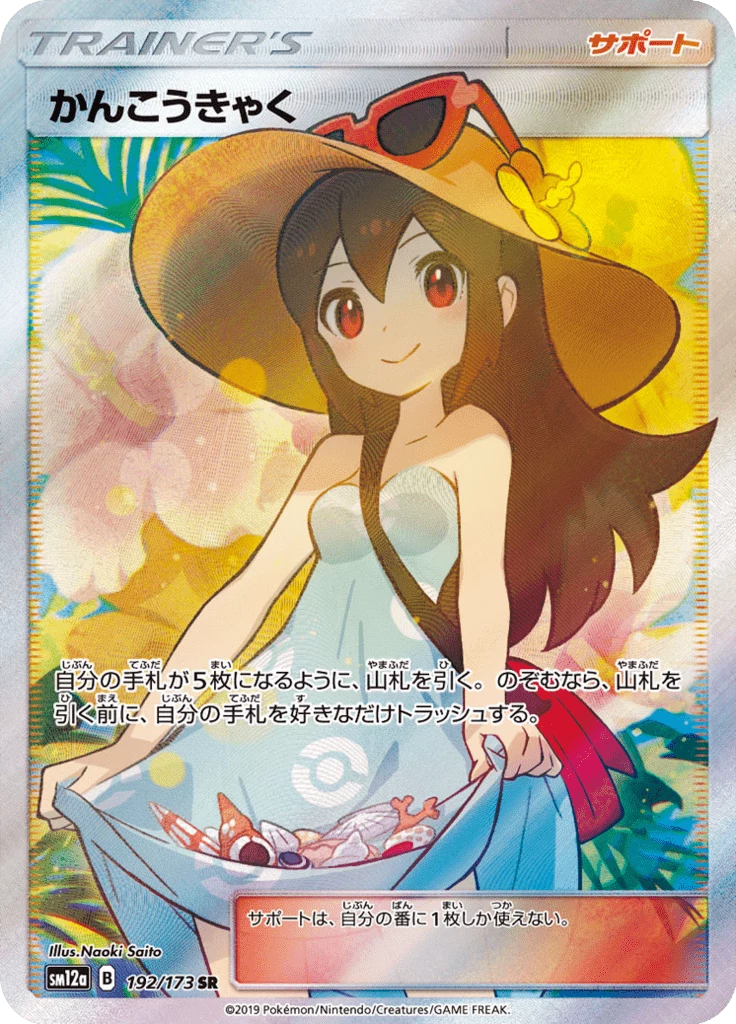
Sightseer SR card, number 192/173, from the Tag All Stars Japanese Pokemon set

Sightseer SR (192/173)
Tag All Stars (SM12a)

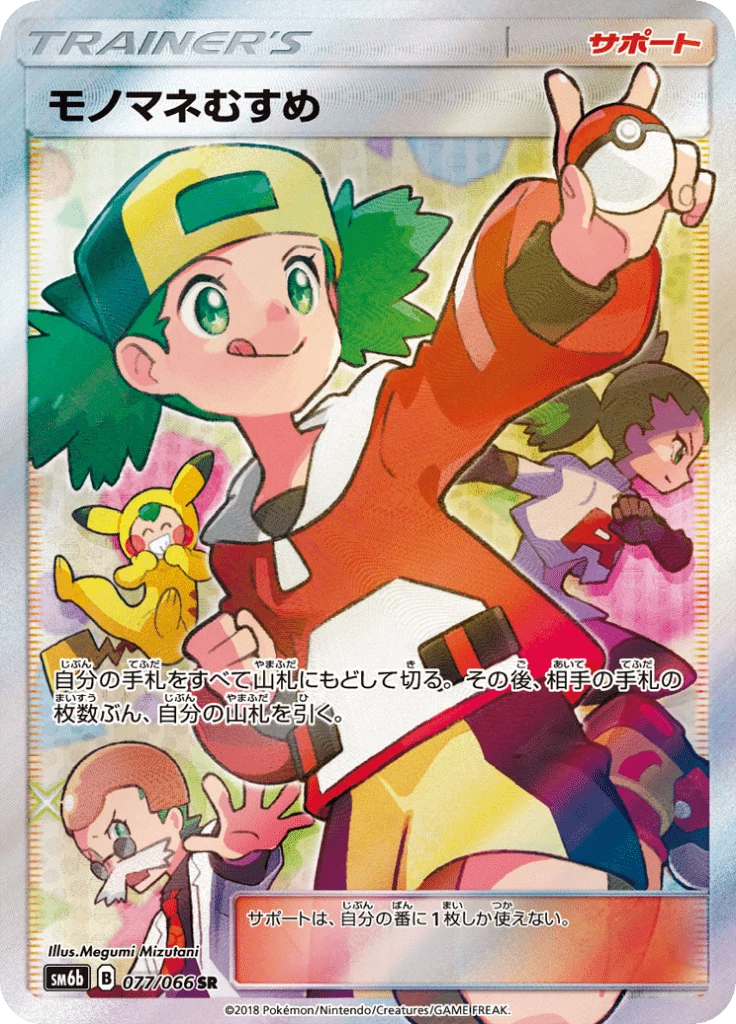
Copycat SR card, number 077/066, from the Champion's Road Japanese Pokemon set

Copycat SR (077/066)
Champion’s Road (SM6b)

Kahili SR card, number 065/060, from the Thunderclap Spark Japanese Pokemon set

Kahili SR (065/060)
Thunderclap Spark (SM7a)

Sightseer (a Trainer class, like Lady) and Copycat (an unnamed recurring NPC) both follow the same «class or archetype, not a headline character» pattern; Kahili is the odd one out here since she’s a confirmed named character (an Alola Elite Four member), included as a further point of comparison for what a Secret Rare Supporter looks like across this design run. If you collect this category specifically, our broader female Trainer card roundup covers the wider field, and our Trainer card guide is the place to start for Supporters generally.

Where to Buy Lady Cards from Japan

We ship graded Japanese singles out of Tokyo with tracked delivery worldwide. Both Lady prints covered here are single graded units in our current stock, so availability reflects exactly one copy of each.

Featured Card
PSA10 Lady SR (100/094, Forbidden Light)
Currently listed at ¥68,310 (~$430)
Ships from Tokyo · Tracked delivery

View Product →

For the Lost Abyss print, see PSA10 Lady SR (114/100, Lost Abyss) directly. If you’re after grading context before buying either graded copy, our Japanese card grading guide explains what a PSA10 label means for value. For anything else from either set, or to build a mixed order, our Quick Order page is the fastest route.

Preguntas frecuentes

How many Japanese Secret Rare prints of Lady are there?

Two: Forbidden Light (SM6) 100/094, illustrated by Kanako Eo, and Lost Abyss (S11) 114/100, illustrated by saino misaki. Both share the same Supporter effect.

What does the Lady Supporter card do?

Search your deck for up to 4 Basic Energy cards, reveal them, add them to your hand, then shuffle your deck. This effect is identical on both printings.

Which Lady SR is worth more, Forbidden Light or Lost Abyss?

Based on our own current stock, the Forbidden Light 100/094 print is listed at ¥68,310 (about $430), roughly five times the Lost Abyss 114/100 print at ¥13,596 (about $85).

Is «Lady» a specific character in the Pokemon games?

No. Lady is a Trainer class that has appeared since Generation III (Ruby/Sapphire/Emerald onward), depicted in elaborate clothing and known for carrying high-value items like Nuggets and Stardust. It isn’t a single named individual.

Do both Lady prints affect gameplay differently?

No. The card text and effect are identical across both prints. The differences are limited to set, card number, illustrator, and artwork.

Mew VMAX 280/184 UR: guía de la rara secreta de VMAX Climax

Mew VMAX has two different Japanese identities, and the card number is the only reliable way to tell them apart. Card #40 in Fusion Arts (S8) is where Mew VMAX first appeared in Japanese. Card 280/184 in VMAX Climax (S8b) is a separate secret rare reprint of the same character, released later in the same era — and it’s the version listed here as a PSA 10 graded single.

This guide is a dedicated identification and buying reference for the 280/184 UR specifically: what set it’s actually from, how its numbering works, why it’s easy to confuse with the Fusion Arts original, and where to see our own graded copy.

Key Takeaways

Mew VMAX 280/184 UR is the VMAX Climax (S8b) secret/Ultra Rare reprint of Mew VMAX — not the Fusion Arts (S8) #40 original Japanese print. VMAX Climax released December 3, 2021, with a printed set total of 184 cards; secret cards like this UR carry numbers beyond that total, which is how you can tell at a glance that 280/184 is a chase card rather than a base-set print. A graded example is listed here, PSA 10 Mew VMAX 280/184 UR, currently listed at ¥32,230 (~$203 at ¥159/USD).

UR
Rarity Tier

184
VMAX Climax Set Total

¥32,230
Our PSA 10 Listing

Dec 2021
VMAX Climax Release

Yen figures are converted at ¥159/USD (September 2026). Our own PSA 10 listing is the only price referenced in this guide — we have not collected third-party secondary-market prices for either print.

What Is the Mew VMAX 280/184 UR?

Mew VMAX is a Psychic-type Pokémon VMAX card. It first appeared in English in the Fusion Strike expansion (114/264). In Japanese, the base/original printing is card #40 in Fusion Arts (S8), illustrated by 5ban Graphics.

Mew VMAX, Fusion Arts (S8) #40, regular rare, Japanese
Mew VMAX, Fusion Arts (S8) #40 — regular Japanese print, pictured for illustration; our graded card is the separate VMAX Climax 280/184 UR secret rare (same character/artwork family).

The card listed and graded here — Mew VMAX 280/184 UR — is not that Fusion Arts print. It is a secret/Ultra Rare reprint of the same character from a later Japanese subset, VMAX Climax (S8b). The two cards share the character and the VMAX name, but they are different print runs from different sets, and collectors regularly mix them up because of that shared name.

Set Details: VMAX Climax (S8b)

VMAX Climax (Japanese: ハイクラスパック VMAXクライマックス) is the 8th Japanese subset of the Sword & Shield Era, released December 3, 2021. Its printed/main set total runs to 184 cards — the exact denominator you see on our card’s number, 280/184.

Mew V, Fusion Arts (S8) #39, regular rare, Japanese
Mew V, Fusion Arts (S8) #39 — pre-evolution card from the same Japanese set, pictured for illustration only.

That numerator-above-184 pattern is standard for this Sword & Shield-era generation: secret and chase-rarity cards are numbered starting after the last standard card in the set, rather than restarting at 1. A card numbered 280 in a 184-card set isn’t a printing error — it’s the expected convention for where secret rares like this UR sit.

How to Identify the 280/184 Print

Three checks confirm you have the VMAX Climax secret rare rather than the Fusion Arts original:

  • Card number. Look for «280/184» printed on the card, not a bare «40,» which identifies the Fusion Arts original.
  • Set marking. The card should carry VMAX Climax (S8b) set identification, not Fusion Arts (S8).
  • Rarity tier. VMAX Climax classifies this print as UR (Ultra Rare) — a secret-rarity tier above the set’s standard rarities.
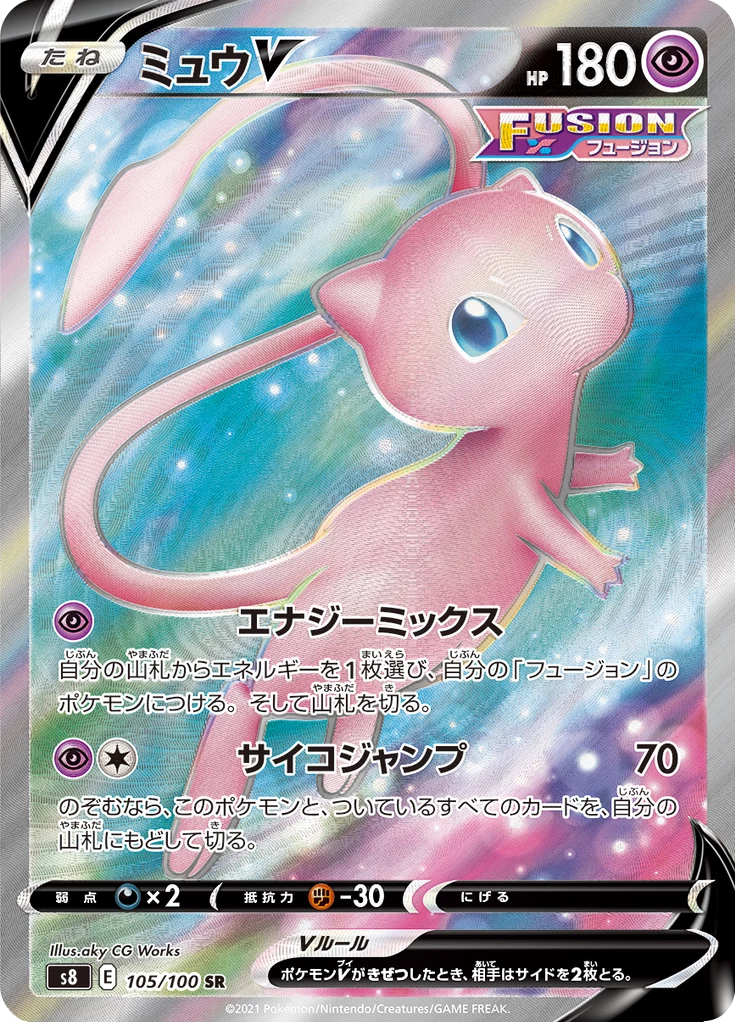
Mew V, Fusion Arts (S8) #105, regular rare, Japanese

Mew V, Fusion Arts (S8) #105

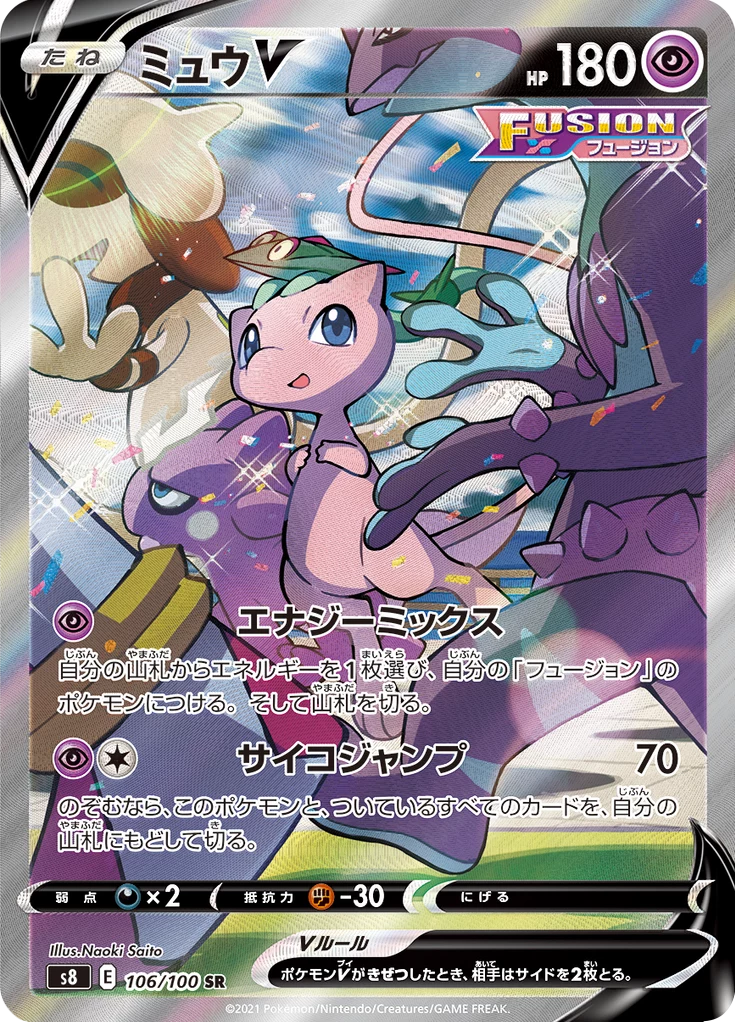
Mew V, Fusion Arts (S8) #106, regular rare, Japanese

Mew V, Fusion Arts (S8) #106

Why We Can’t Show the Exact Print Here

There is currently no indexed reference image for the VMAX Climax secret-rare card numbers in this range, which is why the images above show related Fusion Arts prints of the same set family for illustration instead. The card number and set name printed on the physical card remain the fastest way to confirm what you’re holding.

Our PSA 10 Mew VMAX 280/184 UR

This card is listed as a PSA 10 graded single, sourced and shipped from Tokyo. It’s currently listed at ¥32,230 (~$203), and grading means condition is already independently verified — useful for a secret rare where the textured foil surface can pick up print lines or edge wear easily.

Shop This Card
PSA 10 Mew VMAX 280/184 UR
VMAX Climax (S8b) secret rare, PSA 10 graded
Ships from Tokyo · Tracked delivery

View Product →

For the broader Mew card landscape — including other VMAX alt-art prints, ex SAR versions, and GX-era cards — see our Best Mew Cards Ranked guide, which surveys Mew prints across eras rather than focusing on this one specific card. If you collect Mew and Mewtwo more broadly, our PSA 10 Mew and Mewtwo Japanese cards buying guide and Bubble Mew (Mew ex SAR 205/165) buyer’s guide cover related graded singles.

Where to Buy Mew VMAX 280/184 UR

Our PSA 10 Mew VMAX 280/184 UR is the graded single listed for this print. If you’re building a wider order of Japanese Pokémon singles or promos, our Quick Order page is the fastest way to combine this card with other requests, and restock requests for related prints also go through Quick Order. For more graded Japanese promo and secret-rare context, see our PSA 10 Japanese Pokemon promo cards guide.

Preguntas frecuentes

What is the Mew VMAX 280/184 UR card?

It’s a secret/Ultra Rare reprint of Mew VMAX from the Japanese VMAX Climax (S8b) subset, released December 3, 2021. It is a different print from the original Fusion Arts (S8) #40 Japanese release of the same card.

Is the Mew VMAX 280/184 UR the same as the Fusion Strike Mew VMAX?

No. The English Fusion Strike print (114/264) and the Japanese Fusion Arts #40 print are the original release of Mew VMAX. The 280/184 UR is a separate secret rare reprint from the later VMAX Climax set.

Why is the card numbered 280 in a 184-card set?

VMAX Climax has a printed/main set total of 184 cards. Secret and chase-rarity cards, including this UR, are numbered starting after that total rather than restarting — a standard convention for this Sword & Shield-era generation, not a printing error.

How can I tell the VMAX Climax secret rare apart from the Fusion Arts original?

Check the card number: «280/184» identifies the VMAX Climax UR, while a bare «40» identifies the Fusion Arts original. The set marking on the card (VMAX Climax vs. Fusion Arts) confirms it.

Where can I buy a PSA 10 Mew VMAX 280/184 UR?

A PSA 10 graded example is currently listed at ¥32,230 (about $203), shipped from Tokyo. Related singles and restock requests can be combined through our Quick Order page.

Pikachu CLL 008/032: la guía PSA 10 de Pokemon Card Game Classic

Pikachu 008/032 isn’t a chase pull from a booster box. It’s a staple card packed into a structure deck — and it’s still one of the more talked-about modern Pikachu prints because of where that deck came from.

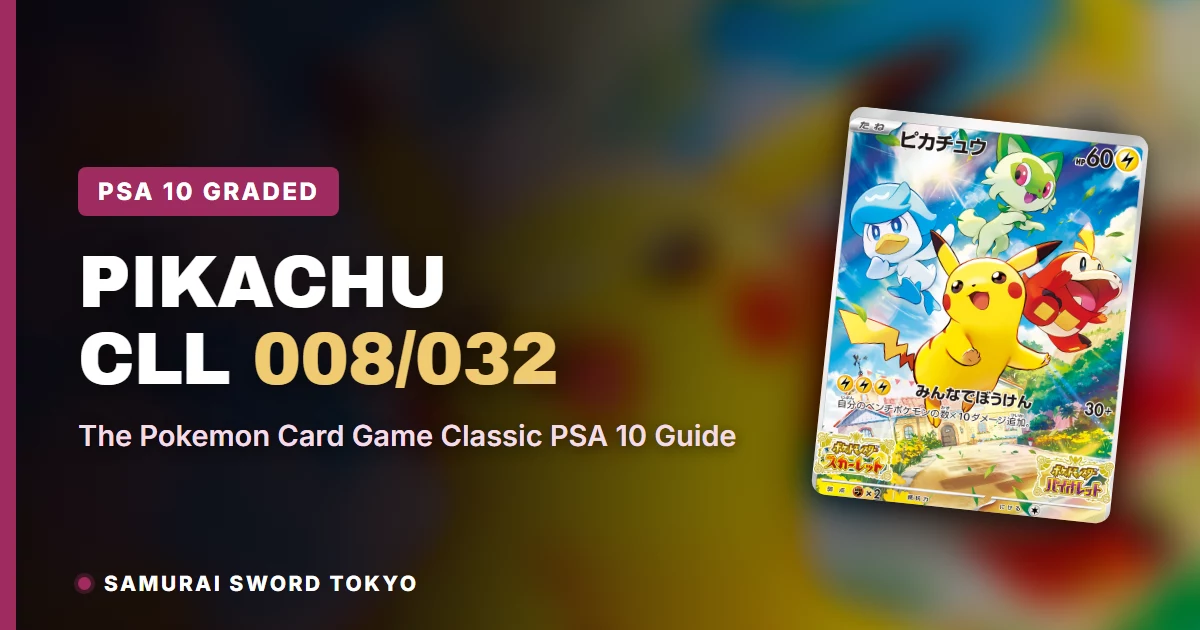
The card ships inside the Charizard & Ho-Oh ex Deck, one of the pre-built decks in Pokémon Card Game Classic, Japan’s nostalgia-themed relaunch of the game’s original 1996 look. This guide covers exactly what’s confirmed about the card, what the «CLL» label on our own listing does and doesn’t tell you, and where a PSA 10 copy currently stands.

Key Takeaway

The PSA 10 Pikachu CLL 008/032 comes from the Charizard & Ho-Oh ex Deck inside Pokémon Card Game Classic, released in Japan in late October 2023. The exact rarity code behind the internal «CLL» label is unverified against third-party card databases — treat it as a listing shorthand, not a confirmed official designation. Currently listed at ¥27,456 (~$173).
008/032
Card Number

32
Cards in the JP Deck

Oct 2023
Japan Release

¥27,456
PSA10 Listed Price

Price is our own current listing as of September 2026, converted at ¥159/USD. No competitor or auction price data is used in this guide.

Identifying Pikachu 008/032: The Charizard & Ho-Oh ex Deck Print

The card is simply named Pikachu, carrying card number 008/032. That numbering places it inside the Charizard & Ho-Oh ex Deck, one of the ready-built structure decks released as part of Pokémon Card Game Classic. Japanese and Traditional Chinese printings of these decks run 32 cards each, across three decks in the release — which is why the print carries a «/032» set size rather than the three-digit totals you’d see on a full booster expansion.
Because this is a structure-deck card rather than a booster pull, it doesn’t carry the kind of secret-rare or full-art treatment that headlines a set. It’s a functional Basic Pokémon included to make the deck playable, which is a different collecting angle than a chase card — more on that below.

Check This First

Confirm the «008/032» number printed at the bottom edge of the card before assuming you’re holding this exact print. The deck-and-number combination is what separates it from every other modern Pikachu card, including the comparison prints pictured in this guide.

Pokémon Card Game Classic: The Set Behind This Print

Pokémon Card Game Classic is a nostalgia-driven release built around structure decks that reference the original 1996 Japanese card frame design, rather than the modern Scarlet & Violet-era layout. The Japanese release landed in late October 2023, with an English/international release following on 17 November 2023.

Our full breakdown of the release — the other decks, the full card list, and how the retro-styled cards compare to modern prints — is covered in our Pokémon Card Game Classic guide. This article stays focused on the Pikachu 008/032 print and its PSA 10 population specifically.

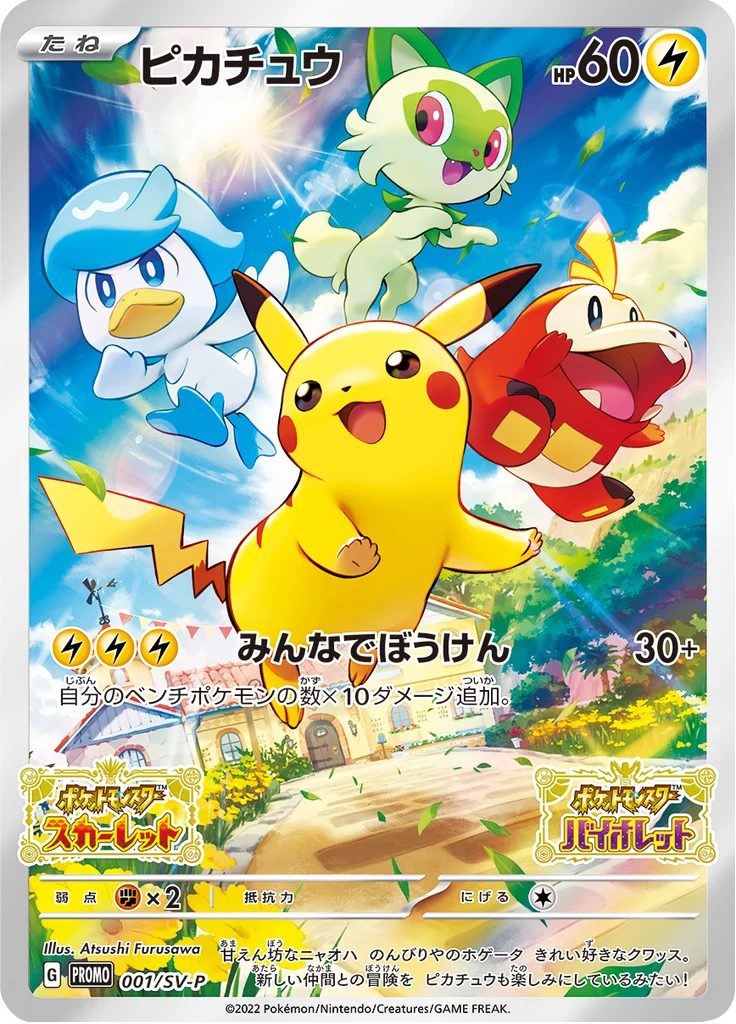
Pikachu, SV-P Promotional Cards number 1, Japanese print

Pikachu 1/SV-P (comparison print, not 008/032)

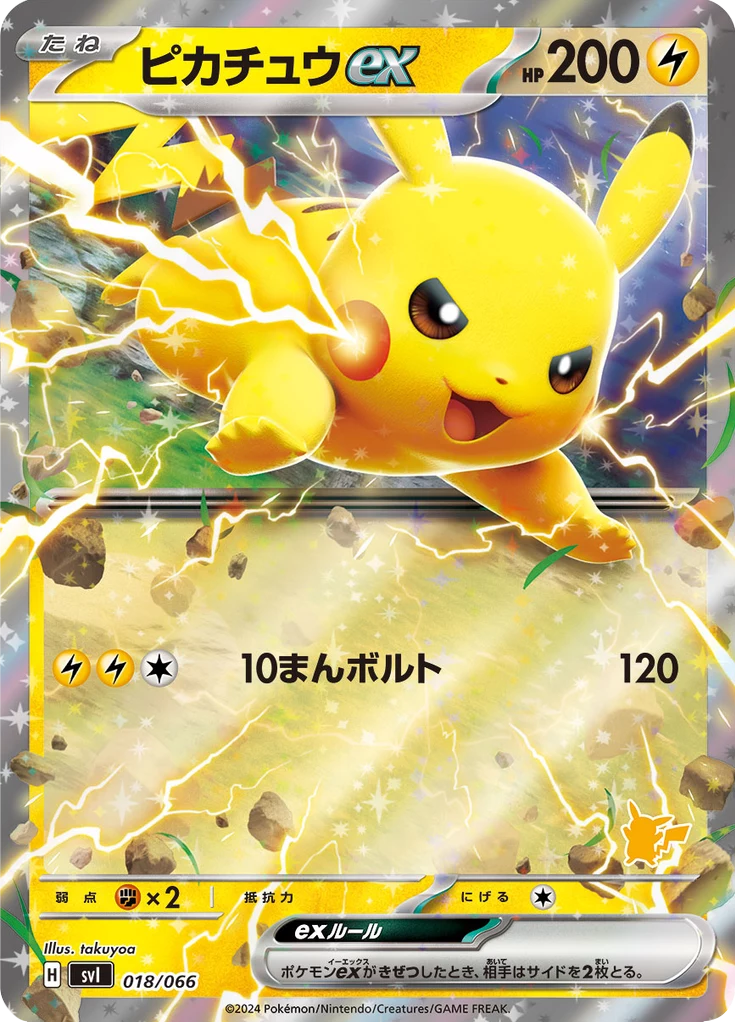
Pikachu ex 018, Scarlet and Violet base set SVI, Japanese print

Pikachu ex 018, Scarlet & Violet (SVI) (comparison print, not 008/032)

Neither of the prints above is the Classic-deck card — the exact 008/032 print image isn’t catalogued on the databases we verify against, which is itself a useful data point on how tightly the Classic decks are tracked compared with mainline sets. The two Pikachu cards shown are modern Scarlet & Violet-era prints, included here to show how differently the same Pokémon is illustrated across releases.

The «CLL» Label: What’s Verified and What Isn’t

Our own listing tags this card «CLL.» That’s an internal, product-title shorthand — it is not a confirmed official rarity code. Two independent checks back that up: Bulbapedia’s deck-list table for Pokémon Card Game Classic doesn’t display a rarity value for 008/032, and Limitless TCG’s Japanese database doesn’t catalogue the card at all — searches for «classic» and for «pikachu» combined with «classic» both returned zero results as of September 2026.

In practice, that means: if you see a rarity code quoted for this card anywhere, including «CLL» itself, treat it as an internal or marketplace label rather than something Pokémon’s official card databases confirm. For a primer on how Japanese Pokémon rarity codes work generally, see our Japanese Pokémon card grading guide.

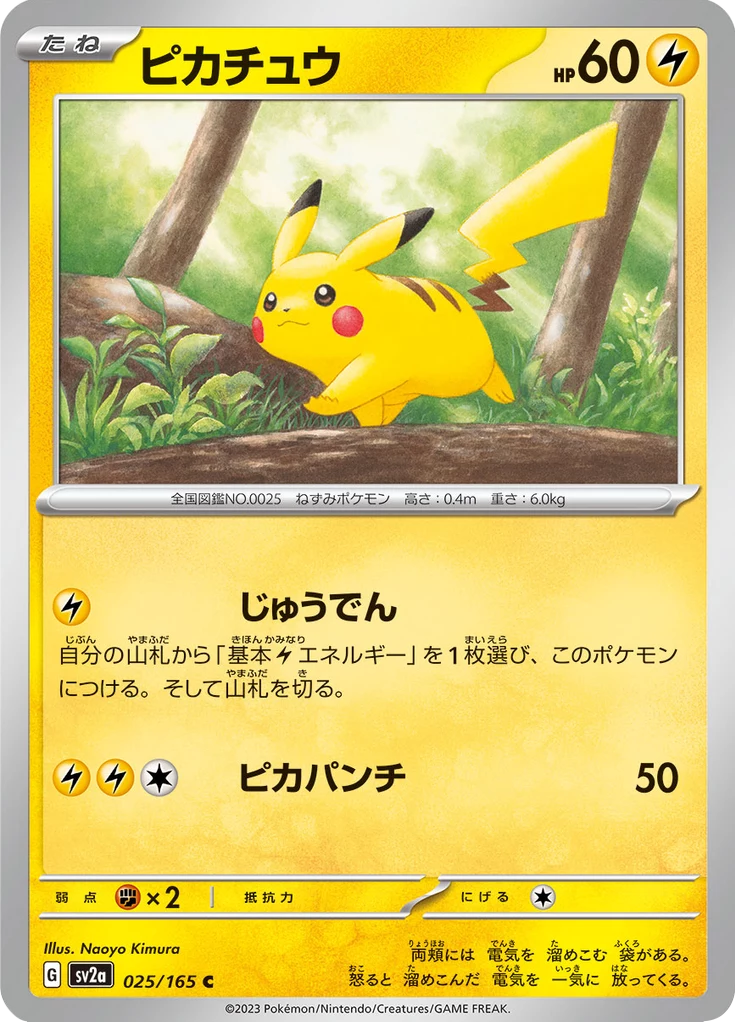
Pikachu Common 025, Pokemon Card 151 SV2a, Japanese print
Pikachu 025/165, Pokémon Card 151 (SV2a) — comparison print, not the Classic-deck 008/032

Why This Pikachu Print Draws Attention

Structure decks are sold as complete boxed products rather than opened one pack at a time, so a single card’s real-world availability tracks however many decks were sold — a figure that isn’t published for this release. That’s a different supply pattern from a booster-pack pull, and it’s part of why collectors treat structure-deck staples differently from set chase cards.

The bigger draw here is context: this Pikachu shipped inside a deck built around Charizard and Ho-Oh, using card frame artwork that deliberately echoes the game’s 1996 debut. For collectors assembling a run of notable modern Pikachu prints, that makes 008/032 a specific, dateable entry point tied to a one-off nostalgia release rather than a recurring expansion. Our roundup of notable Japanese Pikachu cards places it alongside other modern prints, including the SV-P promo cards pictured in this guide.
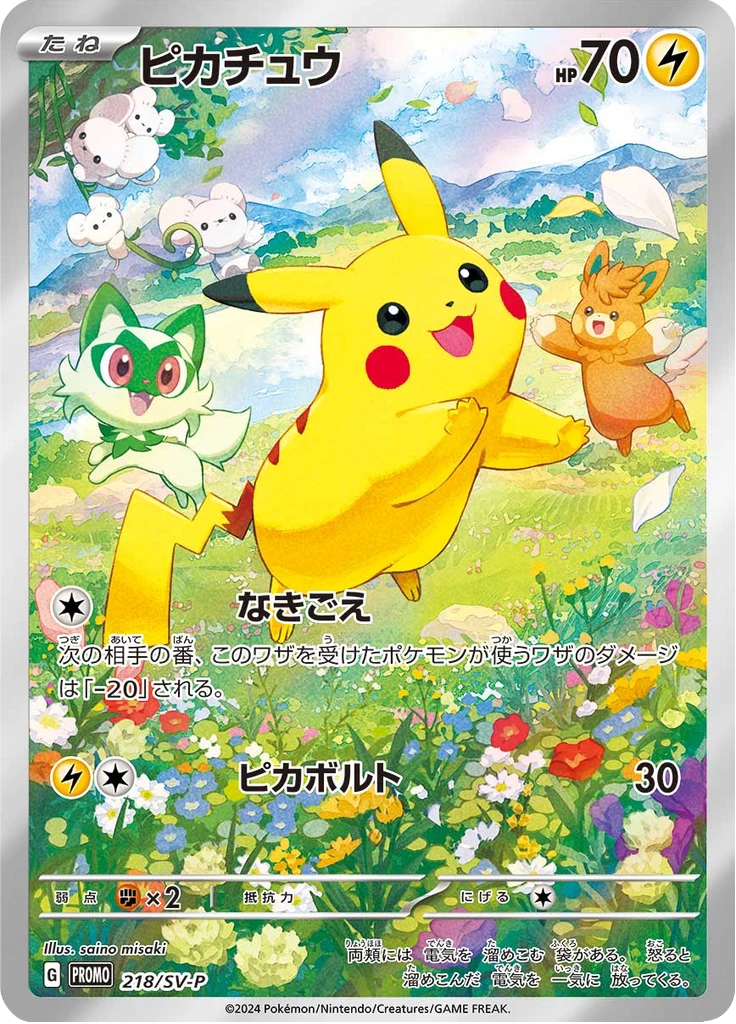
Pikachu, SV-P Promotional Cards number 218, Japanese print
Pikachu 218/SV-P — comparison print, not the Classic-deck 008/032

If it’s the promo side of Pikachu collecting you’re after rather than the Classic decks, our SM-P promo best-cards guide covers the earlier promo era in more detail.

PSA 10 Grading: What It Means for This Card

A PSA 10 designation is PSA’s top grade — it signals the card met their gem-mint standard for centering, corners, edges, and surface at the time of submission. It does not, on its own, tell you anything about how many copies of a given card have been graded, and we don’t have published population data for Pikachu 008/032 specifically, so we’re not going to guess at one here.

For readers comparing graded Pikachu prints across sets and price points, our PSA 10 Pikachu buying guide lines up several current listings side by side, and our general Japanese Pokémon card grading guide walks through how PSA, BGS, and CGC differ in practice. If this specific listing is unavailable when you check, restock requests go through Pedido rápido.

Where to Buy PSA 10 Pikachu 008/032

We ship graded Japanese cards worldwide from Tokyo with tracked delivery. The PSA 10 Pikachu CLL 008/032 is currently listed at ¥27,456 (~$173) as a single graded unit.

Shop This Card
PSA 10 Pikachu CLL 008/032 (Charizard & Ho-Oh ex Deck)
Currently listed at ¥27,456 (~$173)
Ships from Tokyo · Tracked delivery

View Product →

Looking for a different Pikachu print, or want to build a mixed order across graded singles and sealed product? Our Quick Order page is the fastest way to put that together, and restock requests for out-of-stock listings can also go through Quick Order.

Preguntas frecuentes

What deck is Pikachu 008/032 from?

It’s from the Charizard & Ho-Oh ex Deck, one of the structure decks included in Pokémon Card Game Classic.

When was Pokémon Card Game Classic released?

The Japanese release was in late October 2023. The English/international release followed on 17 November 2023.

What rarity is Pikachu CLL 008/032?

Unverified against official card databases. «CLL» is an internal listing label, not a confirmed rarity code — Bulbapedia’s deck list doesn’t show a rarity value for this card, and it isn’t catalogued on Limitless TCG’s Japanese database.

Is the Pikachu shown in this guide’s photos the same as 008/032?

No. The exact 008/032 print image couldn’t be located on the databases we verify images against, so this guide uses other modern Japanese Pikachu prints for visual comparison, each clearly captioned as such.

How much does the PSA 10 copy currently cost?

It’s currently listed at ¥27,456 (about $173 at ¥159/USD), as a single graded unit.

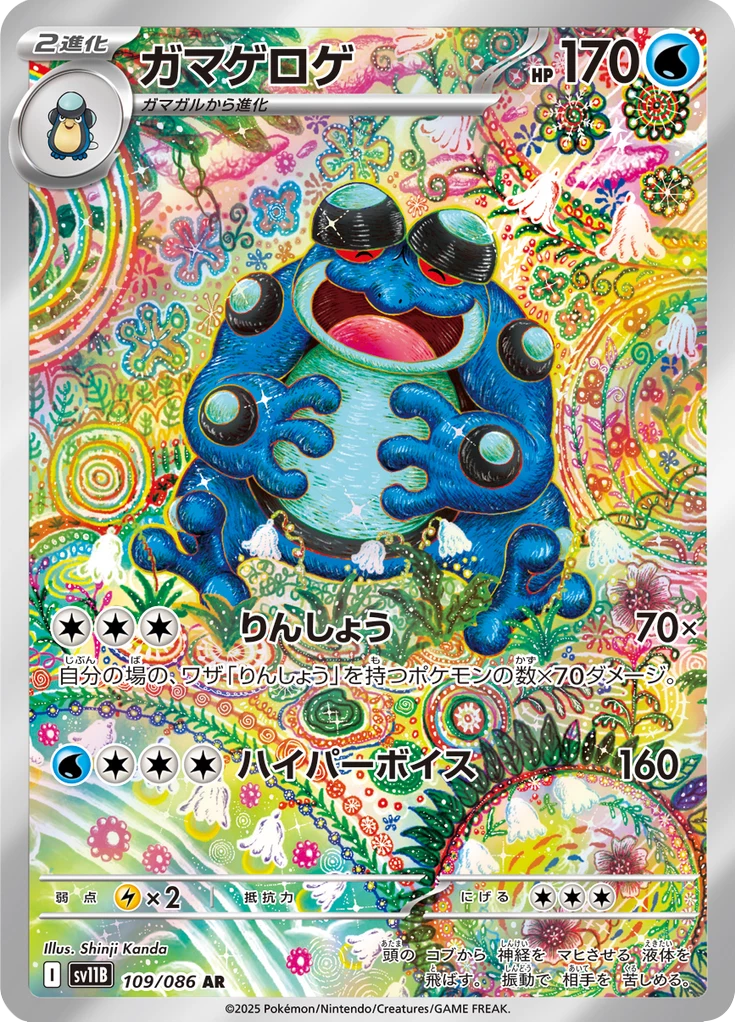
Seismitoad AR (Black Bolt 109/086): guía de cartas PSA 10 japonesas

Card number 109 in a set whose denominator reads 086. That mismatch is the first thing to understand about Seismitoad AR — and it’s a good entry point into how Japanese Art Rare cards are numbered, priced, and graded.

This guide covers everything verified about Seismitoad AR (109/086) from Black Bolt (SV11B): what the card is, where it sits in the set’s rarity structure, what PSA 10 grading means for a single-print card like this one, and where to see our own graded copy. We deal in Japanese Scarlet & Violet-era sealed product and singles out of Tokyo, so the pricing here reflects a card currently listed on our site, not a market survey.

Key Takeaway

Seismitoad AR is card 109/086 from Black Bolt (SV11B), a Japanese main expansion released 6 June 2025 with 174 cards across every rarity tier. A PSA 10 example is currently listed at ¥29,481 (~$185).

109/086
Card Number

AR
Rarity Tier

174
Cards in Black Bolt

¥29,481
Our PSA 10 Listing (~$185)

Price conversion uses ¥159/USD (September 2026). This is our own listed price for a single graded copy, not a market average.

Seismitoad AR 109/086: Card Overview

Seismitoad AR — known in Japanese as ガマゲロゲ — is card number 109/086 in Black Bolt, illustrated by Shinji Kanda. The card carries the AR (Art Rare) designation, one of the alternate-art tiers used across Scarlet & Violet-era Japanese main sets.

Seismitoad AR card, number 109/086, Black Bolt (SV11B), Japanese print
Seismitoad AR, 109/086, Art Rare, Black Bolt (SV11B)

The quick-reference facts:

Field Detail
Card name Seismitoad AR (ガマゲロゲ)
Card number 109/086
Rarity AR (Art Rare)
Colección Black Bolt (SV11B)
Release date 6 June 2025
Artist Shinji Kanda
Idioma Japonés

A PSA 10 example of this card is currently listed at ¥29,481 (~$185). Because this is a single certified copy rather than an open print run, the listing reflects that one graded card’s price — not a general market rate.

Black Bolt (SV11B): Set Context

Black Bolt is a Japanese main expansion (set code SV11B) released on 6 June 2025. The set’s full card count reaches 174 once every rarity tier is included, though the «/086» printed on Seismitoad’s card number refers to the main-set size before secret and chase-tier cards are layered on top. That’s why a card numbered 109 can exist in a set whose base denominator reads 086 — numbers above the «/086» line sit in the secret/special-rarity range that pushes the set’s true total up to 174.

For the full checklist of what’s in the set, see our Black Bolt (SV11B) card list. If you’re weighing whether to open boxes rather than buy the single, our Black Bolt pull-rate and box-value guide and our Black Bolt vs White Flare box comparison cover that side of the market in detail — we don’t repeat pull-rate figures here since this article is scoped to the Seismitoad AR single and its PSA 10 status.

One naming note worth flagging: «Black Bolt» is also used for a paired English-language expansion released 18 July 2025 that reprints cards from this Japanese set. Whether the Seismitoad AR print carries the same number and rarity tier in that English release isn’t confirmed, so treat the two as related but not interchangeable — this guide covers the Japanese SV11B print specifically.

What «AR» (Art Rare) Means

AR stands for Art Rare, one of several special-rarity tiers used in Scarlet & Violet-era Japanese sets alongside designations like SR and SAR. It sits above a set’s standard rarity slots and below the top secret-rare tiers, and Seismitoad’s AR print is where it lands in Black Bolt.

If you’re new to how Japanese sets stack these tiers — and how AR compares to SR, SAR, and the other letter-coded rarities you’ll see on graded-card listings — our Japanese Pokemon card rarity guide for graded buyers breaks down the full hierarchy in one place.

Reading the Card Number

Seismitoad’s «109/086» is a useful example of a rule that trips up a lot of buyers: once a card number exceeds the printed denominator, it’s in special-rarity territory, not a printing error.

PSA 10 Grading for a Single-Print Card

A PSA 10 designation means the specific card has been submitted to PSA, graded, and certified at their top condition tier, then sealed in their tamper-evident holder. For a card like Seismitoad AR, where the listing is for exactly one certified copy, that grading is what separates the listing from a raw (ungraded) card of the same print: the condition claim is backed by PSA’s own certification rather than a seller’s description.

If you want the background on how PSA, BGS, and CGC grading works before buying a graded Japanese card, our Japanese Pokemon card grading guide walks through the process end to end.

Because there’s only one certified copy of this Seismitoad AR in our stock, we’re not making claims about how many PSA 10 copies exist in total or how often the card comes back gem-mint from grading — we don’t have population data in front of us for this specific card, so we’re sticking to what we can verify: this one copy, this one grade, this one listing.

How Japanese Special Rarities Compare

Seismitoad’s Art Rare treatment sits alongside other special-rarity tiers you’ll see across Japanese Scarlet & Violet-era sets. The three cards below are from different sets entirely — not printings of Seismitoad — but they’re useful side-by-side reference points for what SR and other alternate-art tiers look like when you’re trying to place AR in context.

Pikachu ex card, number 122/106, SR rarity, Super Electric Breaker (SV8)

Pikachu ex, 122/106, SR, Super Electric Breaker (SV8)

Galarian Zapdos V card, number 076/070, SR rarity, Matchless Fighters/Twin Warriors (S5a)

Galarian Zapdos V, 076/070, SR, Matchless/Twin Warriors (S5a)

Shining Genesect card, Shining Legends set (SM3+/SM3p), Japanese print

Shining Genesect, Shining Legends (SM3+/SM3p)

None of these three are Seismitoad, and none of them are from Black Bolt — they’re shown purely so you can compare how different Japanese special-rarity treatments (SR-tier alternate art, Shining-era foil work) sit relative to the AR tier Seismitoad carries. For the specific Seismitoad AR print itself, see the card image in the overview section above.

Where to Buy Seismitoad AR (109/086)

We ship Japanese sealed product and graded singles worldwide from Tokyo with tracked delivery. Our current Seismitoad AR PSA 10 is a single certified copy, so this listing represents that one card rather than an ongoing print run.

Shop This Card
PSA10 Seismitoad 109/086 AR (Black Bolt, Japanese)
Currently listed at ¥29,481 (~$185)
Ships from Tokyo · Tracked delivery

View Product →

If this specific certified copy sells or you’re after other Black Bolt singles or PSA-graded Japanese cards, our Quick Order page is the fastest way to send us a request and build a mixed order. Restock requests for additional graded copies of this card also go through Quick Order.

Preguntas frecuentes

What is Seismitoad AR 109/086 from Black Bolt?

Seismitoad AR (Japanese: ガマゲロゲ) is card number 109/086 in Black Bolt (SV11B), a Japanese main expansion released 6 June 2025. It carries the Art Rare (AR) treatment and was illustrated by Shinji Kanda.

How many cards are in the Black Bolt (SV11B) set?

Black Bolt’s full card count reaches 174 across every rarity tier. The «/086» printed on Seismitoad’s card number refers to the main-set size before secret and special-rarity cards are added, which is why a card numbered 109 can exist in a set with an 086 denominator.

What does «AR» mean on a Japanese Pokemon card?

AR stands for Art Rare, one of several special-rarity tiers used in Scarlet and Violet-era Japanese sets alongside designations like SR and SAR. It sits above a set’s standard rarity slots and below the top secret-rare tiers.

Where can I find a PSA 10 Seismitoad AR?

A PSA 10 Seismitoad 109/086 AR is currently listed at ¥29,481 (about $185 at ¥159/USD). It is a single certified copy rather than an open print run, so the price reflects that one graded card.

Is the English-language Black Bolt release the same card?

Black Bolt is also the name used for a paired English-language expansion released 18 July 2025 that reprints cards from this Japanese set. Whether the Seismitoad AR print matches in number and rarity between the two releases is not confirmed, so the Japanese and English versions should not be treated as identical.