Gutschein für kostenlosen Versand im Juli für Bestellungen japanischer TCG-Produkte (einmal pro Konto)
Campaign ended · FIRSTSHIP expired on July 31, 2026 · No longer available
The FIRSTSHIP campaign ended on July 31, 2026, and the coupon can no longer be applied at checkout. This page is kept as a record of the offer. While it ran, FIRSTSHIP was a member-only free-shipping coupon that could be used once per account on an eligible order with a product subtotal of JPY 100,000 or more. Only eligible signed-in accounts could see it in the checkout coupon list, it had to be selected manually, and it was never applied automatically. Guests had to create an account or log in before checkout, and checkout registration could not unlock it for that guest order.
Ended campaign · Free shipping welcome coupon
The firstship free shipping coupon has ended.
This July welcome coupon was for overseas buyers ordering Japanese TCG products from Tokyo. It ended on July 31, 2026 and can no longer be applied at checkout. While it ran, every eligible account that had never used FIRSTSHIP could use it once on an eligible order of JPY 100,000 or more.
firstship Ended July 31, 2026. Was free shipping once per account on an eligible order of JPY 100,000+
One use per accountThe code could be used once per account on an eligible Samurai Sword Tokyo order during the July campaign period.
Overseas deliveryThe campaign was designed for international buyers ordering Japanese TCG products from Tokyo.
Orders from JPY 100,000The code applied to an eligible order of JPY 100,000 or more; checkout confirmed account eligibility and usage limits before payment.
Coupon terms (campaign ended)
Coupon code: firstship
Discount: free shipping on one eligible order per account.
Was valid through July 31, 2026. The campaign has ended and the code can no longer be applied.
Minimum eligible order amount: JPY 100,000 or more.
One use per account. An account that had already used FIRSTSHIP could not use it again.
Could not be combined with other manual coupon codes.
Checkout confirmed final eligibility before payment.
For campaign reporting, purchase/conversion was counted only after payment was received. Unpaid orders were not treated as completed purchases.
FIRSTSHIP coupon FAQ
Could returning customers use firstship?
Yes, while the campaign was running. Any eligible signed-in account that had not used firstship before could use it once on an eligible order of JPY 100,000 or more. Checkout checked the account, billing email, campaign window, and usage limits before payment. The campaign ended on July 31, 2026, so the coupon can no longer be applied.
Could I use firstship with another coupon?
No manual coupon stacking was allowed.
Did an unpaid order count as a purchase?
No. For campaign reporting and order handling, a purchase was treated as completed only after payment was received.
What should I check before paying?
Confirm that any discount you expect is visible in checkout and that your address, shipping method, and cart items are correct.
This coupon is no longer available.
firstship expired on July 31, 2026 and cannot be applied at checkout. The links below go to our current Japanese TCG lineup.
SM5+ Ultra Force Pull-Raten, beste Karten & Box-Guide (2026)
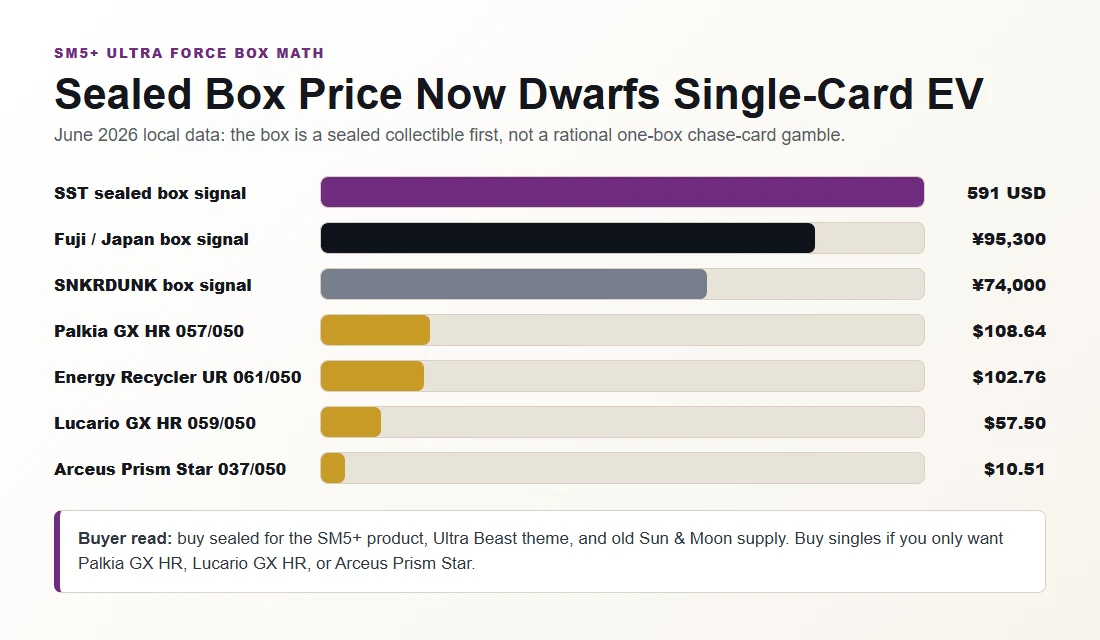
SM5+ Ultra Force (ウルトラフォース) is a Japanese Sun & Moon enhanced expansion released on January 19, 2018. It is not a cheap opening product anymore. In the June 2026 local pricing cache, the SM5+ box sits around ¥74,000 on SNKRDUNK, ¥95,300 on Fuji-style Japan pricing, and $591 in SST product data. That changes the buying answer completely: buy sealed for the old Japanese box, Ultra Beast theme, and collection value; buy singles if you only want one HR/UR card.
Key takeaway: SM5+ Ultra Force should be treated as a sealed Sun & Moon collectible first. The best-card list is led by Palkia GX HR 057/050, Energy Recycler UR 061/050, Lucario GX HR 059/050, Beast Ring UR 062/050, and Arceus Prism Star 037/050. Opening one box for a specific card is a poor risk/reward decision at current sealed prices.
Ultra Force is the enhanced sub-set around the Ultra Beast and Sinnoh-legendary side of the SM5 era. It shares English-market DNA with Ultra Prism, but the Japanese product is its own box with its own numbering, sealed-market behavior, and collector audience. The set is small at the main-card level, which makes it easy to understand, but the premium layer is where buyers need to be careful.
Artikel
Detail
Set-Code
SM5+
Japanese name
ウルトラフォース (Ultra Force)
Japanese release date
January 19, 2018
Box format
30 packs per box, 5 Karten pro Pack
Main set
50 cards
Known premium / secret layer in local price cache
Cards through 063/050, including SR, HR, and UR entries
English relationship
Part of the broader Ultra Prism card pool, not a one-to-one English product
Current box read
Old sealed Sun & Moon collectible, not an EV-first opening box
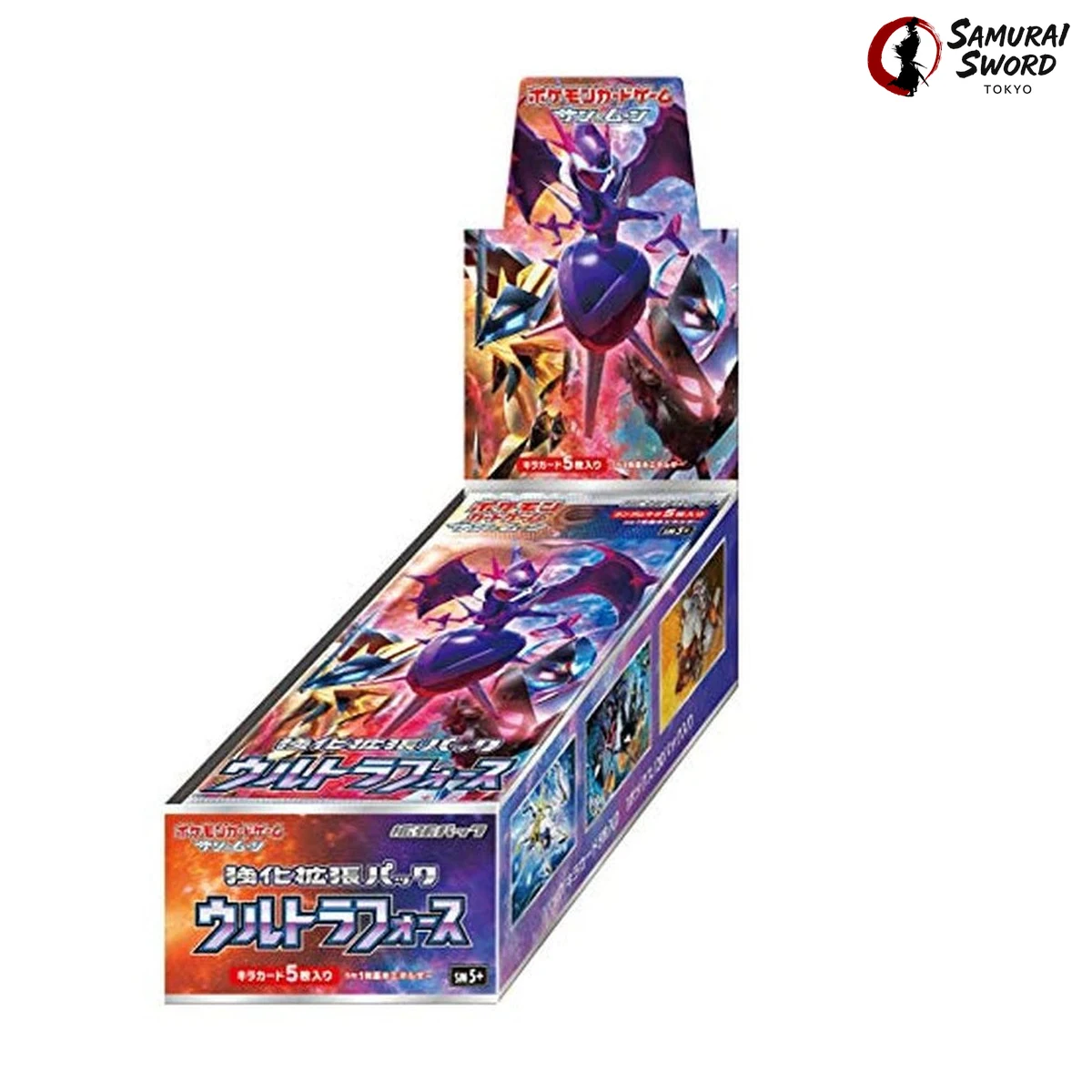
SM5+ Ultra Force sealed Japanese booster box. For this refresh, the box image is from SST product assets rather than unrelated card artwork.
Why the old version was misleading
The old article treated SM5+ like a low-priced box around ¥8,000 and highlighted the wrong image set. That is no longer acceptable for a page targeting pull rates and best cards. The current version separates three things that were previously blurred: official set identity, actual high-value cards, and the sealed-box buying decision.
Top Cards in SM5+ Ultra Force
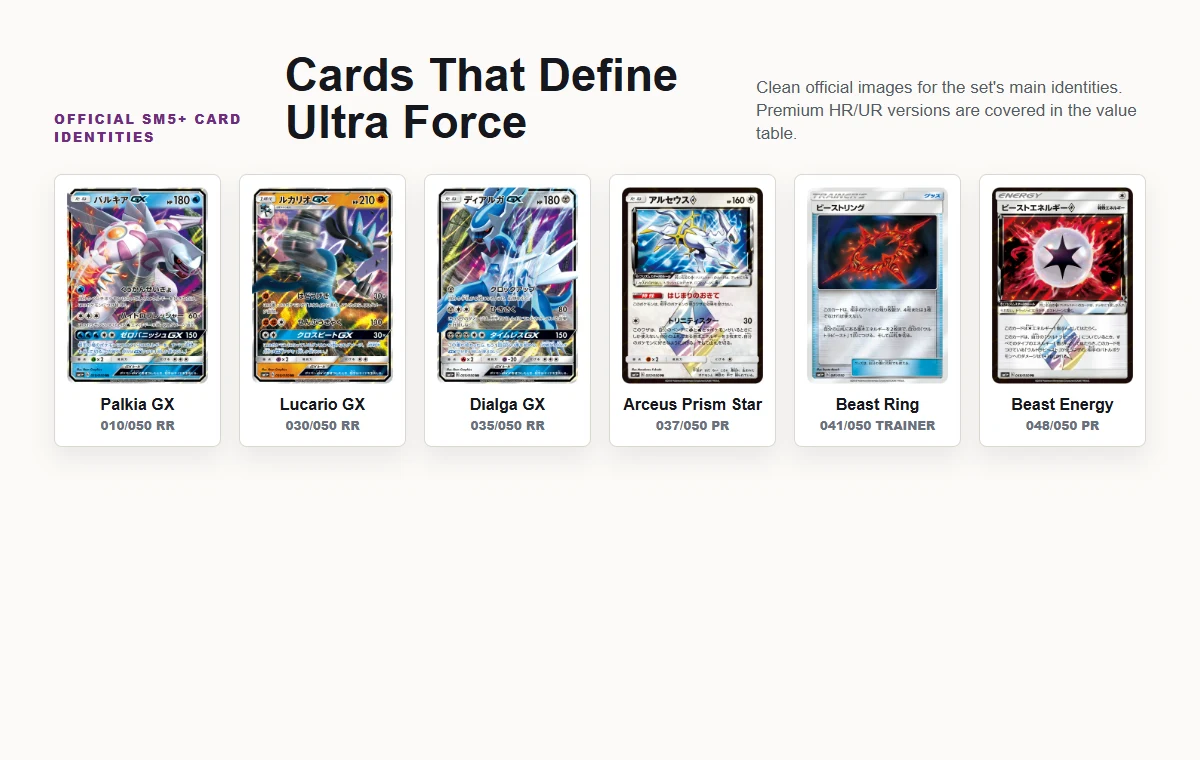
The top-card conversation should not start with unrelated English Ultra Prism cards. For SM5+, the strongest current buying checks are Palkia GX HR, Energy Recycler UR, Lucario GX HR, Beast Ring UR, Ultra Recon Squad SR, Dialga GX SR/HR, Metal Frying Pan UR, and Arceus Prism Star. The exact order changes with live listings, but the old Cynthia/Buzzwole framing was the wrong axis for this Japanese article.
Official SM5+ card identities. Premium HR/UR versions are discussed in the value table below; the images here are clean official set images used to avoid incorrect or low-quality card visuals.
Rang
Karte
Why it matters
Local price signal
Buyer note
1
Palkia GX HR 057/050
Top single-card price signal in the local cache and a recognizable Sinnoh legendary.
$108.64
Buy as a single if this is the only target.
2
Energy Recycler UR 061/050
Gold Trainer/Item demand makes this more important than the old article suggested.
Lucario has character/Pokemon collector demand beyond pure play value.
$57.50
Strong graded and character-card watch item.
4
Beast Ring UR 062/050
Ultra Beast-era competitive memory plus gold Item appeal.
$31.19
Better as a single than a sealed chase.
5
Ultra Recon Squad SR 055/050
Set-specific supporter tied directly to the Ultra Beast theme.
$26.56
Relevant for full-set and trainer collectors.
6
Dialga GX SR 054/050
Sinnoh legendary lane and a natural pair with Palkia GX.
$26.49
Compare SR vs HR price before buying.
7
Lucario GX SR 053/050
Lower-premium Lucario route below the HR version.
$22.00
Good if the HR has moved too high.
8
Metal Frying Pan UR 063/050
Gold Trainer card and metal-type support theme.
$21.90
Zustand and centering matter.
9
Dialga GX HR 060/050
Rainbow legendary card, but local signal trails Palkia/Lucario.
$18.76
Useful for complete secret-rare sets.
10
Arceus Prism Star 037/050
Not the highest raw price, but it is one of the cleanest identity cards in SM5+.
$10.51
Important set-completion and character-search card.
Best raw single Palkia GX HR
Palkia GX HR is the current top card by local ungraded cache signal. The regular Palkia GX also matters because it anchors the water-type Sinnoh legendary side of the box.
Best utility hit Energy Recycler UR
The old article ignored the gold Item/Trainer layer. Energy Recycler UR is one of the cards that makes SM5+ more than a simple GX-box article.
Best character lane Lucario GX HR / SR
Lucario gives the set a recognizable Pokemon chase outside the Palkia/Dialga legendary lane and should be in any serious buyer shortlist.
SM5+ Pull Rates & Box EV
The Pokemon Company does not publish exact pull rates for Japanese booster boxes, so any rate language should be treated as an estimate. The safe buyer model is simple: Japanese Sun & Moon boxes generally give regular GX/holo hits plus a premium SR-or-better style slot, while exact HR/UR outcomes and exact card hits remain low-probability events.
Pull question
Practical answer
Buyer implication
Are SM5+ pull rates official?
No. Treat exact odds as estimates unless an official source states them.
Do not make a sealed-box purchase on exact-card odds alone.
Is one premium card likely?
A Japanese SM-era box is commonly treated as having an SR-or-better style premium slot.
You may hit a premium card, but not necessarily the one you want.
Can one box reasonably chase Palkia GX HR?
No. A specific HR/UR is only one outcome inside the premium pool.
Buy Palkia GX HR directly if that card is the goal.
Does box EV justify opening?
Not at current sealed prices. Singles signals are far below the sealed-box collectible premium.
Open for experience, not expected return.
Box EV model
At current sealed prices, a normal EV table can be actively misleading if it makes the box look mathematically attractive. The useful comparison is not „Can I get one premium card?“ The useful comparison is „How many realistic single-card outcomes can justify opening a box now priced around old sealed Sun & Moon supply?“ For SM5+, the answer is very few.
June 2026 local data comparison. This chart intentionally separates sealed-box pricing from single-card price signals instead of presenting a fake precise EV number.
Buyer type
Better path
Reason
Exact Palkia GX HR buyer
Single card
The top single is far cheaper than the sealed box.
Full SM5+ collector
Singles plus card list
Use the card list first, then fill missing premium cards one by one.
Old sealed-box collector
Sealed box
Zustand, authenticity, and old Japanese supply matter more than EV.
Pack opener
Open only if variance is acceptable
The opening experience is real, but financial return is not the main reason.
Store / repeat buyer
SST product or wholesale route
Confirm availability, condition, and shipping before buying older sealed product in volume.
SM5+ Market Price: Japan vs Overseas
The old page said SM5+ boxes were around ¥8,000. That is no longer useful. The June 2026 local cache places SM5+ around ¥74,000 on SNKRDUNK-style Japan marketplace data, around ¥95,300 on Fuji-style Japan pricing, and $591 in SST product data. These should be treated as directional buyer signals, not permanent quotes.
Signal
June 2026 local value
How to use it
SNKRDUNK-style Japan signal
¥74,000
Useful for domestic Japan floor context.
Fuji-style Japan signal
¥95,300
Useful for shop/listing-side Japan range.
SST product signal
$591
Useful for overseas buyer landed-retail context.
Launch MSRP context
¥4,950 per box in the old article data
Shows why this is now an old sealed product, not a casual opening box.
Price note: older Japanese boxes move quickly and condition matters. Recheck live listings before buying, especially if the box seal, shrink, corners, or display condition are important.
Should You Open SM5+ Ultra Force or Buy Singles?
For most buyers, singles are the rational answer. The main exception is a collector who specifically wants a sealed Japanese SM5+ box. That buyer is not buying a lottery ticket; they are buying an old Sun & Moon product with a specific Ultra Beast theme and shrinking supply.
Buy the sealed box if…
You collect sealed Japanese Sun & Moon boxes.
You care about the Ultra Beast and Sinnoh legendary product identity.
You value condition, authenticity, and the box as a display piece.
You accept that opening is mostly for the experience, not EV.
Buy singles if…
You only want Palkia GX HR, Lucario GX HR, Energy Recycler UR, or Arceus Prism Star.
You are building a binder set and do not need sealed product.
You want to control condition, centering, and grading potential.
You do not want to pay the old sealed-box premium.
Where to Buy SM5+ Ultra Force
Looking for SM5+ Ultra Force? Check current SST availability first, then compare the sealed-box route against the full card list and singles needs.
The „+“ in SM5+ Ultra Force marks it as a Japanese enhanced expansion rather than one of the main SM5S or SM5M boxes. Enhanced expansions are smaller Japanese products that can include competitive cards, special themes, and premium cards that later relate to broader English sets.
What is the best card in SM5+ Ultra Force?
In the June 2026 local price cache, Palkia GX HR 057/050 is the leading ungraded single-card signal. Energy Recycler UR 061/050 is very close, and Lucario GX HR 059/050 is the next major Pokemon chase.
Are SM5+ Ultra Force pull rates official?
No. The Pokemon Company does not normally publish exact pull rates for Japanese booster boxes. Treat any exact SM5+ pull-rate number as an estimate based on box patterns, opening reports, and community assumptions.
Is SM5+ Ultra Force worth opening in 2026?
Only if you want the opening experience and accept the sealed-box premium. At current old-box prices, most exact-card buyers are better off buying singles such as Palkia GX HR, Energy Recycler UR, or Lucario GX HR directly.
Is SM5+ Ultra Force the same as Ultra Prism?
No. Ultra Prism is the English-market relationship, while SM5+ Ultra Force is a Japanese enhanced expansion with its own box, card numbering, release context, and sealed-market behavior.
How expensive is an SM5+ Ultra Force box now?
The June 2026 local cache shows SM5+ around ¥74,000 on SNKRDUNK-style Japan data, around ¥95,300 on Fuji-style Japan pricing, and $591 in SST product data. Treat those as directional signals and verify live prices before buying.
Which SM5+ cards should buyers check first?
Start with Palkia GX HR, Energy Recycler UR, Lucario GX HR, Beast Ring UR, Ultra Recon Squad SR, Dialga GX SR or HR, Metal Frying Pan UR, and Arceus Prism Star. These give a better buyer map than the old Cynthia/Buzzwole framing.
Should I buy SM5+ sealed or buy singles?
Buy sealed if you collect old Japanese Sun & Moon boxes and care about condition, authenticity, and long-term product scarcity. Buy singles if you only want one specific premium card or are building a binder set.
Use the card list first, then decide whether SM5+ should be a sealed-box purchase or a singles purchase.
SV6 Mask von Change (変幻の仮面) Ziehraten, Beste Karten & Boxwert Leitfaden
Mask of Change (SV6) needed a full May 21, 2026 refresh because the old article read like a short card list instead of a serious buying guide. The current standard is different: lead with the buying answer, show the product, show the chase cards, explain the pull-rate math, and separate Japan market signals from overseas customer-facing prices.
The practical answer is simple. Buy sealed if you want the Ogerpon mask suite and a real Carmine chase. Buy singles if you only care about Carmine SAR. A sealed box can be a strong purchase when you want the product story and the opening experience. It is a weak purchase when you are only using it as an expensive shortcut to one exact SAR.
This version follows the same format as the stronger SST Pokemon guides: current market proof, a real product image, a top-card grid, a Japan vs overseas chart, buyer segmentation, box EV, and a deeper FAQ section. The goal is not to pad word count; it is to answer the questions a collector or shop buyer actually has before ordering.
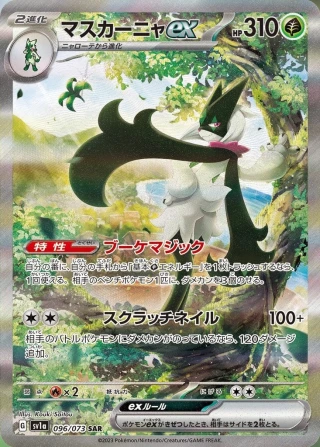
The biggest change is the order of the thinking. A thin article usually starts with a card ranking and only later mentions whether a box is worth buying. This refresh starts with the purchase decision because that is what search traffic is really asking. A reader wants to know whether sealed makes sense today, whether singles are smarter, whether the set has a reason to age well, and whether the visible price is current. The card ranking is still important, but it sits inside a fuller buying framework.
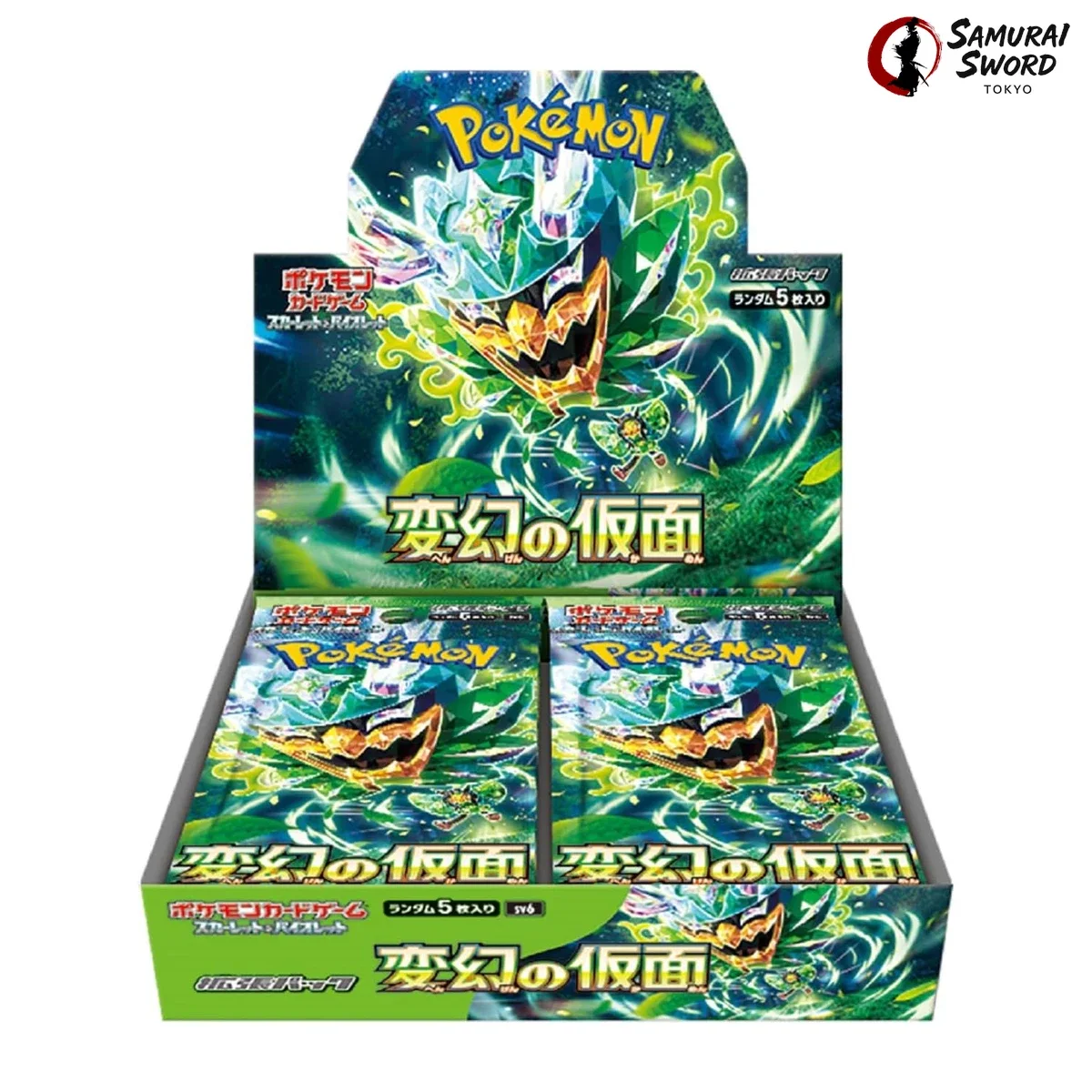
Thumbnail composite for Mask of Change using SST product imagery and key chase-card imagery.
Key Takeaway Carmine SAR is the anchor, but the four Ogerpon ex SARs create the set-specific collection story. Japan signals now sit around ツ・11,999-13,900, while SST’s overseas retail signal is $84. Judge the box by buyer type: sealed collectors, singles buyers, openers, and import buyers all need different advice.
Mask of Change is the Japanese SV6 product released on April 26, 2024. It connects to Twilight Masquerade, but Japanese sealed buyers should treat it as its own product with its own card numbering, box price, and collector identity.
The old short article format usually stopped at release date, card count, and a top-10 table. That is not enough. A modern buyer needs to know whether the set has a durable reason to exist, whether the sealed price is moving, whether the top cards justify opening, and how the Japanese box compares with English or adjacent Japanese sets.
Spec
Detail
Set-Code
SV6
Japanese release
April 26, 2024
Card count
101 main-set cards plus 32 secret cards, 133 total
Box format
30 packs per box, 5 Karten pro Pack
SAR count
6 Special Art Rare cards
Current Japan signal
Japan signals now sit around ツ・11,999-13,900, while SST’s overseas retail signal is $84.
Best buyer
Collector or shop buyer who understands the set story and is not relying on one exact pull.
Mask of Change sealed Japanese booster box. The product image is shown early so the article card and article body match the product being sold.
What Changed in the May 2026 Refresh
The old article was useful as a first pass, but it was too thin for the current blog standard. It had fewer visual breaks, a weaker market section, and a shorter decision path. This refresh adds the missing context: why the set matters, where the box sits today, how the top cards rank, and when singles make more sense than sealed.
Japanese Box vs English Relationship
English products are easier for many local buyers, but the Japanese product is cleaner for collectors who want one exact set code and Japanese print quality. The Japanese box also has a more direct sealed-market signal because the product is not blended with multiple Japanese sources the way many English releases are.
Factor
Japanese Mask of Change
Twilight Masquerade
Product identity
One Japanese set code, one box, one collector story
English market relationship with different distribution and buyer behavior
Ideal für
Japanese sealed collectors, import buyers, visual collectors
Local players and buyers who prefer English cards
Pricing
Read Japan and overseas separately
Often easier to find locally, but not the same sealed thesis
Buying mistake
Using old article prices after the market has moved
Assuming English and Japanese pull economics are identical
What the Product Page Should Help You Decide
A strong set guide should reduce hesitation before the product page click. For Mask of Change, the reader should leave this section knowing the set code, the card count, the box format, the major chase lanes, and the current market spread. That is enough to compare the box against other Japanese sealed products without opening a dozen tabs.
This is especially important for overseas buyers. A small difference in listed price can disappear once shipping, payment fees, import tax, and condition risk are included. The article therefore treats price as a range and a decision signal, not as a single permanent number. That is the difference between a useful ecommerce guide and a static checklist.
Top 10 Best Cards and Current Market Read
Carmine SAR is the anchor, but the four Ogerpon ex SARs create the set-specific collection story. The top-card table below uses the local PriceCharting cache and Fuji card-list image set where available, then frames each card by why a buyer would care. Prices are not permanent; the ranking is useful because it shows the shape of demand.
Rang
Karte
Rarity
Raw price signal
Why it matters
1
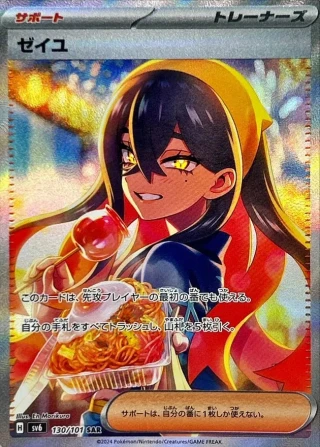
Carmine 130/101
SAR
$109.50
The dominant trainer chase and the card that drives the box conversation.
2
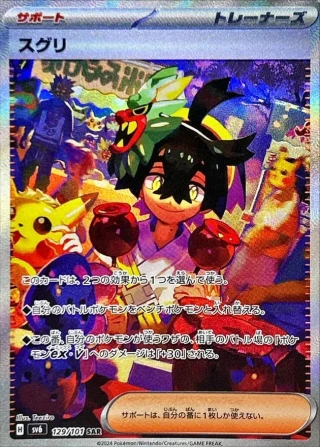
Kieran 129/101
SAR
$30.10
Kieran gives the set a paired character chase below Carmine.
3
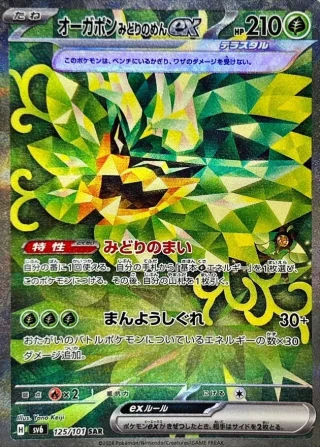
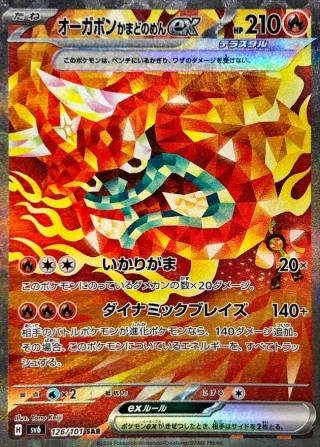
Teal Mask Ogerpon ex 125/101
SAR
$16.72
The base Ogerpon form and the cleanest mask card for collectors.
4
Hearthflame Mask Ogerpon ex 126/101
SAR
$9.07
The fire mask adds color and completes the Ogerpon suite.
5
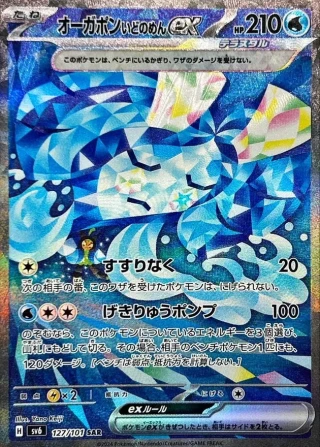
Wellspring Mask Ogerpon ex 127/101
SAR
$13.57
Strong play and mask identity give this card extra relevance.
6
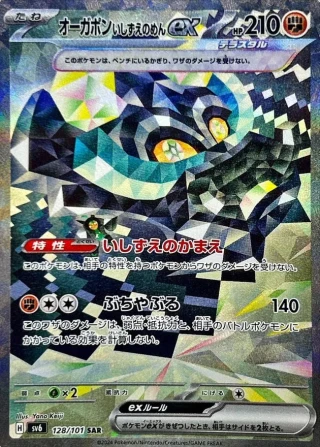
Cornerstone Mask Ogerpon ex 128/101
SAR
$10.55
Completes the four-mask SAR set.
7
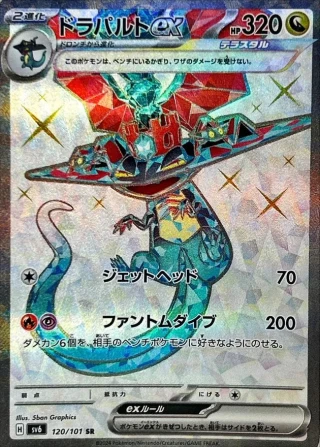
Dragapult ex 120/101
SR
$7.40
A playable and popular Pokemon hit below the SAR layer.
8
Buddy-Buddy Poffins 133/101
UR
$14.99
A utility gold card that helps the box beyond collectors.
9
Teal Mask Ogerpon ex 131/101
UR
$8.09
Gold Ogerpon gives the mascot a second premium lane.
10
Carmine 123/101
SR
$5.36
Carmine SR is the practical backup to the SAR chase.
SAR
Carmine
The dominant trainer chase and the card that drives the box conversation.
SAR
Kieran
Kieran gives the set a paired character chase below Carmine.
SAR
Teal Mask Ogerpon ex
The base Ogerpon form and the cleanest mask card for collectors.
Top-Card Thesis
The best version of a set guide explains why the top card leads. For Mask of Change, the top layer works because the cards are tied to the set story rather than feeling randomly expensive. The market can move, but the identity is easier to defend when the chase cards are aligned with the product name, mascot, character focus, or mechanic.
Secondary Hit Layer
A box feels better when there are enough cards below the top chase to keep opening from becoming binary. That does not mean every SAR or UR pays for the box. It means the buyer has several outcomes that still feel like meaningful collection pieces.
SAR
Hearthflame Mask Ogerpon ex
The fire mask adds color and completes the Ogerpon suite.
SAR
Wellspring Mask Ogerpon ex
Strong play and mask identity give this card extra relevance.
SAR
Cornerstone Mask Ogerpon ex
Completes the four-mask SAR set.
SR
Dragapult ex
A playable and popular Pokemon hit below the SAR layer.
Budget Singles Worth Watching
Budget singles matter because not every reader is ready to buy a sealed box or a top SAR. Lower-cost SRs, ARs, and URs often make the article more useful for collectors who want the set identity without paying for the top card. For Mask of Change, the lower layer also helps explain why opening can still be enjoyable even when the expected value is below sealed price.
The lower layer also matters for resale and customer education. A shop buyer can sell the top chase easily, but the box becomes easier to merchandise when there are several cards that look good in a display case, binder page, or break menu. That is why the article covers secondary SARs, ARs, and URs instead of treating everything outside the top three as filler.
What Makes Mask of Change Special
The Four Ogerpon Masks Are the Product Hook
Mask of Change is unusually easy to understand visually because the four Ogerpon masks create a complete mini-collection inside one box. That makes the product more memorable than a generic chase-card set.
Why the Set Can Be Explained Quickly
A strong ecommerce article should make the set understandable from a thumbnail, a product card, or a quick scan. Mask of Change has that advantage: its best cards and product identity point in the same direction. That makes it easier for collectors, store buyers, and breakers to communicate the product without a long explanation.
Why That Matters for Sealed Boxes
Sealed boxes do not trade only on average pull value. They also trade on identity, scarcity, display appeal, and whether future buyers can understand the box quickly. A set with a clear story can stay easier to sell than a technically similar set whose top cards feel disconnected from the product.
Collector Memory and Thumbnail Recognition
Collector memory is practical, not abstract. If a buyer can remember the set from one image and one chase lane, the article and product card have a much better chance of converting later. Mask of Change should therefore be presented with its box image, its most recognizable cards, and the set-specific hook near the top of the page. A text-only article forces the reader to do too much work.
Should You Buy a Mask of Change Box in 2026?
Buy sealed if you want the Ogerpon mask suite and a real Carmine chase. Buy singles if you only care about Carmine SAR. The honest answer changes by buyer type. That is the main reason the new article format needs more depth than the old one.
Buyer type
Best action
Reason
Exact top-card buyer
Buy the single
Specific-card odds are low, even when the set itself is good.
Sealed collector
Buy after checking current spread
The product story matters, but stale pricing can produce bad entries.
Casual opener
Buy one box if lower hits are acceptable
The box can be fun without guaranteeing the chase card.
Shop or breaker
Buy if the set story is easy for your customers
Clear chase identity matters for merchandising and breaks.
Player
Buy singles
Playable needs are cheaper and cleaner through targeted purchases.
Import buyer
Compare landed cost
Shipping, duties, and currency spread can erase a low sticker price.
Box vs Singles
Singles are the rational route for one exact chase. Sealed boxes are for the product experience, shelf identity, and optionality. The article should not confuse those two jobs. A box can be good and still be the wrong route to one card.
Compared With Crimson Haze
Use Crimson Haze as the comparison point rather than treating every SV-era box as identical. The better buy is the one whose chase structure matches the buyer’s goal. Sometimes that means paying more for a stronger chase; sometimes it means buying the cheaper box because the set identity is enough.
Sealed Holding Logic
The sealed holding case depends on whether the box will still be easy to explain later. Mask of Change has a clearer story than many generic mid-era boxes, but that does not remove restock, reprint, or demand risk. Buy sealed because you want the box and understand the thesis, not because an article says every sealed Pokemon product must rise.
How to Compare Entry Prices
Do not compare one seller’s Japan sticker price with another seller’s international checkout price as if they are the same thing. A clean comparison includes product condition, whether the box is factory sealed, shipping speed, tracking, payment fees, and the risk of dealing with an unknown marketplace seller. The cheapest visible number is not always the cheapest final purchase.
For repeat buyers and stores, consistency can be worth more than a small discount. A predictable sourcing route makes it easier to reorder, answer customer questions, and avoid condition disputes. For one-time collectors, the right move is often to decide the maximum landed cost first, then choose the cleanest box inside that budget.
Pull Rates, Chase Odds and Box EV
Pokemon does not publish official pull rates for Japanese booster boxes. The estimates below are decision support based on typical Japanese SV-era structure and community opening behavior, not guaranteed odds.
Pull Rate Reality The key distinction is any premium hit versus one exact card. A buyer can reasonably expect a satisfying box and still be very unlikely to pull the exact SAR they want.
Estimated Pull Rate Breakdown
Rarity or slot
Estimated box behavior
Buyer meaning
RR / ex
Several per box
Baseline hits, not the sealed-price thesis.
AR
Multiple visual hits in many boxes
Binder value and casual opening satisfaction.
SR
Most boxes are anchored by an SR-or-better style slot
The most common premium outcome.
SAR
Chance upgrade, not guaranteed
The main collector chase, but exact-card odds are much lower.
UR
Lower-frequency gold-card upgrade
Useful for collectors and playable/gold-card buyers.
Specific Chase Odds
If a buyer wants one exact SAR, the correct mental model is multi-box odds. Even if a set has a relatively small SAR pool, the box still has to hit the SAR layer and then hit the correct card inside that layer. That is why the recommendation for exact-card buyers is nearly always singles first.
Goal
Estimated route
Recommendation
Enjoy one sealed box
Reasonable
Buy sealed if the set story appeals to you.
Pull any premium card
Reasonable but variable
Open if lower outcomes are acceptable.
Pull the top SAR
Low exact-card odds
Buy the single if this is the only target.
Build a master set
Boxes plus singles
Use sealed for base volume, singles for expensive gaps.
Hold sealed
No pull risk
Focus on box condition, authenticity, and entry price.
Box EV Context
Expected value is usually below sealed price for Pokemon boxes. That is normal. The sealed price includes scarcity, product identity, optionality, and the entertainment value of opening. The mistake is using EV as the only reason to buy or ignoring EV completely. A strong guide shows both.
EV component
Role in Mask of Change
How to use it
Top SARs
Main upside
Great when hit, too rare to rely on.
Secondary SARs
Reduce binary feel
Make opening more satisfying below the top card.
SR/AR layer
Baseline visual value
Important for casual collectors and binder builders.
UR layer
Gold-card optionality
Can matter when the card is playable or iconic.
Sealed premium
Box value beyond pulls
Driven by condition, supply, and set identity.
Opening Plan by Budget
One box is best treated as an experience purchase. Two or three boxes can give a better feel for the set, but they still do not turn an exact SAR into a reliable outcome. If a buyer plans to spend more than the price of the target single, the singles route should be reconsidered before opening another box.
The balanced route for many collectors is one sealed box plus targeted singles. The box provides the product memory, base cards, AR texture, and a chance at upside. Singles then finish the exact chase cards without forcing the buyer to gamble through a larger sealed budget. That hybrid strategy is often better than pure sealed opening or pure singles buying.
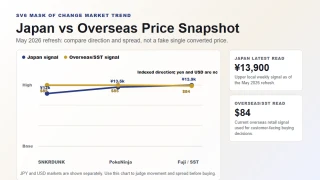
Japan vs Overseas Price Snapshot
The market section is where the old articles were weakest. Japan signals now sit around ツ・11,999-13,900, while SST’s overseas retail signal is $84. That does not mean there is one perfect price. It means buyers should compare Japan source signals, overseas retail, shipping, condition, and the reason they are buying.
Japan vs overseas market snapshot for Mask of Change, updated May 21, 2026. Yen and dollar signals are intentionally separated.
Market signal
Earlier baseline
May 2026 read
Buyer meaning
Japan low/mid signal
¥11,999
¥13,475
Shows whether the box is still in its old range or has reset upward.
Japan upper live signal
Not always covered in old article
¥13,900
Use this to avoid anchoring to stale pricing.
Overseas/SST signal
$85
$84
Customer-facing price must include shipping, handling, and sourcing realities.
Best buyer action
Casual price check
Compare landed cost and buyer goal
Do not use one converted number as the entire market.
How to Read a Wide Spread
A wide spread is not automatically a contradiction. Japan domestic signals, overseas retail, buy-price references, and sold data all measure different parts of the market. The right article explains the spread instead of hiding it.
What Would Change the Recommendation?
The recommendation weakens if sealed supply returns in size, if the top-card demand cools, or if overseas pricing runs far above Japan without a condition or sourcing reason. It strengthens if the box holds its current range while the top cards remain liquid.
Current Market Thesis
Mask of Change is best treated as a set with a specific buyer thesis, not a generic Pokemon box. If the buyer wants that thesis, sealed can make sense. If the buyer only wants a single card, the market thesis is a warning to buy the single instead.
May 2026 Action Guide
If the current Japan signal is close to the overseas checkout price after shipping, buying from a trusted store is usually simpler than chasing a marginal discount. If Japan is materially lower, the buyer should ask whether the difference is real after fees and condition risk. If overseas is materially lower, the buyer should check whether the listing is old stock, opened stock, regional product, or missing condition details.
The correct conclusion is not always „buy now.“ Sometimes the correct move is to watch the spread for another week, buy the single, or choose a different Japanese box with a better entry. The value of the chart is that it gives the reader a framework for that choice instead of leaving them with a stale price line from an older article.
Where to Buy Mask of Change
For SST customers, check the live product page first, then compare against the broader Japanese sealed collection if the box is out of stock or if another set better matches the buyer’s goal.
Mask of Change (SV6) Booster Box
Japanese sealed booster box. Check live stock, current price, and shipping options before using old article assumptions.
Mask of Change is worth covering at full length because the buying decision is not just a top-10 list. The buyer needs product identity, current market context, chase-card odds, and a clear box-vs-singles answer. That is the gap this refresh closes.
The best buyer is someone who likes the set even when the top card does not appear. The worst buyer is someone who wants one exact SAR and thinks a box is the cheapest route. If you separate those two people, the recommendation becomes much clearer.
Best use case Buy sealed for the Mask of Change product story and optionality. Buy singles for precision. Use the current Japan vs overseas spread before deciding where to enter.
Häufig gestellte Fragen
What are the pull rates for Mask of Change?
Pokemon does not publish official pull rates. Treat SV6 as a Japanese box with regular hits, AR/CHR texture depending on the era, and one SR-or-better style slot, with SAR/CSR/UR/alternate-art outcomes as chance upgrades.
What is the best card in Mask of Change?
Carmine is the leading chase in this refresh. The set still needs to be judged by the full premium pool, not only by the single top card.
Is Mask of Change worth buying in 2026?
Yes if you like the set identity and current sealed price. Buy singles instead if you only want Carmine or one exact premium card.
How many cards are in Mask of Change?
Mask of Change has 101 main-set cards plus 32 secret or premium cards, 133 total cards in this guide’s count.
Is Mask of Change the same as Twilight Masquerade?
No. Twilight Masquerade is the English-market relationship. Mask of Change is the Japanese SV6 product with its own card numbering, box format, and sealed-market behavior.
Should I buy a Mask of Change box or Carmine?
Buy Carmine directly if that is the only target. Buy the box if you value the opening experience, sealed collecting, and multiple chase lanes.
What is the biggest risk with Mask of Change?
The biggest risk is treating one sealed box as a rational way to hit one exact card. Exact-card odds remain low even when any-premium-hit odds feel attractive.
Where can I see the full Mask of Change card list?
Use the SV6 card list linked in the article to inspect card numbers, artwork, and rarity before buying sealed or singles.
Is Mask of Change better than Crimson Haze?
Mask of Change is better if you prefer Ogerpon forms and Carmine/Kieran trainer demand. Crimson Haze is the cleaner comparison if you want a different chase structure or sealed price band.
Is Mask of Change better opened or kept sealed?
Open it if the chase suite and pack experience matter. Keep it sealed if you want a clean Japanese box with current Japan-vs-overseas market support.
SV1A Triplet Beat Ziehraten, Beste Karten & Boxwert Leitfaden
Triplet Beat (SV1A) needed a full May 21, 2026 refresh because the old article read like a short card list instead of a serious buying guide. The current standard is different: lead with the buying answer, show the product, show the chase cards, explain the pull-rate math, and separate Japan market signals from overseas customer-facing prices.
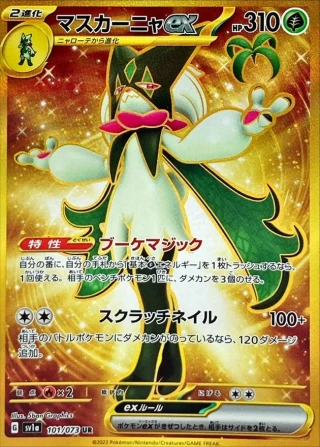
The practical answer is simple. Buy sealed if you want the first enhanced SV subset and the Paldea starter trio. Buy singles if Dendra SAR or Meowscarada ex SAR is your only target. A sealed box can be a strong purchase when you want the product story and the opening experience. It is a weak purchase when you are only using it as an expensive shortcut to one exact SAR.
This version follows the same format as the stronger SST Pokemon guides: current market proof, a real product image, a top-card grid, a Japan vs overseas chart, buyer segmentation, box EV, and a deeper FAQ section. The goal is not to pad word count; it is to answer the questions a collector or shop buyer actually has before ordering.
The biggest change is the order of the thinking. A thin article usually starts with a card ranking and only later mentions whether a box is worth buying. This refresh starts with the purchase decision because that is what search traffic is really asking. A reader wants to know whether sealed makes sense today, whether singles are smarter, whether the set has a reason to age well, and whether the visible price is current. The card ranking is still important, but it sits inside a fuller buying framework.
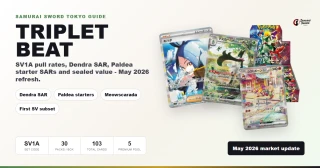
Thumbnail composite for Triplet Beat using SST product imagery and key chase-card imagery.
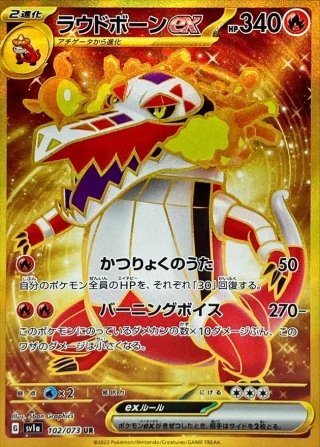
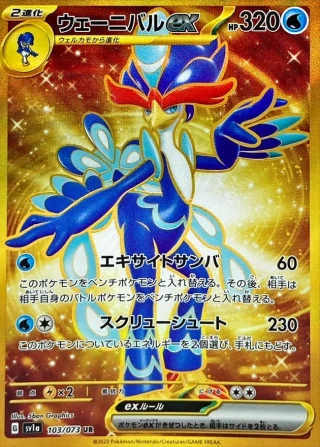
Key Takeaway Triplet Beat is a Paldea starter box with Dendra as the trainer chase and Meowscarada, Skeledirge, and Quaquaval as the product story. Japan signals now sit around ツ・16,666-18,400, while SST’s overseas retail signal is $110. Judge the box by buyer type: sealed collectors, singles buyers, openers, and import buyers all need different advice.
Triplet Beat is the Japanese SV1A product released on March 10, 2023. It connects to Paldea Evolved, but Japanese sealed buyers should treat it as its own product with its own card numbering, box price, and collector identity.
The old short article format usually stopped at release date, card count, and a top-10 table. That is not enough. A modern buyer needs to know whether the set has a durable reason to exist, whether the sealed price is moving, whether the top cards justify opening, and how the Japanese box compares with English or adjacent Japanese sets.
Spec
Detail
Set-Code
SV1A
Japanese release
March 10, 2023
Card count
73 main-set cards plus 30 secret cards, 103 total
Box format
30 packs per box, 5 Karten pro Pack
SAR count
5 Special Art Rare cards
Current Japan signal
Japan signals now sit around ツ・16,666-18,400, while SST’s overseas retail signal is $110.
Best buyer
Collector or shop buyer who understands the set story and is not relying on one exact pull.
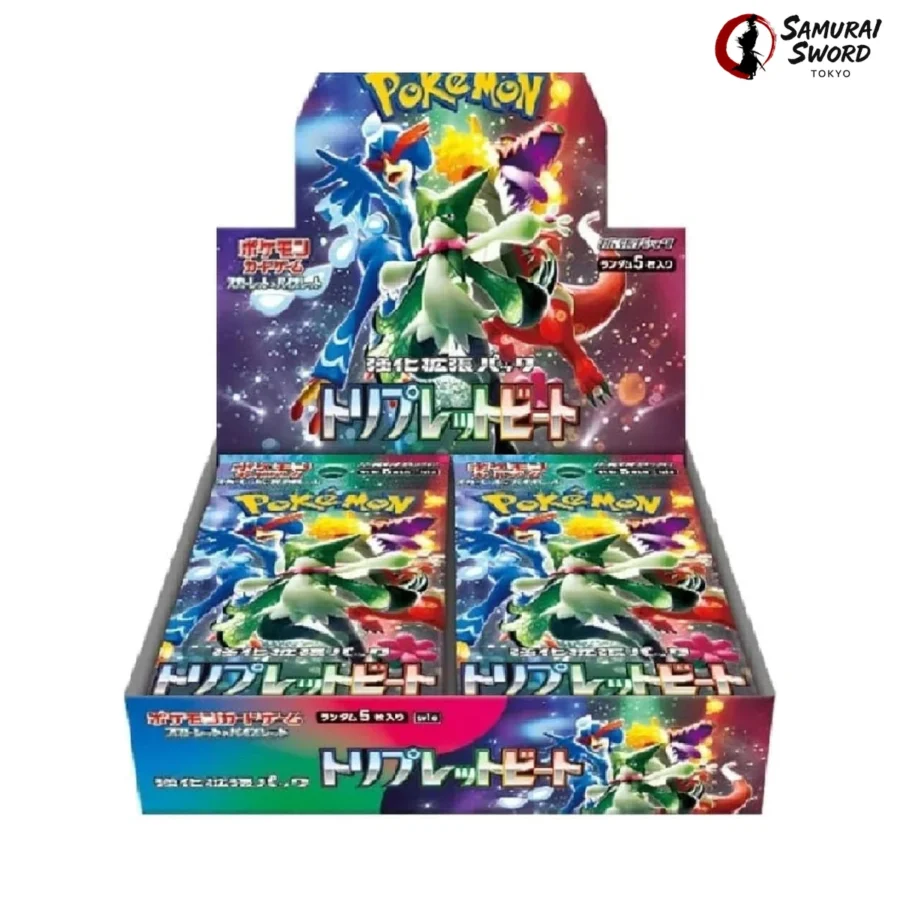
Triplet Beat sealed Japanese booster box. The product image is shown early so the article card and article body match the product being sold.
What Changed in the May 2026 Refresh
The old article was useful as a first pass, but it was too thin for the current blog standard. It had fewer visual breaks, a weaker market section, and a shorter decision path. This refresh adds the missing context: why the set matters, where the box sits today, how the top cards rank, and when singles make more sense than sealed.
Japanese Box vs English Relationship
English products are easier for many local buyers, but the Japanese product is cleaner for collectors who want one exact set code and Japanese print quality. The Japanese box also has a more direct sealed-market signal because the product is not blended with multiple Japanese sources the way many English releases are.
Factor
Japanese Triplet Beat
Paldea Evolved
Product identity
One Japanese set code, one box, one collector story
English market relationship with different distribution and buyer behavior
Ideal für
Japanese sealed collectors, import buyers, visual collectors
Local players and buyers who prefer English cards
Pricing
Read Japan and overseas separately
Often easier to find locally, but not the same sealed thesis
Buying mistake
Using old article prices after the market has moved
Assuming English and Japanese pull economics are identical
What the Product Page Should Help You Decide
A strong set guide should reduce hesitation before the product page click. For Triplet Beat, the reader should leave this section knowing the set code, the card count, the box format, the major chase lanes, and the current market spread. That is enough to compare the box against other Japanese sealed products without opening a dozen tabs.
This is especially important for overseas buyers. A small difference in listed price can disappear once shipping, payment fees, import tax, and condition risk are included. The article therefore treats price as a range and a decision signal, not as a single permanent number. That is the difference between a useful ecommerce guide and a static checklist.
Top 10 Best Cards and Current Market Read
Triplet Beat is a Paldea starter box with Dendra as the trainer chase and Meowscarada, Skeledirge, and Quaquaval as the product story. The top-card table below uses the local PriceCharting cache and Fuji card-list image set where available, then frames each card by why a buyer would care. Prices are not permanent; the ranking is useful because it shows the shape of demand.
Rang
Karte
Rarity
Raw price signal
Why it matters
1
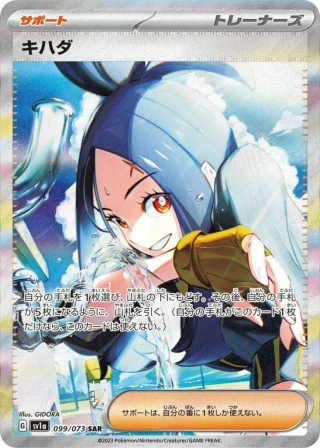
Dendra 99/73
SAR
$59.88
The top trainer chase and the card that gives the box its market ceiling.
2
Meowscarada ex 96/73
SAR
$57.99
The most popular Paldea starter SAR and a strong collector card.
3
Skeledirge ex 97/73
SAR
$35.00
Fire starter SAR with distinct stage presence.
4
Quaquaval ex 98/73
SAR
$19.55
Completes the starter SAR trio.
5
Meowscarada ex 101/73
UR
$12.30
Gold version of the top starter chase.
6
Skeledirge ex 102/73
UR
$8.49
Gold fire starter for completionists.
7
Quaquaval ex 103/73
UR
$6.69
Gold water starter and trio completion card.
8
Magikarp 80/73
AR
$110.69
Magikarp AR gives the set one of its most memorable low-rarity cards.
9
Dendra 92/73
SR
$6.32
Lower-cost trainer alternative to Dendra SAR.
10
Boss’s Orders 95/73
SR
$6.00
Recognizable trainer SR with broad play history.
SAR
Dendra
The top trainer chase and the card that gives the box its market ceiling.
SAR
Meowscarada ex
The most popular Paldea starter SAR and a strong collector card.
SAR
Skeledirge ex
Fire starter SAR with distinct stage presence.
Top-Card Thesis
The best version of a set guide explains why the top card leads. For Triplet Beat, the top layer works because the cards are tied to the set story rather than feeling randomly expensive. The market can move, but the identity is easier to defend when the chase cards are aligned with the product name, mascot, character focus, or mechanic.
Secondary Hit Layer
A box feels better when there are enough cards below the top chase to keep opening from becoming binary. That does not mean every SAR or UR pays for the box. It means the buyer has several outcomes that still feel like meaningful collection pieces.
SAR
Quaquaval ex
Completes the starter SAR trio.
UR
Meowscarada ex
Gold version of the top starter chase.
UR
Skeledirge ex
Gold fire starter for completionists.
UR
Quaquaval ex
Gold water starter and trio completion card.
Budget Singles Worth Watching
Budget singles matter because not every reader is ready to buy a sealed box or a top SAR. Lower-cost SRs, ARs, and URs often make the article more useful for collectors who want the set identity without paying for the top card. For Triplet Beat, the lower layer also helps explain why opening can still be enjoyable even when the expected value is below sealed price.
The lower layer also matters for resale and customer education. A shop buyer can sell the top chase easily, but the box becomes easier to merchandise when there are several cards that look good in a display case, binder page, or break menu. That is why the article covers secondary SARs, ARs, and URs instead of treating everything outside the top three as filler.
What Makes Triplet Beat Special
The Three Paldea Starters Are the Set
Triplet Beat is unusually easy to merchandise because the product promise is in the name: three starter lines, three ex evolutions, and a clean early-SV identity.
Why the Set Can Be Explained Quickly
A strong ecommerce article should make the set understandable from a thumbnail, a product card, or a quick scan. Triplet Beat has that advantage: its best cards and product identity point in the same direction. That makes it easier for collectors, store buyers, and breakers to communicate the product without a long explanation.
Why That Matters for Sealed Boxes
Sealed boxes do not trade only on average pull value. They also trade on identity, scarcity, display appeal, and whether future buyers can understand the box quickly. A set with a clear story can stay easier to sell than a technically similar set whose top cards feel disconnected from the product.
Collector Memory and Thumbnail Recognition
Collector memory is practical, not abstract. If a buyer can remember the set from one image and one chase lane, the article and product card have a much better chance of converting later. Triplet Beat should therefore be presented with its box image, its most recognizable cards, and the set-specific hook near the top of the page. A text-only article forces the reader to do too much work.
Should You Buy a Triplet Beat Box in 2026?
Buy sealed if you want the first enhanced SV subset and the Paldea starter trio. Buy singles if Dendra SAR or Meowscarada ex SAR is your only target. The honest answer changes by buyer type. That is the main reason the new article format needs more depth than the old one.
Buyer type
Best action
Reason
Exact top-card buyer
Buy the single
Specific-card odds are low, even when the set itself is good.
Sealed collector
Buy after checking current spread
The product story matters, but stale pricing can produce bad entries.
Casual opener
Buy one box if lower hits are acceptable
The box can be fun without guaranteeing the chase card.
Shop or breaker
Buy if the set story is easy for your customers
Clear chase identity matters for merchandising and breaks.
Player
Buy singles
Playable needs are cheaper and cleaner through targeted purchases.
Import buyer
Compare landed cost
Shipping, duties, and currency spread can erase a low sticker price.
Box vs Singles
Singles are the rational route for one exact chase. Sealed boxes are for the product experience, shelf identity, and optionality. The article should not confuse those two jobs. A box can be good and still be the wrong route to one card.
Compared With Clay Burst
Use Clay Burst as the comparison point rather than treating every SV-era box as identical. The better buy is the one whose chase structure matches the buyer’s goal. Sometimes that means paying more for a stronger chase; sometimes it means buying the cheaper box because the set identity is enough.
Sealed Holding Logic
The sealed holding case depends on whether the box will still be easy to explain later. Triplet Beat has a clearer story than many generic mid-era boxes, but that does not remove restock, reprint, or demand risk. Buy sealed because you want the box and understand the thesis, not because an article says every sealed Pokemon product must rise.
How to Compare Entry Prices
Do not compare one seller’s Japan sticker price with another seller’s international checkout price as if they are the same thing. A clean comparison includes product condition, whether the box is factory sealed, shipping speed, tracking, payment fees, and the risk of dealing with an unknown marketplace seller. The cheapest visible number is not always the cheapest final purchase.
For repeat buyers and stores, consistency can be worth more than a small discount. A predictable sourcing route makes it easier to reorder, answer customer questions, and avoid condition disputes. For one-time collectors, the right move is often to decide the maximum landed cost first, then choose the cleanest box inside that budget.
Pull Rates, Chase Odds and Box EV
Pokemon does not publish official pull rates for Japanese booster boxes. The estimates below are decision support based on typical Japanese SV-era structure and community opening behavior, not guaranteed odds.
Pull Rate Reality The key distinction is any premium hit versus one exact card. A buyer can reasonably expect a satisfying box and still be very unlikely to pull the exact SAR they want.
Estimated Pull Rate Breakdown
Rarity or slot
Estimated box behavior
Buyer meaning
RR / ex
Several per box
Baseline hits, not the sealed-price thesis.
AR
Multiple visual hits in many boxes
Binder value and casual opening satisfaction.
SR
Most boxes are anchored by an SR-or-better style slot
The most common premium outcome.
SAR
Chance upgrade, not guaranteed
The main collector chase, but exact-card odds are much lower.
UR
Lower-frequency gold-card upgrade
Useful for collectors and playable/gold-card buyers.
Specific Chase Odds
If a buyer wants one exact SAR, the correct mental model is multi-box odds. Even if a set has a relatively small SAR pool, the box still has to hit the SAR layer and then hit the correct card inside that layer. That is why the recommendation for exact-card buyers is nearly always singles first.
Goal
Estimated route
Recommendation
Enjoy one sealed box
Reasonable
Buy sealed if the set story appeals to you.
Pull any premium card
Reasonable but variable
Open if lower outcomes are acceptable.
Pull the top SAR
Low exact-card odds
Buy the single if this is the only target.
Build a master set
Boxes plus singles
Use sealed for base volume, singles for expensive gaps.
Hold sealed
No pull risk
Focus on box condition, authenticity, and entry price.
Box EV Context
Expected value is usually below sealed price for Pokemon boxes. That is normal. The sealed price includes scarcity, product identity, optionality, and the entertainment value of opening. The mistake is using EV as the only reason to buy or ignoring EV completely. A strong guide shows both.
EV component
Role in Triplet Beat
How to use it
Top SARs
Main upside
Great when hit, too rare to rely on.
Secondary SARs
Reduce binary feel
Make opening more satisfying below the top card.
SR/AR layer
Baseline visual value
Important for casual collectors and binder builders.
UR layer
Gold-card optionality
Can matter when the card is playable or iconic.
Sealed premium
Box value beyond pulls
Driven by condition, supply, and set identity.
Opening Plan by Budget
One box is best treated as an experience purchase. Two or three boxes can give a better feel for the set, but they still do not turn an exact SAR into a reliable outcome. If a buyer plans to spend more than the price of the target single, the singles route should be reconsidered before opening another box.
The balanced route for many collectors is one sealed box plus targeted singles. The box provides the product memory, base cards, AR texture, and a chance at upside. Singles then finish the exact chase cards without forcing the buyer to gamble through a larger sealed budget. That hybrid strategy is often better than pure sealed opening or pure singles buying.
Japan vs Overseas Price Snapshot
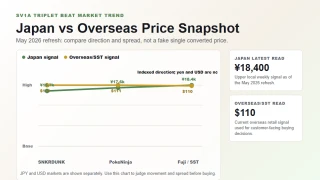
The market section is where the old articles were weakest. Japan signals now sit around ツ・16,666-18,400, while SST’s overseas retail signal is $110. That does not mean there is one perfect price. It means buyers should compare Japan source signals, overseas retail, shipping, condition, and the reason they are buying.
Japan vs overseas market snapshot for Triplet Beat, updated May 21, 2026. Yen and dollar signals are intentionally separated.
Market signal
Earlier baseline
May 2026 read
Buyer meaning
Japan low/mid signal
¥16,666
¥17,597
Shows whether the box is still in its old range or has reset upward.
Japan upper live signal
Not always covered in old article
¥18,400
Use this to avoid anchoring to stale pricing.
Overseas/SST signal
$111
$110
Customer-facing price must include shipping, handling, and sourcing realities.
Best buyer action
Casual price check
Compare landed cost and buyer goal
Do not use one converted number as the entire market.
How to Read a Wide Spread
A wide spread is not automatically a contradiction. Japan domestic signals, overseas retail, buy-price references, and sold data all measure different parts of the market. The right article explains the spread instead of hiding it.
What Would Change the Recommendation?
The recommendation weakens if sealed supply returns in size, if the top-card demand cools, or if overseas pricing runs far above Japan without a condition or sourcing reason. It strengthens if the box holds its current range while the top cards remain liquid.
Current Market Thesis
Triplet Beat is best treated as a set with a specific buyer thesis, not a generic Pokemon box. If the buyer wants that thesis, sealed can make sense. If the buyer only wants a single card, the market thesis is a warning to buy the single instead.
May 2026 Action Guide
If the current Japan signal is close to the overseas checkout price after shipping, buying from a trusted store is usually simpler than chasing a marginal discount. If Japan is materially lower, the buyer should ask whether the difference is real after fees and condition risk. If overseas is materially lower, the buyer should check whether the listing is old stock, opened stock, regional product, or missing condition details.
The correct conclusion is not always „buy now.“ Sometimes the correct move is to watch the spread for another week, buy the single, or choose a different Japanese box with a better entry. The value of the chart is that it gives the reader a framework for that choice instead of leaving them with a stale price line from an older article.
Where to Buy Triplet Beat
For SST customers, check the live product page first, then compare against the broader Japanese sealed collection if the box is out of stock or if another set better matches the buyer’s goal.
Triplet Beat (SV1A) Booster Box
Japanese sealed booster box. Check live stock, current price, and shipping options before using old article assumptions.
Triplet Beat is worth covering at full length because the buying decision is not just a top-10 list. The buyer needs product identity, current market context, chase-card odds, and a clear box-vs-singles answer. That is the gap this refresh closes.
The best buyer is someone who likes the set even when the top card does not appear. The worst buyer is someone who wants one exact SAR and thinks a box is the cheapest route. If you separate those two people, the recommendation becomes much clearer.
Best use case Buy sealed for the Triplet Beat product story and optionality. Buy singles for precision. Use the current Japan vs overseas spread before deciding where to enter.
Häufig gestellte Fragen
What are the pull rates for Triplet Beat?
Pokemon does not publish official pull rates. Treat SV1A as a Japanese box with regular hits, AR/CHR texture depending on the era, and one SR-or-better style slot, with SAR/CSR/UR/alternate-art outcomes as chance upgrades.
What is the best card in Triplet Beat?
Dendra is the leading chase in this refresh. The set still needs to be judged by the full premium pool, not only by the single top card.
Is Triplet Beat worth buying in 2026?
Yes if you like the set identity and current sealed price. Buy singles instead if you only want Dendra or one exact premium card.
How many cards are in Triplet Beat?
Triplet Beat has 73 main-set cards plus 30 secret or premium cards, 103 total cards in this guide’s count.
Is Triplet Beat the same as Paldea Evolved?
No. Paldea Evolved is the English-market relationship. Triplet Beat is the Japanese SV1A product with its own card numbering, box format, and sealed-market behavior.
Should I buy a Triplet Beat box or Dendra?
Buy Dendra directly if that is the only target. Buy the box if you value the opening experience, sealed collecting, and multiple chase lanes.
What is the biggest risk with Triplet Beat?
The biggest risk is treating one sealed box as a rational way to hit one exact card. Exact-card odds remain low even when any-premium-hit odds feel attractive.
Where can I see the full Triplet Beat card list?
Use the SV1A card list linked in the article to inspect card numbers, artwork, and rarity before buying sealed or singles.
Is Triplet Beat better than Clay Burst?
Triplet Beat is better if you prefer Paldea starters and Dendra trainer demand. Clay Burst is the cleaner comparison if you want a different chase structure or sealed price band.
Is Triplet Beat better opened or kept sealed?
Open it if the chase suite and pack experience matter. Keep it sealed if you want a clean Japanese box with current Japan-vs-overseas market support.
Kaufratgeber für japanische Pokemon Special BOX 2026
Japanese Pokemon Special Box Buying Guide 2026
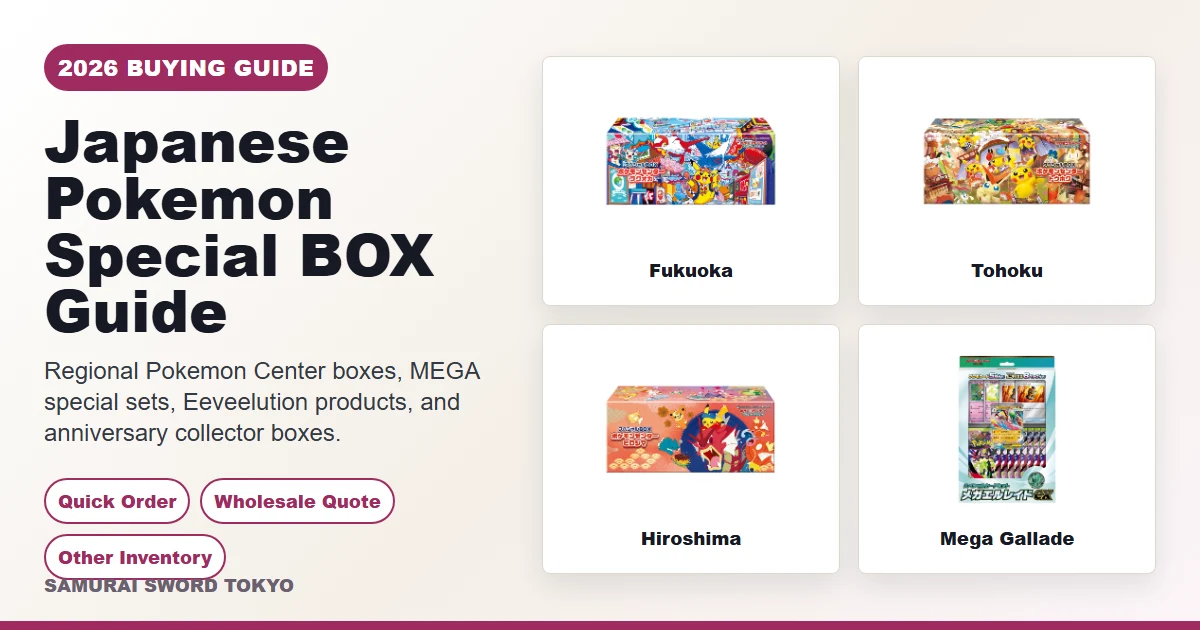
Pokemon Center regional boxes, MEGA-era special sets, Eeveelution collector products, and anniversary boxes are different from normal booster boxes. This guide routes buyers by goal first, then sends them to live SST product pages, Quick Order, or wholesale quote paths.
Quick answer: buy a Special BOX when the fixed theme matters: regional Pikachu, Eeveelutions, anniversary display, MEGA-era accessories, or a premium Pokemon Center bundle. Buy booster boxes when set exposure and opening upside matter. Buy PSA 10 when the exact card matters.
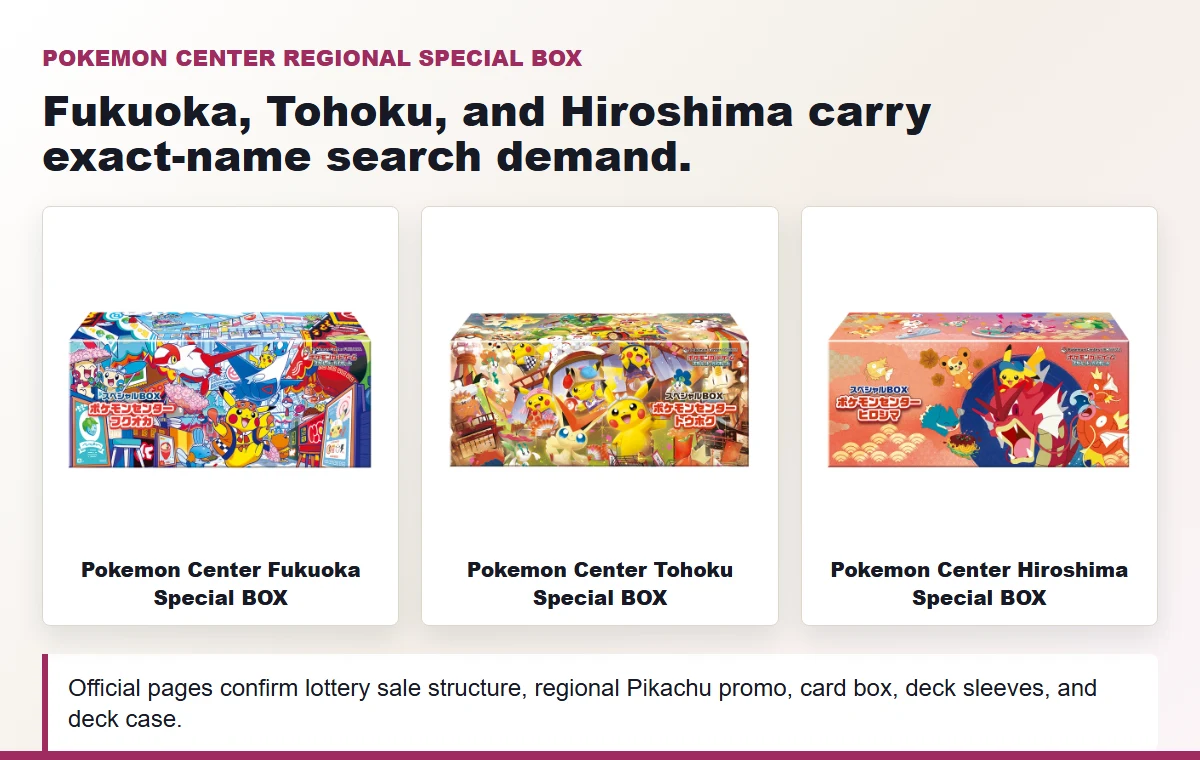
Thumbnail composite using official Pokemon Center product imagery for regional Special BOX products and Mega Gallade Special Card Set.
Check live Other inventoryUse Quick Order and search the exact product name.Open Quick Order
Request allocationBest for out-of-stock regional boxes and recurring orders.Start wholesale inquiry
Compare MEGA boxesUse this when special sets are unavailable but MEGA sealed demand is active.Read MEGA index
What Buyers Should Check First
Buyer goal
Check first
Why it matters
SST route
Regional Pokemon Center collector
Fukuoka, Tohoku, Hiroshima, Kanazawa Special BOX
Each box has a local Pokemon Center identity and matching Pikachu promo
Quick Order Other tab or product quote
Eeveelution collector
Eevee Heroes Eeveelutions Set, VMAX Special Set Eevee Heroes, Eeveelution PSA and promo cards
Eeveelution demand is one of the strongest character-led Pokemon themes
Product page, PSA guide, or quote path
MEGA-era collector
MEGA Premium Trainer Box, Mega Brave Pokemon Center Set, Mega Symphonia Pokemon Center Set, Mega Gallade Special Card Set
MEGA products connect to current set demand and new buyer attention
Product page plus MEGA booster box articles
Anniversary collector
25th Anniversary Golden Box, 25th Anniversary Collection Special Set, Precious Collector Box
Milestone products are easier to explain and display than generic accessories
Product page or wholesale inquiry
Store or reseller
Items with visible stock and clear theme
A simple product story is easier to list, explain, and upsell
Wholesale inquiry
Current Product Rail
This is a June 22, 2026 research snapshot from SST’s public Quick Order and product pages. Recheck live inventory before publishing or taking orders.
Regional Pokemon Center Special BOX products work well as exact-name search targets because the product identity is already clear.
1. Pokemon Center Regional Special BOX Trio
The strongest organic angle is the regional trio: Pokemon Center Fukuoka Special BOX, Pokemon Center Tohoku Special BOX, and Pokemon Center Hiroshima Special BOX. The search intent is clear because the product name itself carries the buyer story. These are not generic boxes. They are location-themed Pokemon Center products with matching Pikachu promos and accessory bundles.
The official Pokemon Center Online pages confirm the core structure: each regional Special BOX was sold by lottery, had a one-per-person purchase limit, and included a regional Pikachu promo card, a card box, deck sleeves, and a deck case. Fukuoka lists Fukuoka’s Pikachu, Tohoku lists Tohoku’s Pikachu, and Hiroshima lists Hiroshima’s Pikachu. That makes the buyer question easy: which regional Pikachu box do I want, and can I still source it in clean sealed condition?
CTA logic: route collectors to the product page when stock exists. When stock is not visible, route to a quote inquiry instead of pretending the product is normally available.
2. Pokemon Center Kanazawa Open Memorial Special BOX
Kanazawa is the older regional opening memorial box, which makes it useful as a comparison point in the same article. The buyer intent is similar to the newer Fukuoka, Tohoku, and Hiroshima boxes, but the purchase logic is different: older memorial boxes are usually more about sealed condition, scarcity, and the attached Pikachu identity than about retail availability.
CTA logic: this should be a quote-led product. If a live unit exists, link it. If not, use it to support a regional Special BOX sourcing inquiry.
3. MEGA Premium Trainer Box
MEGA Premium Trainer Box belongs in the same content cluster because it is a premium sealed product connected to the current MEGA era. It is not the same thing as a booster box, but it sits next to MEGA booster boxes in a buyer’s mind. The product page describes it as a Japanese Pokemon Card Game Premium Trainer Box for collectors and players following the MEGA era.
CTA logic: link the product page, then route to the MEGA booster box price index and current Quick Order inventory. Buyers who miss the premium trainer box may still buy Mega Brave, Mega Symphonia, Mega Dream ex, or related MEGA sealed boxes.
4. Mega Brave And Mega Symphonia Pokemon Center Sets
Mega Brave Pokemon Center Set and Mega Symphonia Pokemon Center Set are especially useful because they connect special-box demand to named set demand. Mega Brave has a Lillie angle; Mega Symphonia has an Acerola angle. These are exactly the character-led themes that domestic Japanese SEO winners tend to surface through product-list and ranking pages.
CTA logic: keep these near the top of the article and cross-link to the MEGA booster box article cluster. The reader may arrive for the special set but convert on the standard booster box if the Pokemon Center Set is out of stock.
5. Mega Gallade Special Card Set
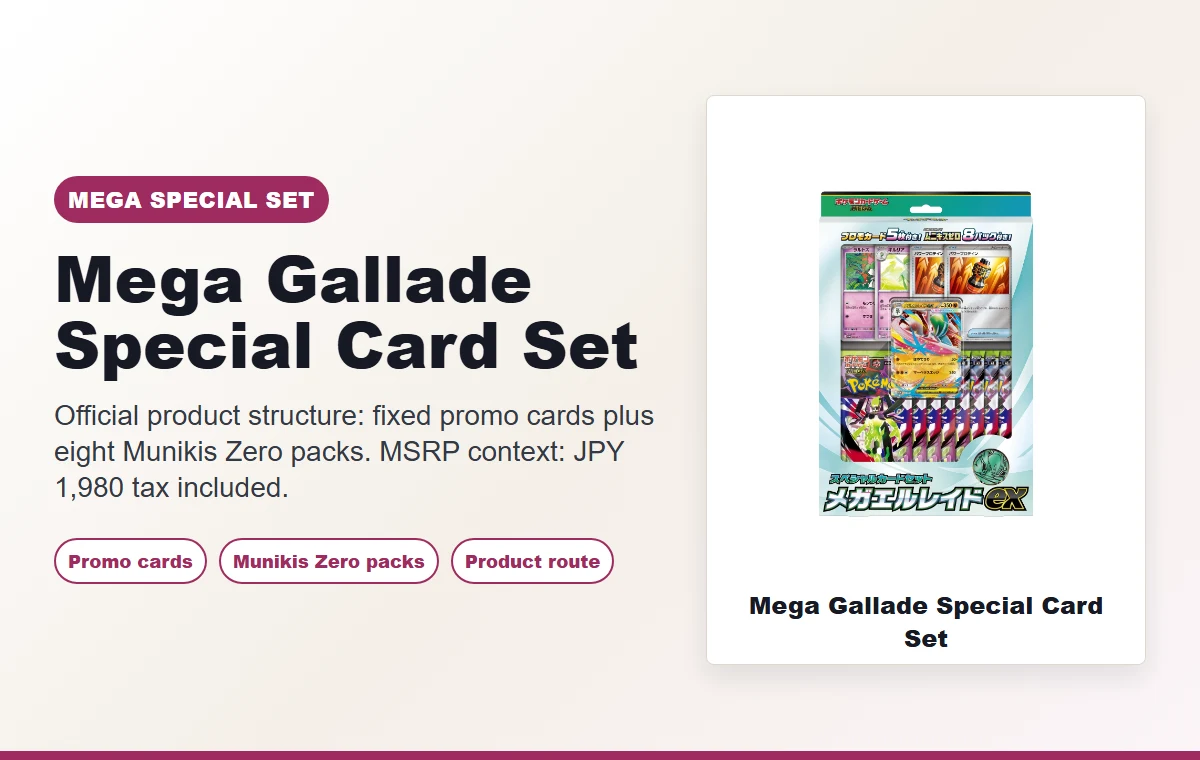
Mega Gallade Special Card Set is a cleaner product story than many accessory boxes because the official page lists fixed promo cards plus eight Munikis Zero packs. The official product page shows the January 23, 2026 release date, a JPY 1,980 tax-included MSRP, product code 4521329462011, and contents including Mega Gallade ex, Power Protein, Ralts, Kirlia, eight Munikis Zero packs, and a Pokemon coin.
CTA logic: this is a good product to support the M3 / Munikis Zero cluster. The article should link to the Mega Gallade product page and to any Munikis Zero card list or booster box article.
6. Clay Burst & Snow Hazard Pokemon Center Gym Set
This product has a strong collector hook because it links to the Clay Burst and Snow Hazard era. Buyers understand why that era matters: Clay Burst and Snow Hazard sit close to major Scarlet and Violet character demand, and a Pokemon Center Gym Set is easier to merchandise as a premium object than a single booster box.
CTA logic: route to the product page when stock is visible and to wholesale if the reader is buying for a store.
7. 25th Anniversary Golden Box
Anniversary products are evergreen. They do not depend only on current set hype. The 25th Anniversary Golden Box should be treated as a premium display item and milestone product. It belongs in a Special BOX buying guide because the buyer is usually not comparing it to a modern booster box; they are comparing it to other high-end sealed Pokemon display pieces.
CTA logic: route to product if available, but also place a high-end sealed inquiry CTA for buyers who want multiple premium products.
8. Eevee Heroes Eeveelutions Set
The Eevee Heroes Eeveelutions Set is one of the easiest products to explain to overseas buyers. Eeveelutions are highly searched, visually easy to understand, and already connected to both sealed and PSA demand. This is not just an accessory product; it is an Eeveelution shelf product.
CTA logic: link to the product page if live and cross-link to Eevee Heroes, Eeveelution PSA, and Japanese Eeveelution buying guides.
9. VMAX Special Set Eevee Heroes JAN 6551
This is the smaller, more focused companion product to the bigger Eeveelution set. It works well for long-tail searches that include „VMAX Special Set“, „Eevee Heroes“, „JAN 6551“, or „Japanese Eevee Heroes special set.“ It also gives the article a second Eevee Heroes route if the main Eeveelutions Set is quote-only.
CTA logic: use it as a rank-four-to-rank-ten product in the article rail and as an internal link target from future Eevee Heroes articles.
10. Pokemon Card Game Classic And Precious Collector Box
These are display-led collector products. They are not the highest search-volume hooks compared with regional Pikachu or Eeveelution products, but they are valuable for conversion. A buyer looking at Pokemon Card Game Classic or Precious Collector Box is already considering a premium purchase, not a cheap pack opening.
CTA logic: route to the product page, and offer wholesale or custom inquiry for buyers building a premium sealed shelf.
Why Regional Pokemon Center Special BOX Products Matter
The Fukuoka, Tohoku, and Hiroshima Special BOX pages are strong SEO and conversion targets because the exact product names carry the search intent. They are not generic products. Each one has a regional Pokemon Center identity and a matching Pikachu promo.
Official Pokemon Center Online pages confirm the key structure: lottery sale, one-per-person limit, regional Pikachu promo, card box, deck sleeves, and deck case. Fukuoka lists Fukuoka’s Pikachu, Tohoku lists Tohoku’s Pikachu, and Hiroshima lists Hiroshima’s Pikachu. That means the buying question is not pull-rate math. It is whether the buyer wants that regional theme in sealed condition.
Why MEGA Special Products Belong in the Same Hub
MEGA Premium Trainer Box, Mega Brave Pokemon Center Set, Mega Symphonia Pokemon Center Set, and Mega Gallade Special Card Set all connect special-box buying intent with current MEGA-era demand. These products should sit beside the MEGA booster box article cluster. If the special product is out of stock, the article can still convert through Mega Brave, Mega Symphonia, Mega Dream ex, Munikis Zero, or quote inquiry paths.
Mega Gallade Special Card Set is especially useful because the official page lists fixed cards plus eight Munikis Zero packs. That makes it a natural internal link from Munikis Zero / M3 articles and a product rail item for buyers who want something more defined than a booster box.
Mega Gallade Special Card Set is useful as both a MEGA-era route and a Munikis Zero related-product route.
Why Special BOX Pages Can Rank
Competitor SEO patterns in this market show that high-PV TCG pages are rarely pure essays. They behave like shopping routers. They surface exact product names, ranked lists, product grids, price signals, and category paths before long explanations. Special BOX products fit that pattern because the exact product name is often the keyword.
A page that only says „Japanese Pokemon boxes are collectible“ is too generic. A useful Special BOX page names the actual products: Pokemon Center Fukuoka Special BOX, Pokemon Center Tohoku Special BOX, Pokemon Center Hiroshima Special BOX, Pokemon Center Kanazawa Open Memorial Special BOX, Mega Gallade Special Card Set, Mega Brave Pokemon Center Set, Mega Symphonia Pokemon Center Set, Eevee Heroes Eeveelutions Set, and 25th Anniversary Golden Box. Those names create the long-tail search surface.
The ecommerce article should therefore avoid hiding the product rail. The reader should see the buying answer, current route, quote path, and product alternatives before a long collector essay. The deeper explanation still matters, but it should support the shopping decision instead of delaying it.
Search intent
Article module that answers it
Conversion route
Exact regional box query
Regional Special BOX table and contents FAQ
Product page or regional quote
MEGA special product query
MEGA section, Mega Gallade details, and MEGA index CTA
Product page plus MEGA booster box cluster
Eeveelution sealed query
Eevee Heroes Eeveelutions Set and VMAX Special Set rows
Product page plus Eeveelution PSA guide
Premium collector box query
Anniversary, Classic, and Precious Collector Box rows
Product page or high-end sealed inquiry
Store/bulk query
Shop-by-intent and order-path sections
Wholesale form
Shop By Intent
Regional Pikachu collectorStart with Fukuoka, Tohoku, Hiroshima, and Kanazawa. Ask for clean sealed condition and exact product matching.Request regional box quote
Eeveelution collectorStart with Eevee Heroes Eeveelutions Set, VMAX Special Set Eevee Heroes, and Eeveelution PSA/promo demand.Read Eeveelution PSA guide
MEGA-era buyerStart with MEGA Premium Trainer Box, Mega Brave, Mega Symphonia, and Mega Gallade Special Card Set.Compare MEGA boxes
Special BOX vs Booster Box vs PSA 10
Path
Ideal für
Main risk
CTA
Special BOX
Collectors who want a fixed Japan-exclusive object
Availability and condition matter more than pull rates
How To Order Japanese Pokemon Special BOX Products
The correct buying path depends on whether the product is continuously available, quote-only, or active in Quick Order. Most Special BOX products should not be treated like standard booster boxes because availability changes quickly after Japan’s lottery or release window closes.
Step
Action
Why it matters
1
Open Quick Order and search the exact product name
This catches products currently surfaced in the Other tab without forcing the buyer through generic browsing.
2
Open the product page if one exists
The page can carry title, product image, price, and quote state even when normal checkout stock is not visible.
3
Use wholesale inquiry for quote-only or allocation-sensitive items
Regional boxes, older memorial boxes, and premium collector products often need sourcing instead of instant checkout.
4
State acceptable substitutes
A buyer who can accept another regional Pokemon Center box or another MEGA-era product is easier to help than a buyer asking for one impossible SKU only.
5
Confirm condition and sealed status before paying
Special BOX value depends heavily on clean sealed condition, accessories, and exact product matching.
Internal Link Rail
Use the same article as a hub for product, category, and buyer-intent pages. The point is not only to capture „Special BOX“ traffic; it is to move that traffic into a product decision quickly.
The reader wants upcoming set context before choosing current special products.
FAQ
What is a Japanese Pokemon Special BOX?
It is a sealed Pokemon Card Game product that usually combines a promo card, deck sleeves, deck case, card box, packs, or other accessories around a specific theme. Some are regional Pokemon Center products, some are anniversary products, and some are tied to current sets.
Are Special BOX products the same as booster boxes?
No. Booster boxes are pack products built around random pulls. Special BOX products are usually fixed collector bundles or mixed products. The value logic is different.
Which Pokemon Center Special BOX should I buy first?
If you want the cleanest regional set, start with Fukuoka, Tohoku, and Hiroshima. If you want older memorial appeal, add Kanazawa.
What is inside the Fukuoka Special BOX?
The official page lists a Fukuoka’s Pikachu holo promo card, a Pokemon Center Fukuoka R card box, a 64-card deck sleeve set, and a deck case.
What is inside the Tohoku Special BOX?
The official page lists a Tohoku’s Pikachu holo promo card, a Pokemon Center Tohoku R card box, a 64-card deck sleeve set, and a deck case.
What is inside the Hiroshima Special BOX?
The official page lists a Hiroshima’s Pikachu holo promo card, a Pokemon Center Hiroshima R card box, a 64-card deck sleeve set, and a deck case.
Why do regional boxes convert well?
The product names are exact, the theme is easy to explain, and the regional Pikachu promo gives each box a clear collector reason.
Should I buy a Special BOX or a PSA 10 card?
Buy a Special BOX if you want the sealed product and its theme. Buy PSA 10 if you want one exact graded card and do not care about the full sealed bundle. Many collectors eventually buy both, but the first purchase should match the actual goal.
Should stores buy Special BOX products?
Yes, selectively. Prioritize products with clear themes and easy customer explanation: regional Pikachu boxes, Eeveelution products, anniversary boxes, and current MEGA-era products.
How should out-of-stock products be handled?
Keep them in the article as quote and sourcing targets when they are relevant. Out-of-stock Special BOX products can still carry search demand and convert serious buyers through inquiry paths.
Buying route: check live Other inventory first, then use a quote request for regional boxes, premium collector products, and allocation-sensitive MEGA items. For stores and recurring buyers, use the wholesale form with exact product names and acceptable substitutes.
Japanische Pokemon SR Bulk-Karten für Wiederverkäufer: Kaufratgeber für das 100-Karten-Los
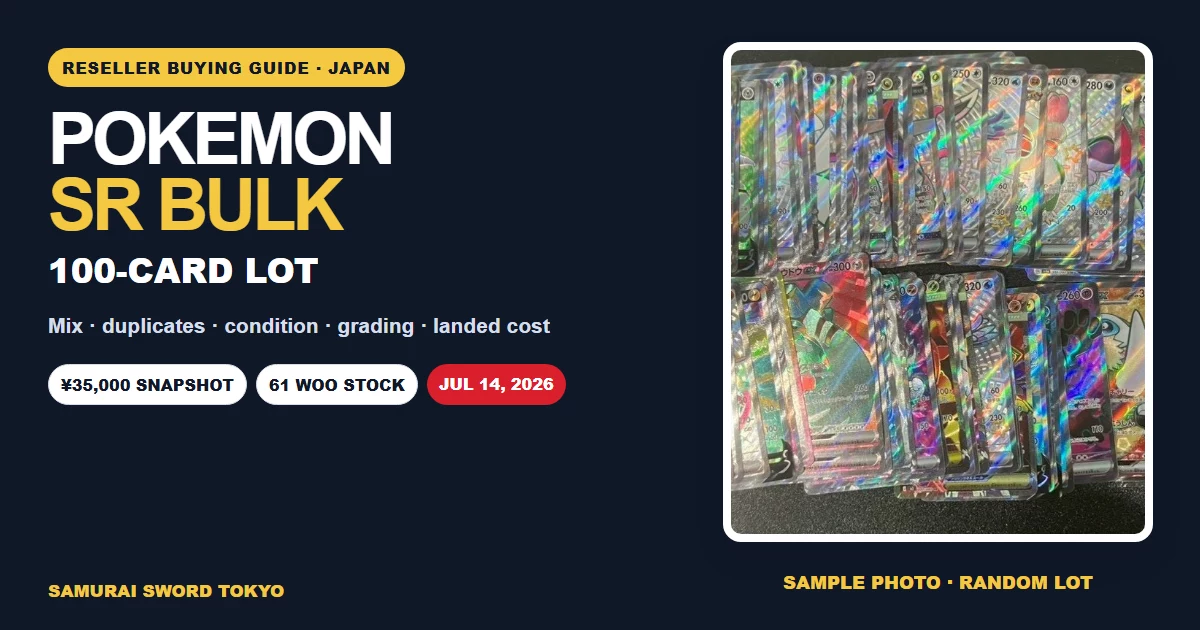
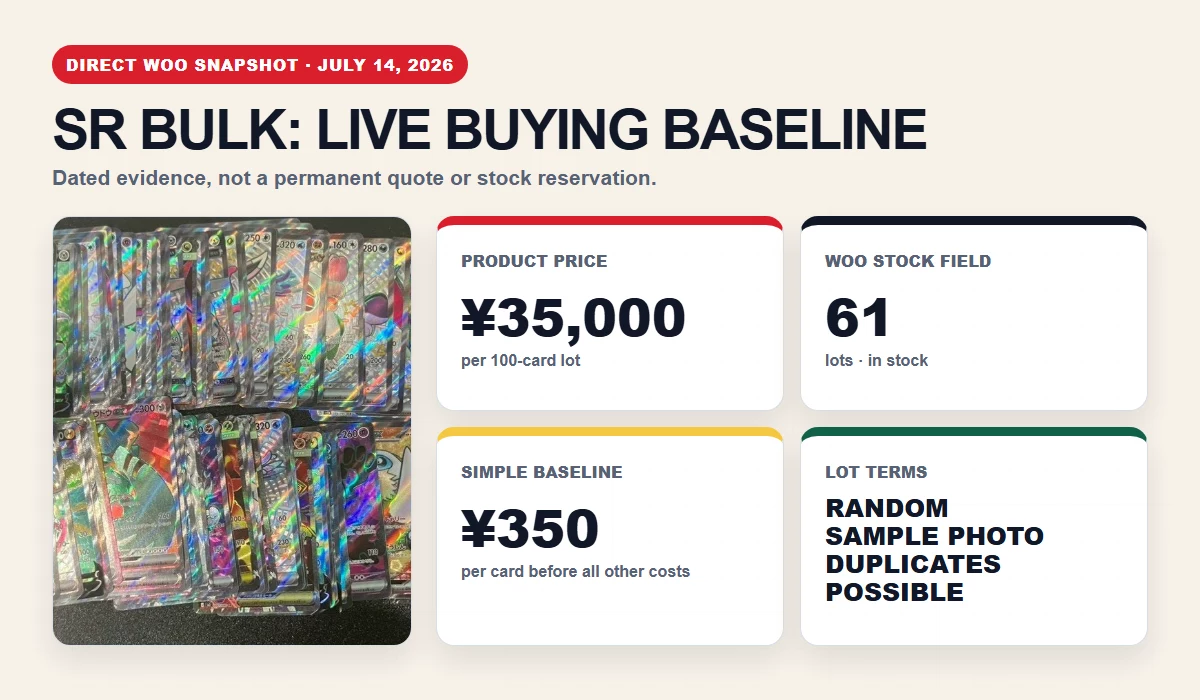
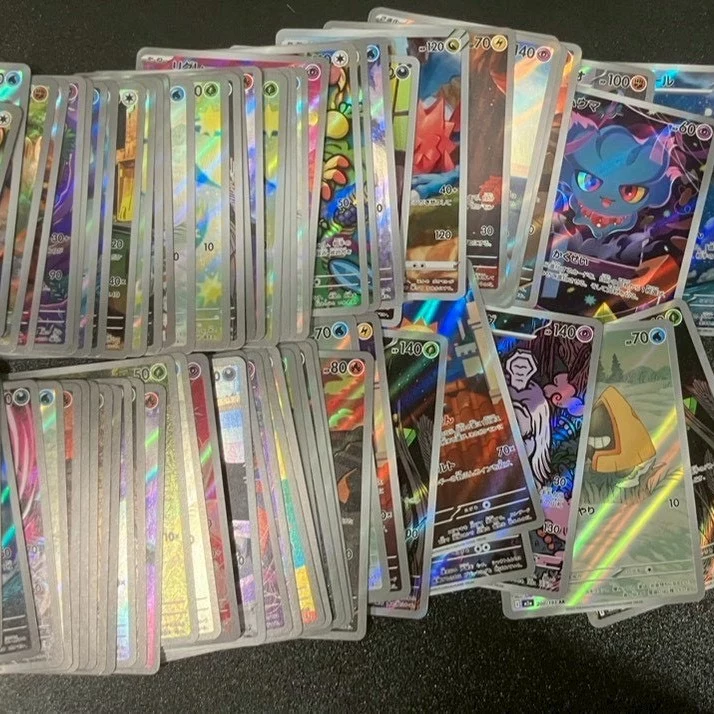
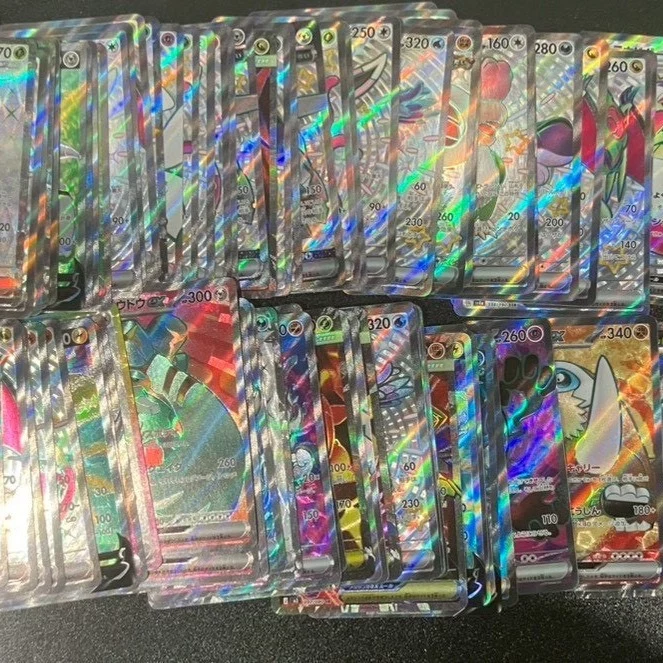
SST editorial thumbnail using the current SR Bulk sample photo. The photograph is representative and does not promise the exact cards, mix or condition in any order.
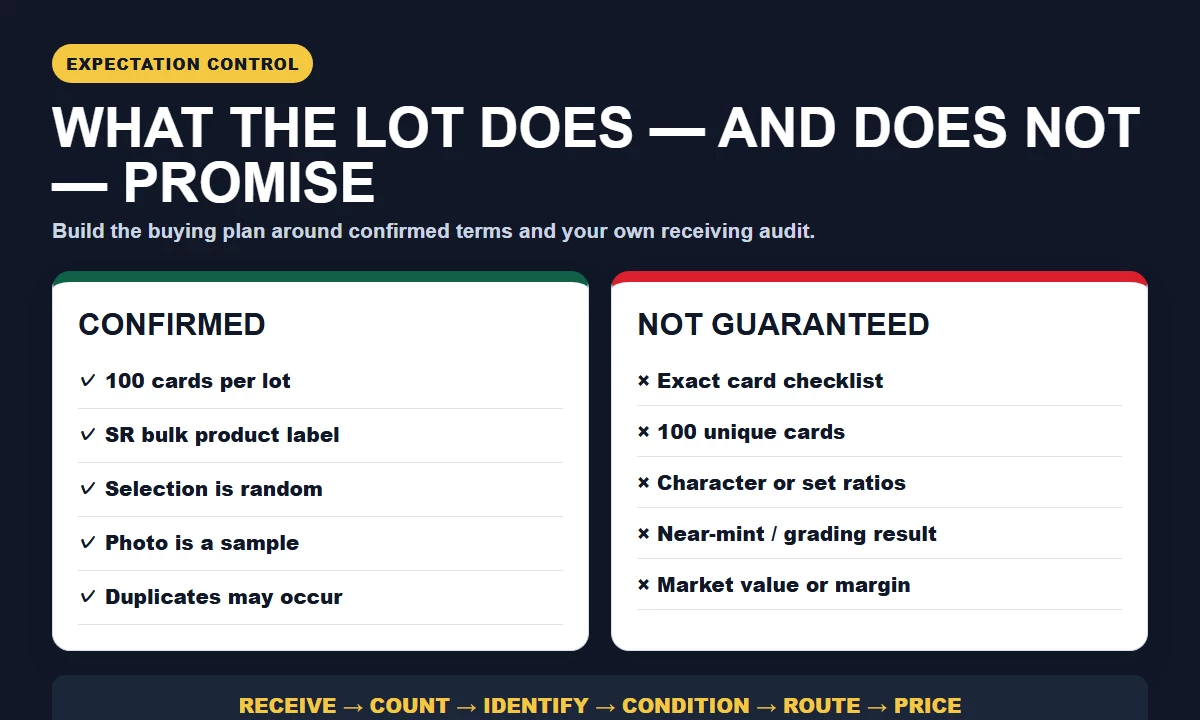
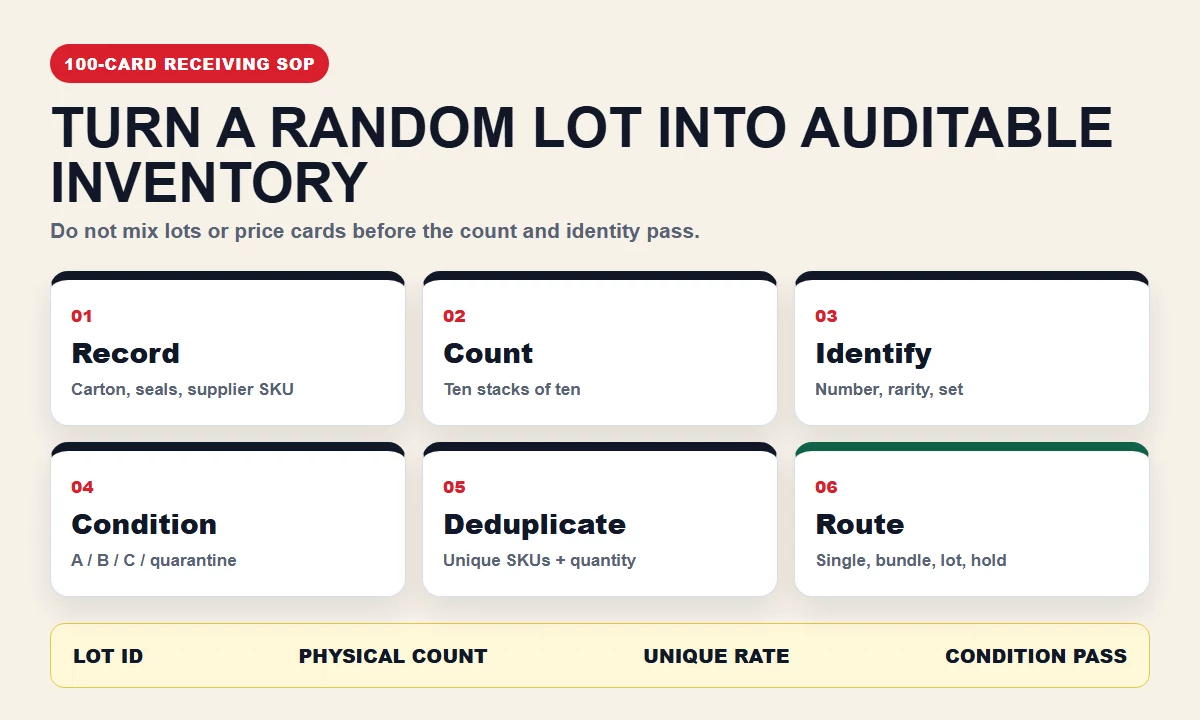
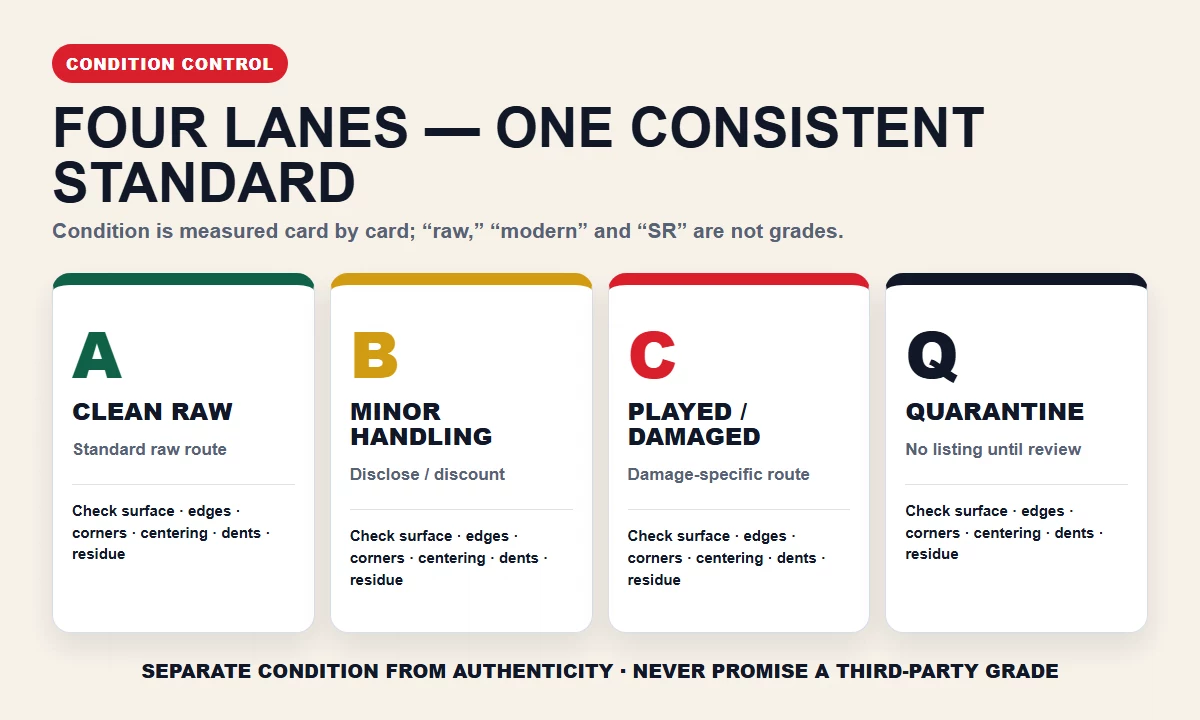
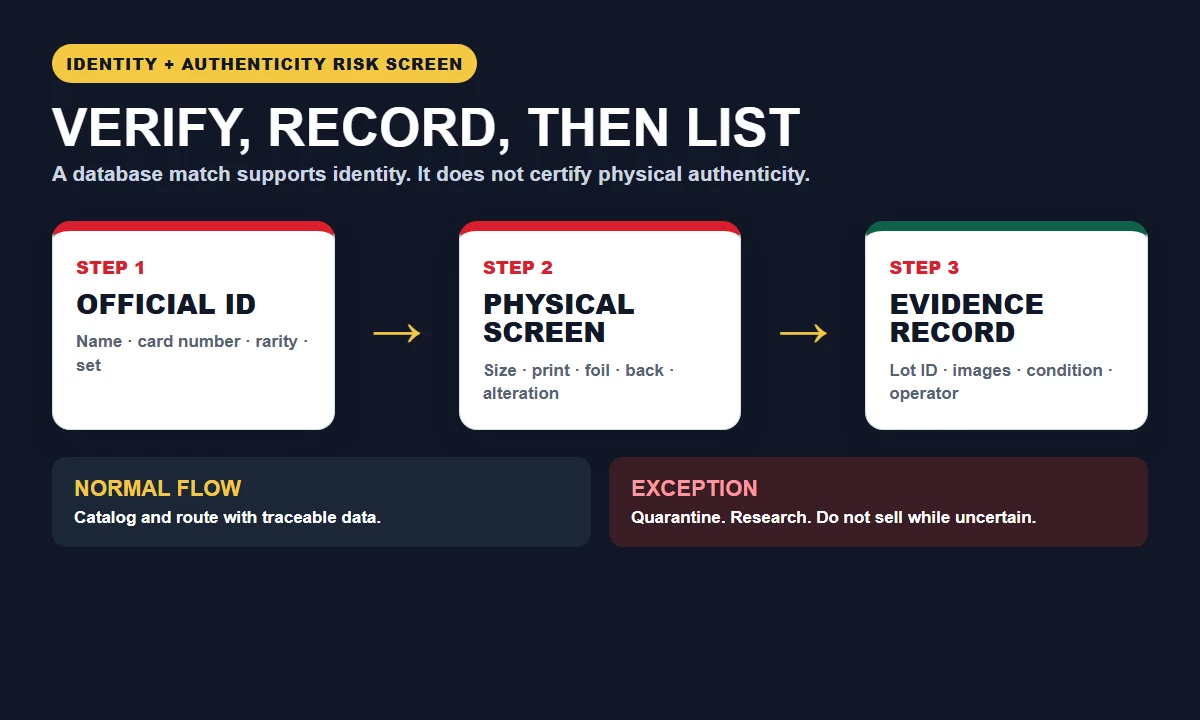
A Japanese Pokemon SR bulk lot can be useful reseller inventory when you want many low-ticket listings, themed bundles or live-sale variety without opening dozens of sealed boxes. It is not a shortcut to a guaranteed chase card, guaranteed grade or guaranteed profit. The commercial advantage comes from process: counting accurately, identifying every card, controlling duplicates, grading condition consistently and knowing your landed cost before you list anything.
Samurai Sword Tokyo currently lists an SR Bulk – 100-Card Set. At the direct WooCommerce snapshot taken July 14, 2026, 4:17 p.m. JST, the product price field was ¥35,000, the Woo stock field was 61 lots, and the stock status was in stock. That equals a simple purchase-price baseline of ¥350 per card before shipping, duties, tax, payment cost, supplies, labor, rejects and selling fees. Price and stock are volatile; recheck the live product page immediately before ordering.
Check the live 100-card lot first
Open the current product page to confirm price and availability. The July 14 values in this guide are a dated audit, not a standing quotation or stock reservation.
Evidence date: July 14, 2026, 4:17 p.m. JST. Price, stock, grading terms, carrier rules and import costs can change. Recheck primary sources before acting.
Is the SR 100-Card Lot Right for Your Resale Model?
The right first question is not “Are SR cards valuable?” It is “Can my store turn a random 100-card assortment into clear, accurately described offers at a controlled operating cost?” A reseller with fast cataloging, existing Pokemon traffic and several sales channels can route different cards to different buyers. A seller who depends on one premium hit may have no reliable way to recover labor and international costs when the mix is ordinary.
Live product snapshot: price, stock and lot terms
Direct SST / WooCommerce snapshot; volatile values must be rechecked before purchase.
Field
July 14, 2026 snapshot
How a reseller should use it
Produkt
SR Bulk – 100-Card Set (ID 40607)
Confirm you are evaluating the SR lot, not the lower-priced AR lot.
SKU
SR-BULK-100
Keep the supplier SKU in your purchase and intake records.
Preis
¥35,000 per 100-card lot
Use as the purchase component only; it is not landed cost.
Woo stock
61 lots; in-stock status
Availability is a snapshot, not a reservation or future promise.
Simple unit baseline
¥350 per card
Before freight, import charges, labor, supplies, rejects and selling fees.
Selection statement
Random; sample photo; duplicates may occur
Do not pre-sell an exact checklist or duplicate-free mix.
Dated product evidence from a direct read-only WooCommerce audit. The live page can change after this guide is generated.
The listing description says the photograph is a sample, cards are selected completely at random, and the seller will try to avoid duplicates while acknowledging that duplicates can still occur. Those three facts define the commercial risk more clearly than the word “bulk.” They mean your expected result must be a range of workable inventory outcomes, not one assumed composition.
Best-fit and poor-fit reseller profiles
Use the lot only when its uncertainty matches your sales operation.
Buyer profile
Fit
Reason
Card shop with a raw-singles cabinet or searchable web catalog
Strong fit
Many distinct low-ticket SKUs can create depth and repeat browsing.
Live seller or breaker who can present random variety honestly
Potential fit
Duplicates can be routed across sessions if condition and identity are controlled.
Convention vendor building affordable Japanese-card binders
Potential fit
Visual variety can be useful when the offer is not built around exact chases.
Grading-only reseller
Weak fit without inspection evidence
A raw bulk title and sample image do not guarantee grade-ready cards.
Preorder seller promising a fixed checklist
Poor fit
The product is random and duplicates may occur.
Buyer needing one trainer, Pokemon or set
Poor fit
Exact singles reduce assortment risk and catalog labor.
A three-question go/no-go test
Can you sell at least three inventory routes—for example individual raw cards, themed bundles and store/display lots—without changing the truth of the product?
Can you count, identify, photograph and condition-grade 100 cards quickly enough that labor does not erase the price advantage?
Can you absorb a conservative outcome containing repeated characters, repeated card numbers or cards that should not be graded?
If any answer is no, reduce the quantity, improve the workflow first or buy exact inventory. A lot can be fairly priced and still be the wrong input for a particular business model.
What “SR Bulk” Means—and What It Does Not Promise
SR is a real rarity filter in the official Japanese Pokemon Card Game database, but “SR bulk” on a reseller product is also a supplier-facing lot label. Those are related concepts, not permission to assume every possible premium rarity, character ratio or era is represented. The official card search currently separates SR from categories such as AR, SAR, UR, SSR, HR, CHR and CSR. A buyer should therefore verify each card’s printed number and official database entry instead of treating every textured or full-art card as interchangeable.
SR compared with neighboring Japanese rarity labels
Rarity labels are identity fields, not automatic value rankings.
Label
Operational meaning for intake
Do not assume
SR
Record the printed card number and confirm the official rarity entry.
That every SR has the same demand, price, art treatment or grade potential.
AR
Keep separate from SR if the supplier or your customer uses strict rarity filters.
That AR and SR lots are interchangeable because both can be illustration-focused.
SAR
Catalog only when the exact card is confirmed as SAR.
That a visually elaborate card in an SR-labeled lot is guaranteed to be SAR.
UR / HR / SSR
Use the official card entry and era context.
That adjacent premium labels are included in a random SR lot.
Promo or special treatment
Record promo number, stamp and distribution context.
That rarity can be inferred from foil pattern alone.
The sample-photo rule
The source photograph shows a broad group of glossy Japanese Pokemon cards laid out together. It is useful for recognizing the general product and for designing this guide. It does not prove the next lot’s exact characters, sets, card numbers, duplicate count, surface quality or resale value. Do not crop one attractive card from the sample and imply that it will be included. Do not advertise “cards shown” unless the supplier explicitly changes the terms to an exact photographed lot.
The random-mix rule
A random selection means the mix can vary across Pokemon, Trainers, set eras, artwork popularity and market liquidity. It may also vary between two lots bought at the same time. Random does not necessarily mean statistically uniform, and there is no published probability model for individual card numbers in this product. Build forecasts around categories—unique cards, duplicate bands, condition lanes and sales routes—rather than named hits.
The duplicate rule
The seller’s best-effort duplicate reduction is helpful, but the listing explicitly allows duplicates. Plan for them. “Duplicate” should normally mean the same card number and treatment, not merely the same Pokemon name. Two Charizard cards from different sets or with different card numbers are different catalog items. Conversely, the same artwork and number repeated five times is one SKU with quantity five, even if tiny print variation makes the copies look slightly different.
The lot is defined by confirmed terms on the left and buyer-controlled verification on the right. The middle remains unknown until receiving.
How to Audit Mix, Duplicates and Count on Arrival
The receiving desk is where a bulk purchase becomes reliable inventory. Film or photograph the sealed parcel before opening, preserve the supplier label, and count before sorting. This protects both parties if the physical count differs from the order and gives your team a timestamped chain of custody. Do not start listing attractive cards while the remainder is still uncounted.
A repeatable six-step intake converts an unknown random mix into auditable inventory without making value assumptions.
Step 1: reconcile the physical count
Use a clean playmat or sorting tray and count in groups of ten. A 100-card unit should resolve into ten stacks of ten before sleeves, cataloging or grading decisions. Record shortages, overages and obvious transit damage separately. If several lots arrive together, keep each supplier unit isolated until its count and intake ID are complete; otherwise duplicate and condition reporting becomes impossible at the lot level.
Step 2: create a lot-level audit sheet
Minimum fields for the first receiving pass.
Field
Example format
Why it matters
Internal lot ID
SR-20260714-A
Connects every card to one purchase and shipment.
Supplier product / SKU
40607 / SR-BULK-100
Prevents confusion with AR bulk or exact-card purchases.
Physical count
100 received
Establishes the denominator for every later rate.
Unique card numbers
Measured after cataloging
Shows assortment depth without implying value.
Duplicate units
Total count minus unique count
Quantifies routing work.
Zustand lane counts
A / B / C / quarantine
Stops damaged cards entering clean listings.
Exceptions
Mismatch, suspected alteration, moisture, odor
Creates a review queue and evidence trail.
Step 3: identify mix before pricing
Sort first by printed card number and rarity, then by character or theme. Pricing too early creates anchoring: the team spends time on the most recognizable cards and neglects repeated or low-liquidity inventory. A complete identity pass also exposes cards that resemble one another but belong to different sets, and it makes the duplicate rate measurable.
Recommended mix metrics for one 100-card lot.
Metric
Calculation
Decision supported
Unique-card rate
Unique card numbers / 100
How much catalog breadth the lot creates.
Duplicate rate
(100 – unique card numbers) / 100
How much inventory needs quantity or bundle routing.
Top-SKU concentration
Largest identical-card quantity / 100
Whether one repeated item dominates the lot.
Pokemon / Trainer split
Count by card type after verification
Merchandising and audience routing.
Era / set spread
Count by set code or release family
Search tags, binder sections and customer fit.
Zustand pass rate
Saleable raw cards / 100
The accepted-card denominator for landed cost.
Step 4: band duplicates by action
Duplicate quantity is a routing input, not a quality verdict.
Identical copies
Default action
Control
1
List as a single SKU
Photograph the actual condition lane or use precise representative-photo wording.
2-3
Single SKU with quantity, or split across channels
Keep worst-condition copy out of the best-condition listing.
4-9
Test themed bundles, playsets only where appropriate, or live-sale rotation
Never call a random group a complete set.
10+
Wholesale/store lot or scheduled replenishment stock
Monitor sell-through before buying more of the same profile.
A duplicate can be commercially useful if it is accurately counted and routed. The risk appears when the buying plan assumed 100 unique listings. Model at least one conservative duplicate case before ordering; for example, ask whether your operation still works if only 70 to 80 card numbers are unique. That range is a stress test, not a forecast for this product.
Zustand Control Without Overpromising
Raw modern cards can look clean in a group photo while showing whitening, scratches, dents, print lines or pressure marks under direct light. “Pack fresh” is not a measurable condition grade, and a bulk supplier photo cannot establish the condition of the cards you receive. The reseller should create a repeatable house standard, disclose it and photograph exceptions.
A four-lane condition system keeps saleable raw cards, discounted inventory and review cards from mixing after intake.
Use four condition lanes
Example internal lanes; align customer-facing terms with your marketplace policy.
Lane
Internal definition
Typical route
A — clean raw
No immediately visible crease, dent or major whitening; surface passes angled-light check.
Standard raw listing with actual or representative images as disclosed.
B — minor handling
Small edge or surface issue that should be disclosed but remains presentable.
Discounted single or clearly labeled bundle.
C — played / damaged
Crease, dent, heavy scratching, peeling, moisture or major edge wear.
Damage-disclosed listing, non-premium bundle or no-sale decision.
Q — quarantine
Identity, authenticity, alteration, odor or contamination concern.
No listing until reviewed and documented.
Inspect foil surfaces under controlled light
Use a diffuse overhead light plus a movable side light. Rotate the card rather than rubbing its surface. Check front and back for print lines, roller marks, scratches, dents, edge chips, corner compression, staining, residue and bending. Sleeves can hide edge whitening and create reflections, so inspect outside the sleeve with clean, dry hands or suitable handling tools. Never clean, press or recolor a card to improve appearance; alteration can destroy trust and may make a card ineligible for a numeric grade.
Separate condition from authenticity
A genuine card can be damaged, and a visually clean card can still need identity or authenticity review. Do not use “authentic” as a synonym for “near mint.” Likewise, do not describe a raw card as “PSA 10 quality.” PSA’s published standards describe a 10 as virtually perfect and include centering, corners, focus, gloss and staining considerations, while also acknowledging judgment and eye appeal. Your intake screen is not the grading company’s final result.
Write listings that survive returns
State whether the image shows the exact card or is representative.
Use the printed card number, set or regulation mark, rarity and language in the title or item specifics.
Disclose material defects with a close photograph rather than relying on a broad grade word.
Keep condition-lane notes attached to the inventory ID after a card moves between channels.
Do not combine A- and B-lane copies under one condition without explaining the range.
Consistent conservative descriptions often matter more than assigning the most optimistic condition. Returns, partial refunds and customer-service time are part of the economics even when the card itself was inexpensive.
Authenticity and Catalog Accuracy at Scale
A reseller needs two controls: verify that the card identity is recorded correctly, and escalate anything that appears inconsistent with a genuine factory-issued card. The first control is routine catalog work. The second is a risk screen, not a guarantee. An image, a matching card number or a database result alone cannot prove authenticity.
Identity confirmation, physical comparison and exception review should be separate steps with recorded evidence.
Start with the official Japanese card database
Use the Pokemon Card Game official card search to cross-check name, printed number, rarity and set context. The official search exposes rarity filters including SR and adjacent categories, making it a better authority for classification than a marketplace title. SST also maintains a Japanese Pokemon card-list hub as a navigation aid, but official card data should resolve identity conflicts.
Run a physical consistency screen
This screen finds exceptions; it does not certify a card.
Check
Normal control
Escalate when
Printed identity
Name, number, rarity and set context agree with official reference.
A number, rarity or art does not match the reference.
Dimensions and cut
Card aligns with a known genuine comparison card.
Size, corner radius or cut is visibly inconsistent.
Typography and symbols
Text weight, energy symbols and rule text look consistent.
Fonts, spacing or symbols are distorted or misspelled.
Surface and foil
Pattern and finish behave consistently under changing light.
Static rainbow print, unusual texture or layer separation appears.
Back and color
Back design and color balance are consistent with the era.
Registration, color or border geometry is materially abnormal.
Alteration evidence
No recoloring, trimming, pressing residue or foreign coating.
Edges, gloss or surface show possible intervention.
Quarantine first, research second
Do not place a questionable card into a live listing while researching it. Assign a quarantine ID, photograph both sides and the specific concern, record the comparison source and obtain experienced review. If evidence remains insufficient, do not sell it as authentic. The same rule applies to cards with possible cleaning or alteration: uncertainty should not be passed to the customer through confident language.
Keep a traceable catalog record
At minimum, retain internal lot ID, supplier SKU, card number, rarity, set, character or Trainer name, language, condition lane, quantity and image path. Add the date and operator for any correction. This record makes it possible to answer a customer question, trace a repeated error and calculate true sell-through by lot rather than by a mixed inventory pool.
Reseller Routing: Singles, Bundles, Live Sales and Store Lots
A random lot becomes easier to monetize when each card has more than one honest destination. The goal is not to force every card into the highest advertised price. It is to match inventory depth, condition, demand and labor to the channel most likely to sell it accurately.
Route cards by identity, condition, demand and duplicate depth; rarity alone does not choose the channel.
Bundle must disclose exact contents; theme does not justify hidden damage.
Set or era mini-lot
Verified cards from the same product family.
Do not call it complete unless every required card is included.
Live-sale rotation
Visually engaging cards with clear condition disclosure.
Presentation time and platform fees can exceed the card cost.
Dealer / store lot
Deep duplicates or slower-moving inventory.
Lower unit realization may be exchanged for faster turnover.
Hold / research queue
Newly released, hard-to-identify or uncertain cards.
Capital remains tied up; holding is not a guaranteed appreciation strategy.
Build one SKU, then manage quantity
Identical card numbers in the same condition lane should normally share one catalog SKU with quantity. This prevents duplicate listings from competing with one another and makes replenishment visible. If copies differ materially in condition, separate them. A clean copy and a dented copy are different offers even when the printed card number matches.
Use themed bundles carefully
Bundles can reduce listing labor and give repeated characters a useful destination. They should show or enumerate every included card, state whether duplicates are present and avoid terms such as “mystery value” that imply an undisclosed financial floor. A themed bundle is strongest when the buyer understands the theme, exact quantity, language, condition range and whether the photograph is exact.
Let sell-through decide reorder size
Track thirty-day units sold, days to first sale, average net revenue after marketplace fees, return rate and remaining duplicate depth by intake lot. Reorder because a repeatable route sold through, not because a few attractive cards made the first photo look strong. Current SST stock can support replenishment today, but future price and availability are not guaranteed.
Simple channel scorecard.
Metric
What it reveals
Warning sign
Net revenue per accepted card
Revenue after selling fees and refunds.
Using gross listing price as profit.
Labor minutes per sold card
Operational cost of cataloging and fulfillment.
Low-ticket listings consuming premium-card time.
30-day sell-through
How quickly the chosen route clears stock.
Reordering while duplicate depth keeps rising.
Return / issue rate
Quality of identity and condition descriptions.
Repeated “not as described” claims.
Inventory concentration
Exposure to one card number or character.
One slow SKU dominates remaining units.
Need a larger or recurring order?
Check current quick-order inventory first, then use SST’s inquiry page for a business-specific question. A custom response is not promised, and live stock remains the controlling availability signal.
Grading Strategy: Select Candidates, Do Not Assume Outcomes
The word SR does not make grading profitable, and a card that looks clean in a group photo is not automatically a grading candidate. Grading adds authentication review, a condition opinion, service cost, shipping, insurance exposure and waiting time. The raw card should first pass identity, demand and condition screens on its own merits.
A conservative gate sends only individually researched cards to a grading queue and keeps the remainder in appropriate raw channels.
Use a five-gate grading screen
Every gate should pass before submission.
Gate
Question
Fail action
Identity
Is the exact card number, rarity and variant confirmed?
Catalog or quarantine; do not submit.
Authenticity / alteration
Is there any concern about trimming, recoloring, cleaning or restoration?
Escalate; do not assume a numeric grade.
Zustand
Do front, back, edges, corners, surface and centering meet your threshold?
Sell raw with accurate condition or reject.
Demand
Is there evidence of buyer demand for this exact card in the target grade?
Prefer raw inventory; avoid grading for rarity alone.
Economics
Does a conservative outcome cover all grading and selling costs?
Do not submit if the decision needs a top grade to work.
Model a grade distribution, not a PSA 10 count
PSA’s published standards call a PSA 10 virtually perfect and describe strict expectations for corners, focus, gloss, staining and centering, with an allowance for a minor print imperfection only when eye appeal is not impaired. The same page explains that eye appeal introduces judgment. Therefore, a reseller model should include lower numeric grades, no-grade outcomes and cards returned as questionable or altered where relevant. Do not market raw inventory as “10 candidates” simply because it is modern and glossy.
Add every grading cost
Service level and membership cost at the time of submission.
Outbound and return shipping, insurance and customs exposure where applicable.
Card saver, sleeve, label and preparation labor.
Capital tied up during estimated turnaround, which can change.
Possible upcharges, no-grade outcomes and lower-than-modeled grades.
Marketplace fees, return risk and fulfillment after the slab returns.
PSA states that turnaround estimates and service terms can change. Check the current official service page instead of copying a fee or time from an older article. This guide deliberately does not insert a grading fee into the lot economics because the correct value depends on your account, service level, destination and submission date.
Keep submitted cards tied to the original lot
Assign a submission ID that connects each card back to the SR bulk intake ID. Record raw images, declared value logic, service level, outbound date, received grade and all costs. Without lot traceability, one successful card can make the whole purchase appear more profitable than it was while unsuccessful submissions disappear into general expenses.
Landed Cost, Break-Even and Margin Sensitivity
The July 14 purchase baseline is simple: ¥35,000 divided by 100 equals ¥350 per card. The business calculation is not simple because only accepted, saleable cards should be in the denominator, while every acquisition and processing cost belongs in the numerator. A low per-card purchase price can become a high landed cost when shipping, labor, rejects and slow sell-through are ignored.
Illustrative cost waterfall. Only the ¥35,000 product price is the dated live SST value; every other input must be replaced with the buyer’s actual costs.
Use an accepted-card landed-cost formula
“Accepted” means cards your business is willing to sell in one of its disclosed condition lanes. Quarantine cards, severe damage and unresolved identity exceptions should not quietly remain in the denominator. They still remain in the cost numerator because the business paid to acquire and process them.
Cost inputs to capture for every lot.
Input
Use actual evidence from
Common mistake
Lot purchase
Supplier invoice / Woo order
Using an old article price after the live price changed.
Shipping allocation
Carrier invoice allocated across the combined order
Assigning zero shipping because other products shared the carton.
Duties, taxes and clearance
Import invoice and local rules
Assuming every destination has the same treatment.
Payment and FX
Processor or bank statement
Using the headline exchange rate with no conversion spread.
Supplies
Sleeves, bags, labels, storage and packaging
Treating consumables as free.
Labor
Measured receiving, cataloging, imaging and fulfillment time
Valuing owner labor at zero.
Loss allowance
Historical damage, returns and unsold write-downs
Modeling every card at the best visible condition.
Illustrative sensitivity scenarios
The following table is not a forecast, quotation or profit promise. It holds the lot purchase at the audited ¥35,000 and changes hypothetical operating inputs so a buyer can see why the accepted-card denominator matters. Replace every assumption with your own records.
Illustrative JPY scenarios; no resale value is assumed.
Scenario
Lot
Other landed/processing costs
Accepted cards
Illustrative landed cost per accepted card
Lean operation example
¥35,000
¥10,000
98
About ¥459
Base stress test
¥35,000
¥15,000
95
About ¥526
High-friction example
¥35,000
¥25,000
90
About ¥667
Calculate break-even from net revenue
Gross listing price is not net revenue. If a marketplace charges a percentage fee plus payment or promoted-listing costs, the required gross price must cover those deductions. Add packaging and fulfillment labor again only if they were not already included in the landed model. For a mixed lot, use a portfolio model: some cards may sell individually, some in bundles, and some may remain unsold. Do not assign the same expected selling price to every SR.
Break-even worksheet structure.
Line
Formula or input
Use
Accepted inventory cost
Accepted cards × landed cost per accepted card
Total cost allocated to saleable inventory.
Expected net sales
Gross collected minus marketplace fees, refunds and discounts
Comparable with accepted inventory cost.
Unsold reserve
Cost of inventory not expected to sell in the planning window
Prevents optimistic 100% sell-through.
Operating contribution
Expected net sales minus inventory cost minus fulfillment labor
Business contribution before overhead and tax.
Margin of safety
Conservative downside case vs break-even
Shows whether one bad mix erases the plan.
Treat currency and price as dated variables
SST prices are denominated in JPY. Your card cost in USD, EUR, GBP or another currency depends on the actual settlement rate and fees on the order date. The current ¥35,000 lot price can also change. Save the checkout quote and payment record, then lock the intake lot to the actual JPY and home-currency amounts. Never combine cards from differently priced purchases under one assumed cost without a documented weighted-average method.
International Shipping, Storage and the Final Buying Checklist
International buyers should decide how the cards will be protected, declared, cleared and received before placing a large order. Trading cards are compact, but surface pressure, moisture and movement can create condition problems that are expensive to document after several lots have been mixed together.
Shipping is part of inventory quality: preserve lot separation, control movement and record the carton before intake.
Plan packing around card condition and lot traceability
Ask that inner stacks cannot slide freely or contact hard carton edges.
Keep each 100-card unit identifiable when ordering more than one lot.
Use moisture-resistant inner protection appropriate for the route and climate.
Avoid excessive compression that can create dents or bending.
Photograph the outer carton, seals, labels and inner packing before sorting.
Do not infer actual packed weight from a catalog field. Combined orders, protective materials and carrier dimensional rules can change the chargeable shipment. Use the checkout or business quote for the real shipment and allocate its cost across products consistently.
Add duties, taxes and clearance to landed cost
FedEx’s current international guidance explains that duties and taxes are government-imposed import charges and can depend on declared value, origin, HS classification, agreements, description and product use. Responsibility can be assigned to the shipper, recipient or a third party depending on the shipment, and clearance-related fees may apply. Rules change by destination; confirm your own importer obligations and do not copy another buyer’s tax result.
Store the lot as inventory, not as one loose stack
After intake, sleeve cards according to your handling policy and keep condition lanes physically separated. Use dividers for set or card number and a location code in the inventory record. Store away from moisture, direct sunlight, dust and pressure. A card that passed intake can still be damaged by repeated live-sale handling or by overfilled storage boxes.
Final pre-purchase checklist
Do not order until each row has an owner and an answer.
Check
Pass condition
If not ready
Live product
Current price and stock rechecked on the product page.
Pause; article values are only a dated snapshot.
Lot uncertainty
Random selection, sample photo and duplicate risk accepted.
Buy exact singles instead.
Intake capacity
Team can count, identify, condition-screen and catalog 100 cards promptly.
Reduce quantity or schedule labor.
Sales routes
At least two honest routes exist for ordinary cards and duplicates.
Design routing before purchase.
Cost model
Shipping, import, FX, supplies, labor, fees and rejects are included.
Do not use ¥350 as final cost.
Grading policy
Only individually screened cards enter the grading queue.
Keep the lot raw.
Traceability
Lot ID, SKU, invoice, images and location codes are ready.
Create the intake template first.
SR versus AR bulk: choose by customer demand, not hierarchy
For context, SST’s related AR Bulk – 100-Card Set showed a direct Woo snapshot of ¥27,000 and 16 units in stock during the same July 14 audit. The SR lot showed ¥35,000 and 61. This does not prove which lot has better resale value or margin. It only establishes two current supplier options with different labels and purchase costs. Compare what your customers actually search for, how accurately your team can catalog each rarity, and whether the lower or higher acquisition baseline fits your channel.
Dated SST bulk comparison; recheck both pages before buying.
Produkt
Product ID
Snapshot price
Woo stock
Simple purchase baseline
SR Bulk – 100-Card Set
40607
¥35,000
61
¥350/card before other costs
AR Bulk – 100-Card Set
40606
¥27,000
16
¥270/card before other costs
Ready to evaluate the live lot?
Confirm the current product page, then order only the quantity your intake and sales systems can absorb. For a larger sourcing question, use SST’s inquiry route before checkout.
How many cards are in the SST Japanese Pokemon SR bulk product?
The product is listed as a 100-card set. Count the physical cards before sorting and keep each unit separate if several lots arrive together. The sample photograph is not an exact checklist.
What was the SR Bulk 100-card price on July 14, 2026?
A direct read-only WooCommerce audit at July 14, 2026, 4:17 p.m. JST showed ¥35,000 for product ID 40607. That is a dated product-price field, not a permanent quote. Recheck the live page before ordering.
Was the SR bulk lot in stock?
The same audit showed a Woo stock quantity of 61 lots and an in-stock status. Inventory can be purchased, held, reconciled or repriced after the snapshot, so the live product page controls current availability.
Does a 100-card SR bulk lot contain 100 different cards?
Not guaranteed. The listing says selection is random and that the seller will try to avoid duplicates, but duplicates may occur. Build your plan around a measurable unique-card rate after receiving.
Are the exact cards in the sample photo guaranteed?
No. The listing describes the photo as a sample. Use it to identify the product category, not to advertise exact characters, card numbers, sets, condition or value in the next order.
Are all cards guaranteed near mint or PSA 10 candidates?
No such guarantee is stated. Inspect every card for surface, edges, corners, centering, dents, scratches and alteration concerns. A raw condition screen cannot guarantee a third-party grade.
Can I grade cards from an SR bulk lot?
You can individually research and screen cards, but submit only when identity, authenticity risk, condition, demand and conservative economics all pass. Include lower-grade and no-grade outcomes in the model.
Is ¥350 the real cost per card?
It is only ¥35,000 divided by 100. Real landed cost must also include allocated shipping, import charges, payment and FX costs, supplies, labor, rejects, returns and selling fees, divided by accepted saleable cards.
How should a reseller handle duplicates?
Catalog identical cards under one SKU with quantity, separate material condition differences, and route deeper copies to transparent themed bundles, live-sale rotation or dealer lots. Never call a random group a complete set.
How do I confirm that a Japanese card is really SR?
Use the printed card number and the official Japanese Pokemon Card Game card search to confirm the rarity and set context. Do not rely on foil appearance or a marketplace title alone.
Should I buy SR bulk or AR bulk?
Choose from customer demand, intake skill, purchase cost and sales routes. The July 14 snapshot showed different prices and stock for the two products, but it does not prove one has better profit or value.
Can international buyers owe duties or taxes?
Potentially. Import treatment depends on destination rules, declared value, classification, origin and shipment terms. Confirm the current customs and carrier requirements for your business and include all charges in landed cost.
Sources checked July 14, 2026: SST product ID 40607 and related AR product ID 40606 through a direct read-only WooCommerce audit; the live SST product pages; the Pokemon Card Game official card search; PSA grading standards; and FedEx international duties, taxes and shipping guidance. Current values are dated snapshots. Operational examples are SST editorial frameworks, not value or earnings promises.
Pokémon-Sammelkarten im Bulk vs. Einzelkarten vs. versiegelte Boxen: der beste Weg für Wiederverkäufer
Samurai Sword Tokyo editorial thumbnail using current SST AR and SR sample-product images plus original route graphics. Sample cards are not guaranteed lot contents.
Route verification: July 14, 2026 (JST). Intended publication time: March 16, 2026 at 7:50 AM JST. Product and category availability is live-only and can change; this guide does not reserve stock or guarantee future supply.
For most resellers, there is no universally “best” inventory format. Bulk cards can create assortment depth at the cost of random identity, possible duplicates, condition intake, and heavy cataloging. Exact singles give the clearest product identity and customer match, but every acquisition decision is made card by card. Sealed booster boxes reduce listing count and keep the opening experience intact, but concentrate capital at the set level and expose the reseller to reprint, box-condition, and demand-cycle risk.
The best route is the one your operation can process, sell, and reorder using evidence. A live seller with fast visual sorting may use bulk efficiently. A search-driven store may prefer exact singles. A shop with collectors who want unopened Japanese product may favor sealed boxes. Many durable businesses use all three, with a different job and risk budget for each.
The first click should match the inventory problem
Do not begin with the format that looks cheapest in isolation. Begin with the customer promise you must fulfill. If a buyer asks for one exact Japanese card, a random lot is the wrong starting point. If a convention seller needs hundreds of visually interesting cards for rotating displays, buying each single one by one may consume too much sourcing time. If a collector wants an unopened box, neither bulk nor loose singles can substitute for sealed condition.
Reseller need
Best first route
Why
Primary SST path
Broad art-card or rarity-lane assortment
Bulk-Karten
One lot creates many card-level SKUs, with randomness and duplicates accepted
Start from the customer promise. Price comparison comes after identity, workload, and exit route are defined.
What buyers should check in the first 10 minutes
Check
Bulk-Karten
Singles
Versiegelt
Exact identity
Unknown until intake
Known before purchase
Set/product known; internal pulls unknown
Zustand work
Card-by-card
Card-by-card, but preselected
Box/seal inspection rather than every card
Duplicate exposure
Explicitly possible in random lots
Controlled by order quantity
Duplicate boxes are intentional quantity
Listing count
Potentially very high
High but controlled
Low relative to units of card inventory
Demand level
Card/character/rarity mix
Exact card
Set, box, chase narrative, sealed collector
Reprint sensitivity
Card-specific and supply-specific
Card-specific
Often concentrated at product/set level
Best evidence
Intake sample and sell-through
Sold data for exact card/version
Set demand, reprint information, live category/quote
These differences explain why a single gross-margin target is not enough. Each format uses capital and labor differently. A format can show a high percentage markup but still produce worse cash flow because it takes too long to catalog or sell.
Live routes are evidence, not inventory promises
Samurai Sword Tokyo’s current WooCommerce structure uses the /collections path as the category base. The current Pokemon single-card category is Pokemon Single Card, and the sealed category is Pokemon Sealed Booster Box. Those routes were verified against live taxonomy on July 14, 2026. Category assignment counts are not the same as currently sellable stock, and neither a link nor this article reserves inventory.
Bulk Route: Buy Breadth, Then Create Order
What the current AR and SR lots actually promise
AR Bulk sample image. The live description states that selection is random, the photo is illustrative, and duplicates may occur.SR Bulk sample image. It shows the product lane, not the exact cards a future buyer will receive.
The current AR Bulk and SR Bulk pages are both 100-card products. Their written disclosures are the controlling buyer expectation: the photograph is a sample, cards are selected randomly, Samurai Sword Tokyo will try to avoid duplicates, and duplicates can still occur. “100-card set” therefore describes quantity, not 100 guaranteed unique card numbers.
This route is strongest when the reseller can turn an unordered assortment into useful inventory. That requires identity checks, condition inspection, stable SKUs, duplicate counts, storage, images, price research, and a channel for slow cards. The acquisition is only the beginning; operational conversion creates the actual product a downstream customer sees.
When bulk wins
Bulk can outperform other routes when sourcing time is the bottleneck and the business already has a fast intake system. Convention sellers, live sellers, binder specialists, character-bundle merchants, and stores with high multi-card order rates may value the breadth. A repeated copy is not automatically a failure if the same SKU sells consistently or can rotate across events.
Bulk can also support content and discovery: a broad visual assortment gives a reseller more subjects for social posts, live streams, themed trays, or “shop by Pokemon” routes. But that benefit exists only when each exact card is represented honestly. Never reuse the sample lot photograph as if it were the customer’s specific inventory, and never promise characters visible in that sample.
When bulk loses
Bulk is a poor fit when the reseller needs exact cards, has little cataloging capacity, cannot inspect raw condition, or has no plan for repeated slow-moving copies. It also fails when profitability depends on every card being Near Mint, gradeable, or worth more than the lot average. The current product descriptions make no such guarantees.
Bulk strength
Operational requirement
Failure mode
Control
Fast assortment depth
Repeatable identity and condition intake
Cards remain unlisted in boxes
Set an intake-hours deadline
Many visual SKUs
Efficient photography and listing template
Labor exceeds gross margin
Measure minutes per sellable SKU
Possible quantity per SKU
Duplicate outlet and storage
Capital concentrates in weak repeats
Track copies by SKU and age
Random discovery
Conservative value forecast
Sample image biases expected value
Forecast by buckets, not pictured cards
One-lot sourcing
Accurate landed-cost allocation
Freight and duties disappear from model
Allocate actual costs consistently
Singles Route: Buy Exact Demand and Control Identity
Why exact singles are the cleanest customer match
The Japanese Pokemon single-card category is the right route when a customer searches by Pokemon, Trainer, set, card number, rarity, language, or exact artwork. The reseller knows the product identity before purchase and can decide quantity deliberately. This removes random assortment risk and makes keyword, collection, and want-list merchandising more precise.
Exact selection is especially useful for restocking proven sellers. If historical orders show steady demand for a specific card, buying that card can be more efficient than acquiring a random lot and hoping it appears. The reseller can also separate versions that look similar but differ by set code, card number, stamp, rarity, mirror treatment, or reprint.
Singles are controlled, not effortless
Each single still requires condition confidence, price research, an inventory record, storage, and fulfillment. Sourcing one by one can consume time, and popular cards may carry a high acquisition cost because other buyers see the same demand. The exact identity reduces mix risk; it does not guarantee that the resale price will hold or that the card will sell inside the desired window.
Use the official Japanese Pokemon Card Game card-search page to cross-check card identity and current official taxonomy where applicable. Then verify the exact product page and condition evidence. Do not merge two printings because the artwork appears similar.
When singles win or lose
Situation
Singles advantage
Singles downside
Decision rule
Customer want list
Exact fulfillment
Acquisition may be competitive
Buy only the exact version requested
Proven bestseller
Controlled reorder
Price can rise with visible demand
Use a maximum landed cost
SEO/search store
Clear card-name landing pages
Many individual listings
Prioritize queries with sales evidence
High-value raw card
Exact inspection focus
One condition mistake has impact
Require detailed condition review
New reseller
Easy identity logic
Temptation to chase hype
Start with low count and measured turnover
Singles lose when sourcing and listing overhead becomes fragmented, when the reseller buys attractive cards without customer evidence, or when current asking prices are mistaken for completed-sale value. A smaller exact inventory is not automatically liquid. Every SKU still needs an exit plan.
Sealed Route: Sell the Product, Not the Expected Pulls
The sealed proposition is set-level demand
The current route for unopened Japanese Pokemon boxes is the sealed booster-box category, with a broader Japanese booster-box route also available. This guide intentionally avoids publishing individual sealed-product prices. Box price, stock, shrink/no-shrink status, allocation, and reprint expectations can change; verify the live category, exact product page, and current wholesale quote at decision time.
A sealed reseller sells a defined unopened product and its set-level narrative: release era, chase lineup, opening experience, collectability, language, and box condition. The internal card outcome remains uncertain, so do not market a box as though it contains a specific chase or guaranteed profit. Pull-rate estimates, when used, need their own source and caveat; they are not a substitute for a sealed inventory thesis.
Why sealed can simplify operations
One box is one primary SKU. The reseller photographs and inspects the exterior, confirms the exact product and seal state, records condition, and stores a smaller number of units than an equivalent card-by-card assortment. Listing, picking, and counting can be faster than a 100-card random lot. That operational simplicity is one reason sealed can support wholesale and repeat-store procurement.
However, low listing count does not mean low risk. A box can absorb more capital per unit, and demand can move with new releases, official reprints, allocation changes, collector sentiment, or the relative value of chase cards. Box dents, tears, fading, crushing, or seal concerns can reduce buyer confidence. Storage volume and international shipping weight also matter.
When sealed wins or loses
Sealed factor
Why it can win
Why it can lose
Evidence needed
Few SKUs
Faster listing and fulfillment
Capital concentrates by set
Set-level sell-through
Unopened experience
Appeals to collectors/openers
Buyer expectations can be speculative
Accurate product and seal description
Recognizable product
Easier merchandising
New releases compete for attention
Release/reprint monitoring
Box quantity
Works for shops and breakers
Shipping/storage cost grows
Checkout/wholesale quote
Long holding option
Product can remain sealed
Capital is unavailable while held
Maximum holding period and exit rule
Sealed is a poor choice when the business needs quick card-level cash flow, cannot store boxes safely, or is buying solely because online discussion predicts a future price. It is also wrong for a customer who wants one exact single. Use the official Pokemon Card Game news page to monitor product announcements and reprint-related information, then verify the specific SST route.
Capital and Landed Cost: Compare the Same Economic Unit
Product cost is only the first layer
Use the same cost layers for all three routes. A format does not become profitable because one layer was omitted.
For every route, landed cost includes acquisition, allocated shipping, destination duties or taxes where applicable, payment and currency costs, supplies, intake labor, listing labor, marketplace fees, pick/pack labor, customer-service and return allowance, discounts, and inventory that remains unsold beyond the target period. Different routes distribute those costs differently, but none makes them disappear.
Bulk often spreads acquisition across many cards while increasing labor per lot. Singles concentrate research and acquisition at the exact-SKU level. Sealed can reduce listing labor while increasing capital and storage per unit. Compare net proceeds per labor hour and per capital-day, not only gross markup percentage.
Cash conversion matters more than the prettiest margin
Cash is not recovered at purchase or listing. The cycle closes only after a completed sale, fees, fulfillment, and any return window.
A bulk card that costs little but takes six months to list is not cheap operationally. A high-demand single with a modest margin may recycle capital quickly. A sealed box with an attractive theoretical gain may create no usable cash while it sits in storage. Decide the maximum time allowed for each stage: procurement, intake, listing, sale, and reorder.
Metric
Bulk-Karten
Singles
Versiegelt
Primary cost unit
Lot, then per received/sellable card
Exact card
Exact box/product
Hidden cost risk
Intake and unlisted cards
Research fragmentation and condition
Storage, freight, capital concentration
Revenue unit
Card, bundle, or quantity listing
Exact card
Box/product
Best velocity metric
% cataloged and sold in 30/60/90 days
Days per SKU sale and reorder
Units sold by set and holding period
Capital warning
Many small slow cards
Overpaying for obvious demand
Holding too much in one release
Allocate shared shipping honestly
The current SST Shipping Policy calculates shipping at checkout and states that separate orders ship separately rather than being combined later. If a reseller wants bulk, singles, and sealed products in one parcel, the basket must be planned before checkout. Allocate actual freight across the products using a consistent method such as weight, volume, or value; do not make one route look better by assigning its freight elsewhere.
Labor and Throughput: The Route Your Team Can Process
Bulk creates the largest intake queue
Relative workflow, not a universal time guarantee. Measure your own minutes per sellable unit.
A random 100-card lot must be counted, identified, inspected, sorted, assigned to SKUs, photographed or matched to an accurate image system, priced, stored, and routed to listings or bundles. Duplicate copies require quantity control. Zustand exceptions require individual photos and conservative descriptions. The lot may be physically received today but commercially unavailable for days if intake capacity is weak.
Exact singles still require many of the same steps, but identity and intended quantity are known at purchase. Sealed boxes shift attention from card-by-card inspection to product, seal, exterior condition, variant, and shipping protection. Each route needs a standard operating procedure that is short enough to follow and detailed enough to prevent SKU mixing.
Measure bottlenecks by stage
Stage
Bulk bottleneck
Singles bottleneck
Sealed bottleneck
Beschaffung läuft
Unknown mix and lot terms
Finding exact card/version
Finding correct set/seal/quantity
Intake
100-card identity and condition queue
Per-card condition
Box/seal/exterior verification
Listing
Many SKUs and duplicates
Many exact listings
Few listings, more product detail
Storage
Card organization
High-value card security
Space and crush protection
Fulfillment
Picking exact card/condition
Exact-card accuracy
Protective box packing and freight
Reorder
Mix may not repeat
Exact SKU can be targeted
Set supply and reprint can change
Choose formats that fit existing labor, not imagined labor
A solo seller with two hours per week should not buy a pipeline that requires twenty hours of intake. A store with barcode, photography, and staff systems may process the same lot efficiently. Record minutes per received unit, minutes per listed SKU, correction rate, and orders per labor hour. Use those facts in the next purchase decision.
If your team cannot process one route without creating backlog, reduce quantity or change format. Unlisted inventory has acquisition cost but no searchable sales surface. The cheapest operational improvement is often a smaller order that reaches customers faster.
Risk and Buyer Expectations: Control What Each Format Can Break
Different routes fail differently. Use a control specific to the risk instead of one generic “buy safely” checklist.
Bulk risk is mix uncertainty
Bulk risk begins with what is not known: exact card identities, duplicate concentration, and the condition distribution of a random assortment. The controls are disclosure, conservative forecasting, intake sampling, duplicate outlets, and a maximum labor budget. The current sample-photo and duplicate language must remain visible to the buyer.
Singles risk is exact-SKU error
Singles risk includes wrong set, wrong card number, wrong language, wrong variation, incorrect condition, or acquisition at a price unsupported by completed demand. The controls are identity verification, exact images, conservative condition grading, and SKU-level purchase ceilings.
Sealed risk is product and cycle concentration
Sealed risk includes wrong variant, seal or box-condition disputes, reprint or allocation changes, release-cycle competition, storage damage, and capital held in one set. Controls include exact product naming, exterior-condition records, official news monitoring, category/wholesale refresh, quantity limits, and a defined exit date.
Risk
Bulk control
Singles control
Sealed control
Identity
Intake every card
Verify exact card before purchase
Verify exact box/set/variant
Zustand
Grade each received card consistently
Use exact-card evidence
Record box and seal condition
Availability
Never promise future lot stock
Confirm live SKU
Confirm category/product/quote
Demand
Use bucketed sell-through
Use exact-card sales evidence
Use set-level demand and release context
Concentration
Duplicate limits and outlets
Per-SKU quantity ceiling
Per-set capital ceiling
Customer claim
Random/sample disclosure
Exact version and condition
No guaranteed pulls or returns
No control removes market risk. It makes the decision auditable and reduces errors that the reseller can prevent.
Build a Mixed Inventory Portfolio
Give every route one job
A balanced portfolio is not equal spending. Weight each lane by proven customer demand and processing capacity.
Bulk can provide discovery and breadth. Singles can fulfill exact search demand and restock proven cards. Sealed can serve collectors, openers, stores, and breakers who want the unopened product. A mixed portfolio becomes useful when those roles are explicit; otherwise it becomes three unrelated piles competing for cash and labor.
Create separate dashboards. For bulk, track percentage cataloged, unique SKUs, duplicate concentration, and sell-through by rarity or character. For singles, track exact SKU turnover, replenishment success, and condition-related returns. For sealed, track units by set, days held, storage, release/reprint events, and price/quote refresh dates.
Budget by capacity and evidence
Do not use an arbitrary equal split. A store with strong box demand and limited card-scanning staff may allocate more to sealed. A high-volume marketplace seller with mature single-card operations may allocate more to exact singles. A live seller with fast sorting and an audience that likes variety may allocate a controlled share to bulk.
Business type
Core lane
Support lane
Limit
Search-driven online singles store
Exact singles
Select bulk for discovery
Cap unlisted intake backlog
Convention / live seller
Bulk or mixed singles
Sealed highlights
Cap duplicate concentration
Collector-focused sealed shop
Versiegelt
Chase singles
Cap per-set capital
New reseller
Small exact singles test
One controlled bulk/sealed test
No route scaled before evidence
Card shop / breaker
Sealed + exact singles
Bulk for side inventory
Use current wholesale quote and labor plan
Use wholesale for mixed procurement, not vague requests
The wholesale inquiry is the right place to state destination, route mix, budget, quantity, condition requirements, duplicate tolerance, timing, and substitution rules. It does not guarantee any product, allocation, price, or custom assortment. Wait for current written confirmation before promising inventory to customers.
Test and Reorder: A 30/60/90-Day Framework
Scale only after intake, sales, labor, and remaining-stock evidence agree.
Day 0 to 30: prove the intake system
Set a fixed test budget and maximum labor allowance for each chosen route. Record the live URL, order terms, checkout shipping, and the reason each item was selected. On arrival, count and inspect before mixing with existing stock. The first 30-day goal is not maximum revenue; it is complete, accurate, searchable inventory with no hidden backlog.
For bulk, calculate unique SKUs, duplicate concentration, condition distribution, and minutes per card. For singles, verify identity/condition error rate and time per listing. For sealed, record box/seal condition, storage space, listing completion, and the current release/reprint information used in the decision.
Day 31 to 60: measure real customer demand
Track views, inquiries, offers, completed sales, discounts, bundles, average cards or boxes per order, and net proceeds. Separate gross listing value from money actually received. Identify inventory that sells without promotion, inventory that requires discounting, and inventory that receives no qualified interest.
Day 61 to 90: decide whether to reorder, revise, or exit
The route closes only when shipped inventory becomes measured sales data—not when it merely arrives.
At 90 days, compare every route on net margin after labor, percentage sold, capital still tied up, error/return rate, and remaining inventory quality. Reorder only if the route passes thresholds written before the test. Revise when one fix is clear, such as faster imaging or a lower per-SKU quantity. Exit when the customer fit or economics do not work under conservative assumptions.
Gate
Reorder
Revise
Stop / exit
Intake
Completed on schedule
Backlog has one solvable cause
Inventory cannot be cataloged economically
Demand
Target sell-through reached
Interest exists but price/channel needs change
Little qualified demand
Margin
Positive after full costs and labor
Near target with measurable fix
Depends on omitted costs or optimistic listings
Risk
Errors/returns within limit
One control needs improvement
Identity, condition, or claims repeatedly fail
Capital
Remaining stock fits holding limit
Reduce next quantity
Capital lock blocks better inventory
The framework protects against excitement bias. One strong pull, one viral card, or one fast box sale does not validate the full route. Repeated, accurately measured transactions do.
Häufig gestellte Fragen
Are bulk Pokemon cards better for resellers than singles?
Only when the reseller can process randomness, possible duplicates, condition intake, and high listing volume efficiently. Singles are usually better for exact customer demand. Compare net proceeds per labor hour and capital-day instead of assuming the lower blended acquisition route wins.
Are sealed booster boxes safer than bulk cards?
Not universally. Sealed removes card-by-card assortment work, but concentrates risk at the set and product level. Reprints, allocation, box condition, storage, and demand cycles matter. Bulk and sealed fail differently; neither guarantees profit.
Which route needs the least listing labor?
Sealed usually needs the fewest listings because one box is one primary SKU. Exact singles require many controlled listings. Random bulk typically creates the largest intake queue because every card must be identified, inspected, sorted, and routed.
Can a 100-card bulk lot be treated as 100 unique cards?
No. The live AR and SR descriptions say selection is random and duplicates can occur despite a best effort to avoid them. Quantity is not a uniqueness guarantee, and the sample image is not an exact manifest.
Will bulk buyers receive the exact sample-photo cards?
No. The photo is described as a sample. Do not forecast value from pictured cards, promise those identities downstream, or reuse the source sample as though it represents your exact resale stock.
Should a new reseller start with sealed boxes?
Only after defining customer demand, storage, box-condition controls, reprint monitoring, freight economics, and an exit window. A small cross-route test often teaches more than putting the entire starting budget into one sealed release.
What is the best route for exact customer requests?
Use the Japanese Pokemon single-card route. Confirm card number, set, rarity, language, version, and condition. Bulk is random, and sealed does not guarantee one specific pull.
How should a reseller compare profit across the three routes?
Use actual net proceeds after acquisition, shipping, duties or taxes, payment costs, labor, supplies, platform fees, discounts, returns, and unsold stock. Apply the same time horizon and labor rate to all routes. This guide makes no profit guarantee.
Can stock or future availability be assumed from this guide?
No. Routes were verified on July 14, 2026, but products, category contents, stock, quotes, and shipping conditions can change. Recheck the live page and obtain current written confirmation before making customer commitments.
When should a reseller use the wholesale route?
Use wholesale for recurring supply, mixed formats, store or breaker quantities, or requirements that need a written answer. Include destination, budget, quantities, route mix, duplicate tolerance, condition rules, timing, and substitutions.
Bottom Line
Bulk, singles, and sealed boxes solve different reseller problems. Bulk buys breadth and creates processing work. Singles buy exact identity and require card-level sourcing discipline. Sealed buys a defined unopened product and concentrates capital at the set level. The right route is not the one with the most exciting gross margin; it is the one that reaches customers accurately, converts cash within the target window, and can be repeated without breaking the team’s labor or risk limits.
Start from the live SST route that matches the customer promise: AR Bulk, SR Bulk, Japanese Pokemon singles, or sealed booster boxes. Use wholesale for a current mixed-order or recurring-supply conversation. Verify availability and terms at decision time, then scale only after measured 30/60/90-day results.
Leitfaden zur Seltenheit japanischer Pokémon-Karten für Käufer gegradeter Karten
Japanese Pokemon Card Rarity Guide For Graded Buyers
Start With The Rarity Guide Buying Router
If you are buying Japanese Pokemon cards for PSA 10, do not sort only by the printed rarity abbreviation. Use rarity to narrow the search, then confirm the exact Pokemon or Trainer, artwork, set, card number, live availability, and buyer role.
Updated June 23, 2026: this guide turns high-traffic rarity-guide search behavior into a practical buying checklist for overseas collectors, resellers, and card shops sourcing Japanese PSA 10 Pokemon cards from Japan.
Key takeaway: rarity helps you filter cards, but PSA 10 value comes from the full buying context. A lower-rarity Pikachu promo, Trainer card, or popular art card can be a better graded buy than a higher-rarity card with weak demand.
The Real Worry Behind A Rarity Search
Most buyers do not search a rarity guide because they love abbreviations. They search because they are worried about making a mistake: buying the wrong version, overpaying for a rare-looking card, grading a card that should stay raw, or building inventory that will not move. A good rarity guide should name those worries before it asks the reader to click a product or wholesale link.
Convert the buyer’s worry into a next action: verify, compare, browse, or request a current quote.
Buyer worry
What they are really asking
How this guide answers
Best CTA
I do not understand the rarity labels.
Which cards are worth my attention first?
Use rarity as a filter, then prioritize character demand, artwork, and buyer role.
Read the rarity ladder, then browse live PSA 10 cards.
I am afraid of buying the wrong version.
How do I avoid confusing similar Japanese cards?
Check set, card number, language, artwork, grade wording, and official card data before relying on price.
Open exact product pages first.
I do not know if PSA 10 is worth the premium.
Should I buy raw, grade later, or buy the slab?
Compare condition certainty, time, fees, resale speed, and buyer trust.
Quick Answer: What Rarity Should PSA 10 Buyers Care About?
For graded-card buyers, the most useful Japanese rarity groups are not simply the rarest labels. The strongest buying routes are usually character-driven: SAR or SR Trainers, icon Pokemon, Japanese promos, Eeveelutions, Charizard, Pikachu, Mew/Mewtwo, and cards with artwork that can sell the slab at a glance.
Buyer question
Short answer
SST action
I want live PSA 10 inventory.
Start with cards that are currently listed or can be quoted now.
The graded-card buyer ladder: rarity label, character demand, artwork, PSA 10 availability, then live quote.
Rarity Guide: Core Japanese Labels Decoded
Before using rarity as a PSA 10 buying filter, decode what the label actually means. Japanese Pokemon products do not use one permanent ladder across every era, but the labels below cover the abbreviations most overseas graded-card buyers will meet when checking modern and semi-modern Japanese cards.
C/U/RRR/RRR
Base layers and headline mechanics
Use these to understand the set structure first. They are not automatic PSA 10 targets.
Best when the Pokemon, era, or play history creates demand beyond the label.
ARCHRCSRSA
Artwork-first routes
These cards sell visually. The image, character pairing, and theme often matter more than abbreviation status.
Good for display cases and themed collections when the art is easy to explain.
SRSARSSR
Premium full-art and chase routes
Trainer names, icon Pokemon, and story artwork decide whether the label turns into PSA 10 demand.
Verify exact product-page taxonomy, card number, and quote date before comparing prices.
URGoldPromo
Scarcity story routes
Gold treatment and promo distribution can look premium, but the story must be clear to the buyer.
Promo number, event context, and live availability matter more than a simple rarity ladder.
Label
Meaning
PSA 10 buying read
C / U / R
Common, Uncommon, and Rare base-set layers.
Usually not a slab priority unless age, play history, character demand, or unusually clean condition changes the equation.
RR / RRR
Modern double-rare/triple-rare headline mechanics such as ex, V, VMAX, or era-specific main cards.
Good identity filter, but the exact Pokemon, artwork, and current price support still decide the buy.
AR / CHR / CSR / SA
Art, character, and special-art routes where the visual scene carries demand.
Strong for merchandising and theme collectors; grade only when condition and resale path justify PSA fees.
SR / SAR / SSR
Secret/full-art, special-art, or shiny-product taxonomy depending on era and product page.
Potential premium PSA route; verify exact card number, product taxonomy, live price, and supply before ordering.
UR / Gold / Promo
Premium finish or distribution route rather than a simple pack-rarity ladder.
Demand depends on recognizability, event story, and availability more than the abbreviation alone.
Why Competitor Rarity Guides Get Traffic
Ahrefs‘ June 15, 2026 domestic competitor snapshot showed SNKRDUNK’s Pokemon card rarity article with an estimated 11,579 monthly organic visits and 280 ranking keywords. The searcher behind that page is usually trying to decode abbreviations before making a buy, sell, grade, or keep decision.
SST should not copy that content. The useful lesson is format: answer fast, use tables, define confusing labels, and then route the reader into the next commercial action. For SST, the next action is not a generic rarity glossary. It is choosing whether to browse live PSA 10 slabs, request a wholesale list, compare raw vs PSA 10, or build a character-themed buying route.
Competitor pattern
Why it works
SST upgrade
Rarity definitions
Beginners need abbreviations decoded quickly.
Connect each rarity to PSA 10 buying risk and buyer role.
Tables and simple hierarchy
Readers skim before they trust the article.
Add buyer routes, product links, and wholesale actions.
FAQ for long-tail questions
Rarity creates many small search queries.
Answer grading, resale, raw-vs-slab, and shop-inventory questions.
Image breaks
Visual cards make the page easier to understand.
Use SST-owned product/slab images instead of copying competitor images.
The bigger SEO lesson is that high-traffic competitors do not rely on one article type. They cover different search jobs: release freshness, hit-card rankings, price checks, product inventory, trust/process questions, character-specific PSA demand, and overseas where-to-buy searches. This article covers the rarity-guide job, then deliberately points buyers toward the commercial routes SST can actually serve.
SEO role
Benchmark surface
Ahrefs read
Searcher job
How this article adapts it
Fresh release and new-set hub
SNKRDUNK release schedule page
18,548 estimated visits
What is new, what should I watch, and when should I act?
Keep rarity explanations tied to the next buyable route instead of leaving the reader in research mode.
Hit-card and price-ranking page
SNKRDUNK set hit-card pages
12,974 estimated visits on a Pokemon 151 hit-card page
Which cards matter most, and what price range should I expect?
Use ranked routes, dated SST price examples, and live quote CTAs instead of a numberless glossary.
Evergreen rarity glossary
SNKRDUNK rarity guide
11,579 estimated visits / 280 keywords
Decode abbreviations before buying, selling, grading, or keeping a card.
Answer the same beginner anxiety, then move into PSA 10 risk, exact version checks, and inventory routes.
PSA 10 inventory surface
Cardrush PSA10 category
6,016 estimated visits
Show me buyable PSA 10 cards now.
Place the PSA 10 collection and exact product routes early so the article does not behave like a passive dictionary.
Trust and transaction page
Hareruya2 buying page
5,496 estimated visits
Can I trust the process, price, and next step?
Repeat current-quote, availability, wholesale, and exact-version checks where anxiety is highest.
Character PSA 10 long tail
magi character PSA10 article
1,136 estimated visits
What about this exact character or named card in PSA 10?
Branch from rarity into Trainer, Pikachu, Charizard, Eeveelutions, promo, and display-case routes.
Overseas shopping entry
PokeNinJapan / TCG Republic style pages
US demand around Japanese Pokemon cards, where-to-buy, and card-list queries
How do I buy Japanese cards from Japan without confusing versions or sources?
Write in plain English, keep images dense, and connect education to collection and wholesale actions.
Japanese Rarity Labels Through A Graded-Card Lens
Japanese Pokemon cards use set-specific rarity labels, and those labels can change across eras. Treat the table below as a buyer map rather than a permanent universal rule. Always confirm the exact Japanese card in the official card database, product page, or current seller quote before relying on a rarity abbreviation.
Rarity or route
How buyers usually read it
PSA 10 buying note
Best CTA
C / U / R
Base rarity layers for set completion and play.
Usually not a PSA 10 priority unless the card has unusual age, art, play history, or character demand.
Use as raw/set-completion context.
RR / RRR
Modern ex/V/VMAX-style headline cards depending on era.
Icon Pokemon can still matter, but the abbreviation alone does not guarantee a strong slab.
Compare exact Pokemon and artwork.
AR
Art Rare, often loved for illustration and binder appeal.
Grade only when art demand, centering, and resale path justify the premium.
Use raw-vs-PSA checklist.
SR
Full-art or special treatment depending on era and card type.
Trainer SRs and icon Pokemon SRs can become strong PSA 10 routes.
Check product pages and related character guides.
SAR
Special Art Rare with stronger story/art pull in many modern sets.
Often a good PSA 10 candidate, but still needs liquidity and live quote discipline.
Browse PSA 10 collection or request availability.
UR / gold
Gold cards and premium treatments.
Can be collectible, but demand varies widely by card identity.
Do not buy by rarity label alone.
Promo
Not a normal pack rarity, but often a major collector route.
Distribution story can matter more than printed rarity.
Use exact product page or wholesale quote.
Vintage / trophy / no-symbol routes
Era and scarcity can outweigh modern rarity logic.
Requires extra authentication, grade, and market research.
Use specialist inquiry and current quote.
Use rarity labels as a filter, then move into character demand and live buying routes.
Era-By-Era Rarity Labels: What Actually Changes
The biggest beginner mistake is treating every Japanese rarity abbreviation as if it belongs to one permanent ladder. Japanese Pokemon products have changed structure across eras, and collector demand does not move in a perfectly straight line from common to rare. For PSA 10 buyers, the era matters because it changes how many comparable cards exist, how easy the card is to identify, and whether the rarity label is the main story or only a small part of it.
Use this section as a sanity check before making a graded-card decision. A modern SAR can be easy to explain because the art, rarity label, and character route are visible at a glance. An older holo or promo can require more explanation because the card’s appeal may come from age, event distribution, or a specific campaign. A clean PSA 10 slab removes condition uncertainty, but it does not remove the need to understand why that exact card has demand.
Era or product route
How the label can mislead buyers
PSA 10 check
Best buying action
Older Japanese holos and vintage routes
The visible rarity mark may not tell the whole story. Age, set history, scarcity, and condition can matter more than modern abbreviation logic.
Confirm exact set, card number, holo pattern, language, grade cert, and whether the slab is easy for your buyer segment to recognize.
Use a specific inquiry rather than a broad rarity filter.
Sun & Moon full-art and promo-heavy routes
SR, HR, and promo routes can overlap with character demand. A normal-looking promo number can still be the main value driver.
Check whether the card is wanted because of rarity, character, event distribution, or art. Do not collapse those into one price assumption.
Open exact product pages and compare cards within the same character route.
Sword & Shield art routes
AR, CHR, CSR, SR, and SA-style collector language can be used loosely by sellers and buyers.
Match the official card identity first, then ask whether the illustration can sell the slab visually.
Use the card image, set number, and product page before relying on shorthand labels.
Scarlet & Violet SAR / AR routes
SAR can sound automatically premium, but weak character demand or thin liquidity can still make a slab slow to move.
Combine rarity with Pokemon or Trainer recognition, artwork, PSA 10 availability, and live quote discipline.
Browse live PSA 10 inventory, then request a current quote for quantity or substitutions.
Promos, event cards, and campaign cards
They do not fit neatly into pack-rarity ladders, so simple rarity charts underrate them.
Look for distribution story, age, visual appeal, and how easily the card can be explained to an overseas buyer.
Use product pages or wholesale inquiry with the exact promo number.
Worked PSA 10 Candidate Walkthrough
Here is the practical way to use the guide on one named route. Suppose a buyer is evaluating a modern Charizard SSR-style PSA 10 slab such as PSA10 Charizard ex SSR 331/190. The printed rarity label helps the card pass the first screen, but the buy decision should not stop there. Charizard has broad recognition, the art is visually strong in a product card, and PSA 10 removes most condition uncertainty for an overseas buyer. Those are positives. The remaining work is to confirm the exact version, whether the product page is live, whether the quote is current, and whether the buyer wants one premium slab or a broader display mix.
This walkthrough also shows why a lower-rarity card can compete with a higher-rarity card. If the higher-rarity card is hard to explain, has weak character demand, or lacks a clear resale audience, it may lose to a promo Pikachu, Eevee, Trainer, or Charizard with a stronger story. In other words, the rarity label is a gate, not the final score.
Decision step
What to inspect
Pass signal
Stop signal
Exact identity
Name, set number, language, artwork, grade label, and product URL.
The product title, image, and slab identity all describe the same card.
Similar artwork or seller shorthand creates version confusion.
Collector demand
Pokemon or Trainer recognition, theme fit, and visual appeal.
The card can be explained quickly in a shop case, listing title, or buyer message.
The only selling point is that the abbreviation sounds rare.
PSA 10 role
Whether the buyer needs certainty or can accept raw-condition risk.
The slab saves time and gives a clear resale/listing format.
The buyer mainly wants grading upside and can wait.
Liquidity and use case
Collector, reseller, store display, or wholesale order.
The card fits a named route: Charizard, Pikachu, Eeveelutions, Trainer, promo, or display mix.
The buyer cannot name who will want the slab later.
Quote discipline
Live product page, current availability, and dated quote if buying quantity.
The decision uses current SST availability or a fresh wholesale list.
The decision relies on old screenshots or unsourced price memory.
Top 10 Rarity Routes To Check Before Buying PSA 10
This is the competitor-derived module: put the named routes near the top so buyers can self-sort quickly. The ranking is not a permanent market ranking. It is a practical order for deciding which rarity-driven routes deserve attention first.
Rang
Route
Why buyers click
PSA 10 decision
SST path
1
Trainer SR / SAR
Character demand can turn the card into a grail.
Check name, artwork, set, quote date, and liquidity.
Shop By Intent: Collector, Reseller, Store, Or Bulk Buyer
A rarity guide converts better when it does not treat every reader the same. A collector wants confidence. A reseller wants turnover. A store wants a case that is easy to explain. A bulk buyer wants a current list and clear substitutions.
Use the buyer route first, then choose rarity and exact card identity.
Before a Japanese card becomes a PSA 10 buying candidate, it should pass more than one filter. This is where many rarity guides stop too early. The abbreviation can tell you what category the card belongs to. It cannot tell you whether the card belongs in a graded inventory order.
Filter
Pass signal
Fail signal
Character demand
Pikachu, Charizard, Eeveelutions, Mew/Mewtwo, major Trainers, or a theme collectors already understand.
The card is rare but hard to explain to the target buyer.
Artwork
The art can sell the slab visually in a product card or showcase.
The art is technically rare but not visually compelling.
Exact version
Card number, language, set, and artwork are easy to verify.
Multiple versions can be confused in listings or quotes.
Zustand path
Already PSA 10 or realistically worth grading after raw screening.
Likely 9 or lower after fees, time, and shipping.
Liquidity
Buyer segment is clear: collector, reseller, store, or high-end buyer.
The only reason to buy is „it is rare.“
Quote discipline
Live product page or current wholesale quote is available.
The decision relies on an old screenshot or unsourced price claim.
Exact card identity is the protection layer between a rarity search and a confident purchase.Official data helps verify the card. The buy decision still needs live SST availability and a dated quote.
Product Routes For The Article
These SST links make the article more than a glossary. Each link gives a reader a practical next step after learning how rarity affects graded-card buying.
A product-style rail keeps the rarity guide connected to live buying paths instead of staying as a glossary.
A promo card may not fit the same hierarchy as pack-pulled rarities. Its demand can come from distribution method, event story, age, region, artwork, character, and how often clean graded copies appear. That is why a promo can outperform a card with a higher-looking rarity abbreviation.
For graded buyers, the practical question is not „what rarity is it?“ The better question is „why will someone want this exact slab later?“ If the answer is release story, character, art, and limited availability, the card can deserve serious attention even when a normal rarity table does not rank it neatly.
Raw vs PSA 10: The Grading Decision Image
Rarity can suggest a candidate, but the buy route depends on condition risk, time, fees, and resale confidence.
When a buyer is not sure whether to buy raw or graded, the article should slow them down. The important question is not whether the card is rare. The important question is whether the certainty of PSA 10 is worth more than the possible upside of grading a raw copy later.
Market Watch: Price Signals Must Stay Numeric
Price-sensitive buyers need numbers, but those numbers must be dated and sourced. Ahrefs demand explains the search behavior; current product pages or quotes handle the buying decision.
The Ahrefs benchmark confirms the practical problem: Japanese rarity searchers are also price searchers. In the June 15, 2026 snapshot, ポケモンカード 値段 showed 16,000 search volume and 3,491 estimated traffic for Cardrush, while psa10 showed 4,500 volume and 5,145 estimated traffic. Removing all price numbers makes the guide feel safer internally but weaker for a buyer who is trying to decide whether a slab price is reasonable.
The safer pattern is not to publish stale third-party price screenshots. It is to show the numeric demand signal, show dated SST product-page price examples where available, and tell the reader to re-check the live page or request a current wholesale quote before ordering.
Signal
Ahrefs keyword
Market
Benchmark site
Volume
Traffic
Pos.
Article use
JP price intent
ポケモンカード 値段
JP
Cardrush Pokemon
16,000
3,491
1
Keep price language visible; users are not satisfied by rarity labels alone.
JP PSA intent
psa10
JP
Cardrush Pokemon
4,500
5,145
22
Connect rarity explanations to PSA 10 product routes early.
JP character/SAR intent
ブラッキーsar
JP
Cardrush Pokemon
8,500
8,912
1
Character demand can outrank the rarity abbreviation itself.
JP named-price intent
リーリエ値段
JP
Cardrush Pokemon
3,300
3,484
1
Named-card price checks should be handled with dated pages or quotes.
JP PSA character route
ピカチュウpsa10
JP
Cardrush Pokemon
900
988
1
PSA 10 plus icon Pokemon is a stronger route than generic rarity terms.
Overseas Japanese-card intent
japanese pokemon cards
US
PokeNinJapan
8,600
29
17
Explain Japanese-card buying in plain English before abbreviations get too dense.
Overseas where-to-buy intent
where to buy japanese pokemon cards
US
PokeNinJapan
400
66
4
Add collection and wholesale CTAs for readers ready to source from Japan.
Overseas card-list intent
eevee heroes card list
US
TCG Republic
3,800
359
4
Use card-list style structure and visual product routes, not only prose.
Research basis: Ahrefs domestic and overseas keyword snapshots dated 2026-06-15, local benchmark report outputs/ahrefs-rarity-psa-keywords-2026-06-23/ahrefs_rarity_psa_keyword_benchmark_from_raw.md, official Pokemon Card Game card-search page, and SST product-page structured data checked June 23, 2026 JST. Product-page examples are price discipline examples, not availability guarantees. Public competitor and official images were not copied into this article.
How To Use This Guide For Wholesale
If you are buying for a shop, resale channel, or recurring overseas supply, send a brief that turns rarity into an actionable assortment. Instead of asking for „rare cards,“ specify the buyer outcome.
A wholesale buyer should turn rarity into an order brief: theme, quantity, budget, substitutions, and destination.
Target quantity and budget range.
Preferred routes: Trainers, promos, Pikachu, Charizard, Eeveelutions, AR illustration cards, modern SAR, or lower-price display slabs.
Whether PSA 10 only is required or raw Japanese cards can be mixed in.
Destination country and expected shipment timing.
Acceptable substitutions and cards to avoid.
Whether the order is for collecting, resale, shop display, or mixed inventory.
Not automatically. SAR often has stronger collector appeal because of full-art storytelling, but the better PSA 10 buy depends on the Pokemon or Trainer, artwork, population, liquidity, and live price.
Should I grade every AR or SAR Japanese Pokemon card?
No. Grade candidates should be screened by demand, condition, centering, expected grade, fees, and resale path. Some lower-rarity cards are better raw binder cards than PSA 10 inventory.
What rarity should a reseller focus on?
Resellers usually need recognizable Pokemon, Trainers, promos, and liquid slabs rather than the rarest label in isolation. A mixed PSA 10 assortment can be stronger than one expensive card.
Do Japanese rarity labels match English rarity labels exactly?
No. Japanese products use their own set structures and rarity labels, and older eras can differ significantly. Always check the exact Japanese card, set, number, and artwork.
Why can a promo card beat a higher rarity pack card?
Promo demand can come from distribution story, age, event context, and character popularity. Those factors can matter more than the printed rarity label.
Where should overseas buyers start?
Start with live SST PSA 10 inventory if you want current buyable slabs. Use the wholesale inquiry route for quantity, substitutions, or mixed Japanese TCG sourcing.
Can rarity predict PSA 10 price by itself?
No. Rarity is only one signal. Card identity, artwork, population, market timing, condition, language, and buyer segment all affect PSA 10 pricing.
How should card shops use rarity guides?
Use rarity as a merchandising map. Build display cases around recognizable themes such as Pikachu, Charizard, Eeveelutions, Trainers, promos, and modern art cards instead of sorting only by rarity abbreviation.
Bottom Line
Japanese Pokemon card rarity is useful because it helps buyers organize the search. It is dangerous when it becomes the entire buying decision. For PSA 10 buyers, the better path is simple: use rarity to filter, use character and artwork to judge demand, use live SST inventory to confirm availability, and use wholesale inquiry when the order needs quantity or recurring supply.
Leitfaden für den Großhandel mit japanischen PSA-10-Pokém...
Japanese PSA 10 Pokemon Cards Wholesale Guide: How Overseas Buyers Can Source From Tokyo
Last updated: June 4, 2026. Market data, canonical CTA links, and gallery product links were refreshed before upload packaging.
This guide focuses on the buying workflow for PSA 10 Japanese Pokemon cards, including how to browse current SST inventory and when to use the wholesale inquiry path for larger orders.
Key Takeaway: Tokyo PSA 10 wholesale sourcing should be treated as a buying workflow, not a simple card list. The strongest SST angle is direct access to Japanese PSA 10 inventory, wholesale inquiry paths, and product pages that help international wholesalers and high-volume collectors move from research to action.
This guide explains how overseas buyers can approach Japanese PSA 10 sourcing from Tokyo with a wholesale mindset instead of a scattered product-page crawl.
The buying decision is different from a sealed-box set guide. A PSA 10 buyer is not only asking "which card is best?" They are asking whether the seller can confirm current graded inventory, whether the order can scale, how to compare product pages quickly, and which link to click when they are ready to request pricing or buy.
Quick Answer
For Tokyo PSA 10 wholesale sourcing, start with the PSA 10 collection, then use the wholesale page if the order is multi-card, recurring, or B2B. Individual product pages are the place to confirm exact card identity, PSA 10 wording, and current availability before ordering.
Use the product page or quote to confirm the exact card, PSA 10 wording, and live availability.
Use the broad collection when you are still comparing options. Use individual product pages when the exact card matters. Use the wholesale path when you need current quantity, pricing, or recurring supply.
Why Japanese PSA 10 Cards Work For Overseas Buyers
Japanese Pokemon cards have several advantages for graded-card buyers: Japanese print quality is often strong, Japanese-only promos create collector stories, and overseas buyers frequently want inventory that is difficult to source locally. A PSA 10 slab also removes a large part of the condition-risk conversation because the buyer can compare grade wording, product title, card identity, and price before ordering.
That does not make every PSA 10 card a good buy. The practical question is what changes buyer action. A reseller cares about liquidity and margin. A collector cares about exact artwork and long-term desire. A store cares about showcase appeal, category breadth, and how quickly each slab can be explained to a customer. A breaker or content seller may care about recognizable names that perform well on camera.
For this topic, the practical hook is Tokyo-origin trust, inventory depth, and direct wholesale CTA flow. Start with the buying workflow, then check risk controls and order planning before committing budget.
Market Signal: PSA Demand Is Still Elevated In 2026
The useful recent data is not "every PSA 10 card is automatically going up." The stronger claim is narrower and more actionable: PSA grading volume is still running at very high levels in 2026, PSA 10 cards carry a large premium over raw cards in broad Pokemon price data, and individual slab prices need a dated comp check before a buyer commits budget.
As of GemRate’s June 3, 2026 dashboard, PSA recorded 482,480 grades over the trailing seven days, up 10% from the prior seven days, and 2,125,904 grades over the trailing 30 days, up 4% from the prior 30 days. GemRate also reported that April 2026 was a record month for card grading, with 3.10 million total cards graded and PSA at 2.21 million cards, up 42% year over year. May cooled from April, but still reached 2.95 million total cards and PSA graded 2.07 million cards, up 25% year over year.
Across tracked Pokemon cards, raw averaged $42.25 while PSA 10 averaged $273.45, a 547.3% premium.
PSA 10 certainty can be worth a real premium, but the premium must be checked card by card.
The chart below is the practical reading for a bulk buyer. It separates demand direction from pricing discipline, which matters because a high PSA 10 premium can create margin but can also hide an overpay if the wrong card, wrong version, or old comp is used.
Market signal
What it supports
What it does not prove
PSA grading volume remains elevated
The graded-card market is active enough to justify a dedicated PSA 10 buying page and current inventory CTA.
It does not prove every individual PSA 10 card is rising.
PSA 10 average premium is much higher than raw in broad Pokemon data
Buyers often pay for certainty, grade, and resale-ready presentation.
It does not replace checking the exact card, language, set, and recent sold comps.
Icon cards show wide raw-to-PSA10 spreads
Charizard, Eevee, Pikachu, Mew, Mewtwo, Trainers, and promos can be useful anchors for a slab order.
It does not mean a random assortment of slabs is good wholesale inventory.
SST has linked product pages
The article can move readers from research to actual browse/request actions.
Availability and exact order details still need the product page or current quote.
A few live card examples show why this matters for buying workflow. On June 4, 2026, PriceCharting’s Japanese Star Birth index listed Charizard V #103 at $150.81 ungraded and $418.96 in PSA 10. PriceCharting listed Japanese Charizard VMAX #002 at $32.61 ungraded and $127.40 in PSA 10, with PSA 10 volume shown as one sale per day. For a lower-ticket example, Japanese VMAX Climax Eevee #210 was listed at $12.74 ungraded and $69.00 in PSA 10, also with PSA 10 volume shown as one sale per day.
Those examples are useful because they show the difference between buying raw upside and buying graded certainty. They are not promises about SST inventory, future appreciation, or guaranteed resale margin. A reseller should still check the latest sold listings, the exact Japanese card number, whether the listing is PSA 10 rather than another grader, and whether shipping costs erase the expected spread. A collector should use the same data differently: the PSA 10 premium may be rational when the buyer wants a clean display copy and does not want to gamble on condition.
Before a larger order, the comp check should run in a fixed order. First, confirm the exact SST product or collection page so the buyer is looking at real available inventory. Second, compare the same Japanese card number in PSA 10, not only the English version or a raw copy. Third, check whether the most recent sales are clustered around one level or scattered across outlier prices. Fourth, convert the result into an order role: anchor card, mid-tier display card, value-depth card, or "skip for now." This keeps the article useful for buyers who want action, not just market commentary.
That workflow also improves the wholesale inquiry. Instead of asking only for "cheap PSA 10 cards," a stronger buyer request says which theme, price band, character group, and resale use case the order needs. SST can then respond with a current list that matches the buyer’s actual plan, while the buyer avoids treating a public article as a permanent price sheet.
For SST buyers, the decision rule is simple: use the PSA 10 collection and product pages to confirm actual available slabs, then ask for a current wholesale quote if the order is larger than a one-card purchase. If the market is moving, the safest article CTA is not a fixed public price list; it is a current inventory check with a dated quote.
Use exact card identity and current comps before treating a PSA 10 spread as margin.
What To Check Before Buying Multiple PSA 10 Cards
Check
Why it matters
Buyer action
Exact card identity
Similar names, promos, and reprints can have very different demand.
Match card name, number, rarity, language, and artwork before comparing price.
PSA grade wording
The article is about PSA 10, so grade wording must be clear in the product title or quote.
Confirm PSA 10 in the product title, product page, or current wholesale list before ordering.
Grade/title consistency
Buyers want the product title, card number, and PSA 10 wording to line up.
Confirm grade wording and card identity through the product page or current quote.
Liquidity
Some slabs are beautiful but slow to resell.
Separate collector gems from fast-moving inventory.
Quantity fit
Bulk buying fails when the assortment is wrong.
Ask whether the order needs many recognizable names or a narrower premium theme.
Price date
PSA 10 markets move.
Add the access date for live SST price, sold comps, or quote table.
Shipping/import
Slabs need protected packing and clear international expectations.
Link wholesale/import guidance near the CTA.
Inventory Themes To Build Around
The linked product pages in this article represent the type of PSA 10 Japanese Pokemon inventory buyers often compare before a larger order. Card examples include: PSA10 Acerola 056/049 SR, PSA10 Ash’s Pikachu GX 005/026, PSA10 Charizard V 103/100 SA, PSA10 Charizard ex SSR 331/190, PSA10 Charizard VMAX 002/021, PSA10 Eevee GX 188/173 SA, PSA10 Eevee 210/184 CHR, PSA10 Eevee Munch Exhibition 287/SM-P PROMO. Availability can change quickly, so use the current SST product pages or a wholesale inquiry for the live list.
A larger PSA 10 order is easier to compare when the inventory is grouped into buyer-readable themes:
Character Trainers: cards where the Trainer name, artwork, and Japanese demand drive collector interest.
Promos: cards where the distribution story matters as much as the card number.
Modern SAR/AR cards: visually strong cards that can work in stores and online listings.
Vintage or nostalgia routes: slower but deeper collector appeal when the card has history.
Theme-led PSA 10 orders work best when every slab has a clear role in the buyer plan.
Which PSA 10 Buyer Are You?
A PSA 10 buying plan works better when it does not treat every reader as the same buyer. The same slab can be a personal grail for one customer, a store showcase card for another, and a slow-moving capital trap for a third. The tradeoff changes with the buyer segment.
Whether the card can be listed quickly and explained simply.
Wholesale inquiry.
Local card shop
Showcase appeal, category breadth, repeat supply.
Whether the order builds a balanced display case, not just one expensive card.
Wholesale inquiry.
High-end buyer
Premium scarcity, display value, confidence.
Exact version, grade wording, card number, and documentation.
Specific product pages.
New graded-card buyer
Avoiding mistakes, understanding grade premium.
Whether PSA 10 certainty is worth the premium over raw cards.
Collection first, then FAQ.
Choose the path that matches the order. A reseller should focus on margin and assortment. A collector should focus on card identity and authenticity. A store should focus on category breadth and reorder potential.
Assortment Strategy For A PSA 10 Order
The biggest mistake in graded-card buying is assuming that a high grade alone creates demand. PSA 10 is the entry filter, not the full reason to buy. A stronger order usually mixes a few high-recognition anchors with mid-tier cards that fit the same story.
Assortment type
Example use
Strength
Risk
Icon-led order
Pikachu, Charizard, Mew, Mewtwo, Eeveelutions.
Easy to explain and merchandise.
Competitive pricing and higher capital requirement.
A grouped order is easier to review than a random list of slabs. Decide the role each card plays in the order, then use the PSA collection or wholesale route to confirm current availability.
Risk Controls Before Payment
A serious PSA buying guide should reduce buyer anxiety without pretending that every risk disappears. Even with PSA 10 slabs, buyers should confirm exact identity, availability, price date, and shipping expectations before payment.
Risk
Why it happens
What the buyer should do
Wrong version
Similar artwork, Japanese/English variants, promos, and reprints can blur together.
Match the exact product title, card number, rarity, and linked product page before comparing price.
Stale availability
PSA inventory can move faster than evergreen blog pages.
Open the current product or collection page before assuming stock is available.
Old price reference
Graded markets change and quote lists expire.
Ask for the quote date and avoid relying on old screenshots or stale price lists.
Product-page mismatch
Article examples, old carts, and saved links can drift from current stock.
Confirm the exact card, PSA 10 wording, live availability, and any extra confirmation needs through the product page or wholesale quote.
Overstated PSA relationship
Sellers can describe PSA-graded cards but should not imply endorsement.
Treat PSA as the grading company, not a seller endorsement.
Shipping expectations
Slabs need protection and international buyers need clarity.
Confirm packing, shipping method, destination limits, and timing before a large order.
If any of these checks are unclear, use the wholesale inquiry path before relying on a saved price list or an old product screenshot.
PSA 10 vs Raw Cards
Raw Japanese cards can be cheaper and may have grading upside, but that upside is not free. The buyer absorbs condition risk, grading cost, grading time, and the chance of receiving a 9 instead of a 10. PSA 10 slabs move that risk into the purchase price. That can be rational for overseas buyers who need certainty, faster listing, or a clean showcase product.
Route
Ideal für
Main risk
Article CTA
PSA 10 slab
Buyers who need certainty and resale-ready inventory.
Paying too much for the wrong card.
PSA 10 collection and product links.
Raw card
Buyers with grading skill or local grading access.
Zustand and grade uncertainty.
Mention only when SST has raw/single links.
Mixed order
Stores that need both premium slabs and accessible singles.
Assortment complexity.
Wholesale inquiry page.
How A Wholesale Buyer Should Use This Page
A strong B2B reader path should look like this:
Understand the PSA 10 buying angle in plain language.
See live SST collection and product links.
Use the article tables to narrow the desired theme or quantity.
Open the wholesale page when the order needs pricing support, recurring supply, or a custom list.
Confirm the final quote, availability, shipping route, and payment terms before relying on any price in the article.
A wholesale article should not promise a fixed discount or guaranteed price list unless SST confirms it for that order. Safer buyer language is "request current pricing" or "ask for an available PSA 10 list."
Ready To Browse Or Request A PSA 10 List?
Use the route that matches your order size. If you want to browse immediately, start with the PSA 10 collection. If you are buying multiple slabs, sourcing for a store, or need a recurring supply path, use the wholesale inquiry route and ask for current availability.
Buyer intent
Best route
Link
Browse current graded cards or inspect one-card examples
For larger orders, include the card theme, target quantity, budget range, destination country, and whether substitutions are acceptable. That gives SST enough context to answer with a useful list instead of a generic reply.
How To Keep Availability And Pricing Accurate
PSA 10 inventory and graded-card prices move quickly, so the safest buying process is to treat the article as a decision framework and verify live availability at the point of order:
Open the current PSA 10 collection before assuming a card is available.
Match the exact card name, card number, rarity, language, and PSA grade before comparing prices.
For a large order, ask for a current list instead of relying on an old screenshot or saved cart.
Use product pages as the browsing starting point, then verify the grade wording, card number, and availability through the product page or quote.
Treat marketplace chatter and social posts as research signals, not as final authority for SST availability.
Date any external price comparison you use internally, because graded-card comps can change fast.
The rule is simple: if a claim can change, verify it at the point of order. That keeps the buying decision grounded without pretending that a static blog page can freeze the PSA market.
Final Pre-Order Checklist
Before placing a larger PSA 10 order, confirm the following points with the product page or wholesale contact:
The slab is PSA 10 and the card identity matches the intended version.
The product or quoted list is currently available.
The quote date, currency, quantity, and substitutions are clear.
Shipping method, packing expectations, and destination country are confirmed.
Any external price comparison is recent enough to matter.
The order mix fits your goal: collector purchase, resale inventory, shop showcase, or recurring B2B supply.
FAQ
Is buying PSA 10 Pokemon cards in bulk from Japan only for stores?
No. Stores and resellers are the clearest B2B audience, but serious collectors may also buy multiple slabs when they are building a theme such as Pikachu promos, Charizard cards, Trainers, or Eeveelutions. The key is whether the buyer needs a repeatable sourcing path rather than a single retail checkout.
Should I buy PSA 10 slabs or raw Japanese cards?
Buy PSA 10 slabs when certainty, speed, and resale-ready presentation matter. Buy raw cards when you have grading skill, accept condition risk, and want upside. For overseas buyers, slabs can reduce friction because the grade is already settled.
Can I treat every PSA 10 card as equally liquid?
No. Liquidity depends on Pokemon or Trainer popularity, artwork, release type, card number, rarity, price point, and current market attention. Separate fast-moving names from niche collector cards before buying quantity.
What should I ask before placing a wholesale PSA order?
Ask for current availability, price date, quantity, card list, extra confirmation needs, shipping method, packing expectations, and whether substitutions are allowed. Never build a public price claim from an old quote.
Does using PSA in the article imply PSA official partnership?
No. Use PSA only to describe graded products. Do not use PSA official logos or imply SST is endorsed by PSA unless that relationship is formally confirmed.
Bottom Line
Japanese PSA 10 Pokemon Cards Wholesale Guide: How Overseas Buyers Can Source From Tokyo is a buying-workflow guide first and a PSA education page second. The practical route is clear: decide the order theme, verify exact slab identity, check live SST inventory, and use the wholesale CTA when the order needs quantity, current pricing, or recurring supply.
Pokemon PSA 10 Großhandels-Preislisten-Leitfaden: Was Sie vor der Bestellung prüfen sollten...
Pokemon PSA 10 Wholesale Price List Guide: What To Check Before Ordering
Last updated: June 4, 2026. Market data, canonical CTA links, and gallery product links were refreshed before upload packaging.
This guide focuses on the buying workflow for PSA 10 Japanese Pokemon cards, including how to browse current SST inventory and when to use the wholesale inquiry path for larger orders.
Key Takeaway: PSA 10 price-list review should be treated as a buying workflow, not a simple card list. The strongest SST angle is direct access to Japanese PSA 10 inventory, wholesale inquiry paths, and product pages that help buyers comparing many slabs at once move from research to action.
This guide explains how to read a PSA 10 price list before ordering: what the price tells you, what it does not tell you, and which checks matter before payment.
The buying decision is different from a sealed-box set guide. A PSA 10 buyer is not only asking "which card is best?" They are asking whether the seller can confirm current graded inventory, whether the order can scale, how to compare product pages quickly, and which link to click when they are ready to request pricing or buy.
Quick Answer
For PSA 10 price-list review, start with the PSA 10 collection, then use the wholesale page if the order is multi-card, recurring, or B2B. Individual product pages are the place to confirm exact card identity, PSA 10 wording, and current availability before ordering.
Use the product page or quote to confirm the exact card, PSA 10 wording, and live availability.
Use the broad collection when you are still comparing options. Use individual product pages when the exact card matters. Use the wholesale path when you need current quantity, pricing, or recurring supply.
Why Japanese PSA 10 Cards Work For Overseas Buyers
Japanese Pokemon cards have several advantages for graded-card buyers: Japanese print quality is often strong, Japanese-only promos create collector stories, and overseas buyers frequently want inventory that is difficult to source locally. A PSA 10 slab also removes a large part of the condition-risk conversation because the buyer can compare grade wording, product title, card identity, and price before ordering.
That does not make every PSA 10 card a good buy. The practical question is what changes buyer action. A reseller cares about liquidity and margin. A collector cares about exact artwork and long-term desire. A store cares about showcase appeal, category breadth, and how quickly each slab can be explained to a customer. A breaker or content seller may care about recognizable names that perform well on camera.
For this topic, the practical hook is price-list QA, product matching, and quote-to-order workflow. Start with the buying workflow, then check risk controls and order planning before committing budget.
Market Signal: PSA Demand Is Still Elevated In 2026
The useful recent data is not "every PSA 10 card is automatically going up." The stronger claim is narrower and more actionable: PSA grading volume is still running at very high levels in 2026, PSA 10 cards carry a large premium over raw cards in broad Pokemon price data, and individual slab prices need a dated comp check before a buyer commits budget.
As of GemRate’s June 3, 2026 dashboard, PSA recorded 482,480 grades over the trailing seven days, up 10% from the prior seven days, and 2,125,904 grades over the trailing 30 days, up 4% from the prior 30 days. GemRate also reported that April 2026 was a record month for card grading, with 3.10 million total cards graded and PSA at 2.21 million cards, up 42% year over year. May cooled from April, but still reached 2.95 million total cards and PSA graded 2.07 million cards, up 25% year over year.
Across tracked Pokemon cards, raw averaged $42.25 while PSA 10 averaged $273.45, a 547.3% premium.
PSA 10 certainty can be worth a real premium, but the premium must be checked card by card.
The chart below is the practical reading for a bulk buyer. It separates demand direction from pricing discipline, which matters because a high PSA 10 premium can create margin but can also hide an overpay if the wrong card, wrong version, or old comp is used.
Market signal
What it supports
What it does not prove
PSA grading volume remains elevated
The graded-card market is active enough to justify a dedicated PSA 10 buying page and current inventory CTA.
It does not prove every individual PSA 10 card is rising.
PSA 10 average premium is much higher than raw in broad Pokemon data
Buyers often pay for certainty, grade, and resale-ready presentation.
It does not replace checking the exact card, language, set, and recent sold comps.
Icon cards show wide raw-to-PSA10 spreads
Charizard, Eevee, Pikachu, Mew, Mewtwo, Trainers, and promos can be useful anchors for a slab order.
It does not mean a random assortment of slabs is good wholesale inventory.
SST has linked product pages
The article can move readers from research to actual browse/request actions.
Availability and exact order details still need the product page or current quote.
A few live card examples show why this matters for buying workflow. On June 4, 2026, PriceCharting’s Japanese Star Birth index listed Charizard V #103 at $150.81 ungraded and $418.96 in PSA 10. PriceCharting listed Japanese Charizard VMAX #002 at $32.61 ungraded and $127.40 in PSA 10, with PSA 10 volume shown as one sale per day. For a lower-ticket example, Japanese VMAX Climax Eevee #210 was listed at $12.74 ungraded and $69.00 in PSA 10, also with PSA 10 volume shown as one sale per day.
Those examples are useful because they show the difference between buying raw upside and buying graded certainty. They are not promises about SST inventory, future appreciation, or guaranteed resale margin. A reseller should still check the latest sold listings, the exact Japanese card number, whether the listing is PSA 10 rather than another grader, and whether shipping costs erase the expected spread. A collector should use the same data differently: the PSA 10 premium may be rational when the buyer wants a clean display copy and does not want to gamble on condition.
Before a larger order, the comp check should run in a fixed order. First, confirm the exact SST product or collection page so the buyer is looking at real available inventory. Second, compare the same Japanese card number in PSA 10, not only the English version or a raw copy. Third, check whether the most recent sales are clustered around one level or scattered across outlier prices. Fourth, convert the result into an order role: anchor card, mid-tier display card, value-depth card, or "skip for now." This keeps the article useful for buyers who want action, not just market commentary.
That workflow also improves the wholesale inquiry. Instead of asking only for "cheap PSA 10 cards," a stronger buyer request says which theme, price band, character group, and resale use case the order needs. SST can then respond with a current list that matches the buyer’s actual plan, while the buyer avoids treating a public article as a permanent price sheet.
For SST buyers, the decision rule is simple: use the PSA 10 collection and product pages to confirm actual available slabs, then ask for a current wholesale quote if the order is larger than a one-card purchase. If the market is moving, the safest article CTA is not a fixed public price list; it is a current inventory check with a dated quote.
Use exact card identity and current comps before treating a PSA 10 spread as margin.
What To Check Before Buying Multiple PSA 10 Cards
Check
Why it matters
Buyer action
Exact card identity
Similar names, promos, and reprints can have very different demand.
Match card name, number, rarity, language, and artwork before comparing price.
PSA grade wording
The article is about PSA 10, so grade wording must be clear in the product title or quote.
Confirm PSA 10 in the product title, product page, or current wholesale list before ordering.
Grade/title consistency
Buyers want the product title, card number, and PSA 10 wording to line up.
Confirm grade wording and card identity through the product page or current quote.
Liquidity
Some slabs are beautiful but slow to resell.
Separate collector gems from fast-moving inventory.
Quantity fit
Bulk buying fails when the assortment is wrong.
Ask whether the order needs many recognizable names or a narrower premium theme.
Price date
PSA 10 markets move.
Add the access date for live SST price, sold comps, or quote table.
Shipping/import
Slabs need protected packing and clear international expectations.
Link wholesale/import guidance near the CTA.
Inventory Themes To Build Around
The linked product pages in this article represent the type of PSA 10 Japanese Pokemon inventory buyers often compare before a larger order. Card examples include: PSA10 Acerola 056/049 SR, PSA10 Ash’s Pikachu GX 005/026, PSA10 Charizard V 103/100 SA, PSA10 Charizard ex SSR 331/190, PSA10 Charizard VMAX 002/021, PSA10 Eevee GX 188/173 SA, PSA10 Eevee 210/184 CHR, PSA10 Eevee Munch Exhibition 287/SM-P PROMO. Availability can change quickly, so use the current SST product pages or a wholesale inquiry for the live list.
A larger PSA 10 order is easier to compare when the inventory is grouped into buyer-readable themes:
Character Trainers: cards where the Trainer name, artwork, and Japanese demand drive collector interest.
Promos: cards where the distribution story matters as much as the card number.
Modern SAR/AR cards: visually strong cards that can work in stores and online listings.
Vintage or nostalgia routes: slower but deeper collector appeal when the card has history.
Theme-led PSA 10 orders work best when every slab has a clear role in the buyer plan.
Which PSA 10 Buyer Are You?
A PSA 10 buying plan works better when it does not treat every reader as the same buyer. The same slab can be a personal grail for one customer, a store showcase card for another, and a slow-moving capital trap for a third. The tradeoff changes with the buyer segment.
Whether the card can be listed quickly and explained simply.
Wholesale inquiry.
Local card shop
Showcase appeal, category breadth, repeat supply.
Whether the order builds a balanced display case, not just one expensive card.
Wholesale inquiry.
High-end buyer
Premium scarcity, display value, confidence.
Exact version, grade wording, card number, and documentation.
Specific product pages.
New graded-card buyer
Avoiding mistakes, understanding grade premium.
Whether PSA 10 certainty is worth the premium over raw cards.
Collection first, then FAQ.
Choose the path that matches the order. A reseller should focus on margin and assortment. A collector should focus on card identity and authenticity. A store should focus on category breadth and reorder potential.
Assortment Strategy For A PSA 10 Order
The biggest mistake in graded-card buying is assuming that a high grade alone creates demand. PSA 10 is the entry filter, not the full reason to buy. A stronger order usually mixes a few high-recognition anchors with mid-tier cards that fit the same story.
Assortment type
Example use
Strength
Risk
Icon-led order
Pikachu, Charizard, Mew, Mewtwo, Eeveelutions.
Easy to explain and merchandise.
Competitive pricing and higher capital requirement.
A grouped order is easier to review than a random list of slabs. Decide the role each card plays in the order, then use the PSA collection or wholesale route to confirm current availability.
Risk Controls Before Payment
A serious PSA buying guide should reduce buyer anxiety without pretending that every risk disappears. Even with PSA 10 slabs, buyers should confirm exact identity, availability, price date, and shipping expectations before payment.
Risk
Why it happens
What the buyer should do
Wrong version
Similar artwork, Japanese/English variants, promos, and reprints can blur together.
Match the exact product title, card number, rarity, and linked product page before comparing price.
Stale availability
PSA inventory can move faster than evergreen blog pages.
Open the current product or collection page before assuming stock is available.
Old price reference
Graded markets change and quote lists expire.
Ask for the quote date and avoid relying on old screenshots or stale price lists.
Product-page mismatch
Article examples, old carts, and saved links can drift from current stock.
Confirm the exact card, PSA 10 wording, live availability, and any extra confirmation needs through the product page or wholesale quote.
Overstated PSA relationship
Sellers can describe PSA-graded cards but should not imply endorsement.
Treat PSA as the grading company, not a seller endorsement.
Shipping expectations
Slabs need protection and international buyers need clarity.
Confirm packing, shipping method, destination limits, and timing before a large order.
If any of these checks are unclear, use the wholesale inquiry path before relying on a saved price list or an old product screenshot.
PSA 10 vs Raw Cards
Raw Japanese cards can be cheaper and may have grading upside, but that upside is not free. The buyer absorbs condition risk, grading cost, grading time, and the chance of receiving a 9 instead of a 10. PSA 10 slabs move that risk into the purchase price. That can be rational for overseas buyers who need certainty, faster listing, or a clean showcase product.
Route
Ideal für
Main risk
Article CTA
PSA 10 slab
Buyers who need certainty and resale-ready inventory.
Paying too much for the wrong card.
PSA 10 collection and product links.
Raw card
Buyers with grading skill or local grading access.
Zustand and grade uncertainty.
Mention only when SST has raw/single links.
Mixed order
Stores that need both premium slabs and accessible singles.
Assortment complexity.
Wholesale inquiry page.
How A Wholesale Buyer Should Use This Page
A strong B2B reader path should look like this:
Understand the PSA 10 buying angle in plain language.
See live SST collection and product links.
Use the article tables to narrow the desired theme or quantity.
Open the wholesale page when the order needs pricing support, recurring supply, or a custom list.
Confirm the final quote, availability, shipping route, and payment terms before relying on any price in the article.
A wholesale article should not promise a fixed discount or guaranteed price list unless SST confirms it for that order. Safer buyer language is "request current pricing" or "ask for an available PSA 10 list."
Ready To Browse Or Request A PSA 10 List?
Use the route that matches your order size. If you want to browse immediately, start with the PSA 10 collection. If you are buying multiple slabs, sourcing for a store, or need a recurring supply path, use the wholesale inquiry route and ask for current availability.
Buyer intent
Best route
Link
Browse current graded cards or inspect one-card examples
For larger orders, include the card theme, target quantity, budget range, destination country, and whether substitutions are acceptable. That gives SST enough context to answer with a useful list instead of a generic reply.
How To Keep Availability And Pricing Accurate
PSA 10 inventory and graded-card prices move quickly, so the safest buying process is to treat the article as a decision framework and verify live availability at the point of order:
Open the current PSA 10 collection before assuming a card is available.
Match the exact card name, card number, rarity, language, and PSA grade before comparing prices.
For a large order, ask for a current list instead of relying on an old screenshot or saved cart.
Use product pages as the browsing starting point, then verify the grade wording, card number, and availability through the product page or quote.
Treat marketplace chatter and social posts as research signals, not as final authority for SST availability.
Date any external price comparison you use internally, because graded-card comps can change fast.
The rule is simple: if a claim can change, verify it at the point of order. That keeps the buying decision grounded without pretending that a static blog page can freeze the PSA market.
Final Pre-Order Checklist
Before placing a larger PSA 10 order, confirm the following points with the product page or wholesale contact:
The slab is PSA 10 and the card identity matches the intended version.
The product or quoted list is currently available.
The quote date, currency, quantity, and substitutions are clear.
Shipping method, packing expectations, and destination country are confirmed.
Any external price comparison is recent enough to matter.
The order mix fits your goal: collector purchase, resale inventory, shop showcase, or recurring B2B supply.
FAQ
Is buying PSA 10 Pokemon cards in bulk from Japan only for stores?
No. Stores and resellers are the clearest B2B audience, but serious collectors may also buy multiple slabs when they are building a theme such as Pikachu promos, Charizard cards, Trainers, or Eeveelutions. The key is whether the buyer needs a repeatable sourcing path rather than a single retail checkout.
Should I buy PSA 10 slabs or raw Japanese cards?
Buy PSA 10 slabs when certainty, speed, and resale-ready presentation matter. Buy raw cards when you have grading skill, accept condition risk, and want upside. For overseas buyers, slabs can reduce friction because the grade is already settled.
Can I treat every PSA 10 card as equally liquid?
No. Liquidity depends on Pokemon or Trainer popularity, artwork, release type, card number, rarity, price point, and current market attention. Separate fast-moving names from niche collector cards before buying quantity.
What should I ask before placing a wholesale PSA order?
Ask for current availability, price date, quantity, card list, extra confirmation needs, shipping method, packing expectations, and whether substitutions are allowed. Never build a public price claim from an old quote.
Does using PSA in the article imply PSA official partnership?
No. Use PSA only to describe graded products. Do not use PSA official logos or imply SST is endorsed by PSA unless that relationship is formally confirmed.
Bottom Line
Pokemon PSA 10 Wholesale Price List Guide: What To Check Before Ordering is a buying-workflow guide first and a PSA education page second. The practical route is clear: decide the order theme, verify exact slab identity, check live SST inventory, and use the wholesale CTA when the order needs quantity, current pricing, or recurring supply.