Two prints of the exact same card number can ask six times apart in price, and it has nothing to do with condition. One Piece card prices come down to which set a card was printed in, whether it was graded, and how much demand the character commands.
The same factors move the prices of the Japanese booster boxes in our catalogue: OP-01 through OP-17, plus the EB and PRB side sets.
Print run and set-of-origin can matter more than the rarity tier printed on the card — the same card number reprinted in PRB-01 THE BEST has asked well above its original-set price. Grading adds a real but variable premium, not a fixed multiplier. Character demand concentrates around the franchise’s core cast, and sealed boxes age unevenly from set to set.
- Set reference: OP-17 The World’s Strongest Warriors card list.
Prices move — follow the product links for the current figure rather than saving these numbers as permanent. USD figures convert at ¥154/USD, approximate.
What Determines One Piece Card Prices
Four factors do most of the work — not just the rarity abbreviation in the corner:
- Print run and set-of-origin. The same card number can exist in an original set and a later reprint set, and the market treats them as two different cards.
- Grading. A professionally graded top-condition copy carries a real premium over a raw card — but the size of that premium varies by card and by which grading company issued the slab.
- Character demand. Franchise-defining characters — the Emperors, the Straw Hats’ core cast — pull a price premium independent of the rarity tier they’re printed at.
- Sealed-box aging. Some sets’ box prices climb after release; others don’t. Which sets do it is only visible in hindsight, not something the rarity or MSRP predicts up front.
Same Card, Different Set: Why Print Run Matters
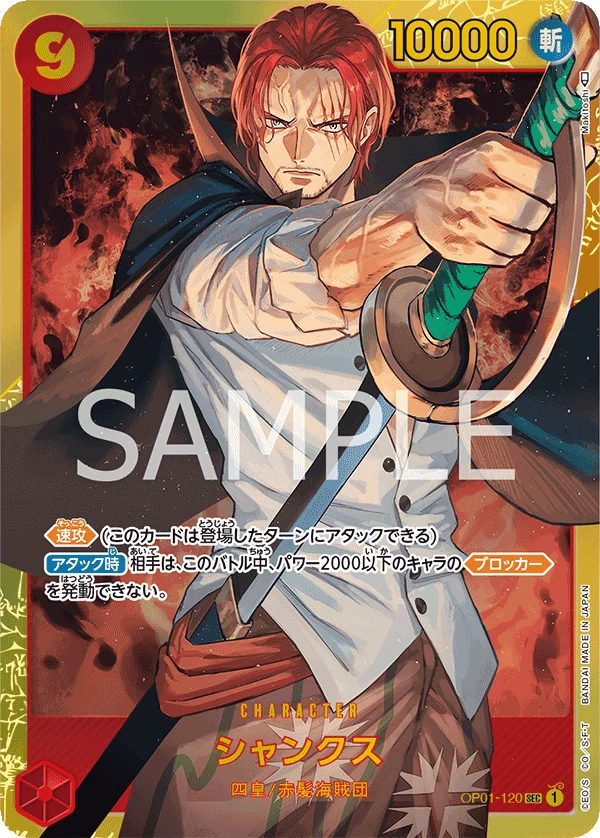
The clearest example: Shanks, card number 120, SEC-SP Comic Parallel. As a Romance Dawn (OP-01) original, it asked around ¥138,000. The identical card number reprinted in PRB-01 “ONE PIECE CARD THE BEST” asked around ¥860,000 — over six times higher, same measurement day (SNKRDUNK asking prices, 5 August 2026). Same card number, same rarity tier — different set, different price.
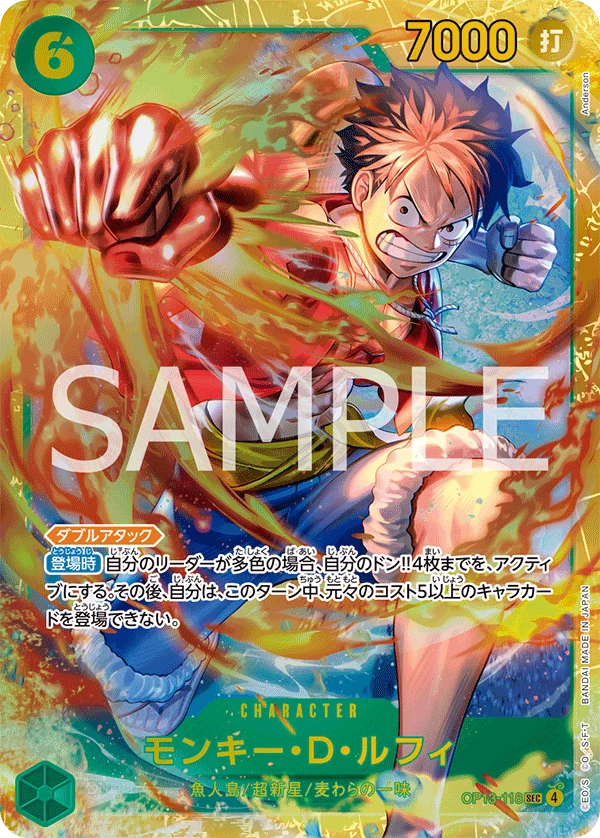
The same pattern shows up within a single set, one tier apart. OP-13 introduced Red Comic Parallel (レッドコミパラ), a scarcer treatment above the regular comic parallel of the same card number. Luffy, OP13-118, existed in both forms on the same measurement day — the regular comic parallel asked around ¥350,000, the single-listed Red Comic Parallel copy around ¥1,570,000. So “what set is this from” is always worth checking before “what’s the rarity tier.” These figures are from the same SNKRDUNK measurement behind our Most Valuable One Piece Cards round-up, if you want the full top-17 ranking.
Grading and the PSA10 Premium
Grading changes price, but not by a fixed multiplier. Across four comic-parallel cards tracked in the same 5 August 2026 measurement, raw-to-PSA10 premiums ran roughly 2.5x to 5x the raw asking price — a real range, specific to that measurement, not a universal rule.
Grading company matters too. On Zoro, OP06-118, an ARS10 (Japanese grading service) ask of around ¥650,000 beat the PSA10 asking range of roughly ¥425,000–¥434,000 for the same card, same day. Two graders, two numbers, both a top grade.
The official top printed rarity is Secret Rare (SEC) — numbered beyond a set’s main card list. OP-17’s official card list confirms Rocks D. Xebec (OP17-118) and Loki (OP17-119) as the set’s base-numbered Secret Rares; the set released 22 August 2026 in Japan, with the English edition following on 28 August 2026.
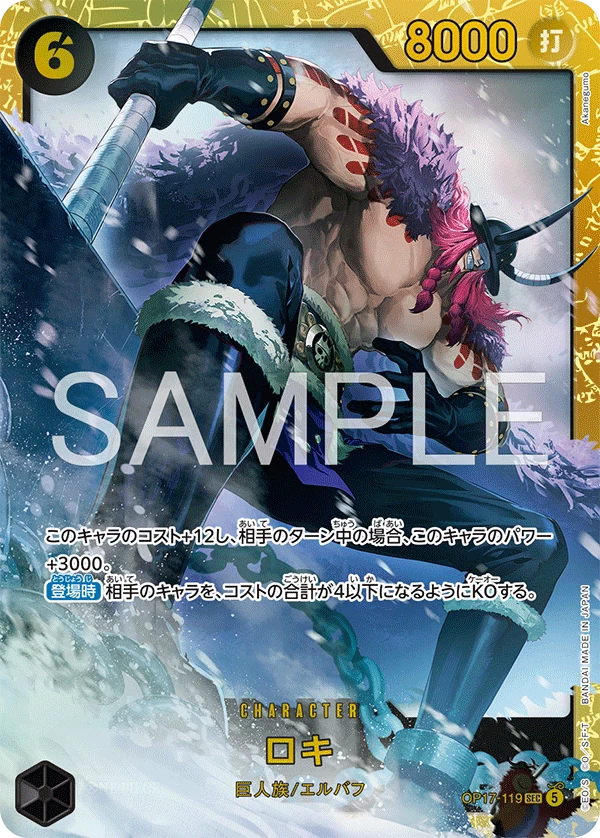
Above SEC, the collector community recognises further alternate-art treatments — manga-style black-and-white parallels and, new with OP-17, a “Pirate-Crew Super Parallel” reserved for exactly two cards. None are official Bandai rarity codes, so treat any frequency figure for them as an unofficial community estimate. Full breakdown: our manga rare cards guide.
Character Demand: The Luffy Effect
Rarity and print run explain the mechanics, but demand concentrates around specific characters. In the top 17 raw-card price ranking from that SNKRDUNK measurement, Luffy appeared six times, Ace and Shanks three times each — the franchise’s core cast pulling collector demand regardless of set or rarity tier.
For the top (manga-style) tier specifically, three factors drive price: scarcity, the distinctiveness of the black-and-white comic-panel art, and casting — a franchise-defining figure like an Emperor, not a filler character. OP-17 launched with four confirmed manga treatments: Edward Newgate (Whitebeard, OP17-005), Shanks (OP17-022), Kaido (OP17-062), and Charlotte Linlin (OP17-112) — all Emperor-tier, consistent with that casting pattern.
Do Sealed Boxes Get More Valuable With Age?
Sometimes. Our own catalogue has a worked example: OP-01 (Romance Dawn) at Box: ¥38,901 (~$253) and OP-05 (Awakening of the New Era) at Box: ¥55,491 (~$360) were listed against OP-16 (The Time of Battle) at ¥10,634 (~$69) on October 23, 2026. All three launched at broadly comparable factory pricing.
That comparison is a historical observation, not a promise about any future set. Sets whose chase tier stays desirable tend to be the sets whose sealed boxes age well; it isn’t readable off a rarity list or MSRP in advance, and even “aged well” examples keep moving.
Japanese Sealed Box Price List (OP-01 to OP-17 + EB + PRB)
EB and PRB sets actually released chronologically interleaved with the numbered OP sets, not as a separate track — check each release date for where it landed on the calendar.
| Set | Title | JP release | Price (option) |
|---|---|---|---|
| OP-01 | Romance Dawn | 22 Jul 2022 | Box: ¥38,901 (~$253) |
| OP-02 | Paramount War | 4 Nov 2022 | Box: ¥19,540 (~$127) |
| OP-03 | Pillars of Strength | 11 Feb 2023 | Box: ¥14,779 (~$96) |
| OP-04 | Kingdoms of Intrigue | 27 May 2023 | Box: ¥17,621 (~$114) |
| OP-05 | Awakening of the New Era | 26 Aug 2023 | Box: ¥55,491 (~$360) |
| OP-06 | Wings of the Captain | 25 Nov 2023 | Box: ¥23,670 (~$154) |
| OP-07 | 500 Years in the Future | 24 Feb 2024 | Box: ¥16,048 (~$104) |
| OP-08 | Two Legends | 25 May 2024 | — |
| OP-09 | Emperors in the New World | 31 Aug 2024 | Box: ¥17,773 (~$115) |
| OP-10 | Royal Blood | 30 Nov 2024 | Box: ¥10,536 (~$68) |
| OP-11 | A Fist of Divine Speed | 1 Mar 2025 | Box: ¥31,260 (~$203) |
| OP-12 | Legacy of the Master | 31 May 2025 | Carton: ¥242,788 (~$1,577) |
| OP-13 | Carrying on His Will | 23 Aug 2025 | Box: ¥20,390 (~$132) |
| OP-14 | The Azure Sea’s Seven | 22 Nov 2025 | — |
| OP-15 | Adventure on Kami’s Island | 28 Feb 2026 | Box: ¥9,602 (~$62) |
| OP-16 | The Time of Battle | 30 May 2026 | ¥10,634 (~$69) |
| OP-17 | The World’s Strongest Warriors | 22 Aug 2026 | ¥11,191 (~$73) |
| EB-01 | Memorial Collection | 27 Jan 2024 | — |
| EB-02 | Anime 25th Collection | 25 Jan 2025 | Box: ¥31,782 (~$206) |
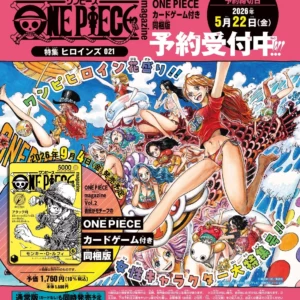
| EB-03 | One Piece Heroines Edition | 25 Oct 2025 | Box: ¥13,500 (~$88) |
| EB-04 | Egghead Crisis | 31 Jan 2026 | — |
| PRB-01 | One Piece Card THE BEST | 27 Jul 2024 | Box: ¥21,957 (~$143) |
| PRB-02 | One Piece Card THE BEST Vol.2 | 26 Jul 2025 | — |
Requests for a specific product go through Quick Order. For a deeper look at the OP-17 box, see our OP-17 release date and card list guide.
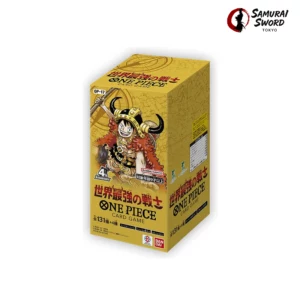
Budget Sealed: Damaged Box Pricing
A lower-cost route into some of the same sets: Damaged Box listings, discounted off the standard price — see the condition disclosure on each product page for specifics. Not the going rate for a set:
| Set | Damaged Box price |
|---|---|
| OP-04 Kingdoms of Intrigue | ¥14,941 (~$97) |
| OP-05 Awakening of the New Era | ¥47,919 (~$311) |
| OP-11 A Fist of Divine Speed | ¥28,826 (~$187) |
Compare the OP-05 Damaged Box against the standard OP-05 box: on a higher-priced set, the discount is modest in percentage terms since the set carries most of the value, not the box condition; on lower-priced sets such as OP-04, the gap is proportionally bigger. Read the condition disclosure on the product page before buying.
Graded OP Singles and Sourcing Requests
Grading and set-of-origin both move the price of a graded One Piece single, so a request starts from the exact card number and the set it was printed in — a comic parallel, a Red Comic Parallel or a manga treatment of the same number can sit at very different asks.
Where to Buy One Piece Boxes and Cards
OP-15, OP-05 and OP-17 boxes ship from Tokyo; the full run sits in the One Piece card box collection.
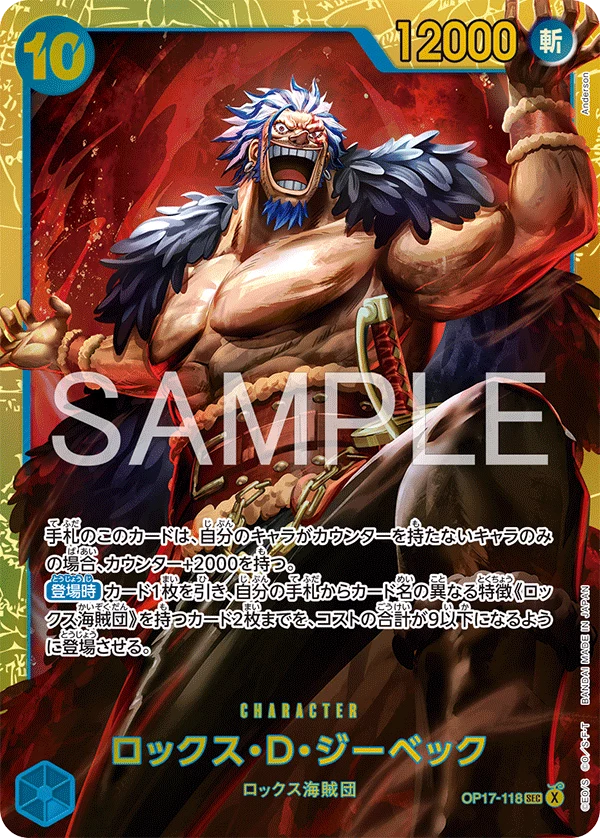
OP17-118 carries OP-17’s Pirate-Crew Super Parallel treatment — a reminder of what sits above the printed SEC rarity. More on OP-17’s confirmed chase cards: our OP-17 chase cards guide.
Frequently Asked Questions
What determines the price of a One Piece card?
Four things together: print run and which set the card number was originally printed in versus reprinted in, whether it’s professionally graded and by which company, how much collector demand the character on the card carries, and — for sealed boxes — whether the set’s chase tier has stayed desirable over time.
Why do identical card numbers from different sets have different prices?
Reprints in later sets, such as PRB-01 “ONE PIECE CARD THE BEST,” can command several times the asking price of the original-set printing of the same card number and rarity tier — Shanks OP01-120, SEC-SP Comic Parallel, is the clearest case, measured on the same SNKRDUNK day.
How much does grading add to a One Piece card’s value?
In the tracked SNKRDUNK measurement, PSA10 grading added a real premium over the raw asking price, and its size varied by card. Grading company matters too — on one tracked card, an ARS10 (Japanese grading service) ask exceeded the PSA10 ask for the same card.
Do sealed One Piece boxes get more valuable as they age?
Sometimes, but it isn’t predictable in advance. Our own catalogue has examples of sets that rose well above their original price point and others that stayed close to it — this is a historical observation from our own catalogue data, not a prediction of how any current or future set will move.
How do I request a specific graded One Piece single?
Start from the card number and the set it was printed in, since the same card number can exist in an original set and a later reprint set at different asking prices. Name the grading company too: an ARS10 and a PSA10 of the same card asked different prices on the same day.
Picked for this article
📩 Get member-only sale alerts & coupons
Sale alerts, coupons and restock notices by email — straight from Tokyo.